↩ Accueil

Vue lecture

Cosmic time capsules: the search for pristine comets

In this episode of Physics World Stories, host Andrew Glester explores the fascinating hunt for pristine comets – icy bodies that preserve material from the solar system’s beginnings and even earlier. Unlike more familiar comets that repeatedly swing close to the Sun and transform, these frozen relics act as time capsules, offering unique insights into our cosmic history.
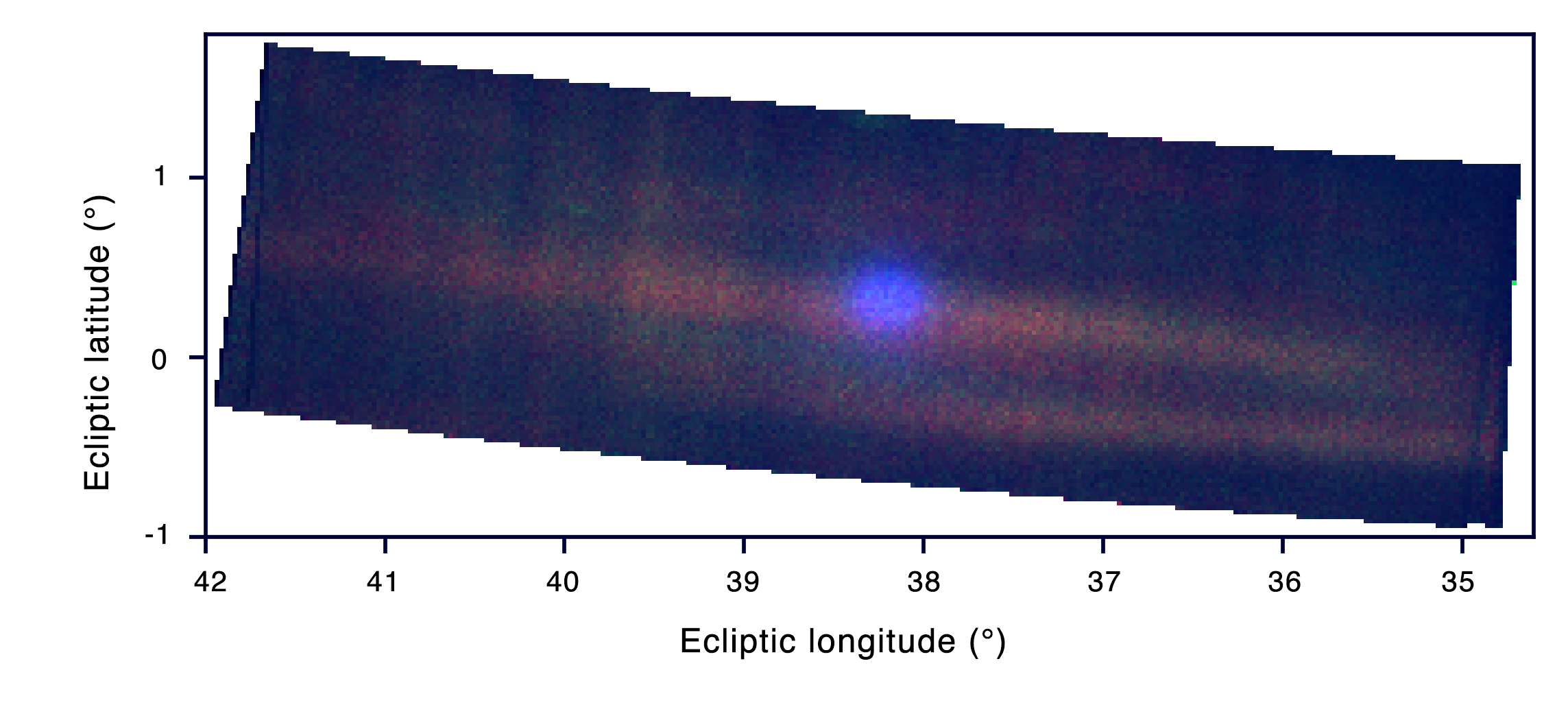
Pale blue circle against red streaks. composite image of interstellar comet 3I/ATLAS captured by the Europa Ultraviolet Spectrograph instrument on NASA’s Europa Clipper spacecraft
Interstellar comet 3I/ATLAS is seen in this composite image captured on 6 November 2025 by the Europa Ultraviolet Spectrograph instrument on NASA’s Europa Clipper spacecraft. (Courtesy: NASA/JPL-Caltech/SWRI)

The first guest is Tracy Becker, deputy principal investigator for the Ultraviolet Spectrograph on NASA’s Europa Clipper mission. Becker describes how the Jupiter-bound spacecraft recently turned its gaze to 3I/ATLAS, an interstellar visitor that appeared last July. Mission scientists quickly reacted to this unique opportunity, which also enabled them to test the mission’s instruments before it arrives at the icy world of Europa.

Michael Küppers then introduces the upcoming Comet Interceptor mission, set for launch in 2029. This joint ESA–JAXA mission will “park” in space until a suitable comet arrives from the outer reaches of the solar system. They will deploy two probes to study it from multiple angles – offering a first-ever close look at material untouched since the solar system’s birth.

From interstellar wanderers to carefully orchestrated intercepts, this episode blends pioneering missions and cosmic detective work. Keep up to date with all the latest space and astronomy developments in the dedicated section of the Physics World website.

The post Cosmic time capsules: the search for pristine comets appeared first on Physics World.
💾

  •  

Forging a more inclusive new generation of physicists

The latest episode of Physics World Stories takes you inside CUWiP+, the Conference for Undergraduate Women and Non-Binary Physicists, and the role the annual event plays in shaping early experiences of studying physics.

CUWIP+ US and Ireland logoThe episode features June McCombie from the University of Nottingham, who discusses what happens at CUWiP+ events and why they are so important for improving the retention of women and non-binary students in STEM. She reflects on how the conferences create space for students to explore career paths, build confidence and see themselves as part of the physics community.

Reflections and tips from CUWiP+ 2025

University of Birmingham students Tanshpreet Kaur and Harriett McCormick share their experiences of attending the 2025 CUWiP+ event at the University of Warwick and explain why they are excited for the next event, set for Birmingham, 19–22 March 2026. They describe standout moments from 2025, including being starstruck at meeting Dame Jocelyn Bell Burnell, who discovered radio pulsars in 1967.

The episode provides practical advice to get the most out of the event. Organizers design the programme to cater for all personalities – whether you thrive in lively, social situations, or prefer time to step back and reflect. Either way, CUWiP+ offers opportunities to be inspired and to make meaningful connections.

Hosted by Andrew Glester, the episode highlights how shared experiences and supportive networks can balance the often-solitary nature of studying physics, especially when you feel excluded from the majority group.

The post Forging a more inclusive new generation of physicists appeared first on Physics World.

💾

  •  

Quantum 2.0: Paul Davies on the next revolution in physics

In this episode of Physics World Stories, theoretical physicist, cosmologist and author Paul Davies discusses his latest book, Quantum 2.0: the Past, Present and Future of Quantum Physics. A Regents Professor at Arizona State University, Davies reflects on how the first quantum revolution transformed our understanding of nature – and what the next one might bring.

He explores how emerging quantum technologies are beginning to merge with artificial intelligence, raising new ethical and philosophical questions. Could quantum AI help tackle climate change or tackle issues like hunger? And how far should we go in outsourcing planetary management to machines that may well prioritize their own survival?

Davies also turns his gaze to the arts, imagining a future where quantum ideas inspire music, theatre and performance. From jazz improvized by quantum algorithms to plays whose endings depend on quantum outcomes, creativity itself could enter a new superposition.

Hosted by Andrew Glester, this episode blends cutting-edge science and imagination in trademark Paul Davies style.

This article forms part of Physics World‘s contribution to the 2025 International Year of Quantum Science and Technology (IYQ), which aims to raise global awareness of quantum physics and its applications.

Stayed tuned to Physics World and our international partners throughout the year for more coverage of the IYQ.

Find out more on our quantum channel.


The post Quantum 2.0: Paul Davies on the next revolution in physics appeared first on Physics World.

💾

  •  
❌