↩ Accueil

Vue lecture

Mulugeta Bekele: the jailed and tortured scientist who kept Ethiopian physics alive

Mulugeta Bekele paid a heavy price for remaining in Ethiopia in the 1970s and 1980s. While many other academics had fled their homeland to avoid being targeted by its military rulers, Mulugeta did not. He stayed to teach physics, almost single-handedly keeping it alive in the country. But Mulugeta was arrested and brutally tortured by members of the Derg, Ethiopia’s ruling military junta. “I still have scars,” he says when we meet at his tiny, second-floor office at Addis Ababa University (AAU) in January 2026.

Gentle and softly-spoken, Mulugeta, 79, is formally retired but still active as a research physicist. In 2012 his efforts led to him being awarded the Sakharov prize by the American Physical Society (APS) “for his tireless efforts in defence of human rights and freedom of expression and education anywhere in the world, and for inspiring students, colleagues and others to do the same”.

Mulugeta was born in 1947 near Asela, a small town south of Ethiopia’s capital Addis Ababa. The district had only a single secondary school that depended on volunteer teachers from other countries. One was a US Peace Corps volunteer named Ronald Lee, who taught history, maths and science for two years. Mulugeta recalls Lee as a dramatic and inventive teacher, who would climb trees in physics classes to demonstrate the actions of pulleys and hold special after-school calculus classes for advanced students.

Mulugeta and other Asela students were entranced. So when he entered AAU – then called Haile Selassie 1 University – in 1965, Mulugeta declared he wanted to study both mathematics and physics. Impossible, he was informed; he could do one or the other but not both. “I told myself that if I choose mathematics I will miss physics,” Mulugeta says. “But if I do physics, I will be continually engaged with mathematics.” Physics it was.

At the end of his third year, Mulugeta’s studies appeared in doubt. The university’s only physics teacher was an American named Ennis Pilcher, who was about to return to Union College in Schenectady, New York, after spending a year in Addis on a fellowship from the Fulbright Program. Pilcher, though, managed to convince Union to support Mulugeta so he could travel to the US and study physics there for his final year.

As I talk to Mulugeta, he pulls a dusty book off his shelf. “This was given to me by Pilcher,” he says, pointing to Walter Meyerhof’s classic undergraduate textbook Elements of Nuclear Physics. Mulugeta turns to the inside of the front cover and proudly shows me the inscription: “Mulugeta Bekele, Union College. Schenectady, 1969–1970”.

When Mulugeta returned to AAU in the summer of 1970, he was awarded a BSc in physics. He then received a grant from the US Agency for International Development (USAID) to attend the University of Maryland for a master’s degree. After two more years in the US, Mulugeta returned to Addis Ababa in 1973. As an accomplished researcher and teacher, he was made department chair and began to expand the physics programme at the university.

In the firing line

It was a time when political turmoil was upending Ethiopia, as well as the lives of Mulugeta and many other academics. For centuries the country had been ruled by a dynasty whose present emperor was Haile Selassie. Having come to the throne in 1930, he had tried to reform Ethiopia by bringing it into the League of Nations, drawing up a constitution, and taking measures to abolish slavery.

When fascist Italy invaded Ethiopia in May 1935, Selassie left, spending six years in exile in the UK during the Italian occupation of the country. He returned as emperor in 1941 after British and Ethiopian forces recaptured Addis Ababa. But famine, unemployment and corruption, as well as a brief unsuccessful coup attempt, undermined his rule and made him unexpectedly vulnerable.

While in Maryland, Mulugeta and other Ethiopian students in the US started supporting the Ethiopian People’s Revolutionary Party (EPRP) – a pro-democracy group that sought to build popular momentum against the monarchy. In February 1974 Selassie was deposed by the Derg – a repressive military junta named after the word for “committee” in Amharic, the most widely spoken language in Ethiopia. Selassie was assassinated the following year.
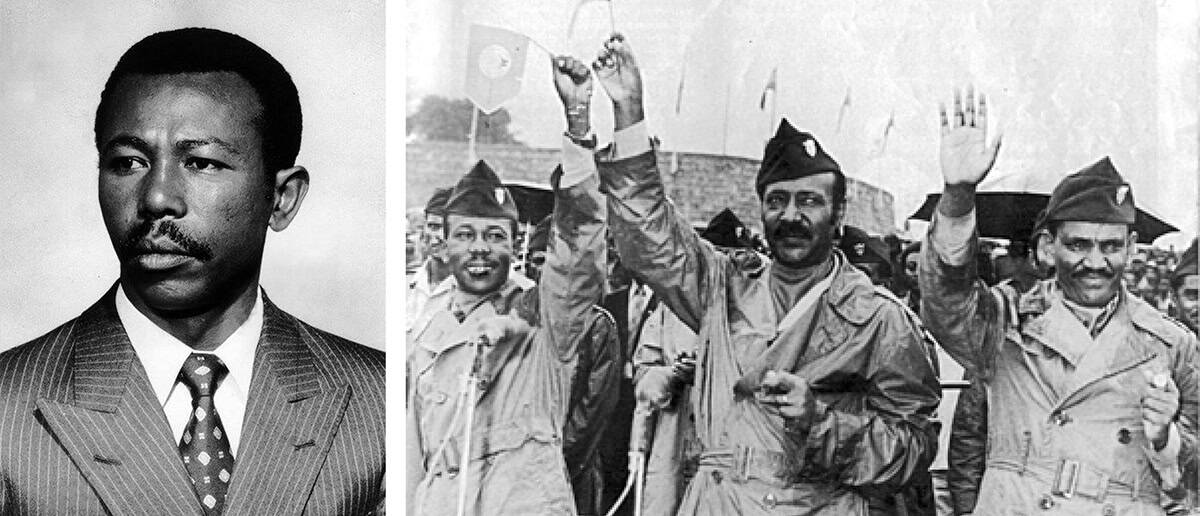
Mengistu Haile Mariam - official portrait plus leaders of the Derg
Ruthless ruler Mengistu Haile Mariam (left) was leader of the Derg military junta and communist dictator in Ethiopia between 1977 and 1991. Mengitsu is also shown (right) with two other senior members of the Derg: Tafari Benti (middle) and Atnafu Abate (right). (Images: Public Domain)

Led by an army officer named Mengistu Haile Mariam, the Derg’s radical totalitarianism was in sharp contrast to the student-led EPRP’s efforts and its agenda included seizing property from landowners. Mulugeta’s family lost all its land, and his father was killed fighting the Derg. “Land ownership was still inequitable,” Mulugeta remarks ruefully, “only the landlords changed.”

In September 1976 the EPRP tried, unsuccessfully, to assassinate Mengistu. The following February, on becoming chairman of Derg – and therefore head of state – Mengistu began ruthlessly to crush any opposition, particularly the EPRP, in what he himself called the “Red terror” campaign of political suppression. About half a million people in Ethiopia were killed.

“It was a police state,” recalls Solomon Bililign, Mulugeta’s then graduate assistant, now a professor of atomic and molecular physics at North Carolina Agricultural and Technical State University. “The police didn’t need any reason to arrest you. They would arrest people openly in the streets, break into homes, and left people dead in roads and parks. Many were tortured; others simply disappeared.”

Captured and tortured

Mulugeta himself was a target. In the summer of 1977, a policeman showed up at his office with an informant. Mulugeta was arrested and imprisoned for his role in helping to organize anti-Derg activities, as was Bililign. Mulugeta still recalls exactly how long he was jailed for: “Eight months and 20 days”.

After his release, Mulugeta knew it would be unsafe to stay in Addis and lived in hiding for several months. So he devised a plan to travel 500 km north to a holdout region not controlled by the Derg. However, while using a fake ID to pass through checkpoints to reach a compatriot, he was betrayed again, captured, and taken back to Addis.

Mulugeta was savagely tortured using a method that the Derg meted out on thousands of other prisoners.

En route to Addis, he managed to steal back the fake ID that he’d been using from the pocket of the policeman travelling with him. He then tore it up to shield the identity of his compatriot, and tossed the pieces into a toilet. But the policeman noticed and retrieved the pieces. Mulugeta was then savagely tortured using a method that the Derg meted out on thousands of other prisoners. His arms and legs were tied around a pole, and he was hung in the foetal position between two chairs, upside down. His feet were then beaten until he could no longer walk.

Mulugeta was sent to Maekelawi, an infamous jail in Addis, in which up to 70 prisoners could be jammed in rooms each barely four metres long and four metres wide. Inmates were tortured without warning, could not have visitors, never had trials, were denied books and paper, and at night heard screams from periodic executions. Mulugeta helped those who were beaten by tending to their wounds.

“People who knew him in prison told me that his mental strength helped all of them endure,” remembers Mesfin Tsige, an undergraduate student of Mulugeta at the time, who is now a polymer physicist at the University of Akron in Ohio. Despite the awful conditions, Mulugeta managed to continue working on physics by surreptitiously taking paper from the foil linings of cigarette packets to compose problems.
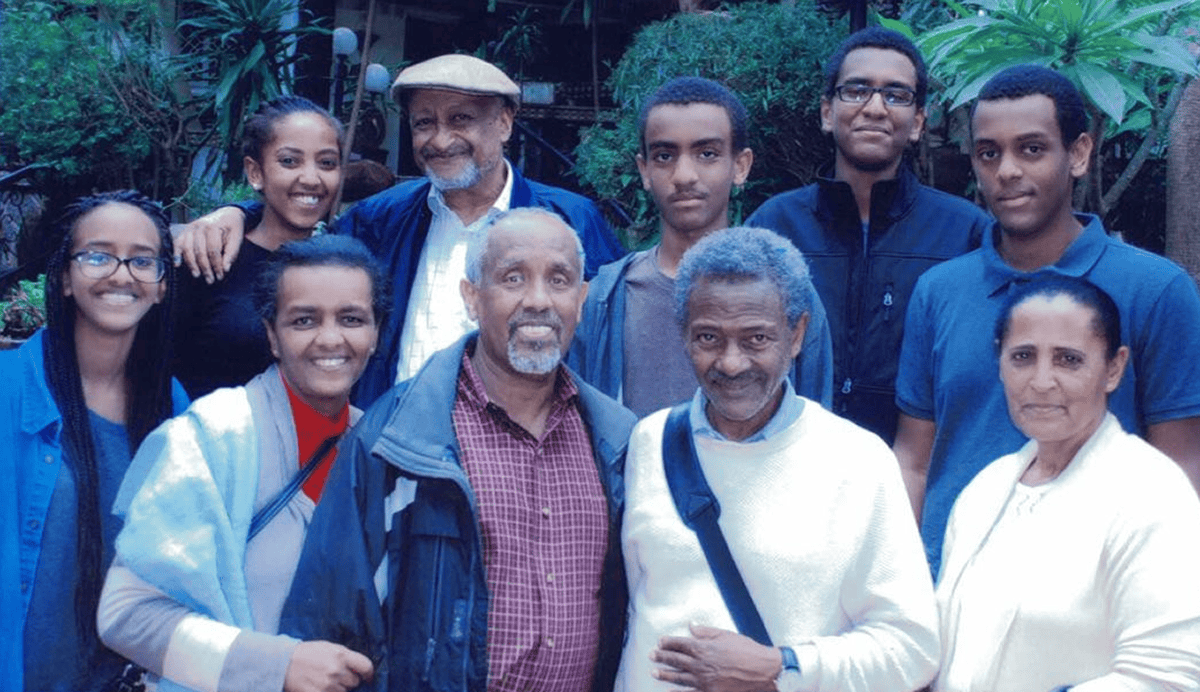
Mulugeta, Bililign and Mekonnen
Happier times Mulugeta Bekele (front centre in the white top), Solomon Bililign (next to him in the purple shirt) and Nebiy Mekonnen (back row, with the hat) pictured with their family and friends. All three were incarcerated together at the notorious Maekelawi prison.

Another prisoner was Nebiy Mekonnen, a chemistry student of Mulugeta. Later a gifted artist, translator and newspaper editor, Mekonnen began translating the US writer Margaret Mitchell’s classic 1936 book Gone with the Wind into Amharic. It was the one book that the Maekelawi prisoners had in their hands, having retrieved it from the possessions of someone who had been executed.

Surreptitiously writing his translation onto the foil linings of cigarette packets, Mekonnen would read passages to fellow prisoners in the evening for what passed for entertainment. Mekonnen’s translation of Mitchell’s almost 1000-page book was recorded onto 3000 of the linings, which were then smuggled out of the prison stuffed in tobacco pouches and published years later.

Gone with the Wind might seem a strange choice to translate, but as Mulugeta reminds me: “It was the only book we had at the time”. More smuggled books did eventually arrive at the prison, but Gone with the Wind, which describes life in a war-torn country, has several passages that resonated with prisoners. One was: “In the end what will happen will be what has happened whenever a civilization breaks up. The people with brains and courage come through and the ones who haven’t are winnowed out.”

Release and recapture

In 1982, Mulugeta was moved to Kerchele, another prison. There, as at Maekelawi, inmates were forced to listen to Mengistu’s pompous speeches on radio and TV. During one Mengistu pontificated that he would turn prisons into places of education. A clever inmate, knowing that the prison wardens were also cowering in terror, proposed that Kerchele establish a school with the prisoners as teachers.

The wardens found this a great idea, not least because it let them show off their loyalty to Mengistu. The Kerchele prisoners were promptly put to work erecting a schoolhouse of half a dozen rooms out of asbestos slabs. Unlike schools in the rest of Ethiopia, the Kerchele prison school was not short of teachers, as the prisoners included a wide range of professionals, such as architects, scientists and engineers.

Students included prison guards and their families, along with numerous inmates who had been jailed for non-political reasons. Mulugeta and Bililign taught physics. “It was therapy for us,” Bililign says – and the school was soon known as one of the best in Ethiopia.

When I ask Mulugeta how he maintained his interest in physics in jail, despite being locked up for so many years, he becomes animated.

When I ask Mulugeta how he maintained his interest in physics in jail, despite being locked up for so many years, he becomes animated. “In those days, prisons were full of ideas,” he smiles. “We were university students, university teachers. We had a cause. It was exciting. Intellectually, we flourished.”

In the summer of 1985 Mulugeta was released. Many colleagues were not. “They were given release papers and as they left the building, one by one, they were strangled. I had a tenth-grade student who was one of the best; he didn’t make it. There were plenty of stories like this.” Mulugeta pauses. “Somehow we survived. But not them.”

Mulugeta returned to the university, now renamed from Haile Selassie University to Addis Ababa University, and started teaching physics full time. As the Derg was in full control no opposition was possible except in outer regions of Ethiopia. In summer 1991, after Mulugeta had taught physics for another six years, political turmoil erupted yet again.

Mengistu was overthrown that May by a political coalition representing pro-democracy groups from five of Ethiopia’s ethnic regions, the Ethiopian People’s Revolutionary Democratic Front (EPRDF). But ethnic tensions rose and human rights violations continued. “Even though the Derg was overthrown,” Mulugeta recalls, “we knew we were entering another dark age.”

In the same year Mulugeta was put in touch with a Swedish programme seeking to build networks of scientists across countries in the southern hemisphere. Mulugeta knew a physicist from Bangalore, India, who had visited Addis twice as an examiner for his master’s programme and arranged to work with him for his PhD.

That July, Mulugeta married Malefia, who worked in the university’s registrar office, and the two left for Bangalore. As a wedding present, his student Mekonnen painted a picture of two hands coming together, each with a ring on a finger, against a black Sun in the background. “Two rings, in the time of a dark sun” Mekonnen’s caption read, “Happy marriage!” Mulugeta still has the painting.

Mulugeta thrived in Bangalore. Here, he was finally able to combine his two loves, physics and maths, studying statistical physics and stochastic processes and applying them to issues in non-equilibrium thermodynamics. He has worked in that field ever since. He received his PhD in 1998 from the Indian Institute of Science in Bangalore and returned to Addis once more to teach.

Shortly after Mulugeta’s return from Bangalore to Ethiopia in August 1998, some of his former students formed the Ethiopian Physical Society, electing him as its first president. Other students of his who had taken positions in the US created the Ethiopian Physical Society of North America (EPSNA), formally established in 2008. Bililign organized and convened its first meeting.

In 2007, Philip Taylor, a soft-condensed-matter physicist from Case Western Reserve University in the US, who had been Tsige’s PhD supervisor, heard the story of Mulugeta’s imprisonment. Astonished, he spearheaded the successful 2012 application for Mulugeta to receive the APS’s Sakharov prize, which is given every two years to physicists who have displayed “outstanding leadership and achievements of scientists in upholding human rights”.
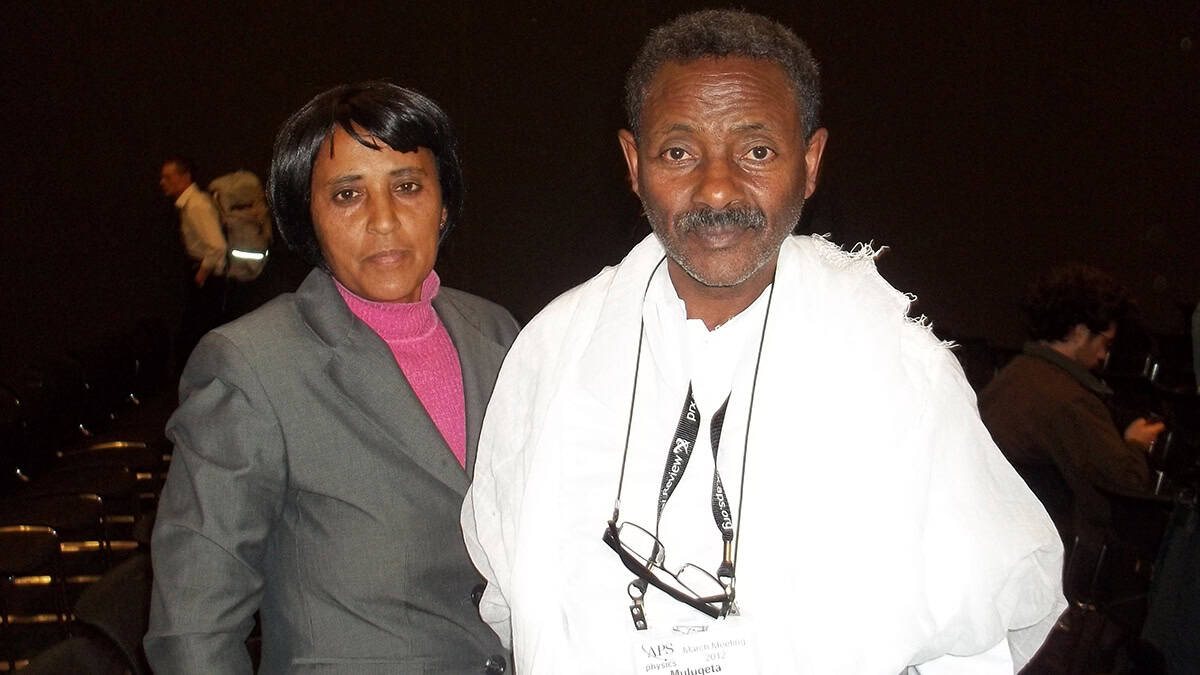
Mulugeta Bekele with his wife Malefia
Honoured figure Mulugeta Bekele with his wife Malefia at the March 2012 meeting of the American Physical Society in Boston, where he was awarded the Sakharov medal for his “tireless efforts in defence of human rights and freedom of expression”. (Courtesy: Solomon Bililign)

Unsure that he would receive travel funds to attend a special award ceremony at that year’s APS March meeting in Boston, the EPSNA raised money for Mulugeta and his wife to attend. Jetlagged, worn out by the cold, and somewhat overwhelmed by the attention, Mulugeta could not be found as the ceremony began. EPSNA members tracked him down to his hotel room, where he was dressing in traditional Ethiopian clothes for the occasion – all white from head to toe, including shoes.

Under a dark Sun

In recent years, Mulugeta has continued to teach and collaborate with students and former students, publishing in a wide range of journals, as well as helping out with the Ethiopian Physical Society. But while I was in Ethiopia to talk to Mulugeta at the start of 2026, the Trump administration curtailed immigrant visas from Ethiopia and almost half of all nations in Africa supposedly in an attempt to “protect the security of the United States”. A few months before, it had imposed a $100,000 fee on work visas, all but preventing US universities from hiring non-US citizens. It killed the USAID programme that had once sent Mulugeta to the US for his master’s degree.

The Trump administration has also withdrawn the US from international scientific organizations, conventions and panels, and has gutted the most important US scientific agencies. These and other measures are destroying the networks of international physics collaborations of the kind that Mulugeta both promoted and benefited from – networks that nurture education, careers and knowledge.

“We are not yet in good hands,” Mulugeta warns me as I start to leave. “We are,” he says, “still under the dark Sun.”

The post Mulugeta Bekele: the jailed and tortured scientist who kept Ethiopian physics alive appeared first on Physics World.

  •  

The future of particle physics: what can the past teach us?

In his opening remarks to the 4th International Symposium on the History of Particle Physics, Chris Llewellyn Smith – who was a director-general of CERN in the 1990s – suggested participants should speak about “what’s not written in the journals”, including “mistakes, dead-ends and problems with getting funding”. Doing so, he said, would “provide insight into the way science really progresses”.

The symposium was not your usual science conference. Held last November at CERN, it took place inside the lab’s 400-seat main auditorium, which has been the venue for many historic announcements, including the discovery of the Higgs boson. Its brown-beige walls are covered with lively designs by the Finnish artist Ilona Rista, suggesting to me the aftermath of a collision of high-energy bar codes.

The 1980s and 1990s saw the construction and operation of various important accelerators and detectors.

The focus of the meeting was the development of particle physics in the 1980s and 1990s – a period that saw the construction and operation of various important accelerators and detectors. At CERN, these included the UA1 and UA2 experiments at the Super Proton Synchrotron, where the W and Z bosons were discovered. Later, there was the Large Electron-Positron Collider (LEP), which came online in 1989, and the Large Hadron Collider (LHC), approved five years later.

Delegates also heard about the opening of various accelerators in the US during those two decades, including two at the Stanford Linear Accelerator Center – the Positron-Electron Project in 1980 and the Stanford Linear Collider in 1989. Most famous of all was the start-up of the Tevatron at Fermilab in 1983. Over at Dubna in the former Soviet Union, meanwhile, scientists built the Nuclotron, a superconducting synchrotron, which opened in 1992.

Conference speakers covered unfinished machines of the era as well. The US cancelled two proton–proton facilities – ISABELLE in 1983 and the Superconducting Super Collider (SSC) a decade later. The Soviet Union, meanwhile, abandoned the multi-TeV proton–proton collider UNK a few years later, though news has recently emerged that Russia might revive the project.

Several speakers recounted the discovery of the W and Z particles at CERN in 1983 and the discovery of the top quark at Fermilab in 1995. Others addressed the strange fact that fewer neutrinos from the Sun had been detected than theory suggested. The “solar-neutrino problem”, as it was known, was finally resolved by Takaaki Kajita’s discovery of neutrino oscillation in 1998, for which he shared the 2015 Nobel Prize for Physics with Art McDonald.

The conference also addressed unsuccessful searches for proton decay, axions, magnetic monopoles, the Higgs boson, supersymmetry particles and other targets. Other speakers described projects with highly positive outcomes, such as the advent of particle cosmology, or what some have jokingly dubbed “the heavenly lab”. The development of string theory, grand unified theories and perturbative quantum chromodynamics was tackled too.

In an exchange in the question-and-answer session after one talk, the Greek physicist Kostas Gavroglu referred to many of such quests as “failures”. That remark prompted the Australian-born US theoretical physicist Helen Quinn to say she preferred the term “falling forward”; such failures, she said, were instances of “I tried this, and it didn’t work so I tried that”.

In relating his work on detecting gravitational waves, the US Nobel-prize-winning physicist Barry Barish said he felt his charge was not to celebrate the importance of his discoveries nor the ingenuity of the route he took. Instead, Barish explained, his job was to answer the much more informal question: “What made me do what?”.

His point was illustrated by the US theorist Alan Guth, who described the very human and serendipitous path he took to working on cosmic inflation – the super-fast expansion of the universe just after the Big Bang. When he started, Guth said, “all the ingredients were already invented”. But the startling idea of inflation hinged on accidental meetings, chance conversations, unexpected visits, a restricted word count for Physical Review Letters, competitions, insecurities and “spectacular realizations” coalescing.

Wider world

Another theme that arose in the conference was that science does not unfold inside its own bubble but can have extensive and immediate impacts on the world around it. Two speakers, for instance, recounted the invention of the World Wide Web at CERN in the late 1980s. It’s fair to say that no other discovery by a single individual – Tim Berners-Lee – has so radically and quickly transformed the world.

The growing role of international politics in promoting and protecting projects was mentioned too, with various speakers explaining how high-level political negotiations enabled physicists to work at institutions and experiments in other nations. The Polish physicist Agnieszka Zalewska, for example, described her country’s path to membership in CERN, while Russian-born US physicist Vladimir Shiltsev spoke about the “diaspora” of Russian particle physicists after the fall of the Soviet Union in 1991.

As a result of the Superconducting Super Colllider’s controversial closure, the centre of gravity of high-energy physics shifted to Europe.

Sometimes politics created destructive interference. The US physicist, historian and author Michael Riordan described how the US’s determination to “go it alone” to outcompete Europe in high-energy physics was a major factor in bringing about the opposite: the termination of the SSC in 1993. As a result of that project’s controversial closure, the centre of gravity of high-energy physics shifted to Europe.

Indeed, contemporary politics occasionally hit the conference itself in incongruous and ironic ways. Two US physicists, for example, were denied permission to attend because budgets had been cut and travel restrictions increased. In the end, one took personal time off and paid his own way, leaving his affiliation off the programme.

Before the conference, some people complained that conference organizers hadn’t paid enough attention to physicists who’d worked in the Soviet Union but were from occupied republics. Several speakers addressed this shortcoming by mentioning people like Gersh Budker (1918–1977). A Ukrainian-born physicist who worked and died in the Soviet Union, Budker was nominated for a Nobel Prize (1957) and even has had a street named after him at CERN. Unmentioned, though, was that Budker was Jewish and that his father was killed by Ukrainian nationalists in a pogrom.

On the final day of the conference, which just happened to be World Science Day for Peace and Development, CERN mounted a public screening of the 2025 documentary film The Peace Particle. Directed by Alex Kiehl, much of it was about CERN’s internationalism, with a poster for the film describing the lab as “Mankind’s biggest experiment…science for peace in a divided world”.

But in the Q&A afterwards some audience members criticized CERN for allegedly whitewashing Russia for its invasion of the Ukraine and Israel for genocide. Those onstage defended CERN on the grounds of its desire to promote internationalism.

The critical point

The keynote speaker of the conference was John Krige, a science historian from Georgia Tech who has worked on a three-volume history of CERN. Those who launched the lab, Krige reminded the audience, had radical “scientific, political and cultural aspirations” for the institution. Their dream was that CERN wouldn’t just revive European science and promote regional collaborative effects after the Second World War, but also potentially improve the global world order too.

Krige went on to quote one CERN founder, who’d said that international science facilities such as CERN would be “one of the best ways of saving Western civilization”. Recent events, however, have shown just how fragile those ambitions are. Alluding to CERN’s Future Circular Collider and other possible projects, Llewellyn Smith ended his closing remarks with a warning.

“The perennial hope that the next big high-energy project will be genuinely global,” he said, “seems to be receding over the horizon due to the polarization of world politics”.

The post The future of particle physics: what can the past teach us? appeared first on Physics World.

  •  

The obscure physics theory that helped Chinese science emerge from the shadows

“The Straton Model of elementary particles had very limited influence in the West,” said Jinyan Liu as she sat with me in a quiet corner of the CERN cafeteria. Liu, who I caught up with during a break in a recent conference on the history of particle physics, was referring to a particular model of elementary particle physics first put together in China in the mid-1960s. The Straton Model was, and still largely is, unknown outside that country. “But it was an essential step forward,” Liu added, “for Chinese physicists in joining the international community.”

Liu was at CERN to give a talk on how Chinese theorists redirected their research efforts in the years after the Cultural Revolution, which ended in 1976. They switched from the Straton Model, which was a politically infused theory of matter favoured by Mao Zedong, the founder of the People’s Republic of China, to mainstream particle physics as practised by the rest of the world. It’s easy to portray the move as the long-overdue moment when Chinese scientists resumed their “real” physics research. But, Liu told me, “actually it was much more complicated”.

A physicist by training, Liu received her PhD on contemporary theories of spontaneous charge-parity (CP) violation from the Institute of Theoretical Physics at the Chinese Academy of Sciences (CAS) in 2013. She then switched to the CAS Institute for the History of Natural Sciences, where she was its first member with a physics PhD. Her initial research topic was the history and development of the Straton Model.

The model is essentially a theory of the structure of hadrons – either baryons (such as protons and neutrons) or mesons (such as pions and kaons). But the model’s origins are as improbable as they are labyrinthine. Mao, who had a keen interest in natural science, was convinced that matter was infinitely divisible, and in 1963 he came across an article by the Marxist-inspired Japanese physicist Shoichi Sakata (1911–1970).

First published in Japanese in 1961 and later translated into Russian, Sakata’s paper was entitled “Dialogues concerning a new view of elementary particles”. It restated Sakata’s belief, which he had been working on since the 1950s, that hadrons are made of smaller constituents – “elementary particles are not the ultimate elements of matter” as he put it. With some Chinese scholars back then still paying close attention to publications from the Soviet Union, their former political and ideological ally, that paper was then translated into Chinese.

Mao Zedong was engrossed in Shoichi Sakata’s paper, for it seemed to offer scientific support for his own views.

This version appeared in the Bulletin of the Studies of Dialectics of Nature in 1963. Mao, who received an issue of that bulletin from his son-in-law, was engrossed in Sakata’s paper, for it seemed to offer scientific support for his own views. Sakata’s article – both in the original Japanese and now in Chinese – cited Friedrich Engels’ view that matter has numerous stages of discrete but qualitatively different parts. In addition, it quoted Lenin’s remark that “even the electron is inexhaustible”.

A wider dimension

“International politics now also entered,” Liu told me, as we discussed the issue further at CERN. A split between China and the Soviet Union had begun to open up in the late 1950s, with Mao breaking off relations with the Soviet Union and starting to establish non-governmental science and technology exchanges between China and Japan. Indeed, when China hosted the Peking Symposium of foreign scientists in 1964, Japan brought the biggest delegation, with Sakata as its leader.

At the event, Mao personally congratulated Sakata on his theory. It was, Sakata later recalled, “the most unforgettable moment of my journey to China”. In 1965, Sakata’s paper was retranslated from the Japanese original, with an annotated version published in Red Flag and the newspaper Renmin ribao, or “People’s Daily”, both official organs of the Chinese Communist Party.

Chinese physicists realized that they could capitalize on Mao’s enthusiasm to make elementary particle physics a legitimate research direction.

Chinese physicists, who had been assigned to work on the atomic bomb and other research deemed important by the Communist Party, now started to take note. Uninterested in philosophy, they realized that they could capitalize on Mao’s enthusiasm to make elementary particle physics a legitimate research direction.

As a result, 39 members of CAS, Peking University and the University of Science and Technology of China formed the Beijing Elementary Particle Group. Between 1965 and 1966, they wrote dozens of papers on a model of hadrons inspired by both Sakata’s work and quark theory based on the available experimental data. It was dubbed the Straton Model because it involved layers or “strata” of particles nested in each other.

Liu has interviewed most surviving members of the group and studied details of the model. It differed from the model being developed at the time by the US theorist Murray Gell-Mann, which saw quarks as not physical but mathematical elements. As Liu discovered, Chinese particle physicists were now given resources they’d never had before. In particular, they could use computers, which until then had been devoted to urgent national defence work. “To be honest,” Liu chuckled, “the elementary particle physicists didn’t use computers much, but at least they were made available.”

The high-water mark for the Straton Model occurred in July 1966 when members of the Beijing Elementary Particle Group presented it at a summer physics colloquium organized by the China Association for Science and Technology. The opening ceremony was held in Tiananmen Square, in what was then China’s biggest conference centre, with attendees including Abdus Salam from Imperial College London. The only high-profile figure to be invited from the West, Salam was deemed acceptable because he was science advisor to the president of Pakistan, a country considered outside the western orbit.

The proceedings of the colloquium were later published as “Research on the theory of elementary particles carried out under the brilliant illumination of Mao Tse-Tung’s thought”. Its introduction was what Liu calls a “militant document” – designed to reinforce the idea that the authors were carrying Mao’s thought into scientific research to repudiate “decadent feudal, bourgeois and revisionist ideologies”.

Participants in Beijing had expected to make their advances known internationally by publishing the proceedings in English. But the Cultural Revolution had just begun two months before, and publications in English were forbidden. “As a result,” Liu told me, “the model had very limited influence outside China.” Sakata, however, had an important influence on Japanese theorists having co-authored the key paper on neutrino flavour oscillation (Prog. Theoretical. Physics 28 870).

A resurfaced effort

In recent years, Liu has shed new light on the Straton Model, writing a paper in the journal Chinese Annals of History of Science and Technology (2 85). In 2022, she also published a Chinese-language book entitled Constructing a Theory of Hadron Structure: Chinese Physicists’ Straton Model, which describes the downfall of the model after 1966. None of its predicted material particles appeared, though a candidate event once occurred in a cosmic ray observatory in the south of China.

By 1976, quantum chromodynamics (QCD) had convincingly emerged as the established model of hadrons. The effective end of the Straton Model took place at a conference in January 1980 in Conghua, near Hong Kong. Hung-Yuan Tzu, one of the key leaders of the Beijing Group, gave a paper entitled “Reminiscences of the Straton Model”, signalling that physics had moved on.

During our meeting at CERN, Liu showed me photos of the 1980 event. “It was a very important conference in the history of Chinese physics,” she said, “the first opening to Chinese physicists in the West”. Visits by Chinese expatriates were organized by Tsung-Dao Lee and Chen-Ning Yang, who shared the 1957 Nobel Prize for Physics for their work on parity violation.

The critical point

It is easy for westerners to mock the Straton Model; Sheldon Glashow once referred to it as about “Maons”. But Liu sees it as significant research that had many unexpected consequences, such as helping to advance physics research in China. “It gave physicists a way to pursue quantum field theory without having to do national defence work”.

The model also trained young researchers in particle physics and honed their research competence. After the post-Cultural Revolution reform and its opening to the West, these physicists could then integrate into the international community. “The story,” Liu said, “shows how ingeniously the Chinese physicists adapted to the political situation.”

The post The obscure physics theory that helped Chinese science emerge from the shadows appeared first on Physics World.

  •  
❌