↩ Accueil

Vue lecture

Software sell-off over AI fears hits global stock markets, but FTSE 100 hits record on £8bn insurance takeover – business live

Rolling coverage of the latest economic and financial news

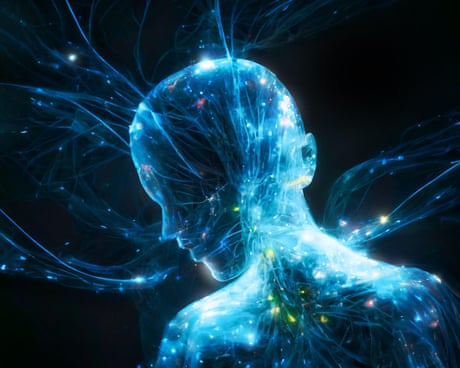
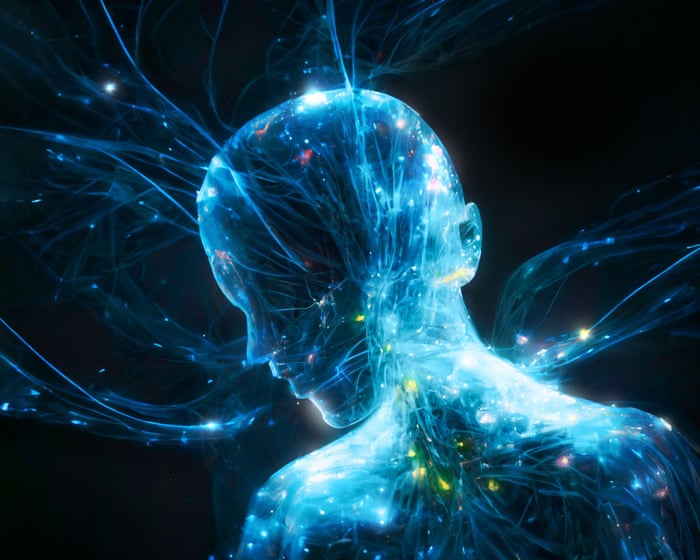
Ben Barringer, head of technology research at wealth manager Quilter Cheviot,says investors are ‘shunning’ the software market due to uncertainty over AI’s potential, and the disruption it could cause:

“All innovation means there is going to be disruption at some point, and we appear to be at a significant point in that journey for software and IT services companies. The launch of the Claude Cowork agent has sent share prices of these companies into a spin, and this is hurting other tech names too.

“We are not yet at the point where AI agents will destroy software companies, especially given concerns around security, data ownership and use, but this market rout suggests the potential disruption that is on the cards for markets in the coming days, weeks and months. There is a lot of uncertainty around exactly what AI agents can do, and as such investors are choosing to shun the software market altogether, leaving nowhere to hide.

Continue reading...

© Photograph: ktasimar/Alamy

© Photograph: ktasimar/Alamy

© Photograph: ktasimar/Alamy

  •  

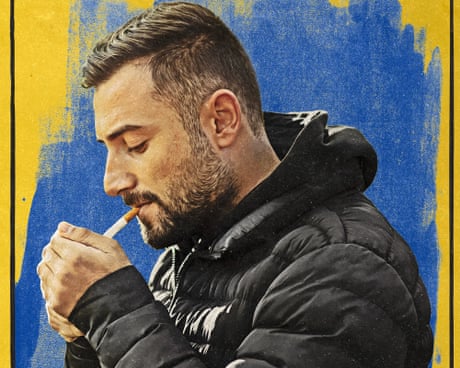
André Is an Idiot review – a riotously funny, painfully honest film about facing death

A cancer diagnosis becomes the catalyst for gallows humour, rage and hard-won emotional openness in a disarmingly frank film about how to say goodbye

There are about a zillion films – fiction, nonfiction, and everything in between – about people coping with cancer, so kudos to the team behind this one for finding a relatively fresh way to tackle the subject. San Francisco-resident André Ricciardi – a constantly wisecracking former advertising executive, a semi-reformed hard-living hedonist, and father of two teenage girls and loving husband to wife Janice – was only in his early 50s when he realised that he’d made a big mistake when he passed up the chance to have a colonoscopy test with his best friend, Lee Einhorn. Because only a year or so on from when he would have had that colonoscopy, he found out that he has stage four colon cancer which had it been spotted earlier might have been more treatable. Damn.

With assistance from director Tony Benna and a film crew, Ricciardi goes on a mission to create, among other goals, an unconventional public service announcement in the form of this film to persuade (American) viewers not to be idiots like him and get colonoscopies whenever possible after the age of 45. (In the UK, the procedure isn’t automatically offered by the NHS, although home faecal immunochemical tests are recommended every couple of years after a certain age.) At one point, Ricciardi even hooks up with his colleagues at his old advertising agency to advise on a witty PSA campaign using fruit and other everyday objects with vaguely anus-shaped orifices to raise awareness.

Continue reading...

© Photograph: A24

© Photograph: A24

© Photograph: A24

  •  

On the Future of Species by Adrian Woolfson review – are we on the verge of creating synthetic life?

A genomic entrepreneur’s guide to the coming revolution in biology raises troubling questions about ethics and safety

The prophet Ezekiel once claimed to have seen four beasts emerge from a burning cloud, “sparkling like the colour of burnished brass”. Each had wings and four faces: that of a man, a lion, an ox and an eagle. Similarly, a creature called Buraq, something between a mule and a donkey with wings and a human face, was said to have carried the prophet Muhammad on his journeys; while the ancient Greeks gave us the centaur, the mythical human-horse hybrid recently rebooted by JK Rowling in the Harry Potter books.

“The impulse to blend the anatomical traits of other species with those of humans appears to be hardwired into our imagination,” notes Adrian Woolfson in his intriguing and disturbing analysis of a biological revolution he believes is about to sweep the planet. Very soon, we will not only dream up imaginary animals – we will turn them into biological reality.

Continue reading...

© Photograph: Artelan/Alamy

© Photograph: Artelan/Alamy

© Photograph: Artelan/Alamy

  •  

Harry Potter’s Draco Malfoy becomes mascot for year of the horse in China

Mandarin transliteration of character’s name regarded as auspicious, prompting wave of memes and fan art

Draco Malfoy, one of Harry Potter’s most recognisable villains, has become an unlikely lunar new year icon across China, as fans embrace the character for the year of the horse.

In Mandarin, Malfoy’s name is transliterated as “mǎ ěr fú”. The first character means “horse” while the final character, “fú”, means “fortune” or “blessing” – a powerful symbol found across lunar new year celebrations.

Continue reading...

© Photograph: Jaap Buitendjik

© Photograph: Jaap Buitendjik

© Photograph: Jaap Buitendjik

  •  

The Investigation of Lucy Letby review – this sensationalist take isn’t what this awful case needs

The broad-brush, emotive telling of the questions around the neonatal nurse’s conviction uses arrest footage that her parents have said ‘would likely kill us’ if they watched. Did her mother’s howl of distress need to be broadcast?

The Investigation of Lucy Letby is at least the fifth documentary that has been produced in the wake of the neonatal nurse’s convictions in 2023 and 2024 on seven counts of murder and seven of attempted murder of babies in her care at the Countess of Chester hospital. Probably the best of them was ITV’s Lucy Letby: Beyond Reasonable Doubt? last summer. It did a fine job of meticulously explaining the evidence against her – and why a growing body of experts believe that at the very least her conviction on the basis of what was gathered is unsafe, and at most that none of the babies were murdered by her, but were victims of a chronically understaffed and mismanaged unit that might have sought to scapegoat an individual for its failings.

The Investigation of Lucy Letby does not compare in its attention to detail, preferring a broader-brush, more emotive telling of the story of either one of the most prolific female serial killers in history or one of the greatest miscarriages of justice in recent times. Its publicity has made much of the fact that it contains hitherto unseen footage of Letby’s arrest at her parents’ home. Her mother and father say they were unaware that it would be shown until Lucy’s barrister told them. “We will not watch it – it would likely kill us if we did.” When the footage is shown, you can hear her mother howl in distress as the police take Lucy away. It is an almost inhuman sound. It is hard to say what value such an inclusion adds except to warn the viewer to brace themselves for sensationalism along the way as the case is pieced together using accounts from the police, people – from both sides – directly involved with the case, Letby’s best friend Maisie and Letby’s current lawyer (not the one who represented her in court), Mark McDonald, along with media reporting from the time and tapes of her interviews with investigators.

The Investigation of Lucy Letby is on Netflix now

Continue reading...

© Photograph: Netflix

© Photograph: Netflix

© Photograph: Netflix

  •  

Six Nations form guide: how the 2026 contenders are shaping up

England are bullish, France are in flux, while Wales will be hoping just to beat Italy and avoid the wooden spoon

Fixtures: 7 Feb, Wales (h); 14 Feb, Scotland (a); 21 Feb, Ireland (h); 7 Mar, Italy (a); 14 Mar, France (a)
Last year’s finish:
2nd

Continue reading...

© Photograph: Steve Welsh/PA

© Photograph: Steve Welsh/PA

© Photograph: Steve Welsh/PA

  •  

Winter Olympics briefing: final preparations amid the noise for Milano Cortina

What to look out for as the action gets under way in Italy despite the Games not yet beginning until Friday

In my opening briefing last week, I wrote that organisers were banking on the cultural pull of Italy – its architecture, food, history and fashion – to cut through any political noise surrounding the Milano Cortina Games. So far, that has not been the case. And the Olympics have not yet officially begun.

Hundreds of demonstrators gathered in Milan’s Piazza XXV Aprile, named for the day Italy was liberated from Nazi fascism in 1945, to protest against the planned deployment of ICE agents during the Games. The ICE agents to be deployed to Milan are not from the same unit as the immigration agents cracking down in Minneapolis and other US cities.

Continue reading...

© Photograph: David Ramos/Getty Images

© Photograph: David Ramos/Getty Images

© Photograph: David Ramos/Getty Images

  •  

Celebrating the most remarkable almost-one-club players in football | The Knowledge

Plus: footballers’ weddings on live television, the most successful fictional teams, and more

  • Mail us with your questions and answers

Ian Muir played 95% of his games for Tranmere,” writes Robert Abushal. “One-club players aside, who’s the closest to 100% without being 100%?”

One-club men and women are among football’s more celebrated groups, the players who dedicated their entire career to one particular cause. Athletic Club give out the One Club Man and One Club Woman awards each year; the list of recipients include Paolo Maldini, Matthew Le Tissier and Malin Moström.

We haven’t included non-league teams, which rules out Paul Scholes (three games for Royton) and Le Tissier (Eastleigh) among others. We’ve also excluded Hamburg legend Uwe Seeler, whose one appearance for Cork Celtic was in a sponsored event.

Data on appearances for individual players can vary from source to source, particularly for older players. We made a judgment call in each case, so the figures may only be 99.82% correct. But that’s appropriate for this question, right? Right?

Continue reading...

© Composite: Getty, Alamy, Shutterstock, Action Images

© Composite: Getty, Alamy, Shutterstock, Action Images

© Composite: Getty, Alamy, Shutterstock, Action Images

  •  

Outspoken Cristian Romero brings his own form of leadership to Tottenham

The Spurs captain is driven by an internal fire and is unafraid of dropping truth bombs on the club’s ownership

Cristian Romero had been named as the Tottenham captain, a symbol of a new era, of fresh direction and hope. It was last September, the eve of the club’s Champions League return against Villarreal and it was time for him to speak to the English media. A rare appointment but one that could not be sidestepped given his rise in status.

There had to be a few nerves at Spurs because Romero was not exactly the diplomat over the course of the previous season, dropping his truth bombs, the shrapnel flying at the board and ownership, in particular. It would be a bit awkward in parts but Romero got through it. There were no unwanted headlines.

Continue reading...

© Photograph: Rob Newell/CameraSport/Getty Images

© Photograph: Rob Newell/CameraSport/Getty Images

© Photograph: Rob Newell/CameraSport/Getty Images

  •  

Women behind the lens: ‘I met 14-year-old Arti a day before her wedding. Her suicide six years later hit home’

Despite being illegal, child marriage is still common in much of India. Saumya Khandelwal, a photojournalist, followed one girl’s tragic story

In 2013, I came across a pamphlet from an organisation working on child marriage in the north-eastern India-Nepal border region of Shravasti. Statistics showed that 25% of girls in Shravasti, in Uttar Pradesh, were married by the time they reached 19. The figures were appalling, not only because of how rampant child marriage was in the region, but also because the practice is illegal in India.

I decided to visit Shravasti, which is less than 90 miles from my home town. My first impression was that in a place with high rates of migration among men, young women lived with their in-laws and managed their households while their children cried and played in their arms. After that first visit it became a stop for me every time I went home.

Continue reading...

© Photograph: Saumya Khandelwal

© Photograph: Saumya Khandelwal

© Photograph: Saumya Khandelwal

  •  

Fairphone 6 review: cheaper, repairable and longer-lasting Android

Sustainable smartphone takes a step forward with modular accessories, a good screen and mid-range performance

The Dutch ethical smartphone brand Fairphone is back with its six-generation Android, aiming to make its repairable phone more modern, modular, affordable and desirable, with screw-in accessories and a user-replaceable battery.

The Fairphone 6 costs £499 (€599), making it cheaper than previous models and pitting it squarely against budget champs such as the Google Pixel 9a and the Nothing Phone 3a Pro, while being repairable at home with long-term software support and a five-year warranty. On paper it sounds like the ideal phone to see out the decade.

Continue reading...

© Photograph: Samuel Gibbs/The Guardian

© Photograph: Samuel Gibbs/The Guardian

© Photograph: Samuel Gibbs/The Guardian

  •  

The Guide #228: Against ​my ​better ​judgment​,​ A Knight of the Seven Kingdoms ​has ​me ​back in Westeros

​In this week’s newsletter: Years of dragon fatigue and lore overload ​had me running from the Game of Thrones franchise, but this modest new chapter ​offers a reminder of how good simple storytelling can be

Don’t get The Guide delivered to your inbox? Sign up here

Just when I thought I was out … just when I thought I would no longer have that sweeping, ever so slightly irritating theme tune ringing around my head for hours on end, or feel the need to remember the difference between House Tyrell, Tully or Arryn, I suddenly find myself pulled back in to the Game of Thrones extended universe. The blame for this goes to A Knight of the Seven Kingdoms, the likably low-key Game of Thrones spin-off series about a cloth-eared hedge knight and his shrewd child squire currently ambling through its first season on HBO/Sky Atlantic.

Before its arrival, I had departed Westeros for good. My faith had first been shaken by that rushed, badly plotted final season of Game of Thrones proper, which bashed to bits six previous seasons’ worth of finely tuned political intrigue and fascinating character dynamics in a succession of endless (often badly lit) CGI-laden battles, before flambéing them in dragon fire. Worse came with House of the Dragon, a dreary, po-faced, endlessly withholding slog of a prequel series, the enjoyment of which seemed to rest entirely on whether the viewer was familiar with deep lore buried within a Westeros history book that George RR Martin wrote instead of cracking on with that sixth novel. If, like me, you were not, the show proved to be little more than a confusing conveyor belt of platinum-haired poshos glowering at each other. Oh and dragons. So many dragons.

Continue reading...

© Photograph: HBO/2025 Home Box Office, Inc. All rights reserved. HBO® and all related programs are the property of Home Box Office, Inc.

© Photograph: HBO/2025 Home Box Office, Inc. All rights reserved. HBO® and all related programs are the property of Home Box Office, Inc.

© Photograph: HBO/2025 Home Box Office, Inc. All rights reserved. HBO® and all related programs are the property of Home Box Office, Inc.

  •  

When Maga oligarchs control the platforms, it isn’t really a debate about ‘free speech’ | Rafael Behr

Moves to ban under-16s from social media should raise deeper questions about who controls democracy’s digital infrastructure

The last UK general election of the 20th century was also the first to anticipate, albeit faintly, the coming technological revolution. The 1997 Labour and Conservative manifestos both included pledges to connect schools to something they called “the information superhighway”.

That metaphor soon fell out of use, unmourned, although it contains an interesting policy implication. Roads need rules to prevent accidents. Superhighways do not sound like the kind of places where children should play.

Rafael Behr is a Guardian columnist

Guardian Newsroom: Can Labour come back from the brink? On Monday 30 April, ahead of May elections join Gaby Hinsliff, Zoe Williams, Polly Toynbee and Rafael Behr as they discuss how much of a threat is Labour from both the Green party and Reform and whether Keir Starmer can survive as leader of the Labour party? Book tickets here or at guardian.live

Continue reading...

© Illustration: Deena So’Oteh/The Guardian

© Illustration: Deena So’Oteh/The Guardian

© Illustration: Deena So’Oteh/The Guardian

  •  

Quadruple-chasing Arsenal can dream a micromanaged dream | Barney Ronay

After prevailing in a gristly physical ballet with Chelsea, Arsenal’s season has now reached a point of pre-ignition

Zamina mina. Waka, waka, hé-hé. By the end of this gruelling, bruising, deep tissue ache of a football match, it felt as though the opening 96 minutes had been staged simply as an extended tease for a startlingly carefree final 30 seconds.

Up to that point Arsenal and Chelsea had produced something that felt like the football equivalent of having your eyes descaled with a wire brush. This was a dense, gristly kind of physical ballet. Johan Cruyff once said that in football the clock is never your friend. It’s either moving too fast or too slowly. Here the clock didn’t really seem to move at all, or to be going backwards. The clock hated everyone.

Continue reading...

© Photograph: Paul Childs/Action Images/Reuters

© Photograph: Paul Childs/Action Images/Reuters

© Photograph: Paul Childs/Action Images/Reuters

  •  

Tantrums, rancid meatloaf and family silver stuffed into underpants: the delicate art of the Holocaust comedy

Making light of one of the darkest horrors of the 20th century is a risky business – but a new generation is taking ownership of family histories by making space for human foibles, says an award-winning graphic novelist

My beloved German-Jewish grandmother Gisela was not an affable person. She enjoyed laughing at her own jokes, revelling in the misfortunes of others, and telling people off. If an event combined opportunities for all three activities, so much the better.

When my father was six, he refused to eat the meatloaf that his mother had given him for lunch. Gisela took the piece of meatloaf, now rapidly turning rancid in the Zimbabwe afternoon heat, and served it to him for dinner, and breakfast, and every subsequent meal until he forced himself to eat it. It was the late 1950s – tyrannical parenting was de rigueur, and uneaten meatloaf was the hill that Gisela was willing to die on.

Continue reading...

© Illustration: Astrid Goldsmith

© Illustration: Astrid Goldsmith

© Illustration: Astrid Goldsmith

  •  

The Stunt Man review – Peter O’Toole runs amok in a gleefully deranged Hollywood satire

Richard Rush’s cult 1980 comedy-drama turns film-making into a battlefield, with O’Toole’s imperious director blurring art, war and cruelty in a performance of lasting menace

Richard Rush’s 1980 comedy was always one of the most distinctive items in Peter O’Toole’s filmography, a witty performance as an autocratic movie director that earned him one of his many (unconverted) Oscar nominations. After 46 years, The Stunt Man looks in some ways like a B-side to Lawrence of Arabia, about a possibly, definitely crazy person whose innate gift for leadership is going to endanger the troops much more than himself.

It’s a high-concept satire of … what, exactly? Of the movie business with all its hubris and conceit? Yes, it’s perhaps also an anti-war satire – although it’s more a satire of cinema’s inability to be anti-war when the movies have a vested interest in making war look exciting. But the black comedy and the raucousness are interleaved with weird, fierce stabs of extended seriousness and even anguish.

Continue reading...

© Photograph: Cinematic/Alamy

© Photograph: Cinematic/Alamy

© Photograph: Cinematic/Alamy

  •  

Crux by Gabriel Tallent review – a passionate portrait of teenage climbers

The follow-up to My Absolute Darling, this tale of best friends who dream of a better life features exquisite sports writing and a lovable heroine – but the plotting is unconvincing

Tamma and Dan are 17-year-old best friends growing up in a California desert town blighted by the strip-mall nihilism of late capitalism. They’re poor. They’re unpopular. Their families are a wasteland. But they have each other and their great shared passion: trad rock climbing. Whenever they can, they head to a climbing route – sometimes a boulder at the edge of a disused parking lot, sometimes a cliff an hour’s hike into a national park – and climb, often with no gear but their bloodied bare hands and tattered shoes.

This is the premise of Crux, the second novel from Gabriel Tallent, the author of the critically acclaimed My Absolute Darling. At its heart, it’s a sports novel, and Tallent’s prose here is precise and often exquisite, inching through a few seconds of movement in a way that reflects the unforgiving nature of climbing. We get a lot of closeups of granite and faint half-moons in rock that suddenly become “the world’s numinous edge”. The language of climbing – a dialect of brainy dirtbags – is a gift to the writer. Tallent’s characters talk about “flashing bouldering problems” and “sending Fingerbang Princess”; a list of routes with “Poodle” in the title includes Poodle Smasher, Astropoodle, Poodle-Oids from the Deep, A Farewell to Poodles, and For Whom the Poodle Tolls. Tallent also has an extraordinary gift for descriptions of landscape; a road is “overhung with stooping desert lilies, tarantulas braving the tarmac in paces, running full out upon their knuckly shadows, the headlights smoking with windblown sand”.

Continue reading...

© Photograph: VAWiley/Getty Images
© Photograph: VAWiley/Getty Images
© Photograph: VAWiley/Getty Images

  •  

Wildlife photographer of the year – people’s choice 2026

A shortlist of 24 images has been selected for the wildlife photographer of the year people’s choice award. You can vote for your favourite image online. The winner will be announced on 25 March and shown from that date as part of the overall wildlife photographer of the year exhibition, which runs until 12 July at the Natural History Museum in London

Continue reading...

© Photograph: Joseph Ferraro/Joseph Ferraro (USA)

© Photograph: Joseph Ferraro/Joseph Ferraro (USA)

© Photograph: Joseph Ferraro/Joseph Ferraro (USA)

  •  

A moment that changed me: I shaved off my hair – and immediately became an invisible woman

Strangers used to open doors, help lift my pram and greet me with approval when I looked ‘like a mum’. After one simple haircut, I was treated very differently

In November 2000, two weeks after giving birth to my first and only child, I found myself collapsed in bed, breastfeeding in front of Top of the Pops, hair matted, sheets dirty, surrounded by sick-soaked muslin rags. I liked it. Or at least, it felt like a perfectly reasonable thing to be doing, until Madonna – who had given birth to Rocco Ritchie only three months earlier – appeared on the screen in a cropped leather jacket, belly bared, sexy-dancing to Don’t Tell Me. Did I feel inspired? Resentful? Brimming with pity for this attention-seeker? For sure, it was all three.

As the weeks wore on, I began to see how it might be possible to shower, put on actual clothes and maybe even pop to the corner shop. Occasional visits to cafes, museums and other warm, baby-friendly spaces soon followed and stopped me from feeling as if I had fallen into a well of loneliness.

Continue reading...

© Photograph: Courtesy of Anouchka Grose

© Photograph: Courtesy of Anouchka Grose

© Photograph: Courtesy of Anouchka Grose

  •  

‘Demand has increased, without a doubt’: the shocking rise of personal protection dogs

Pets trained to bite, hold and release on command are growing ever more popular in the UK. But why – and at what cost to the animals and their owners?

Even if you’re not afraid of dogs, you might be a little intimidated by Butch Cassidy. His tail may be wagging, but the Belgian shepherd weighs 40kg and moves with awesome agility. Even a casual brush of his body could knock you off your feet if you weren’t expecting it. “I don’t for a minute think he’s going to bite anyone,” said his owner Grahame Green earlier. “Although he would, if I asked him to.” Now Green’s about to demonstrate.

He brings Cassidy to heel, and gets him to sit. Facing them is another man, Florin, already braced and wearing a protective arm sleeve. The dog is visibly quivering with excitement, so keen is his anticipation for what comes next. Green gives a one-word command, in German. Cassidy darts forward, an auburn arrow, and in that split-second clamps on to Florin’s forearm. Florin is engaging every muscle to remain upright, but Cassidy does not let go until Green gives the word.

Continue reading...

© Photograph: Ali Smith/The Guardian

© Photograph: Ali Smith/The Guardian

© Photograph: Ali Smith/The Guardian

  •  

On a street in Minneapolis, two versions of masculinity clashed. One anchored in fear, the other in care | Alexander Hurst

Alex Pretti had courage and empathy. This, not Maga’s conception of male power, is what we must teach young men

The first thing that grabbed me about the Rapture’s 2011 song It Takes Time to be a Man was the warbly, analogue fuzz of its recurring guitar and piano riff. Once that drew me in, what kept me listening were the lyrics’ hard-marriage of masculinity and empathy. In the final verse, Luke Jenner tells us that: “Well there’s room in your heart now / for excellence to take a stand / And there’s tears that need shedding / it’s all part of the plan”.

For the past year, rightwing voices have waged war on empathy. According to Elon Musk, empathy is “the fundamental weakness of western civilisation”. Others go further, calling it “toxic”, “suicidal” and even “sinful”. Certainly, the macho wing of the Maga right sees no place for it amid its (mis)appropriation of medieval history and imagery that is visible everywhere from the face paint and horned headdress of the “QAnon shaman”, convicted for his role in the US Capitol siege, to the tattooed arms and body of Donald Trump’s secretary of war, Pete Hegseth.

And yet, consider the ideal of chivalry held by medieval knights: generosity and suspicion of profit, courtesy, honesty and the bind of your word, hospitality, abiding by the rules of combat and granting mercy to your adversary – whose life a knight takes only as a last resort. I say this not because I think the medieval knight should be the new standard for modern men, but to point out that Maga men would fail, miserably so, to live up to their own ideals.

Alexander Hurst is a Guardian Europe columnist. H​is memoir, Generation Desperation​, is published in January 2026

Do you have an opinion on the issues raised in this article? If you would like to submit a response of up to 300 words by email to be considered for publication in our letters section, please click here.

Continue reading...

© Photograph: Roberto Schmidt/AFP/Getty Images

© Photograph: Roberto Schmidt/AFP/Getty Images

© Photograph: Roberto Schmidt/AFP/Getty Images

  •  

I’m married, Pakistani – and I don’t want children. That doesn’t make me broken | Fizza Abbas

I live in a country where a woman’s value is often measured by motherhood, but for me and many others fulfilment simply looks different

I booked an online appointment with a gynaecologist in Karachi during the pandemic. I had a severe urinary tract infection and needed immediate relief. Everything felt routine at first: the doctor joined the video call late, held her phone awkwardly and asked about my symptoms. I explained, she prescribed medication, and then came the expected questions: Was I married? For how long? Any children? When I said “no,” her tone shifted as she asked, “Bachay tou chaihiye na aap ko?” (You do want children, right?). It felt subtly menacing – the assumption was clear: not wanting kids meant something was wrong.

What shocked me more was my own response. “Ji, ji, bilkul,” (Yes, yes, of course) I mumbled. Later, I was furious with myself for crumbling under pressure – for not being honest.

Continue reading...

© Photograph: Arif Ali/AFP/Getty Images
© Photograph: Arif Ali/AFP/Getty Images

© Photograph: Arif Ali/AFP/Getty Images

  •  

Zero net migration would shrink UK economy by 3.6%, says thinktank

Jump of £37bn in budget deficit by 2040 would force government to increase taxes, NIESR predicts

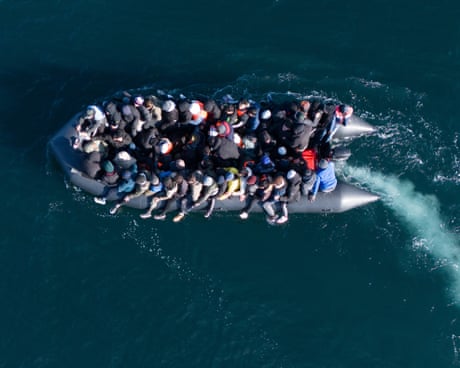
The UK economy would be 3.6% smaller by 2040 if net migration fell to zero, forcing the government to raise taxes to combat a much bigger budget deficit, a thinktank has predicted.

The National Institute of Economic and Social Research (NIESR) said falling birthrates in the UK and a sharp decrease in net migration last year had led it to consider what would happen if this trend continued to the end of the decade.

Continue reading...

© Photograph: Amer Ghazzal/Alamy Stock Photo/Alamy Live News.

© Photograph: Amer Ghazzal/Alamy Stock Photo/Alamy Live News.

© Photograph: Amer Ghazzal/Alamy Stock Photo/Alamy Live News.

  •  
❌