↩ Accueil

Vue lecture

World Cup draw reaction, Q&A and fixture schedule to come – matchday live

⚽ Reaction to the draw and pre-match news
Fixtures | Tables | Read Football Daily | Mail us

Kári Tulinius has messaged in to say:

“Given that eight out of twelve third-place teams will get to the knockout stage, four points should be enough to get through. Given the potential disparity in quality between France, Senegal and Norway on the one hand, and one of Bolivia, Suriname and Iraq on the other, it’s not unlikely we’ll get a group where the third place team has four points and a positive goal difference. It could be the Group of Everybody Lives. The era of group stage drama may be over.”

Continue reading...

© Photograph: Guerin Charles/Abaca/Shutterstock

© Photograph: Guerin Charles/Abaca/Shutterstock

© Photograph: Guerin Charles/Abaca/Shutterstock

  •  

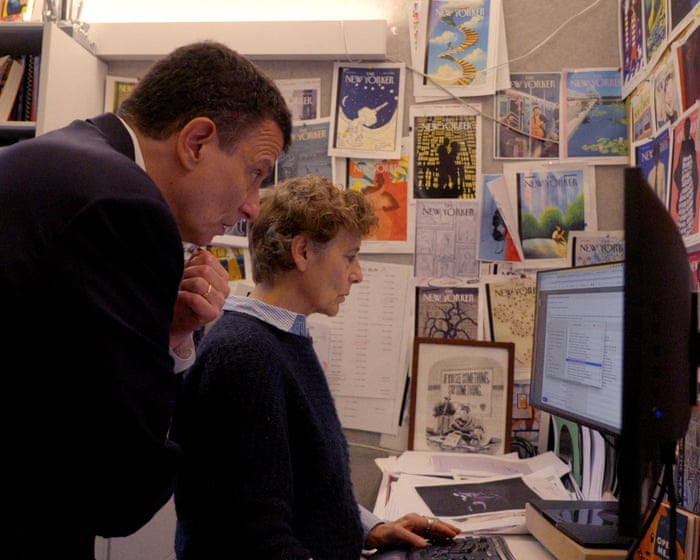
The New Yorker at 100: Netflix documentary dives inside a groundbreaking magazine

Film-maker Marshall Curry pulls back the curtain on the beloved institution in a revealing and celebratory new film

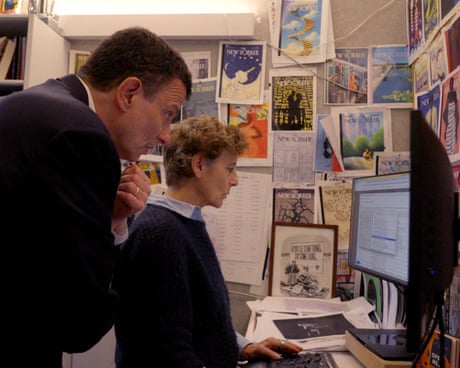
When young film-makers ask Marshall Curry what makes a documentary idea, he tells them: “There are some stories that make great New Yorker articles, but they’re not movies.” It was only a matter of time before the director found himself testing his own wisdom with The New Yorker at 100, a new Netflix film about the magazine. “Somebody said to me that trying to make a 90-minute movie about the New Yorker was like trying to make a 90-minute movie about America. Ken Burns does that with one war.”

The film pulls back the curtain on the mystical media shop. Curry and his crew spent a year rummaging through the archives, listening in on production meetings, shadowing famous bylines – none more venerated in the industry than editor David Remnick, the magazine’s abiding leader. Curry had hoped to make a meal out of staffers pushing to meet the February 2025 publishing date, the magazine’s centennial anniversary issue, but the scenes he found didn’t quite approximate anything from the boiler room-centered dramas of film fiction or even The September Issue doc on Anna Wintour’s clannish Vogue operation. “I wanted to see people running around each other and saying, ‘We’ve got to get this thing done before the deadline!’” Curry says. “But they don’t do that.”

Continue reading...

© Photograph: Courtesy of Netflix

© Photograph: Courtesy of Netflix

© Photograph: Courtesy of Netflix

  •  

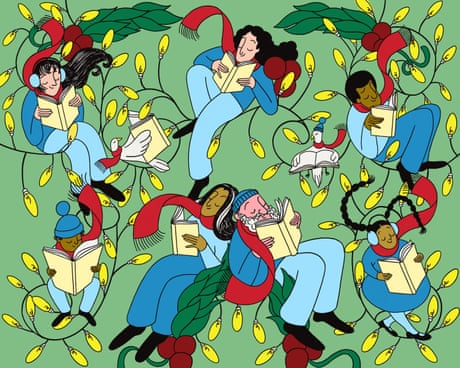
The best books of 2025

New novels from Chimamanda Ngozi Adichie and Ian McEwan, plus the return of Slow Horses and Margaret Atwood looks back … Guardian critics pick the must-read titles of 2025

Guardian fiction editor Justine Jordan picks the best of the year, from Chimamanda Ngozi Adichie’s Dream Count to Thomas Pynchon’s return, David Szalay’s Booker winner and a remarkable collection of short stories.

Continue reading...

© Illustration: Debora Szpilman/The Guardian

© Illustration: Debora Szpilman/The Guardian

© Illustration: Debora Szpilman/The Guardian

  •  

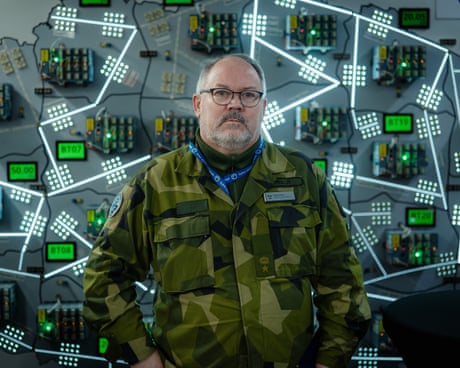
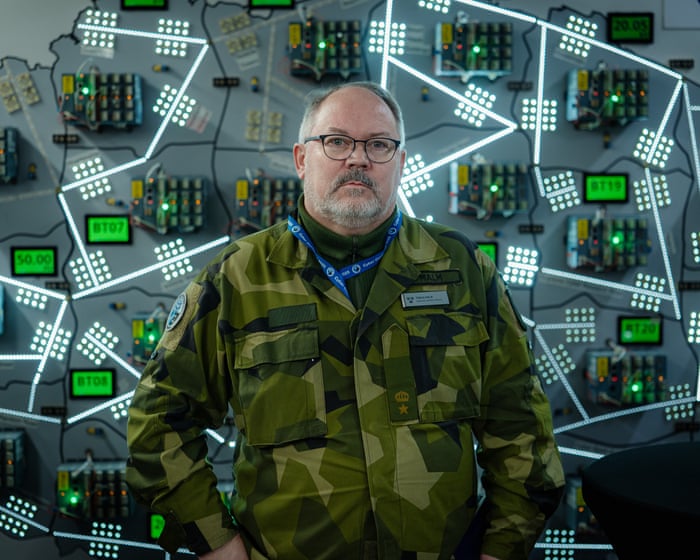
Harbadus attacks Andvaria: cyber war game tests Nato defences against Russia

Power blackouts, public chaos and loss of communication with space were all thrown at troops in seven days

Russia and China were barely mentioned, but they were the threats in everyone’s minds in Tallinn this week, where Nato hosted its largest ever cyber war game.

The goal of the war game, conducted 130 miles from the Russian border in Estonia, was to test the alliance’s readiness for a rolling enemy assault on civilian and military digital infrastructure.

Continue reading...

© Photograph: Tanel Meos/The Guardian

© Photograph: Tanel Meos/The Guardian

© Photograph: Tanel Meos/The Guardian

  •  

‘They can’t take away your imagination and creativity’: Nazanin Zaghari-Ratcliffe on how sewing helped her in Iran jail

Zaghari-Ratcliffe made clothes for her daughter while waiting for her eventual release. Now, the idea of creativity as a form of resistance is the theme of a new collaboration between London’s Imperial War Museum and the fabric department of Liberty.

When Nazanin Zaghari-Ratcliffe returned home to London after six years of arbitrary detention in Iran, she brought back with her a small patchwork cushion. Pieced together from scrap material and made with the single sewing machine available in the prison, it was the product of a communal craft circle.

“It’s something very, very precious to me,” she said. So precious, in fact, that she has worked on a new collaboration between London’s Imperial War Museum (IWM) and the fabric department of Liberty, creating three new prints that explore experience as a prisoner.

Continue reading...

© Photograph: Liberty

© Photograph: Liberty

© Photograph: Liberty

  •  

BBC showing tennis’s new Battle of the Sexes will just offer up opportunity to belittle women’s sport | Barney Ronay

The match between Aryna Sabalenka and Nick Kyrgios opens up a direct channel between the BBC of old and a world of toxic internet hatred

It’s always best to take a sceptical view of the constant flow of BBC-bashing newspaper stories, which are often simply bogus outrage expressed for commercial gain. Even the war-on-woke, cod-ideological stuff – Clive Myrie INSISTS hamsters can breastfeed human robots – the bits that make you want to smear your face with greengage jam and weep for England, our England, with its meadows, its shadows, its curates made entirely from beef. Even these come from a hard, transactional place.

Basically, it’s the licence fee. The BBC is free at the point of delivery, but paid for by a national levy. The BBC is also a direct commercial competitor to every other form of legacy media, all of which are trying to find ways to survive and recoup revenue.

Continue reading...

© Illustration: David Lyttleton/The Guardian

© Illustration: David Lyttleton/The Guardian

© Illustration: David Lyttleton/The Guardian

  •  

Crystal Palace fans are literally fighting each other. How has it come to this?

Clashes between rival factions are the culmination of a long-running feud involving claims of racism

It should have been a night for Crystal Palace supporters to savour. About 1,500 officially made the trip to Strasbourg for their second away match of the Conference League group stage last week, although plenty more had gathered in the pretty Alsatian city famous for its expansive Christmas market.

Yet while most were enjoying being part of Palace’s first European campaign after May’s FA Cup win, “a tiny majority” – as the club’s statement the following day described them – had different ideas. Footage of bottles and chairs being thrown as two rival groups of supporters of the same club clashed before the game in one of the city’s squares went viral on X. “Palace fans fighting each other in Strasbourg,” read the message, not surprisingly sparking widespread confusion.

Continue reading...

© Photograph: Tom Jenkins/The Guardian

© Photograph: Tom Jenkins/The Guardian

© Photograph: Tom Jenkins/The Guardian

  •  

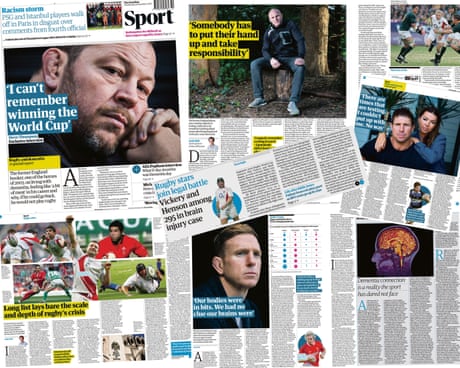
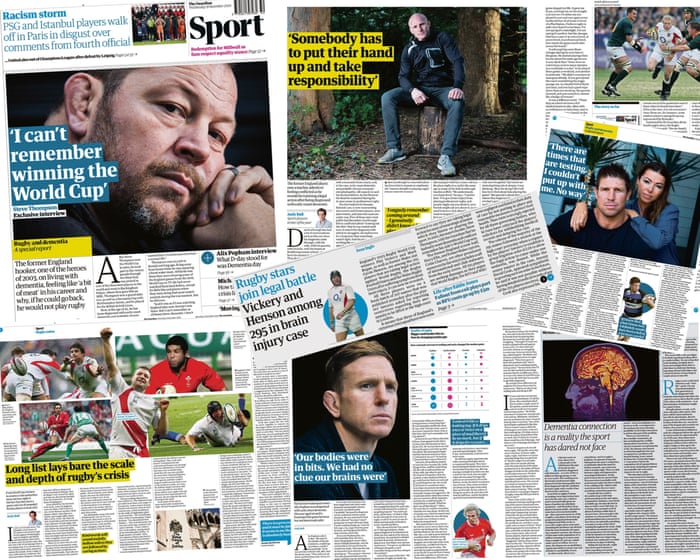
Five years on: rugby’s brain damaged players wait and wait for the help they need

In 2020 Steve Thompson revealed he could not remember winning the Rugby World Cup and since then his case and others have been caught up in a warren of legal argument

The Royal Courts of Justice are a warren. They were built piecemeal over 125 years of intermittent construction, wings were added, blocks were expanded and then joined by a web of twisting staircases and long corridors. You navigate your way to whichever corner of it you have business in by checking the tiny print on the long daily case lists that are posted in the lobby early each morning, when the building always seems to be full of people hurrying in the other direction. For the last three years, three separate sets of legal action about brain damage in sport have been slowly making their way through here, lost in the hallways.

One is in football, one is in rugby union, one is in rugby league. The same small firm, Rylands Garth, is behind all three. Sometimes these hearings take place in the modern rooms of the east block, where the carpet is peeling and the roofs are gap-toothed with missing panels, and sometimes they take place in the cold old stone rooms off the great hall, which are wood-cladded, and contain rows and rows of heavy leather-bound books. Progress is slow. Events often go unreported.

Continue reading...

© Composite: The Guardian

© Composite: The Guardian

© Composite: The Guardian

  •  

Brian Cox on Tom Stoppard’s sensational Rock’n’Roll: ‘I looked through the curtain and saw Mick Jagger and Václav Havel’

The actor, who starred as a Marxist academic in the acclaimed 2006 play at the Royal Court, remembers an astonishing writer of ideas and elegance

By the time I was cast in Rock’n’Roll in 2006 I had been following Tom for years. I saw Rosencrantz and Guildenstern Are Dead when it came to London in 1967 with the wonderful Graham Crowden as the Player King. It was a big sensation. The Real Thing was a great play and Arcadia was extraordinary.

Rock’n’Roll was at the Royal Court in London, directed by Trevor Nunn, and starred Rufus Sewell as Jan, a Czech student who returns to Prague in 1968. I played Max, a Marxist academic. It was a fascinating experience, because there were two plays there: the play about Sappho, the Ancient Greek poet, and the play about the Soviet takeover in Czechoslovakia.

Continue reading...

© Photograph: Lucas Jackson/Reuters

© Photograph: Lucas Jackson/Reuters

© Photograph: Lucas Jackson/Reuters

  •  

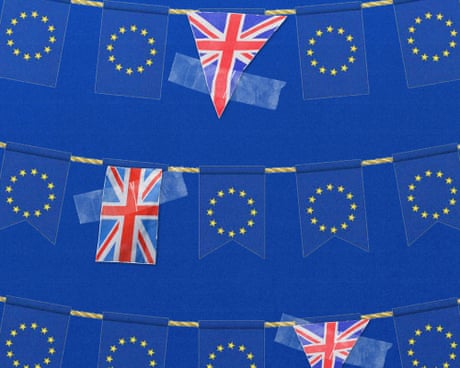
‘The only idea around’: will Labour return to a customs union with the EU?

The desperate search for economic growth is pushing the party to confront the issue that dare not speak its name

For much of the last week, Keir Starmer’s government has been suggesting that a closer relationship with Europe will be a more prominent part of his agenda in the future.

But it was a little-noted personnel change that might prove the most telling shift: Nick Thomas Symonds, the minister in charge of EU negotiations, was promoted to full cabinet rank.

Continue reading...

© Composite: Guardian Design/Getty Images/iStockPhoto

© Composite: Guardian Design/Getty Images/iStockPhoto

© Composite: Guardian Design/Getty Images/iStockPhoto

  •  

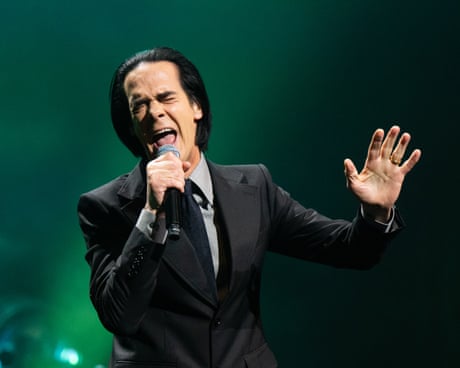
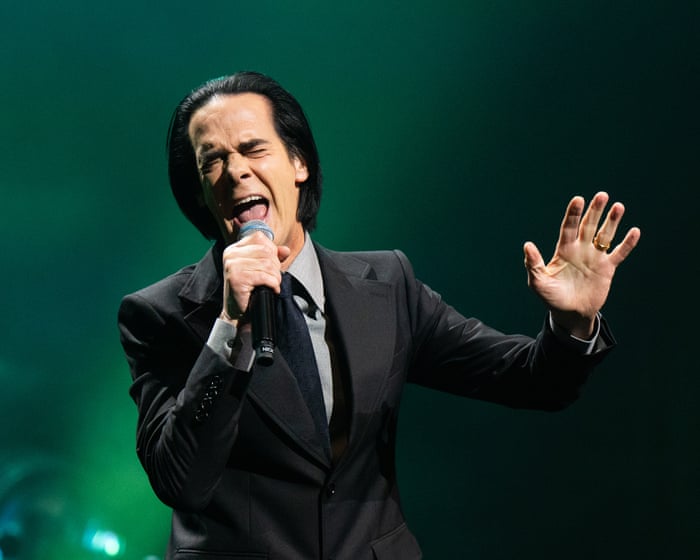
Nick Cave’s Veiled World: the starry tale of how sometimes the devil doesn’t have the best tunes

This documentary on the musician interviews everyone from Flea to … Rowan Williams. It’s a thoughtful take on his songs and Christianity

Devouring the new Nick Cave documentary on Sky, I am reminded how critics go wild for arty musicians who constantly change direction and dabble in everything. This is its own kind of myth. I know plenty of artists who keep moving – one week they’re sewing fish scales on to jackets, the next they’re painting mirrors or putting seahorses in samovars. The problem is, no one cares. If poet and ceramicist Nick Cave didn’t also write classic songs, he’d just be a local weirdo. I definitely wouldn’t buy a hardcover transcription of conversations he’d had with a mate about God. I’m glad I did, though.

The documentary, Nick Cave’s Veiled World (Saturday 6 December, 9pm, Sky Arts), is timed to promote the TV adaptation of his filthy novel The Death of Bunny Munro. It’s a glorious opportunity to revisit his early, intense masterpieces: electric chair confessionals, murderous duets with pop princesses, profane love songs. They’re still in my head, days later. It’s also a reminder that, in a joyfully perverse career, the assertion of his Christian faith has been his most divisive move. Audiences love biblical imagery in rock songs, provided the singer doesn’t actually believe.

Continue reading...

© Photograph: Samir Hussein/WireImage

© Photograph: Samir Hussein/WireImage

© Photograph: Samir Hussein/WireImage

  •  

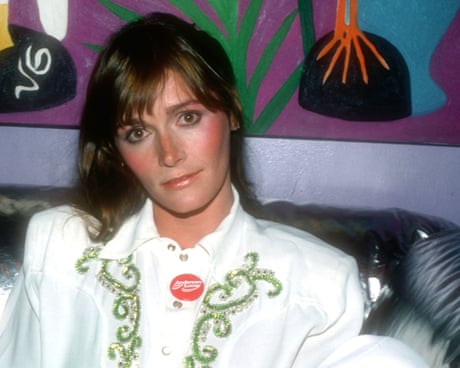
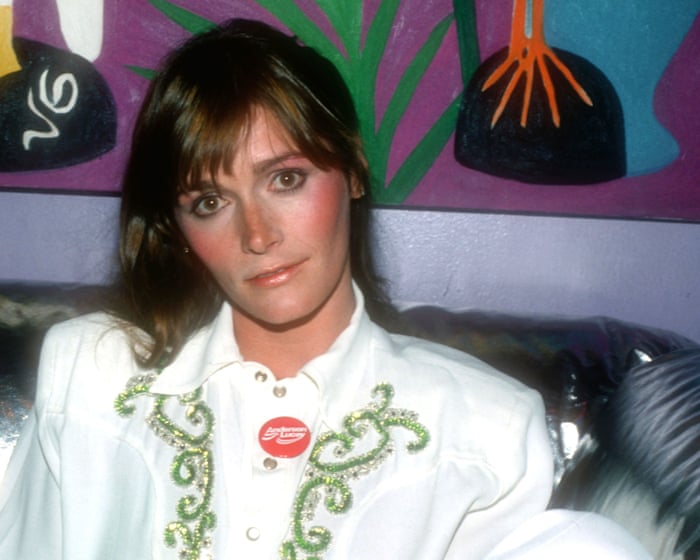
What links Amy Adams, Teri Hatcher and Margot Kidder? The Saturday quiz

From Cecil at Waitrose and Slinky at Tesco to an app designed to be deleted, test your knowledge with the Saturday quiz

1 In 1932, Australia declared war on which bird?
2 What became the world’s tallest church in October?
3 Matthew Streeton is the voice of which much-maligned rail announcement?
4 Which recent US president’s mother was called Stanley?
5 In which country has the TV crime drama Tatort run since 1970?
6 Which football club’s new stadium contributed to a loss of world heritage status?
7 Which app’s makers claim it is “designed to be deleted”?
8 Four-month-old Spencer Elden appeared on which album cover?
What links:
9
Amy Adams; Kate Bosworth; Rachel Brosnahan; Teri Hatcher; Margot Kidder?
10 Boardwalk; Rue de la Paix; Schlossallee; Shrewsbury Road?
11 Hasbani, Banias and Dan rivers; Sea of Galilee; Dead Sea?
12 Dian Fossey; Biruté Galdikas; Jane Goodall?
13 Christopher Wren; John Houblon; Matthew Boulton and James Watt; Alan Turing?
14 Cecil at Waitrose; Cuthbert at Aldi; Slinky at Tesco; Wiggles at Sainsbury’s?
15 King John (2); Henry VIII (3) and (2); John Mortimer (2); Ben Affleck (2)?

Continue reading...

© Photograph: Yvonne Hemsey/Getty Images

© Photograph: Yvonne Hemsey/Getty Images

© Photograph: Yvonne Hemsey/Getty Images

  •  

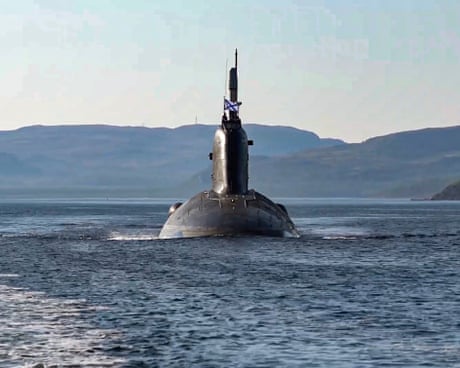
Swedish navy encountering Russian submarines ‘almost weekly’ – and more could be on the way

Moscow ‘continuously reinforcing’ its presence in the region, says Swedish chief of operations Capt Marko Petkovic

The Swedish navy encounters Russian submarines in the Baltic Sea on an “almost weekly” basis, its chief of operations has said, and is preparing for a further increase in the event of ceasefire or armistice in the Ukraine war.

Capt Marko Petkovic said Moscow was “continuously reinforcing” its presence in the region, and sightings of its vessels were a regular part of life for the Swedish navy. Its “very common”, he said, adding that the number of sightings had increased in recent years.

Continue reading...

© Photograph: Russian Defence Ministry Press Service Handout/EPA

© Photograph: Russian Defence Ministry Press Service Handout/EPA

© Photograph: Russian Defence Ministry Press Service Handout/EPA

  •  

My cultural awakening: Jonathan Groff inspired me to overcome my stammer

Watching the Broadway actor’s joyous energy, along with his calmness and openness, I was convinced that I could step out into the world and be myself

My first encounter with Broadway actor Jonathan Groff was innocuous. Stuck in the wilds of Donegal for two weeks as part of teacher training, I listened to Broadway musicals while the rest of the lads watched the Gaelic fixtures and got drunk. I stumbled upon the recent production of Merrily We Roll Along with Jonathan Groff and Daniel Radcliffe and like most of the internet, I became obsessed.

Afterwards, I went down a Groff rabbit hole tracking down interviews and cast recordings. I was drawn to how bubbly he was, how smiley he was. Groff had a joyous energy that was infectious. His voice was like melted chocolate. I both loved – and envied – his calmness and his openness to the world.

Continue reading...

© Illustration: Martin O'Neill/The Guardian

© Illustration: Martin O'Neill/The Guardian

© Illustration: Martin O'Neill/The Guardian

  •  

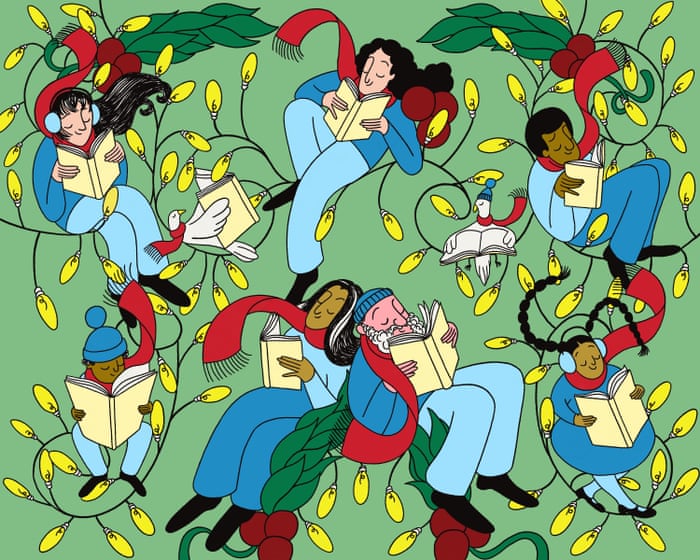
The best fiction of 2025

New novels from Ian McEwan and Chimamanda Ngozi Adichie, a high-concept debut and remarkable short stories are just some of the best new titles of the year

There aren’t many giants of 20th-century literature still writing, but 2025 saw the first novel in 12 years from American great Thomas Pynchon, now in his late 80s: Shadow Ticket (Jonathan Cape) is a typically larky prohibition-era whodunnit, set against rising nazism and making sprawling connections with the spectre of fascism today. Other elder statesmen publishing this year included Salman Rushdie with The Eleventh Hour (Cape), a playful quintet of mortality-soaked short stories and his first fiction since the 2022 assault that blinded him in his right eye; while Ian McEwan was also considering endings and legacy in What We Can Know (Cape), in which a 22nd-century literature scholar looks back, from the other side of apocalypse, on a close-knit group of (mostly) fictional literary lions from our own era. In a time of climate terror, the novel is both a fascinating wrangle with the limits of what humans are able to care about – from bare survival, to passion and poetry, to the enormity of environmental disaster – and a poignant love letter to the vanishing past.

But perhaps the most eagerly awaited return this year was another global figure: Chimamanda Ngozi Adichie, whose first novel in more than a decade, Dream Count (4th Estate), follows the lives of four interconnected women between Nigeria and the US. Taking in love, motherhood and female solidarity as well as privilege, inequality and sexual violence, it’s a rich and beautifully composed compendium of women’s experience.

Continue reading...

© Composite: Debora Szpilman

© Composite: Debora Szpilman

© Composite: Debora Szpilman

  •  

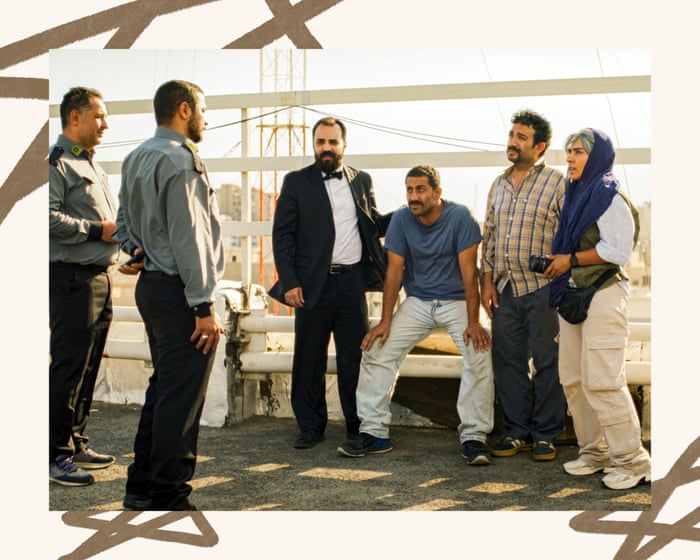
Sean Combs: The Reckoning to It Was Just an Accident: the week in rave reviews

A documentary so damning it surely marks the end for Diddy, and grotesquery of a different kind in a Palme d’Or-winning film. Here’s the pick of the week’s culture, taken from the Guardian’s best-rated reviews

Continue reading...

© Composite: LANDMARK MEDIA / Alamy Stock Photo
© Composite: LANDMARK MEDIA / Alamy Stock Photo

© Composite: LANDMARK MEDIA / Alamy Stock Photo

  •  

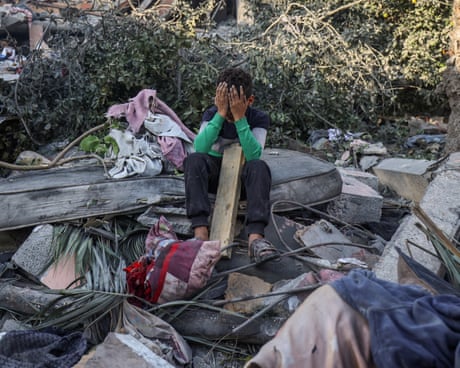
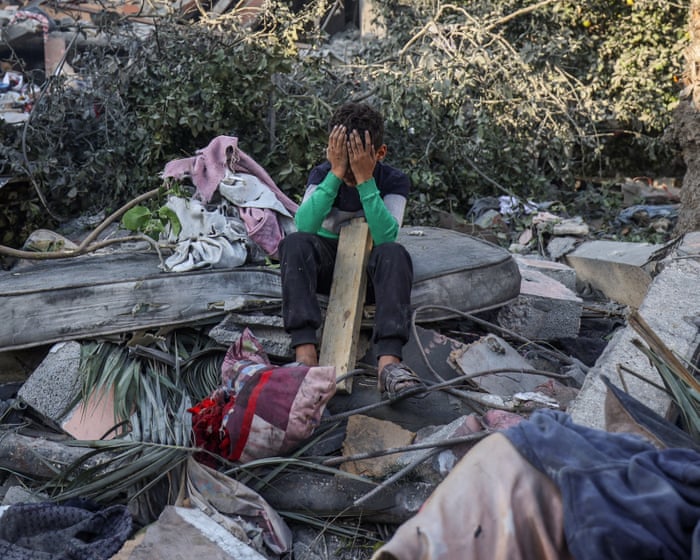
‘Bloodshed was supposed to stop’: no sign of normal life as Gaza’s killing and misery grind on

The term ceasefire ‘risks creating a dangerous illusion life is returning to normal’ for Palestinians squeezed into the remaining 42% of their land behind Israel’s ‘yellow line’

When Jumaa and Fadi Abu Assi went to look for firewood their parents thought they would be safe. They were just young boys, aged nine and 10 and, after all, a ceasefire had been declared in Gaza.

Their mother, Hala Abu Assi, was making tea in the family’s tent in Khan Younis when she heard an explosion, a missile fired by an Israeli drone. She ran to the scene – but it was too late.

Continue reading...

© Photograph: Eyad Baba/AFP/Getty Images

© Photograph: Eyad Baba/AFP/Getty Images

© Photograph: Eyad Baba/AFP/Getty Images

  •  

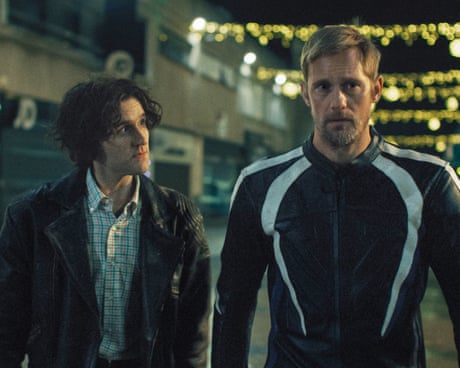
Forget festive schmaltz, the best Christmas film this year is a gay biker dom-com | Kitty Grady

Die Hard isn’t a Christmas film, claims the British public. But Pillion reminds us that the finest festive films reflect the complexities of the season

Can Die Hard – the 1988 action movie starring Bruce Willis as an NYPD detective hoping to reconcile with his estranged wife on Christmas Eve – be called a Christmas film? The annual debate had officially reached my street WhatsApp group when a happily married couple decided to launch a poll. With 18 votes against four, the result from my road was a landslide “yes”. One neighbour even shared a picture of their Die Hard tree baubles to prove the point.

But an official poll by the British Board of Film Classification has now asserted the contrary – with 44% deciding that Die Hard should not be designated a Christmas movie, against 38% in favour. To some, even with the odd tinsel-strewn tree thrown in, the gun fights, violence and hostage-taking just don’t feel festive. For an admirable 5% of respondents, it remains their favourite Christmas film of all time.

Continue reading...

© Photograph: Element Pictures/BBC Film/BFI

© Photograph: Element Pictures/BBC Film/BFI

© Photograph: Element Pictures/BBC Film/BFI

  •  

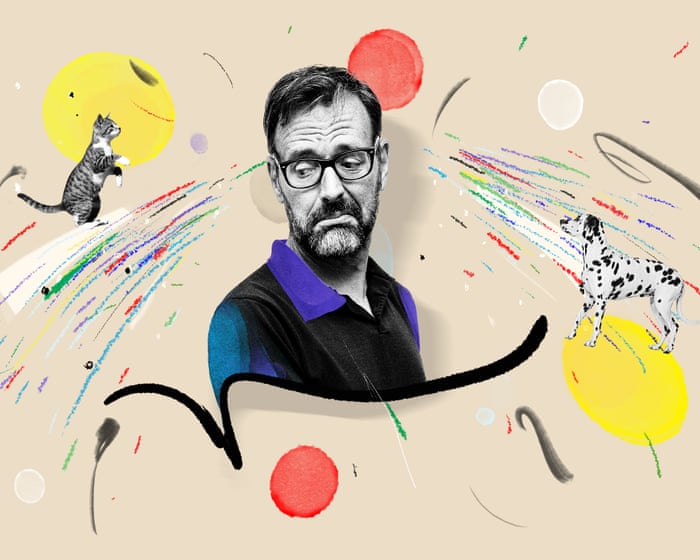
‘True activism has to cost you something’: Bridgerton’s Nicola Coughlan on politics, paparazzi and parasocial fandom

The diminutive Derry Girls star isn’t afraid to speak her mind, even if it costs her fans and followers

Back in 2008, when Nicola Coughlan was at drama school, a guy in her class swaggered over and, with all the brimming confidence of young men in the noughties, asked her, “Do the Irish think the English are really cool?” Coughlan, born in Galway, mimes processing the question. “Well,” she said, “it’s quite complicated. Like, there’s a lot of history there, between the two countries. Like, there’s a lot going on.”

Today, people are more knowledgable about the history of the English in Ireland. Coughlan is happy about that. She’s also happy about the explosion of Irish storytelling in popular culture – Normal People, Trespasses, Small Things Like These, not to mention the series that made her name, Derry Girls. And she’s proud of young Irish actors – Paul Mescal, Barry Keoghan and Lola Petticrew, to name a few. She listens to bands such as Fontaines DC, CMAT and Kneecap. “It’s such a small country and the amount of creativity that comes out of Ireland is really extraordinary.”

Continue reading...

© Photograph: Rosaline Shahnavaz/The Guardian

© Photograph: Rosaline Shahnavaz/The Guardian

© Photograph: Rosaline Shahnavaz/The Guardian

  •  

Meera Sodha’s recipe for Friede’s grandma’s zimtsterne | Meera Sodha recipes

When you try these festive, chewy German almond biscuits, you’ll see why people have kept making and gifting them at Christmas for more than 500 years

The thing I love most about these chewy, crisp, star-shaped, cinnamon-and-almond Christmas biscuits from Germany is that they date back to the 1500s. Which, much like spotting Mars in the night sky or visiting the pyramids of Egypt, makes me feel hugely insignificant in the grand scheme of things, but simultaneously awe-inspired by the power of a simple biscuit to provide joy and underpin celebrations across centuries. This particular recipe belongs to my friend Friede’s grandma, Hadmuth, and is worth continuing, I think, for at least another 500 years.

Continue reading...

© Photograph: Robert Billington/The Guardian. Food styling: Loïc Parisot Prop styling: Anna Wilkins. Food styling assistant: Sophie Pry.n Photo assistant: Kate Anglestein.

© Photograph: Robert Billington/The Guardian. Food styling: Loïc Parisot Prop styling: Anna Wilkins. Food styling assistant: Sophie Pry.n Photo assistant: Kate Anglestein.

© Photograph: Robert Billington/The Guardian. Food styling: Loïc Parisot Prop styling: Anna Wilkins. Food styling assistant: Sophie Pry.n Photo assistant: Kate Anglestein.

  •  

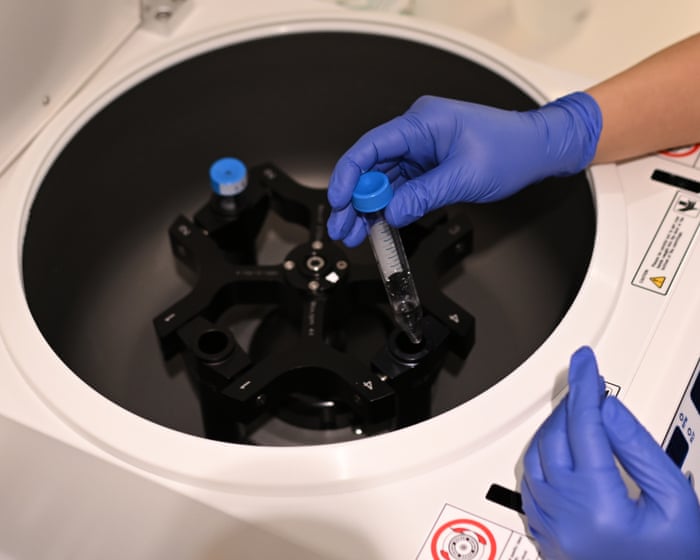
UK IVF couples use legal loophole to rank embryos based on potential IQ, height and health

British fertility clinics raise scientific and ethical objections over patients sending embryos’ genetic data abroad for analysis

Couples undergoing IVF in the UK are exploiting an apparent legal loophole to rank their embryos based on genetic predictions of IQ, height and health, the Guardian has learned.

The controversial screening technique, which scores embryos based on their DNA, is not permitted at UK fertility clinics and critics have raised scientific and ethical objections, saying the method is unproven. But under data protection laws, patients can – and in some cases have – demanded their embryos’ raw genetic data and sent it abroad for analysis in an effort to have smarter, healthier children.

Continue reading...

© Photograph: Dean Lewins/AAP

© Photograph: Dean Lewins/AAP

© Photograph: Dean Lewins/AAP

  •