 Connexion
Prince Harry at court and an Afcon victory dance: photos of the day – Monday

The Guardian’s picture editors select photos from around the world
Continue reading...
© Composite: Various

© Composite: Various

© Composite: Various
The Guardian’s picture editors select photos from around the world
Continue reading...
© Composite: Various
© Composite: Various
© Composite: Various
Economic inequality is at the heart of all humanity’s major problems, but the wealthiest refuse to confront a system that benefits them
This week, hundreds of government leaders, heads of state, and business executives are gathering at the annual meeting of the World Economic Forum (WEF) in Davos. They will be discussing solutions to the world’s biggest risks and problems.
But everything suggests that, once more, what will not be addressed at their meeting is the biggest threat to humanity and the planet: neoliberal capitalism.
Ingrid Robeyns is an economist and philosopher, and holds the chair in ethics of institutions at Utrecht University. Her most recent book is Limitarianism: The Case Against Extreme Wealth
Continue reading...
© Photograph: Michael Buholzer/EPA

© Photograph: Michael Buholzer/EPA

© Photograph: Michael Buholzer/EPA
Over 2 million documents are under DoJ review despite ‘legal obligation’ from Epstein Files Transparency Act
The law was clear: Donald Trump’s Department of Justice was required to disclose all investigative files on Jeffrey Epstein by 19 December 2025, with rare exceptions.
One month after this deadline mandated by Congress’s Epstein Files Transparency Act, however, Trump’s justice department has not complied with this law, prompting questions about when – and whether – authorities will ever release investigative documents about the late sex offender.
Continue reading...
© Photograph: Zuma via Alamy

© Photograph: Zuma via Alamy

© Photograph: Zuma via Alamy
Critics draw ‘direct line’ between content by Nick Sortor and similar figures and violent actions of federal agents
A rightwing influencer, who appeared to admit that he recently drove his truck at protesters in Minneapolis, has for years cooperated with the Trump administration even while he has been repeatedly accused of escalating conflict for video content he pumps out to 1.2 million followers on X.
Nick Sortor has received full-throated support of the Trump administration after an October arrest in Portland, and attended an October 2025 White House influencer roundtable on “antifa”.
Continue reading...
© Photograph: Anna Moneymaker/Getty Images

© Photograph: Anna Moneymaker/Getty Images

© Photograph: Anna Moneymaker/Getty Images
A store-cupboard saviour for weeknights and ends of the month that you can adapt at will
This is my favourite store-cupboard dinner when faced with the pre-shop complaints that “there’s nothing in the fridge”. The cherry tomatoes provide a welcome fresh note, but otherwise it’s a happy cupboard raid. An old Nigel Slater recipe first put me on to the idea of using yoghurt to finish a pasta dish, and it works brilliantly here to balance the harissa. Excellent for a work-from-home lunch, too.
Continue reading...
© Photograph: Ola O Smit/The Guardian. Food styling: Tamara Vos. Prop styling: Florence Blair. Food styling assistant: Lucy Ellwood.

© Photograph: Ola O Smit/The Guardian. Food styling: Tamara Vos. Prop styling: Florence Blair. Food styling assistant: Lucy Ellwood.

© Photograph: Ola O Smit/The Guardian. Food styling: Tamara Vos. Prop styling: Florence Blair. Food styling assistant: Lucy Ellwood.
In 2021, Harold Price, now 82, broke a vertebra while cycling with a friend, leaving him barely able to use his legs. Then a chance recommendation changed his life
Before the accident, Harold Price, 82, loved being on two wheels. A retired engineer from Griffithstown in Wales, he cycled about 95 miles a week on his road bike. “Not bad for 78,” he says. On other days he’d be out on one of his restored motorbikes, as he was in June 2021, with a friend. They were riding at 10 miles an hour on a narrow road when his friend pulled out in front of him. “I had nowhere to go,” Price says. He remembers his head snapping back into his helmet before he blacked out.
Price spent months in hospital. He had broken the fifth vertebra in his neck, resulting in compression of his spinal cord. He was told he wouldn’t walk again. “That was a bit of a downer, obviously,” he says. He was determined to prove the doctors wrong. “My mind told me I could get up and walk out. But when I tried, I collapsed.”
Continue reading...
© Photograph: Francesca Jones/The Guardian

© Photograph: Francesca Jones/The Guardian

© Photograph: Francesca Jones/The Guardian
President announces 30-day order after inmates also took 46 people hostage at three prisons
Guatemala’s president has declared a 30-day nationwide state of emergency to combat criminal gangs after authorities accused them of killing eight police officers and holding hostages at three prisons.
The killings occurred in the capital, Guatemal City, and surrounding areas a day after gang-affiliated inmates took 46 people hostage in the three prisons across the country to demand incarcerated gang leaders be moved to lower-security facilities.
Continue reading...
© Photograph: Edwin Bercián/AFP/Getty Images

© Photograph: Edwin Bercián/AFP/Getty Images

© Photograph: Edwin Bercián/AFP/Getty Images
The streaming giant has the data that proves we all just watch things with one hand gripping our phones, so need to have the plot explained to us over and over again
Matt Damon has a new film out, a $100m cop thriller co-starring Ben Affleck called The Rip. It is currently the most watched film on Netflix, because it is a Netflix movie. So how is Damon choosing to promote his new Netflix movie? By kind of laying into Netflix.
During an interview on The Joe Rogan Experience, Damon went to great lengths to describe the differences between going to see a film theatrically and watching it on television. Explaining his experience of watching One Battle After Another in an Imax screening, Damon said: “I always say it’s more like going to church – you show up at an appointed time. It doesn’t wait for you.”
Continue reading...
© Photograph: Erik Pendzich/Shutterstock

© Photograph: Erik Pendzich/Shutterstock

© Photograph: Erik Pendzich/Shutterstock
Gian Piero Gasperini is clearly a fan of the on-loan Aston Villa forward who shone in their 2-0 victory at Torino
Was it even a real quote, or only an approximation, a convenient lead-in to columns such as this? After Donyell Malen put the ball in the net for the second time in the first half-hour of his Roma debut, a member of his new team’s coaching staff was reportedly heard asking: “ma chi abbiamo preso?” – who on earth have we just signed?
Nobody would clarify who said this, and frankly it did not matter. The phrase was now canon, repeated in commentary and churned across the oceans of online news aggregation. It resonated because Roma’s supporters were asking the same question of a player who arrived from Aston Villa two days before.
Continue reading...
© Photograph: Fabio Rossi/AS Roma/Getty Images

© Photograph: Fabio Rossi/AS Roma/Getty Images

© Photograph: Fabio Rossi/AS Roma/Getty Images
Relentless 5-1 comeback win was ominous and made one wonder how many goals champions could score this season
Vincent Kompany had warned after their completion of a record-pace Hinrunde of the Bundesliga season that Bayern would have to “start completely from scratch” for the campaign’s second half. The message clearly got across. Poor RB Leipzig could not have known that his players would interpret that quite so literally.
On Wednesday Bayern had done the job in Köln; on Saturday in Leipzig, they gave the full manifestation of their brilliance as the evening went on. This became the numbers of the season’s first half made flesh. It is difficult to know what their hosts could have done much differently. Leipzig had been “clearly the better team” in the first 45, as Kompany had admitted. “It felt like they were twice as good as us.” His opposite number, Ole Werner, described his team’s first half as “the almost perfect performance”, and it was difficult to argue. Had Antonio Nusa, part of the excellent collective movement that led to Rômulo’s opener, taken one of the two good chances he missed in that time, then perhaps the discussion would be different.
Continue reading...
© Photograph: F Noever/FC Bayern/Getty Images

© Photograph: F Noever/FC Bayern/Getty Images

© Photograph: F Noever/FC Bayern/Getty Images
These are the federal agencies detaining people across the US – mostly, but not all, under the umbrella of the Department of Homeland Security
When the Trump administration ordered a surge of armed federal immigration enforcement personnel on to the streets of Minneapolis, the Department of Homeland Security declared it the largest operation in its history and the liberal midwestern city became Donald Trump’s latest chosen hotspot.
Such escalations mark the US president’s agenda of mass arrests and deportations from the US interior. The highest-profile efforts involve officers from multiple agencies rushing to prominent Democratic-led US cities, against local leaders’ wishes. But coast to coast, federal officers have been raiding homes, businesses, commercial parking lots – even schools, hospitals and courthouses. The efforts have delighted the president’s hardcore Make America Great Again voter base, but are also tearing families apart and spreading fear and even death on the streets and in detention.
Continue reading...
© Illustration: Photos via UCG Credit/Universal Images Group/Getty Images, Scott Olson/Getty Images, Octavio Jones/AFP/Getty Images/Guardian Design

© Illustration: Photos via UCG Credit/Universal Images Group/Getty Images, Scott Olson/Getty Images, Octavio Jones/AFP/Getty Images/Guardian Design

© Illustration: Photos via UCG Credit/Universal Images Group/Getty Images, Scott Olson/Getty Images, Octavio Jones/AFP/Getty Images/Guardian Design
Martin Luther King Jr knew that ‘whatever affects one directly affects all indirectly’. But we Americans are denying that reality
The United States seems determined to turn its back on the rest of our planetary neighbors. The Trump administration’s recent decision to withdraw from 66 international treaties, conventions and organizations is striking for the range of its rejections. Everything from the global treaty on climate change to multilateral efforts to address migration and cultural heritage, clean water and renewable energy, and the international trade in timber and minerals has been summarily dismissed as “contrary to the interests of the United States”.
It’s no surprise that an administration hellbent on physical walls around the United States would also put up such walls of indifference, as if all of these longstanding collective efforts were simply “irrelevant” to our interests as a country, as the US secretary of state, Marco Rubio, put it in a public statement. And yet, as we know, the reality of contemporary life on Earth is so profoundly otherwise. How has the truth of our interconnectedness with others elsewhere become so difficult to grasp in the United States?
Continue reading...
© Photograph: Fotosearch/Getty Images

© Photograph: Fotosearch/Getty Images

© Photograph: Fotosearch/Getty Images
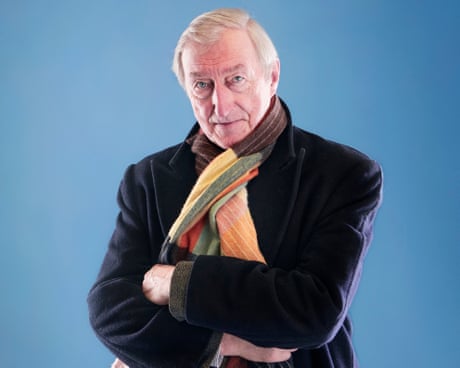
As the Booker prize-winning author prepares to publish his final novel at 80, we assess his finest work
Duffy is the first in a series of crime novels about a bisexual private eye that Barnes published under the pseudonym Dan Kavanagh. It came out the same year as Barnes’s debut novel proper, Metroland, but where that took seven years to write, this took 10 days. Not that it shows: this “refreshingly nasty” (as Barnes’s friend Martin Amis put it) crime caper is beguilingly well written, with passages that display all of Barnes’s perception and wit. The plot of reverse blackmail and the shocking climax only add to the fun.
Sample line “Two in the morning is when sounds travel for ever, when a sticky window makes a soft squeak and three Panda cars hear it from miles away.”

© Photograph: Linda Nylind/The Guardian
© Photograph: Linda Nylind/The Guardian

© Photograph: Linda Nylind/The Guardian
People across the US are moving on from the empty platitudes MLK Day often evokes – and embodying King’s words
This year, the Dr Martin Luther King Jr holiday forces Americans to grapple with the crisis and protests that have spread across the country, particularly in Minneapolis. Each year on this holiday, we reflect on King’s life and legacy. We wonder about what he might make of this moment. Though civil rights protesters in the 1950s and 60s were repeatedly met with extreme state violence, Americans are now facing a president who is troublingly more powerful than past figures such as the notorious segregationist and Alabama governor George Wallace.
Militarized and masked federal police forces, abetted by a corrupted justice department, are expansive and employ far more deadly weapons against protesters today. Civil rights leaders often sought federal intervention to combat localized racial violence in the south. But now, local and state officials, along with ordinary citizens who have been galvanized by federal violence, are combating government crackdowns against immigrants and their neighbors. Over the span of a week, ICE agents killed an American wife and mother of three, Renee Good, and shot a man from Venezuela during a traffic stop. They have arrested and detained American citizens and have terrorized neighborhoods, businesses and schools. Their irrational, unprofessional and unconstitutional actions have caused chaos, panic and harm throughout American cities. This is far from the progress King dreamed of, and he used his last years to warn Americans to refuse comfort, the status quo, and bring oppression to an end.
Continue reading...
© Composite: Getty Images

© Composite: Getty Images

© Composite: Getty Images
Fear, abuse and eroding rights for trans people have created a hostile environment in the US – can they claim asylum in the Netherlands?
Ter Apel, a small, unassuming Dutch town near the German border, is a place tourists rarely have on their itinerary. There are no lovely old windmills, no cannabis-filled coffee shops and on a recent visit it was far too early for tulip season.
When foreigners end up there, it is for one reason: to claim asylum at the Netherlands’ biggest refugee camp, home to 2,000 desperate people from all around the world.
Continue reading...
© Photograph: Judith Jockel/The Guardian

© Photograph: Judith Jockel/The Guardian

© Photograph: Judith Jockel/The Guardian
Fears of storm surges and flooding, with landslides and volcanic mudflows possible on Luzon
The Philippines is experiencing its first tropical storm of the year. Ada, also known as Nokaen, slowly developed into a tropical storm on Friday, travelling northwards along the east coast over the weekend and bringing torrential rain of up to 200mm a day and maximum wind gusts of up to 65mph near the storm’s centre.
The system is expected to remain a tropical storm until Tuesday as it tracks north-west, though weakening as a result of the incoming north-east monsoon, transitioning back to a tropical depression, which could bring further rain and strong winds enhanced by the monsoon later in the week.
Continue reading...
© Photograph: Aaron Favila/AP

© Photograph: Aaron Favila/AP

© Photograph: Aaron Favila/AP
Mané says it would have been ‘crazy’ not to finish game
Fifa president Infantino condemns ‘unacceptable scenes’
Senegal are poised to be punished for walking off the field in protest at a penalty award in the Africa Cup of Nations final. The team were led off the field by their head coach, Pape Thiaw, when Morocco, the hosts, were awarded a penalty in the eighth minute of stoppage time after a video assistant referee review, shortly after Senegal had a goal ruled out.
Play resumed 16 minutes later when the players returned, with Brahim Díaz missing the penalty and Senegal going on to win in extra time thanks to a spectacular strike from Pape Gueye.
Continue reading...
© Photograph: Mosa’ab Elshamy/AP

© Photograph: Mosa’ab Elshamy/AP

© Photograph: Mosa’ab Elshamy/AP
An exploration of what constitutes the literary arts – plus all the ‘troubled hearts’ and demons that accompany it – through the lens of Shakespeare’s Hamlet
Now, Mother, What’s the Matter?
Only the monsters do not have troubled hearts.
Life is for troubled hearts. Art is for troubled
hearts. For my whole life, Hamlet has been
a bridge between. Hamlet’s ‘Now, mother,
what’s the matter?’ is life on earth. Something
is always the matter, and not just for mothers.
(As I write this, the Angelus rings.) Every
character in Hamlet is troubled, there are
no monsters in it. I render unto Caesar
the things that are Caesar’s — everything is
troubled there and, if I am lucky, Caesar
is troubled. I render unto God the things
that are God’s and feel — want to feel? Do feel —
that God is troubled. I also render unto art.
But I have no idea what art is. What
Edward Thomas’s ‘Adlestrop’ is. What
the luminous chaos of The Portrait of
a Lady is. What The Pilgrim’s Progress is.
My feet knew the way before I opened
the book: that just before the gate to heaven
is yet another hole to hell.

© Photograph: Tristram Kenton/The Guardian

© Photograph: Tristram Kenton/The Guardian

© Photograph: Tristram Kenton/The Guardian
Caleb Williams pulled off a miracle against the Rams and Chicago looked destined for the Super Bowl. The hope wouldn’t last long
A playoff game often pivots on a single moment. The Bears thought they had theirs. Down a score, driving to keep the game alive, the Bears had the ball on the Rams’ 14-yard line. Fourth down. Four yards to pick up a fresh set of downs. A play to keep their season alive. The ball in Caleb Williams’s hands.
And then it happened.
Continue reading...
© Photograph: Nam Y Huh/AP

© Photograph: Nam Y Huh/AP

© Photograph: Nam Y Huh/AP
Putin shows no signs of ending Ukraine war and claim adds weight to accusation Trump favours Russian president
The Kremlin has announced that Vladimir Putin has been invited to join Donald Trump’s “board of peace”, set up last week with the intention that it would oversee a ceasefire in Gaza.
The Kremlin spokesperson, Dmitry Peskov, told journalists on Monday that Russia was seeking to “clarify all the nuances” of the offer with Washington, before giving its response.
Continue reading...
© Photograph: Julia Demaree Nikhinson/AP

© Photograph: Julia Demaree Nikhinson/AP

© Photograph: Julia Demaree Nikhinson/AP
As punishing wellness challenges proliferate online, I’ve decided the only sensible response is to invent a kinder – and more lucrative – alternative
I have a masochistic interest in catchily named social media self-improvement challenges, so I already knew about “75 hard” – 75 days of drinking eight pints of water, doing two 45-minute workouts, eating clean and, endearingly, reading 10 pages of nonfiction – before it made its recent comeback. Paddy McGuinness has reignited interest, crediting the regime started in 2019 by podcaster Andy Frisella for his transformation from a normal soft-bodied human into an uncanny mass of bronzed abs and pecs.
It’s inspired me to make my own changes, but not by doing 75 hard or its ilk. I’ve realised what I actually want to do is devise my own devilish self-improvement challenge. After all, I enjoy telling people what to do, and goodness knows, I could use another revenue stream. But what should mine involve? I debated an intellectual 75 hard, to transform your brain into as finely honed a machine as McGuinness’s body. Participants would pack the library like a gym in January, every table crowded with locked-in bros hyping each other up, as they struggle through Gravity’s Rainbow or Martin Heidegger’s Being and Time. “I can’t, it makes no sense! I’ve read this paragraph 12 times!” “That’s quitter’s talk. I know you’ve got another page in you, bruh – MAN UP!” Additional requirements would include sonnet composition, calculus, learning a new language and listening to In Our Time episodes on very occasional “cheat” days.
Continue reading...
© Photograph: Posed by model; simonapilolla/Getty Images/iStockphoto

© Photograph: Posed by model; simonapilolla/Getty Images/iStockphoto

© Photograph: Posed by model; simonapilolla/Getty Images/iStockphoto
Stimson Snead’s preposterous time-leaping indie starring multiple Samuel Dunnings is just about rescued by cameos from Keith David and Danny Trejo
For the sheer quantity of its gibbering, jabbering nonsense, this movie deserves some points. That, and the amusing cameo at the end from Keith David as the Simulator, AKA God, who explains to the awestruck mortals that God is an entirely free creator, rather like a self-published novelist, then grows irritated when the mortals think that being self-published is lame: “It’s not my fault if you don’t understand the industry!”
This is an exhausting indie romp on the subject of time travel, and sometimes plays like a funnier version of Shane Carruth’s time-travel classic Primer – well, slightly funnier. Samuel Dunning plays Tim Travers, a goateed scientist who has stolen nuclear materials from a terrorist group to power the time machine he has invented. He sends himself back one minute into the past with a gun to kill his younger self to investigate the time-traveller’s paradox: if he eliminates his one-minute younger self, then won’t he also disappear at that moment, popping like a soap bubble, because it means he can’t exist in the future? But given that he has to exist in the future to have set all this in motion, doesn’t it mean that this time-travelled self has to survive?
Continue reading...
© Photograph: Publicity image

© Photograph: Publicity image

© Photograph: Publicity image
Ye Olde Swiss Cottage in London was gaudy, draughty and built on a traffic island. But it was just the escape I needed
Early in my career, I was going through a difficult chapter in work and life. Having moved down to London from Glasgow, I felt socially untethered, unsure of where I belonged. I yearned to feel part of a gang like I’d done back home, but I had no clue about how to find one.
Continue reading...
© Composite: Guardian Design; Courtesy of Anita Chaudhuri

© Composite: Guardian Design; Courtesy of Anita Chaudhuri

© Composite: Guardian Design; Courtesy of Anita Chaudhuri
I was in a work-commute-collapse cycle and didn’t know what to do. Then I began sampling activities I’d previously dismissed – book clubs, line dancing, chess – and it became oddly addictive
For most of my life, I treated taste as fixed. There were things I liked and things I didn’t, and that was that. Hobbies, foods and even social situations were quietly written off with the certainty of personal preference. But sticking to that sentiment had left me in a bit of a rut.
When I moved to London, I threw myself into work: long hours, commuting and networking. In the process, I stopped making time for hobbies or trying anything new.
Continue reading...
© Photograph: Jill Mead/The Guardian

© Photograph: Jill Mead/The Guardian

© Photograph: Jill Mead/The Guardian
