↩ Accueil

Vue lecture

EU car sales grow 1.8% in 2025 with electric cars surging but Tesla loses market share – business live

Sales at Elon Musk’s carmaker plummet nearly 38% in 2025 as it loses ground to China’s BYD; gold continues to rise

Good morning, and welcome to our rolling coverage of business, the financial markets and the world economy.

Sales of new cars in the European Union rose by 1.8% last year, with electric cars making up a bigger share of the market, while Tesla sales plummeted as it lost ground to China’s BYD.

11.30am GMT: Rachel Reeves gives speech

1.15pm GMT US ADP Employment change

3pm GMMT: US Conference Board Consumer confidence for January

5pm GMT: European Central Bank president Christine Lagarde speech

Continue reading...

© Photograph: Maxim Shemetov/Reuters

© Photograph: Maxim Shemetov/Reuters

© Photograph: Maxim Shemetov/Reuters


  •  

Australian Open 2026 quarter-finals: Gauff v Svitolina, Alcaraz v De Minaur to follow – live

Live updates from the last eight at Melbourne Park
Sabalenka beats heat and Jovic | And you can mail Katy

Looking at the head-to-head, Svitolina has beaten Gauff before at the Australian Open, but that was in 2021, when Gauff was only 16 and hadn’t yet graduated to the status of double grand slam champion. Gauff has defeated Svitolina in the two matches they have played since, but they did both go to three sets. And I wouldn’t be surprised if this match goes the distance too. Svitolina is in supreme form, having won all nine of her matches in 2026.

Gauff and Svitolina have made their entrance, with the Rod Laver Arena roof closed. That’s always the case for the night session walk-outs, but we’re not sure yet if the the heat rule is in place which would mean the roof stays on for the match. It’s still 42C (!!!) at 7pm in the evening. Zverev placed his match under the roof earlier, the doubles matches are taking place under the roof on Margaret Court and the start of the wheelchair events have been postponed until tomorrow.

Continue reading...

© Photograph: Dita Alangkara/AP

© Photograph: Dita Alangkara/AP

© Photograph: Dita Alangkara/AP

  •  

Champions League permutations: who needs what from final night of fixtures?

A staggering 32 of 36 teams go into the final set of matches with their hopes of staying in the competition still alive

With seven wins from seven, Arsenal have a perfect record in the league phase. Only Bayern Munich and Inter have found the net against Mikel Arteta’s team, who dismissed Atlético Madrid 4-0 in October. The bottom side, Kairat, visit the Emirates Stadium on the final night, with Arsenal needing a draw to confirm top spot and, theoretically, the most favourable last-16 draw.

Continue reading...

© Composite: Alamy

© Composite: Alamy

© Composite: Alamy

  •  

Aiyawatt Srivaddhanaprabha: ‘It’s love and pain. Leicester is like my son, so I have to do it right’

The Leicester City chair plays down talk of another relegation but knows the mood among fans is fraught

Leicester City are hurting but Aiyawatt “Top” Srivaddhanaprabha, looking towards the pitch at the King Power Stadium, insists he shares supporters’ frustrations. He acknowledges the warm glow of their extraordinary Premier League title win almost a decade ago has long faded. He watches every game, which sometimes means tuning in from Thailand in the early hours. An 8pm kick-off in England is a 3am start in Bangkok.

“I want to see the real passion of the players and the performance,” the chair says. “When it is not there, I can’t sleep, so it’s love and pain. Leicester is like my son. So I have to do it right. Of course, a son can be naughty, a son can fail the exam, a pain in your head. The son can be top of the class, graduate, have a bad girlfriend or good wife, you never know. So I feel the same, but the love is there. The responsibility is there. The first thing for me is to identify the problem and fix it.”

Continue reading...

© Photograph: LCFC

© Photograph: LCFC

© Photograph: LCFC

  •  

The Joy of Six: unlikely Winter Olympics stars

From a cult hero ski jumper, to African bobsleigh pioneers and more, here are half a dozen unexpected heroes

Michael “Eddie the Eagle” Edwards, was the antithesis of the Olympic high-flyer. Heavily disadvantaged by his 82kg (181lb) weight – far heavier than his rivals – poor eyesight and the small matter of being entirely self-funded, he became Great Britain’s first Olympic ski jumper. He finished 67th and last at the 1987 world championships but managed to hit the qualifying standard to secure the sole British spot for Calgary. At the Games, he finished last in the normal hill (70m) and large hill (90m) events. In the normal hill, he scored 69.2 points from two jumps of 55m, while the winner Matti Nykänen scored 229.1 points from 89.5m jumps. Despite the last-place finishes, his enthusiasm captured global media attention but also lead to the “Eddie the Eagle Rule” which was introduced to tighten entry requirements and prevent similar “Olympic tourists”.

Continue reading...

© Photograph: John Downing/Getty Images

© Photograph: John Downing/Getty Images

© Photograph: John Downing/Getty Images

  •  

The Fukushima towns frozen in time: nature has thrived since the nuclear disaster but what happens if humans return?

Fifteen years after a tsunami caused the Fukushima nuclear accident, only bears, raccoons and boar are seen on the streets. But the authorities and some locals want people to move back

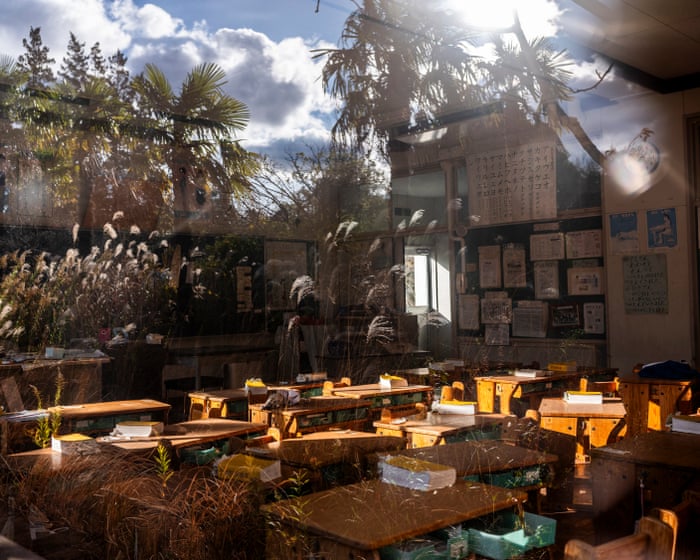
Norio Kimura pauses to gaze through the dirt-flecked window of Kumamachi primary school in Fukushima. Inside, there are still textbooks lying on the desks, pencil cases are strewn across the floor; empty bento boxes that were never taken home.

Along the corridor, shoes line the route the children took when they fled, some still in their indoor plimsolls, as their town was rocked by a magnitude-9 earthquake on the afternoon of 11 March 2011 which went on to cause the world’s worst nuclear disaster since Chornobyl.

Continue reading...

© Photograph: Kazuma Obara/The Guardian

© Photograph: Kazuma Obara/The Guardian

© Photograph: Kazuma Obara/The Guardian

  •  

Zoning in on Leith, Edinburgh – ‘It’s been a joy to watch the area reinvent itself’

The historic port district – and setting for Irvine Welsh’s Trainspotting – has evolved into a cultural and culinary hub. In the first of a new series, a local resident visits the venues powering the resurgence

Leith is Edinburgh’s port district, where people, goods and new ideas have flowed into the city for centuries. Here, the Water of Leith river meets the sea, and on bright days, when pubs and restaurants spill out to the Shore area, there’s nowhere quite like it. I moved here 13 years ago, and it has been a joy to watch the area evolve and reinvent itself. Today it’s the city’s creative heart, full of artists, musicians, designers and startups, with a thriving food and drink scene. The arrival of the tramline from Edinburgh city centre in 2023 has given it a big boost too.

Continue reading...

© Photograph: Iain Masterton/Alamy

© Photograph: Iain Masterton/Alamy

© Photograph: Iain Masterton/Alamy

  •  

Glyph by Ali Smith review – bearing witness to the war in Gaza

This second novel in a sharp duology offers a powerful interrogation of language in the age of mechanical mass destruction

Never knowingly unknowing, Ali Smith pre-empts the most likely criticism of her latest novel, Glyph, when a character says: “I’m just not sure that books that are novels and fiction and so on should be so close to real life … or so politically blatant.”

Glyph, which follows sisters Petra and Patch as they reflect on childhood attempts to grapple with the finality of death following the loss of their mother, goes further than any of Smith’s recent work in robustly answering this charge. While the Seasonal Quartet playfully anatomised the social fracture of post-Brexit Britain, and immediate predecessor Gliff dealt with the violence of the securitised state, Glyph, in its explicit engagement with the Israeli government’s apartheid and genocide in Palestine, raises the ethical stakes decisively. To engage in a Smithian pun – this is Art in the Age of Mechanical Mass Destruction.

Continue reading...

© Photograph: Isabella De Maddalena/opale.photo/eyevine

© Photograph: Isabella De Maddalena/opale.photo/eyevine

© Photograph: Isabella De Maddalena/opale.photo/eyevine

  •  

Another World review – kaleidoscopic afterlife fairytale with the dark fury of a Greek tragedy

Adorable spirits guide the dead towards reincarnation in this beautifully strange Hong Kong anime – but watch out for the gut-wrenching violence

The wonder of Studio Ghibli meets the gruesomeness of Game of Thrones and the dark fury of a Greek tragedy in this striking and deeply strange animation from young Hong Kong film-maker Tommy Kai Chung Ng. His film is a gorgeous fairytale glutted with gut-wrenching moments of violence that make it strictly not suitable for kids. In one scene, a medieval feudal lord burns peasants alive in a grain store; in another, a teenage princess lashes the back of a general she blames for her father’s death to a bloody pulp.

It opens in a place called Another World, an afterlife stopover for humans who have died, on their way to reincarnation. In this netherworld we meet a troupe of adorable pint-sized spirits called soul keepers, whose job is to guide the dead to the next life. The dead leave their unresolved resentments behind in Another World; they become knots tied in beautiful threads of red silk. The place is run by Goddess Mira, who despairs that after millennia of untying knots she has failed to eradicate human hate and cruelty. It’s a world beautifully animated in a kaleidoscope of trippy pastels, with some breathtaking images.

Continue reading...

© Photograph: Publicity image

© Photograph: Publicity image

© Photograph: Publicity image

  •  

Number of US-style ‘battering ram’ pickup trucks on UK roads has nearly doubled in a decade

Exclusive: Campaigners say ‘menacing vehicles’ are putting children at risk owing to their large front blind zones

The number of US-style pickup trucks on UK roads has almost doubled in the past 10 years, data shows.

The vehicles are more environmentally damaging than ordinary cars, and more dangerous for pedestrians and cyclists. Campaigners have said the extra-large vehicles, which are often too big for UK streets and parking spaces, are built like “battering rams”.

Continue reading...

© Photograph: Rebecca Cook/Reuters
© Photograph: Rebecca Cook/Reuters
© Photograph: Rebecca Cook/Reuters

  •  

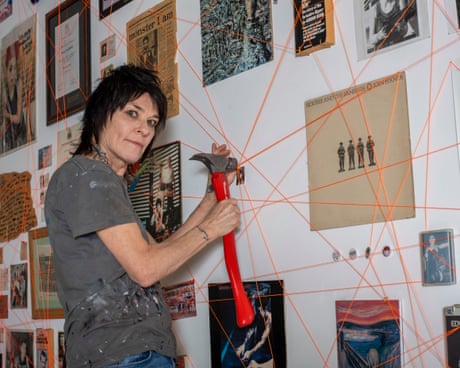
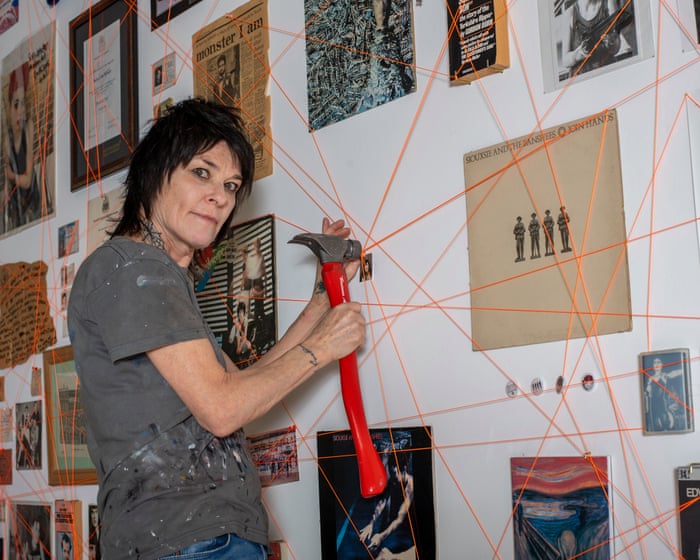
‘I box to exorcise the badness’: Sue Webster on boozy spats, her thrilling new work – and having a baby at 52

She was half of a 90s art power couple that seemed unstoppable. But they split and the trauma floored her. Now she’s back with defiant paintings celebrating her punk past – and late-career motherhood

Sue Webster is reminiscing about boozy 90s art openings. A hazy memory of Damien Hirst riding Leigh Bowery’s shoulders is surfacing, and a terrible fight with Jake Chapman at Charles Saatchi’s gallery. “It was a verbal thing but he was probably about to punch me. You’d get very drunk on the free champagne.”

Webster, and her former partner in art, romance and general punk rockery, Tim Noble, hit London in 1992 as the YBAs rose to fame. Five years later, Saatchi stopped by their cheap-as-chips live-work space in Shoreditch and, with his taxi still running outside, snapped up a light sculpture called Toxic Schizophrenia and a “shadow sculpture” titled Miss Understood and Mr Meanor. The shadow sculptures were meticulously melded pieces of junk and detritus which, when lit from one side, projected self-portrait silhouettes onto the wall. Webster says she would sometimes cry when saying goodbye to an artwork after selling it. So what does an artist do when such a long and successful partnership ends? “I wanted to unravel my brain, and work out how I ended up here,” she says.

Continue reading...

© Photograph: Jill Mead/The Guardian

© Photograph: Jill Mead/The Guardian

© Photograph: Jill Mead/The Guardian

  •  

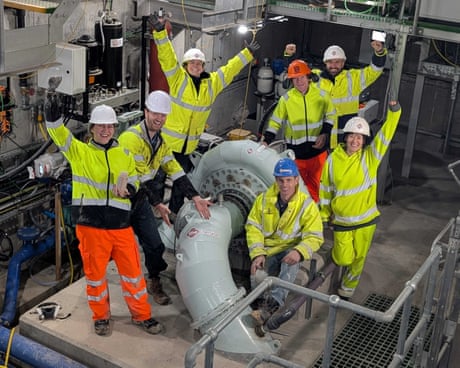
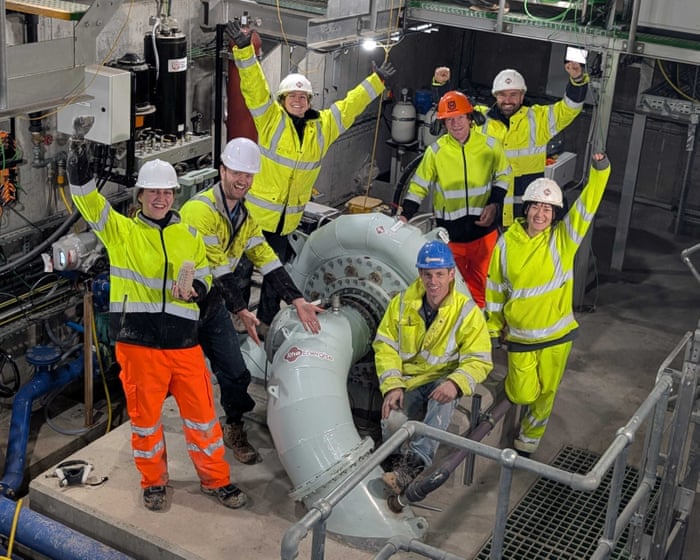
First of its kind ‘high-density’ hydro system begins generating electricity in Devon

Project employs technology that can be used to store and release renewable energy using even gentle slopes

A hillside “battery” outside Plymouth in Devon has begun generating electricity using a first of a kind hydropower system embedded underground.

The pioneering technology means one of the oldest forms of energy storage, hydropower, can be used to store and release renewable energy using even gentle slopes rather than the steep dam walls and mountains that are usually required.

Continue reading...

© Photograph: Taylor Keogh Communications/RheEnergise

© Photograph: Taylor Keogh Communications/RheEnergise

© Photograph: Taylor Keogh Communications/RheEnergise

  •  

Starmer's fraught visit to China will tell us what he really thinks of the UK's place in the world | Peter Frankopan

Does Britain have any leverage over human rights or security concerns or is it a decaying nation that cannot risk trade relations?

This week, Keir Starmer will reportedly visit China. This will be the first trip of this kind by a British prime minister since Theresa May’s three-day visit to Beijing in 2018. Since then, relations between London and Beijing have become increasingly fraught, caught between growing security concerns and deep economic interdependence. Allegations of espionage and influence operations have sharpened political and public suspicion in the UK, even as deep trade links and supply chains on which the country depends make disengagement unrealistic. As fierce debate about the recent approval for the new Chinese embassy has shown, there are strong opinions about how to best manage relations with Beijing – as well as what, precisely, constitutes a threat and what is an opportunity. The result is an uneasy balancing act in which caution and cooperation coexist, often uncomfortably.

These security concerns are grounded in recent experience. In December, the Foreign Office disclosed it had been the target of a sustained cyber-attack two months earlier that was suspected to be the work of a Chinese group known as Storm 1849. This followed investigations into alleged espionage involving parliamentary researchers and repeated warnings from security agencies about technology transfer and data exposure in sensitive industries.

Peter Frankopan is professor of global history at the University of Oxford. His most recent book is The Earth Transformed: an Untold History.

Continue reading...

© Photograph: Stefan Rousseau/Reuters
© Photograph: Stefan Rousseau/Reuters
© Photograph: Stefan Rousseau/Reuters

  •  

José Pizarro’s recipe for slow-roast celeriac with rosemary and crisp chorizo

Creamy celeriac with aromatic garlic and paprika topped with a salty-sour chorizo dressing

Celeriac is easy to ignore or overlook, but it really deserves a bit of attention in winter. January is a time for turning on the oven and cooking without having to think too much, and this is the sort of dish that more or less looks after itself while you get on with your evening. The kitchen feels warmer, the smell changes and you know that dinner is sorted. This is simple, honest food, and not remotely trying to be clever. It’s just something to put in the middle of the table, cut into and share, which is exactly what you want when the days are cold and nights are long.

Continue reading...

© Photograph: Ola O Smit/The Guardian. Food and prop styling: Kitty Coles

© Photograph: Ola O Smit/The Guardian. Food and prop styling: Kitty Coles

© Photograph: Ola O Smit/The Guardian. Food and prop styling: Kitty Coles

  •  

Starmer v Burnham: will it split Labour? – podcast

The prime minister may have seen off the challenge for the moment – but what will be the cost to his leadership? Peter Walker reports

Ever since Andy Burnham abandoned Westminster to become Greater Manchester’s first ever mayor in 2017, he has been dogged with questions about returning to parliament for the top job. He never hid his ambition to become prime minister one day – he couldn’t, really, given that he tried and failed twice to become Labour party leader. But he insisted time and again that he was perfectly happy back in his beloved north, and had no plans to get back to London.

Then on Saturday night, he finally cracked. He wrote to Labour’s ruling body to ask for permission to stand in Gorton and Denton, promising a “hopeful and unifying campaign”, in what he admitted was a risky move. Winning the byelection was not a given and he would have to give up being the mayor if he succeeded. But instead he was blocked by the committee, including Keir Starmer, from standing at all.

Continue reading...

© Photograph: Christopher Furlong/Getty Images

© Photograph: Christopher Furlong/Getty Images

© Photograph: Christopher Furlong/Getty Images

  •  

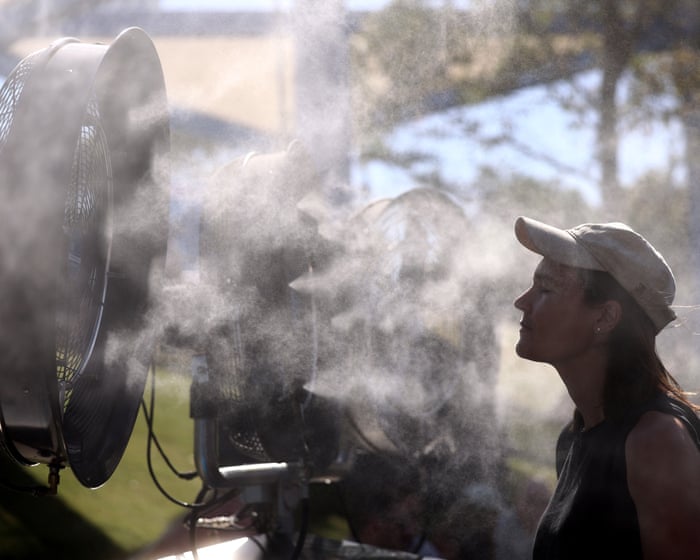
Australian Open insulates tennis from extreme heat but still faces million-dollar hit

  • Crowd numbers shrink and fans keep Melbourne Park visits brief


  • Rod Laver and Margaret Court Arenas protected by roofs and aircon

Tens of thousands of tennis fans are expected to stay away from the Australian Open on Tuesday as temperatures climb above 40C, but the Melbourne Park grand slam has largely been able to insulate itself – physically and commercially – from the effects of extreme heat.

The daytime attendance for the heat-affected Saturday was 51,048, down more than 10,000 compared with the previous and following days, and an even greater decline is expected on Tuesday given widespread publicity of the Victorian heatwave. Sales of $35 ground passes have been slow and queues at security appeared shorter than usual shortly after gates opened at 9am.

Continue reading...

© Photograph: Tingshu Wang/Reuters

© Photograph: Tingshu Wang/Reuters

© Photograph: Tingshu Wang/Reuters

  •  

California governor Gavin Newsom accuses TikTok of suppressing content critical of Trump

Newsom launched a review of the platform, despite TikTok saying a systems failure was responsible for the issue

California governor Gavin Newsom has accused TikTok of suppressing content critical of president Donald Trump, as he launched a review of the platform’s content moderation practices to determine if they violated state law, even as the platform blamed a systems failure for the issues.

The step comes after TikTok’s Chinese owner, ByteDance, said last week it had finalised a deal to set up a majority US-owned joint venture that will secure US data, to avoid a US ban on the short video app used by more than 200 million Americans.

Continue reading...

© Photograph: Andre M Chang/ZUMA Press Wire/Shutterstock

© Photograph: Andre M Chang/ZUMA Press Wire/Shutterstock

© Photograph: Andre M Chang/ZUMA Press Wire/Shutterstock

  •  

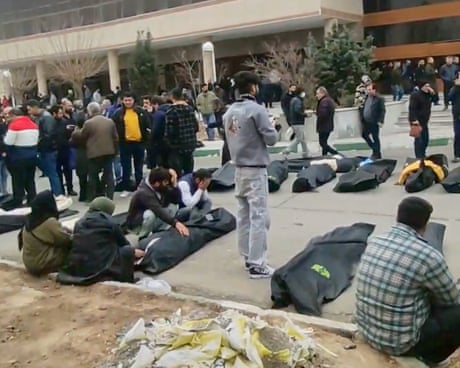
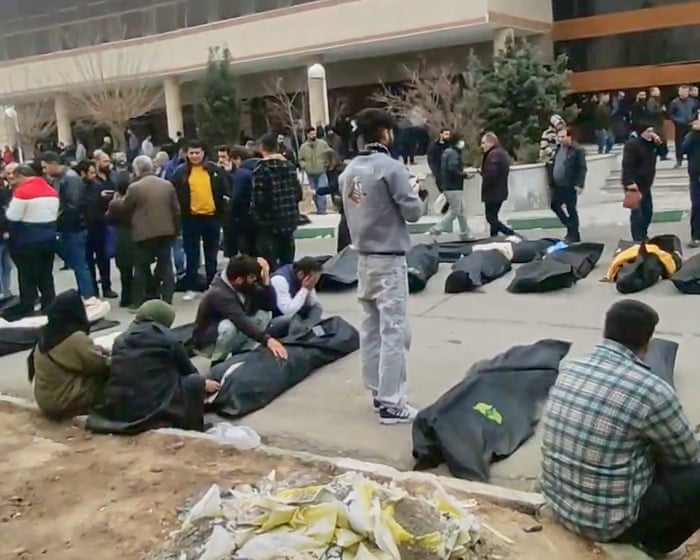
Disappeared bodies, mass burials and ‘30,000 dead’: what is the truth of Iran’s death toll?

Testimony from medics, morgue and graveyard staff reveals huge state effort to conceal systematic killing of protesters

On Thursday 8 January, in a midsize Iranian town, Dr Ahmadi’s* phone began to buzz. His colleagues in local emergency wards were getting worried.

All week, people had taken to the streets and had been met by police with batons and pellet guns. With treatment, their injuries should not have been too serious. But emergency room staff believed many wounded young people were avoiding hospitals, terrified that registering as trauma patients would lead to their identification and arrest.

Continue reading...

© Photograph: AP

© Photograph: AP

© Photograph: AP

  •  

Has the world entered an era of ‘water bankruptcy’? – podcast

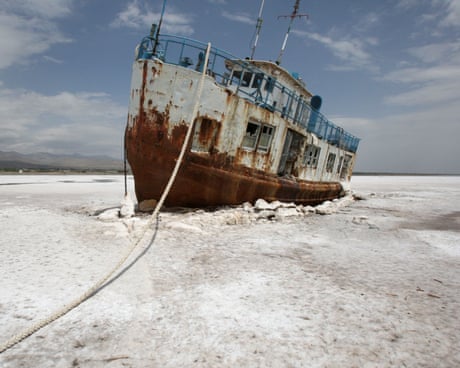
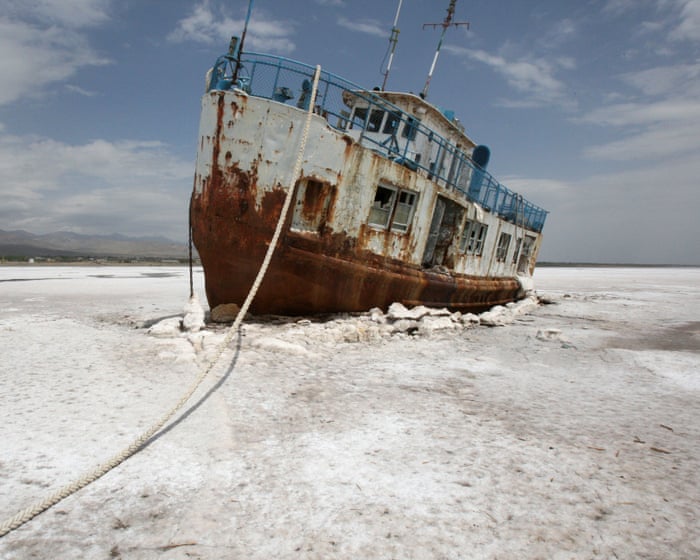
Last week, a UN report declared that the world has entered an era of ‘global water bankruptcy’ with many human water systems past the point at which they can be restored to former levels. To find out what this could look like, Madeleine Finlay speaks to the Guardian’s diplomatic editor, Patrick Wintour, who has been reporting on Iran’s severe water crisis. And Mohammad Shamsudduha, professor of water crisis and risk reduction in the department of risk and disaster reduction at University College London, explains how the present situation arose and what can be done to bring water supplies back from the brink

Era of ‘global water bankruptcy’ is here, UN report says

Climate crisis or a warning from God? Iranians desperate for answers as water dries up

Continue reading...

© Photograph: Vahid Salemi/AP

© Photograph: Vahid Salemi/AP

© Photograph: Vahid Salemi/AP

  •  

Anti-pop and an alien sigil: how Aphex Twin overtook Taylor Swift to become the soundtrack to gen Z life online

The mysterious Cornish electronic music pioneer has gained an extraordinary second life in the TikTok era. Writers and musicians explain why his glitchy slipperiness is so in tune with life today

QKThr, an obscure cut from Aphex Twin’s 2001 album, Drukqs, sounds like an ambient experiment recorded on a historic pirate ship. Shaky fingers caress the keys of an accordion to create an uncanny tone; clustered chords cry out, subdued but mighty, before scuttling back into dreamy nothingness.

This 88-second elegy has always been overshadowed by another song on Drukqs, the Disklavier instrumental Avril 14th, which alongside Windowlicker is the Cornish producer’s best-known track. But QKThr has become a weird breakaway success, featuring on nearly 8m TikTok posts, adorning everything from cute panda videos to lightly memed US presidential debates, and a fail video trend dubbed “subtle foreshadowing”.

Continue reading...

© Composite: Guardian Design/PA/Warp Records

© Composite: Guardian Design/PA/Warp Records

© Composite: Guardian Design/PA/Warp Records

  •  

Access denied: why Muslims worldwide are being ‘debanked’ | Oliver Bullough

Innocent people are being frozen out of basic banking services – and it all traces back to reforms rushed through after 9/11

Hamish Wilson lives a few miles away from me, in a cosy farmhouse in the damp hills of mid Wales. He makes good coffee, tells great stories and is an excellent host. Every summer, dozens of Somali guests visit Wilson’s farm as part of a wonderfully wholesome project set up to celebrate their nation’s culture, and to honour his father’s second world war service with a Somali comrade-in-arms.

Inadvertently, however, the project has revealed something else: a deep unfairness in today’s global financial system that not only threatens to ruin the Somalis’ holidays, but also excludes marginalised communities from global banking services on a huge scale.

Continue reading...

© Composite: Guardian Design/Getty Images

© Composite: Guardian Design/Getty Images

© Composite: Guardian Design/Getty Images

  •  

To show the next generation the horrors of the Holocaust, we need to learn from David Lynch | Grzegorz Kwiatkowski

How best to portray the evil of Stutthof camp witnessed by my grandfather? The Zone of Interest and Twin Peaks could have the answer

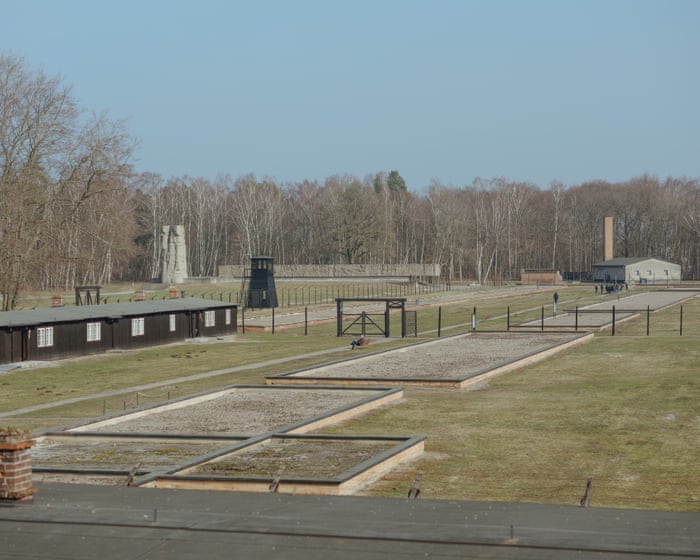
When I was nine years old, my grandfather took me to the museum at the former Stutthof concentration camp near Gdansk, in northern Poland. Established by the Nazis in the German-annexed territory of the Free City of Danzig, he had been imprisoned there as a teenager. It was his first visit since the second world war. When we went through the gate, he began to cry, to shout, to reconstruct scenes. The past returned all at once and he fell into a state of trauma. During his imprisonment he had been responsible, among other things, for carrying bodies from the camp infirmary.

Most of the most infamous Nazi death camps have been turned into memorials like Stutthof, in the hope that they can teach something to future generations and avert a repeat of this darkest of chapters in Europe’s history. But it is a fact that few visitors to Auschwitz-Birkenau, Dachau or Stutthof are shaken like my grandfather was. Sites of memory increasingly fail to reach new generations. Visitors learn facts, dates, perpetrators. But knowledge of past crimes does not automatically prevent future ones. Many institutions still teach a reassuring lesson: there were evil people once, they were defeated, we are different. Evil is placed safely in the past. The visitor leaves morally intact.

Continue reading...

© Photograph: Bartosz Bańka/The Guardian

© Photograph: Bartosz Bańka/The Guardian

© Photograph: Bartosz Bańka/The Guardian

  •  

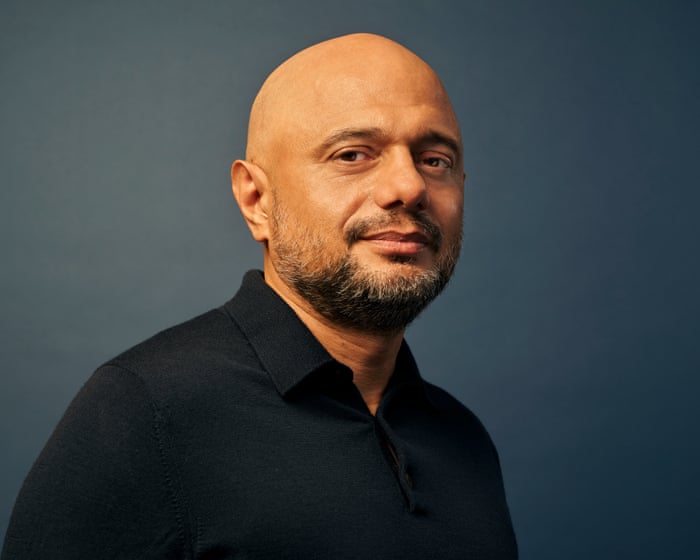
‘It could be a shoe or a stick’: Sajid Javid on being beaten by his father, petty crime – and turning his life around

As a young teenager, Javid and his brother were caught stealing from slot machines, arrested and held in a cell. His future hung in the balance. How did he get from there to the top of UK politics?

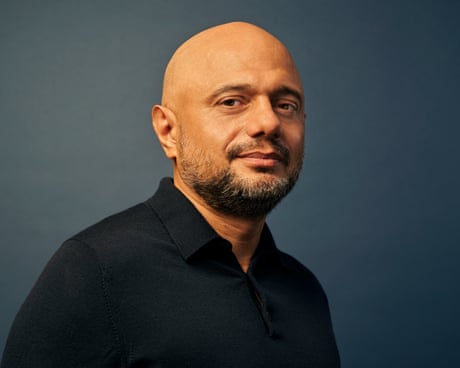
In 2019, when Sajid Javid was home secretary, he spoke about growing up on “the most dangerous street in Britain” and said how easy it would have been to fall into a life of crime. Fortunately, he said, he managed to avoid trouble. But it turns out that Javid was being a little economical with the truth. He did get into trouble. Serious trouble.

Now 56, he has just published his childhood memoir, The Colour of Home. It’s crammed with incident – arranged marriages, savage beatings and boys behaving badly. I think there’s one key moment in your story, I tell him. “What, just one?” he hoots. Javid is not lacking for confidence.

Continue reading...

© Photograph: Suki Dhanda/The Guardian

© Photograph: Suki Dhanda/The Guardian

© Photograph: Suki Dhanda/The Guardian

  •  
❌