Rolling coverage of the latest economic and financial news
Artificial intelligence is boosting productivity in the euro zone but it is not yet causing a wave of layoffs due to greater automation of labour, European Central Bank President Christine Lagarde has claimed.
Testifying to the European Parliament’s Economic and Monetary Affairs committee this morning, Lagarde said:
“What we are seeing for the moment is that it’s increasing productivity. But we are not yet seeing consequences in terms of labour market and waves of redundancies that are feared, and that you know we will be extremely attentive going forward.”
“Our transformation continues with pace and intensity. We are consistently achieving outcomes that were not possible before our transformation. With our new capabilities and mindset, we have navigated challenges from supply chain to tariffs, and delivered a strong performance in 2025, all while we built the foundations for significant growth for years to come.”
Powerful case studies can’t make up for this book’s superficiality when it comes to the broader issues
‘We are today in need of more humility in how we frame geographies of the mind,” says Gavin Francis, a GP and travel writer. In his new book he attempts to combine both disciplines as he treks the uncanny topography of mental illness.
The journey is divided into chapters that explore various genres of human anguish – clinical anxiety, trauma, bipolar disorder, depression and psychosis – as well as autism and ADHD. He attempts to summarise each condition’s history in roughly 20 pages, evaluate past and contemporary theories, and weigh up the efficacy of treatments. To call this ambitious is to break new frontiers in understatement.
Polish foreign minister Radosław Sikorski said in a speech to parliament that cost could pass €1.2tn ($1.42 trillion
Defending Nato’s eastern flank in case of a potential Russian aggression would cost at least €1.2tn ($1.42 trillion), Polish foreign minister Radosław Sikorski said in a speech to parliament, Reuters reported.
“Defending the countries of Nato’s eastern flank in the event of a potential Russian aggression would cost at least twelve hundred billion euros - twenty-four times more than the Polish defence budget,” he warned.
“Despite what its propaganda claims, Russia is by no means winning. Don’t fall for it. Russia is not, and never has been, invincible.”
‘Index of repression’ includes smears, harassment, job losses and arrests, legal advocacy group says
Palestinian solidarity is being “silenced, criminalised and sanctioned”, according to an advocacy group that says it has recorded more than 900 examples of repression across Britain in the last six years.
People had been targeted with smears, disinformation, harassment, doxing (having private or identifying information published online), visa cancellations, financial blacklisting, loss of employment and arrest, according to the European Legal Support Center, which, along with the research group Forensic Architecture, has created the “index of repression”.
Wendy Faith and Alesi Diana Denise were taken into custody under laws that have outraged LGBTQ+ community and rights activists
Two women have been arrested and detained in Uganda after allegedly kissing in public, an act of “same-sex activity” which can lead to a life sentence in the east African country..
Wendy Faith, a 22-year-old musician known as Torrero Bae, and Alesi Diana Denise, 21, were taken into custody after police raided their rented room in Uganda’s north-west Arua City last week.
Half a century ago, the famed New York venue run by a former marine and folk singer was ground zero for the punk and new wave scenes. Now the bands who played there are being celebrated on a 101-track box set
Fifty years ago, a dive bar in New York’s East Village started to attract attention as a new hub for rock music. Initially, this was a whisper conveyed in a handful of small-circulation music magazines. Then, celebrated musicians, record label executives, hip journalists and photographers, followed by the influencers of that era, began making a beeline for 315 Bowery, the home of CBGB.
Inside, an array of young, unknown artists were making music that would change rock’s sound and look, attitude and aesthetic. These outsiders created a template for punk, spoken word, powerpop, new wave, no wave, mutant funk, hardcore and so much more besides.
Some on the right portray this TikTok phenomenon as tantamount to treason. That says more about them than the fans of Chinese culture
As it’s Chinese lunar new year, it would not be surprising if you’ve found yourself scrolling through some China-inspired content. But before you click the heart on a TikTok of paper lanterns or mouthwatering noodles, think twice. As an unsuspecting citizen, you may well be participating in a geopolitical battle where western civilisation itself is on the line.
This isn’t the plot of a mediocre action thriller on Amazon Prime – this is “Chinamaxxing”, an internet trend that has got some commentators worrying that gen Z are about to topple the west from the inside.
Coco Khan is a writer and co-host of the politics podcast Pod Save the UK
Henderson, made captain when Marc Guéhi was sold to Manchester City in January after Palace were humbled in the Cup by non-league Macclesfield, must be wondering how things have turned sour at Selhurst Park so quickly. Supporters turned on the manager, Oliver Glasner, during the first leg of the Conference League playoff against Zrinjski Mostar in Bosnia and Herzegovina last week and demanded his sacking after another unconvincing performance in the 1-1 draw.
How did a small Nordic country dominate the Games? By making sport fun and not something for kids to suffer
Norway’s Olympians stormed the mountains of Milano Cortina and left the rest of the world wondering how a nation of 5.6 million people regularly tops the Winter Olympics medal table, this year winning 18 gold medals and 41 medals overall.
They’re not bad at the Summer Olympics either, despite not playing to their obvious national geographical strengths, winning four gold medals and a total of eight medals in Paris 2024. But all this talk of medals detracts from looking more closely at what the Norwegians do to create one of the best and most sustainable sports systems in the world.
Around 10 federations want Fifa to tackle problems
A number of European football federations fear they will lose money sending their national teams to the World Cup this summer, with an unusual hike in costs and inconsistencies around tax exemptions among the problems Fifa is being urged to rectify.
Although Fifa approved record prize money of £539m for the tournament last December it may not be enough to prevent losses, or reduced profits, for competitors who would usually expect a World Cup to generate vital funds. An investigation by the Guardian and PA Media found particular concerns among football associations about the consequences of missing out on money that would largely be reinvested in local initiatives.
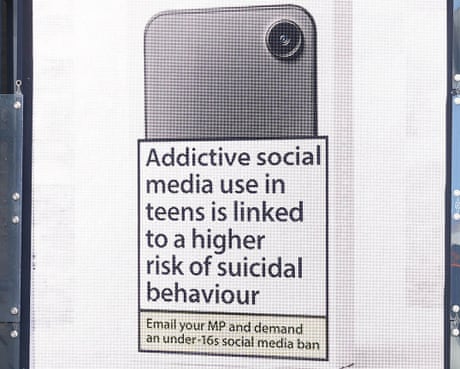
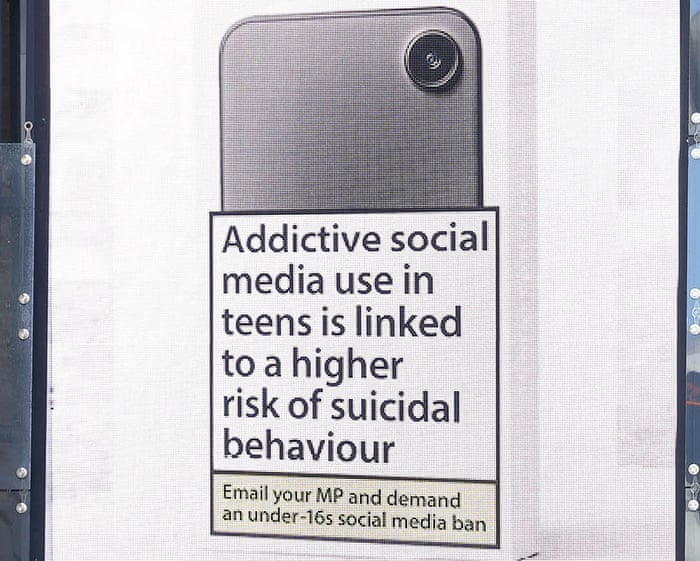
Resembling cigarette packet warnings, the ads highlight dangers and urge people to email MPs
Mumsnet has launched a campaign to introduce a ban on social media for under-16s featuring health warnings in the style of those on cigarette packets.
The deliberately provocative national advertising campaign calls for all social media to be banned for children under the age of 16. The images on billboards and social media make a number of stark statements related to health.
We follow one woman across decades of change in this deeply compassionate novel of independence and dreams
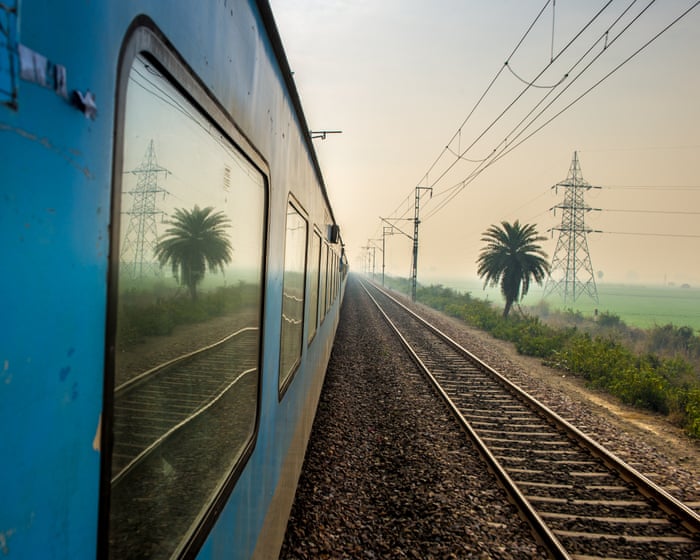
Indian Railways has been a source of patriotic pride, controversy, endless cover-ups, labyrinthine bureaucracy and death on an industrial scale since its founding in 1951. Rahul Bhattacharya’s Railsong, his first novel in 15 years since The Sly Company of People Who Care, explores its other major and fiercely contested impact on Indian society, as one of the country’s foremost employers of women and sources of female empowerment, especially in rural areas.
We follow the irrepressible, motherless Charu Chitol, from her childhood in 1960s smalltown Bihar with her rail employee father, a frustrated writer and frustrated socialist, through her dizzying encounters with rapidly modernising big-city Bombay, and on to a railways personnel department job, first office-bound, then as a roving welfare officer, investigating pensions claims, frauds and other abuses. The book ends in the early 1990s, all post-independence goodwill long spent.
This former industrial quartier is now getting noticed for its community-focused art spaces, lively local bars and inexpensive north African food
On a hill that rises up between Belleville’s Chinatown and Père-Lachaise cemetery, Ménilmontant was once a rural hamlet with vines and farms, before becoming more industrial in the 19th century. The quartier boasts a united, colourful community whose working-class Parisian roots have long been integrated with a strong north African diaspora. Bohemian, arty and socially committed, it remains off the tourist trail with no notable museums or monuments; it’s just a genuinely Parisian neighbourhood. The locals were bemused to learn that Time Out made Ménilmontant one of its World’s Coolest Neighbourhoods for 2025, though tourists who do venture here to discover a glimpse of a fast-disappearing Paris are sure of a warm welcome.
A comforting and rustic plate inspired by trip to a traditional Roman trattoria
The benefit of soaking and cooking (or, better still, pressure cooking) your own beans are many: less packaging; money saved (a 500g bag of dried beans costing £2.50 will yield 1.5kg cooked beans, while some 400g tins can cost more or less the same); the suspiciously coloured but flavourful and starchy bean cooking water; and some personal satisfaction that you actually remembered to soak the beans in the first place. The benefits – and joy – of tinned beans, however, are almost instantaneous. That is, just a ring-pull away – unless, of course, said ring-pull comes off prematurely, turning the tin into a door without a knob and leaving you two options: searching for the tin opener that is somewhere in the miscellaneous drawer (or among the picnic equipment, which is on top of the wardrobe), or puncturing the tin at exactly the right spot on the seam with a pointy parmesan knife, which is somewhere in the same drawer.
Fortunately, the ring pull didn’t come away prematurely on any of the three tins – two borlotti beans and one plum tomatoes – required for this week’s recipe, which came about thanks to a meal at Dal Cordaro, a hard-working and decent trattoria just behind Porta Portese, a 17th-century city gate (arch) in the Aurelian wall on the right bank of the river Tiber. Everything we ordered – whole braised artichokes, slow-cooked oxtail stew, flash-fried rags of beef (straccetti), pasta and chickpeas – was pleasing and could have made its way into this column. However, my plate of beans in a rich, orange-tinted tomato sauce with poached sausages and greens (escarole) stirred in at some point was the satisfying idea that came home with me.
Test yourself on topical news trivia, pop culture and general knowledge every Thursday. How will you fare?
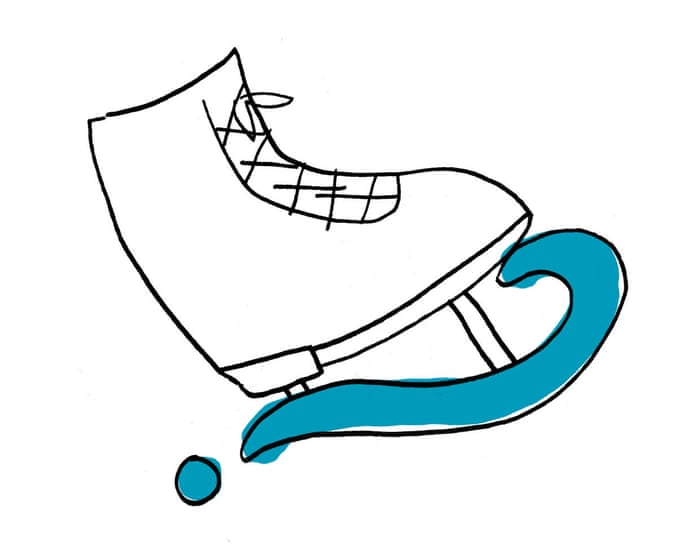
Missing the Winter Olympics? Thanks to this week’s illustration by Anaïs Mims, here is your chance to discover whether you are gracefully landing a flawless triple axel under arena lights to the sound of your favourite tune, or merely skating on the thin ice of ignorance, arms windmilling gently as the cold reality of the answers draws closer. Fifteen questions on topical headlines, pop culture and general knowledge await. There are no prizes, but we always enjoy hearing how you got on in the comments. Allons-y!
A new mini power station and lithium extraction facility near Redruth are set to bolster green energy and create jobs
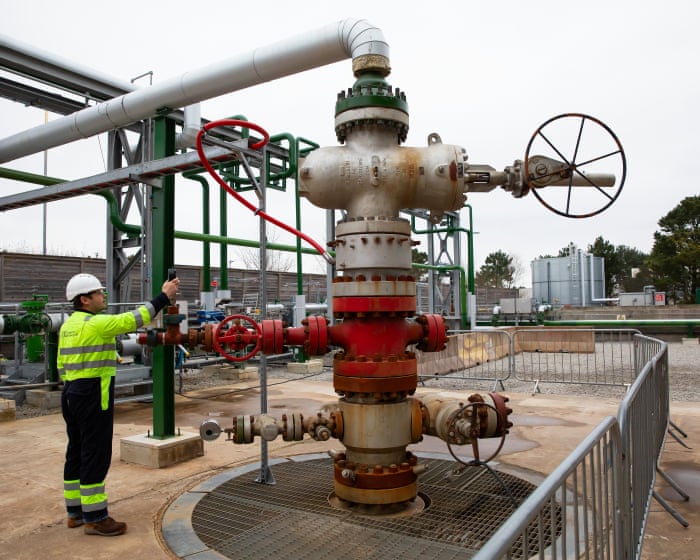
Just outside the perimeter fence stand the hulking remains of grand stone engine houses, a testament to Cornwall’s proud tin and copper mining history.
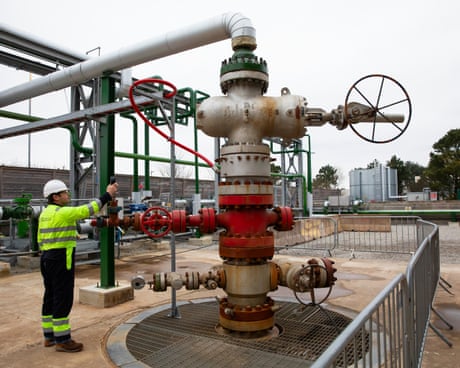
But inside is a shiny new mini power station and lithium extraction plant that is once again accessing rich underground resources in the far south-west of Britain.
Atmospheric machine-gun has fired storm after deadly storm at the region this year, leaving a trail of widespread destruction
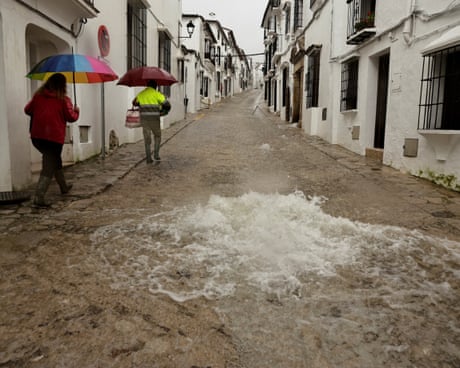
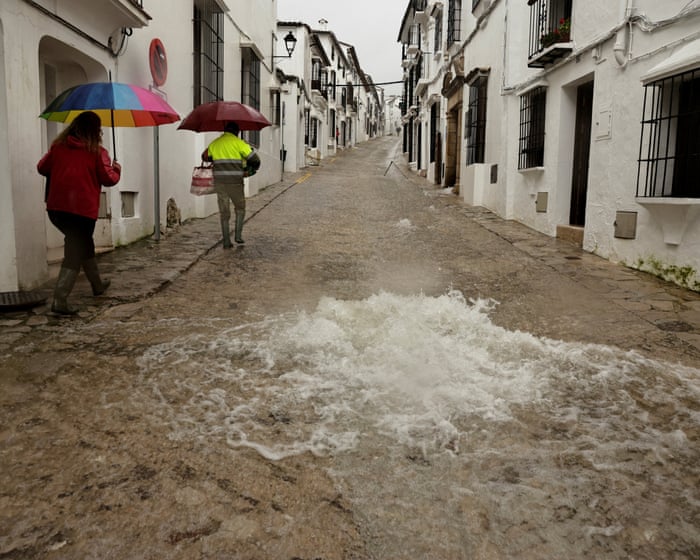
For Andrés Sánchez Barea, in Spain, it was the fear that arose when water started to spurt from plug sockets. For Nelson Duarte, in Portugal, it was the helplessness that hit as violent winds smacked down trees and tore tiles from roofs. For Amal Essuide, in Morocco, it was the reality that dawned when a corpse was pulled onboard a boat in the flooded medina.
Each moment of horror is a fragment of the destruction wrought by an atmospheric machine-gun that in recent weeks has fired storm after storm at the western Mediterranean. Scientists do not know if climate breakdown helped pull the trigger, but research suggests it loaded the chamber with bigger bullets.
Are influencers really the biggest problem facing waiting staff? Not compared with the customer who demanded I pick up her dog’s poo ...
Influencers have had a bad time of it at restaurants recently. There they are, just trying to record a quick video and take a few pictures of their lunch, and restaurateur Jeremy King (of the Ivy and the Wolseley in London) goes and writes an article saying they’re ruining the dining experience of “bona fide guests” – something he says staff are “desperately trying to stop”. I’ve read pieces calling TikTok the end of the London restaurant scene. Friends’ parents have even said they would get up and leave if they were sitting next to anyone filming their meal.
This surprises me. I have worked as a waitress in restaurants for more than five years, a job I love, and the joys of which most often come from the customers I serve. Of course, for every 10 great customers, you’re bound to get one that’s not so great – I’ve come across my fair share of those.
Centuries-old wells restored to provide drinking water as parts of the country head towards “day zero” when no water will be available
A loud cheer and sounds of clapping reverberated around Bansilalpet, a neighbourhood in Hyderabad, when the first trickle of clean water dribbled out of the ground. After an 18-month effort to clear out 3,000 tonnes of rubbish and restore the stone walls and adjacent area, the 17th-century Bansilalpet stepwell had become a source of clean drinking water for the first time in four decades.
“It was such a joyous moment to see water collecting into the stepwell after clearing 40 years of garbage,” says Hajira Adeeb, a 45-year-old resident of Bansilalpet, who grew up seeing the well become transformed from the community’s water source to a dumping ground. “I visit almost every day. The area is clean and lit up in the evenings. I enjoy sitting there.”
Fans of the hit noughties series will be delighted to see the original cast back at Sacred Heart hospital. But this reboot isn’t afraid to move with the times
Bill Lawrence is on a tear. This is the man who gave us Ted Lasso and Shrinking, and who is days away from launching Rooster, the Steve Carell sitcom that HBO already sees as the anchor to its comedy output. At this stage in his career, Lawrence could blow his nose and the contents of his tissue would become a beloved heartwarming comedy series.
So it’s interesting that, of all his available options, Lawrence has instead decided to revive Scrubs. It’s a show with a big footprint – when Friends ended, you could argue that it became the biggest sitcom on Earth – but it still felt very much of its time. It was a medical comedy that not only derived a lot of its laughs from Family Guy-style cutaway skits, back when they counted as new and exciting, but also had more than one character who specialised in baroque cruelty, which doesn’t seem particularly on-brand for Lawrence any more. Ted Lasso would never.
To even be talking about this drastic deportation policy is a sign the far right is winning. In Italy, it’s more than just talk
Meeting Tommy Robinson earlier this month, the French anti-immigration politician Éric Zemmour bluntly summed up his mission: “Politics needs to defeat demographics.”Given rising numbers of Muslims, he said, there was perhaps “10 to 20 years” left to save Europe from “disappearing”. Both men placed their hopes in one policy to reverse the “invasion”: remigration.
At root, remigration means using mass deportations in order to curtail minority – especially Muslim – populations. In France’s 2022 presidential election, Zemmour pledged the creation of a “ministry of remigration” meant to remove “1 million” people, targeting undocumented and dual-national criminals. In practice, supporters of the idea often blur distinctions between criminals and non-criminals, longer-standing citizens and recent migrants, the undocumented and those with settled status.
David Broder is the author of Mussolini’s Grandchildren: Fascism In Contemporary Italy
Do you have an opinion on the issues raised in this article? If you would like to submit a response of up to 300 words by email to be considered for publication in our letters section, please click here.
After a nine-year-old girl was kidnapped and taken from Spain to Bolivia, authorities feared the worst. They found her in the rainforest nine months later – but that wasn’t the end of her ordeal
On 27 August 2013, a tall, spirited nine-year-old girl with long, well-brushed hair boarded an overnight coach in Barcelona. Nada Itrab was bright and observant. At school, she regularly came top of her class. Even now, she carried a notebook, eager to record the things she would discover on this trip. She had been given a camera, too – a cheap, lilac-coloured digital model which, since she was unused to luxuries, seemed to her like a treasure.
In eight hours, Nada would be at Barajas airport in the Spanish capital, Madrid. She would take her first flight, heading for Bolivia’s largest city, Santa Cruz de la Sierra. To her, the trip was an adventure, like something from the storybooks that she read at her local library in L’Hospitalet de Llobregat, a city just south of Barcelona. The daughter of undocumented immigrants from Morocco, Nada had lived there since she was four.
 Connexion