↩ Accueil

Vue lecture

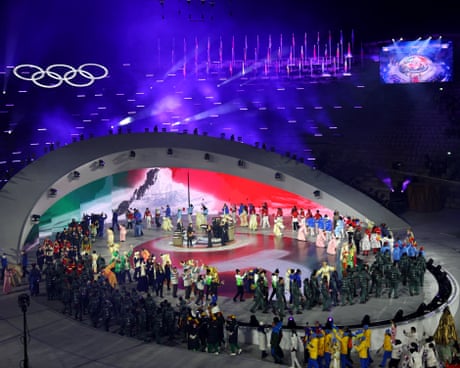
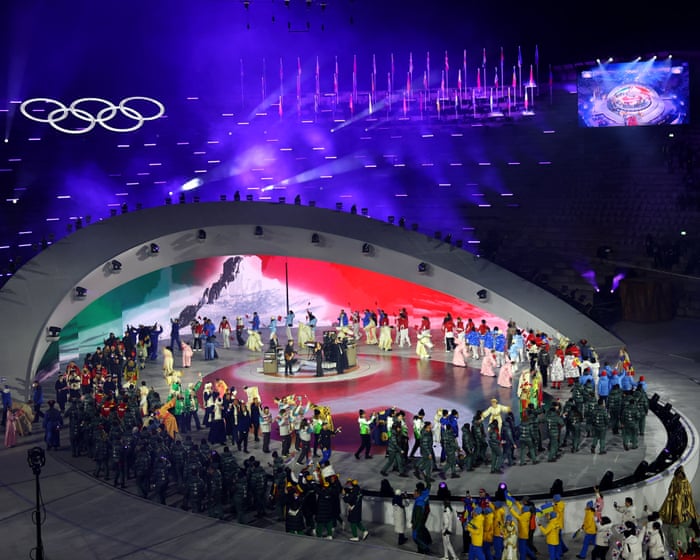
Winter Olympics were again unrelatable and ‘useless’ and yet utterly astounding to watch

The Games offer little fame or fortune but the purity of the athletes and their stories made them great

It was the Olympics of politics and penises, of JD Vance being jeered and of Ukrainian bobsledders being banned from the competition, of a convicted criminal beating the teammate she was guilty of defrauding, of Lindsey Vonn crashing out 12 seconds into the race and of Ilia Malinin making one mistake too many, of the internet became momentarily obsessed with slow‑motion videos of a Canadian stroking a curling stone with the tip of his finger, and it was the Olympics where the Norwegian ski‑jump team refused to dignify questions about whether or not they were injecting acid into their genitals.

Like I said right at the beginning, Pierre de Coubertin never wanted a Winter Olympics. If that line sounds a little familiar it might be because you read it here a fortnight or so ago. “The great inferiority of these snow sports is that they are completely useless,” Coubertin wrote, “with no useful application whatsoever.” But it’s true, too, that over time he changed his mind. And by the end of the International Olympic Committee’s very first Olympic “winter sports week” at Chamonix in 1924 he gave a speech in which he told his audience that “winter sports are among the purest”.

Continue reading...
© Photograph: Yara Nardi/Reuters
© Photograph: Yara Nardi/Reuters
© Photograph: Yara Nardi/Reuters

  •  

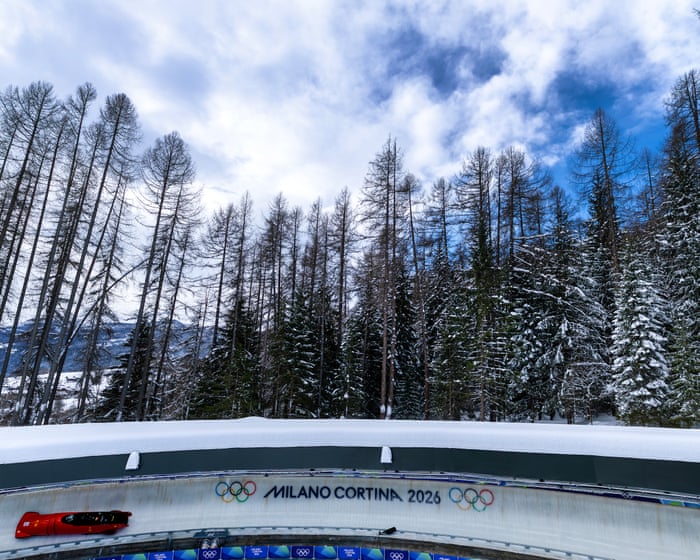
The Great Olympic lie: untold story of Winter Games’ huge environmental impact

Rivers drained dry to create artificial snow, a forest cut down for the bobsleigh track – IOC’s claims to prioritise sustainability at Milano Cortina exposed

On the foothills of the mountains, by the banks of the river in Cortina, there was a forest. It was full of tall larch trees. Arborists said the oldest of them had been there for 150 years and dendrologists that it was unique because it was unusual to find a monocultural forest growing at such a low altitude in the southern Alps.

The locals knew mostly it was the place where the old wooden bobsleigh run was, where you went on your walks in summer or autumn, or when you wanted to play tennis on the small courts built near the bottom. They called it the Bosco di Ronco and it isn’t there any more.

Continue reading...

© Photograph: Al Bello/Getty Images

© Photograph: Al Bello/Getty Images

© Photograph: Al Bello/Getty Images

  •  

Heartbreak for Team GB as Canada take men’s curling gold on last stone

  • Great Britain 6-9 Canada

  • Mouat’s side take silver after falling short in last end

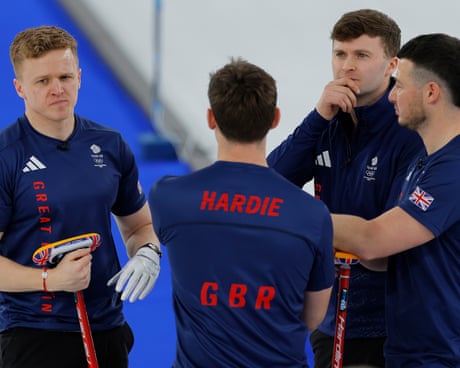
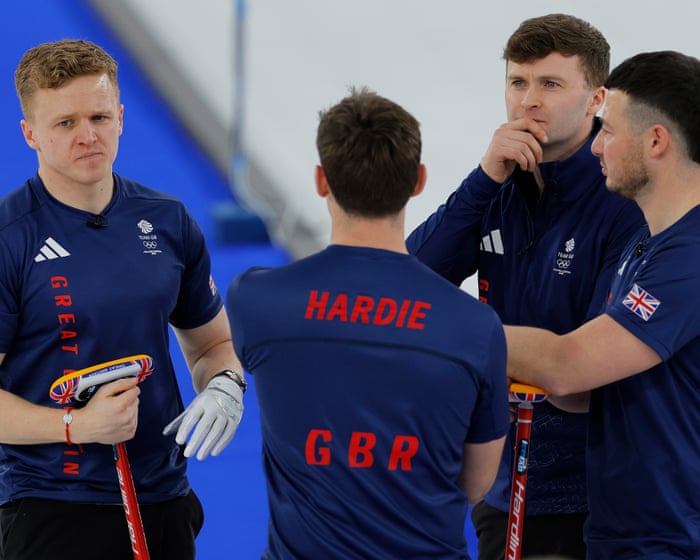
The cruel truth is that sometimes the silvers you win are more like golds you lost. After four years of thinking about this Olympics, and 11 days of competing in this Olympics, there is no doubt about how Bruce Mouat and his three teammates will weigh their achievement here after they were beaten by Canada 9-6 in the final. It was an excruciatingly tense game, which twisted and turned on its way to the very final stone of the 10th end. And when it was over, two of the British players were left in tears. Great Britain’s fourth medal of these Olympics was more bitter than sweet.

“I’m heartbroken,” said Grant Hardie. “We lost that final four years ago. It took us a long time to get over it and find the motivation to go again and we found it and we were so hungry to go and deliver this time, and unfortunately it just didn’t quite happen.” His cousin Hammy McMillan felt the same way. “It took me four years to get over the first silver,” he said, “so it will probably take a lot longer this time.”

Continue reading...

© Photograph: Tom Jenkins/The Guardian

© Photograph: Tom Jenkins/The Guardian

© Photograph: Tom Jenkins/The Guardian

  •  
❌