 Connexion
Tension at the tennis: inside the high-stakes world of racket stringing

There would be no Australian Open were it not for the work undertaken in an unassuming underground room at Melbourne Park
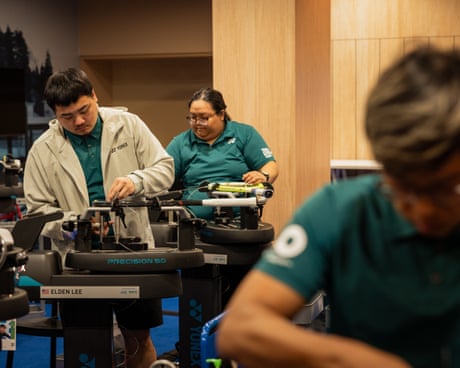
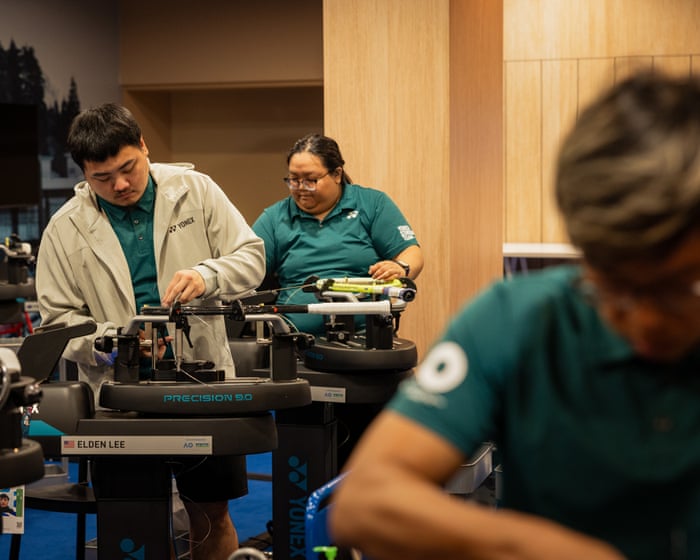
Underneath Rod Laver Arena, a group of tennis specialists cut and twist and weave – intently focused on their preparation for the action on the blue court a few metres above their heads. In the lead-up to the Australian Open, these experts maintain a consistent workload, training their muscles and technique, ready to peak as if they were the athletes taking to the courts themselves. But they won’t step on the court – their unique domain is tennis rackets. Racket stringing, specifically, and as the Yonex string team leader, Jim Downes, has learned over his 30-year stringing career, “it’s a high demand job”.
The world’s top tennis players are, unsurprisingly, “very particular” about how their rackets are strung, Downes says, referring to how tight or loose the strings that crisscross the frames are pulled. A highly strung racket generally offers its user more control but less power, while the opposite is true for a racket with lower tension. “A lot of people know how to string,” he says. “You have your shop stringers, but they might not be quick enough to do this job and maybe not consistent enough for the players’ needs at this level.”
Continue reading...
© Photograph: Charlie Kinross/The Guardian
© Photograph: Charlie Kinross/The Guardian
© Photograph: Charlie Kinross/The Guardian
