↩ Accueil

Vue lecture

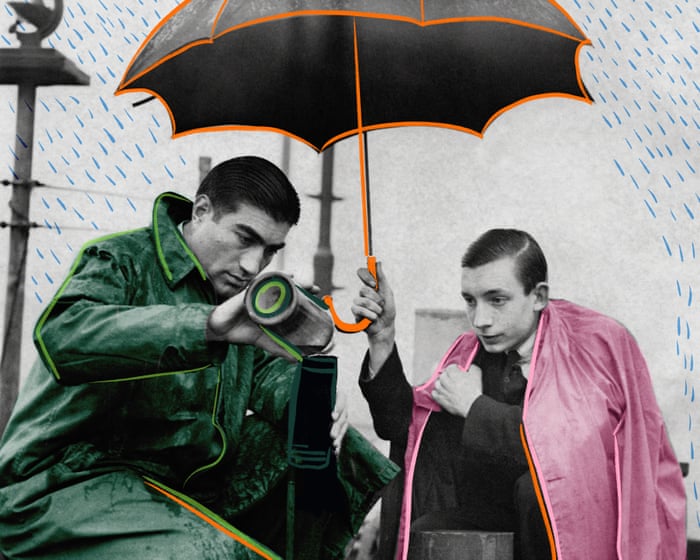
The kindness of strangers: while we waited outside in the rain, a young boy brought us hot tea and cake

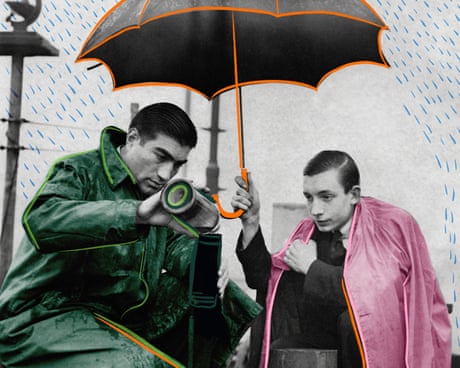
Our youthful enthusiasm was starting to falter when a child came out of a cottage with a basket, sent by his mum

It was 1974 and my school friends and I decided to backpack around Tasmania in the middle of winter – go figure. We were three mates in our late teens, without a clear plan.

After arriving on the ferry, we hopped on a train owned by a mining company and travelled through the wild and unpopulated Tasmanian west coast to Queenstown. It was all forest and mountains, and so utterly freezing, we sat in our sleeping bags on the train to try to warm up.

Continue reading...

© Illustration: Victoria Hart/Getty Images
© Illustration: Victoria Hart/Getty Images
© Illustration: Victoria Hart/Getty Images

  •  

How the left can win back the internet – and rise again | Robert Topinka

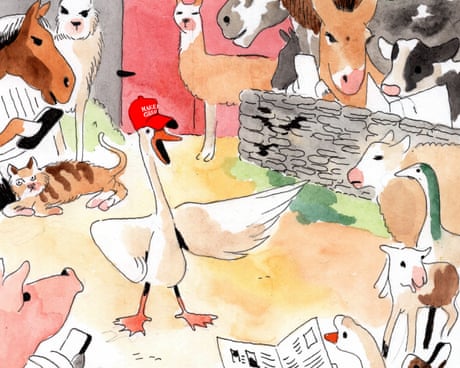
In the final part of this series, we look at how infighting has ripped the left apart online while the right has flourished – and how some progressives are turning the tide

There is politics before the internet, and politics after the internet. Liberals are floundering, the right are flourishing, and what of the left? Well, it’s in a dire state. This is despite the fact that the key political problems of the last decade – rising inequality and a cost of living crisis – are problems leftists claim they can solve. The trouble is, reactionaries and rightwingers steal their thunder online, quickly spreading messaging that blames scapegoats for structural problems. One reason for this is that platforms originally built to connect us with friends and followers now funnel us content designed to provoke emotional engagement.

Back when Twitter was still the “town square” and Facebook a humble “social network”, progressives had an advantage: from the Arab spring to Occupy Wall Street, voices excluded from mainstream media and politics could leverage online social networks and turn them into real-life ones, which at their most potent became street-level protests that toppled regimes and held capitalism to account. It seemed as though the scattered masses would become a networked collective empowered to rise up against the powerful.

Robert Topinka is a reader in digital media and rhetoric at Birkbeck, University of London

Continue reading...

© Illustration: Antoine Cossé/The Guardian

© Illustration: Antoine Cossé/The Guardian

© Illustration: Antoine Cossé/The Guardian

  •  

How the right won the internet | Robert Topinka

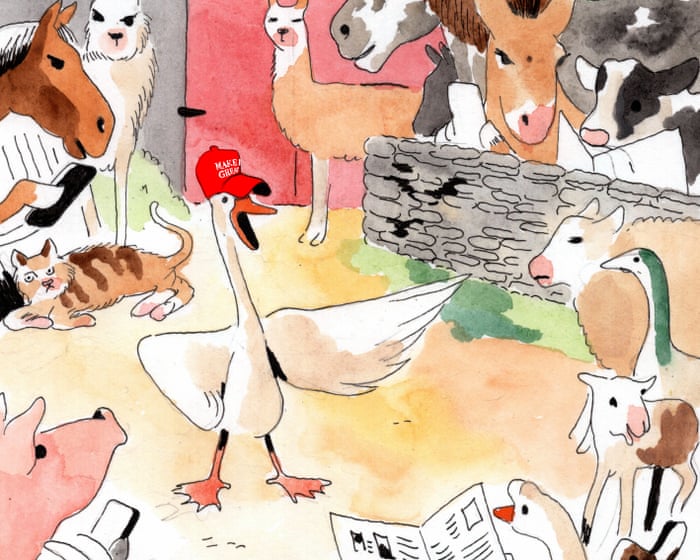
In the second part of our series on digital politics, we look at how online provocateurs have advanced extreme political ideas – and watched them seep into the mainstream

The internet has totally changed the way in which politics is conducted. As established in the first piece in our series, liberals have totally failed to grasp this fact. The right, however, are thriving in this new world. Future historians studying the role that fringe online ideas played in the US republic’s demise will be spoiled for choice. One episode in particular comes to mind: Tucker Carlson, a former primetime speaker at a Republican convention, inviting a white supremacist livestreamer, Nick Fuentes, on to his YouTube show in 2025 for a chat in which he talked about the influence of “organised Jewry” in the US.

Carlson spent years echoing white nationalist talking points on his Fox News show, but Fuentes’ style – combining Nazi salutes with cheeky grins – places him beyond the pale for broadcast television. However, under the logic of YouTube, the meeting of these two major influencers is almost inevitable. Platforms incentivise audience cross-pollination, which is why Fuentes routinely livestreams with figures such as Adin Ross and Andrew Tate, who are known more for their homophobia and misogyny than their thoughts on ethnostates.

Robert Topinka is a reader in digital media and rhetoric at Birkbeck, University of London

Continue reading...

© Illustration: Antoine Cossé/The Guardian

© Illustration: Antoine Cossé/The Guardian

© Illustration: Antoine Cossé/The Guardian

  •  

England’s Joe Heyes: ‘People try to fit into moulds, be something they’re not. Screw that’

Leicester’s quirky prop on beating adversity, being second-string goalkeeper at Nottingham Forest and his love of ‘cooking with butter’

For some people the road to the top is painfully long and winding. Joe Heyes used to be a player whose dreams of making England’s matchday squad were constantly dashed. Driving home from Bagshot, having been omitted yet again, he would listen to Johnny Cash’s Folsom Prison Blues – “I ain’t seen the sunshine since I don’t when …” – and wonder if the hardship and sacrifice would ever be worth it.

And now? Less than two years later he is suddenly the most important player in England. The national management have already lost two injured tightheads in Will Stuart and Asher Opoku-Fordjour plus the loosehead prop Fin Baxter. If they had enough cotton wool England would be wrapping the now indispensable Heyes up in it.

Continue reading...

© Photograph: Patrick Khachfe/Getty Images

© Photograph: Patrick Khachfe/Getty Images

© Photograph: Patrick Khachfe/Getty Images

  •  
❌