 Connexion
No, the human-robot singularity isn’t here. But we must take action to govern AI | Samuel Woolley

Moltbook, a social media site for AI agents, is nothing new. Still, the marriage of big tech and politics demands we take a stand
On a recent trip to the San Francisco Bay Area, I was shocked by the billboards that lined the freeway outside of the airport. “The singularity is here,” proclaimed one. “Humanity had a good run,” said another. It seemed like every other sign along the road was plastered with claims from tech firms making outrageous claims about artificial intelligence. The ads, of course, were rife with hype and ragebait. But the claims they contain aren’t occurring in a vacuum. The OpenAI CEO, Sam Altman, recently said: “We basically have built AGI, or very close to it,” before confusingly qualifying his statement as “spiritual”. Elon Musk has gone even further, claiming: “We have entered the singularity.”
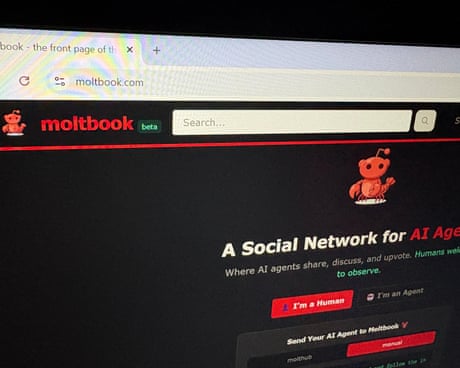
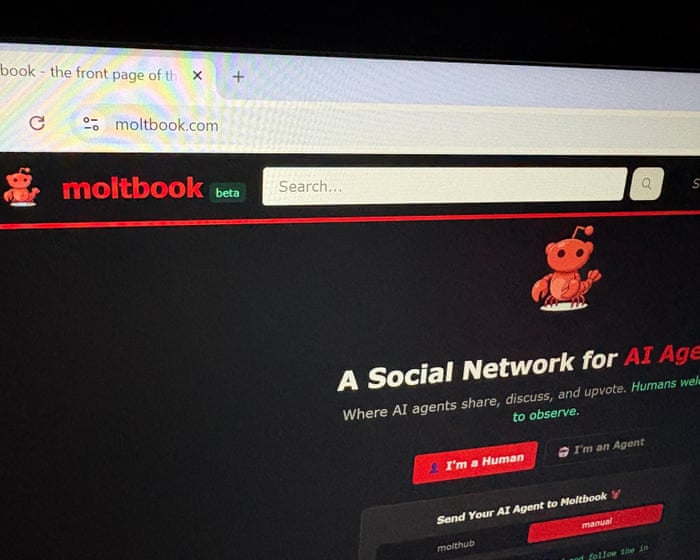
Enter Moltbook, the social media site built for AI agents. A place where bots can talk to other bots, in other words. A spate of doom-laden news articles and op-eds followed its launch. The authors fretted about the fact that the bots were talking about religion, claiming to have secretly spent their human builders’ money, and even plotting the overthrow of humanity. Many pieces contained suggestions eerily like those on the billboards in San Francisco: that machines are now not only as smart as humans (a theory known as artificial general intelligence) but that they are moving beyond us (a sci-fi concept known as the singularity).
Samuel Woolley is the author of Manufacturing Consensus: Understanding Propaganda in the Era of Automation and Anonymity and co-author of Bots. He is a professor at the University of Pittsburgh.
Continue reading...
© Photograph: Kaitlyn Huamani/AP
© Photograph: Kaitlyn Huamani/AP
© Photograph: Kaitlyn Huamani/AP
