↩ Accueil

Vue lecture

CES 2026: Gigabyte unveils new laptop range, including high-end Aorus Master 16

Gigabyte is finishing up its CES announcements this week with the reveal of several new laptop models. The new models house the latest Ryzen CPUs and RTX graphics, with new AI features designed to make hardware and software management easier.

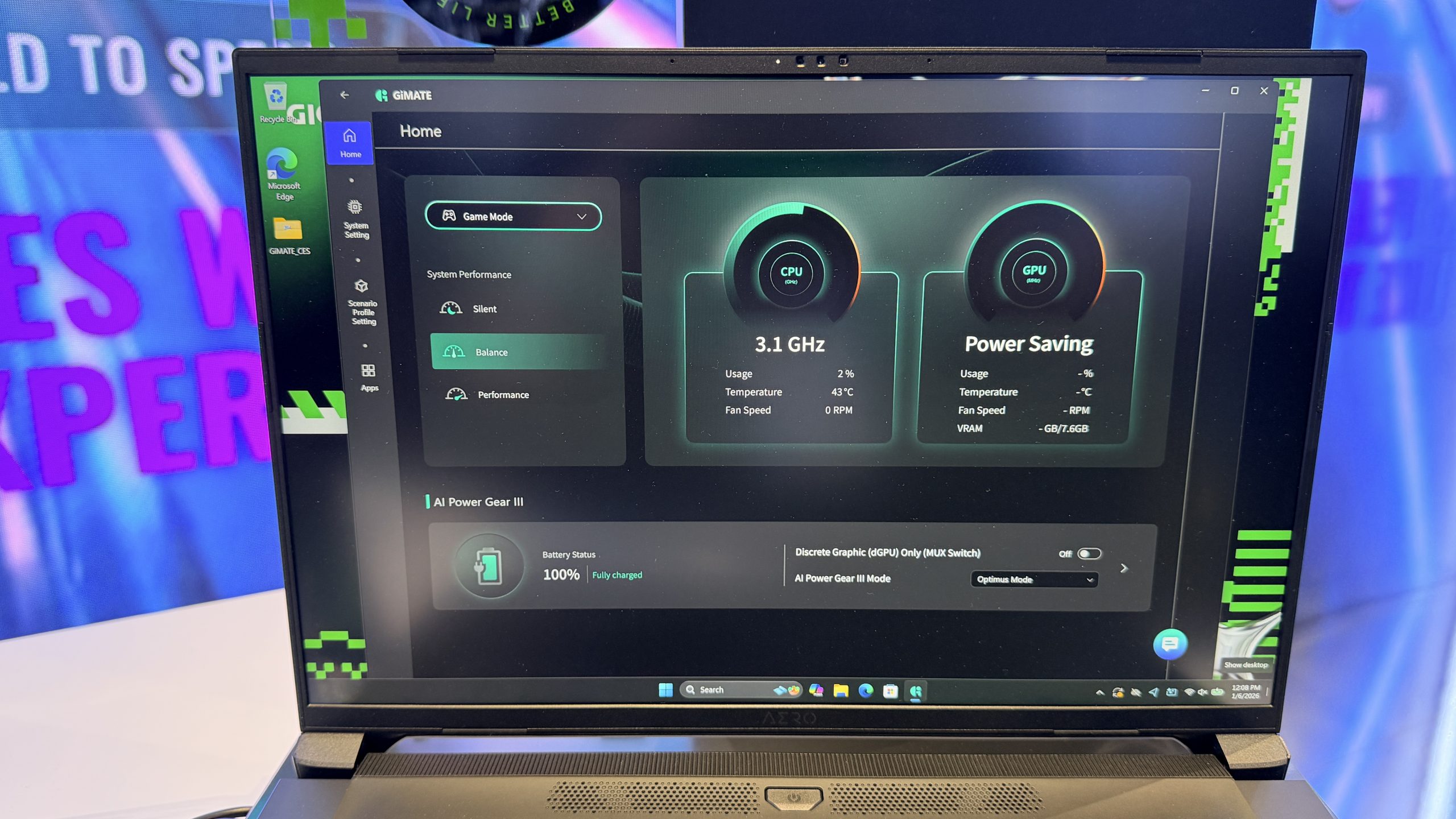
The updated GiMATE interface consolidates real‑time system information, voice‑driven controls and hardware management into a single interface aimed at simplifying navigation and day‑to‑day adjustments. The GiMATE ecosystem is also being expanded. AI Power Gear III now supports direct MUX switching between Discrete Mode and MSHybrid, while offering several automated power profiles: Auto Mode disables the GPU on battery to extend runtime, Optimus Mode targets balanced performance and Eco Mode prioritises maximum power saving. GiMATE Creator adds support for Qwen‑Image for English and Chinese visual‑generation prompts, and GiMATE Coder introduces natural‑language code generation, correction and optimisation.

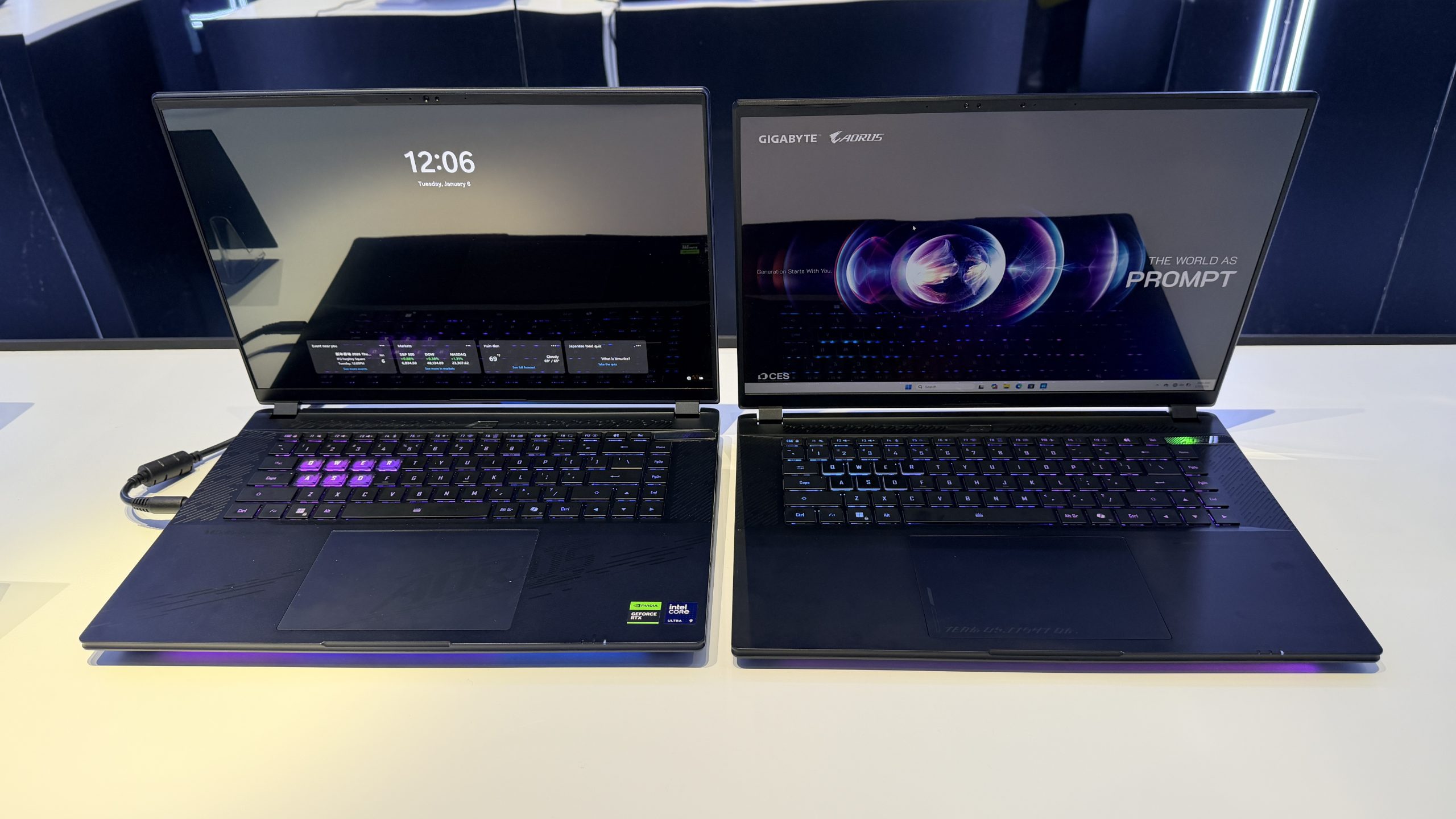
Moving on to the new laptops themselves, there are three models to look at, headlined by the Aorus Master 16. This laptop is positioned as the flagship for 2026, pairing AMD’s Ryzen 9 9955HX3D with an RTX 5090 Laptop GPU inside a 19mm chassis, a notable reduction in thickness compared to the previous generation. The system uses the company’s WINDFORCE Infinity EX cooling design, combining a vapor chamber with an asymmetric Frost Fan layout to manage the thermal load of high‑end components in a thin‑and‑light form factor. This model is clearly aimed at users who want desktop‑class performance in a portable footprint.

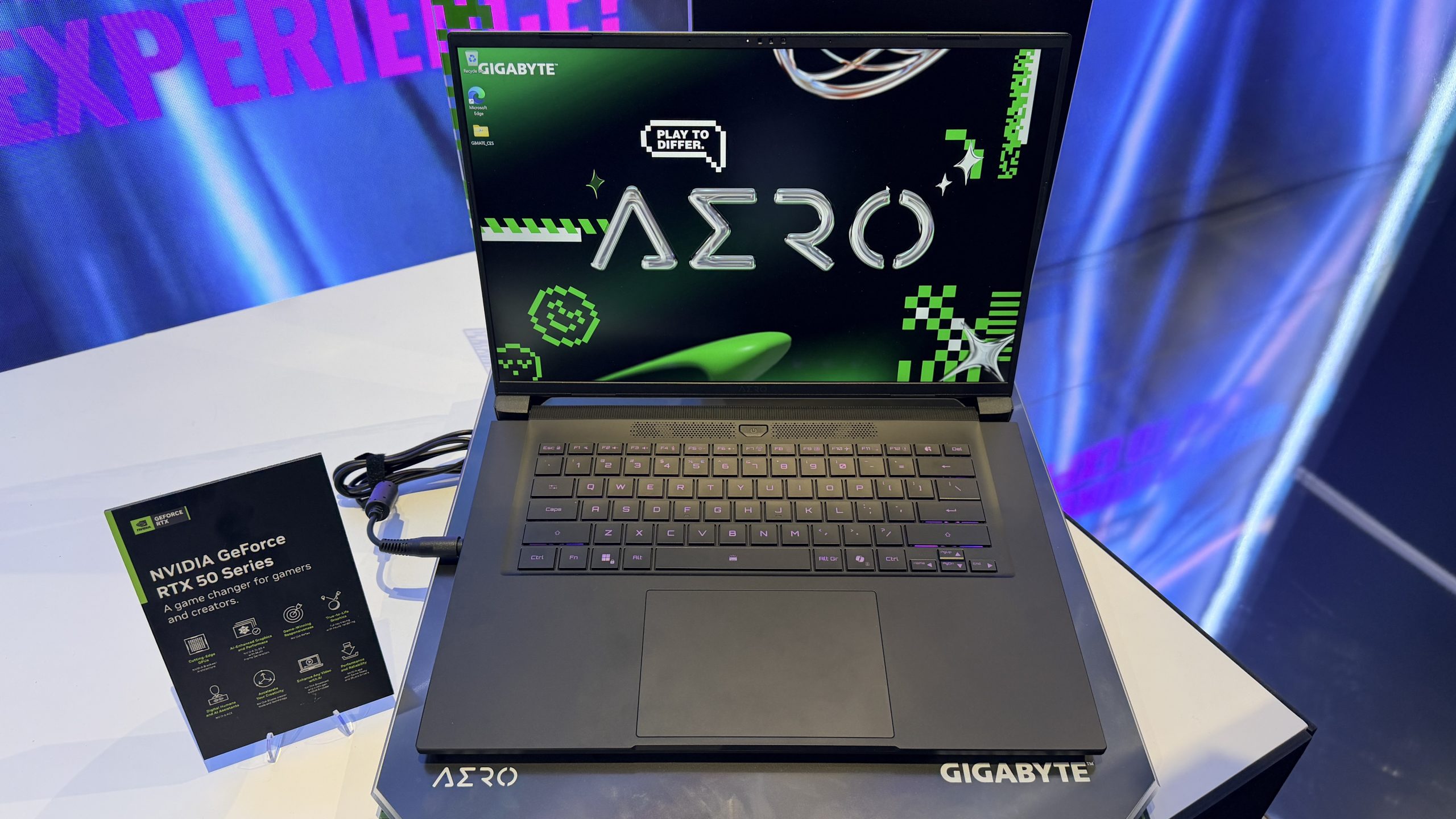
For creators and mobile professionals, the AERO X16 shifts the focus toward efficiency and on‑device AI acceleration. It is built around AMD’s Ryzen AI 400 series processors, which are designed to improve responsiveness and handle heavier AI‑assisted workloads without relying on cloud processing. GIGABYTE positions this model as the more mobility‑friendly option in the lineup, with an emphasis on creative workflows and general productivity.

Rounding out the range is the GAMING A18 PRO, which offers a more balanced configuration. With a 20mm profile and support for up to an RTX 5080 Laptop GPU, it targets users who want strong gaming and content‑creation performance without stepping into flagship territory. GIGABYTE frames this model as a versatile choice for mainstream gamers, hybrid creators and users beginning to explore AI‑accelerated applications.

KitGuru Says: Are you thinking of picking up a new laptop this year?

The post CES 2026: Gigabyte unveils new laptop range, including high-end Aorus Master 16 first appeared on KitGuru.
  •  

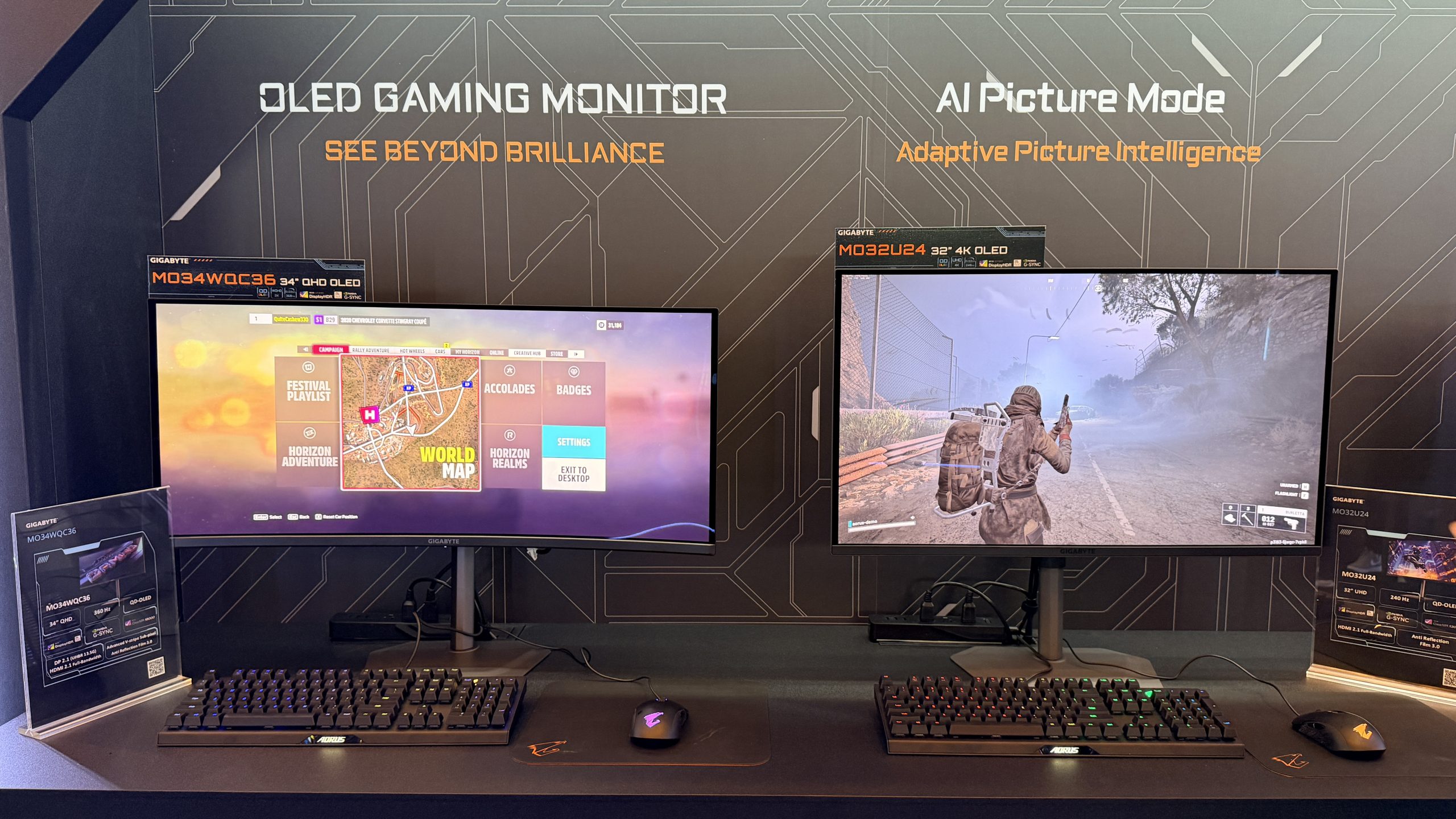
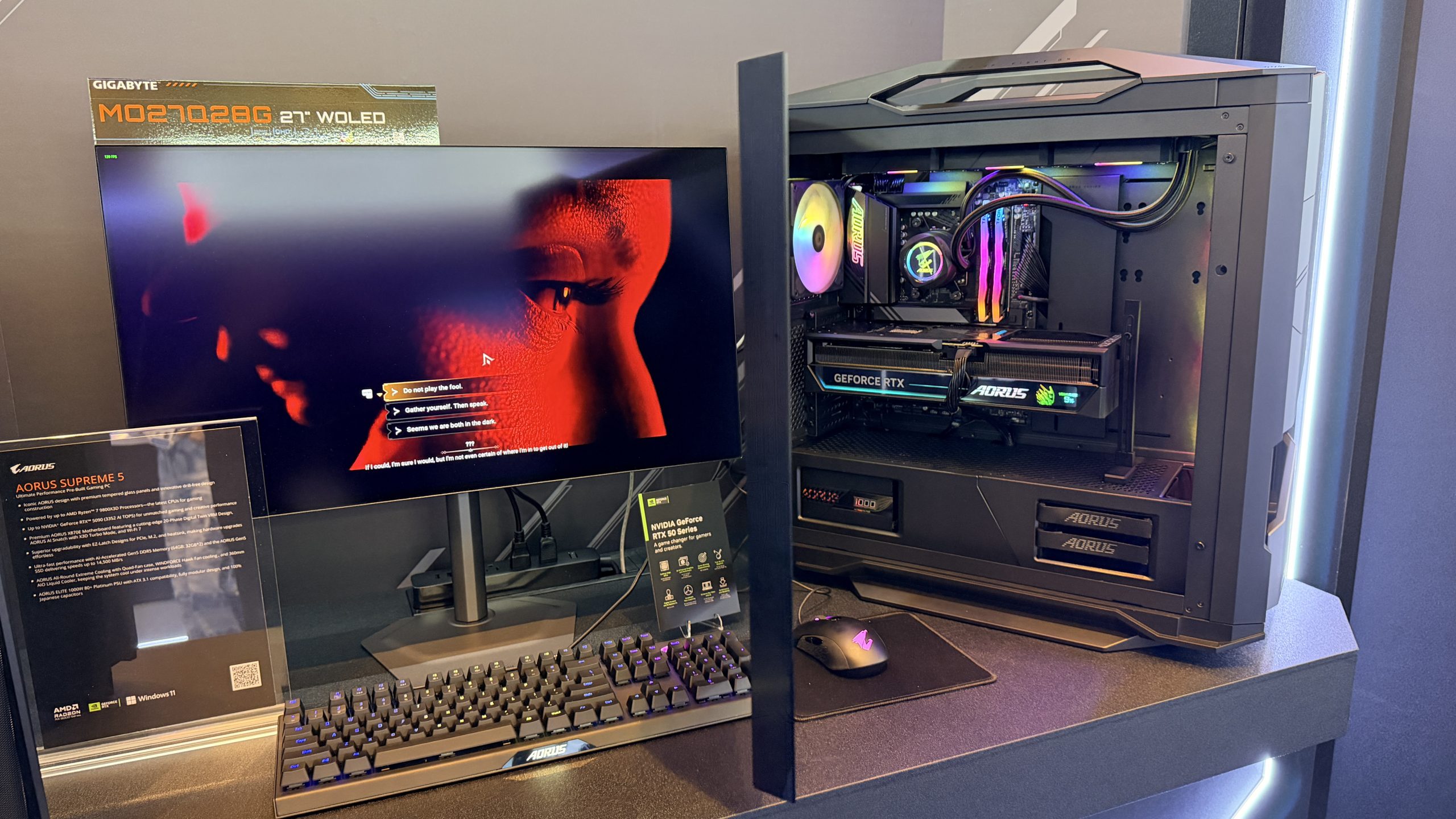
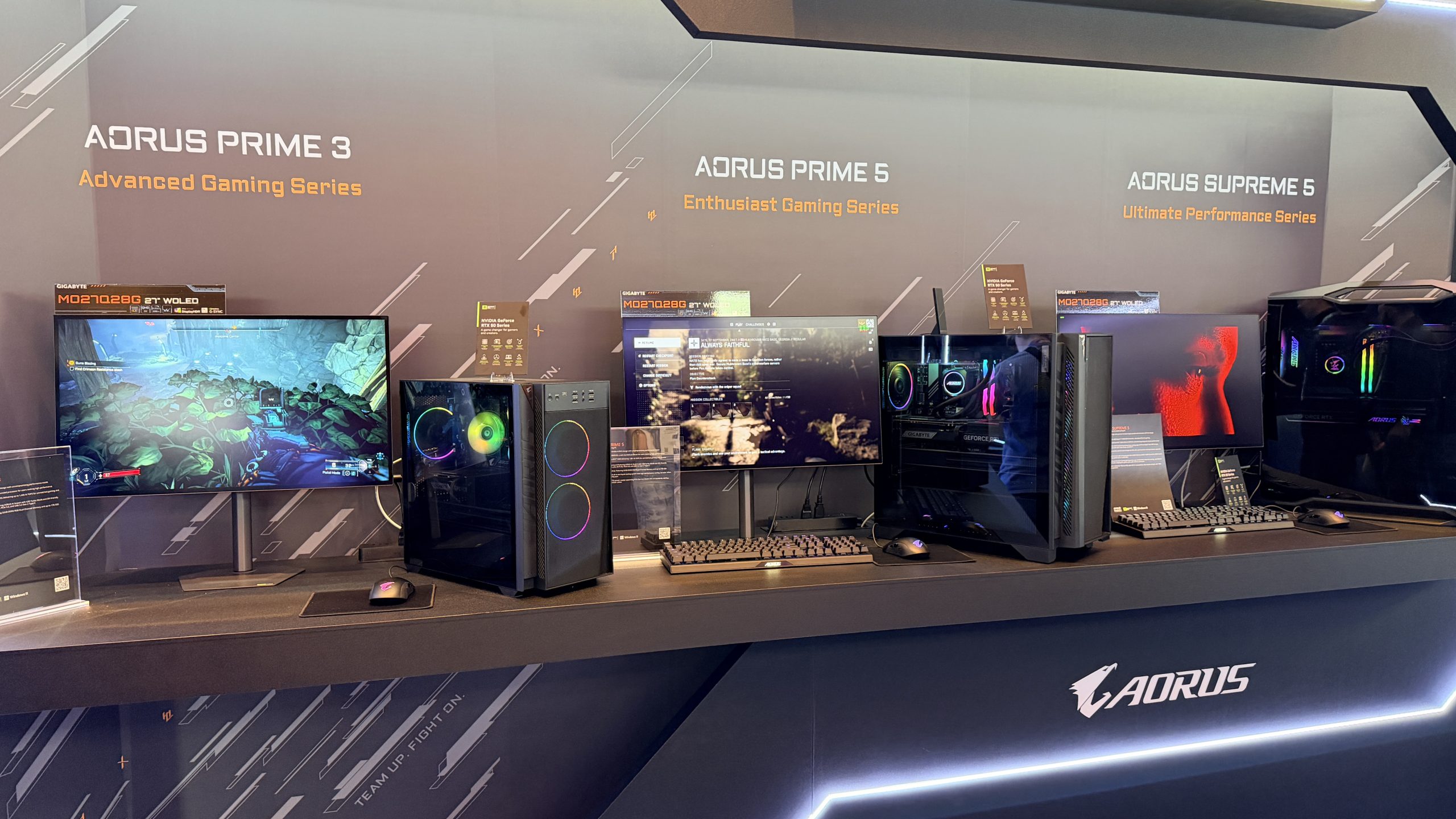
CES 2026: Gigabyte unveils new-gen OLED monitors

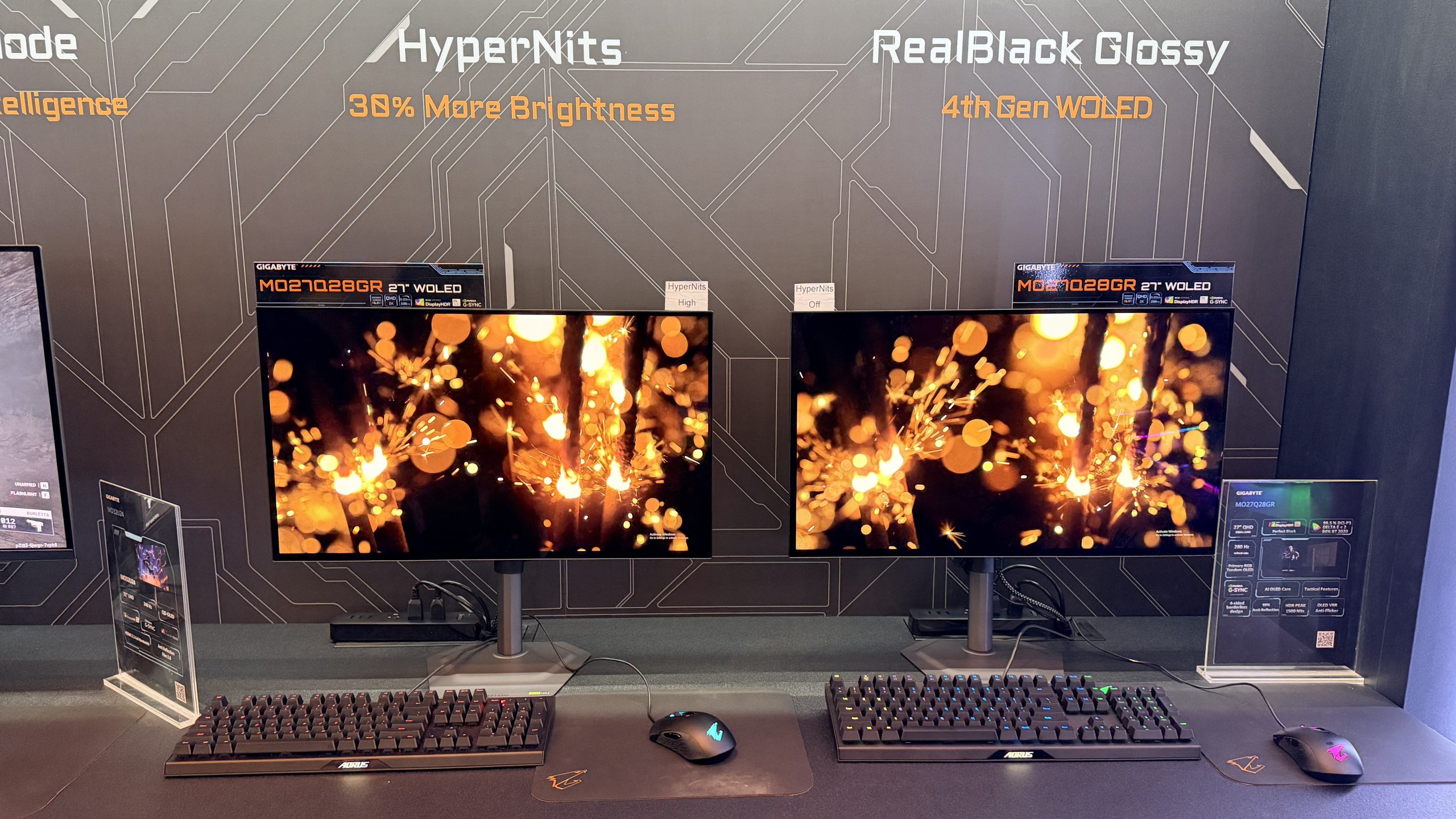
At CES this week, Gigabyte has introduced four new OLED gaming monitors to its line-up, focusing heavily on picture-quality tuning for HDR and SDR content. The key new feature is HyperNits, which aims to address issues with HDR modes appearing dim by boosting the brightness curve without blowing out highlights.

For HDR, GIGABYTE is introducing a set of tuned HDR Picture Modes including HDR Movie, HDR Game and HDR Vivid, alongside a new feature called HyperNits. Many OLED panels appear dim in HDR peak‑brightness modes due to APL constraints, and HyperNits aims to counter this by reshaping the EOTF curve to boost brightness by up to 30% without blowing out highlights. Users can select HyperNits High for maximum output or HyperNits Medium for a milder 20% lift.

SDR content is handled by a new AI Picture Mode trained on a large dataset to automatically adjust settings based on activity. It can reduce brightness and blue light for work, increase contrast and adjust gamma for movies, or activate AI Black Equalizer for improved visibility in FPS titles. Adjustments are applied dynamically in real time.

These new displays will also come with a new set of Gigabyte's ‘Tactical Features'. Tactical Switch 2.0 enables one‑click switching between resolutions and aspect ratios such as 4:3 or 5:4, while Ultra Clear is designed to improve motion clarity and reduce blur in fast‑moving content.

The CES lineup includes the ultra‑wide QD‑OLED MO34WQC36 and the 4K QD‑OLED MO32U24, both featuring the new ObsidianShield film and DisplayHDR True Black 500 certification. ObsidianShield is said to improve perceived black levels by up to 40% and increases surface hardness from 2H to 3H for better scratch resistance. The MO34WQC36 also adopts a new V‑stripe sub‑pixel structure for improved text clarity. Rounding out the range is the MO27Q28GR, which uses RealBlack Glossy 4th‑gen WOLED technology and carries UL certification for bright‑room black performance.

KitGuru Says: Are you thinking of making the jump to a new-gen OLED display this year?

The post CES 2026: Gigabyte unveils new-gen OLED monitors first appeared on KitGuru.
  •  

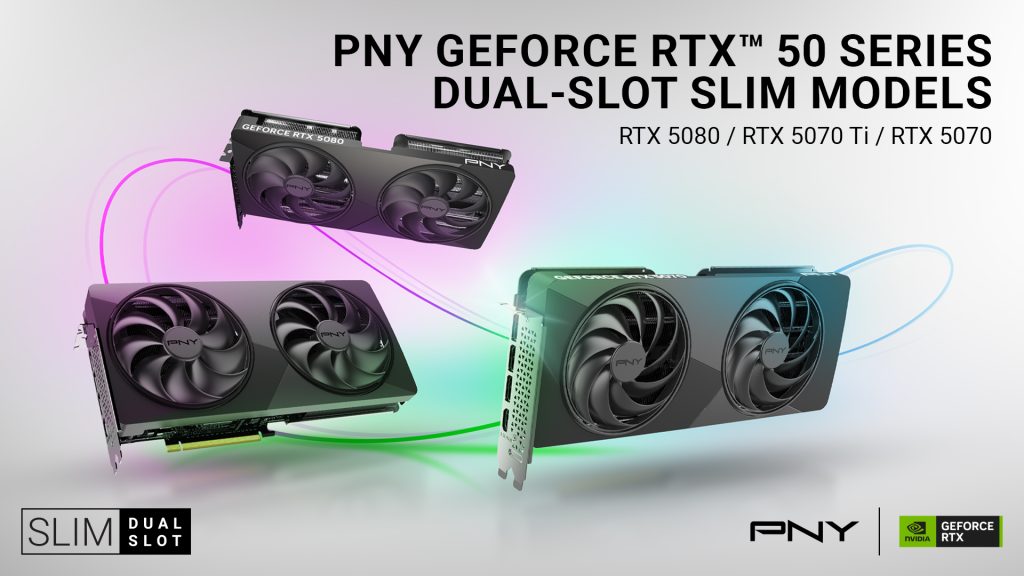
CES 2026: PNY targets SFF enthusiasts with dual-slot GeForce RTX 5080 and 5070 Slim

PNY has officially entered the 2026 Small Form Factor (SFF) market at CES 2026, unveiling a trio of Blackwell-based graphics cards designed to fit where most modern flagships cannot. The new GeForce RTX 5080, RTX 5070 Ti and RTX 5070 Slim models all adhere to a strict dual-slot, 40mm-thick design, making them suitable for SFF builds. By leveraging a redesigned thermal solution that utilises a vapour chamber and an aluminium backplate, PNY aims to provide the full performance of Nvidia's reference specifications without the massive physical footprint

The flagship of this compact series is the PNY GeForce RTX 5080 16GB Slim. PNY is shipping both standard and factory-overclocked versions, with the OC model boosting up to 2730MHz. Cooling a 360W TDP dual-slot card measuring 300mm in length and 40mm in thickness is no small feat, which is why PNY has equipped the 5080 with dual 120mm fans. These fans are designed to move more air at lower RPMs, theoretically keeping the noise floor manageable even during heavy 4K gaming loads

Sitting just below the flagship, the RTX 5070 Ti Slim is arguably the most interesting entry for SFF builders, as Nvidia isn't producing a Founders Edition for this SKU. PNY's version has a 300W TDP and fits into a slightly shorter 290mm chassis. Further down the stack, the RTX 5070 Slim is even smaller, measuring 128mm wide and featuring a pair of 100mm fans. All three models use a PCIe 5.0 interface and offer modern display connectivity, including three DisplayPort 2.1b outputs and a single HDMI 2.1b port.

Software control is handled by PNY's VelocityX suite, which allows for real-time telemetry monitoring, custom fan curves and manual OC. While the cards lack the ARGB lighting found on the more mainstream Epic-X series, the clean, industrial aesthetic is clearly aimed at users who prefer performance over flair. PNY expects these units to hit retail shelves in February 2026.

KitGuru says: PNY is filling a gap in the market here, particularly with the dual-slot RTX 5070 Ti. For those building in restrictive spaces, these Slim models might be one of the few ways to get a high-end RTX 50 card on their systems.

The post CES 2026: PNY targets SFF enthusiasts with dual-slot GeForce RTX 5080 and 5070 Slim first appeared on KitGuru.
  •  

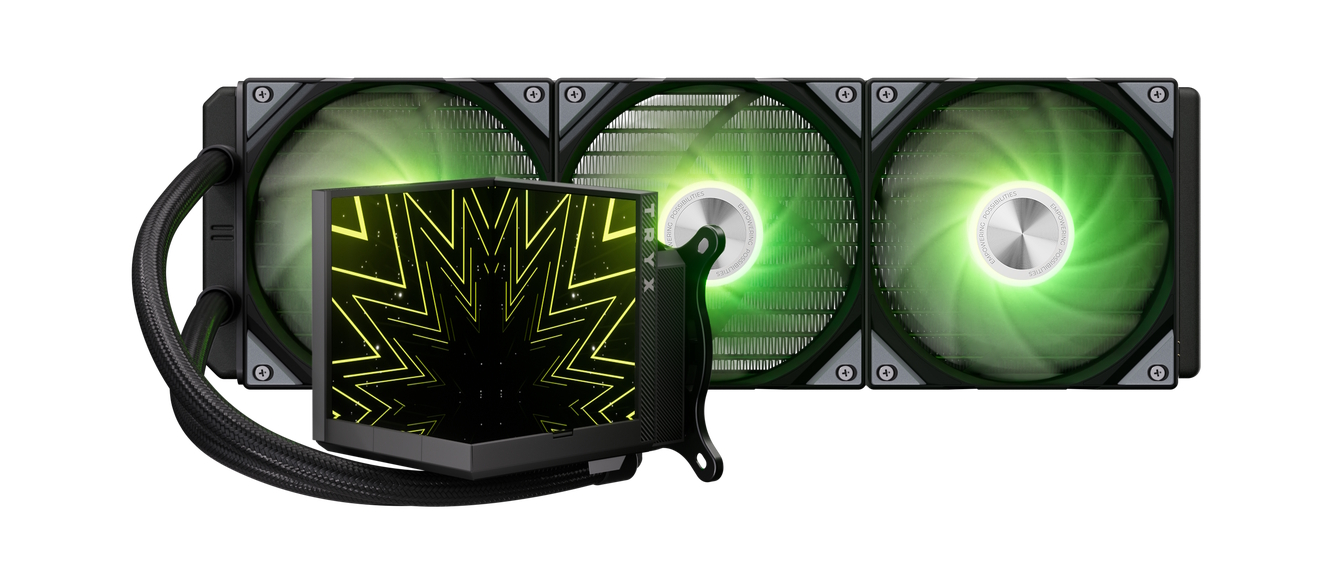
CES 2026: Tryx expands its lineup with new cooling solutions and cases

Following the launch of its Panorama series last year, Tryx has made a mark on the PC hardware market. At CES 2026, the brand is expanding its lineup to new segments with a trio of products that push the limits of how much screen real estate you can realistically fit inside a chassis. Headlining the launch is the Stage 360 AIO, a liquid cooler that ditches the single-panel approach for a unique “spliced” dual-display setup. Alongside the AIO comes a “lifestyle” chassis with a cross-flow fan design and the company’s first high-end CPU cooler, the Turris 620.

The Stage 360 liquid cooler offers an upgrade over typical LCD-on-pump systems. Rather than a single large screen, Tryx has integrated two 4.0-inch IPS displays onto an aluminium pump base, “spliced” together to create a continuous visual stage. With a pixel density of 254 PPI and a 720×720 resolution per panel, the visual fidelity is high enough to display detailed animations or even support small physical figurines placed on the base. Configuration is handled through the company’s Kanali software. Under the hood, the unit relies on 8th-gen Asetek technology and triple Rota SL ARGB fans to handle a rated TDP of 280W.

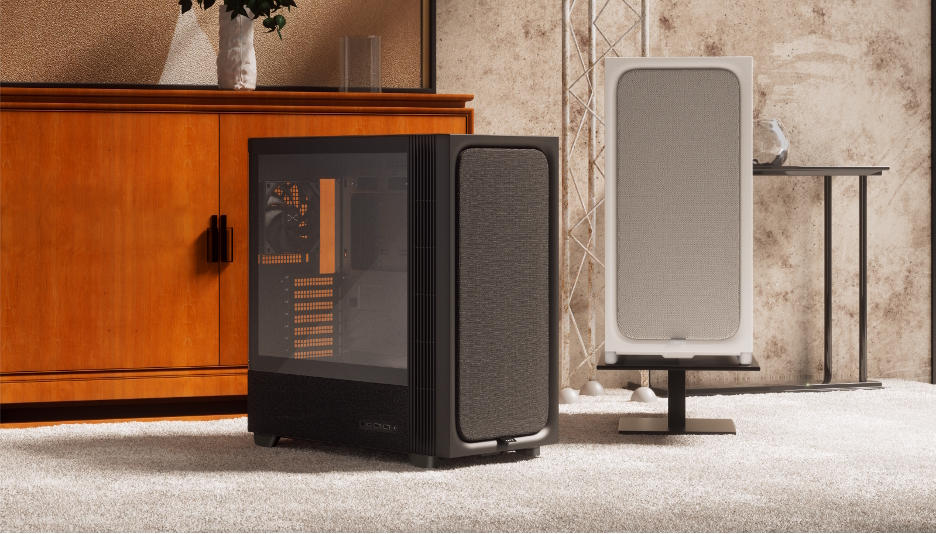
Moving to the chassis, the Flova F50 mid-tower was designed to blend a PC case with home aesthetics. The case features ventilated fabric-finished panels available in black, white or pink. However, the real innovation is the proprietary Tryx Cross-Flow (TCF) fan. Unlike traditional axial fans that push air in a straight line, the TCF is a side-mounted drum-style fan that creates a 90-degree airflow channel. This uniform wall of air is intended to eliminate dead spots over the motherboard and GPU while operating at an ultra-quiet 20 dBA. The case is also modern in its compatibility, offering full support for back-connect motherboards like Asus BTF and MSI Project Zero.

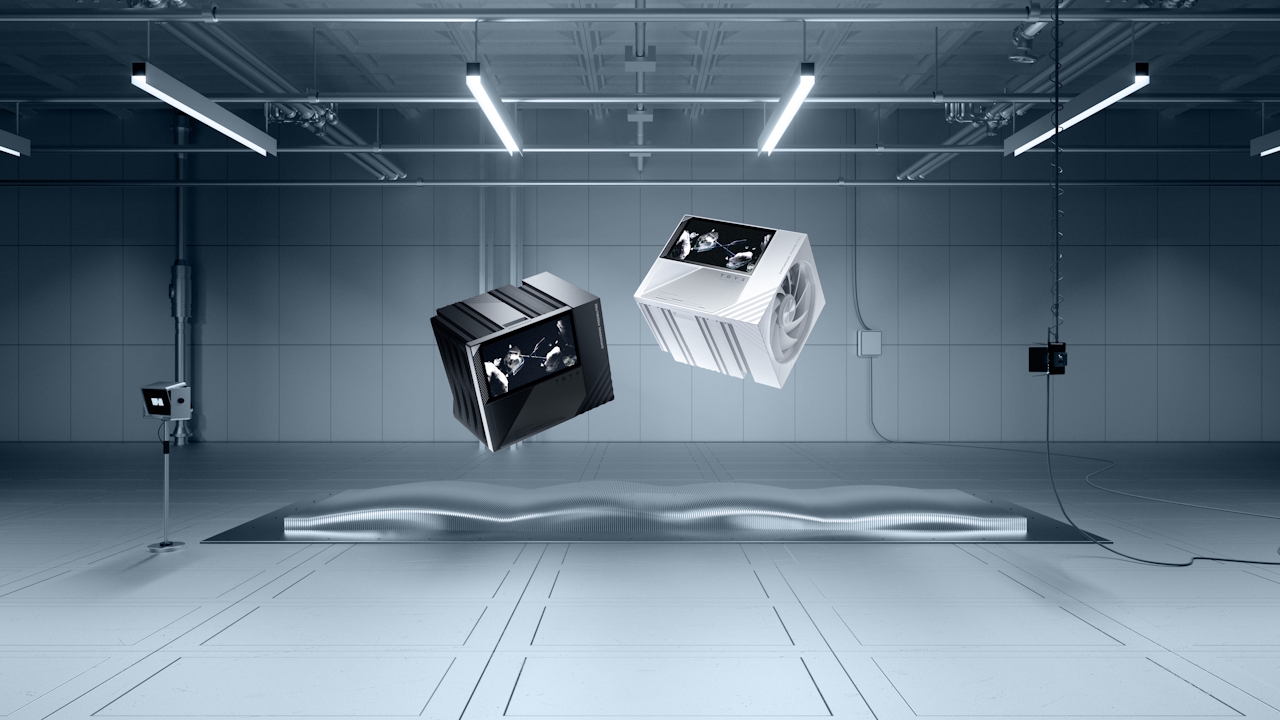
For those who prefer air cooling but still want the “screen-on-everything” aesthetic, the Turris 620 aims to deliver. This dual-tower heatsink features a massive 5.0-inch ultra-wide HD IPS display that is magnetically mounted to the top. The cooler uses a six-heatpipe configuration and a nickel-plated micro-convex base, and it can tame CPUs up to 280W. Installation is simplified through a rail system for the Rota fans, allowing them to be snapped into place without the usual struggle of wire clips.

The Stage 360 is expected to hit European shelves in February 2026 for £199.99/€229.99. The Flova F50 will arrive around the same time, starting at £129.99/€144.99, while the Turris 620 is slated for a March release with pricing to be confirmed closer to launch.

KitGuru says: The engineering behind the Flova F50's cross-flow fan is legitimately interesting. If that TCF fan can actually deliver on its promise of silent, uniform cooling, Tryx might have more than just coolers with big displays on its hands.

The post CES 2026: Tryx expands its lineup with new cooling solutions and cases first appeared on KitGuru.
  •  

Sony unveils new limited edition Hyperpop PS5 DualSense and accessories

Since the launch of the PlayStation 5 back in 2020, Sony has kept the console feeling fresh thanks to plenty of additional accessories and customisation options. Joining the line-up in 2026 is the PS5’s new Hyperpop Collection – featuring bright and colourful face plates and DualSense controllers.

Making the announcement via the PlayStation Blog, the VP of global marketing at SIE Isabelle Tomatis officially unveiled the Hyperpop Collection: Featuring three new striking designs for DualSense wireless controllers and PS5 console covers.”

With a shiny/glossy finish complimented by a mix of bright colours transitioning into black, the Hyperpop collection is perhaps one of the PS5’s best-looking after-market accessories yet – second only to their ‘Chroma’ series.

The PS5 Hyperpop Collection is available in 3 colours (Techno Red, Remix Green, Rhythm Blue) and will be pre-orderable from the 16th of January – with shipping commencing from the 12th of March.

Additional details on the new console covers and DualSense controllers can be found HERE.

KitGuru says: What do you think of the PS5’s customisation compared to previous generations? Were the face plates a good idea? Which collection has been your favourite so far? Let us know your thoughts down below.

The post Sony unveils new limited edition Hyperpop PS5 DualSense and accessories first appeared on KitGuru.
  •  

CES 2026: MSI introduces the MPG 272QRF X36, its first Nvidia G-Sync Pulsar monitor

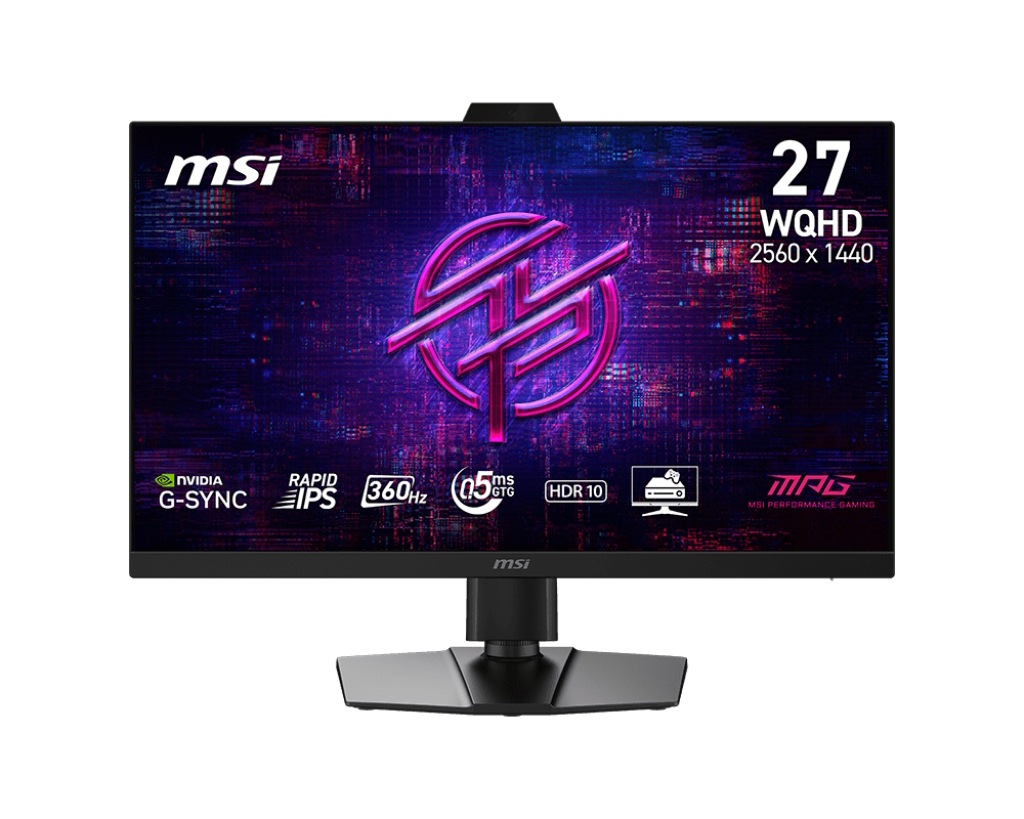
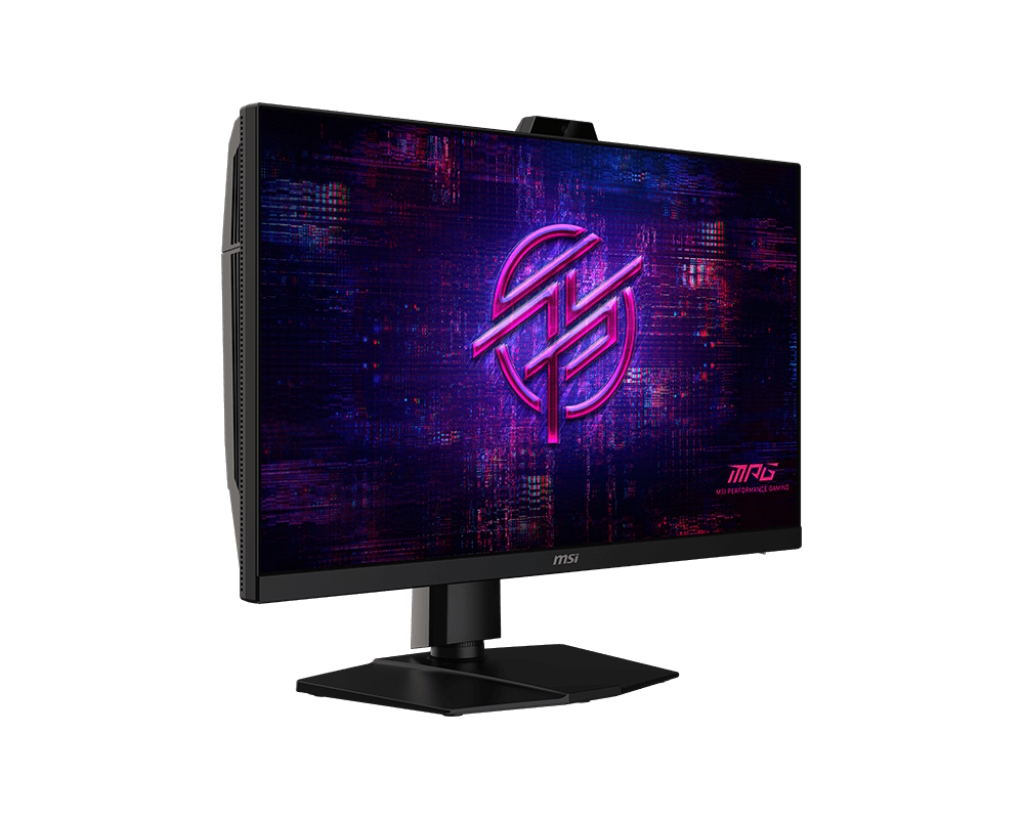
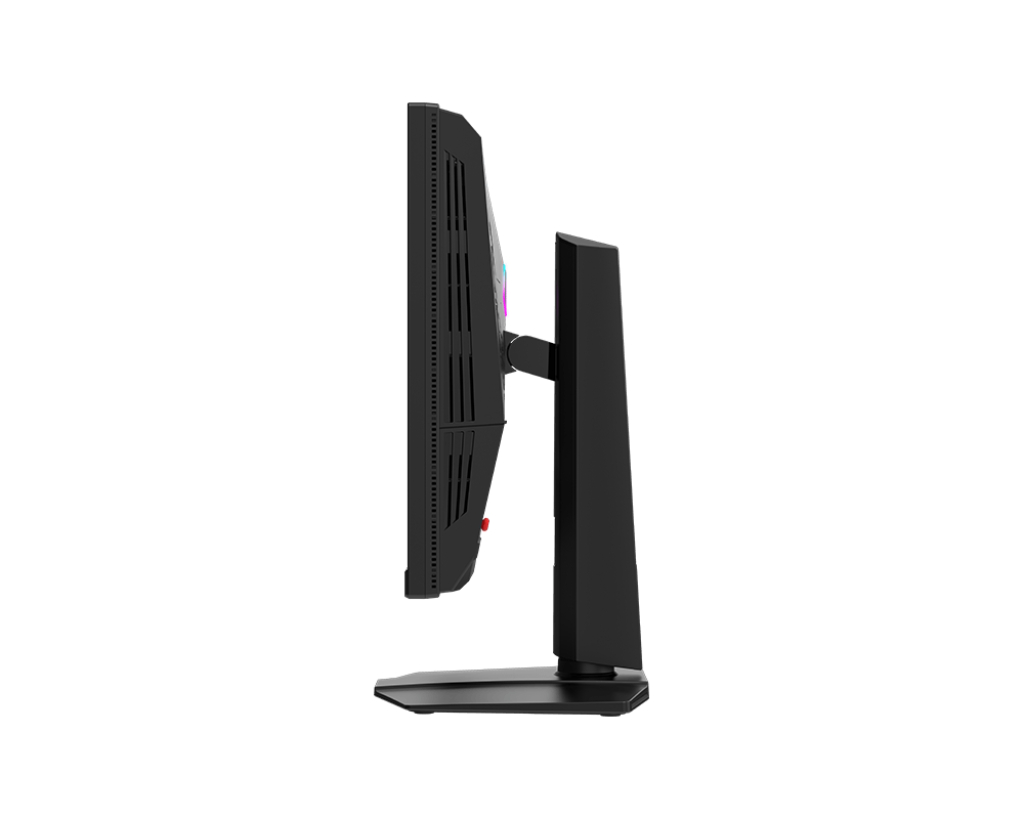
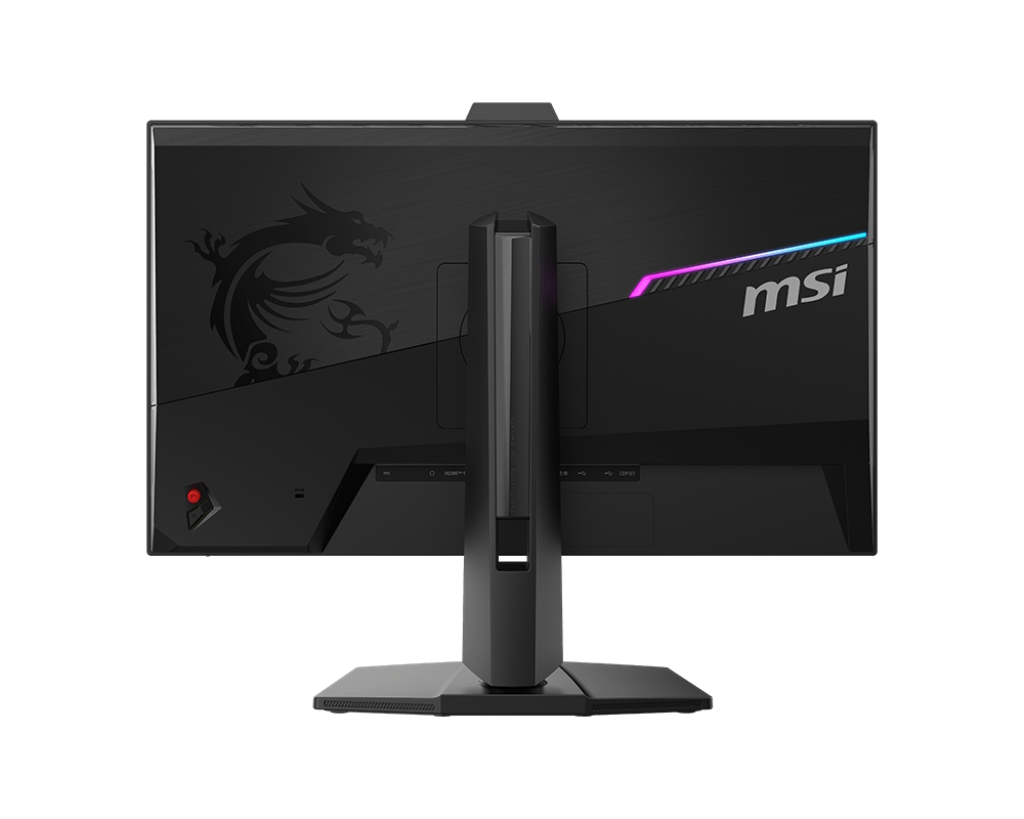
MSI has officially launched the MPG 272QRF X36, a monitor developed in close partnership with Nvidia to spearhead the arrival of G‑Sync Pulsar technology. Aimed at the competitive gaming market, this 27‑inch Rapid IPS display pairs a native WQHD (2560 x 1440) resolution with a 360Hz refresh rate. While high‑refresh displays are increasingly common in the competitive scene, the MPG 272QRF X36 distinguishes itself by finally unifying variable refresh rate (VRR) and backlight strobing without the traditional compromises of flickering or screen tearing

Nvidia’s G‑Sync Pulsar technology is what makes this possible. Historically, gamers had to choose between the stutter‑free experience of G‑Sync and the superior motion clarity of backlight strobing (ULMB). Pulsar eliminates this by using variable‑frequency backlight strobing to synchronise with the GPU’s fluctuating frame rate. By dividing the backlight into multiple horizontal sections and utilising a “rolling scan” technique, the monitor pulses the backlight for only 25% of each frame duration. This ensures pixels have time to stabilise before they are illuminated, resulting in what Nvidia claims is a fourfold improvement in motion clarity (240 FPS has the motion clarity of 960Hz).

Beyond raw speed, the MPG 272QRF X36 integrates several quality‑of‑life features for varying environments. The G‑Sync Ambient Adaptive system utilises an on‑board light sensor to monitor the user’s surroundings, automatically adjusting brightness and colour temperature to maintain optimal contrast while reducing eye strain. Competitive players who still prefer lower resolutions for performance reasons will also find value in the 25″ Mode simulation. This feature provides pixel‑perfect scaling for resolutions such as 1920 x 1080 and 1280 x 960, allowing players to use a smaller windowed area with reduced interpolation artefacts or blur.

The monitor uses a Rapid IPS panel with 10‑bit colour support (8‑bit + FRC) and a peak brightness rating of 500 nits. Connectivity includes dual HDMI 2.1 ports and a DisplayPort 1.4a input. The display also supports user‑updatable firmware directly from Nvidia, allowing the G‑Sync module to receive performance optimisations post‑purchase. The MPG 272QRF X36 is priced at $649.99.

KitGuru says: Nvidia's G-Sync Pulsar is very promising. However, considering you're getting a 27-inch IPS panel when you could get a 27/32-inch 4K OLED monitor for the same price, potential buyers will have to evaluate if they really value motion clarity that much.

The post CES 2026: MSI introduces the MPG 272QRF X36, its first Nvidia G-Sync Pulsar monitor first appeared on KitGuru.
  •  

Fallout: New Vegas remaster reportedly in the works alongside Fallout 3

In the wake of last year’s highly-successful The Elder Scrolls IV: Oblivion Remastered, we began to hear an increasing number of leaks and rumours suggesting that Fallout 3 would be next in line to receive such a treatment. Though yet to be officially confirmed, insiders have claimed that not only is Fallout 3 set to get a remaster, but the much-loved New Vegas too.

As claimed by known Xbox insider Jez Corden via Windows Central, “we are eventually getting a Fallout 3 remake in the vein of Elder Scrolls IV: Oblivion Remastered.”

This far from surprising given both the success of Oblivion Remastered and the fact that a Fallout 3 remaster was leaked by Microsoft themselves back in 2023. What is more interesting however is that according to Corden the much-loved Fallout: New Vegas is also set to receive a similar treatment.

Fallout 3 New Vegas

While Fallout 3 has plenty of fans, New Vegas in particular has come to be known as one of the best RPGs of all time and so it getting a remaster in particular would be exciting indeed.

That said, while the Oblivion remaster was received warmly, it suffers from plenty of performance issues owing in part to its Unreal Engine 5 layer. Assuming Fallout 3 and New Vegas will be handled in the same way, here’s to hoping that more time is dedicated to making the experience a smooth one – though this might be asking too much from Bethesda.

KitGuru says: What do you think of this latest claim? Which of the two games would you want to see remastered first? What were your overall thoughts on Oblivion Remastered? Let us know down below.

The post Fallout: New Vegas remaster reportedly in the works alongside Fallout 3 first appeared on KitGuru.
  •  

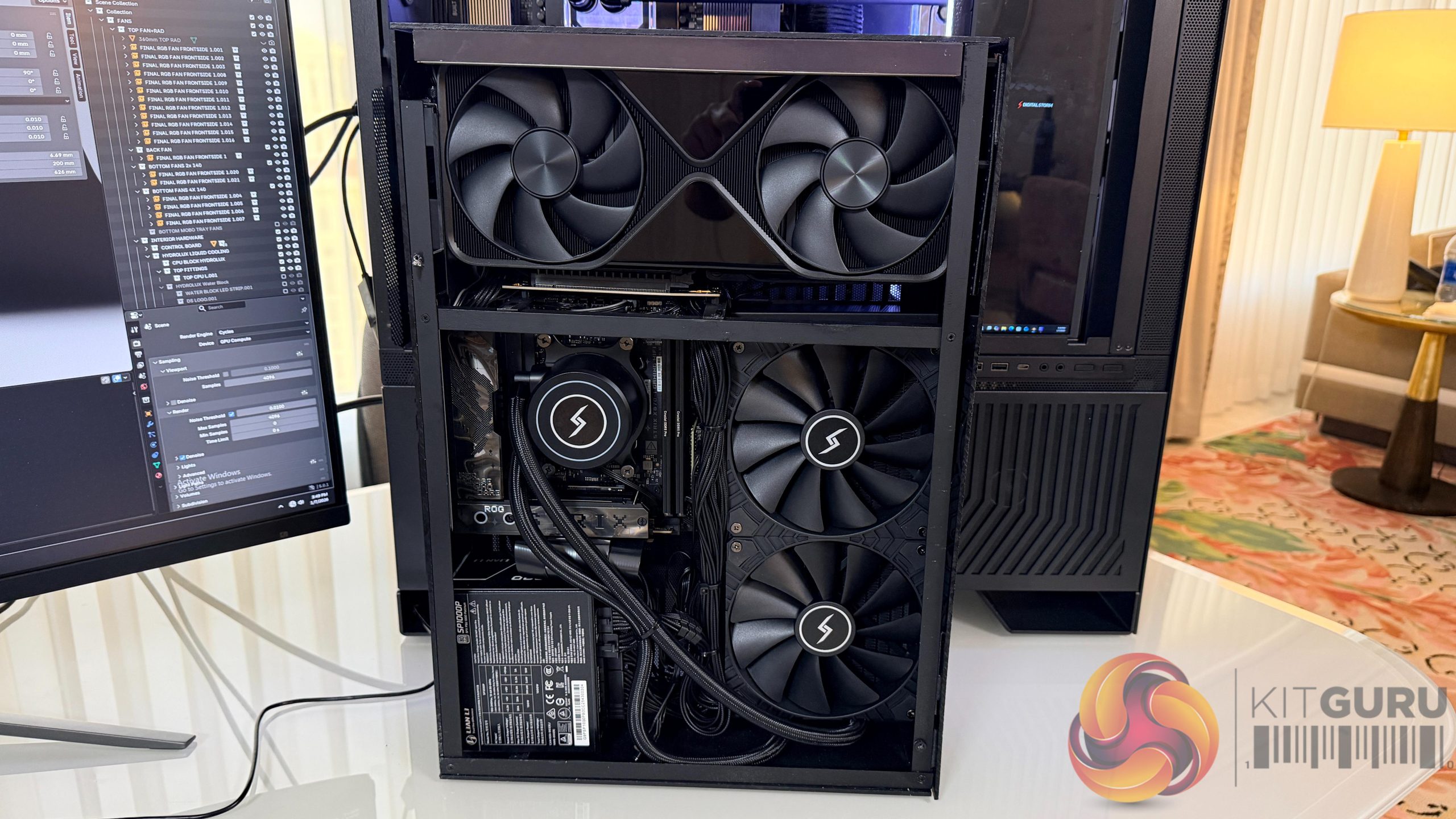
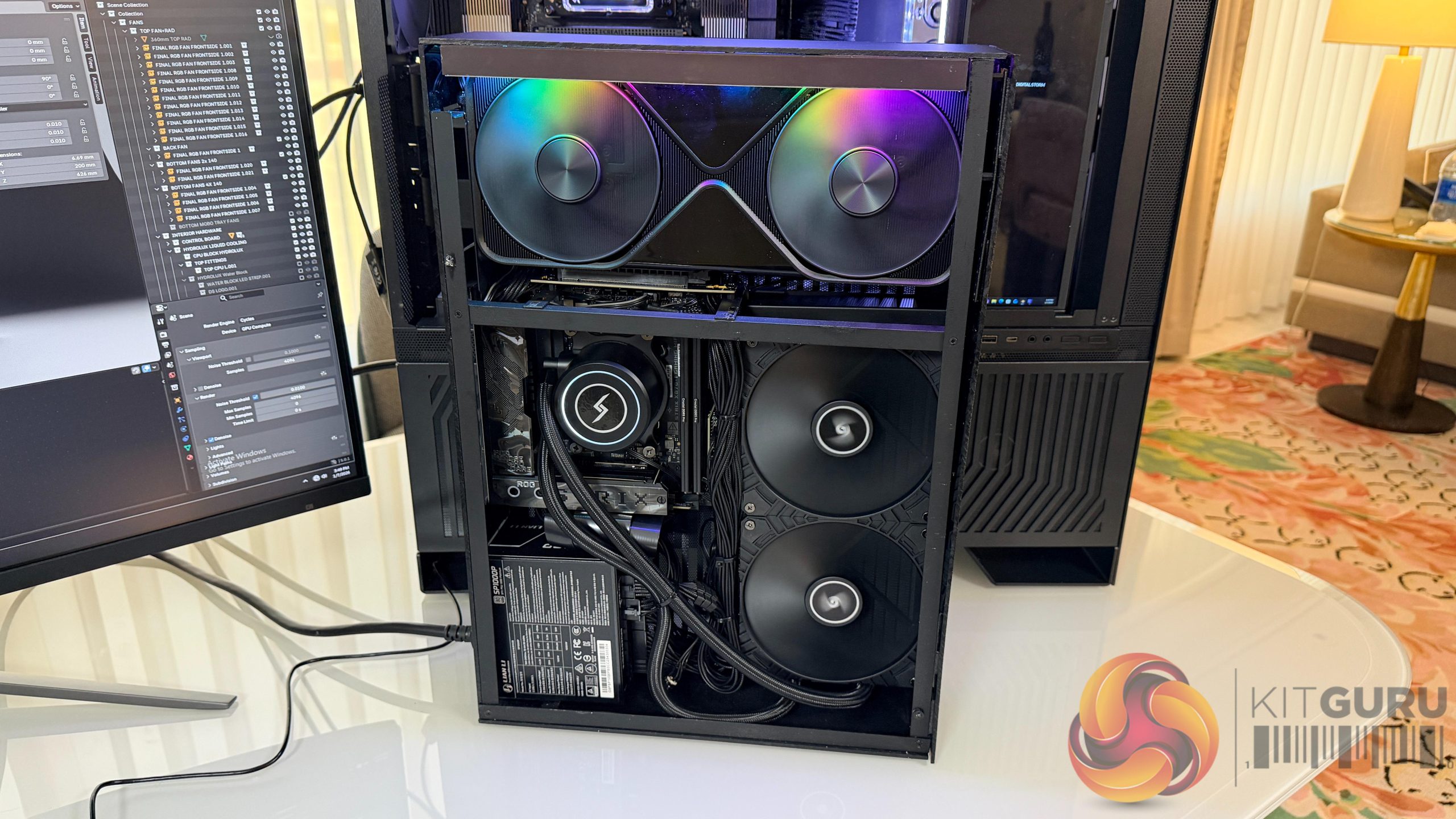
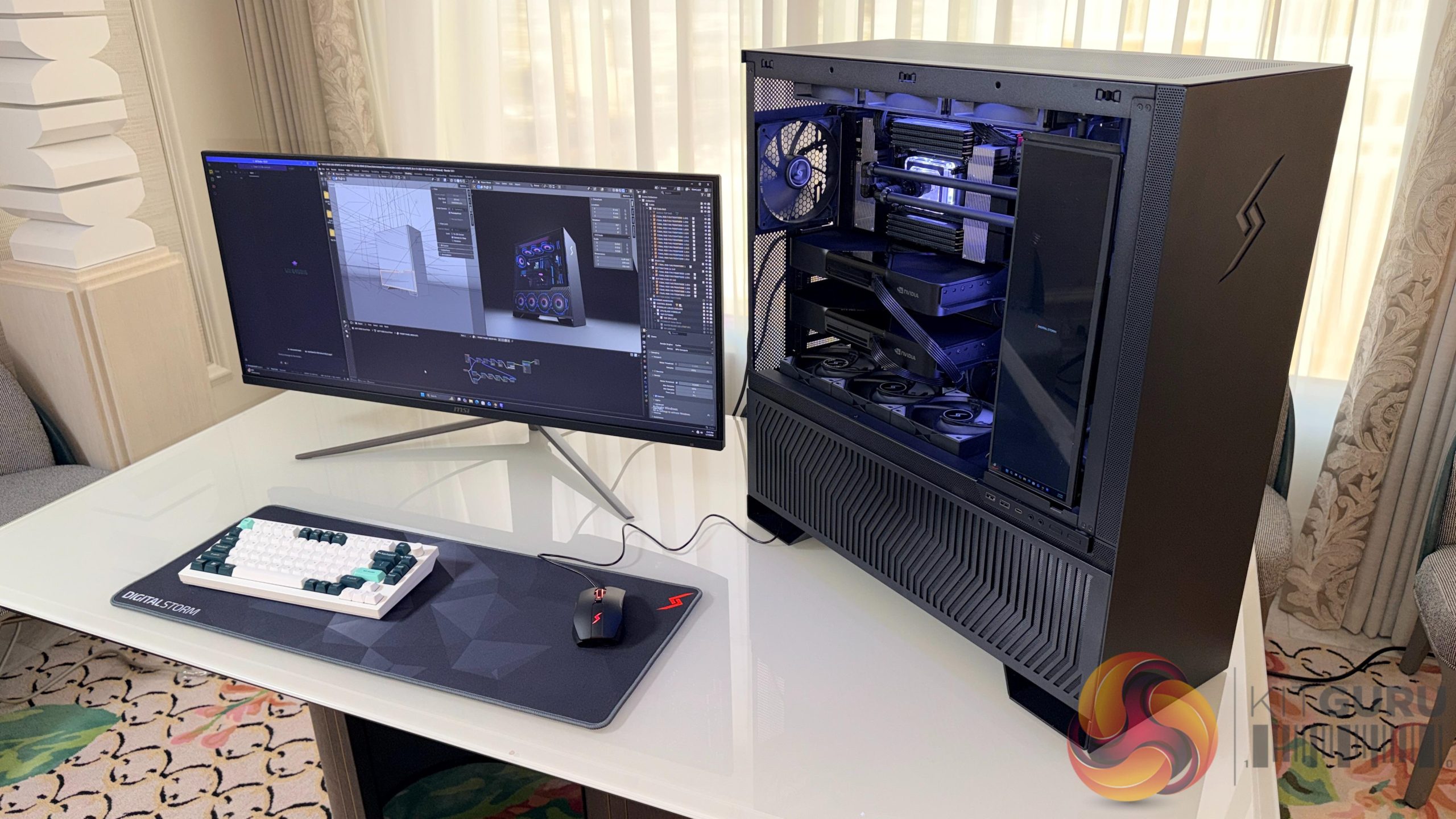
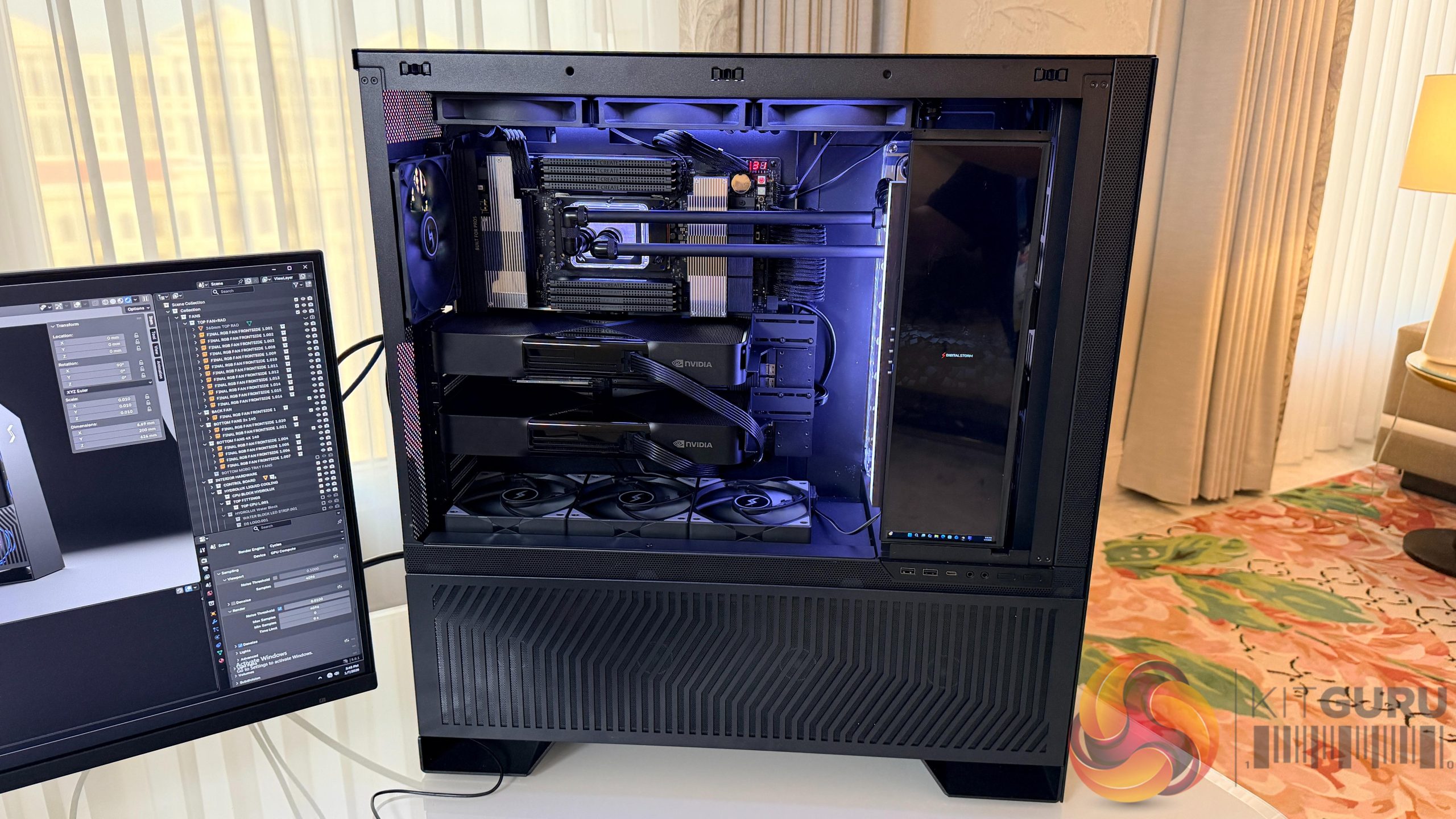
CES 2026: Digital Storm debuts new prebuilt PCs with RTX Pro Blackwell graphics

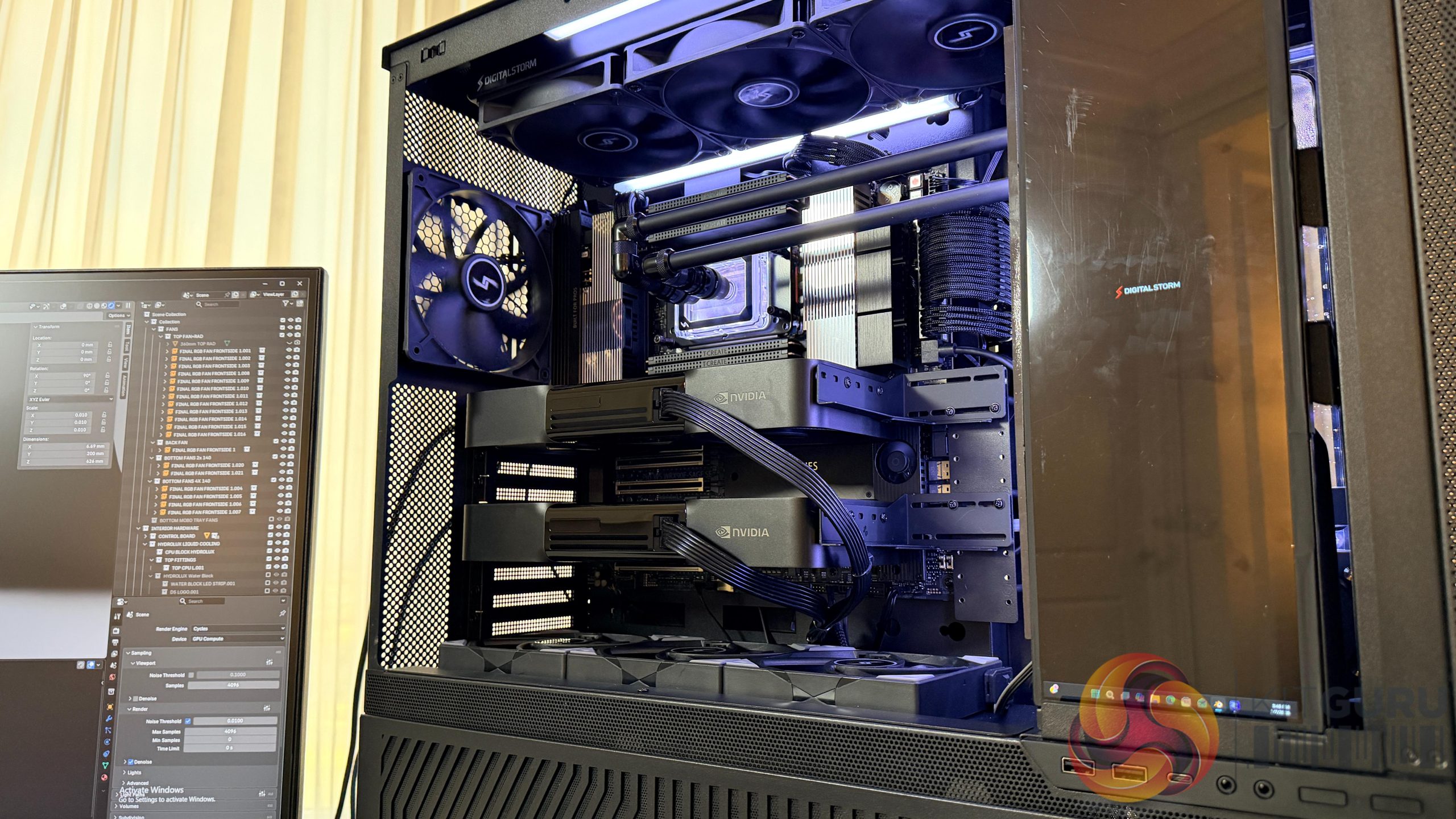
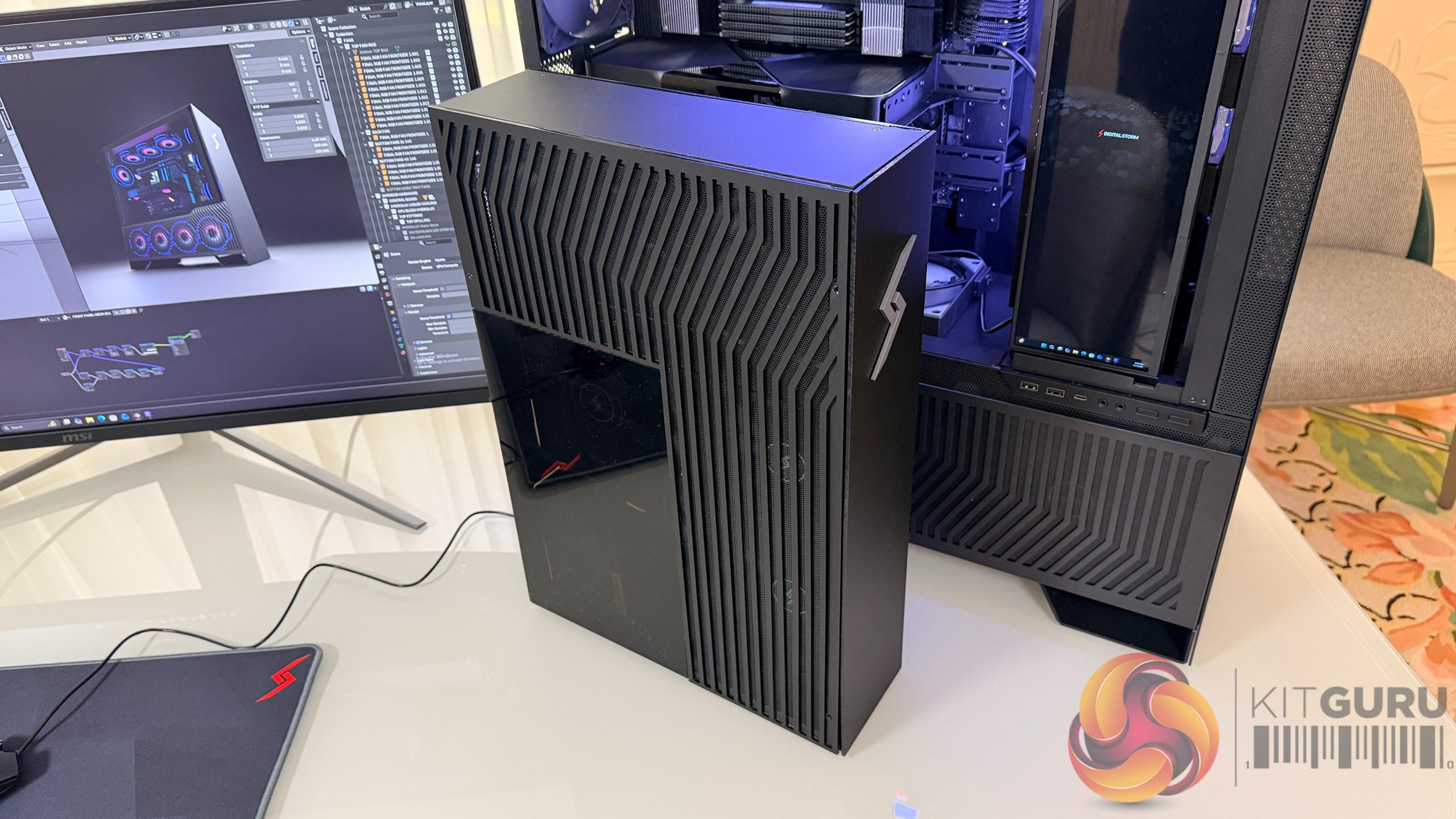
At CES this week, we stopped by to visit US PC maker, Digital Storm. At their booth, we got a look at the new Vector and Aventum 5 systems, each taking a different approach to high-end computing.

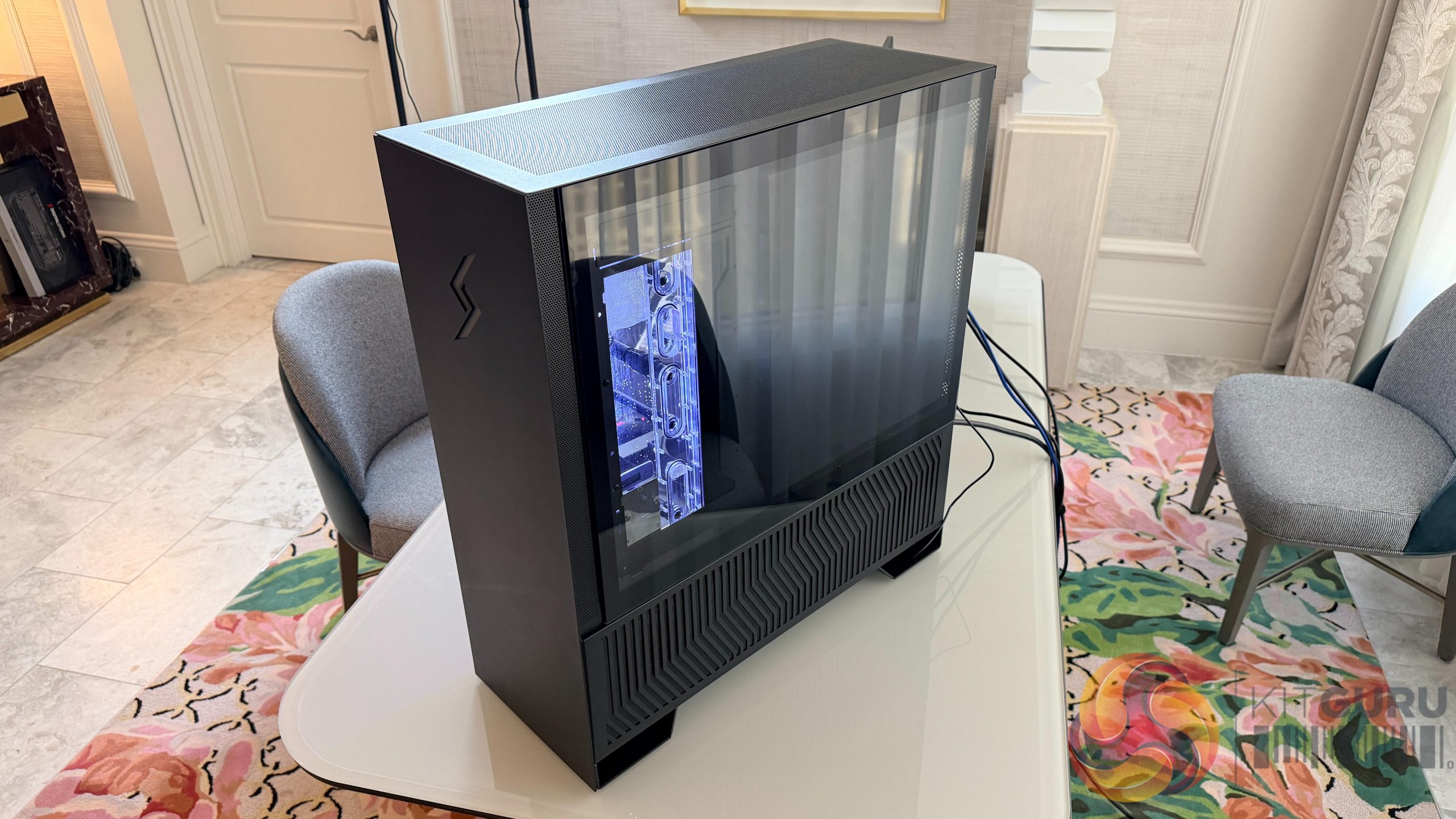
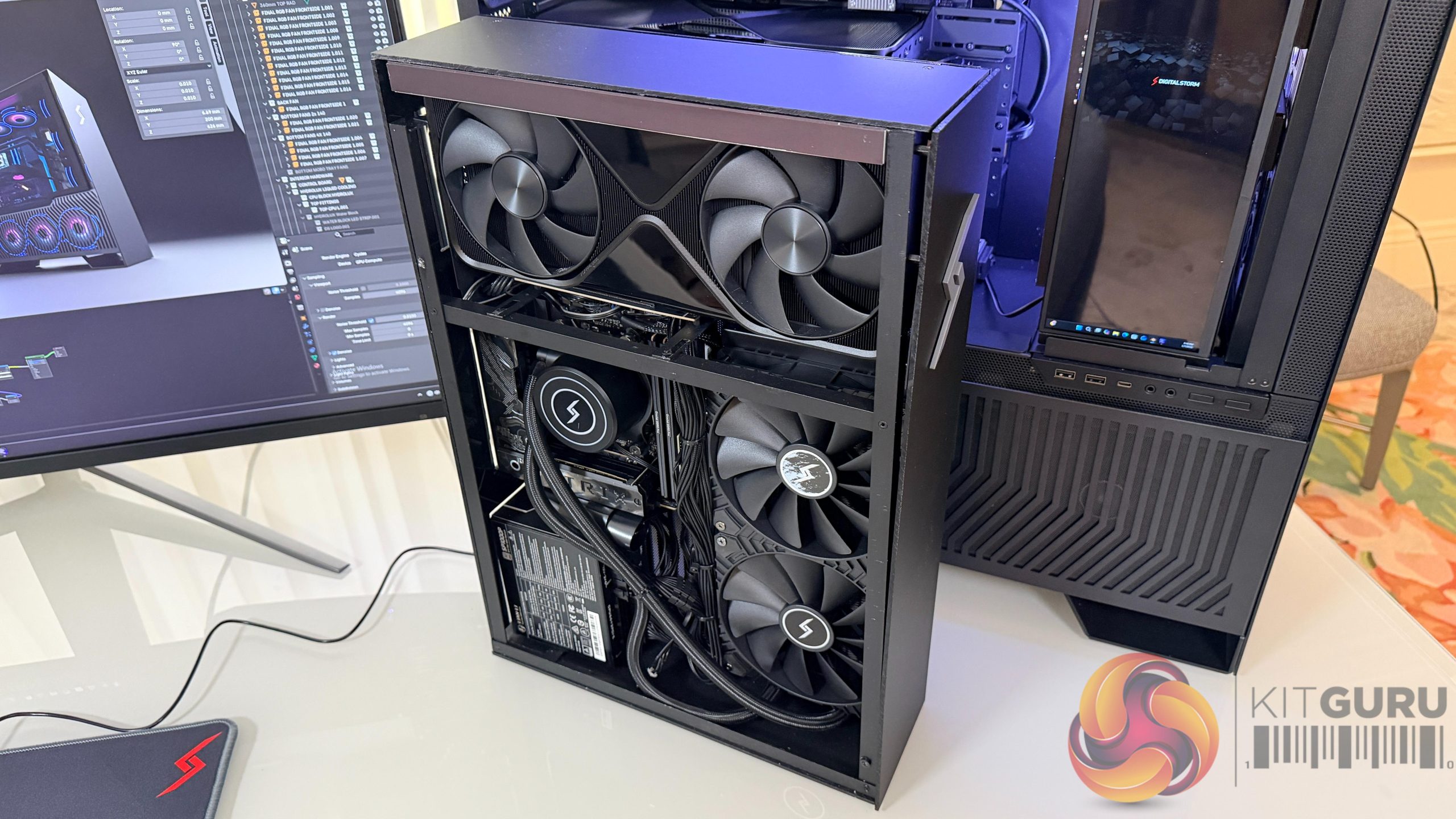
The Digital Storm Vector is designed as a slimmer, more compact alternative to traditional ATX towers, fitting high‑end components into a chassis just 4 inches wide. It emphasises performance density, managing heat, airflow and acoustics within a constrained volume while still supporting powerful CPUs and modern GPUs. In its top configurations, the Vector can be equipped with an NVIDIA RTX 6000 Pro Blackwell GPU paired with either an AMD Ryzen 9 9950X or an Intel Core Ultra 9 285K processor.

The Aventum 5 is Digital Storm’s latest fully liquid‑cooled desktop, redesigned to prioritise radiator capacity, airflow routing and serviceability for long‑duration CPU and GPU workloads. The system is built to keep next‑generation CPUs and RTX 6000‑class GPUs operating at boost clocks for extended periods without throttling. A large display is integrated directly into the chassis, providing real‑time system monitoring stats such as temperatures, clock speeds, utilisation and cooling performance without relying on overlays or additional monitors.

Both the Vector and Aventum 5 PCs will be available with a wide range of configuration options, including the latest desktop platforms from AMD and Intel, NVIDIA GPUs up to the RTX 6000 Pro Blackwell, large memory capacities, fast NVMe storage and high‑end power supplies. The Aventum 5 is expected to start at around $3,000 USD. Meanwhile, the Vector will start at approximately $2,000 USD. Both are expected to be available to order through Digital Storm starting in Q2.

KitGuru Says: These aren't so much gaming PCs but rather AI development powerhouses.

The post CES 2026: Digital Storm debuts new prebuilt PCs with RTX Pro Blackwell graphics first appeared on KitGuru.
  •  

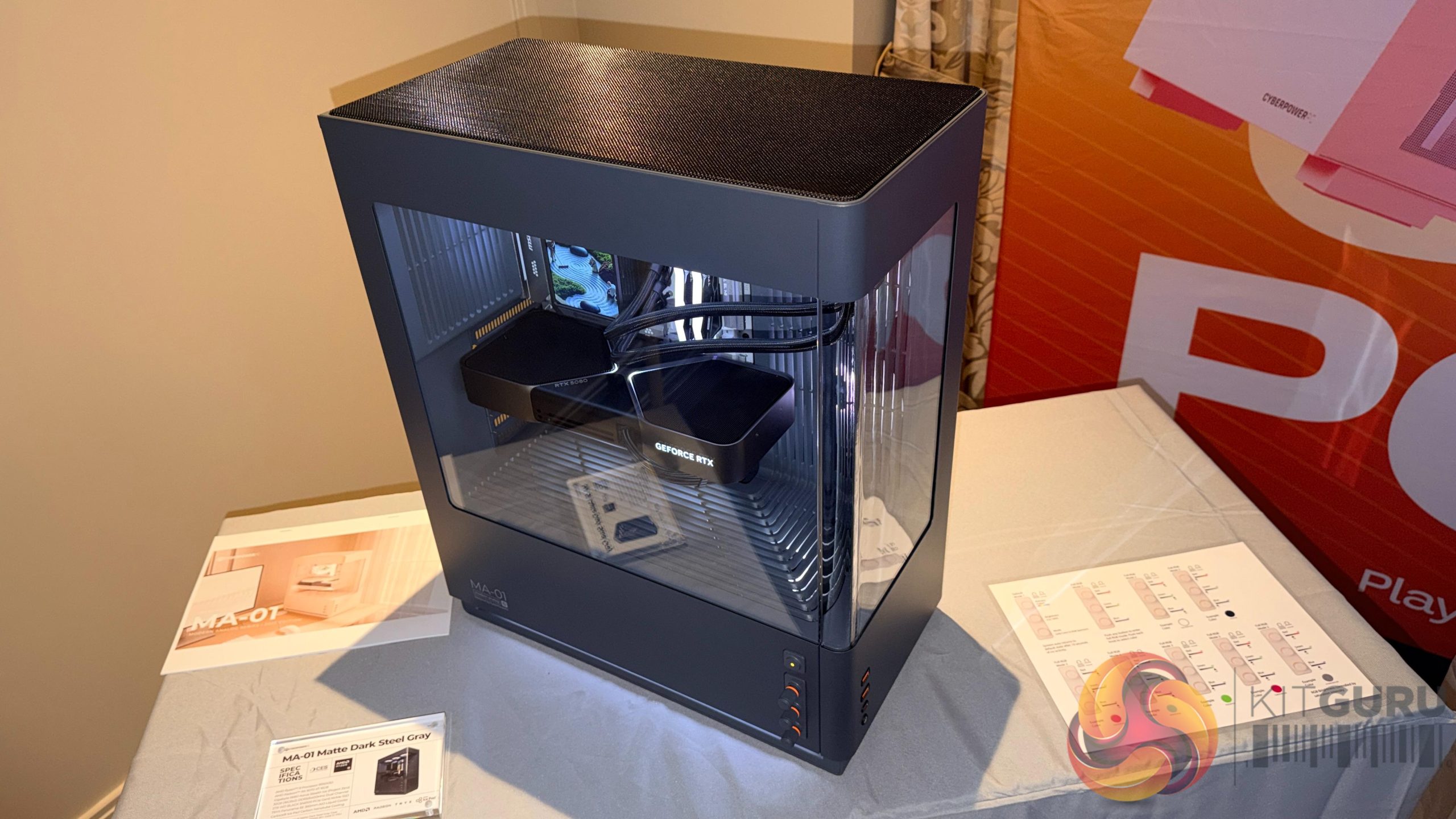
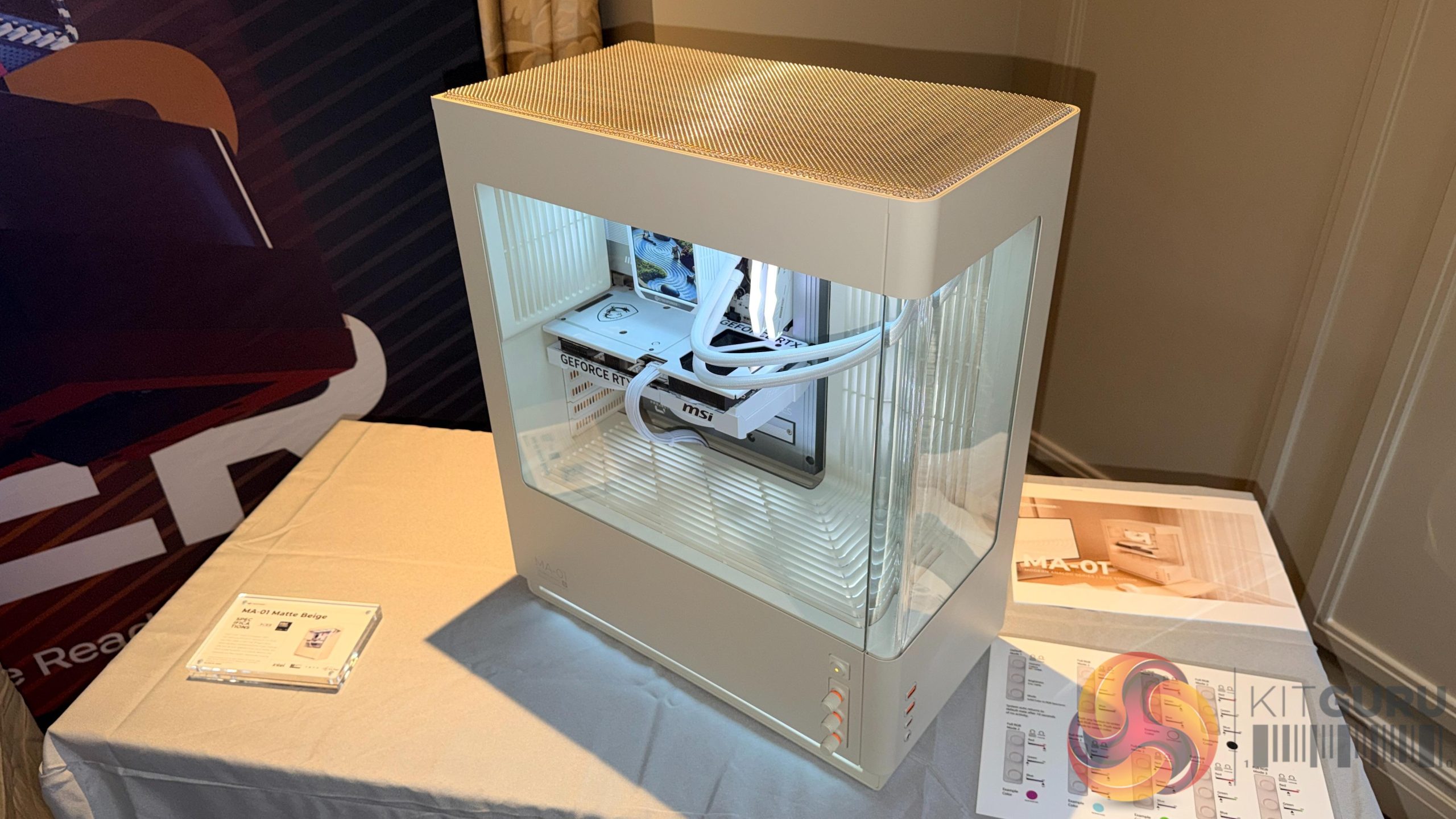
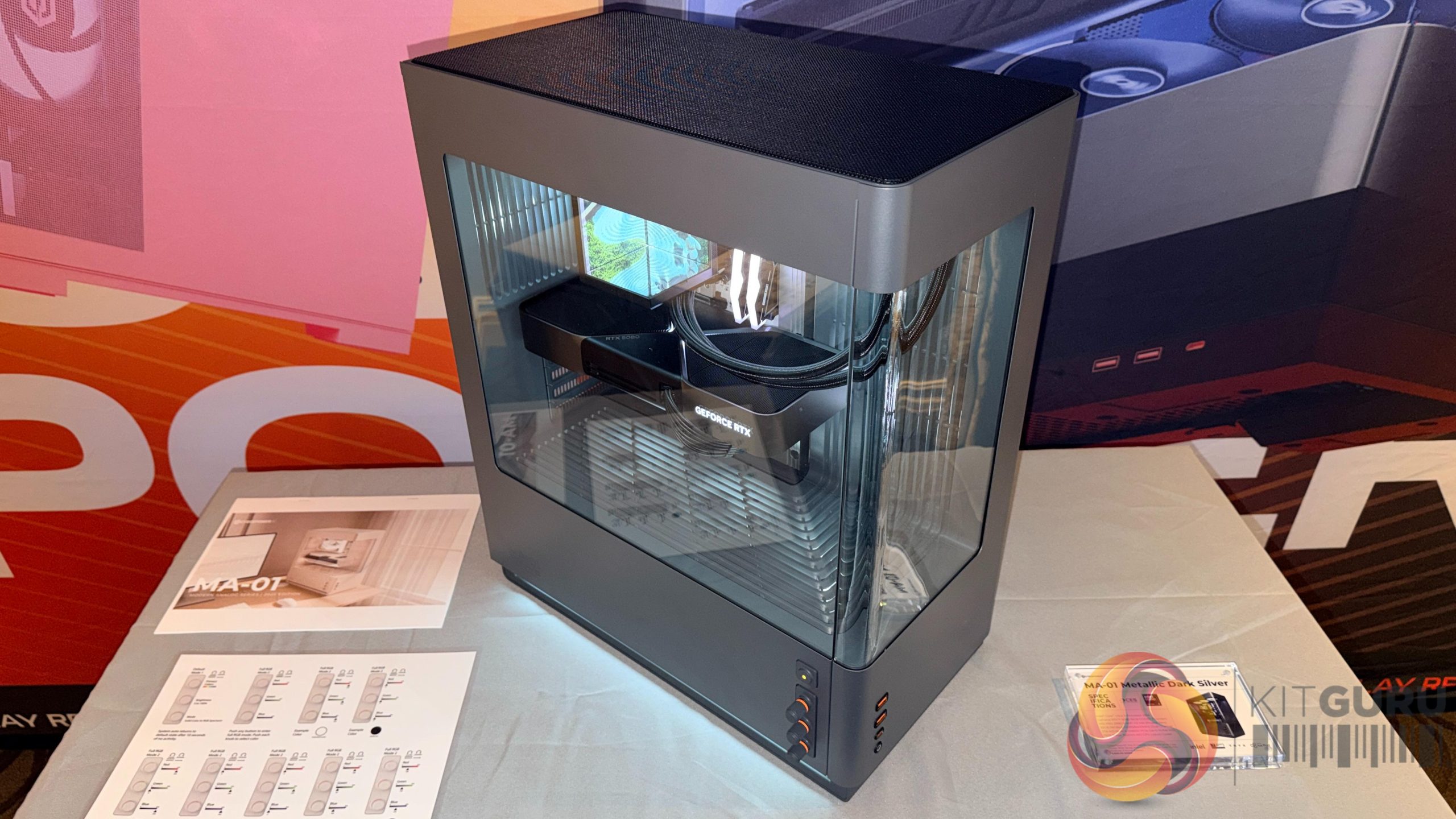
CES 2026: CyberPowerPC showcases impressive MA-01 chassis with woven steel mesh

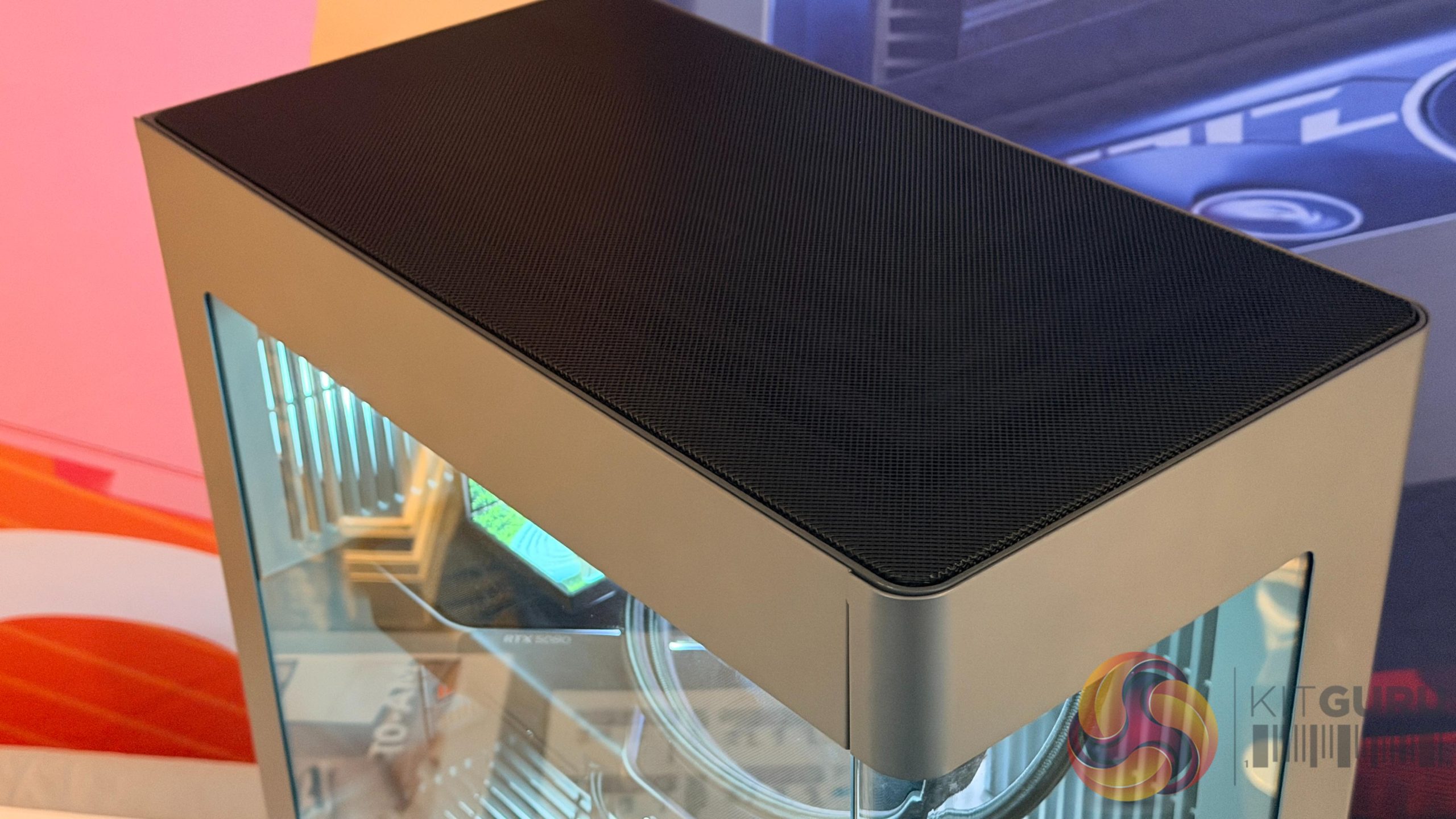
CyberPowerPC is well known for its pre-built gaming PCs in both the US and the UK. This year at CES, the company is showcasing something for the DIY market – a new PC case designed in-house, built around a minimalist design that hides most structural and cooling elements while keeping key components on display. It is also one of the first DIY PC cases on the market to use woven steel mesh rather than standard mesh panels, heavily reducing noise resonance while maintaining strong airflow channels. 

You can get a good look at the CyberPowerPC MA-01 chassis in the video and gallery above, but for those who would prefer to read, you can find a full breakdown of this chassis below based on the details shared so far.

One of the standout features of the MA-01 is the use of woven steel mesh, a first of its kind in the PC case market. The mesh varies in porosity and depth to reduce high‑frequency resonance, lowering exhaust noise by up to 30% while maintaining airflow. The MA‑01 also conceals fans, radiators and lighting behind sculpted internal covers, with all illumination engineered to shine indirectly through vent slits and adjacent surfaces to create a soft ambient glow rather than visible LED hotspots.

Other design elements include angled vent covers that guide intake air directly onto heat‑critical components, precision‑moulded I/O shrouds that absorb side impacts and reduce insertion wear, and support for both standard ATX and back‑connect BTF‑style motherboards. The chassis also uses two curved glass panels that meet without a corner pillar, providing an unobstructed view of the GPU, CPU cooler and memory. Analog RGB dials offer software‑free control across the full 16.7‑million‑colour spectrum, with secondary push functions for colour jumping, effect modes and brightness.

The MA‑01 measures in at 460 x 235 x 498mm and has the space for seven expansion slots, two 3.5-inch drive bays, one 2.5-inch drive bay, up to ten 120mm fans and support for 360mm or 240mm liquid cooling radiators in the front and top. Component clearances include 420mm for GPUs, 185mm for CPU coolers and 200mm for power supplies.

CyberPowerPC will offer the MA‑01 in Satin Dark Silver, Satin Matte Off White and Satin Matte Steel Gray colour options. The Chrome Steel version will launch at $149.99, while the Stainless Steel model will be priced at $249.99, with availability expected in early Q2 2026.

KitGuru Says: We'll be looking forward to getting our hands on this for a review in the future. What do you think of this new case from CyberPower? Would you like to build in one of these?

The post CES 2026: CyberPowerPC showcases impressive MA-01 chassis with woven steel mesh first appeared on KitGuru.
  •  

CES 2026: Kioxia launches new BG7 SSDs with improved efficiency

At CES this week Kioxia is launching its BG7 series SSDs at CES 2026, marking the first client‑focused drives to use the company’s eighth‑generation BiCS Flash paired with its new CMOS‑Bonded‑to‑Array (CBA) architecture. The update targets thin‑and‑light notebooks, compact desktops and OEM systems, promising stronger performance and improved power efficiency over the previous BG6 generation.

The move to BiCS Flash Gen 8 brings a notable uplift in throughput. Kioxia rates the BG7 for up to 7,000MB/s sequential reads and as much as 1,000,000 IOPS in random workloads, translating to roughly a 10% improvement in random performance and around 16% in sequential reads compared to BG6. Power efficiency sees the biggest generational jump with sequential‑write efficiency up by approximately 67%. This improvement is achieved through a combination of CBA‑enhanced memory cells, refined control circuitry and an updated SSD controller.

The BG7 series also expands the physical formats available. Alongside the familiar M.2 2230 and 2280 options, Kioxia is adding a new M.2 2242 model to support a wider range of OEM designs and space‑constrained systems. NVMe 2.0d support has been introduced as well, giving system builders finer control over power states and device behaviour.

As with previous entries in the BG line, the BG7 remains a DRAM‑less design, relying on Host Memory Buffer (HMB) to keep costs down while maintaining responsiveness. Capacities span 256GB, 512GB, 1TB and 2TB, and the drives connect over PCIe 4.0. Security‑conscious deployments can opt for models supporting TCG Opal 2.01 self‑encrypting drive functionality.

KitGuru Says: With DRAM being in short supply for consumer-oriented products at the moment, DRAM-less SSDs should become more prominent across the consumer market.

The post CES 2026: Kioxia launches new BG7 SSDs with improved efficiency first appeared on KitGuru.
  •  

Wolfenstein 3 reportedly in development according to multiple insiders

The Wolfenstein series saw a massive resurgence in popularity following the release of 2014’s pseudo-reboot The New Order and 2017’s The New Colossus…with the 2019 spin-off Youngblood being a bit more contentious. After taking a break from the series to work on Indiana Jones and The Great Circle, the team behind the two mainline modern Wolfenstein titles – Machine Games – are reportedly developing a proper 3rd entry.

First reported by known Xbox leaker Jez Corden in a piece discussing the future of Xbox in 2026 and beyond, the insider claimed to have “heard that Wolfenstein III is also on the cards to coincide with the upcoming Wolfenstein Amazon TV show.”

Though far from definitive at the time, the publication Kotaku have since corroborated the claim, stating that they “can confirm it’s true from our own sources.”

Wolfenstein Machine Games

Given that the team only recently released Indiana Jones and The Great Circle back in late 2024 (and have worked on various ports and updates since), don’t expect Wolfenstein 3 to arrive any time soon.

That said, back in October the team at Machine Games did tease that work on their next project had officially begun, and so it’s possible we could get an early initial announcement in the not-too-distant future. We will have to wait and see.

KitGuru says: What do you think of the modern Wolfenstein games? Did you enjoy Indiana Jones? How long do you think we’ll have to wait for an official announcement? Let us know down below.

The post Wolfenstein 3 reportedly in development according to multiple insiders first appeared on KitGuru.
  •  

CES 2026: Thermaltake launches new cases, expands racing sim line-up and more

This week at CES we caught up with Thermaltake to get a first-hand look at their new product launches. In our video, we take you through it all, direct from the CES show floor.

Watch via YouTube below:

Timestamps:
00:00 View Cross TG Case
00:40 GK500 Go-Kart Simulator
01:08 GR900 Racing Simulator Cockpit
01:25 GR700 Racing Race Car Simulator
01:41 Race peripherials
01:53 New Fan Series
02:29 New System components
02:46 AI Forge Software
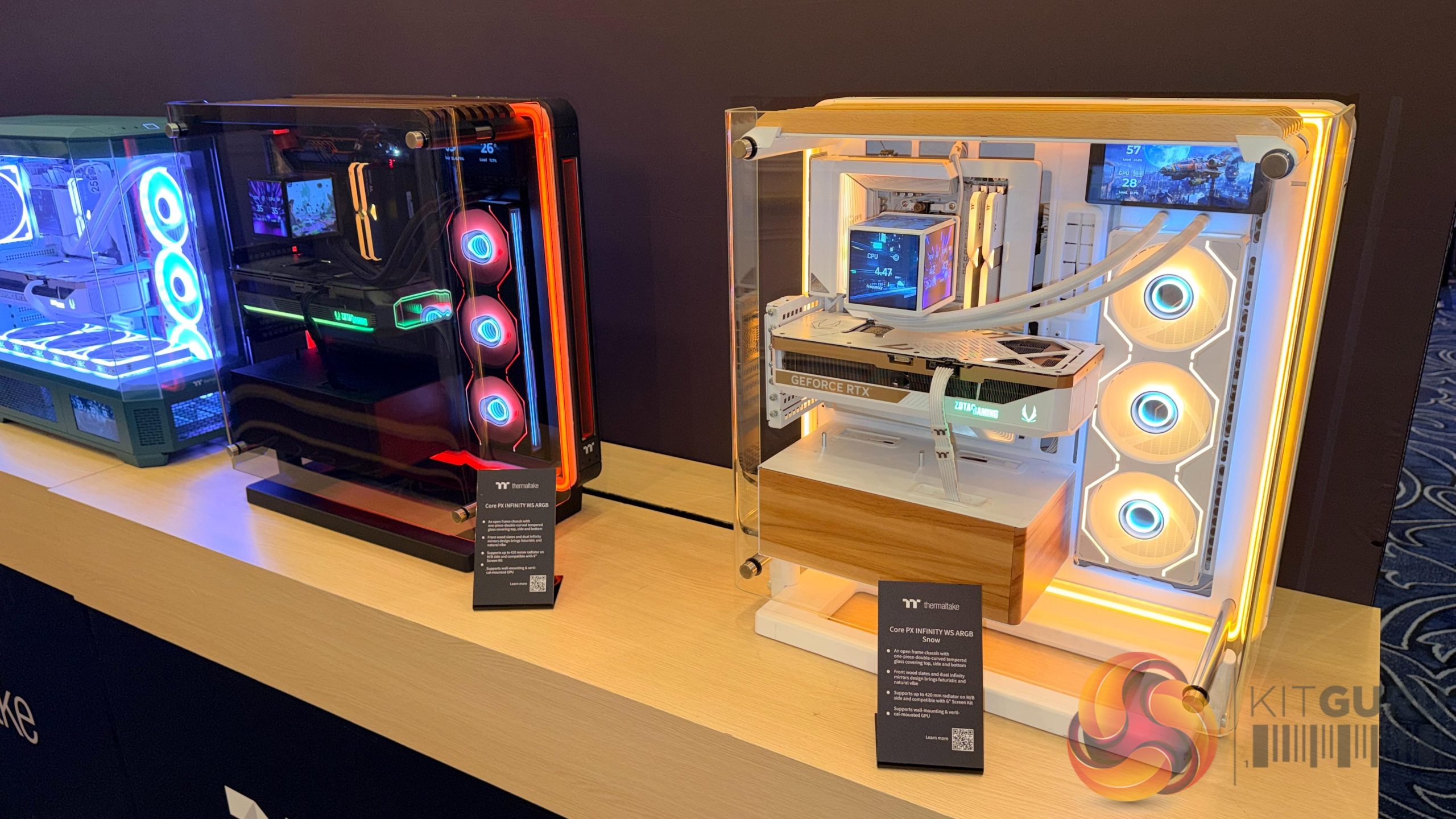
03:16 Core PX Series Cases
03:50 Power Supplies
04:24 Retro Gaming Kit

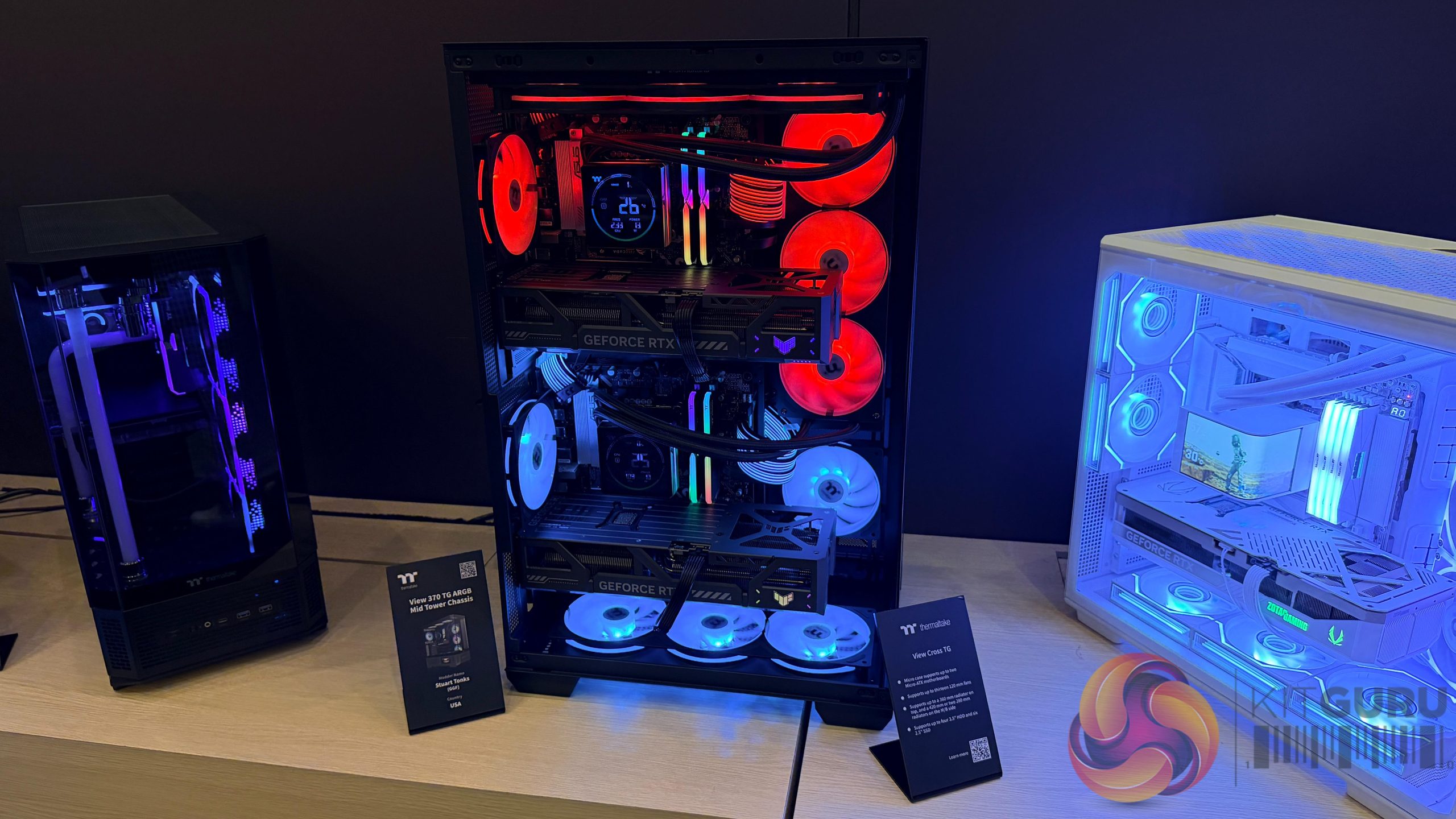
Thermaltake’s View 370 TG ARGB is a mid‑tower chassis built around panoramic presentation, using a four‑piece tempered‑glass layout that wraps across the front and side for full component visibility. It supports Mini‑ITX to ATX boards, including hidden‑connector designs from ASUS, MSI, and Gigabyte, and offers room for up to ten 120mm fans and 360mm radiators, with two ARGB fans pre‑installed. The case also supports vertical GPU mounting and an optional 6‑inch LCD panel on the PSU shroud for system stats or custom graphics via TT RGB Plus 3.0. Front I/O includes USB‑C, dual USB‑A, and HD audio, while removable dust filters cover the major intake points for easier upkeep.

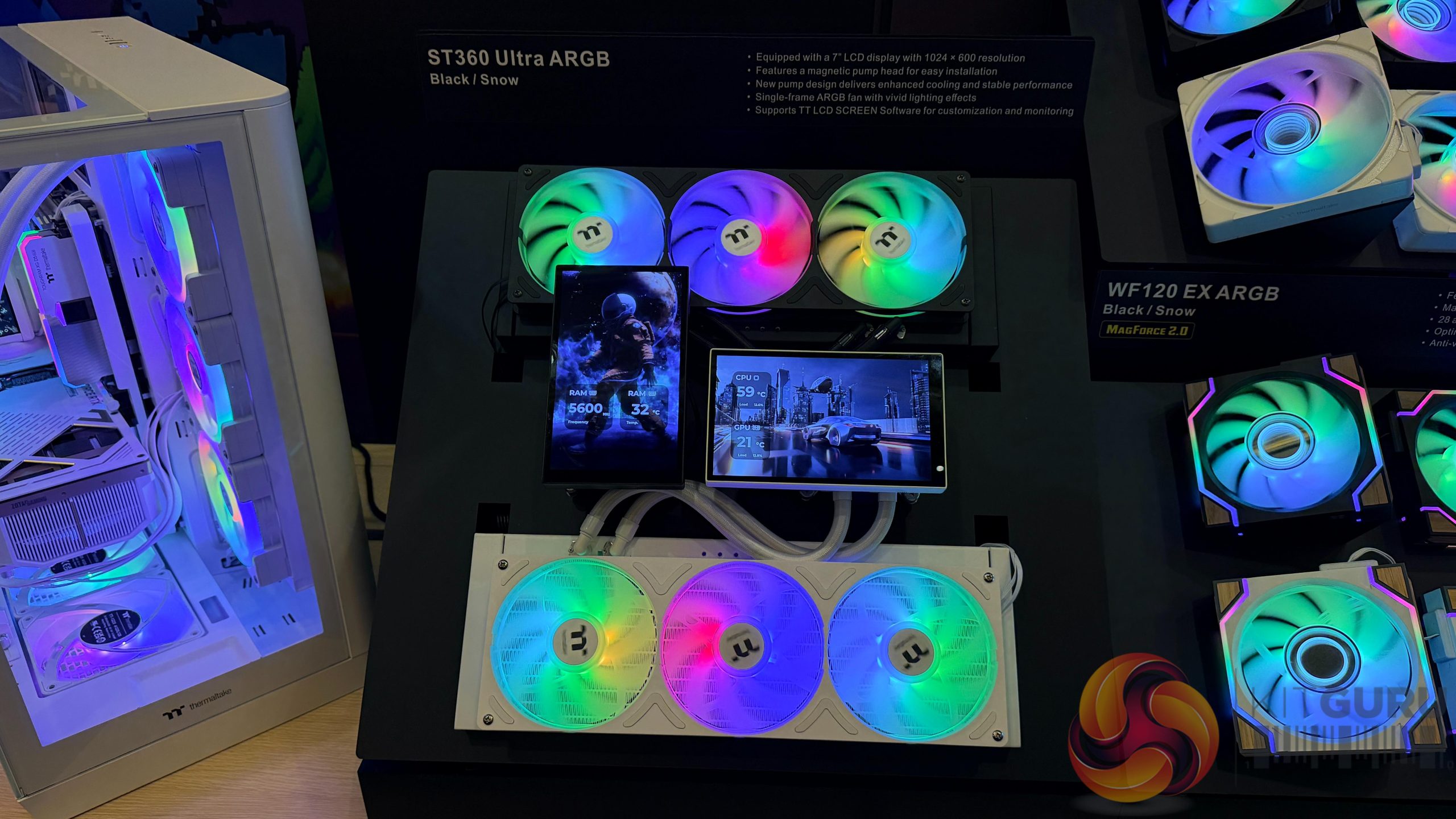
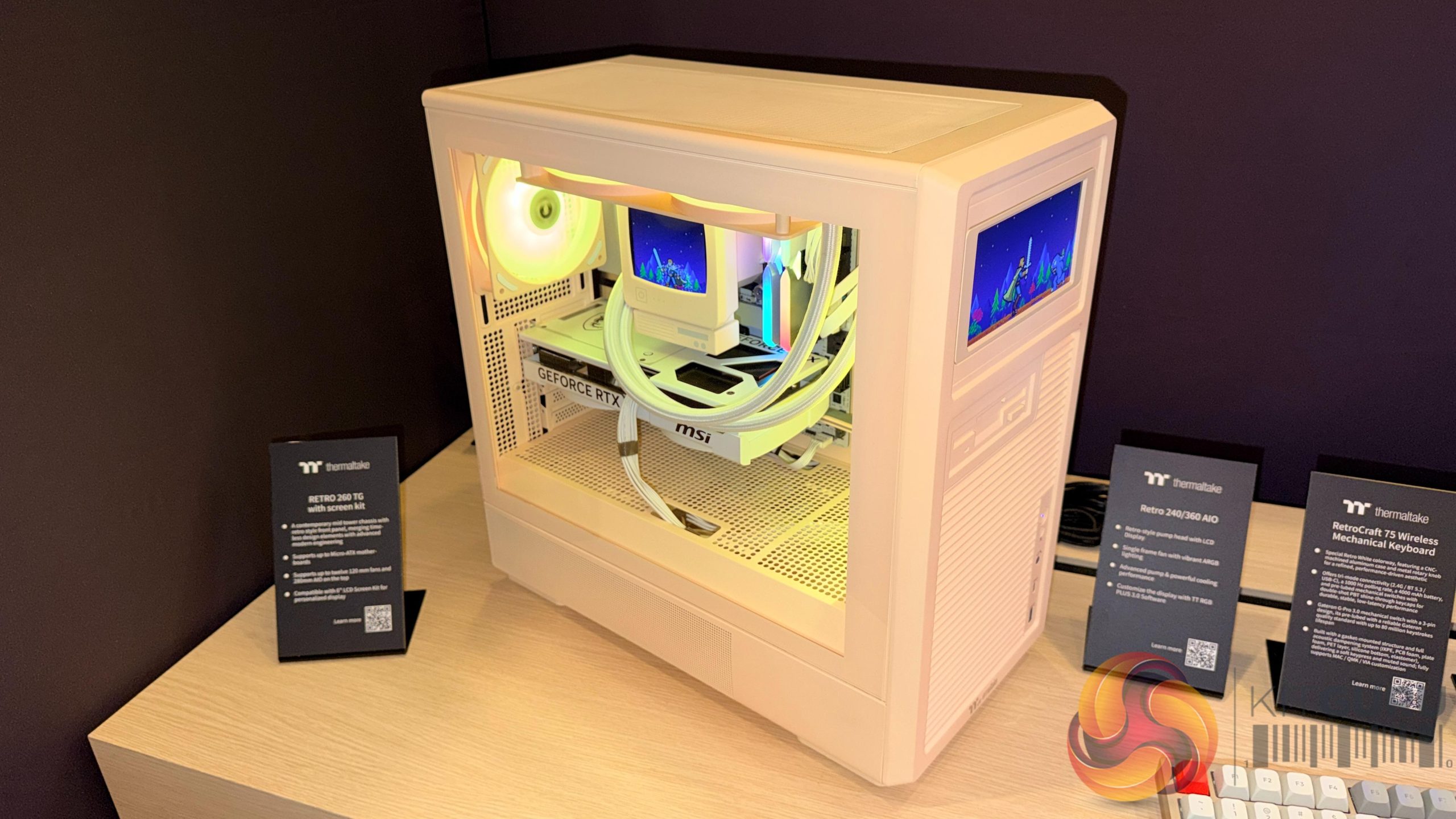
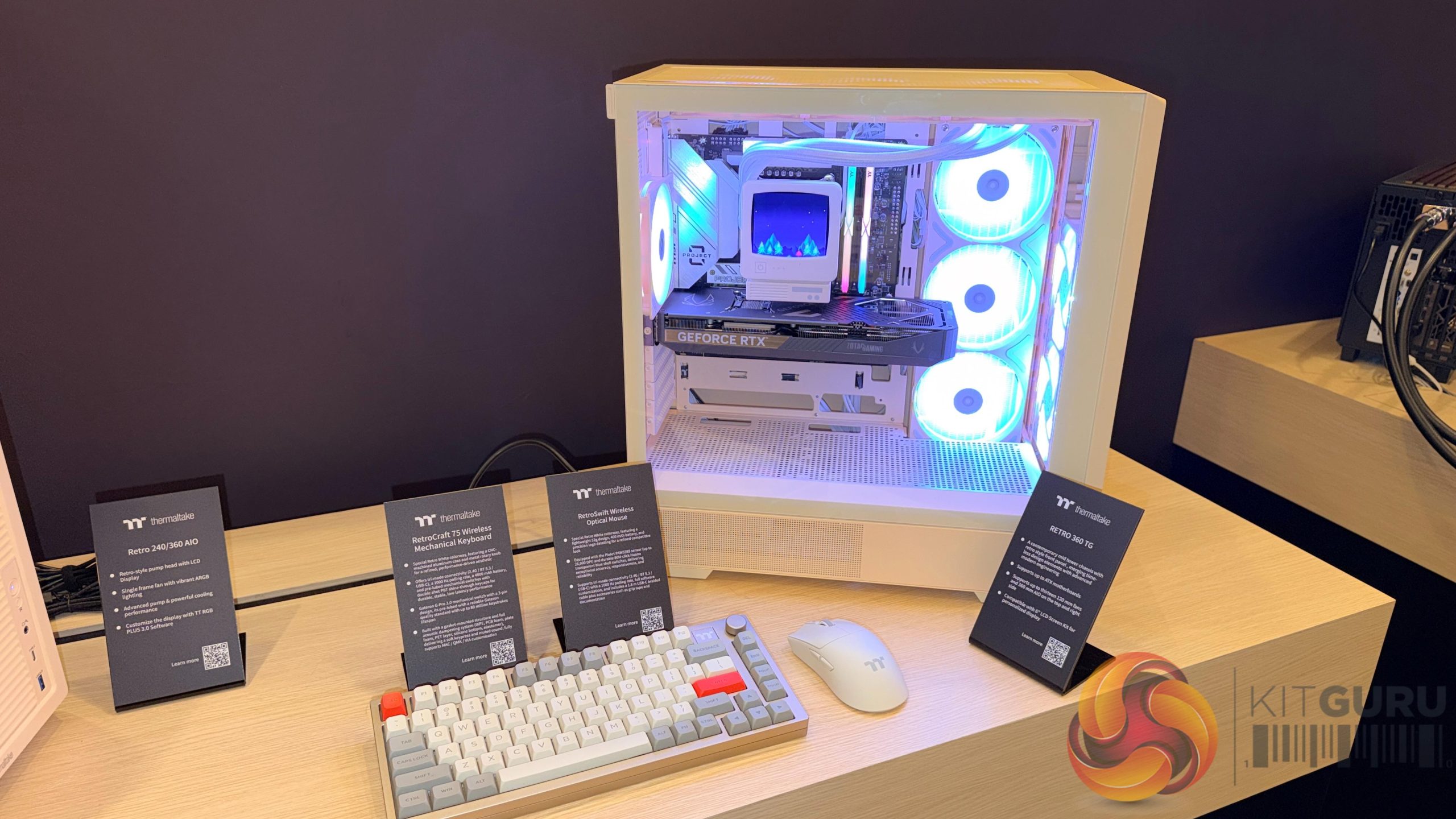
Next up we have the new Retro Series, which brings 90s workstation styling to modern hardware. Starting with the compact Retro 260 TG mATX chassis, despite its old-school look this case supports hidden‑connector motherboards, up to nine 120mm fans, a 280mm top radiator, and the company’s optional 6‑inch LCD display. The larger Retro 360 TG scales the design to a mid‑tower with ATX support, room for twelve 120mm fans, dual 360mm radiator mounts, and updated front I/O including USB‑C. Rounding out the lineup is the Retro Ultra ARGB Sync AIO cooler, which will be available in 240mm and 360mm sizes and features a CRT‑inspired 3.6‑inch LCD display on the CPU block.

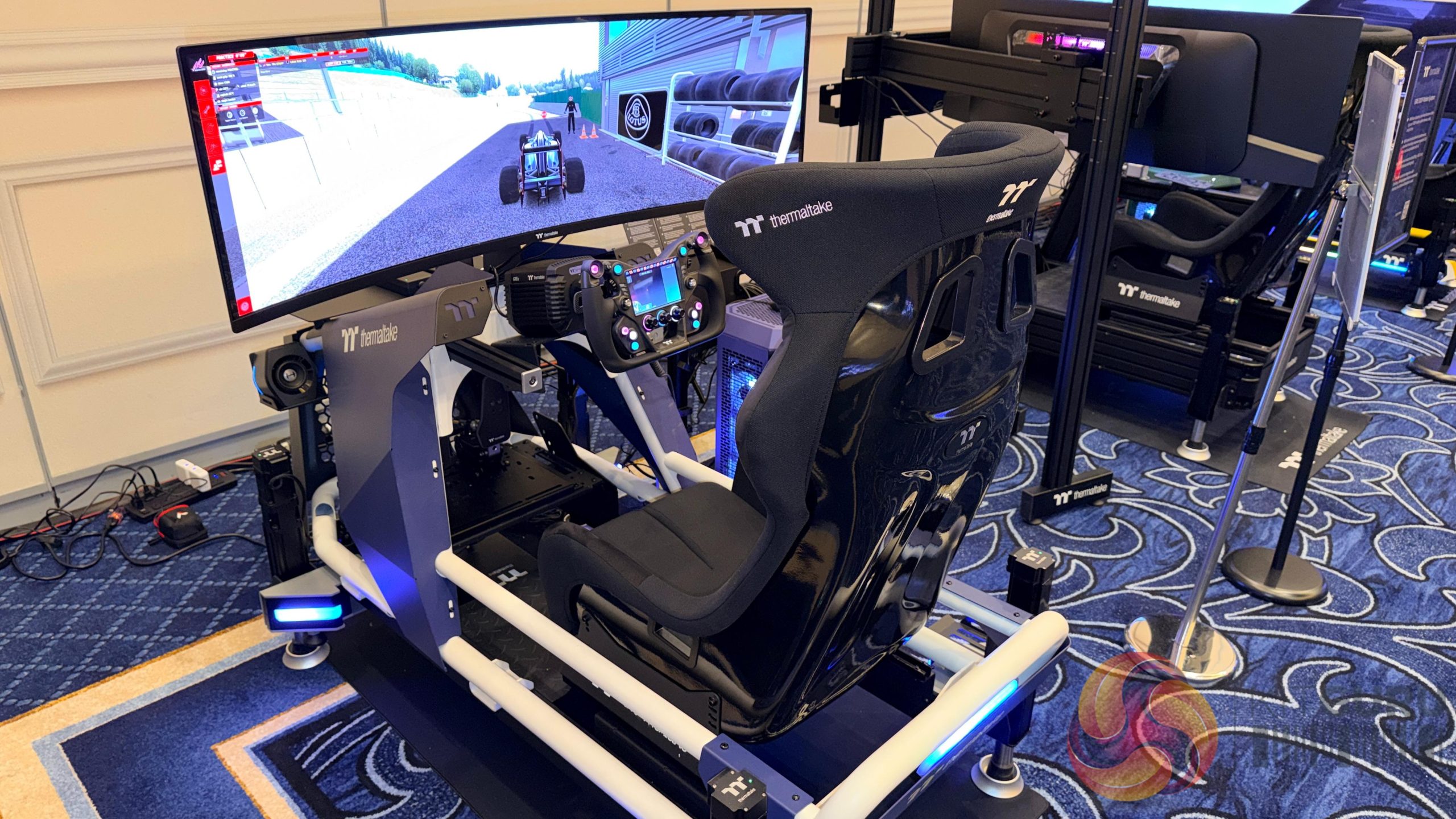
Thermaltake is also expanding its sim‑racing portfolio at CES with three new cockpits and updated peripherals. The flagship GR900 uses an anodised aluminium profile frame with extensive adjustability and support for single or triple displays and can be paired with motion systems for full professional‑grade feedback. The GR700 offers a more accessible tubular‑steel design with support for belt‑ and direct‑drive wheels, an integrated monitor mount, and optional 3DOF motion for added immersion. For karting fans, the GK500 delivers an authentic low‑slung posture with adjustable seating, steering and pedals for both children and adults. Aside from the new cockpits, Thermaltake also has new wheel and pedal sets coming out, including the XRW G1 steering wheel with a five‑inch touchscreen, RGB indicators, Hall‑effect paddles and CNC‑machined construction, plus the XRP L1 load‑cell pedal set built around a 200kg sensor, adjustable pedal mechanics and high‑resolution Hall sensors for precise braking control.

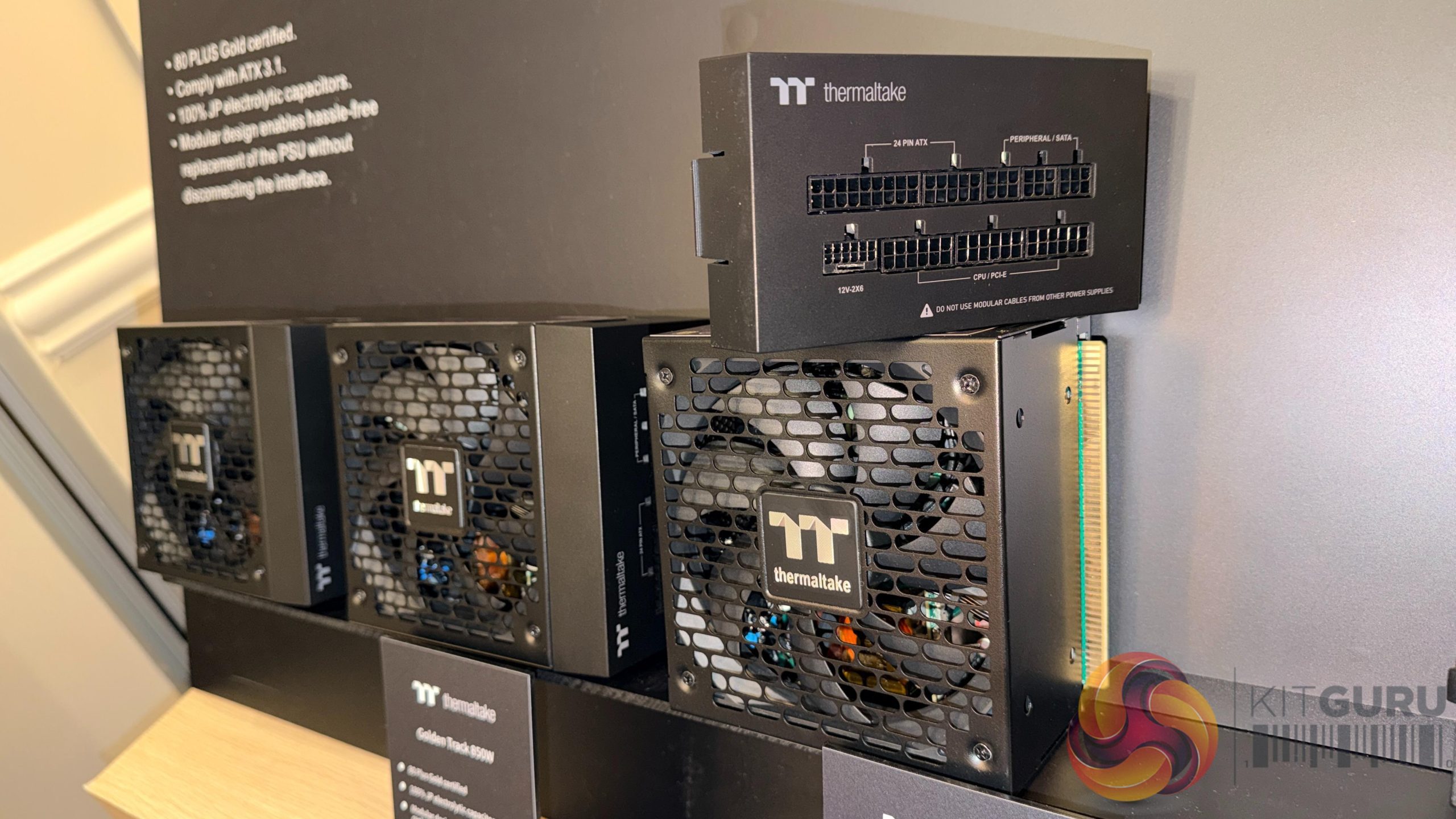
On the power supply front Thermaltake has something quite innovative on show. The Golden Track Series offers a new modular approach to power supplies, launching in 750W, 850W, 1000W and 1200W models, built around a new gold‑finger connector that links the power‑supply body to a fixed rear backplane. Instead of unplugging cables or re‑routing wiring, users can swap the PSU module itself for a higher‑wattage unit while leaving the interface and all cabling in place.

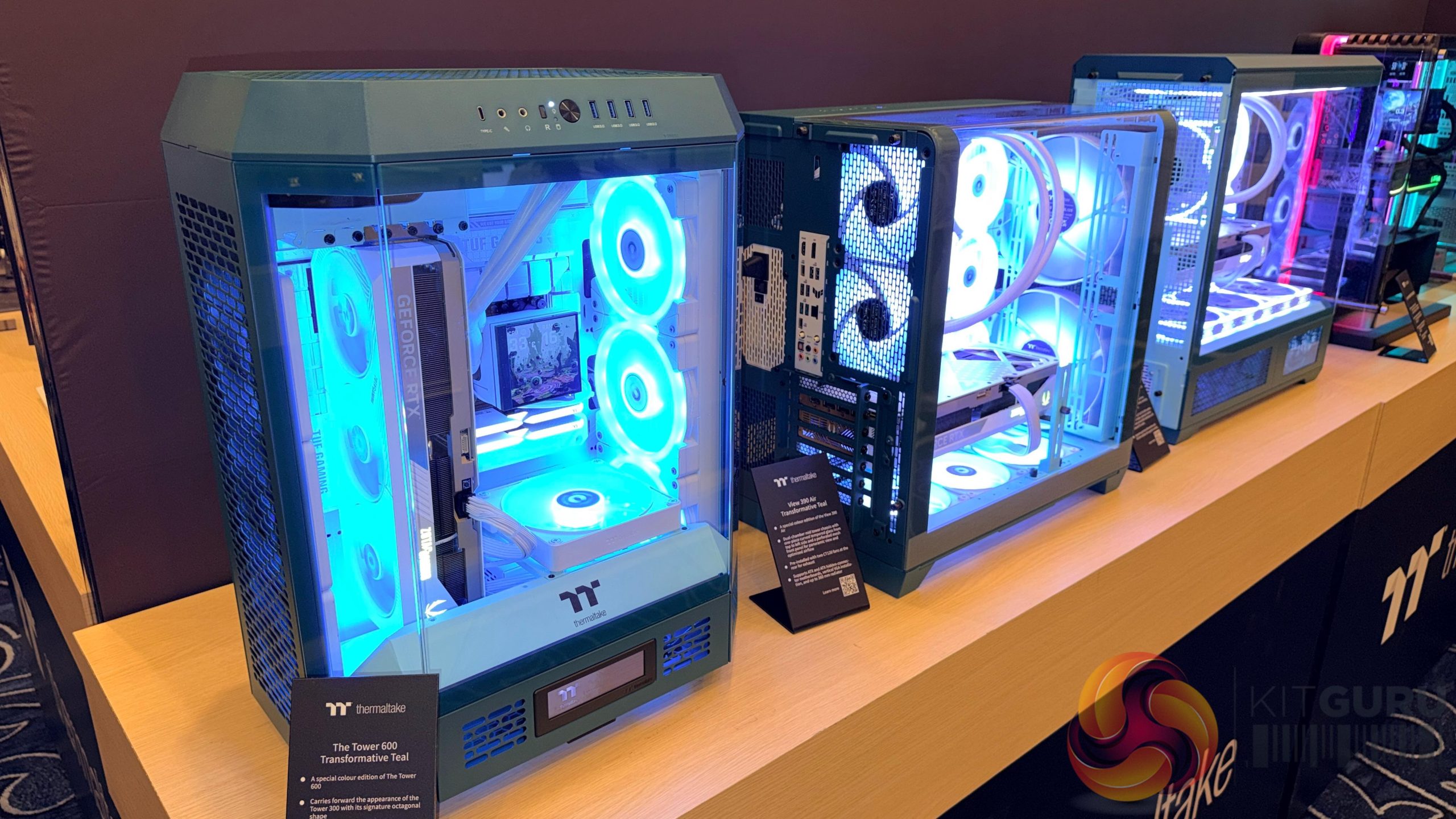
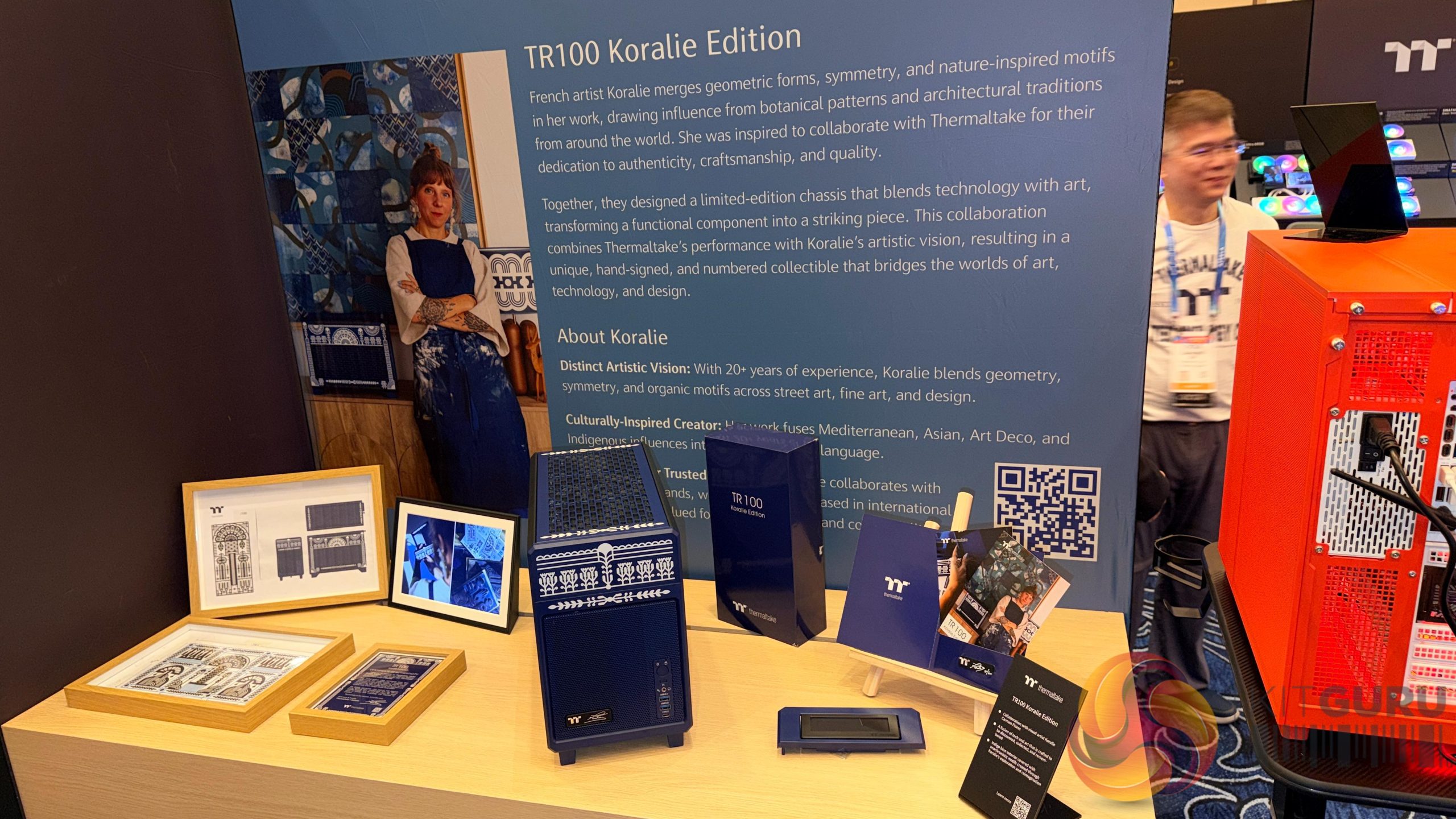
Last on our list we have two design‑focused updates: Transformative Teal, a new blue‑green colourway being applied across several existing chassis, and the TR100 Koralie Edition, a limited‑run artistic re‑skin of the company’s compact Mini‑ITX case. Transformative Teal is positioned as a calming, sustainability‑inspired shade that will appear on refreshed versions of The Tower 600, View 390 Air and View 600 TG, while the TR100 Koralie Edition adds a deep blue finish and geometric motifs created with French artist Koralie Carmen Flores.

KitGuru Says: What did you think of Thermaltake's CES showing this year? 

The post CES 2026: Thermaltake launches new cases, expands racing sim line-up and more first appeared on KitGuru.
  •  

Black Ops 7 x Fallout officially unveiled and detailed

In recent years Call of Duty has ramped up the number and intensity of their crossover events – with Black Ops 6 being the most egregious in this regard. Following plenty of backlash, Activision seems to have toned down their plans for Black Ops 7, officially announcing a somewhat more grounded Fallout crossover.

Though initially teased late last year, the team at Treyarch / Activision have now fully unveiled the first crossover coming to Black Ops 7; with COD x Fallout officially launching on the 8th of January alongside Season 1 Reloaded.

In what might be their most comprehensive crossover yet, this limited-time event will of course include the obligatory event pass (featuring both a paid and free track to earn various Fallout-themed cosmetics).

In addition, a paid bundle will be made available for purchase which focuses on Amazon’s Fallout show protagonist Lucy.

In terms of actual content however, the crossover will introduce a bunch of new modes across the board including:

  • Deathclaw Hunt World Event [Endgame]
  • Nuketown map variant ‘Vault Town’ [Multiplayer]
  • S.P.E.C.I.A.L. Mayhem mode [Multiplayer]
  • The Ghouls mode [Multiplayer]
  • Project RADS mode [Zombies]
  • Power Armor Royale [Warzone]

While a far cry from some of Fortnite’s more all-encompassing cross-overs, this latest collab will likely go down much more smoothly in the eyes of fans when compared to Black Ops 6’s offerings. We will have to wait and see – but with Microsoft owning both Call of Duty and Fallout, they’ll likely be winning either way.

KitGuru says: What do you think of Season 1 Reloaded? Are you looking forward to the crossover? How does it compare to BO6’s best? Let us know down below.

The post Black Ops 7 x Fallout officially unveiled and detailed first appeared on KitGuru.
  •  

CES 2026: MSI unveils new laptop line-up with Intel Core Ultra 3 CPUs

We've already covered a number of MSI launches at CES this week. In this article, our attention turns towards new laptops, including new models powered by Intel's new Core Ultra 3 processors, along with Nvidia RTX graphics.

MSI has overhauled its laptop lineup for CES 2026, introducing redesigned business systems, refreshed gaming hardware, and a new colour variant of its Claw handheld. The announcement is led by a major update to the Prestige series, which now adopts a smoother, more rounded design and a full‑aluminium chassis aimed at professionals who want lighter hardware without compromising performance.

The Prestige 14 drops to 1.32kg, while the Prestige 16 comes in at 1.59kg, both powered by Intel’s new Core Ultra Series 3 processors and paired with Intel Arc B390 graphics. MSI claims the 81Wh battery can deliver more than 30 hours of video playback, and the updated cooling system uses a vapor chamber, dual fans, and an Intra Flow design to keep noise below 30dBA.

The Prestige 14 and 16 Flip extend the same hardware into a 2‑in‑1 form factor with touchscreens and stylus support. MSI includes its new Nano Pen, which docks into the chassis for charging and can deliver 45 minutes of use from a 15‑second top‑up. As part of a collaboration with Microsoft, the pen also supports a Copilot press‑to‑talk shortcut for voice input. The Flip models add a larger touchpad with custom gesture zones, enterprise‑grade security features, and an optional 2.8K 120Hz OLED display with DisplayHDR True Black 1000 certification.

For users who prioritise portability, the Prestige 13 AI+ has been updated and now weighs just 899g, making it the lightest 13‑inch magnesium‑aluminium laptop available. It also moves to Intel’s latest processors and retains the same security and connectivity features as the larger Prestige models.

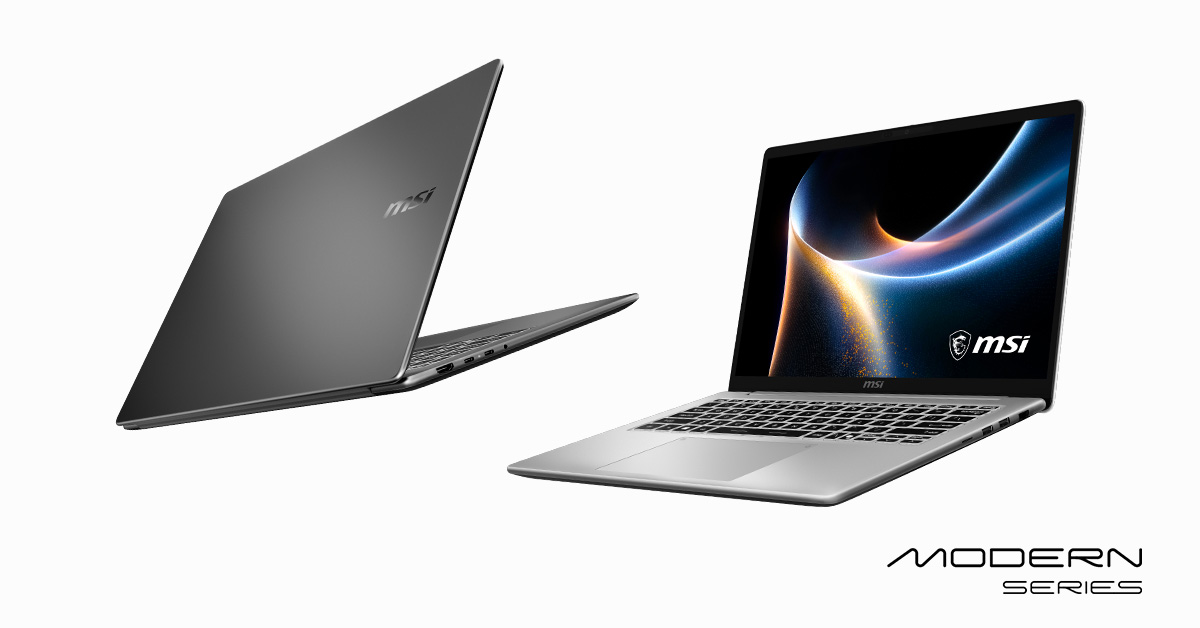
MSI’s mainstream Modern 14S and 16S laptops have also been refreshed with more metal in the chassis and a cleaner design. Both models use Intel Core Ultra Series 3 processors and include dual memory slots for easier upgrades. Connectivity covers USB‑A, USB‑C with charging and display support, HDMI, LAN, and a microSD reader. Despite the added metal, the Modern 14S remains portable at 1.3kg and as thin as 11.1mm in its OLED configuration.

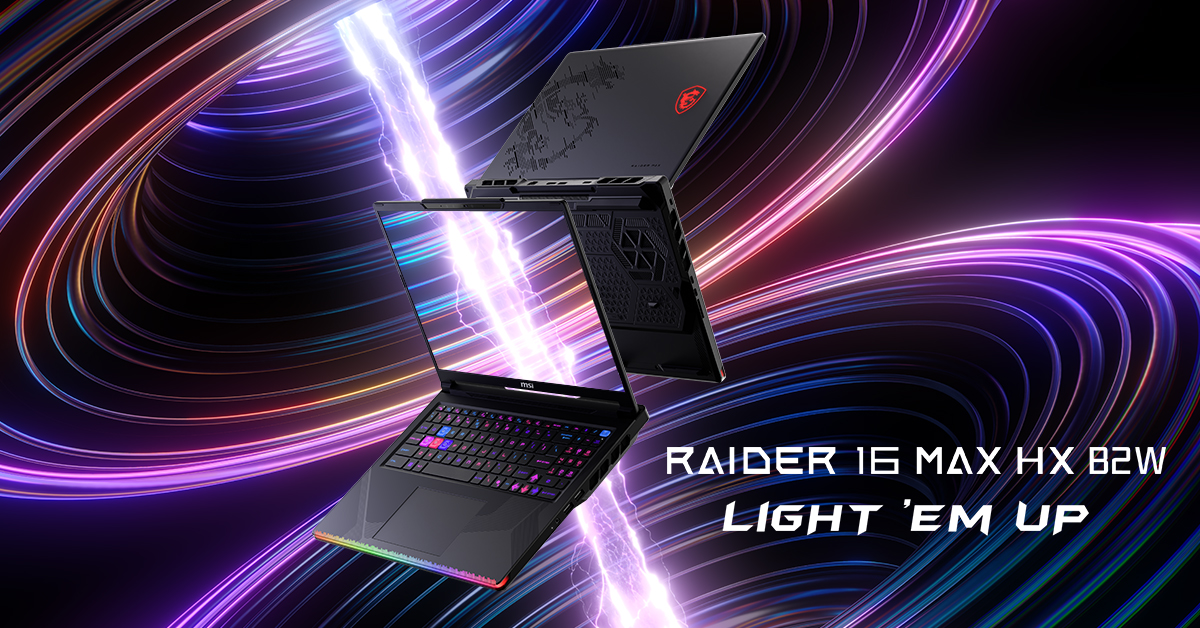
On the gaming side, MSI is pushing performance with the new Raider 16 Max HX, which the company says is the first laptop capable of delivering 300W of total system power. It can allocate up to 175W to an RTX 5090 or 5080 GPU while feeding 125W to an Intel Core Ultra 200HX processor. Cooling is handled by a redesigned Cooler Boost Trinity system with three fans, six heat pipes, five exhaust vents, and phase‑change thermal compound. The laptop also includes a quick‑access bottom panel for easier upgrades and a 2.5K 240Hz OLED display.

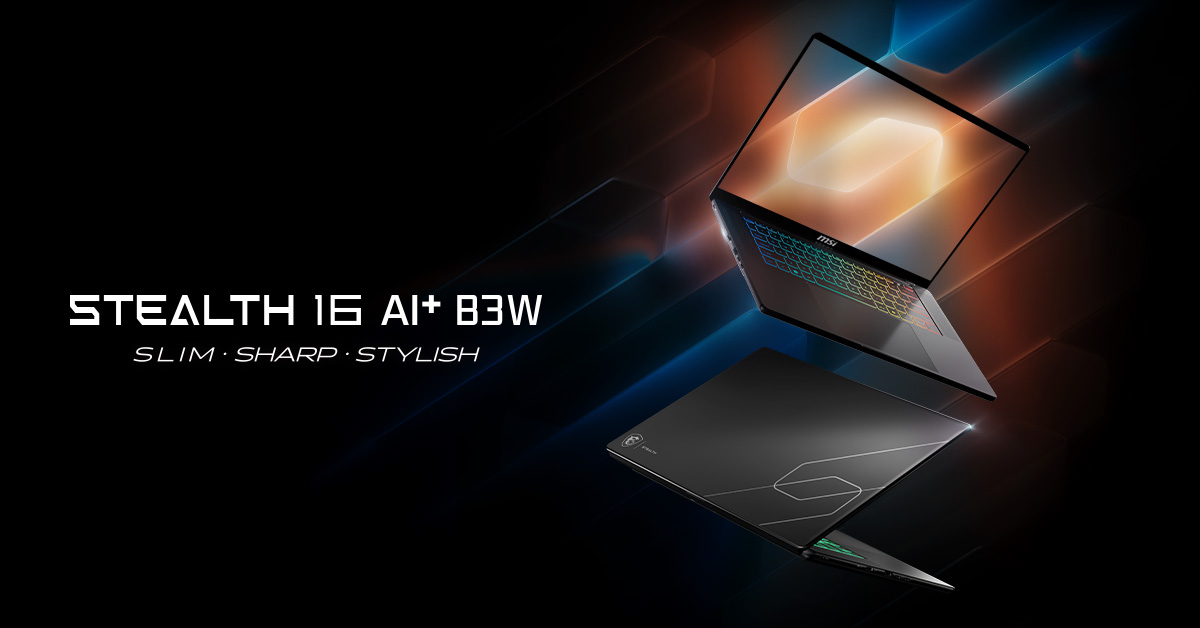
The Stealth 16 AI+ has been updated with a thinner, lighter chassis while offering higher GPU power limits and improved cooling. It includes a 90Wh battery, dual upgradeable slots, and a full aluminium build under 2kg. The Crosshair 16 Max HX and Crosshair 16 HX round out the gaming lineup with up to 200W system power, optional QHD+ 165Hz OLED displays, and a revised port layout.

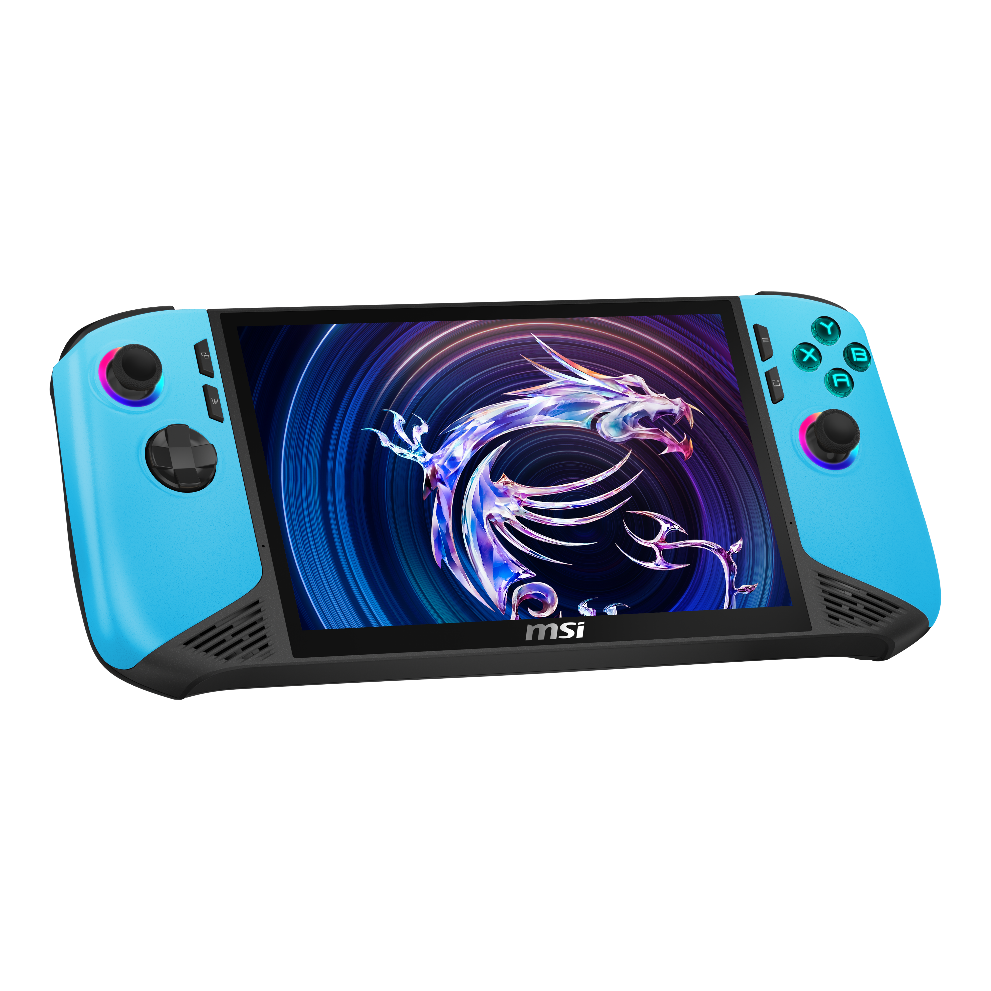
MSI also introduced a Glacier Blue edition of its Claw 8 AI+ handheld, offering the same Intel Core Ultra 200V hardware and Arc Xe2 graphics in a new finish.

KitGuru Says: Are you thinking of going with an MSI laptop this year? 

The post CES 2026: MSI unveils new laptop line-up with Intel Core Ultra 3 CPUs first appeared on KitGuru.
  •  

CES 2026: Phanteks shows off open-air chassis prototype – the Exo 626

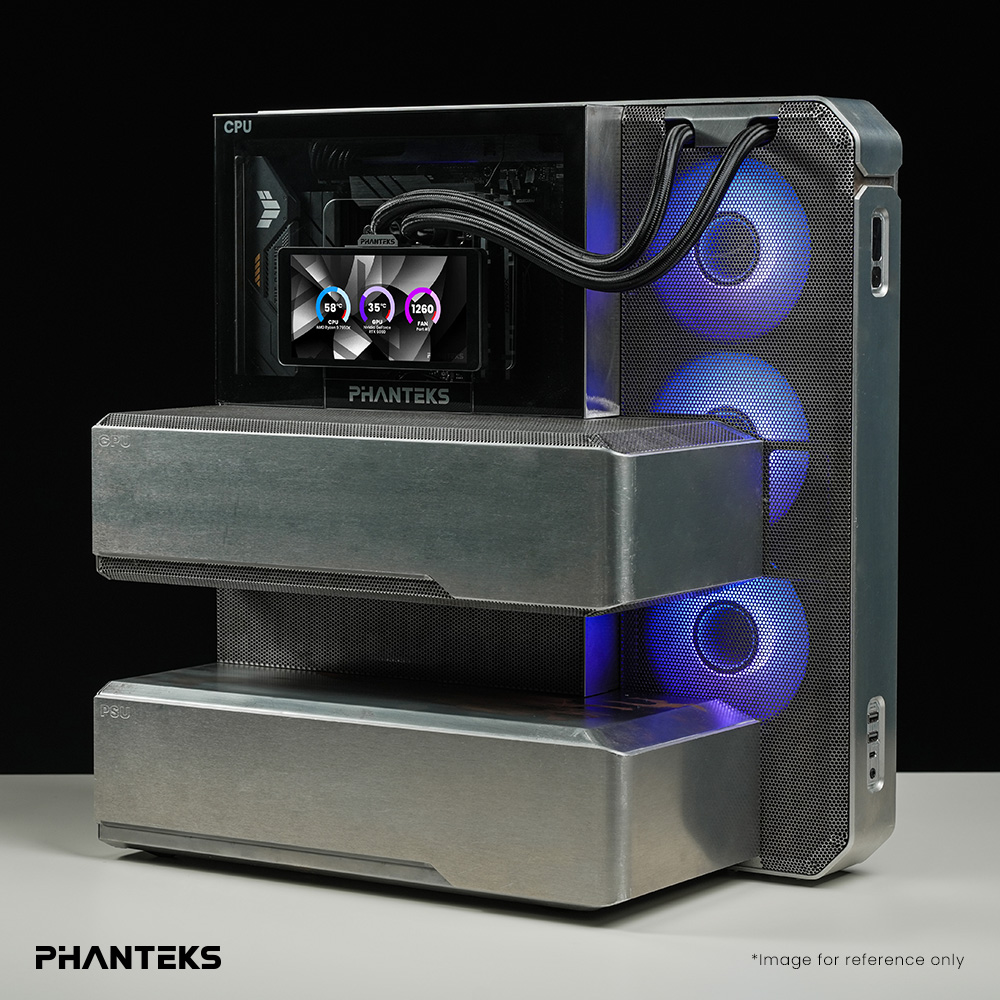
While CES is often used as a platform to launch new products definitely coming to market, it is also occasionally used to showcase prototype products that are not yet ready. This year, Phanteks is showing off a new concept device of its own – the Exo 626. 

The Exo 626 is an open-air chassis, a first for the company. It is inspired by exoskeletal design, as the name implies, and provides a compartmentalised layout for your components:

As you can see in the image, the motherboard and AIO cooler are visible, but the GPU, power supply and most cables are locked away in their own enclosures. The AIO radiator also sits to the side in its own compartment, with a mesh panel providing holes for airflow.

Phanteks says this is a concept at the moment, but more details on the Exo 626 will be shared at a later stage. Perhaps it will make a second appearance later this year at Computex.

KitGuru Says: What do you think of this concept from Phanteks? Do you think future PCs should move towards a compartmentalised layout? 

The post CES 2026: Phanteks shows off open-air chassis prototype – the Exo 626 first appeared on KitGuru.
  •  

CES 2026: Sandisk launches new Optimus series SSDs, replacing WD Blue and WD_Black

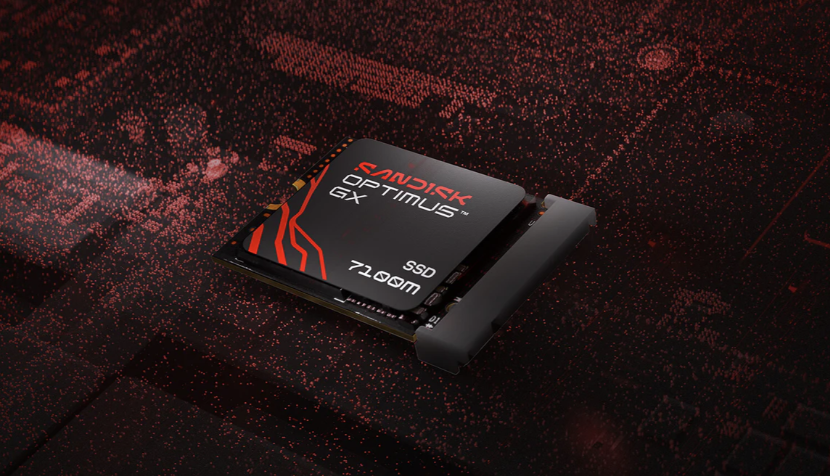
At CES this week, Sandisk is announcing a big rebranding of its internal SSD line-up. The WD Blue and WD Black ranges are being replaced. Moving forward, Sandisk will launch Sandisk Optimus, Optimus GX and Optimus Pro SSDs. The first set of drives are also ready to hit the market in the coming weeks.

Sandisk says the Optimus branding is intended to simplify the lineup and give customers a clearer sense of performance tiers as the company expands its storage offerings for gamers, creators, and professionals. “The SANDISK Optimus brand redefines what performance means for consumer needs,” said Heidi Arkinstall, VP of Global Consumer Brand and Digital Marketing, adding that the change is designed to make it easier for buyers to identify the right drive.

The base Sandisk Optimus line targets creators looking for faster everyday performance and replaces the WD Blue range, including the WD Blue SN5100 NVMe SSD. The Optimus GX tier is aimed at gaming systems, offering higher speeds, larger capacities, and improved efficiency – taking over from the WD_BLACK SN7100. At the top end, the Optimus GX Pro line becomes the flagship, positioned for AI PCs, workstations, and high‑end gaming rigs. It replaces the WD_BLACK SN8100 and incorporates higher capacities and Sandisk’s latest storage technologies.

Unfortunately, we don't have pricing details yet for these drives, but they should be similarly priced to previous WD Blue and WD_Black offerings.

KitGuru Says: How do you feel about WD Blue and Black being replaced? 

The post CES 2026: Sandisk launches new Optimus series SSDs, replacing WD Blue and WD_Black first appeared on KitGuru.
  •  

CES 2026: Corsair’s latest full-size keyboard replaces numpad with Elgato Stream Deck

It has been years since Corsair acquired Elgato. During that time, Corsair and Elgato have operated independently, but this year, the two are joining forces on a new product for the first time. The new Corsair Galleon 100 SD is a new full-size keyboard from Corsair, but rather than having a numpad, the keyboard has been equipped with a 12-key Elgato Stream Deck.

The company says the device combines engineering from both Corsair and Elgato to meet long‑standing community requests for a single input solution that handles gameplay, apps, and device control. “The GALLEON 100 SD marks a new era of input that our community has been clamoring for,” said Tobias Brinkmann, VP and GM of Gaming Peripherals at Corsair. “This isn't just a better keyboard. It's a solution to the reality of modern gaming, where managing apps, info, and devices is just as critical as performance.”

The keyboard includes 12 LCD keys, two multifunction dials, and a 5‑inch colour display for real‑time system and game information. All controls are configured through the Stream Deck app, with support for folders, profile switching, and the full plugin ecosystem.

Corsair says the integration allows players to trigger abilities, macros, and complex sequences without menu diving, while also offering quick access to apps like Spotify, voice chat, and system monitoring. Dozens of game profiles and hundreds of plugins from the Elgato Marketplace are supported, just as they would be on a standalone Stream Deck.

Beyond the Stream Deck features, the Galleon 100 SD uses Corsair’s AXON engine with polling rates up to 8,000Hz, plus FlashTap SOCD handling for directional‑input control. The board ships with pre‑lubed MLX Pulse switches, gasket mounting, six layers of dampening, and an aluminium frame. A cushioned wrist rest, RGB light bar, and Web Hub customisation round out the design.

As you might expect, this keyboard won't come cheap, as you are effectively getting two products in one. The Galleon 100 SD is expected to become available at the end of January, priced at $349.99.

KitGuru Says: If I were to ever go back to a full-sized keyboard, it would be for something like this. Standard numpads are of little use to many gamers, but a host of Stream Deck keys would provide some really interesting functionality.

The post CES 2026: Corsair’s latest full-size keyboard replaces numpad with Elgato Stream Deck first appeared on KitGuru.
  •  

CES 2026: AOC launches its first Agon G-Sync Pulsar gaming monitor

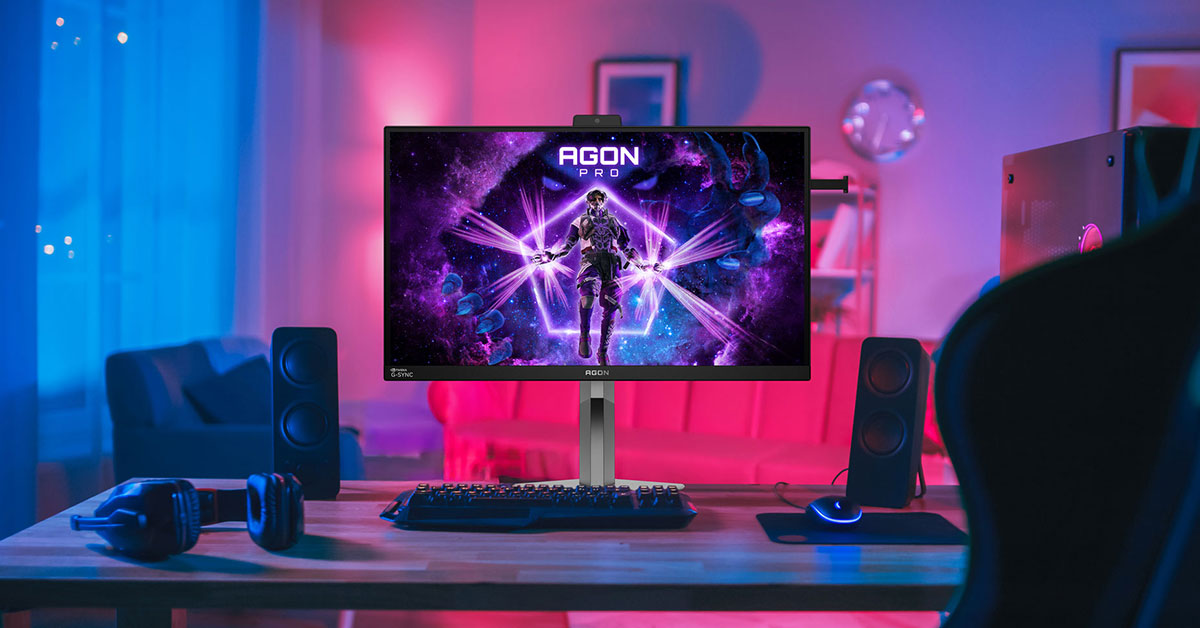
At CES this week, AOC is launching its latest Agon gaming monitor, the AGON PRO AG276QSG2. Developed in close collaboration with NVIDIA, this is one of the first G-Sync Pulsar displays hitting the market, enabling higher levels of motion clarity and responsiveness for competitive gaming.

G‑SYNC Pulsar is designed to deliver up to four times clearer motion by combining backlight strobing with G‑SYNC Variable Refresh Rate, eliminating the traditional trade‑off between motion clarity and stutter‑free gameplay. Fast‑moving targets appear sharper and easier to track, giving competitive players more consistent visual information during gameplay. The monitor also supports NVIDIA’s Ambient Adaptive Technology, using a built‑in sensor to automatically adjust brightness and colour temperature based on room lighting.

The AG276QSG2 is built around a 360Hz Fast IPS panel with 1ms GtG response time, ensuring rapid pixel transitions for esports titles. HDR support is included, with G‑SYNC HDR providing calibrated colour accuracy and automatic HDR brightness tuning across both Windows and supported games.

AGON by AOC has also focused on the physical design, offering a fully ergonomic stand, an aluminium‑accented esports aesthetic, and customisable Light FX illumination. A full suite of I/O connectivity ensures compatibility with multi‑platform setups.

The AGON PRO AG276QSG2 will be available starting in February with an MSRP of £559.

KitGuru Says: Are you thinking about making the jump to a G-Sync Pulsar monitor this year?

The post CES 2026: AOC launches its first Agon G-Sync Pulsar gaming monitor first appeared on KitGuru.
  •  

CES 2026: Corsair unveils new peripherals for the enthusiast segment

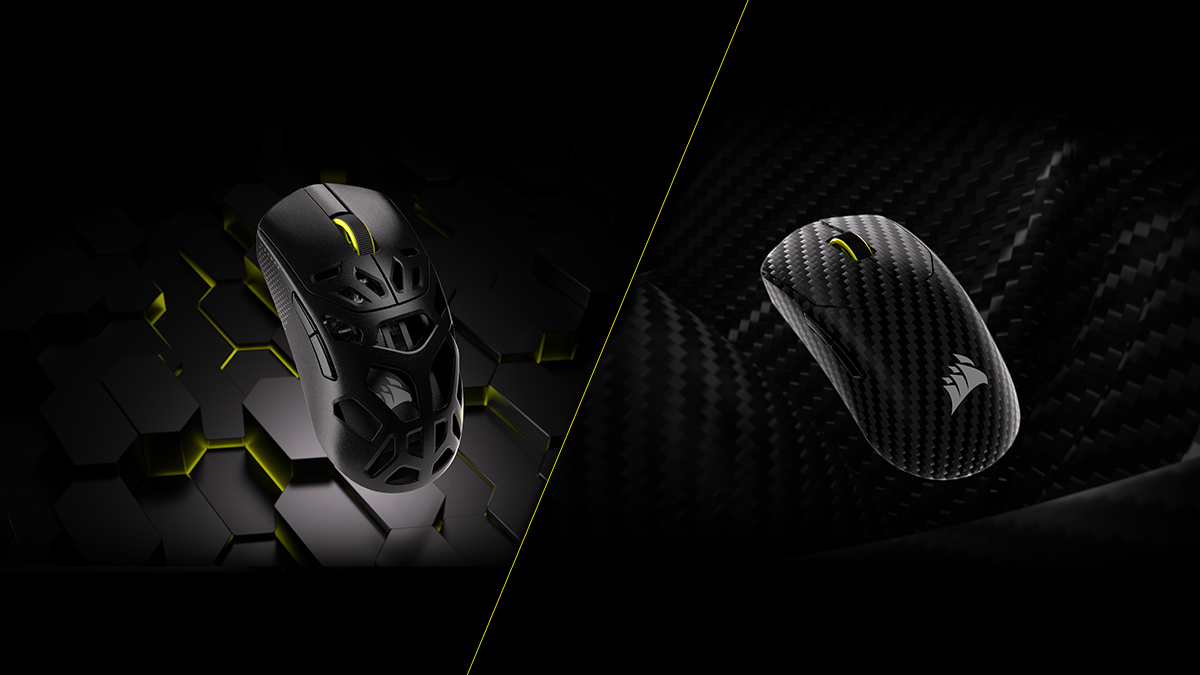
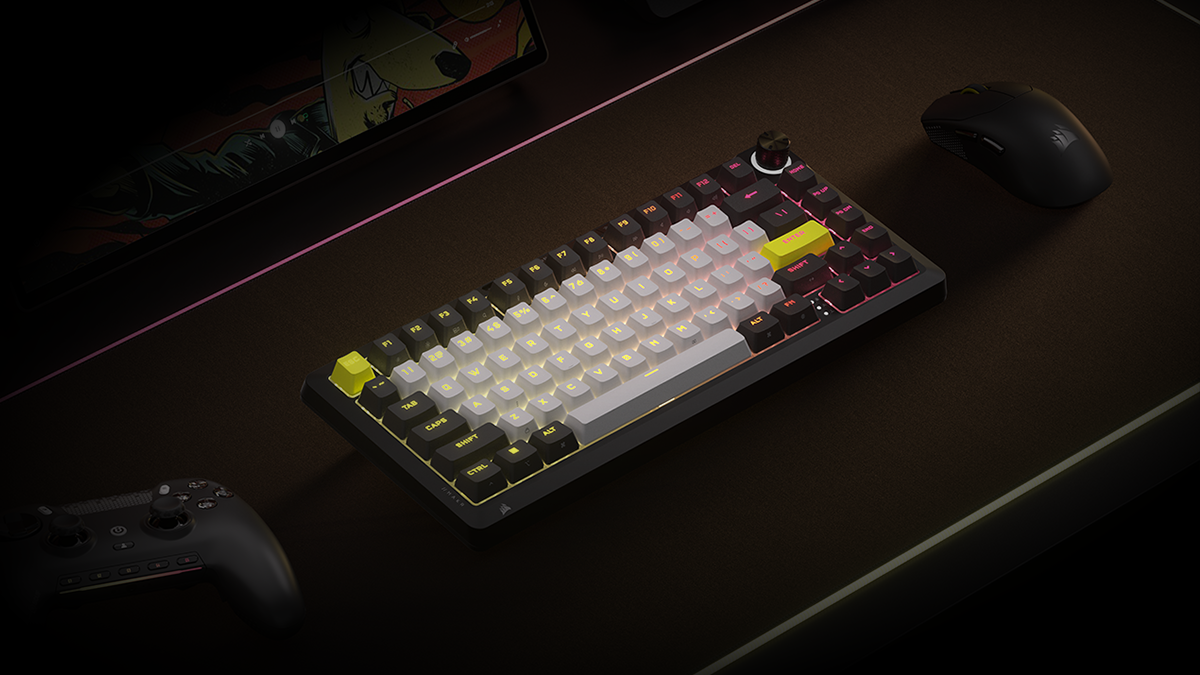
Corsair has arrived at CES 2026 with a clear focus on the upper echelons of competitive play, unveiling a refreshed peripheral lineup that prioritises new materials and rapid‑response Hall Effect technology. For mice, Corsair is introducing two iterations of the Sabre V2 Pro wireless mouse: one built from carbon fibre and the other from magnesium alloy. As for keyboards, the company has revealed the Makr Pro 75, an enthusiast‑grade mechanical keyboard that brings magnetic switch functionality to the Makr platform.

The new Sabre V2 Pro Wireless variants use high‑rigidity shells while keeping weight to a minimum. The Sabre V2 Pro CF utilises a 55g carbon fibre unibody, while the Sabre V2 Pro MG features a 56g magnesium alloy chassis. Both models retain the 8000Hz hyper‑polling capability and the 33,000 DPI Marksman S optical sensor found in the ultralight model. These material‑focused versions instead aim to eliminate micro‑flex during high‑intensity sessions. Battery life is rated at up to 120 hours at a 1000Hz polling rate, dropping to around 21 hours at 8000Hz.

The Makr Pro 75 serves as the spiritual successor to the original Makr 75. Unlike its predecessor, which focused heavily on the barebones experience, the Pro 75 arrives as a fully assembled unit featuring MGX Hyperdrive magnetic switches. These Hall Effect switches enable performance features such as Rapid Trigger and FlashTap SOCD, allowing near‑instantaneous counter‑strafing and movement resets. The keyboard maintains its enthusiast roots with an aluminium frame, an FR4 switch plate, and eight layers of internal sound damping. Modularity remains a key selling point, with support for secondary modules such as an LCD or a wireless add‑on.

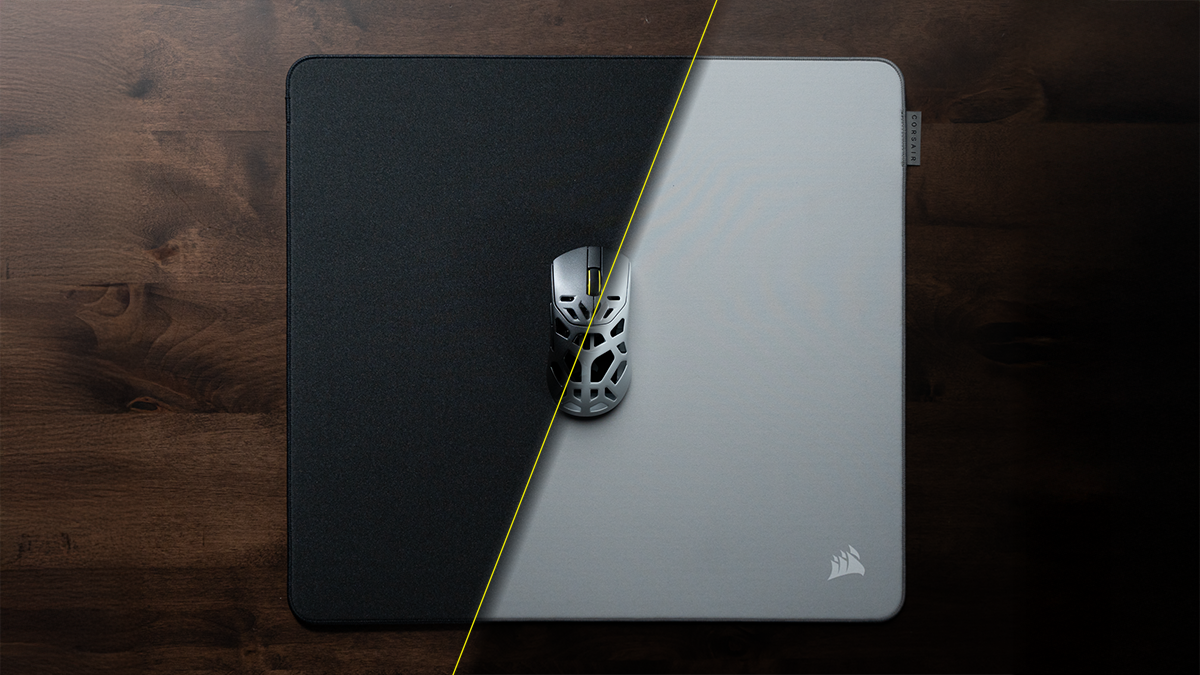
To complement the new hardware, Corsair also debuted the MM Pro Control Large esports‑tuned cloth mousepad. Designed for high‑precision tracking, the pad features a 4mm‑thick cushioned surface and a hex‑patterned polyurethane base to ensure stability during rapid flicks. The sloped edges are intended to provide more consistent stopping power, helping players who struggle with overtravel on standard cloth surfaces.

All these peripherals are now on sale, with the Sabre V2 Pro CF priced at £159.99 and the MG at £119.99. The new Makr Pro 75 is £219.99, and the MM Pro Control Large is £49.99.

KitGuru says: While a 56g magnesium mouse might seem counterintuitive compared to the 36g plastic original, the added structural rigidity and premium feel could be a major draw for players who find ultralight plastic a bit too “toy‑like”

The post CES 2026: Corsair unveils new peripherals for the enthusiast segment first appeared on KitGuru.
  •  

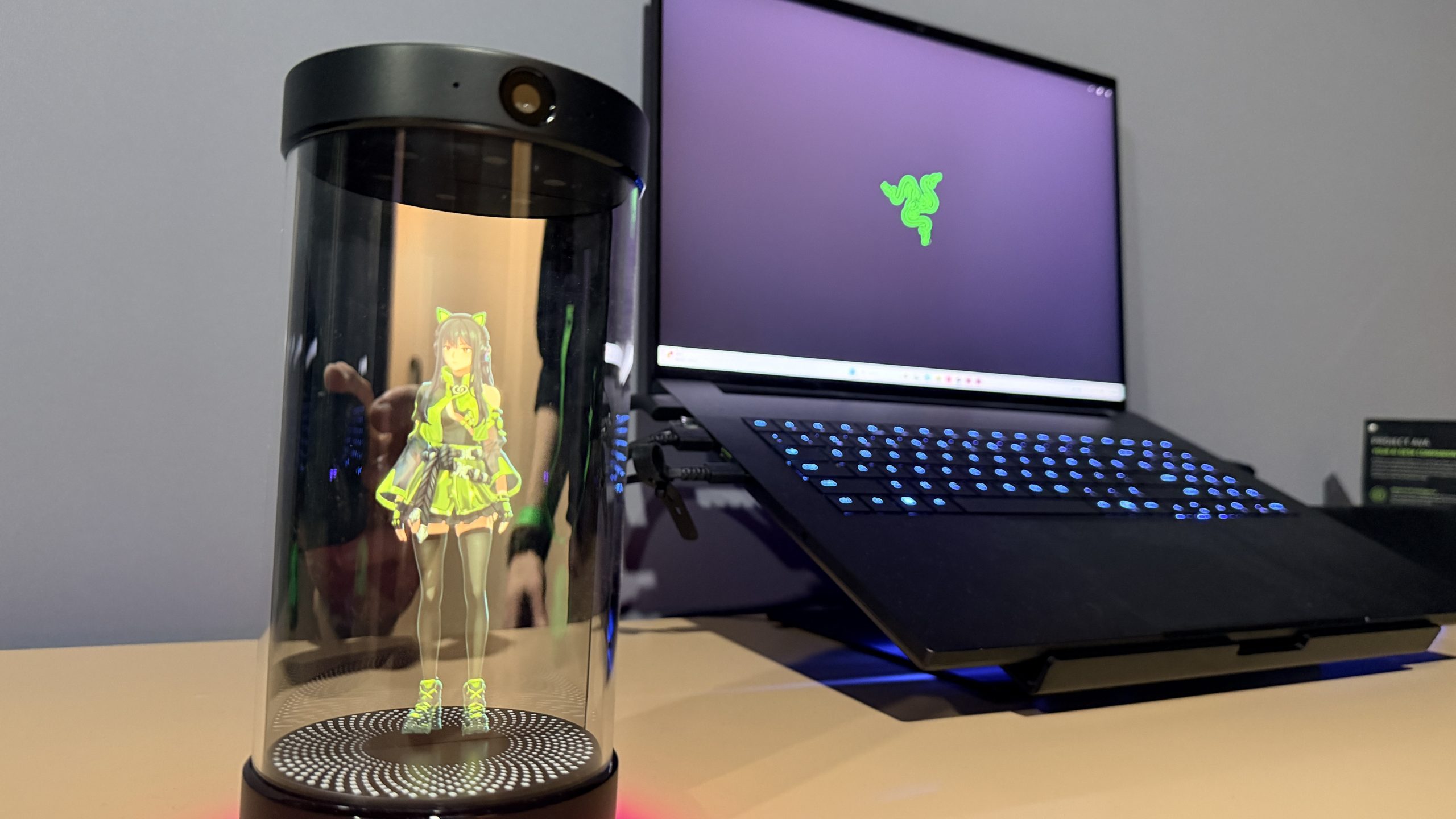
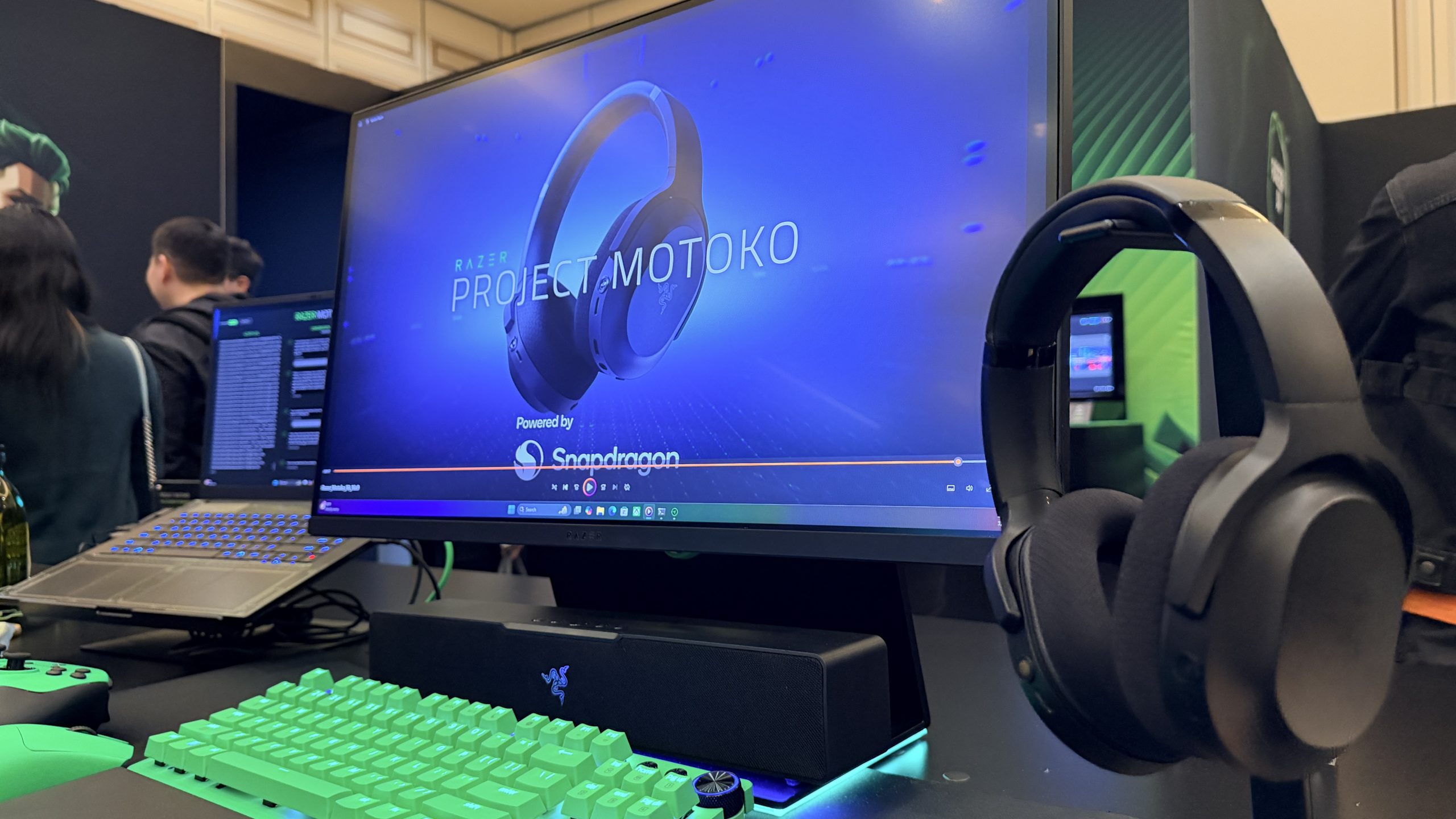
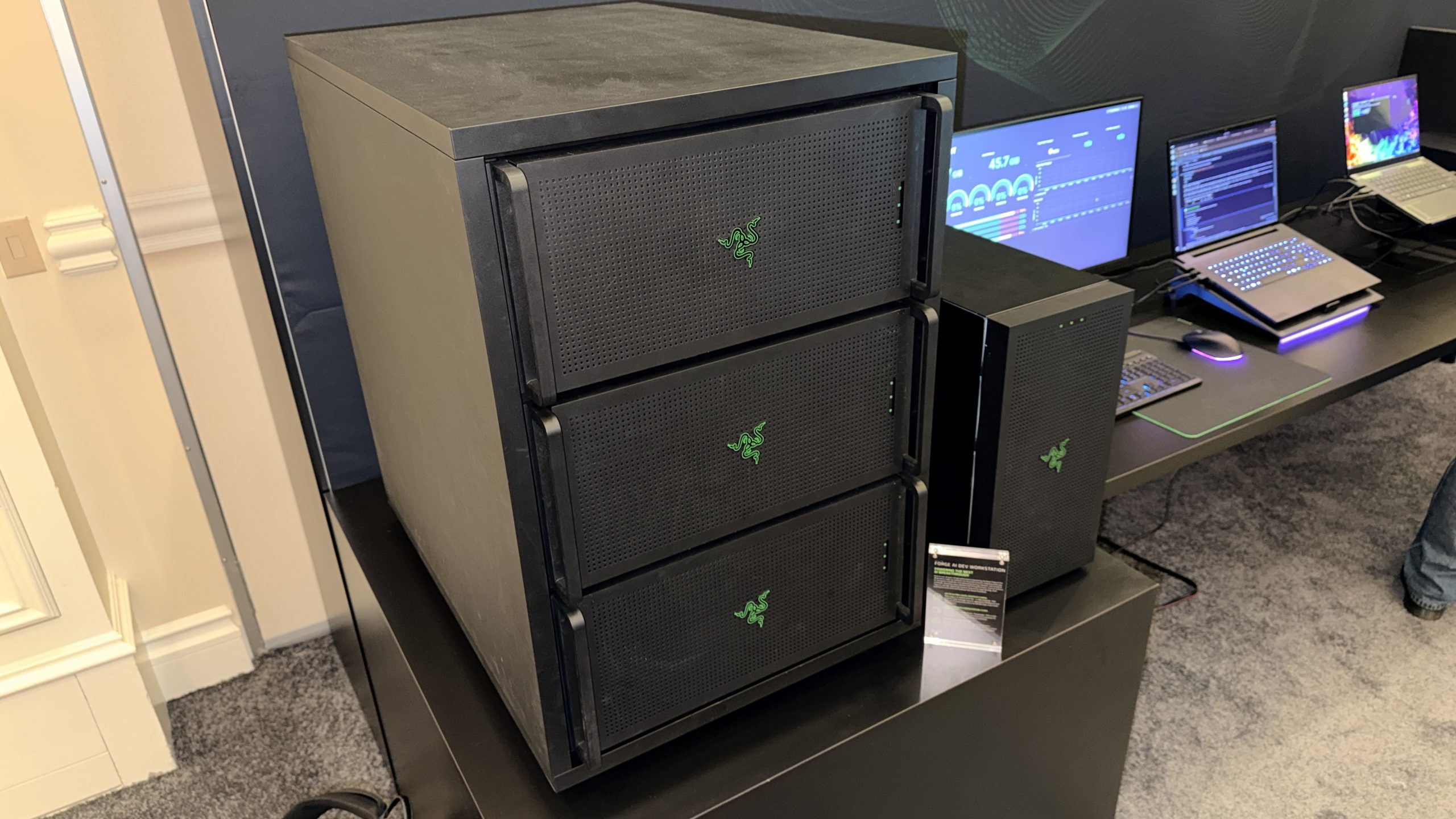
CES 2026: Razer goes all-in on AI with Project Ava and Snapdragon-powered wearables

Razer is using its CES 2026 campaign to showcase its “AI Gaming Ecosystem”, moving beyond traditional peripherals and into autonomous digital companions and enterprise‑grade AI workstations. The lineup is headlined by Project Ava, a physical evolution of Razer’s earlier AI coaching software, and Project Motoko, an AI‑integrated headset positioned as an alternative to smart glasses for the AI‑driven generation.

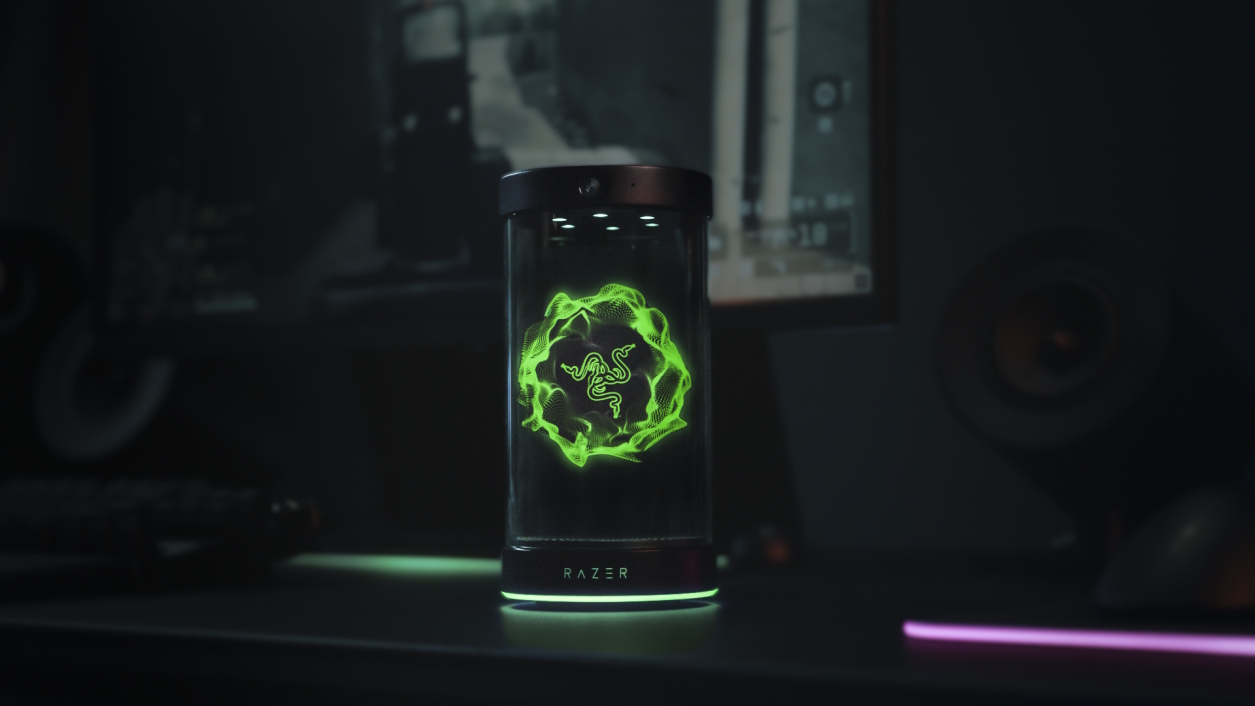
Starting with Project Ava, this cylindrical desktop device houses a 5.5‑inch animated avatar inside a transparent shell. Evolving from an abstract esports coach into a full “digital partner”, Ava uses a top‑mounted camera and PC Vision Mode to monitor gameplay or productivity in real time. Whether offering weapon loadout recommendations in shooters or managing your calendar while you work, Ava is designed as a persona‑driven assistant that sits beside your monitor rather than appearing as an on‑screen overlay. Razer has already opened reservations in the US, featuring the default character “Kira”, with support for custom avatars planned for the future.

For users on the move, Project Motoko introduces an AI‑powered wireless headset built on Qualcomm Snapdragon silicon. Unlike current smart glasses, Motoko relies on high‑fidelity audio feedback and dual first‑person cameras to deliver visual and environmental awareness. It supports translation, object recognition, and real‑time guidance, all while offering up to 40 hours of battery life. Razer is keeping the platform engine‑agnostic, enabling it to run local or cloud‑based models from OpenAI, Google, or even Tenstorrent’s mobile accelerators.

Razer is also making a pivot into the enterprise and research sectors with a dedicated suite of AI development tools:

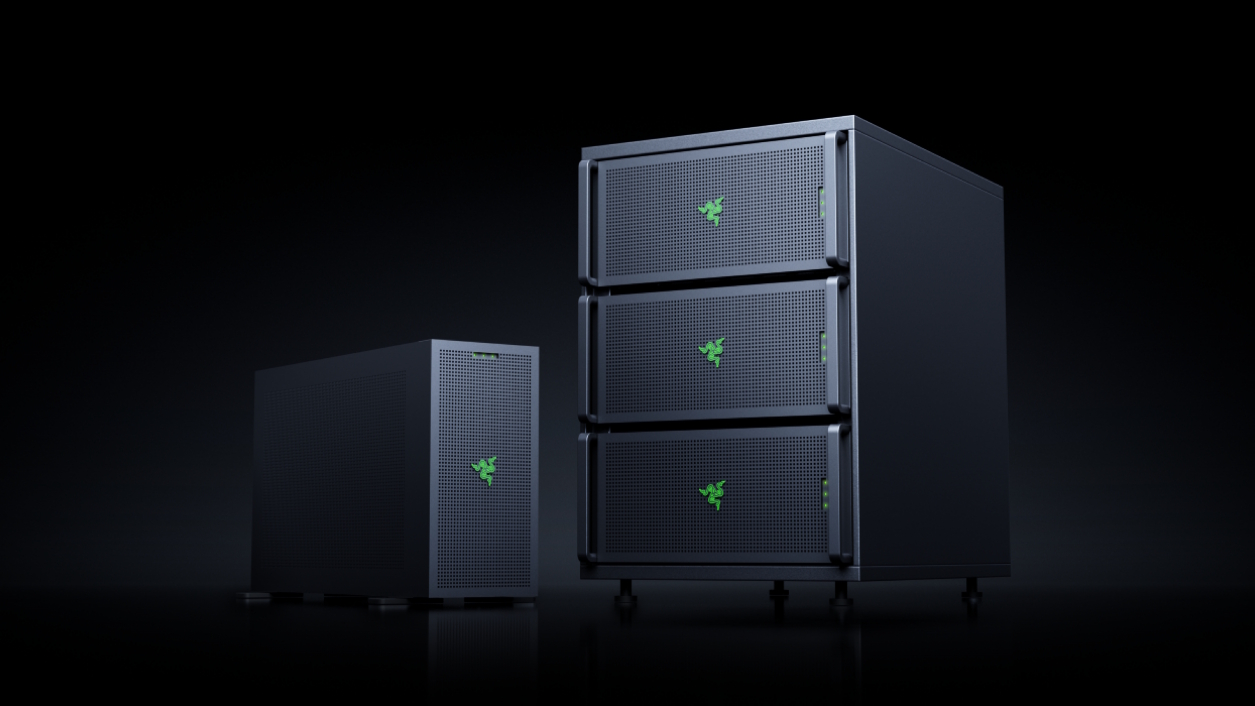
  • Razer Forge AI Dev Workstation: A localised powerhouse built for training Large Language Models (LLMs) and running complex simulations. It supports multiple professional GPUs (including the Nvidia RTX Pro 6000 Blackwell series) and workstation-class CPUs from the AMD Threadripper Pro or Intel Xeon W lines.
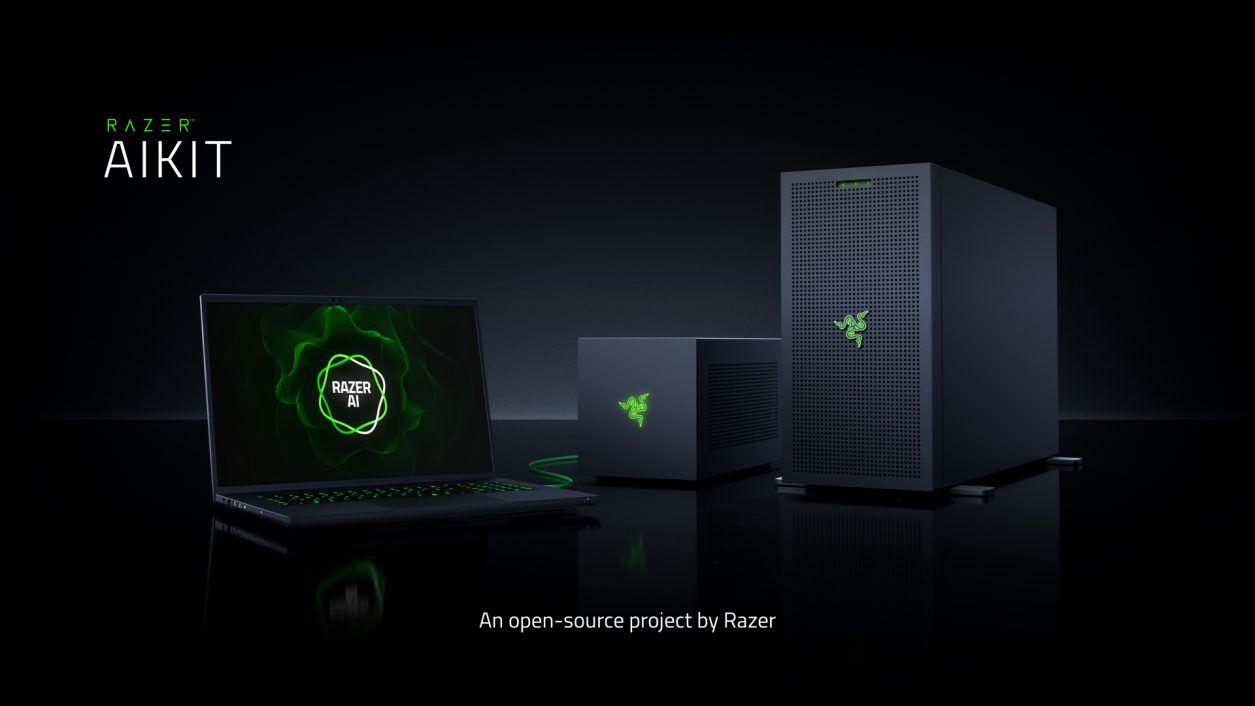
  • Razer AIKit: An open-source, local-first workflow tool available on GitHub. It allows researchers to fine-tune models on local hardware with cloud-comparable performance, featuring automatic GPU discovery and cluster formation.
  • Tenstorrent Partnership: In collaboration with Jim Keller's Tenstorrent, Razer is launching a compact AI accelerator that connects via Thunderbolt 5. Using “Wormhole” technology, these modular units can be daisy-chained to provide desktop-class generative AI performance to laptops and handheld PCs.

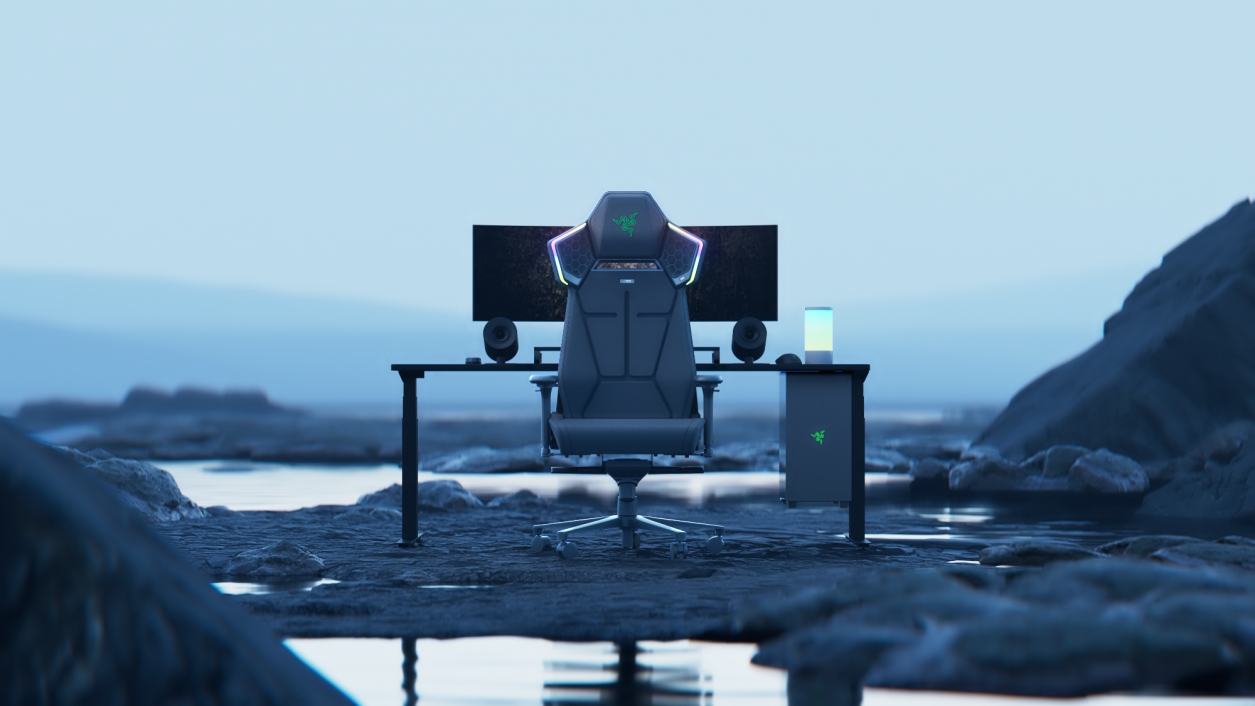
Razer’s gaming chair lineup has also been refreshed with the Razer Iskur V2 NewGen. While maintaining the price point of its predecessor, the NewGen model introduces Razer’s Gen‑2 EPU Leather with “CoolTouch” technology and a more breathable dual‑density foam cushion. For those seeking something beyond a standard office chair, Project Madison is a concept seat that integrates Sensa HD Haptics directly into the frame, vibrating in sync with game events or THX Spatial Audio for a multisensory experience.

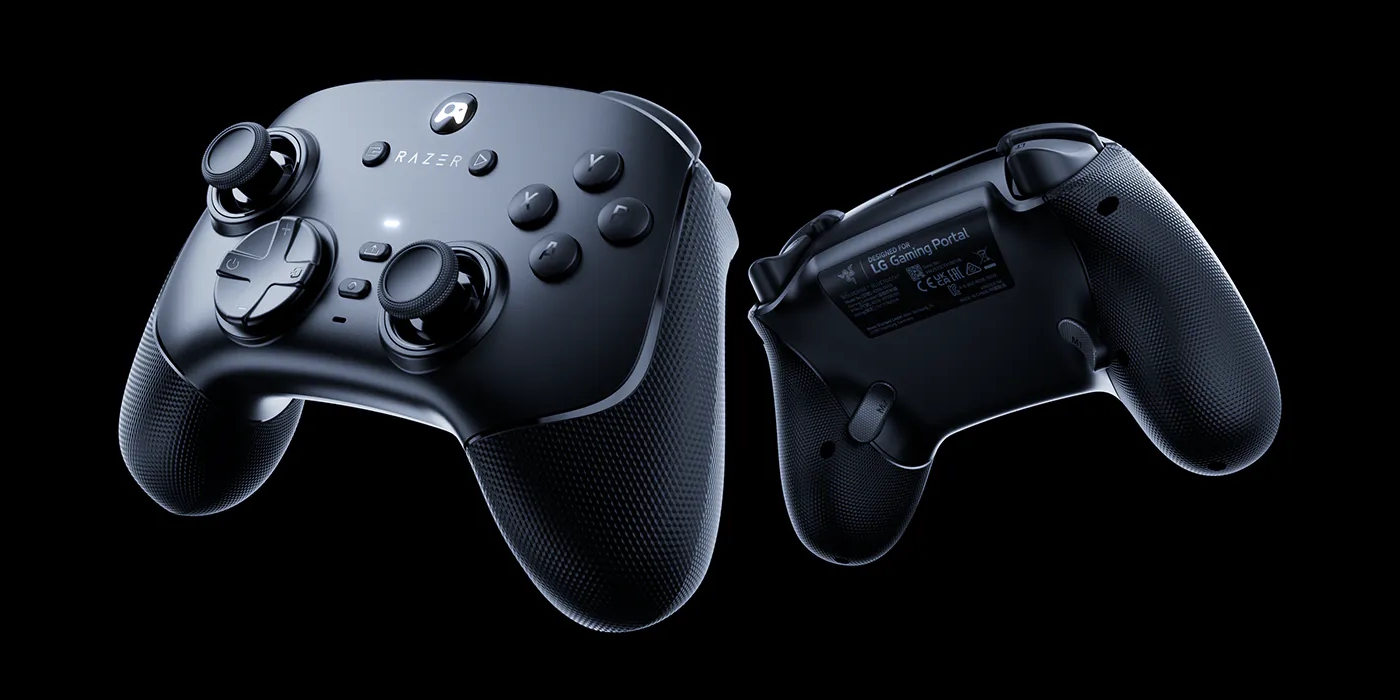
Lastly, the new Razer Wolverine V3 Bluetooth arrives as the “world’s fastest” wireless controller optimised for cloud gaming. Developed in partnership with LG, it features ultra‑low‑latency Bluetooth and integrated TV controls, allowing users to navigate LG’s gaming portals and cloud services without a separate remote.

KitGuru says: With this announcement, it's safe to say that Razer is no longer just a gaming brand. It's positioning itself as a hardware provider for the AI era. While Project Ava is probably the most interesting product for its core audience, the Forge workstation and the Tenstorrent accelerator suggest Razer is serious about capturing the professional AI market as well.

The post CES 2026: Razer goes all-in on AI with Project Ava and Snapdragon-powered wearables first appeared on KitGuru.
  •  

CES 2026: ASUS opens door for next-gen, high-performance systems

During the European Hardware Association Tech Tour, KitGuru was invited to ASUS headquarters in Taipei for an early look at a wide range of hardware planned for 2026. Rather than focusing on individual launches, the briefings were structured around broader design themes – power delivery, thermal density, system integration and the growing need to treat modern PCs as complete platforms rather than collections of parts. 

What follows is an overview of how ASUS is approaching that challenge across its 2026 high-performance portfolio – starting with its new motherboards/platforms. 

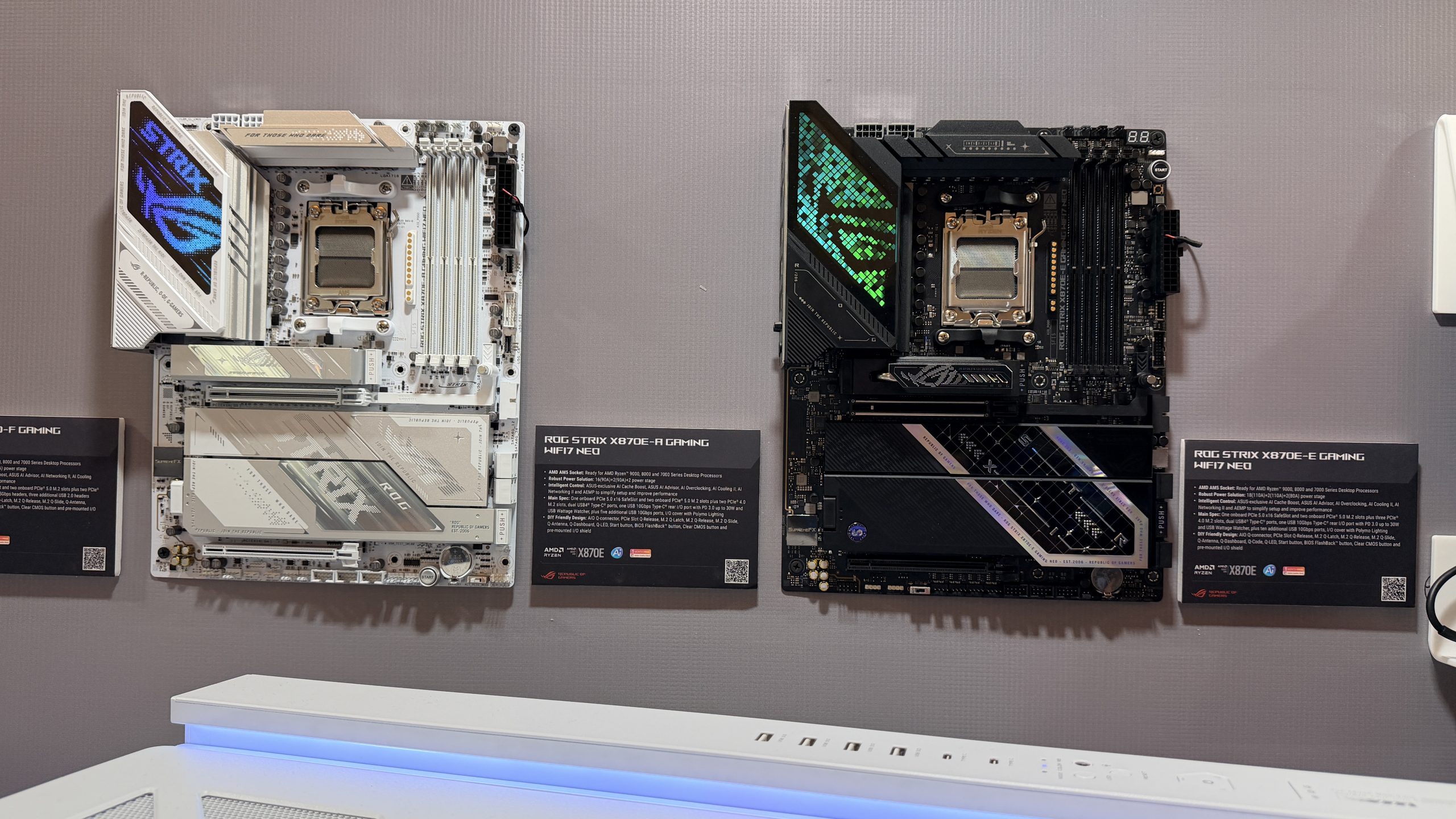
ROG Crosshair X870E and the NEO Refresh
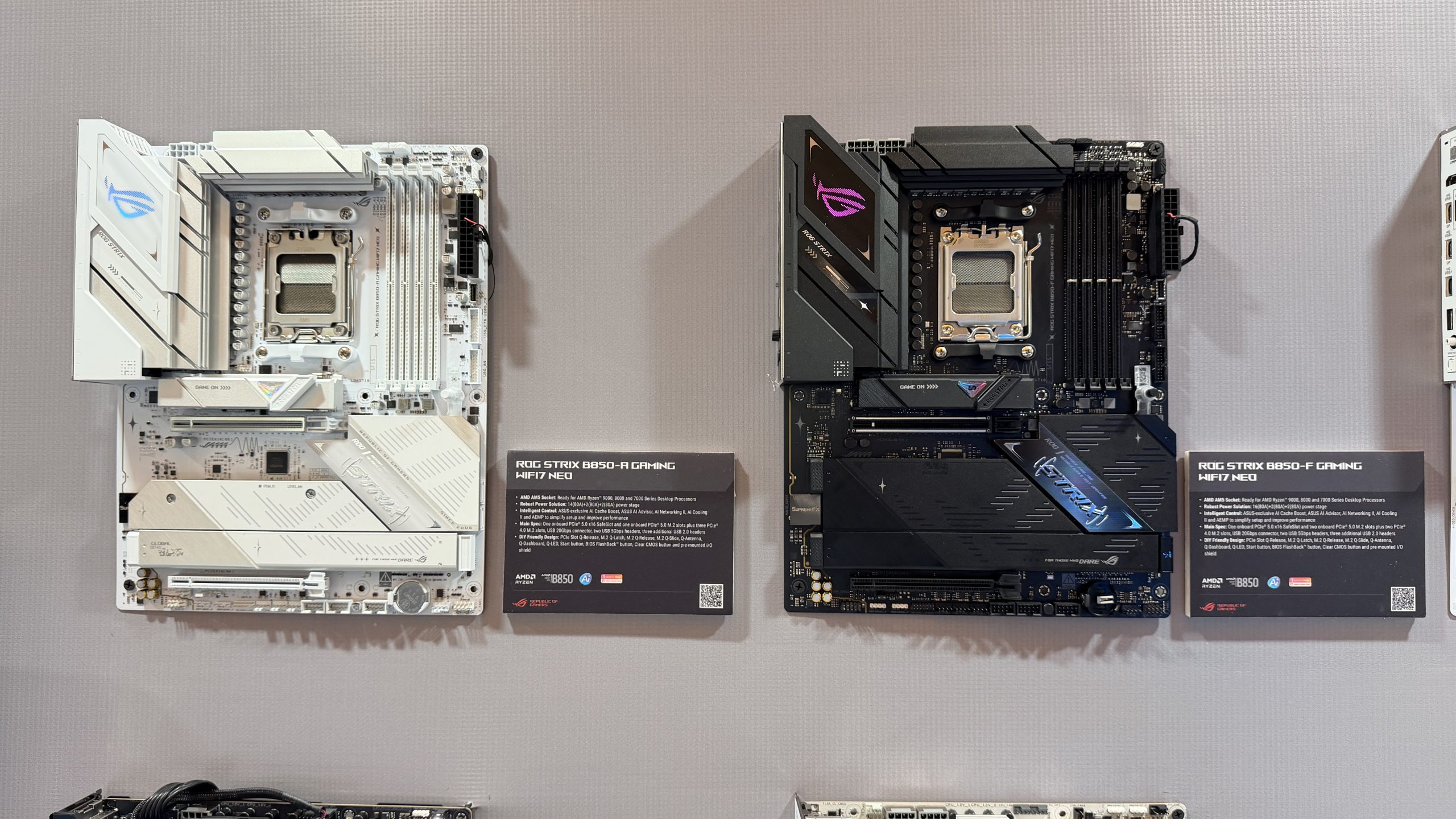
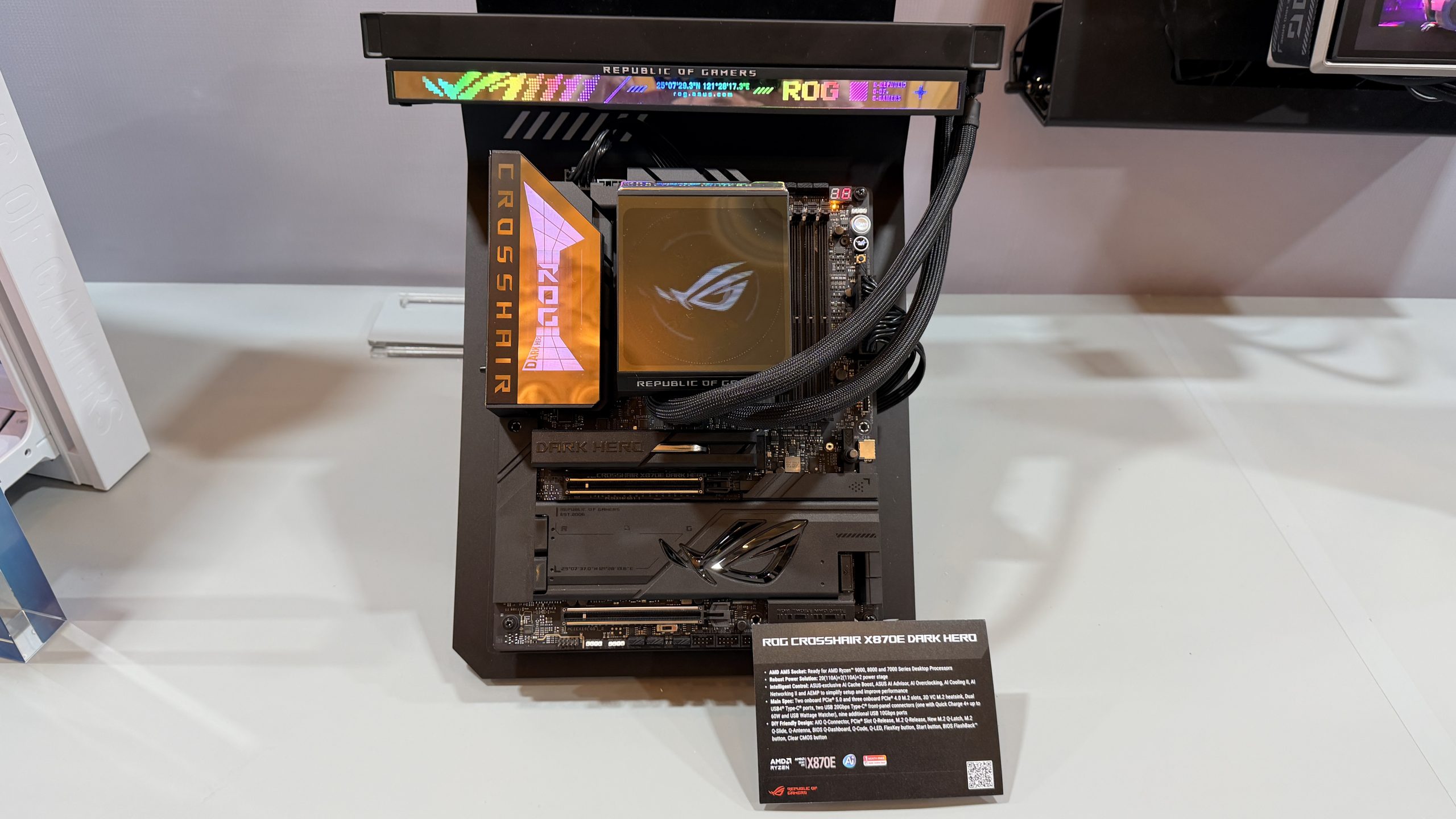
At the centre of ASUS' next-generation strategy sits the ROG Crosshair X870E platform, positioned as the flagship foundation for upcoming AMD systems. Two models lead that charge – the Crosshair X870E Glacial and Crosshair X870E Dark Hero – each targeting slightly different priorities while sharing the same underlying design intent. More will be announced about the NEO refresh closer to the launch in February 2026.


Power delivery and future-proofing
ASUS is explicit that these boards are designed with future AMD CPUs in mind, including processors that may, in theory, demand 200W or more of sustained power draw. While no such CPUs have been announced publicly (at the time of writing), this expectation aligns with broader industry conversations around rising power density and sustained boost behaviour. 

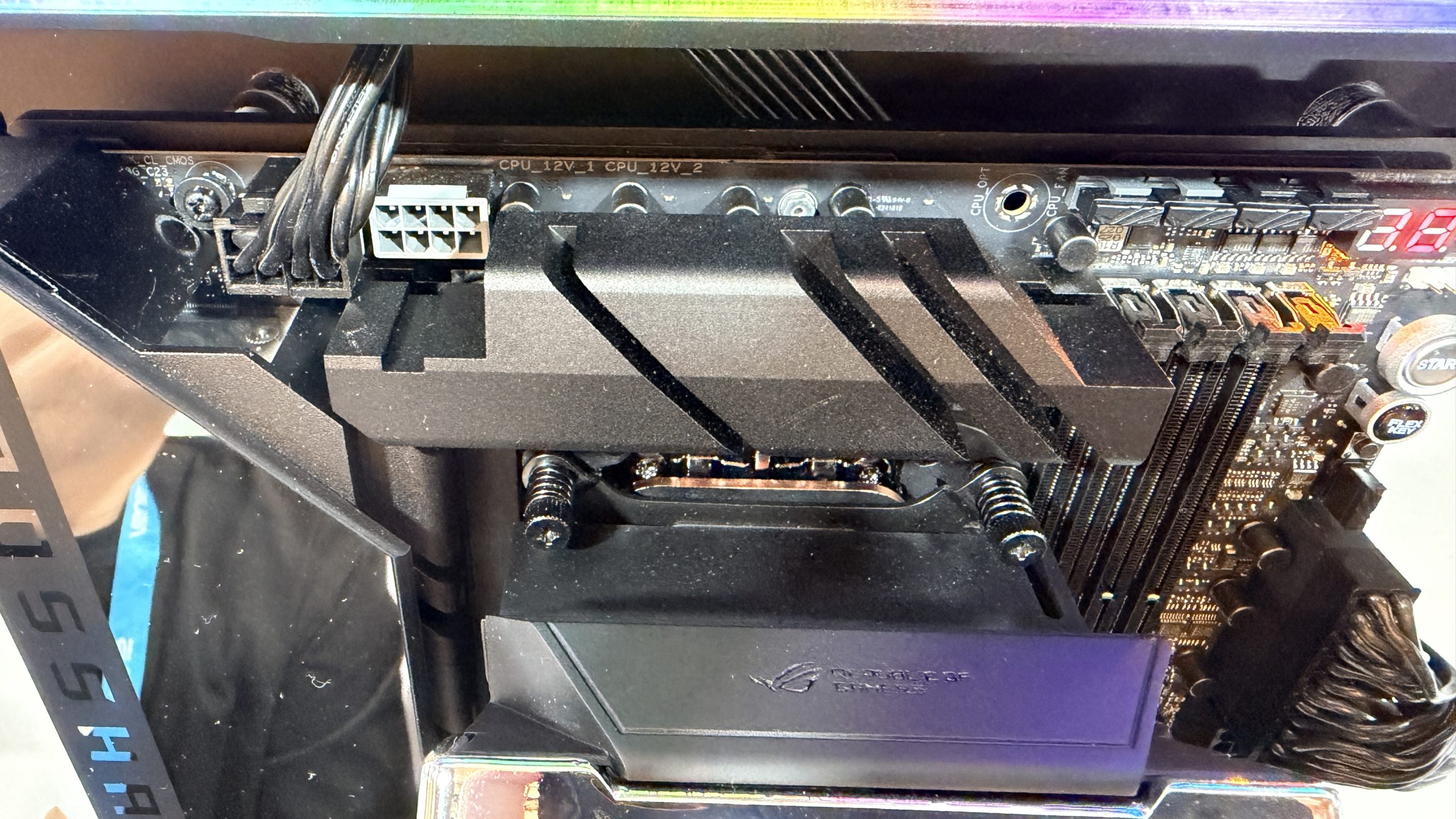
The Glacial model features a 24(110A)+2(110A)+2 power stage design, while the Dark Hero uses a 20(110A)+2(110A)+2 configuration, both employing ProCool II connectors, MicroFine alloy chokes and premium metallic capacitors. The intent here is not peak benchmarking, but long-term electrical stability under heavy, sustained loads.
Within the motherboard industry, there is also a growing belief that next-generation platforms could unlock 5–15% gaming performance gains, depending on workload and configuration. This is not positioned as a guarantee, but as a byproduct of improved signal integrity, memory routing and platform optimisation rather than dramatic architectural shifts. All of which could be pretty useful as we head into a year where gamers might need to step back slightly on graphics card and system memory options.

Connectivity and segmentation
Networking is another area where ASUS differentiates clearly between the two boards. The Glacial integrates dual Realtek 10Gb Ethernet, while the Dark Hero combines 10Gb and 5Gb Ethernet, with both boards featuring on-board WiFi 7 (802.11be) and ASUS' WiFi Q-Antenna system. 

Thermal engineering as a motherboard feature
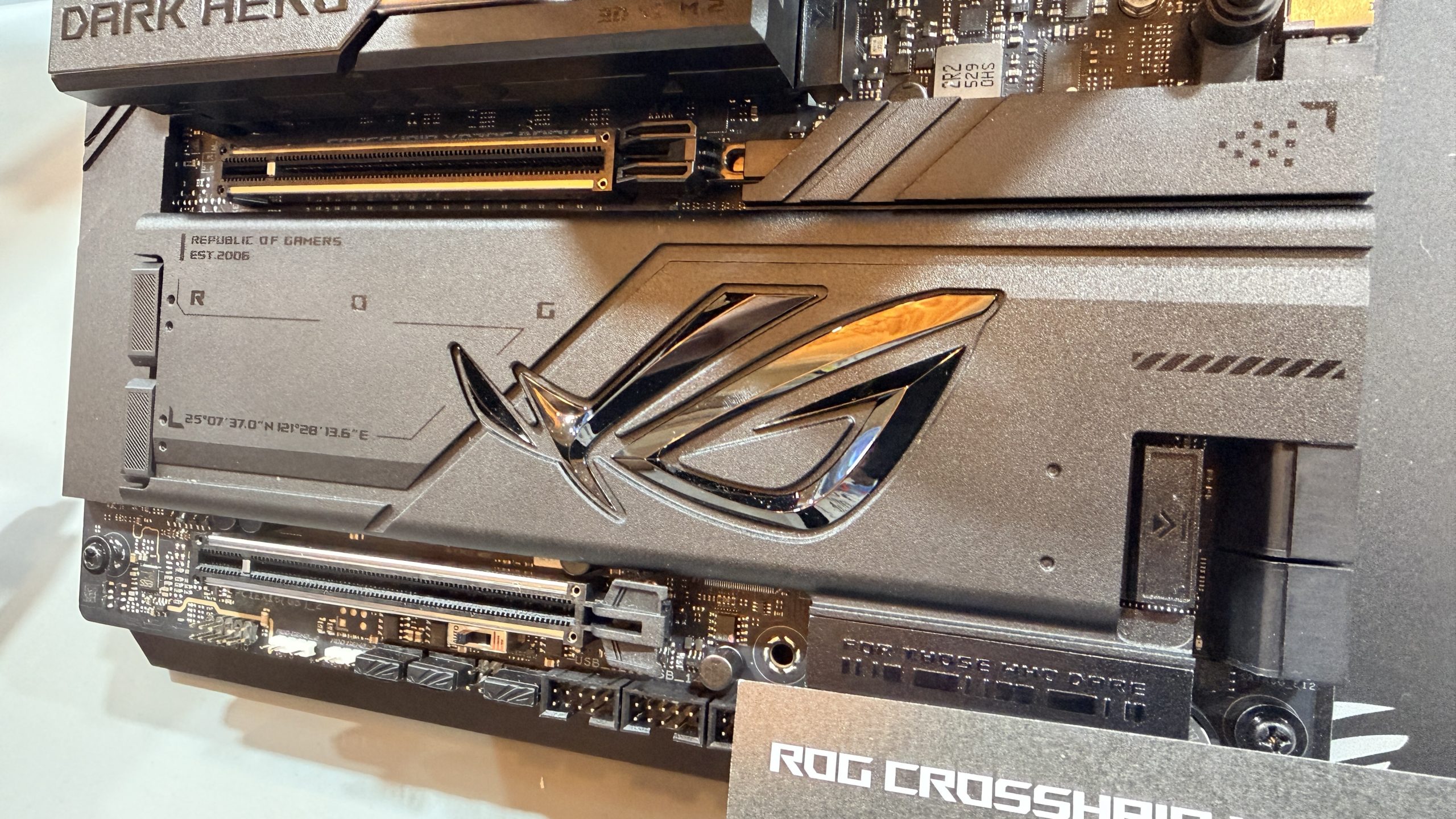
Thermal design is treated as a first-class concern. Both boards use large, integrated heatsinks tied into the I/O shroud, linked by heatpipes and high-conductivity thermal pads. One PCIe 5.0 M.2 slot benefits from ASUS' 3D vapour chamber M.2 heatsink, explicitly designed to cope with the heat output of next-generation storage. With PCI-Express Gen 6 on the horizon, we will need to get used to active cooling for SSDs as being a standard topic of discussion. 

Memory cooling is also integrated into the control logic via ROG Memory Q-Fan, reinforcing the idea that modern motherboards are now active thermal managers rather than passive backplanes.

The NEO refresh
Sitting beneath the Crosshair flagships and more affordable for the masses, is the refreshed ROG Strix NEO series, covering X870E and B850 models. ASUS describes this as more than a cosmetic update. A redesigned memory routing architecture using via-in-pad routing and improved impedance continuity enables ASUS to quote much faster overclocked memory speeds. 

We were shown ‘ASUS internal figures’ – and KitGuru will look to validate them independently once hardware is available. The more important takeaway is that memory stability and compatibility appear to be the primary goal, rather than chasing record-setting frequencies. 

Additional platform changes include asynchronous clocking, expanded M.2 support while maintaining PCIe 5.0 x16 GPU bandwidth, and a renewed BIOS interface. ASUS has also introduced ASUS MB Manager, initially on the NEO series, to separate motherboard-level RGB and system control from the broader Armoury Crate ecosystem. 

ASUS ExpertCenter Pro ET900N G3
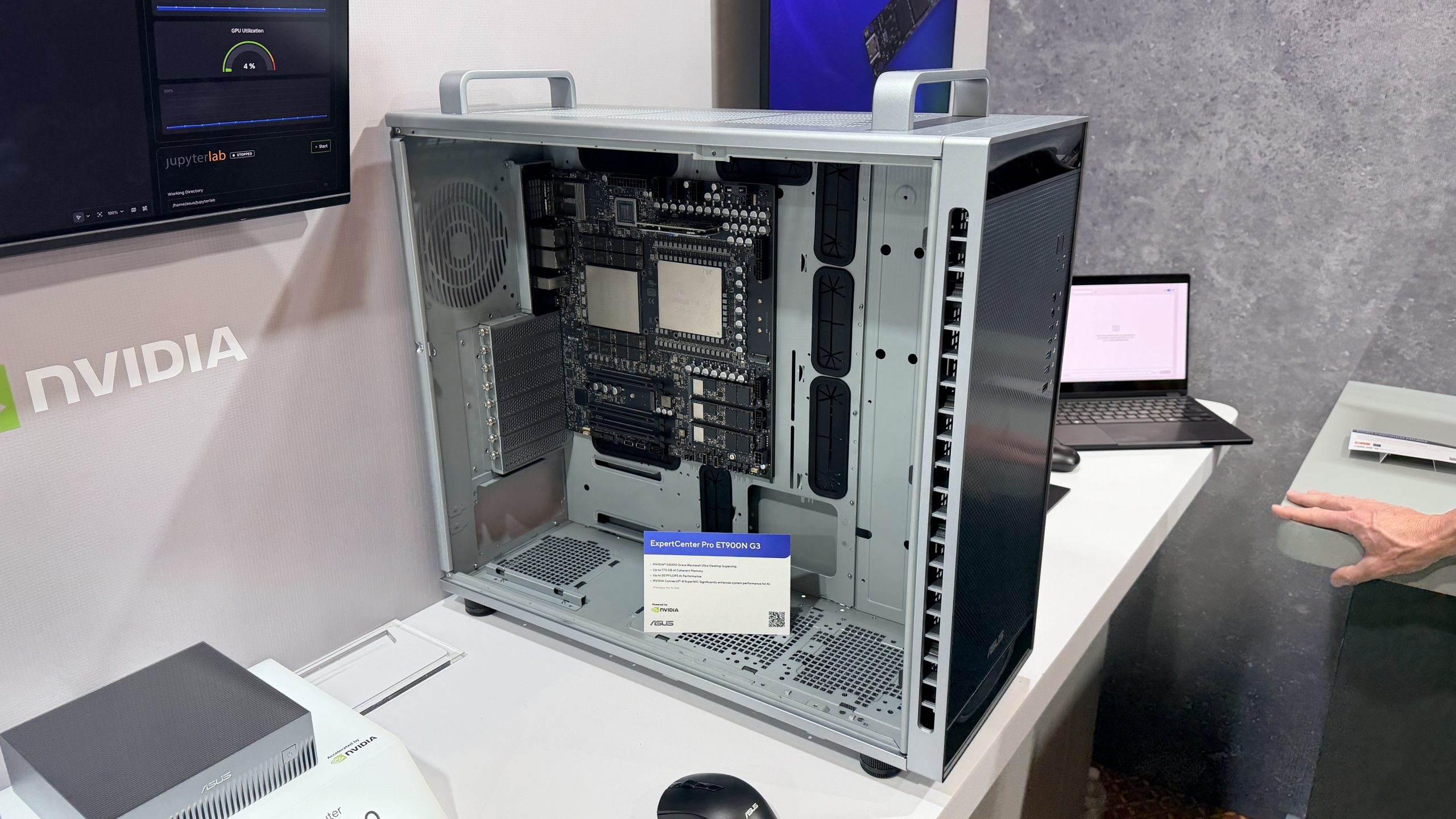
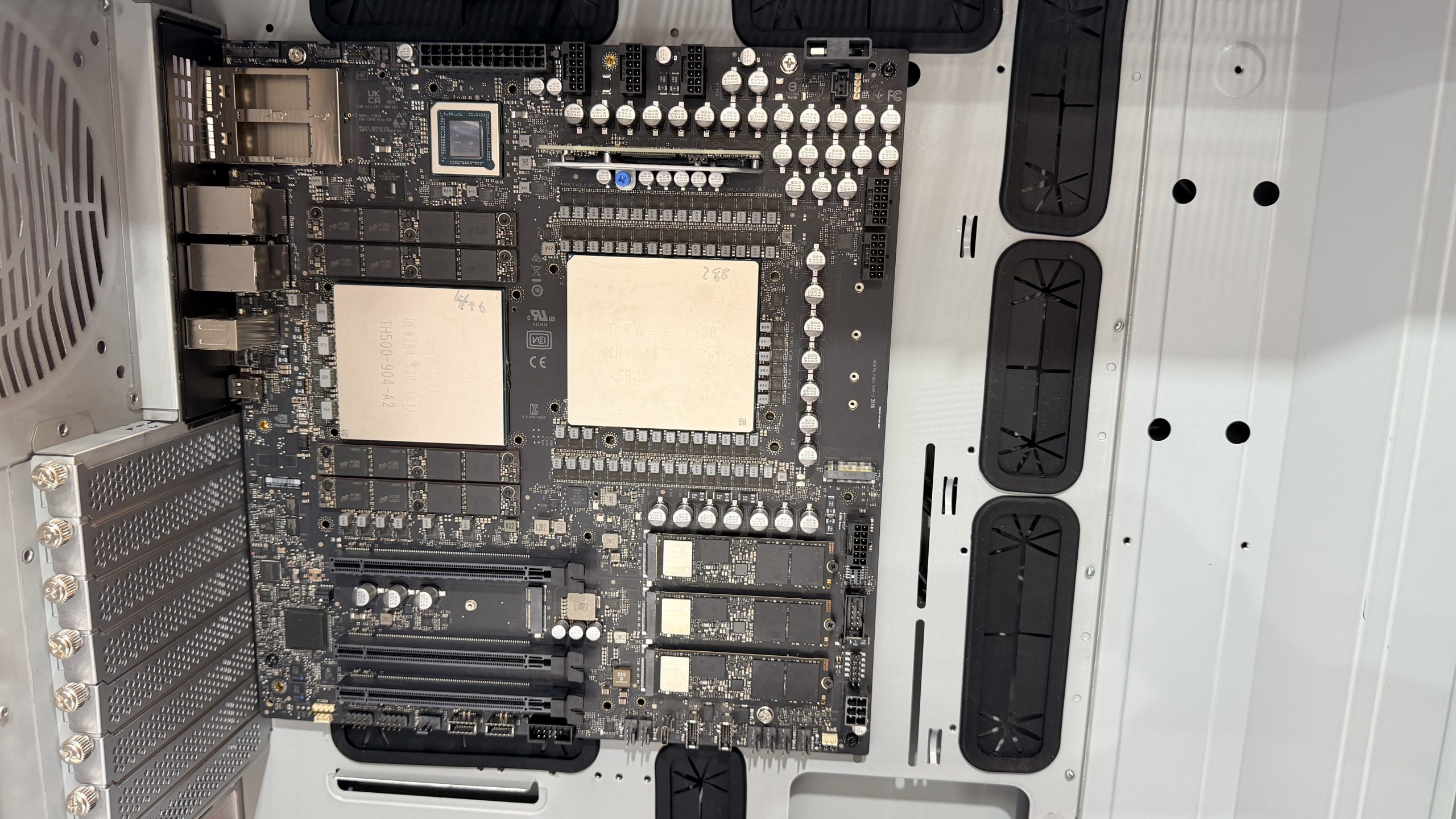
The most striking system shown during the tour was arguably the ASUS ExpertCenter Pro ET900N G3. This is a desktop form factor AI supercomputer built around NVIDIA Grace and Blackwell technologies. 

ASUS positions the ET900N G3 as a bridge between traditional workstations and rack-mounted server infrastructure. According to figures provided by ASUS, the system offers higher PFLOPS compute capability than a four-GPU NVIDIA HGX H200 SXM system, based on FP8 model performance comparisons. The figures shown are claims by ASUS. We expect that real-world performance will depend on workload and configuration. 

The rationale behind the creation of the ET900N G3 becomes clearer when viewed against industry pricing. HGX H200 SXM systems are widely understood to cost hundreds of thousands of dollars once GPUs, chassis, networking, power and cooling infrastructure are accounted for. By contrast, ET900N G3 is designed to deliver serious AI compute in environments that cannot justify data-centre-scale deployments. 

Features such as ConnectX-8 SuperNICs, QSFP 400G networking, and Multi-Instance GPU (MIG) support reinforce that this is not a consumer product, but a workstation-class tool aimed at research, enterprise AI, and edge compute scenarios. 

Thermal Solutions: ROG Ryuo and Strix LC IV 

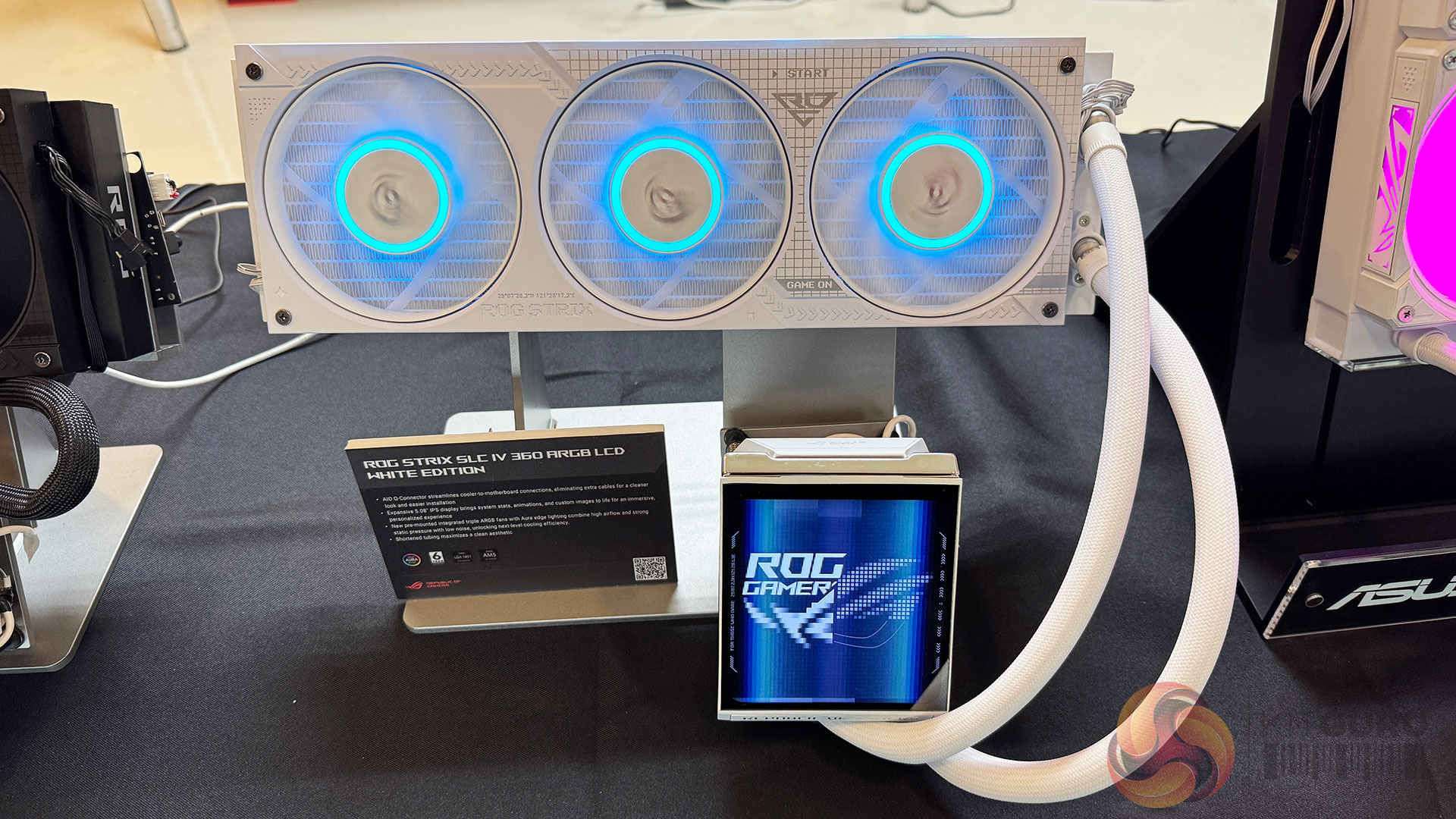
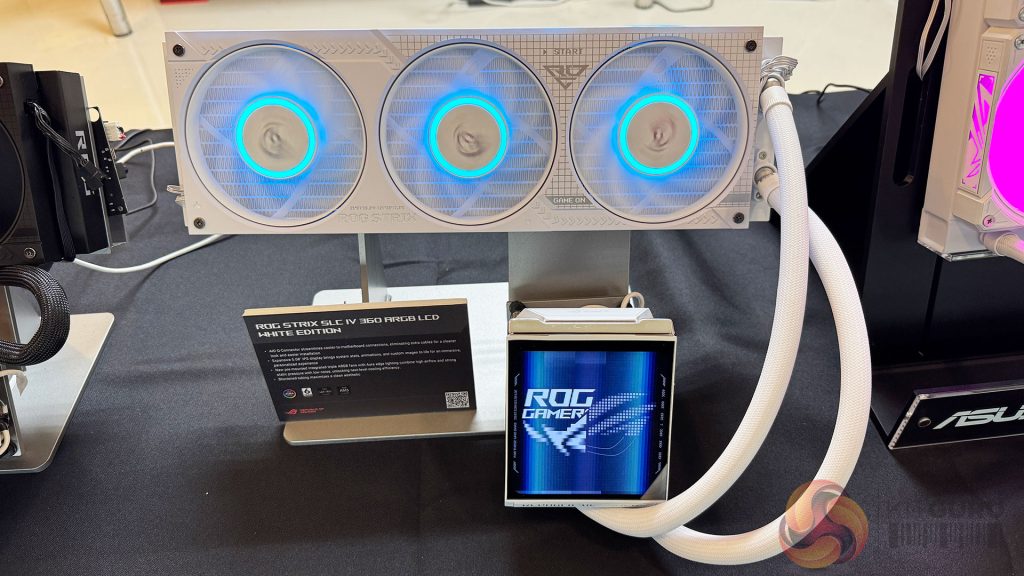
As CPU power draw begins to rise again, ASUS is also evolving its cooling ecosystem. The ROG Ryuo IV and introduces Asetek Emma Gen8 V2 pumps, with the Ryuo IV and ROG Strix SLC/LC IV AIO coolers benefiting from updated cold plates and an emphasis on installation simplicity. 

A notable design change is the AIO Q-Connector, which consolidates cabling between the cooler and compatible ASUS motherboards into a single connection. While this reduces cable clutter and simplifies builds, it also reinforces a clever ecosystem lock-in, which is a trade-off that ASUS appears willing to make in pursuit of cleaner system design. 

The integrated 5.08-inch IPS LCD, running at 720 × 720 and 60Hz, is positioned less as a novelty and more as a system monitoring surface, capable of displaying thermals, fan speeds and custom visuals. We did ask about future models with much higher refresh rates on bigger screens, but were told (with a smile) that 5” and 60Hz was probably all that was needed. 
Graphics: ASUS ProArt GeForce RTX 5090 32GB GDDR7 OC Edition 

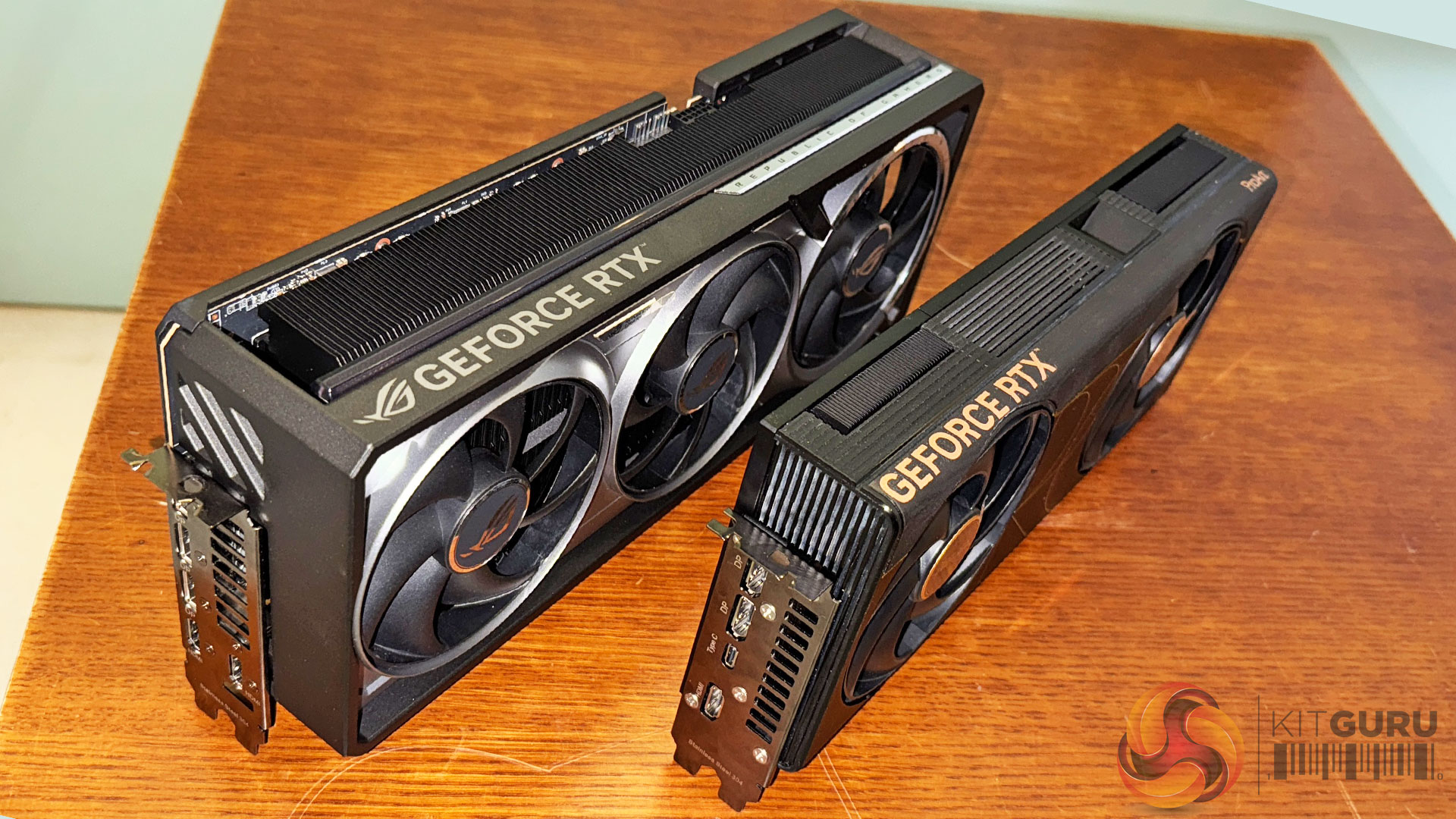
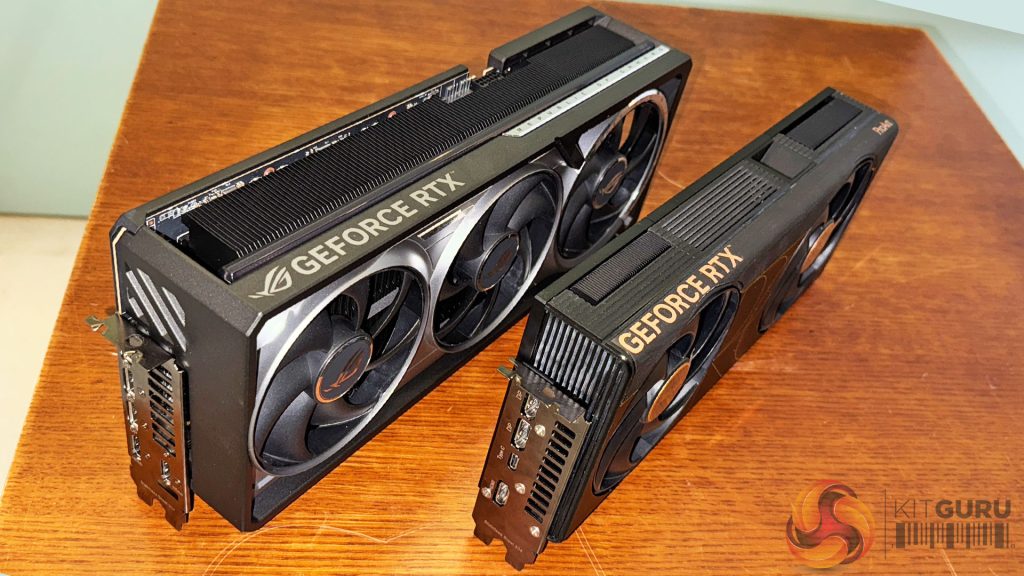
Last year, ASUS demonstrated the ROG Astral RTX 5090, a physically enormous statement GPU. The ProArt RTX 5090 shown this year, is effectively the counterpoint. All of the important hardware in a much smaller package. 

According to ASUS, the ProArt card occupies roughly a quarter of the volume of the largest Astral designs (see below), while remaining SFF-ready in a 2.5-slot form factor. This immediately broadens its appeal to professional workstations, compact builds and creator systems – where physical space and airflow matter as much as raw performance. 

Cooling is handled via liquid metal on the GPU die, a vapour chamber, dual Axial-tech fans and a double-vented backplate designed to actively exhaust heat rather than trap it within the chassis. ASUS also highlights USB-C output support and ProArt-specific software tuning for professional workflows. 

ASUS claims performance parity with flagship RTX 5090 silicon while maintaining acoustics and thermals suitable for sustained workloads. As always, KitGuru will be looking to validate those claims through independent testing.  
Chassis and Airflow: ROG Cronox and Eurux GR120 

The final piece of the system puzzle is airflow and enclosure design, and this is where ASUS' BTF (Hidden Connector) strategy becomes most visible. 

ROG Cronox PC Case
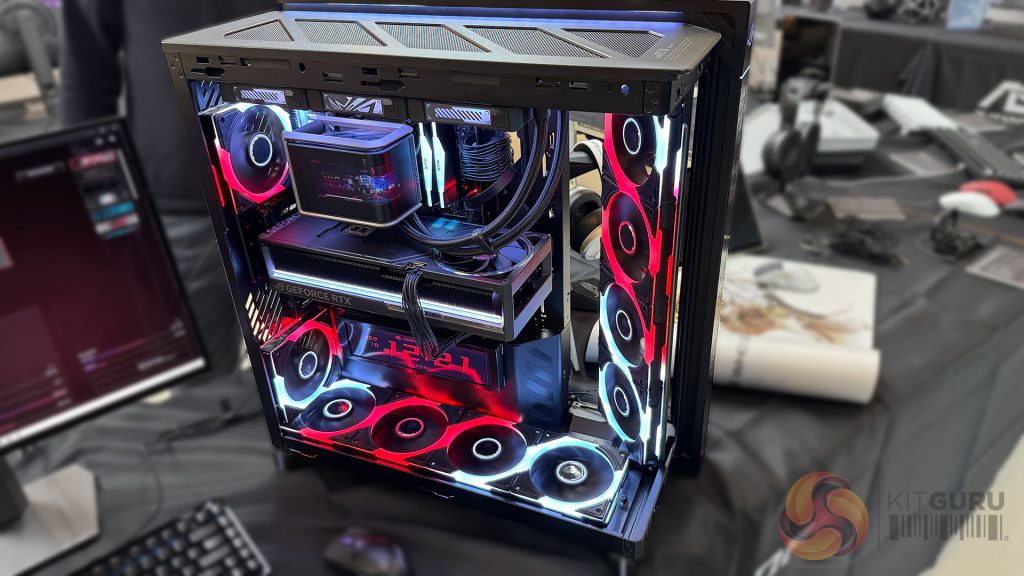
The ROG Cronox is a large, airflow-focused chassis that will be sold separately. It features an aluminium-trimmed structural frame, a tool-free curved glass side panel, and support for up to 14 × 120 mm fans. 

Cooling support includes dual 360mm radiators, GPUs up to 400mm in length, and CPU coolers up to 180mm tall. A patented rotatable side fan bracket allows airflow to be redirected at a 45-degree angle, prioritising either cooling efficiency or system visibility depending on the build. 

A built-in 9.2-inch LCD panel (1920 × 420, 400 nits, 60Hz) provides system monitoring and visual customisation, reinforcing the theme of integrated, system-level control rather than bolt-on accessories.
BTF integration
The chassis briefing delivered by ASUS, also revealed the Hero BTF version of the new X870E Crosshair motherboards and a ROG Astral GeForce RTX 5090 BTF Edition graphics card. While not every build will adopt BTF, it provides a clean link between motherboard design, GPU layout, and chassis airflow, reducing visible cables and improving internal airflow paths. 

ROG Eurux GR120 ARGB fan
Completing the airflow story is the ROG Eurux GR120 ARGB fan, featuring LCP fan blades, CNC-milled brass bearing shells, and ASUS-quoted performance figures of 91 CFM airflow, 4.6mmH₂O static pressure, and 33 dB(A) noise levels at up to 2600 RPM. 

Figures shows are ASUS claims but, on paper, they position the GR120 as a fan capable of handling dense radiator and chassis scenarios, particularly when paired with the Cronox case and BTF-style builds. It will be interesting to see if we can achieve the same cooling standards as ASUS claim with this kind of set-up. 

KitGuru Says: Taken individually, each of these products serves a specific audience. Viewed together, they form a coherent picture of where ASUS believes high-performance systems are heading: Higher sustained power, tighter thermal budgets, cleaner physical layouts and platforms engineered as complete ecosystems rather than collections of parts. Many of the figures quoted here come directly from ASUS briefings, and KitGuru will be looking to see how those claims translate into real-world performance once hardware becomes available. 

The post CES 2026: ASUS opens door for next-gen, high-performance systems first appeared on KitGuru.
  •  

January’s Humble Choice line-up includes Sonic Frontiers; Hunt Showdown and more

2026 is officially here, and seeing as how it’s a new month, Humble has another set of games available to claim right now as part of its Humble Choice subscription service. Kicking off the year with a strong selection of titles, January’s line-up includes Sonic Frontiers; Hunt Showdown; the Tomb Raider Classic collection and more.
Available to add to your library from now, January 2026’s Humble Choice line-up is as follows:

  • Sonic Frontiers
  • Tomb Raider IV-VI Remastered
  • Hunt Showdown 1896
  • Etrian Odyssey II HD
  • Nice Day for Fishing
  • Metal Slug Tactics
  • Settlement Survival
  • Wizard of Legend 2

All in all this marks a pretty good month for Choice subscribers, with Sonic Frontiers offering a fun open zone to dash around and complete various platforming puzzles – all the while offering a set of more traditional boost-era stages as well.

Tomb Raider IV-VI Remaster is, as it says, a remaster of Lara Croft’s earlier outings. Released a little under a year ago, this package offers options for both classic and enhanced visuals thanks to the efforts of remaster specialists Aspyr.

Wizard of Legend 2 meanwhile is a fun single-player or co-op rogue-like offering a mix of dungeon crawling, fun and fast gameplay as well as a wide variety of upgrades. Though somewhat of a downgrade in art style compared to the first entry, Wizard of Legend 2 is still definitely worth checking out.

As always, a portion of your subscription will go towards charity, with this month supporting Gamers Outreach: “A nonprofit organization that exists to empower hospitalized families through video games.”

KitGuru says: What do you think of January’s offerings? Is this a solid start to 2026? Let us know your thoughts down below.

The post January’s Humble Choice line-up includes Sonic Frontiers; Hunt Showdown and more first appeared on KitGuru.
  •  

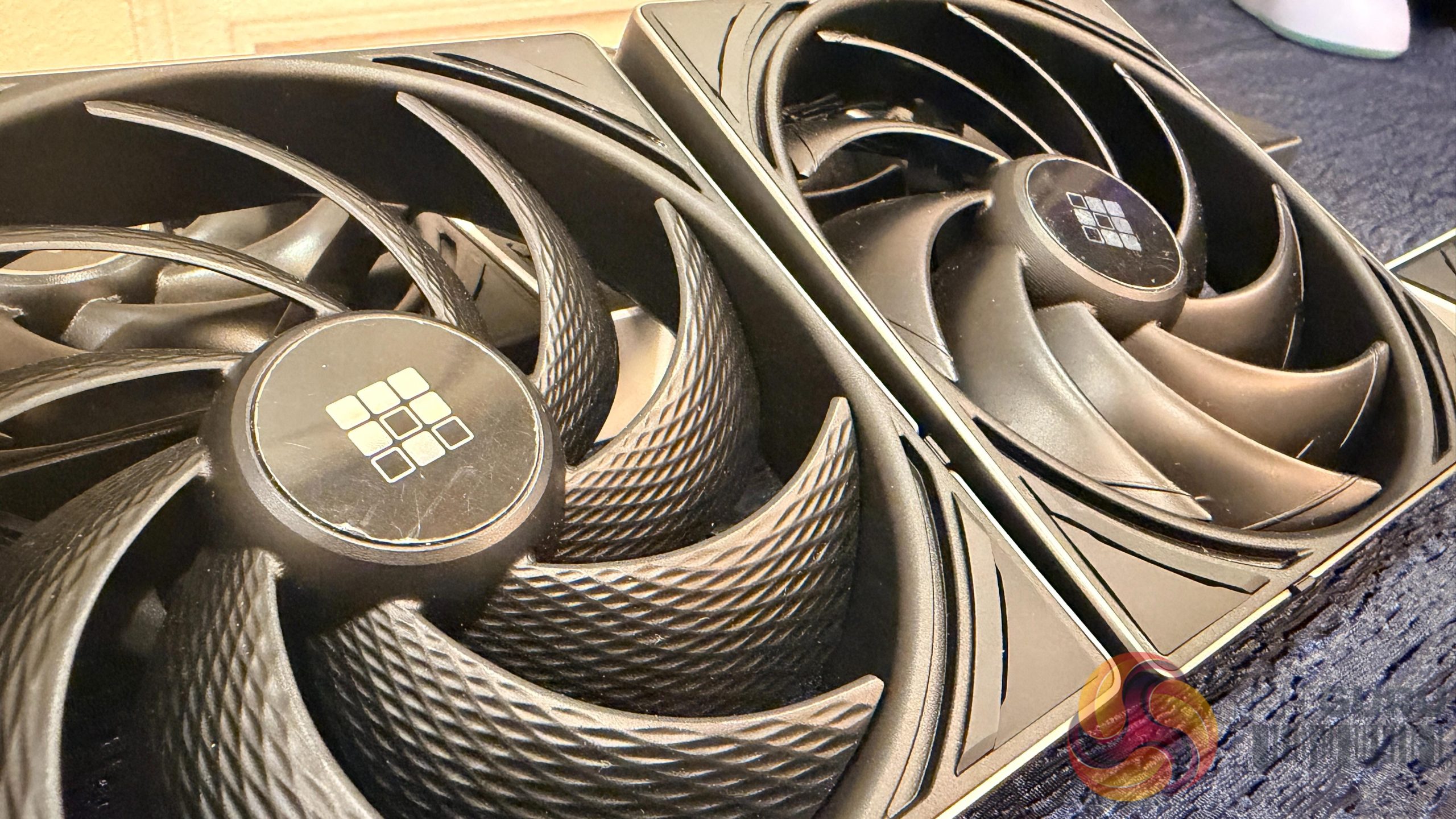
CES 2026: Sudokoo launches full line-up of CPU coolers

Sudokoo is making its first CES appearance this year, bringing along a host of new CPU coolers, covering both air and AIO units. We stopped by their booth to get a first-hand look at the new range.

Watch via YouTube below:

Timestamps:
00:00 SK700V Mach
00:55 SK600VC
01:18 ST720
01:45 Aetherflex 360
02:16 Energlo 360
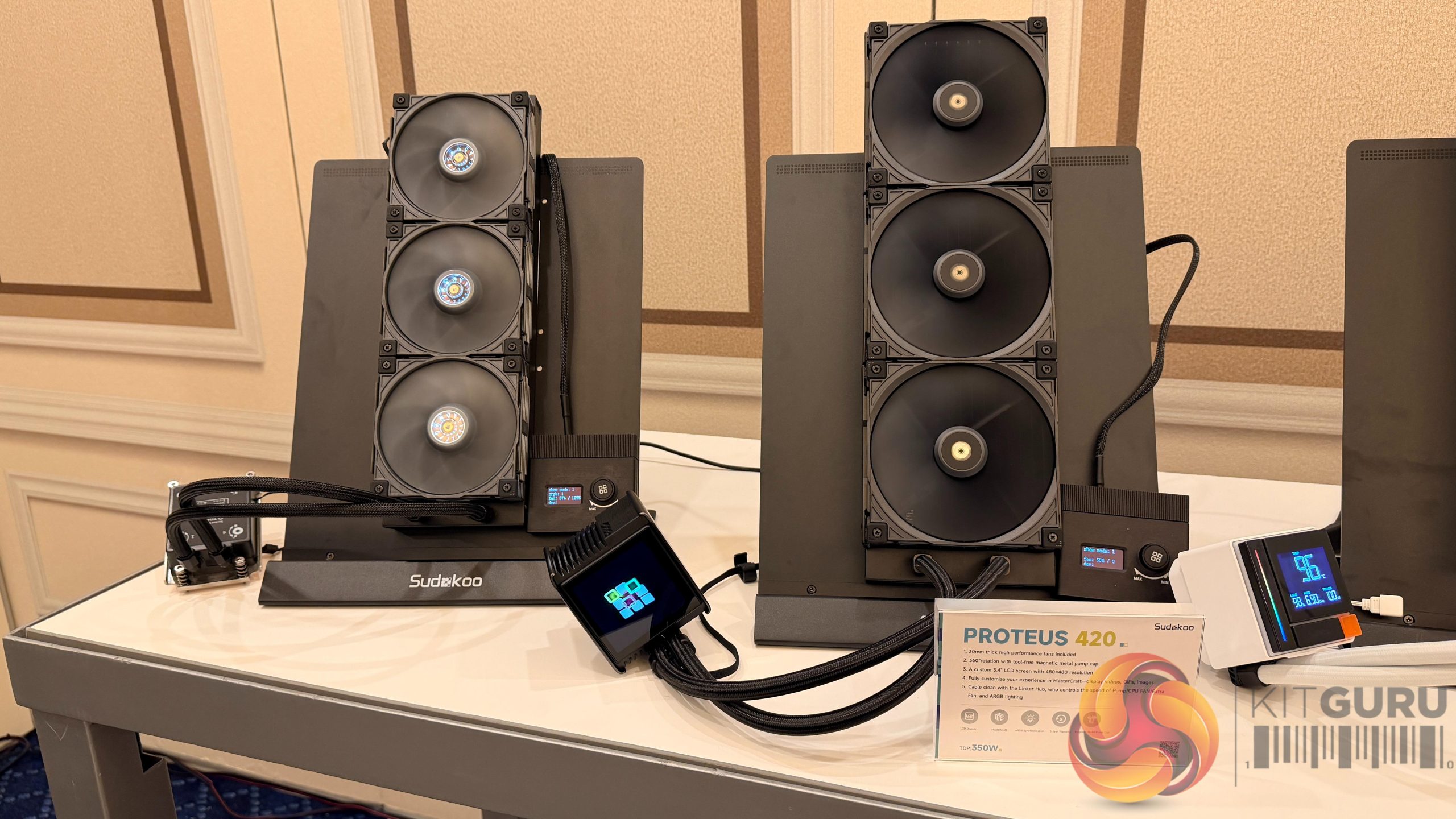
03:06 Proteus 420
03:35 Workstation Liquid Cooler
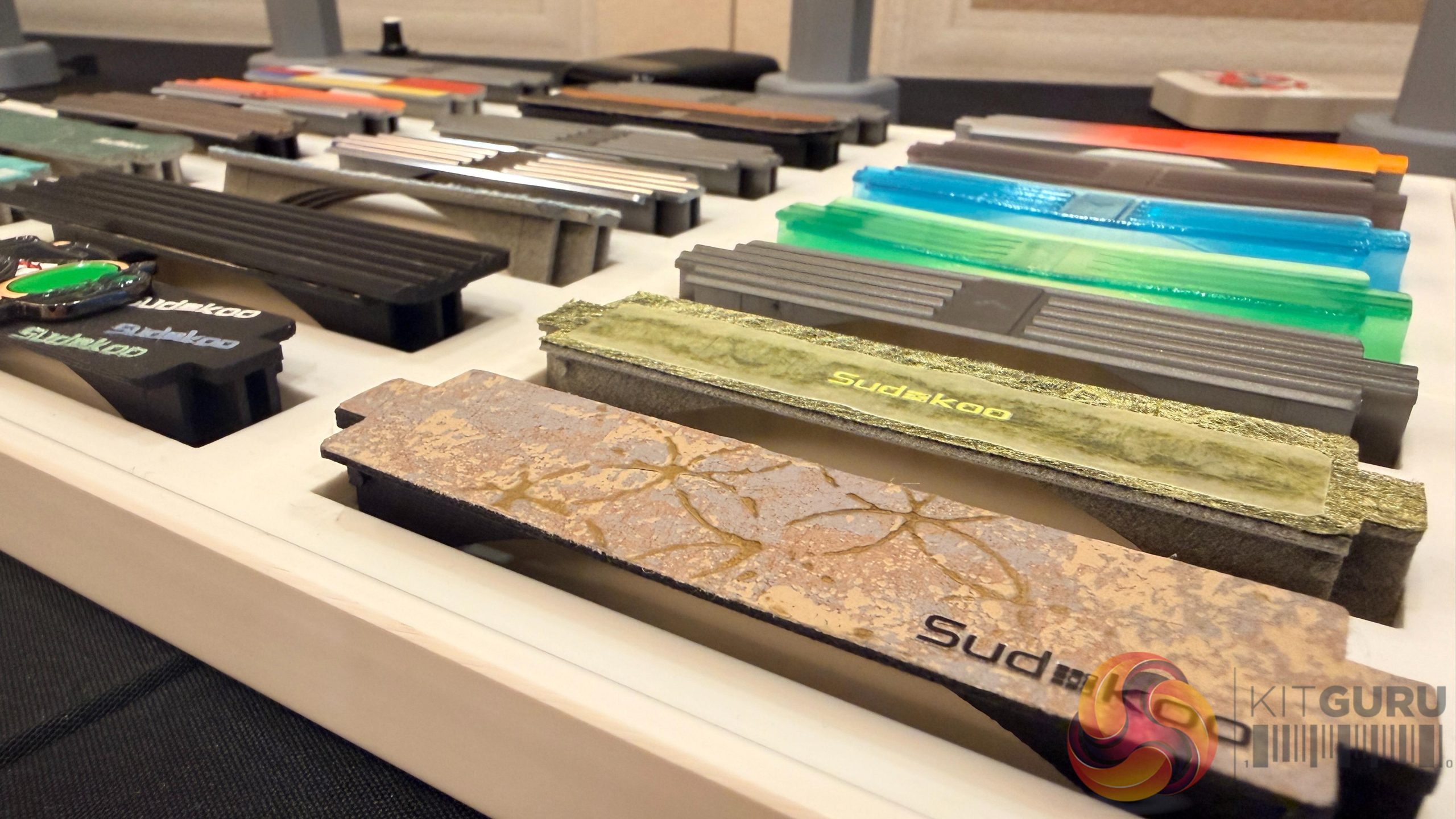
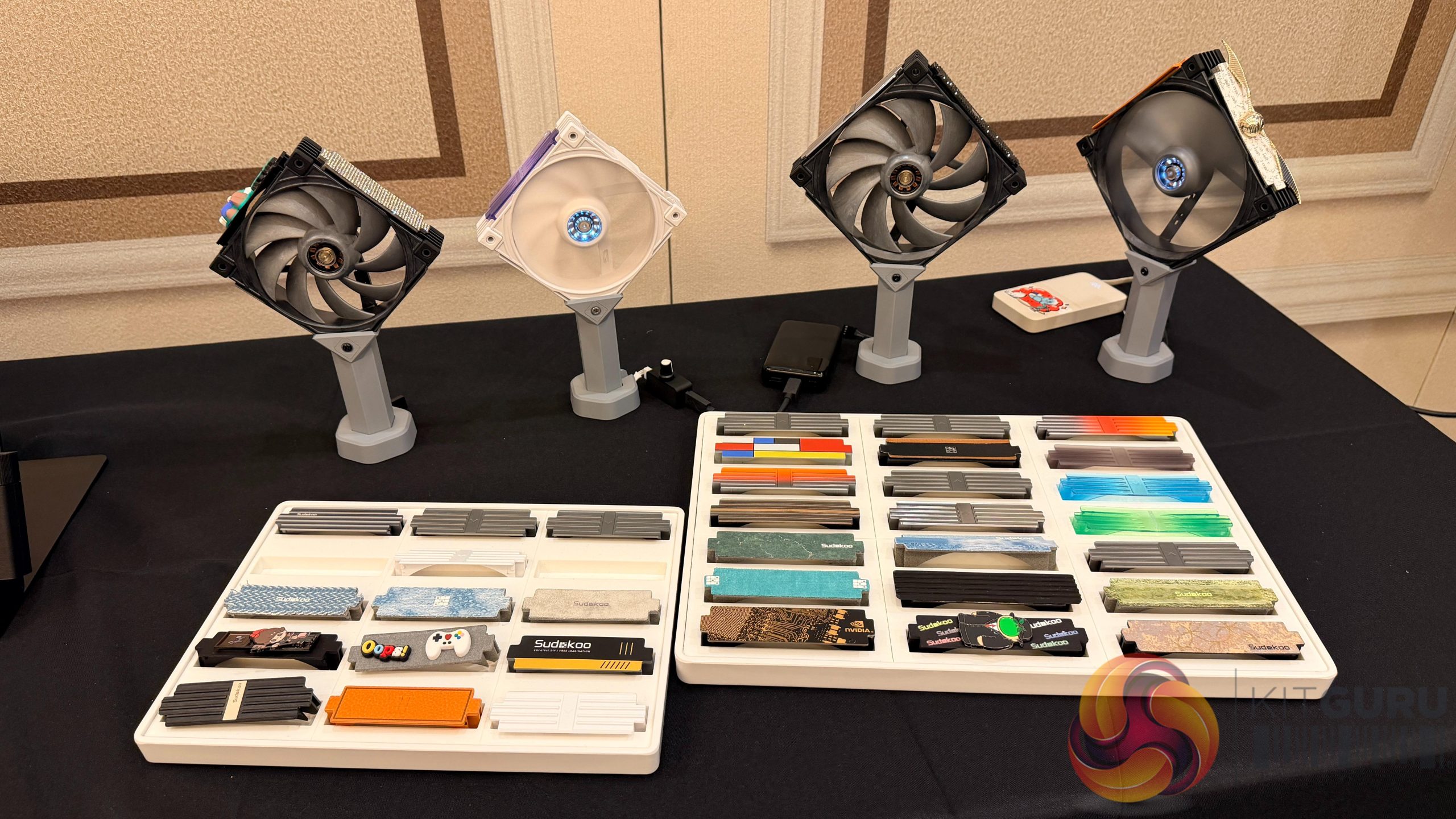
03:51 Fans and Custom options
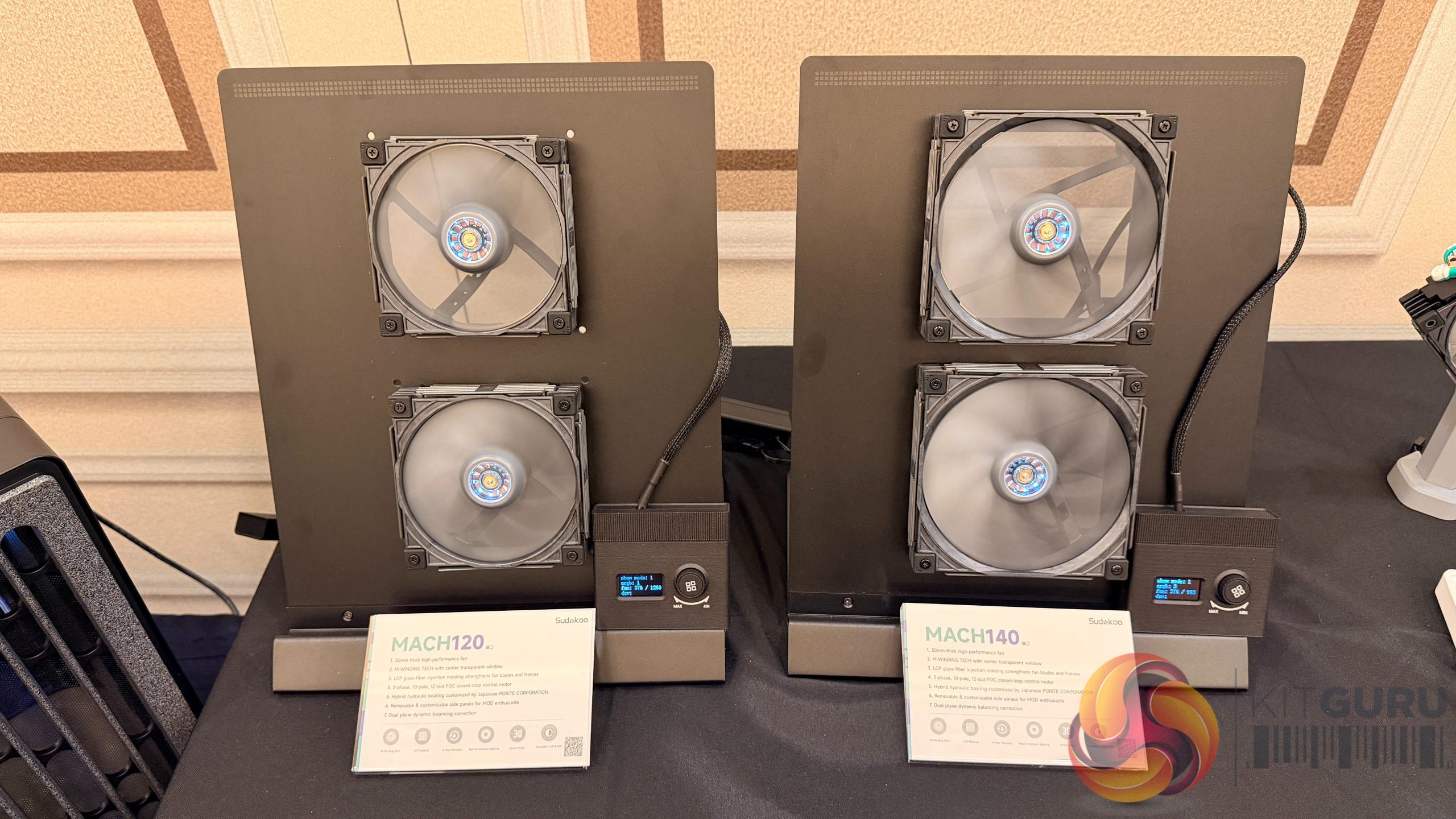
04:35 Mach 120 and Mach 140 Fans
04:50 Proteus 360 Display
04:58 Modded Aircoolers – coming soon
05:27 Cross section of fans
05:41 Magnetic Astra Fans

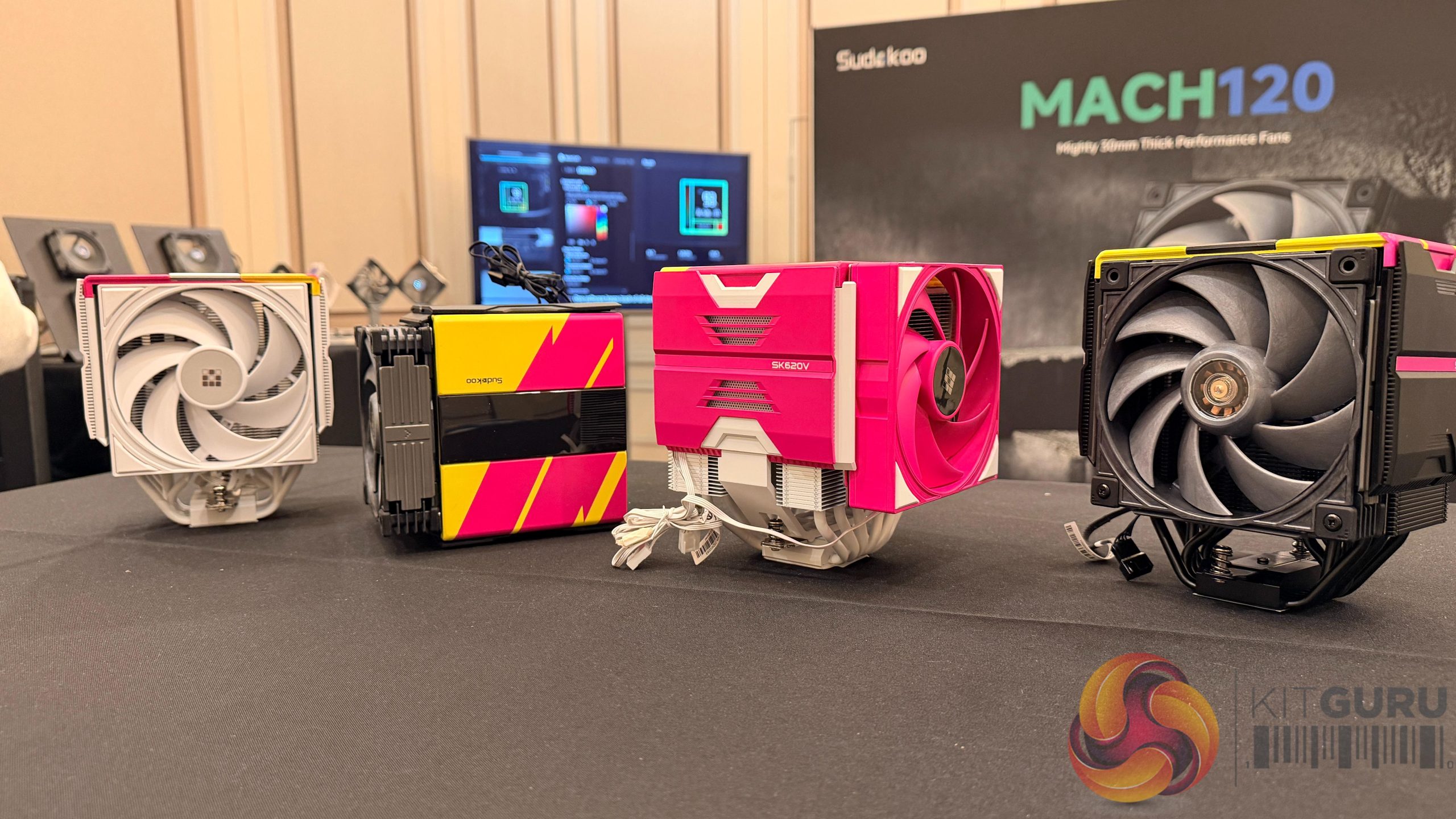
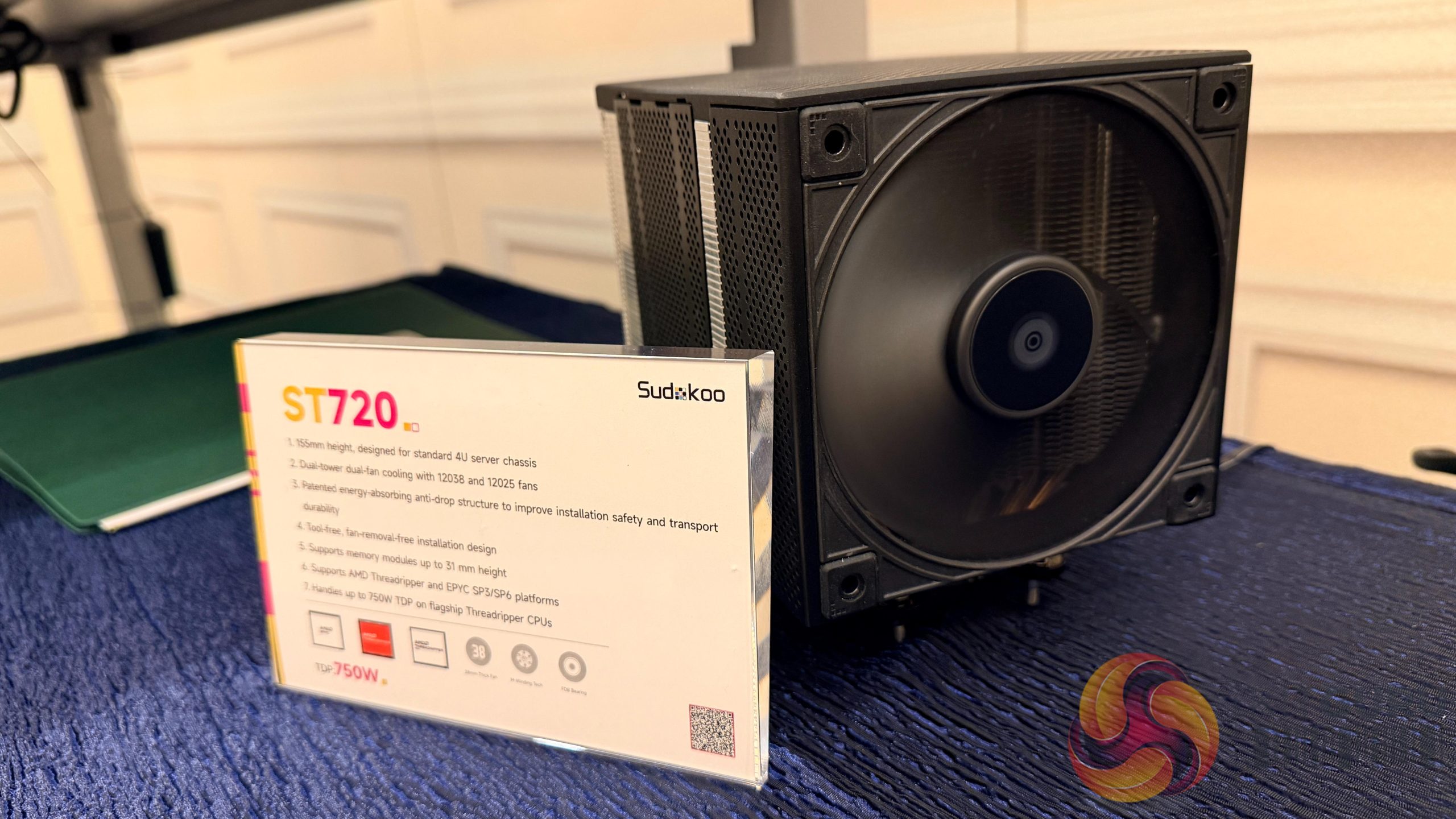
The flagship ST720 is positioned for workstation and server environments where thermal stability and compact dimensions are critical. The cooler supports up to 750W TDP on AMD’s top-end Threadripper processors and is fully compatible with Threadripper and EPYC SP3/SP6 platforms. With a 155mm height, it is sized for standard 4U chassis deployments.

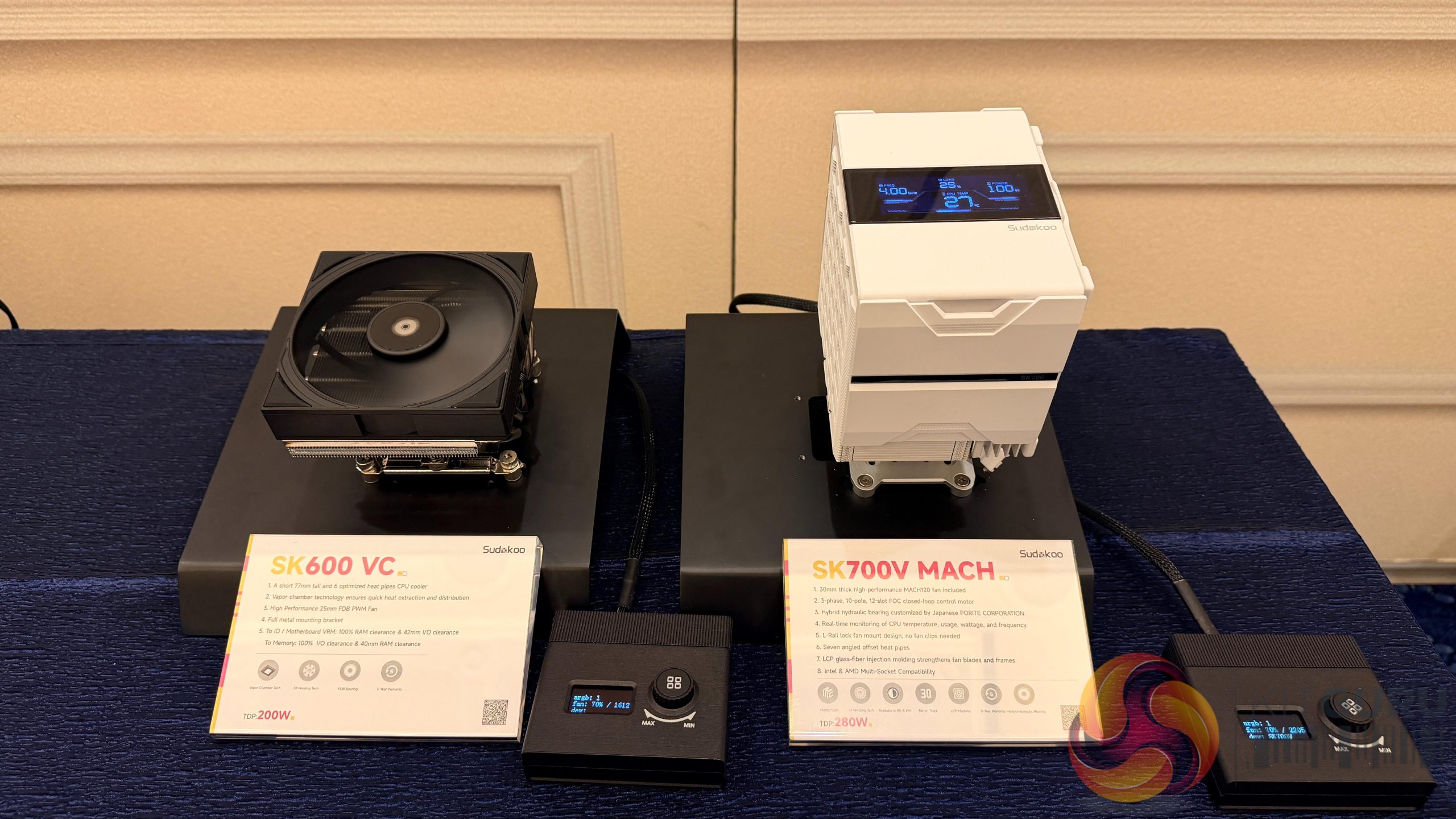
For small‑form‑factor builders, the SK600 VC introduces an ultra‑low‑profile design built around a vapor chamber cold plate and six heat pipes. The cooler stands 77mm tall and uses a 25mm FDB PWM fan, which should give you enough clearance for most RAM sticks on the market.

Enthusiast users are the target for the SK700V MACH, a revised version of the company’s high‑end air cooler. The MACH edition includes a 30mm‑thick MACH120 fan and adopts an L‑Rail lock mounting system intended to eliminate traditional fan clips and simplify installation. Intel and AMD multi‑socket support is included.

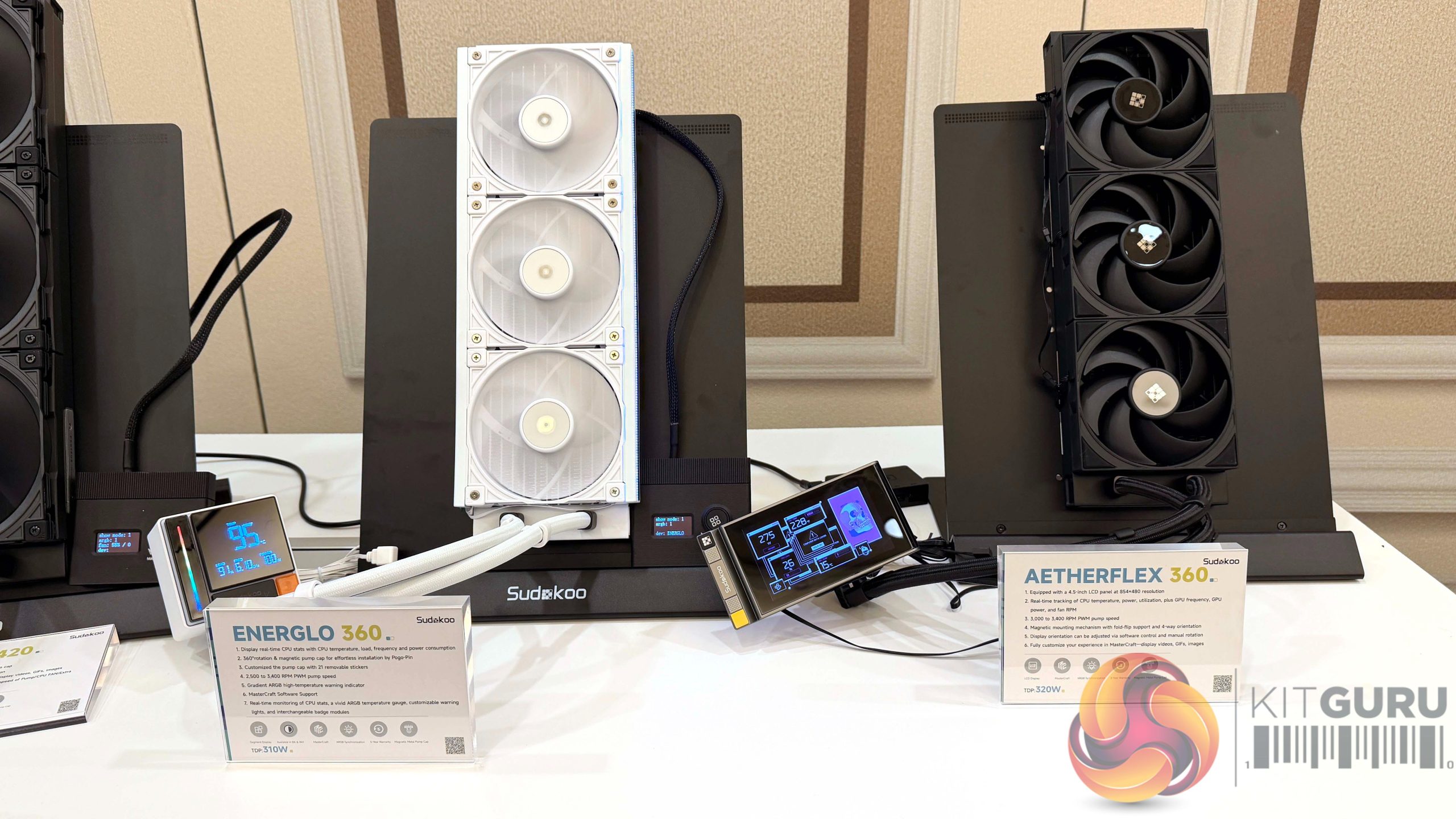
SUDOKOO is also entering the liquid cooling market with the AETHERFLEX 360, a 360mm AIO designed around real‑time system monitoring. The unit features a 4.5‑inch LCD display with an 854×480 resolution panel capable of showing CPU temperature, power and utilisation, along with GPU frequency, GPU power, and fan RPM. The cooler uses a magnetic mounting system with fold‑flip support for easier installation and adjustment.

KitGuru Says: Sudokoo has built out an impressive looking line-up of coolers. We'll look forward to seeing some of these units in action in the months ahead.

The post CES 2026: Sudokoo launches full line-up of CPU coolers first appeared on KitGuru.
  •  

January’s Xbox Game Pass line-up include Star Wars Outlaws; RE: Village and more

Twice a month, Microsoft offers an update on their Xbox Game Pass library, announcing which titles will be arriving over the coming weeks and which will be departing. Microsoft has now officially unveiled the first drop of new titles joining Game Pass this January, including but not limited to Atomfall; Rematch; Star Wars Outlaws; Resident Evil Village and more.

Being released in a staggered form, Xbox Game Pass’ line-up for the first half of January 2026 is as follows:

Available now:

  • Brews & Bastards
  • Little Nightmares Enhanced Edition

Arriving on the 7th of January (to the mid-tier Game Pass Premium):

  • Atomfall
  • Lost in Random: The Eternal Die
  • Rematch
  • Warhammer 40,000: Space Marine – Master Crafted Edition 

Game Pass Village

Coming Soon:

  • Final Fantasy (8th Jan)
  • Star Wars Outlaws (13th Jan)
  • My Little Pony: A Zephyr Heights Mystery (15th Jan)
  • Resident Evil Village (20th Jan)
  • Mio: Memories in Orbit (20th Jan)

As mentioned, a number of titles are also set to depart from the service – with the following being removed on the 15th of January:

  • Flintlock The Siege of Dawn
  • Neon White
  • Road 96
  • The Ascent
  • The Grinch Christmas Adventures

Further details on the upcoming games can be found HERE, but all-in-all the first few weeks of January is looking pretty good for Xbox Game Pass – even if many of the biggest titles were already available on GP Ultimate.

KitGuru says: What do you think of January’s line-up so far? Is it worth the price hike? Let us know down below.

The post January’s Xbox Game Pass line-up include Star Wars Outlaws; RE: Village and more first appeared on KitGuru.
  •  
❌