Sony has launched PlayStation Flex in the UK, a hardware leasing programme that allows gamers to rent a PlayStation 5 for a monthly fee with no upfront cost. Developed in partnership with London-based fintech firm Raylo, the programme marks a shift in Sony's strategy, targeting audiences who may not want to pay for a console they plan to replace soon or want to have some fun for a couple of months or so.
The subscription service offers tiered pricing based on the length of the commitment, with the lowest rates reserved for those who sign up for 36-month leases. For the PlayStation 5 Digital Edition (825GB), prices start at £9.59 per month for a three-year term. Shorter 24-month and 12-month terms increase the monthly cost to £10.49 and £14.59, respectively. For those seeking ultimate flexibility, a monthly rolling plan is available for £19.49, allowing users to cancel at any time, provided the console is returned. In addition to the Digital Edition with one controller or two controllers (starting at £10.99), there are also options for the 1TB version with a single controller (£11.59) or two DualSense controllers (£12.49).
Beyond the standard console models, the Flex programme encompasses a wide range of hardware, including the PS5 Pro (starting at £16.99/month), PlayStation VR2 (from £11.99/month), PlayStation VR2 Horizon Call of the Mountain bundle (from £10.99/month), the PlayStation Portal remote player (from £7.49/month), and a DualSense Edge controller (from £6.49). Every leased device comes with a lifetime warranty and free next-day delivery. At the end of the term, users have three primary choices: return the console to exit the plan, upgrade to the latest model for no additional fee, or continue paying the monthly subscription indefinitely.
KitGuru says: While PlayStation Flex makes upgrading more accessible, it can also be seen as the beginning of “end of ownership” in gaming. Unlike financing programmes like Xbox All Access, Flex is a pure rental model; after paying roughly £358 over three years for a PS5 Digital Edition, the customer still does not own the device.
The director behind Final Fantasy 7 Remake Part 3 has been discussing the game in interviews for quite a few months now. In his latest, he confirms plans to develop the third-game as a multiplatform title from the jump, adding that PC is technically the lead platform this time.
For the first two titles in the series, Final Fantasy 7 Remake and Final Fantasy 7 Rebirth, PlayStation consoles were the lead development platform, as each game launched as a timed exclusive for Sony's platform. With Part 3, this will no longer be the case, so Part 3 is already being made with PC, Xbox and the Switch 2 in mind.
In an interview with Automaton, Naoki Hamaguchi said that it is “correct” to view PC as the lead platform for Final Fantasy Remake Part 3, adding that the development team creates assets for the ‘highest possible' spec first, before scaling things down to optimise for platforms like the Switch 2 or Xbox Series S, where memory and GPU resources are a bit more limited.
With that in mind, Hamaguchi states that there will be no impact on the quality of the launch version of the new game, as it focuses on what can be achieved at the high-end first, before scaling down to mid-range systems like the PS5 and Xbox Series X. Then it does additional optimisation work to get the games running on lower-spec systems like the Steam Deck, Switch 2 and Xbox Series S.
Final Fantasy Remake Part 3 doesn't have a release date yet but all signs are currently pointing to a 2027 launch, and perhaps an initial reveal of the game later this year. In the meantime, Square Enix is bringing Final Fantasy 7 Rebirth to more platforms, including the Switch 2 and Xbox in June.
KitGuru Says: Are you looking forward to the finale for the Final Fantasy 7 Remake trilogy?
Ubisoft has confirmed that the iconic protagonist of the Metal Gear Solid series, Solid Snake, will join the tactical roster of Rainbow Six Siege as a permanent new operator. Making his debut on March 3rd as part of Year 11, Season 1 (Operation Silent Hunt), Snake is being positioned as a high-speed, high-intel attacker.
Reflecting his origins in stealth and infiltration, Snake is categorised as a 3-speed, 1-health operator, making him agile but fragile. His signature gadget is the Soliton Radar MKIII, a handheld device that materialises a floor plan of his immediate surroundings to detect enemy threats and cameras. The radar features a Precision-Finding Mode that recharges over time, allowing Snake to see the exact real-time position and vision cones of nearby defenders.
Snake's loadout is equally distinctive, headlined by a new secondary weapon: the TACIT .45 pistol, a semi-automatic handgun featuring an integrated suppressor and reflex sight. For his primary weapons, players can choose between the F2 assault rifle and the PMR90A2 battle rifle. He also introduces the OSP (On-Site Procurement) Pouch, which allows him to scavenge a secondary gadget from fallen operators' bodies.
To further delight long-time fans, the character is voiced by the legendary David Hayter (Solid Snake's voice on Metal Gear Solid 3), who returned to record new, unique voice lines specifically for this collaboration.
The collaboration extends beyond just the new operator, as the premium battle pass for Operation Silent Hunt includes several themed cosmetics. Those include a Psycho Mantis skin for Smoke, a Gray Fox outfit for Jackal, and a Meryl skin for Ash. The season will also feature a limited-time 4v4 infiltration event where Snake and Zero (Sam Fisher) team up to recover stolen data, marking the first time these two stealth legends have officially appeared on-screen together.
KitGuru says: Landing Solid Snake is perhaps the biggest crossover in the game's history. While some fans may have hoped for a cardboard box gadget, the decision to prioritise the Soliton Radar and David Hayter's voice work shows a deep respect for the source material.
TT Games caught some heat a couple of weeks ago when it revealed the PC system requirements for its new Lego Batman game. At the time, the recommended requirements called on users to have as much as 32GB of RAM in their, which sounds pretty ridiculous for a Lego game. Fortunately, the PC system requirements have since been revised.
In a new statement shared on the game's Steam Community page, TT Games confirms that LEGO Batman: Legacy of the Dark Knight now has reduced PC system requirements. The specs are still higher than what was necessary to run 2022's LEGO Star Wars: The Skywalker Saga, but the insane 32GB RAM recommendation has indeed been fixed.
The revised PC system requirements for the new LEGO Batman game are as follows –
Minimum:
OS: Windows 11
Processor: Intel Core i5-9600K or AMD Ryzen 5 3600
Memory: 16GB RAM
Graphics: NVIDIA GeForce RTX 2070, 8GB or AMD Radeon RX 5700 XT, 8GB or INTEL Arc A770, 16GB
Storage: 50GB available space
Recommended:
OS: Windows 11
Processor: Intel Core i7-12700K or AMD Ryzen 7 7700X
Memory: 16GB RAM
Graphics: NVIDIA GeForce RTX 3080, 10GB or AMD Radeon RX 6800 XT, 16GB
Given that the memory chip market is currently facing massive shortages and price hikes, impacting both the gaming PC market and console markets alike, software developers are really going to have to hone-in on optimisation, as very few will be able to upgrade their systems over the next couple of years. Part of that will have to include creating games that work well on limited memory budgets.
KitGuru Says: Game developers have worked magic with limited memory resources in the past but ever since the Xbox One era and beyond, all of that seems to have been thrown out of the window. Now with RAM no longer being a plentiful resource, the industry will have to shift back and shake the mindset that consumers have plenty of spare memory to work with.
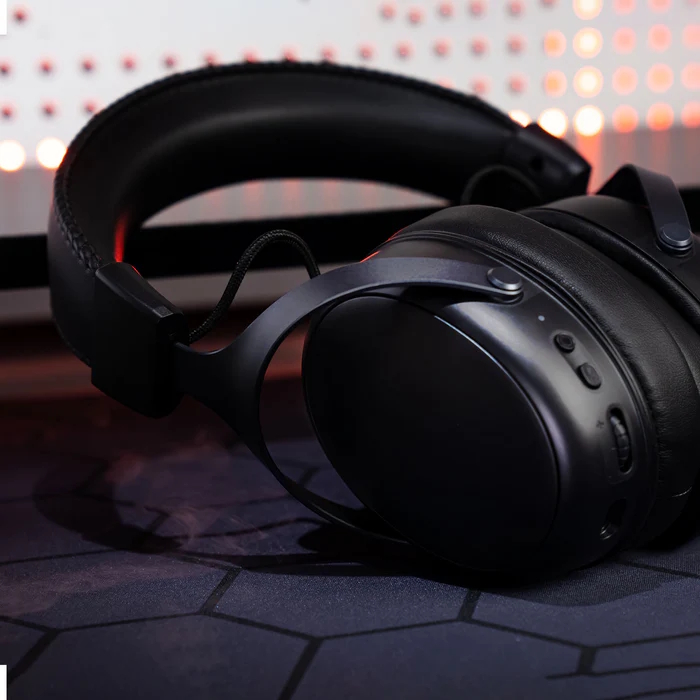
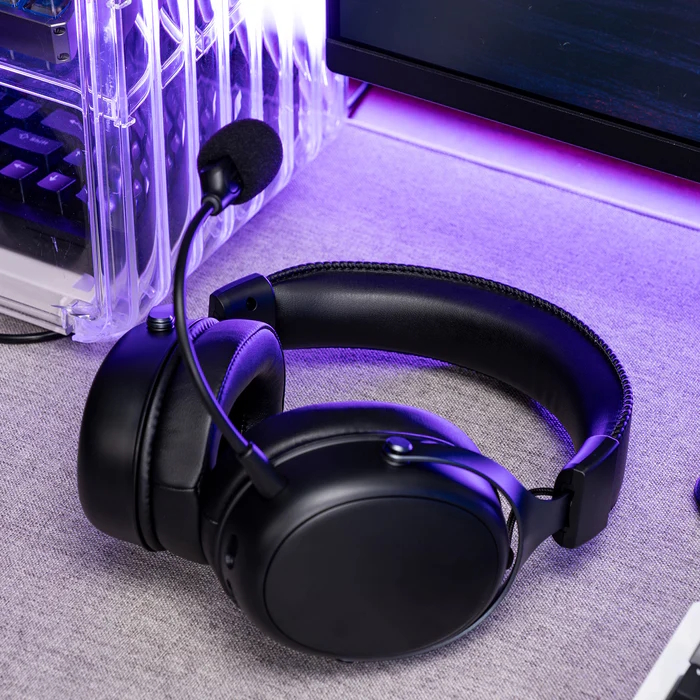
Akko has steadily expanded its presence in the peripheral market, moving beyond the mechanical keyboards that established its reputation. The Verge gaming headset is the latest product of that expansion, representing a calculated attempt to balance enthusiast-grade components with a chassis designed for prolonged usage.
The Verge headset uses 53mm N52 neodymium drivers, a notable step up from the 40mm or 50mm units typically found at its price point. The headset also features a three-chamber TCB design that increases the effective cavity volume to 39 mm³, a technical choice intended to improve spatial separation. For the user, this translates to a more defined soundstage where low-frequency impacts do not overwhelm the high-frequency details required for directional tracking.
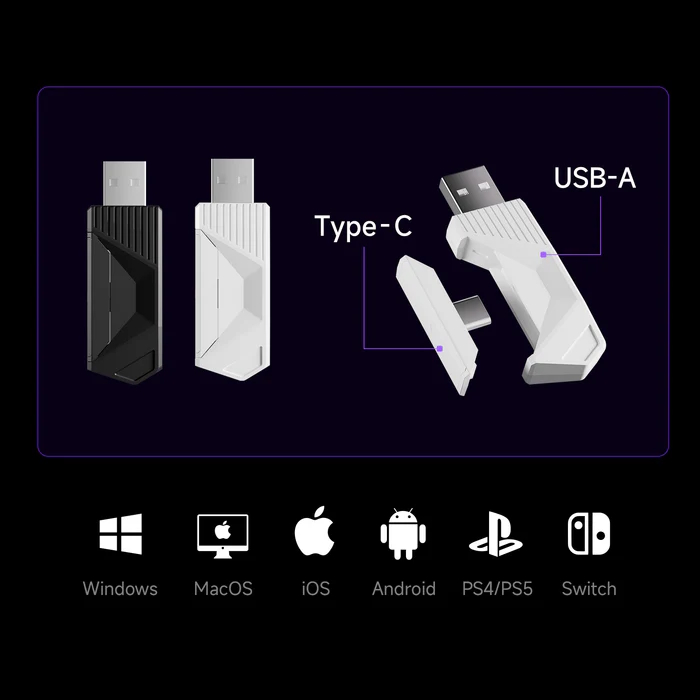
Connectivity is handled through a quad-mode system. While many manufacturers force a choice between USB-A and Type-C for wireless dongles, the Verge Gaming Headset implements a dual-port receiver that supports both. This is supplemented by Bluetooth 5.3 and a traditional wired Type-C connection, ensuring compatibility across PC, PlayStation, and mobile platforms. Powering the wireless experience is a 2000 mAh battery that delivers up to 250 hours of playback.
Processing is handled by a 32-bit dual-core DSP, which enables onboard virtual 7.1 surround sound and toggleable audio profiles. Users can cycle between dedicated modes for music, cinema, and FPS gaming directly on the headset. For voice capture, there's a detachable unidirectional microphone featuring environmental noise cancellation, designed to filter out approximately 20 dB of ambient room noise. The microphone itself connects via a gold-plated 3.5mm jack to maintain signal integrity during intense sessions.
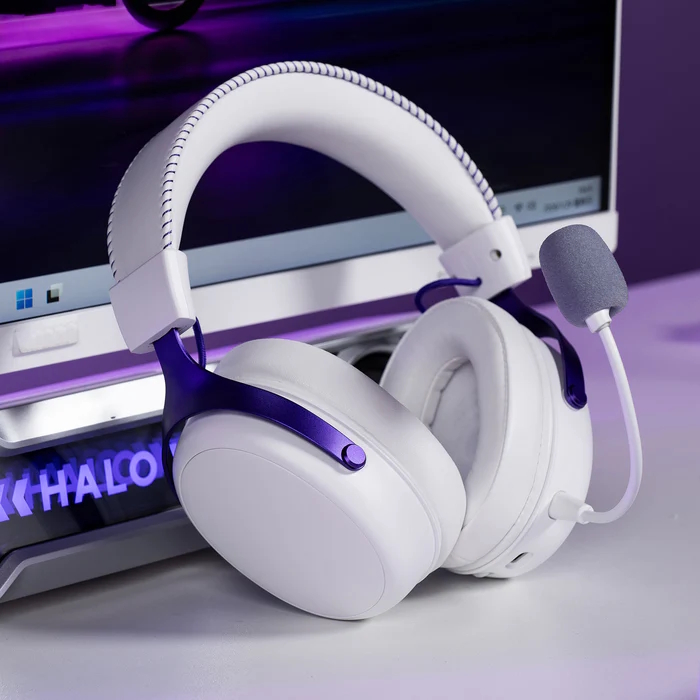
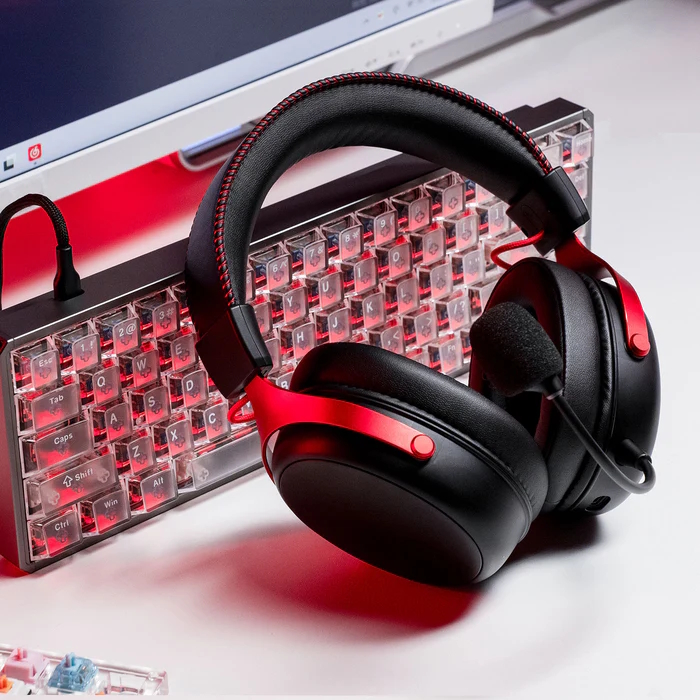
Physically, the Verge Gaming Headset focuses on an understated aesthetic using CNC-machined aluminium arms for the headband adjustment, finished with a sandblasted texture to balance structural rigidity and weight. At 270 grams, it sits comfortably in the lightweight category. The headset is available for £54,00/$73.00/€73,79 (Early Bird price) in three colour options: black, white, and black and red.
KitGuru says: Although not as cheap as other Akko headsets, the higher-end feature set and simple design make the Verge worth checking out.
In recent weeks, we've heard from one analyst that Sony is pushing back its next-gen PlayStation console plans due to the on-going RAM shortage. We have also heard from Nintendo's CEO about the possibility of a Switch 2 price hike due to rising component costs. Now, a new report claims that both of these scenarios are indeed due to take place.
According to Bloomberg, Sony is indeed considering delaying the launch of the PlayStation 6 from its apparently planned 2027 launch to 2028 or 2029. This is due to a global memory shortage, with AI corporations buying up nearly all available supply, leaving little left over for consumer electronics.
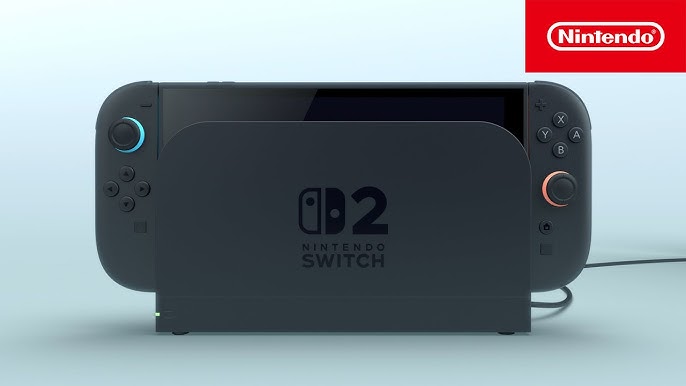
On top of that, the same report also claims that Nintendo is also contemplating a Switch 2 price hike, due to the rising cost of components like memory. Previously during a recent earnings call, Nintendo's CEO said that there were ‘no immediate plans' to raise the Switch 2 price but that it would have to reconsider that should the component market continue to face price increases.
Meanwhile, it appears that Microsoft is apparently still intending to release its next-generation Xbox in 2027, a move that seems ill-advised at this stage. The component market is impacting many hardware launches this year already, with even Valve delaying the Steam Machine by a number of months while it assesses the market.
KitGuru Says: 2026 is not a great time to be a PC hardware enthusiast, but the wider gaming market is also suffering.
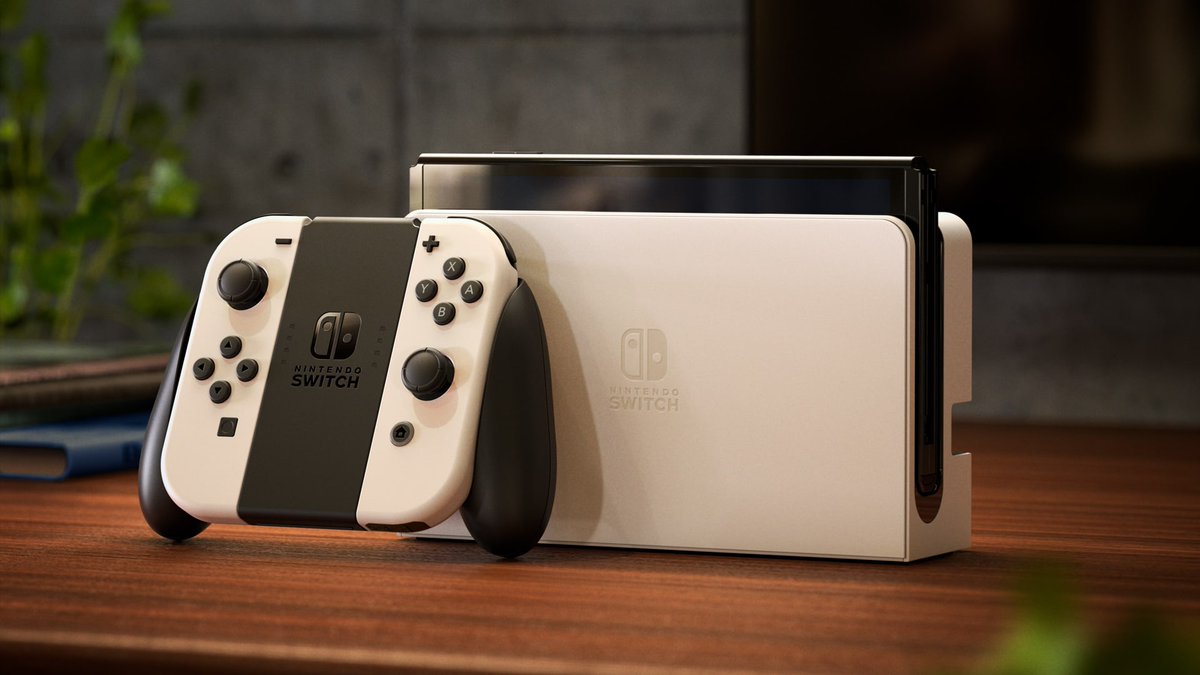
Nintendo is continuing to issue DMCA takedown notices to a growing number of Switch emulator projects. While Nintendo has moved on to its next-generation Switch 2 at this stage, support for the original Switch is still continuing due to its large user-base, with new first-party and third-party titles still coming to the older console in 2026.
Nintendo began its fight against Switch emulators back in 2024, when it took down prolific projects like Yuzu and Ryujinx. However, many still had access to the files for these emulators and as a result, numerous groups began providing forks, and releasing newly-named Switch emulators.
With its latest takedown effort, Nintendo is targeting various Switch emulator projects, including the likes of Citron, Eden, Kenji-NX, MeloNX, Pine, Pomelo, Ryubing, Ryujinx, Skyline, Sudachi, Sumi, Suyu and Yuzu.
Previously, Nintendo had limited its efforts to targeting ROM sites offering illegal downloads of games for its platforms, but that tactic didn't really work either, as every time a piracy site would shut down, several more would appear in their place. For a long time, it was believed that emulators existed in a legal ‘grey area' and could not be targeted, but Nintendo is quickly changing that narrative, despite no actual court cases coming to fruition yet. The developers behind the emulator Eden have already spoken out saying they intend to continue development despite Nintendo's DMCA but it still remains to be seen if the other projects will live on.
KitGuru Says: Once a product has reached end-of-life, then emulators can be very useful, as it keeps a platform alive and its games accessible long after the creators have lost interest. However, when a platform is still alive, thriving and selling millions of units a year, it is hard to justify emulators for reasons outside of piracy.
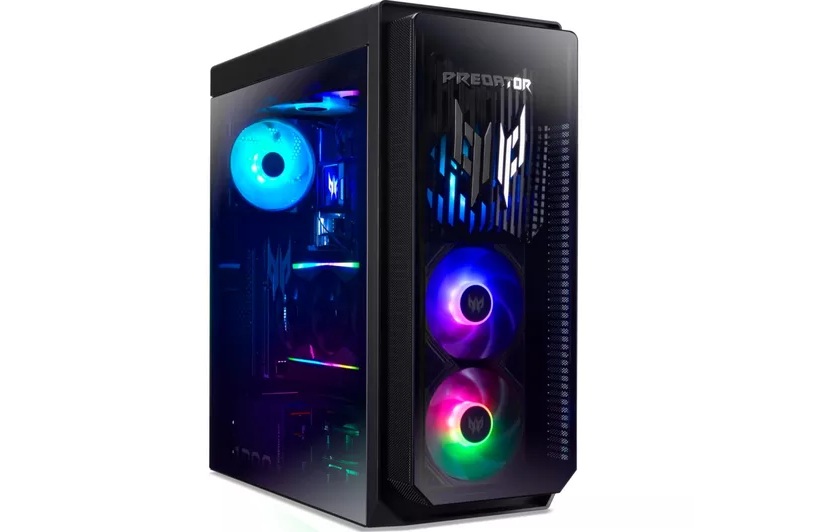
At the latest IEM Katowice tournament, Acer provided competitors with Predator Orion 7000 gaming PCs to play on. Now that the event has come to an end, Acer is now shipping this PC to the masses with stock now available throughout the UK.
The Acer Predator Orion 7000 is a prebuilt PC built for high-performance gaming, packing an Intel Core Ultra 7 processor, along with an Nvidia GeForce RTX 5080 GPU. With this combination, you'll have more than enough horsepower to drive games at ultra-fast frame rates, even at resolutions as high as 4K. The PC also boasts high-end cooling, thanks to its unique CycloneX 360 triple fan array and AIO liquid cooler.
Other important specs include 32GB of DDR5 memory, a 2TB M.2 SSD, support for WiFi 7 and Gigabit Ethernet, and customisable RGB lighting, which can be controlled via Acer's PredatorSense control centre.
For a limited time, any UK buyers picking one of these up can also claim £139 in free gaming accessories, so you can get a full peripheral set-up to go with your new rig. The Acer Predator Orion 7000 is in stock now at Curry's, priced at £3,299.
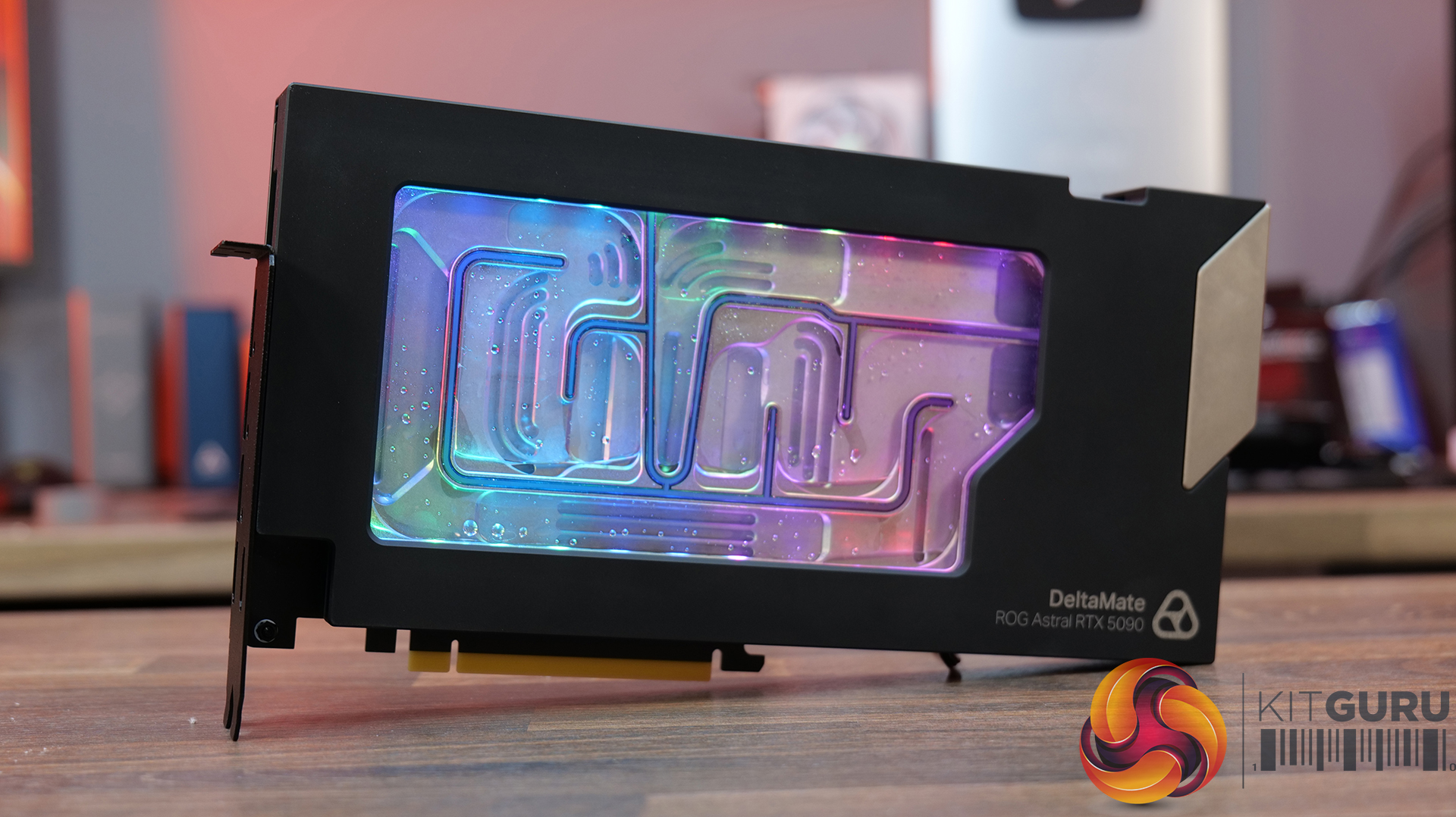
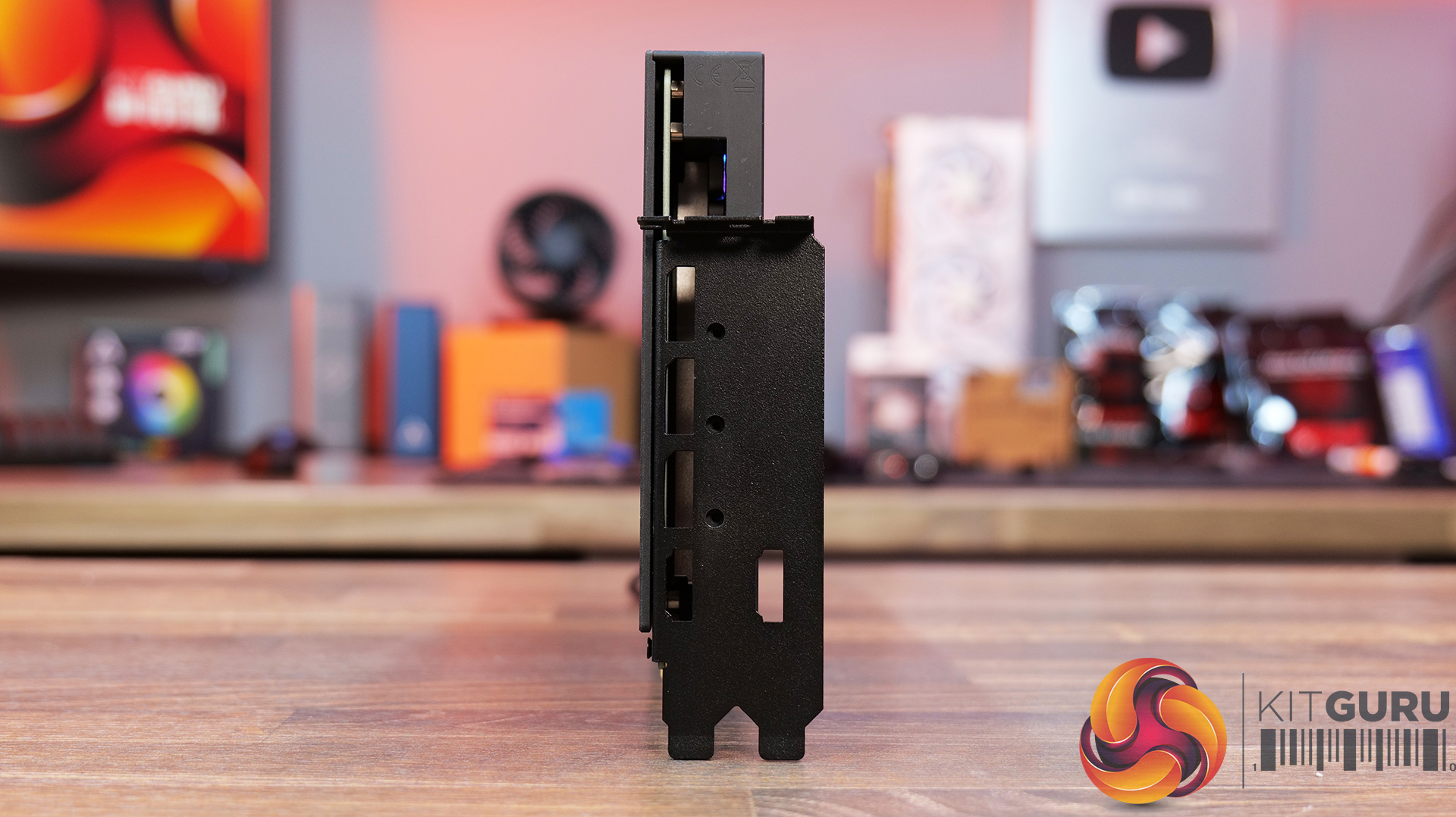
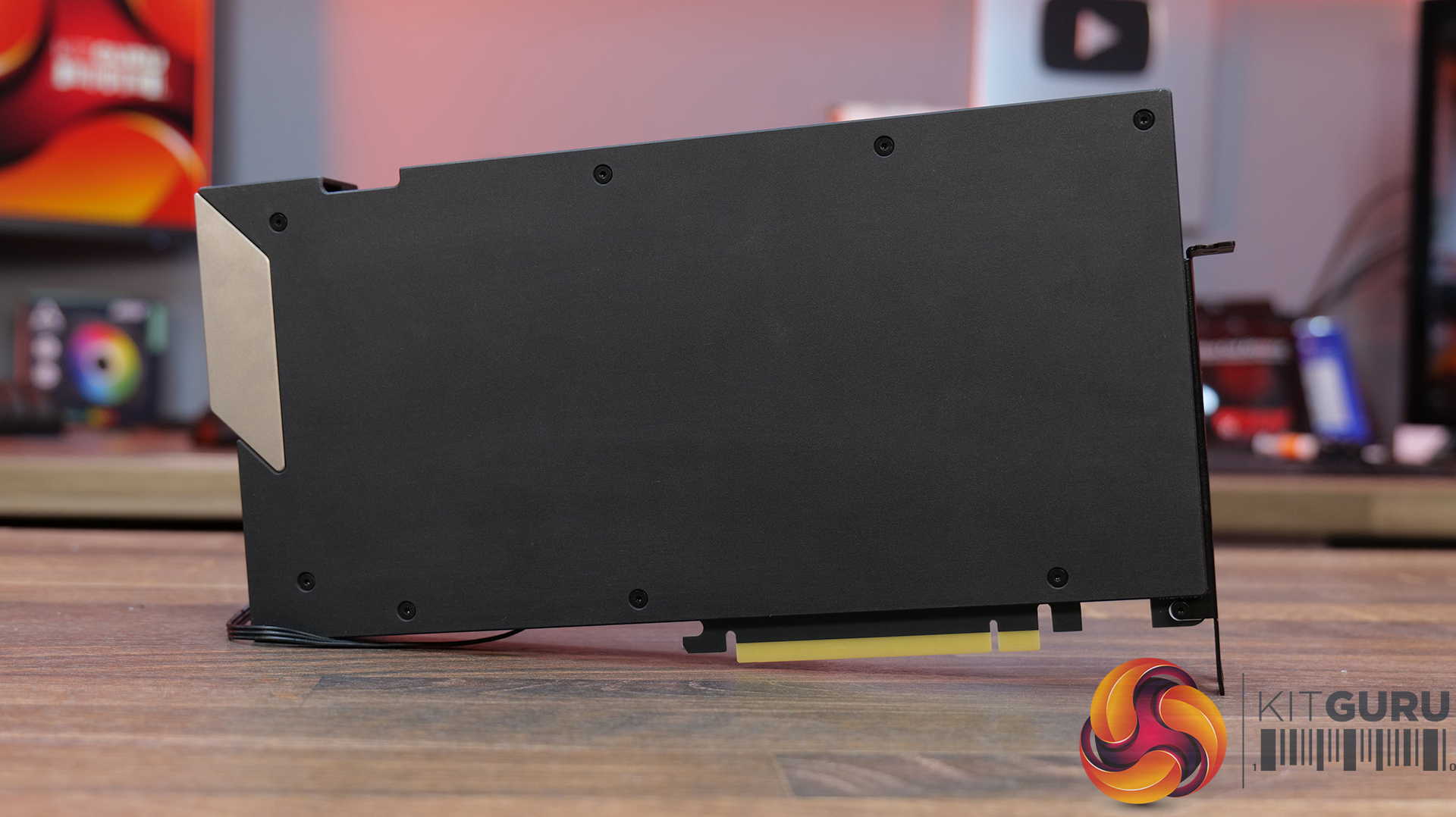
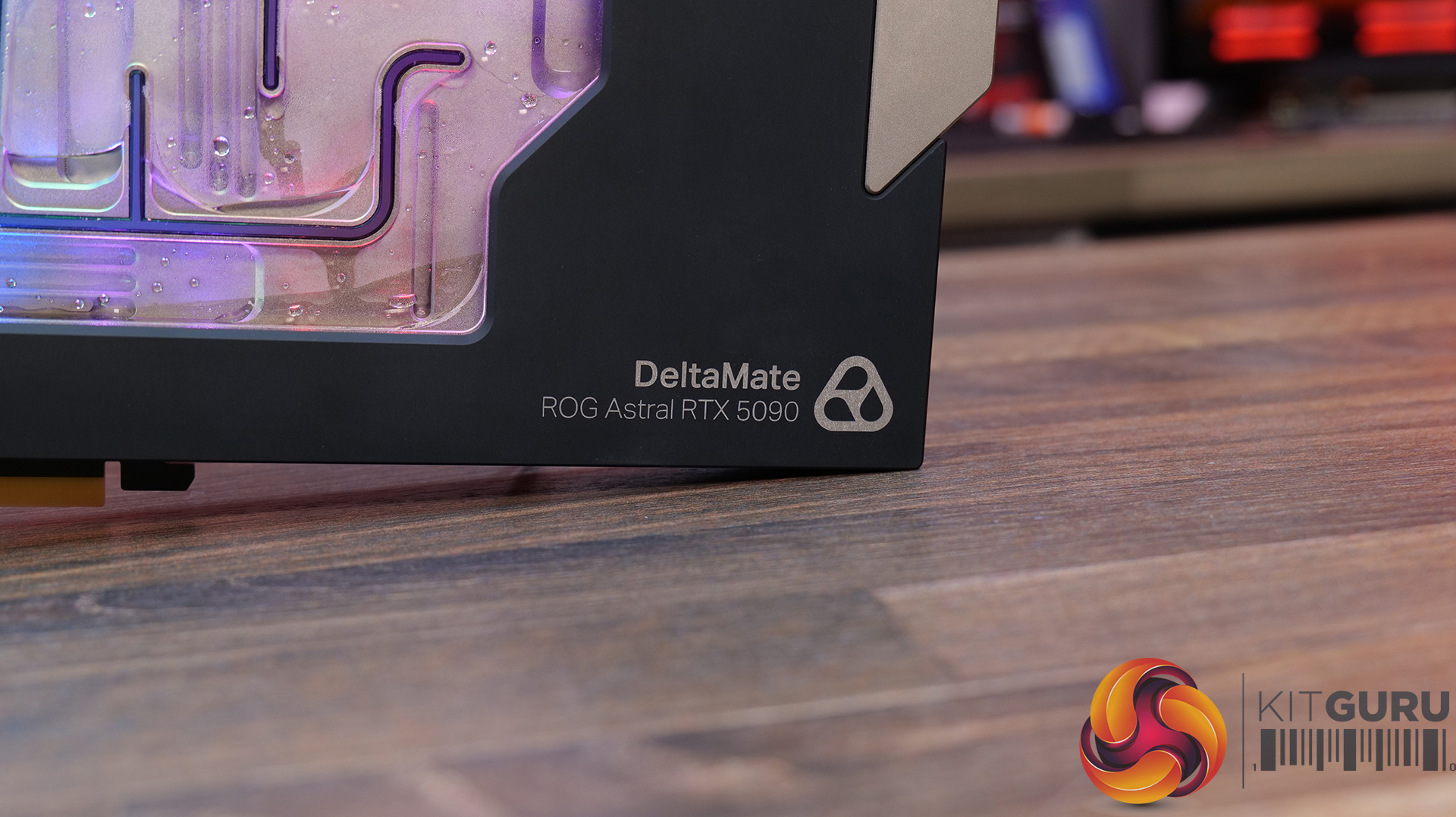
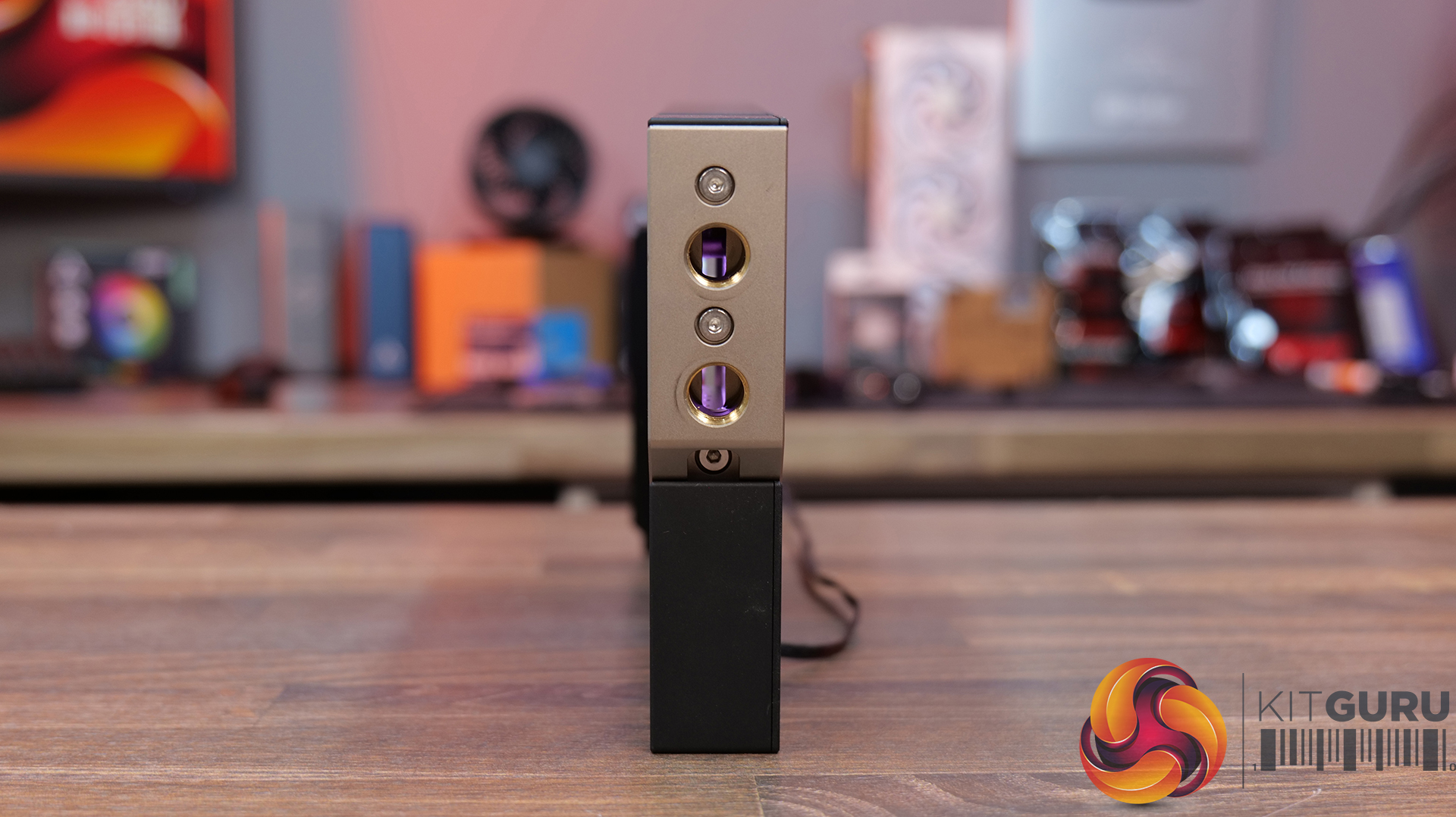
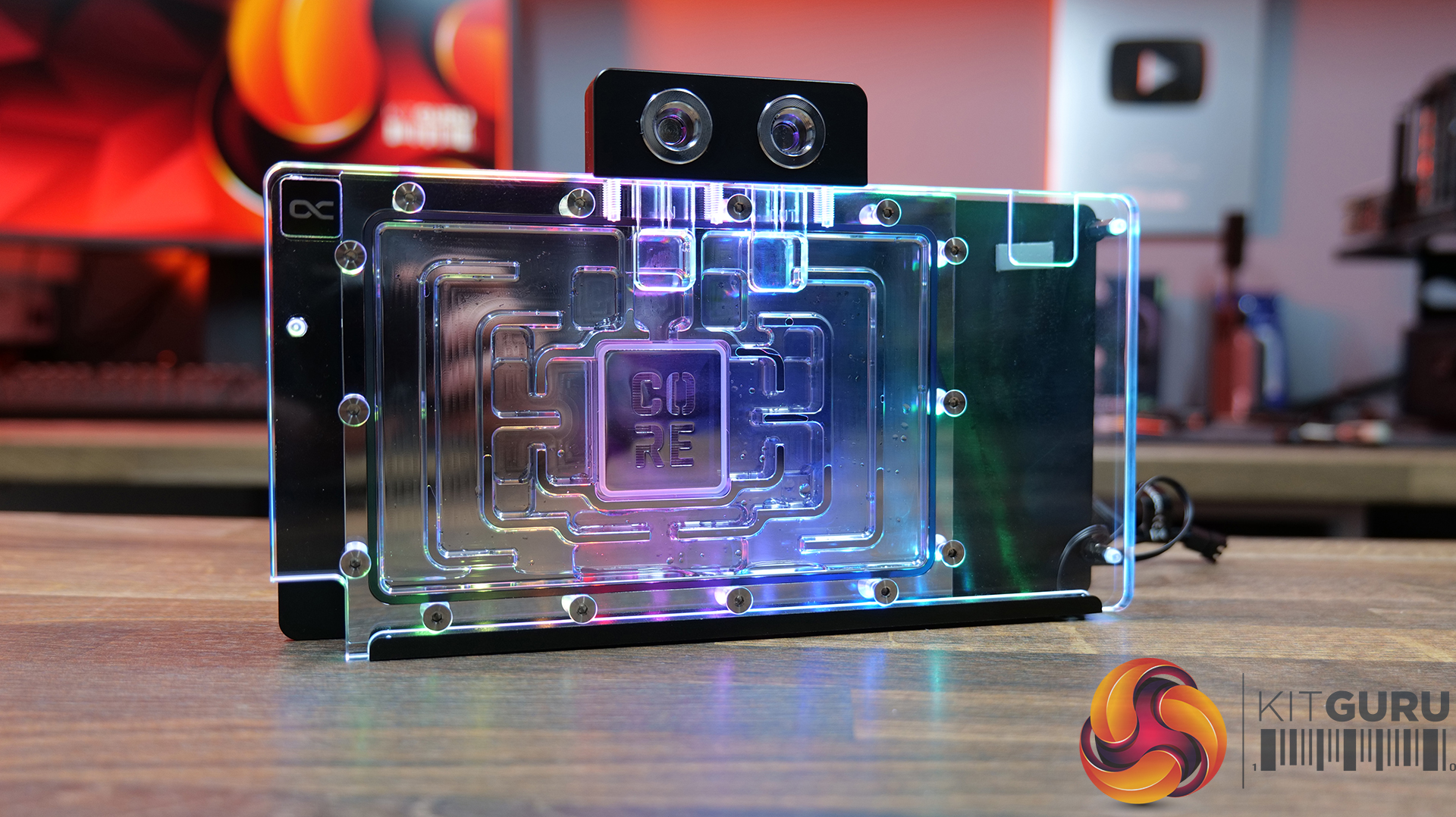
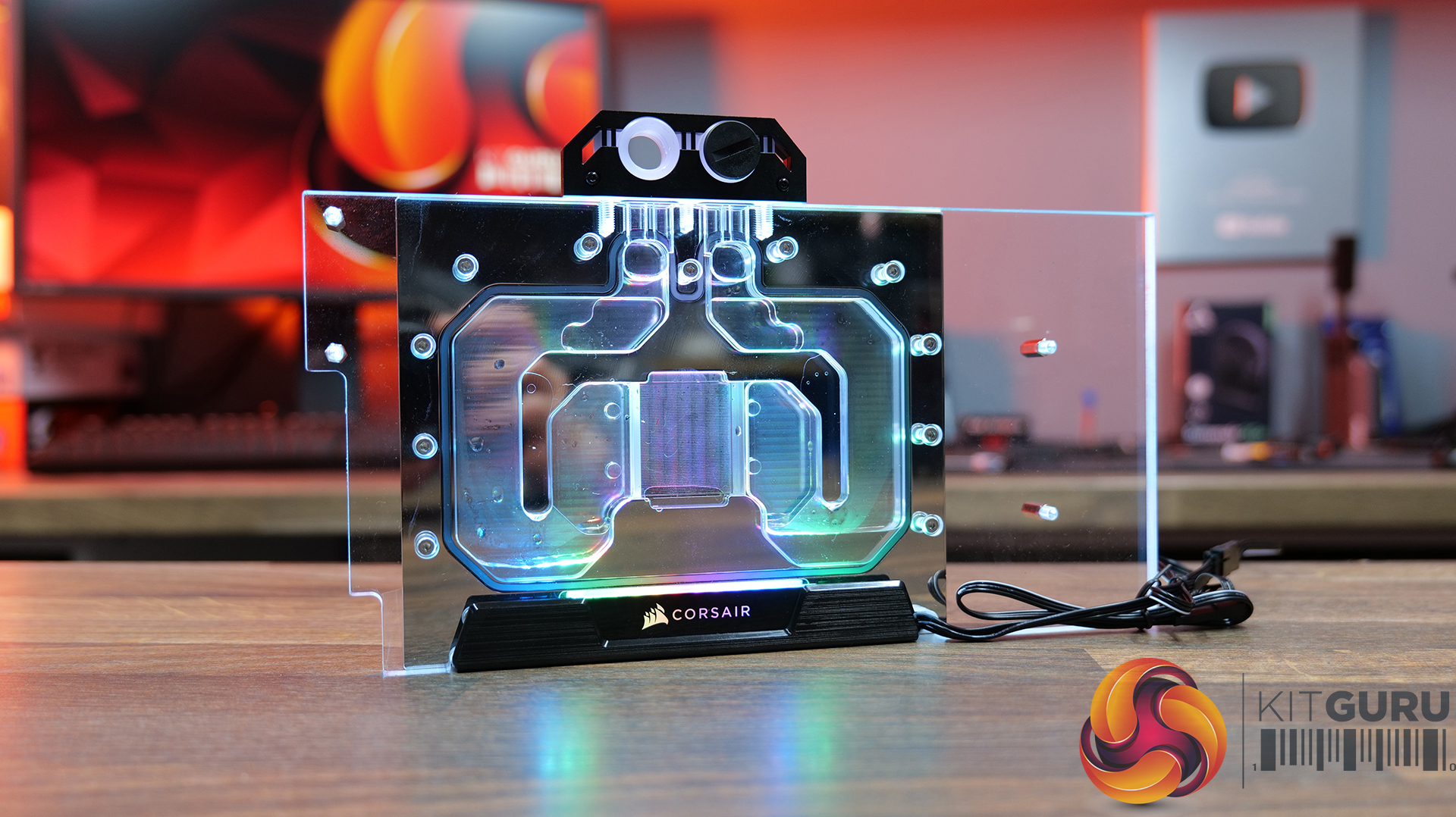
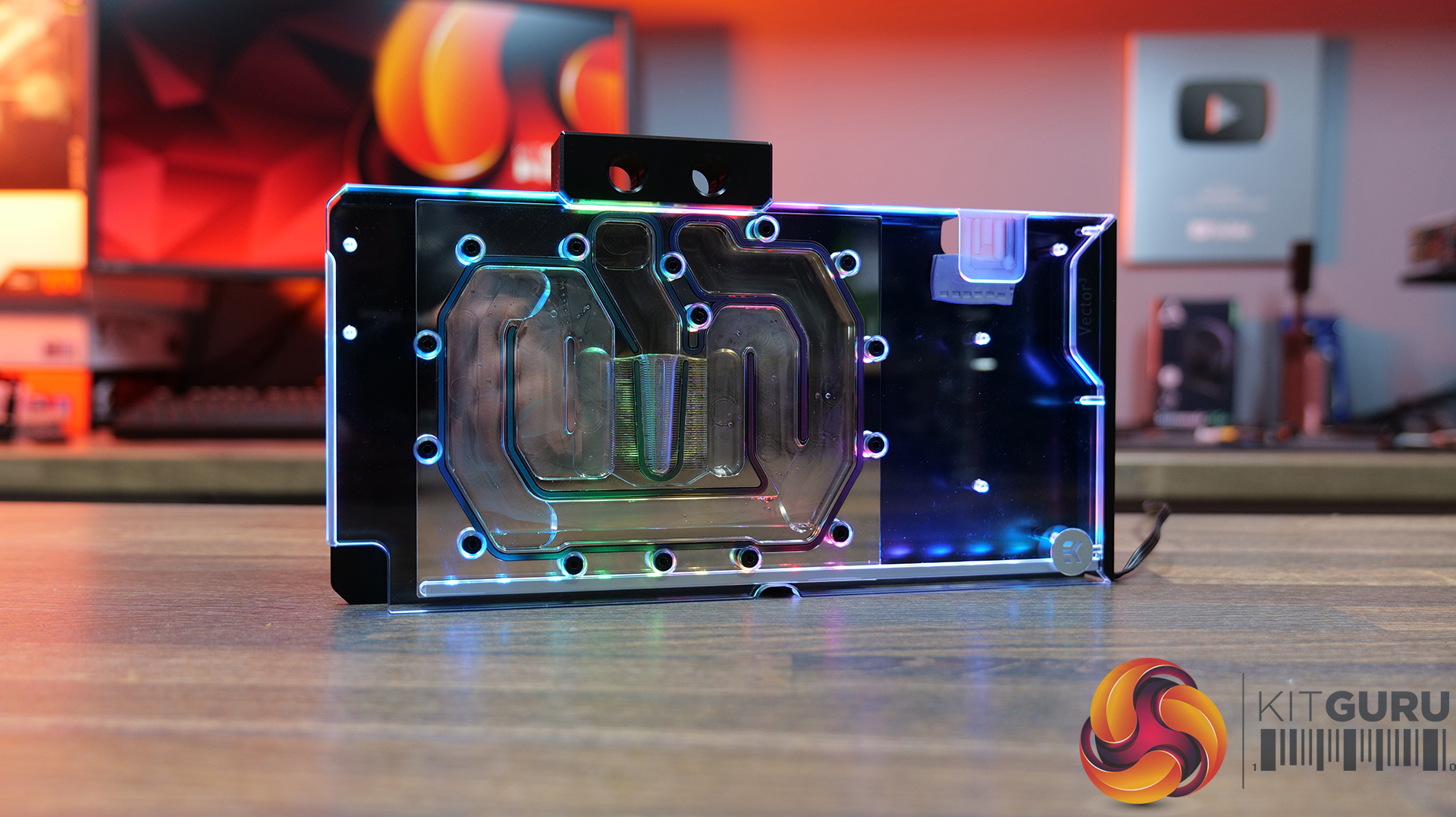
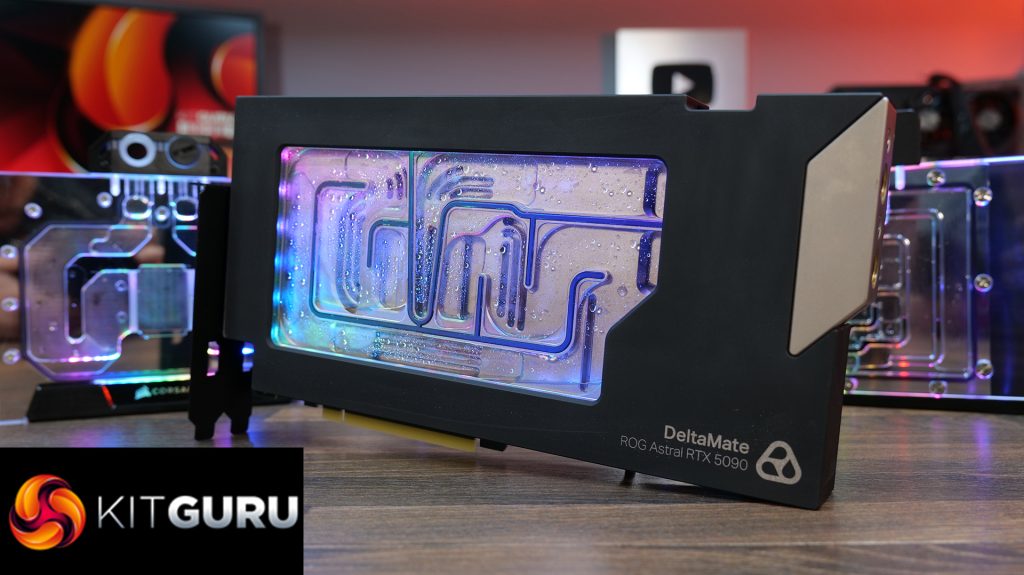
In our previous video we looked at a final engineering sample of the Thermal Grizzly DeltaMate water block for the ROG Astral RTX 5090. This time around, it’s all about performance. We’re putting up the final retail version against three competing GPU blocks, from Corsair HydroX, Alphacool and EK, testing under identical conditions, to see how it stacks up for temperatures, overall performance and value. So let's dive straight into it…
Timestamps:
00:00 Thermal Grizzly DeltaMate
00:49 Final retail version / pricing against others
02:06 Unboxing
05:14 Install process
06:49 Block is installed -a closer look
08:29 Test Methodology
08:50 Temperatures
09:20 Core Frequency
09:42 Power Draw
10:01 Benchmark Performance
10:23 Results?
11:00 Installation thoughts and accessories
12:38 The Overall Experience
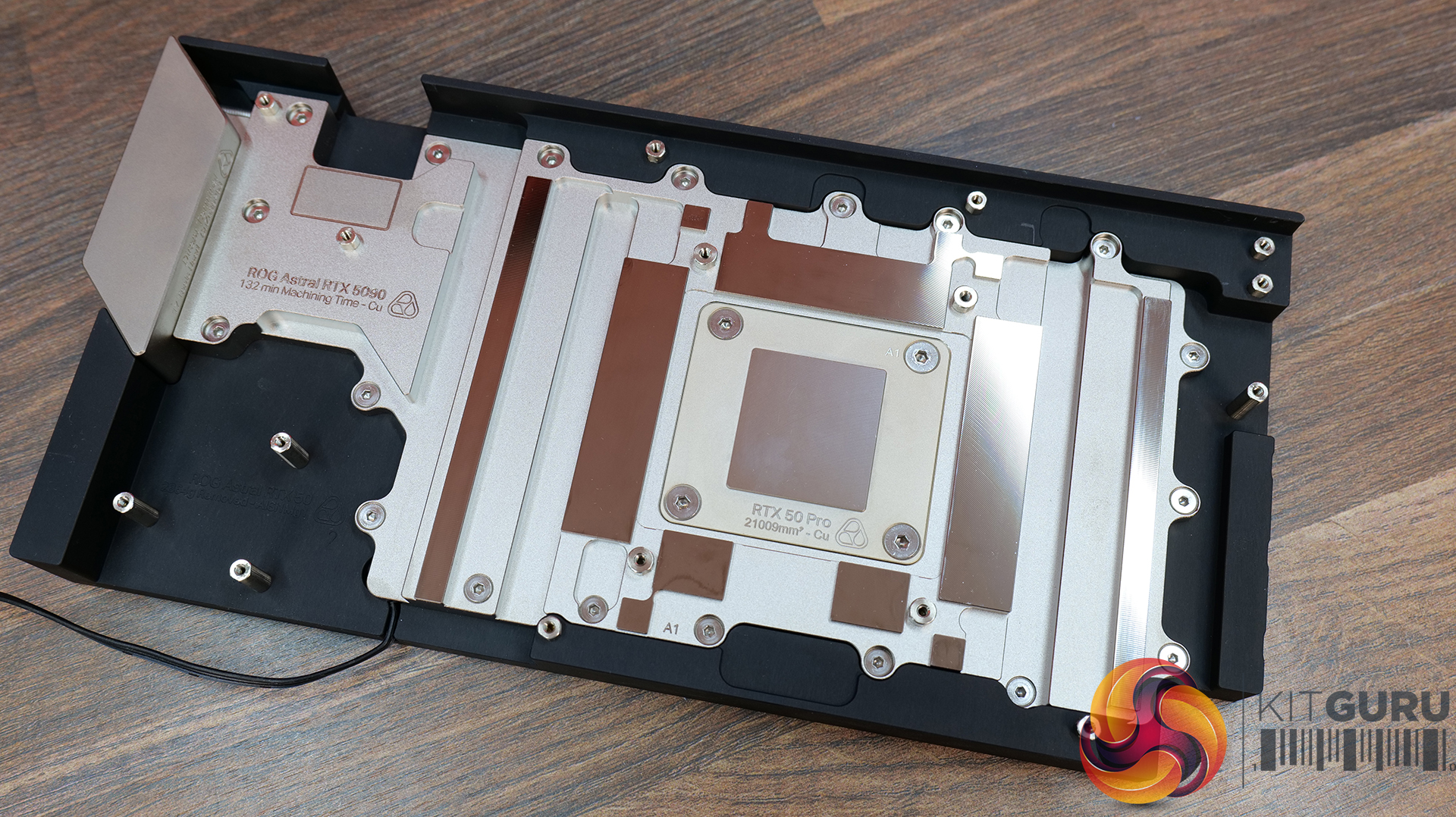
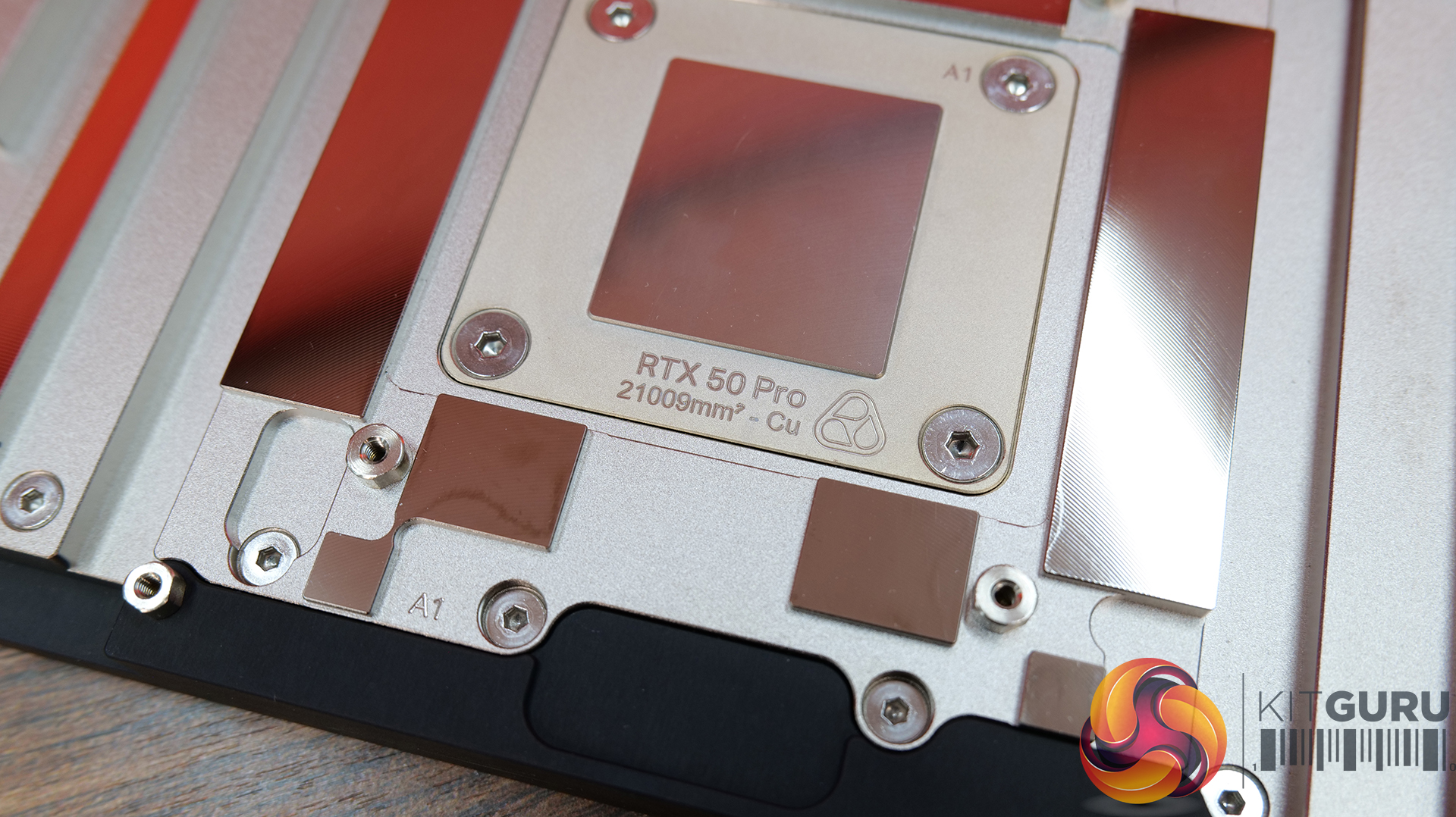
High-density microfin coldplate design – DeltaMate uses a 0.20 mm microfin array over the GPU core for maximum cooling surface area and optimal heat transfer efficiency.
Full-cover cooling for memory and VRM – Integrated dedicated nickel-plated copper contact surfaces for the VRAM and power delivery components, ensuring comprehensive thermal management across the PCB.
Robust metal construction with configurable terminal options – The block features a full metal housing for rigidity, an acrylic RGB illuminated window and a choice of 2 terminal configurations (pass-through sold separately), offering loop layout flexibility.
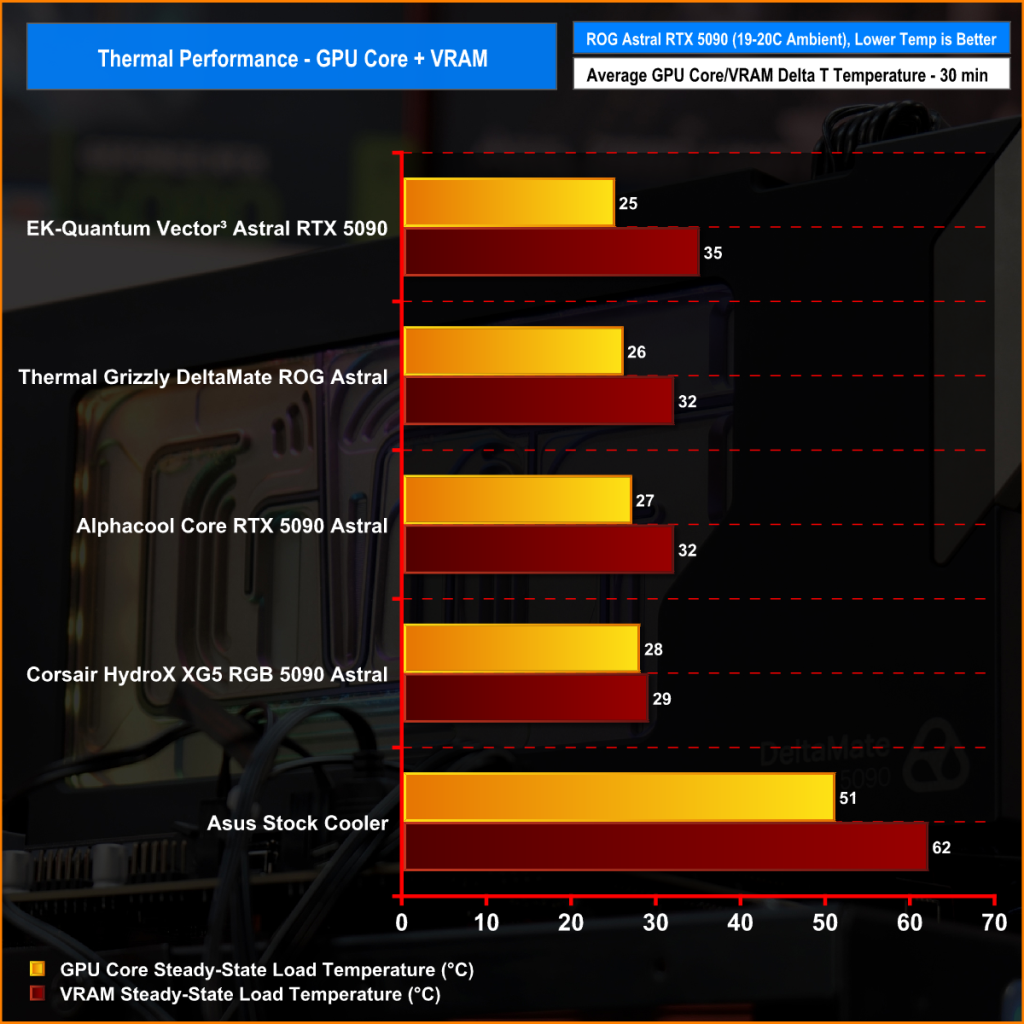
To measure the thermal performance, GPU core frequency and power draw of the ROG Astral RTX 5090, we run a 30-minute 3Dmark Speed Way stress test. An additional 3Dmark Speed Way Benchmark is performed with each water block installed to measure potential gaming performance.
The test data is logged using HWINFO and the final 10 minutes of the data is calculated to find the average GPU core / VRAM temperature, GPU core frequency and power draw. Plus a 3Dmark Speed Way benchmark run to measure gaming performance.
For testing, we use a 30-minute looped run of 3Dmark Speed Way and record the steady-state values at the end of the test. This ensures that the GPU has had ample time to warm up and reach a steady state under all of the coolers.
The ambient is maintained at 19-20 degrees Celsius. Where there is variation beyond this temperature range, we add extra repeated tests to ensure consistency. However, this is well controlled now with A/C.
Ambient temperature and humidity are controlled via a mini split air conditioning system inside the test room. Ambient temperature is maintained between 19-20°C, Temperature delta figures are shown in the charts (ambient temperature is deducted from the measured component temperature).
If we look at the temperature first we can see that compared with the stock ASUS cooler, there's a huge drop in GPU core and VRAM temperature, from mid-50s over ambient on the GPU core using the stock cooler, down to mid 20s on all GPU blocks, but there's virtually nothing in terms of GPU core and VRAM temperature between all of the custom blocks, just 3 degrees Celsius between the best and worst. However, the Corsair block produces the best VRAM temperature.
GPU Core Frequency
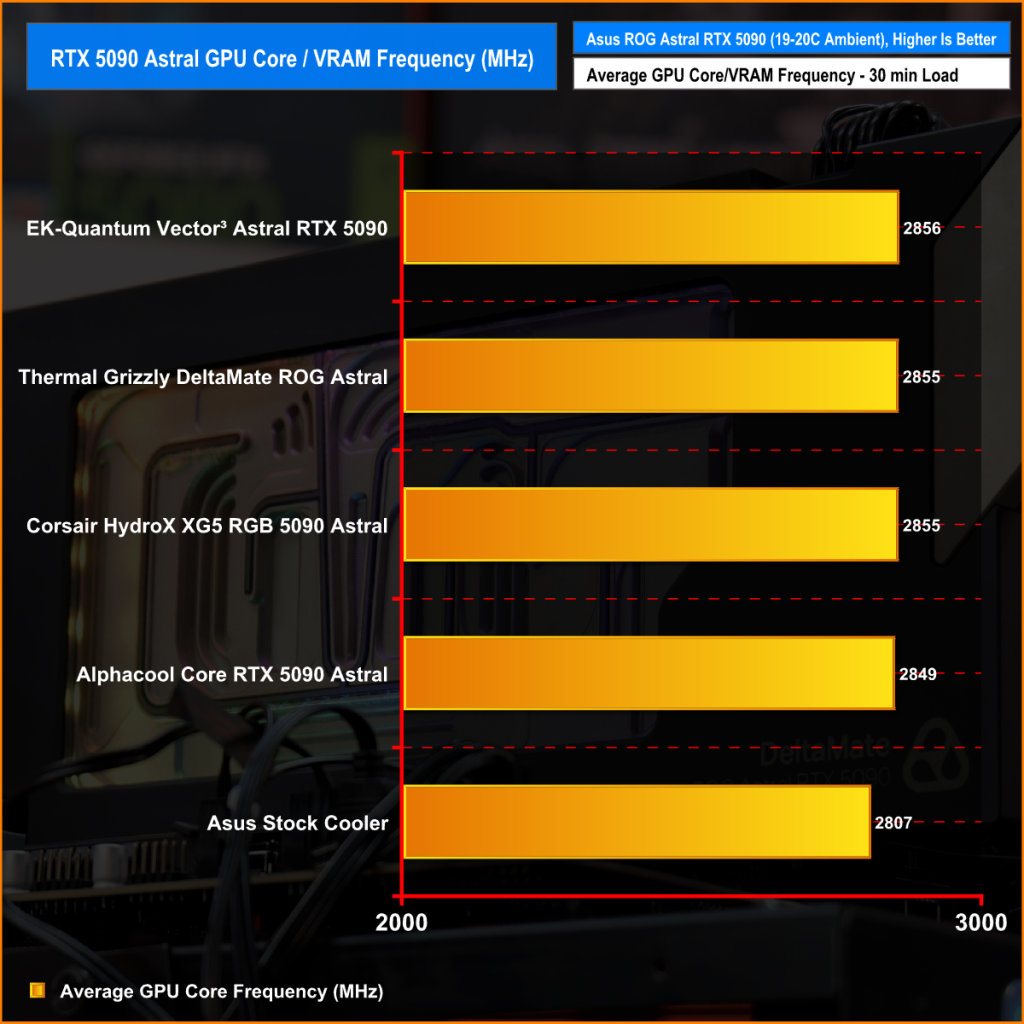
Looking at core frequency, the drop in temperature with the custom blocks also gives us a modest improvement in GPU core temperature when the GPU is allowed to boost automatically. Installing the custom water blocks gives an extra 50 MHz GPU frequency, but again there's not much at all to separate the performance of the custom water blocks.
Power Draw
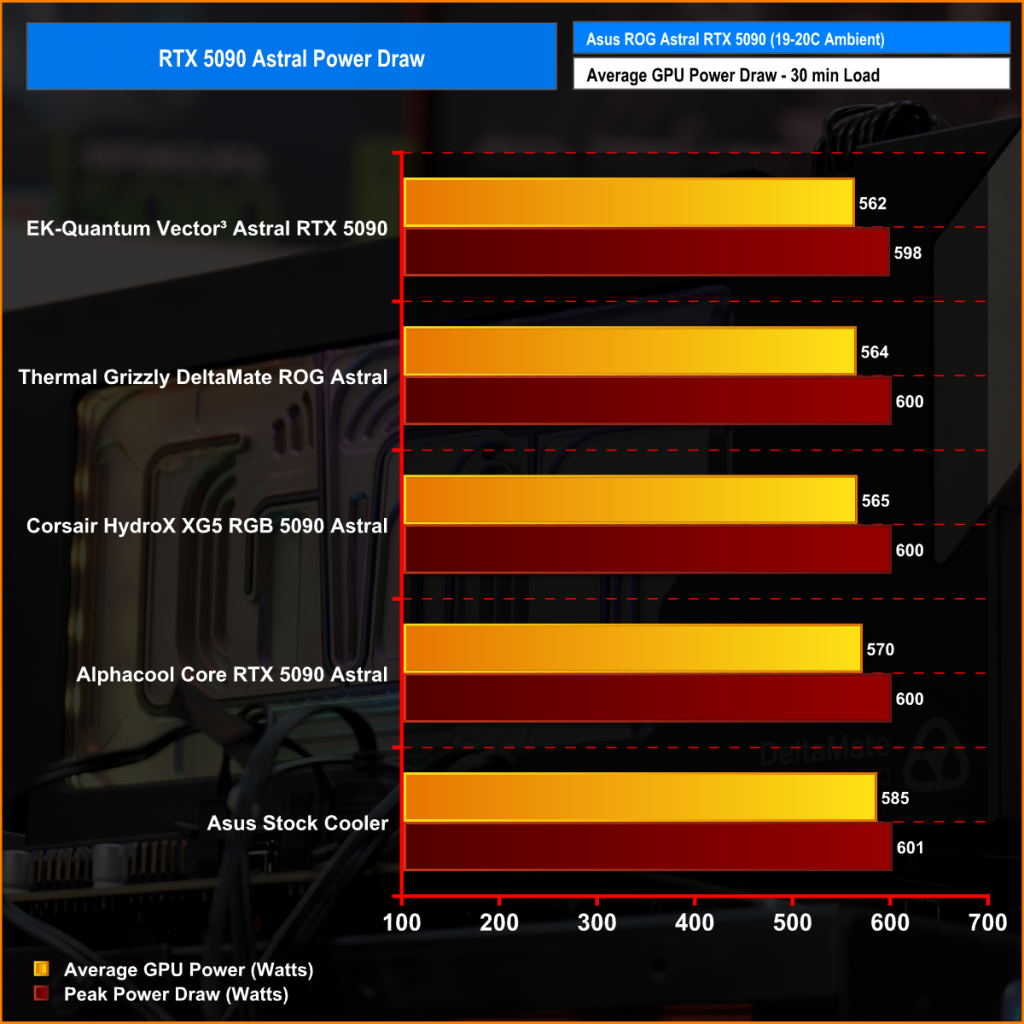
Average power draw follows a similar pattern, but in all scenarios, the peak power draw is 600 watts, even with the stock cooler. There is some slight variation between the custom water blocks, with the EK block achieving the lowest average power draw and the Alphacool block the highest, but only 8 watts separate them.
3DMark Speed Way Benchmark
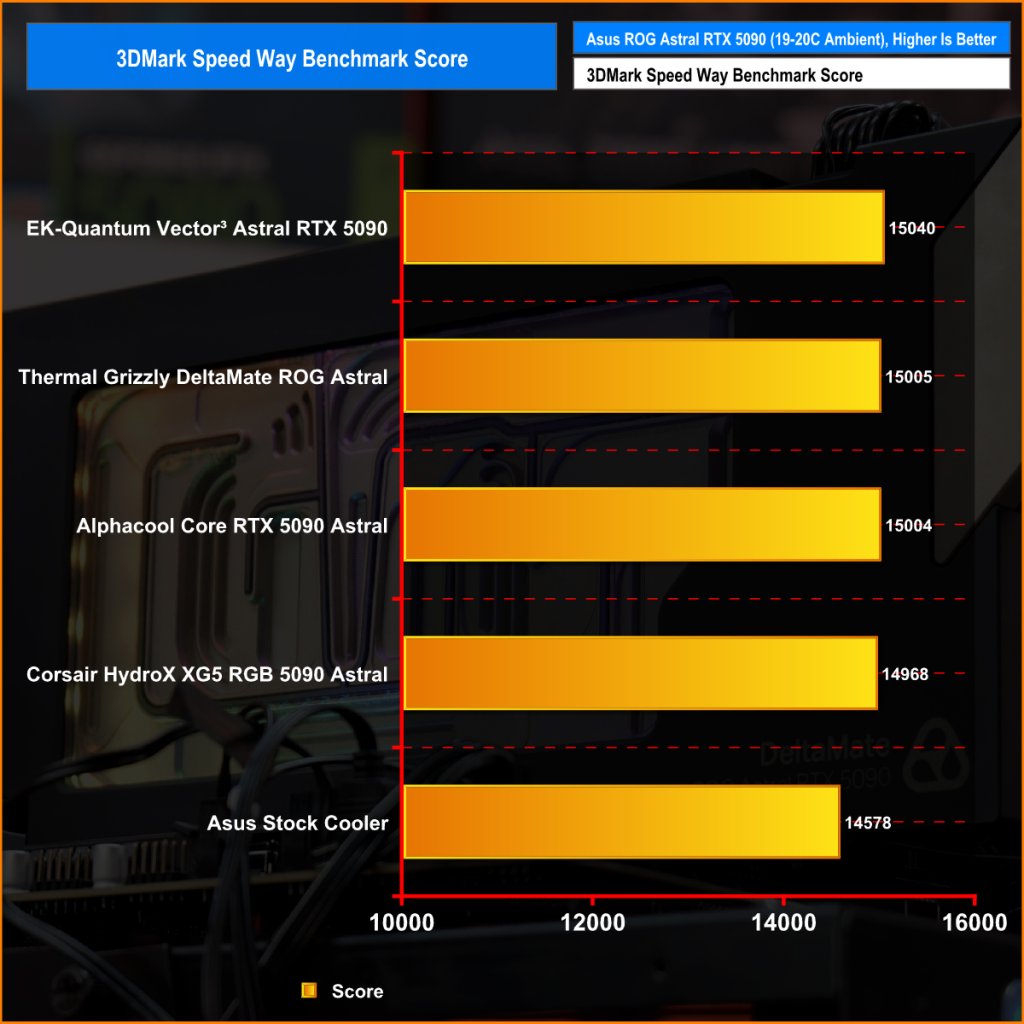
Then finally benchmark performance. As we have seen with the other tests, there is a noticeable improvement in 3DMARK Speed Way benchmark performance with the custom blocks installed. Speed Way performance increases by 400 plus points using the custom water blocks with Thermal Grizzly DeltaMate, EK and Alphacool blocks, all very close at around 15000 points.
Closing Thoughts
Since thermal performance, GPU core frequency benchmark performance is very close between all of the GPU blocks tested, it all comes down to build quality, the installation process, looks and the overall experience of using the block which will determine the one you choose. There's no denying that installing a water block to the Asus ROG Astral RTX 5090 will give you a significant improvement in thermal headroom, so if you want to overclock the card this will be the path you need to take.
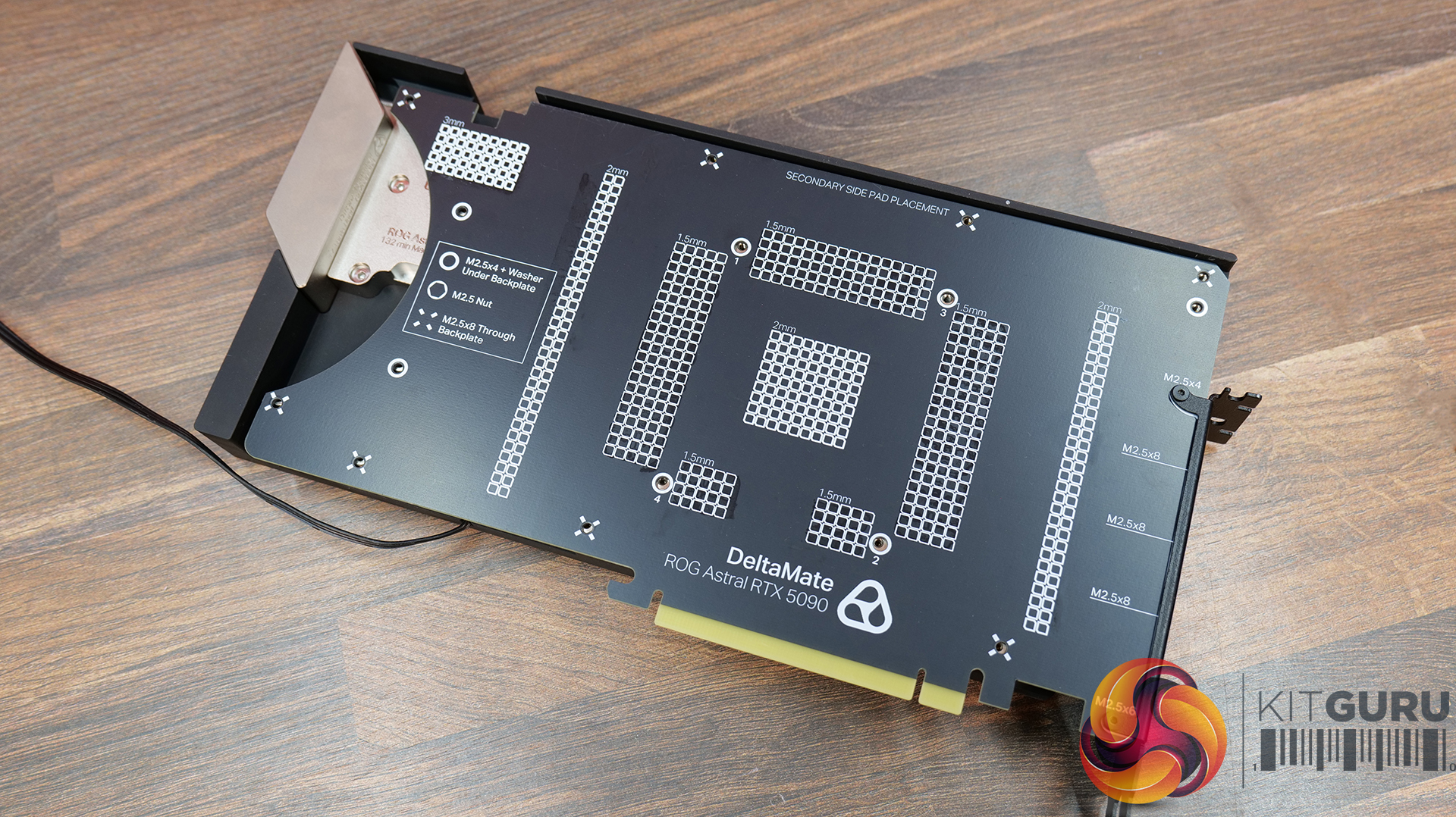
If budget is no worry and you want a water block that feels special, then the Thermal Grizzly block wins hands down. The build quality and attention to detail with the GPU water block are top-tier. There are quality-of-life features included with the DeltaMate that you don’t get with the others, like the dummy PCB, which is a great accessory for helping cut thermal pads to the correct size and laying out the placement of them, but also the user can install the block into their system and build the loop using the dummy PCB before installing the actual graphics card.
Thermal Grizzly also includes thermal putty with the DeltaMate block, so if you want to use putty or thermal pads you have the choice. Putty may offer some thermal benefit, but it can be messy which is why Thermal Grizzly includes both, which the others don’t do. However, you are paying a high premium for these options since the DeltaMate block is almost twice the cost of the EK block and more than double the cost of the Alphacool.
But when you are splashing out over £2500 on a graphics card, you will no doubt want the very best GPU block when it comes to water cooling so for most, it might be a price worth paying. Plus the attention to detail in terms of the engineering that has gone into making the DeltaMate block is second to none – it truly is the very highest of high-end and makes the other blocks look like budget lower quality budget models, even if they are not.
The Thermal Grizzly DeltaMate ROG Astral RTX 5090 is available to purchase now directly from Thermal Grizzly priced at €499.90 HERE.
Pros:
Superb engineering attention to detail.
Included dummy PCB is a great idea.
Great thermal performance improvement over the stock cooling solution.
Cons:
Expensive compared to some alternatives.
KitGuru says: If you have an Asus ROG Astral RTX 5090 and want to water cool it, this is the option to go for if you have change left over from your £3000+ graphics card purchase.
Just weeks after the game was finally officially released to the world, Riot Games’ 2XKO has already encountered a number of roadblocks, with the much-anticipated title seeing its dev team majorly downsized following a less-than-explosive launch. Despite this, the team are planning to continue to support the 2v2 fighter, officially announcing the next two Champions alongside a new local duo mode.
Taking to their blog to make the announcement, the team at Riot Games officially detailed the first major post-launch update for 2XKO, writing: “We wanted to give you a quick preview of what’s upcoming for 2XKO. We would have made a video to talk about this face-to-face, but the team is heads down and we wanted to chat ASAP.”
The full blog post can be found HERE and goes into various details surrounding the game’s competitive scene, community support and more. The most interesting however is confirmation that “we've been prototyping a Local Duo Mode experience that will let you and a friend play couch co-op together against the world”. Though not yet available, this feature is said to be “a top priority and we're working to get it into the game as quickly as possible.”
In terms of characters, Riot have teased the next two Champions planned to release. Though no official date has been given, the team confirmed that the “sharp, stylish ninja” Akali, and Senna (who “wields the power of light and shadow”) are next in line to join the roster.
As mentioned, 2XKO is in a bit of a weird place, with the long-awaited title finally releasing after years of development and testing to lower-than-expected player numbers. That said, the game itself is fun and so hopefully over time, as more Champions and features get added, 2XKO will find a solid and dedicated audience.
KitGuru says: what do you think of 2XKO so far? Does it have the potential to blow up in popularity? What’s your favourite style of fighting game? Let us know down below.
Stellar Blade has been one of the most successful new IPs released in recent years under Sony, with the PlayStation Studios’ published title selling millions of copies across both the PlayStation 5 (and later on) PC. While a sequel is already announced to be in the works, it appears as though studio SHIFTUP are planning to further expand Stellar Blade to additional platforms this year.
“Stellar Blade has established itself as a steady, long-tail IP, supported by sustained sales momentum and strong user reception since launch. Building on this foundation, development of the next project is progressing in a structured manner, and we are reviewing plans to share additional details on the follow-up project within the year.”
Adding further context, they continued, “In parallel, we are reviewing platform expansion beyond PS5 and PC to broaden audience reach. This approach is expected to both introduce the title to new players and gradually build anticipation for the next chapter in the series. We expect 2026 to be a year in which more users experience the existing title while momentum and anticipation builds toward the next phase of the franchise.”
As mentioned, Stellar Blade initially started life as a PlayStation 5 exclusive. In the wake of its success however, the title was ported over to PC one year later. Given this fact, the only two platforms which the studio is likely referring to is Xbox and the Switch 2.
While it is possible that Stellar Blade could come to Xbox, the Switch 2 seems more likely – especially as all SHIFTUP developers were gifted free Switch 2’s following the game’s strong launch.
Regardless, it is exciting to see that Stellar Blade is continuing to be a success and will hopefully find an even wider audience throughout the next year as the title is eventually brought over to more platforms.
KitGuru says: What do you think of Stellar Blade? Would you like to see it ported to more platforms? Is an Xbox or Switch 2 release more likely? Let us know down below.
If you've ever wanted to review tech, then this is a perfect opportunity as we are now hiring for a new reviewer to join our team! Prior experience is not strictly necessary, but we would like to see some example works from applicants.
We are looking for someone who will be able to produce reviews of a range of tech gear in video format and in the KitGuru style. Any experience in this sector is beneficial; however, we are open to all applicants provided you can give us a sample of your written or video work so we can assess your abilities.
KitGuru is a great company to work with, we are all tech enthusiasts who enjoy gaming, so we all have very similar interests. Behind the scenes it is very close-knit environment and many of our team have been with us for several years.
To be considered for this position you need:
Skillset to present well on camera – and in English.
The ability to meet tight deadlines.
Strong communication skills.
Some knowledge of video editing would be useful, but we have that capability in-house if we find the right candidate.
Strong writing ability.
This is a freelance position.
The successful applicant must be based in the United Kingdom, and we pay very well for this kind of work. If you are interested and feel you can meet the criteria above and want to work in this fast-moving sector then please send your CV along with any samples of your work to our Editor in Chief, Allan Campbell – allan(at)kitguru.net.
KitGuru says: We look forward to receiving your application!
Bloober Team have been quite a busy studio in recent years, with the Silent Hill 2 Remake developers having released a new title every year for the past 3 years. Despite this, Bloober began to tease another project at the start of 2026 – finally revealing it to be the next entry in their Layers of Fear series.
At the start of the year, Bloober Team shared a link to a website which was clearly hinting at the studio’s next project alongside a countdown timer leading up to Valentines Day. With the annual event having now come and gone, so too has Bloober’s countdown, with the team officially revealing that their next project is Layers of Fear 3.
For the uninitiated, Layers of Fear is Bloober Team’s biggest original IP, with the horror title first releasing back in 2016. Since then, the game received a sequel and a remake of sorts, with the latter coming out just a few years ago in 2023.
While the series is far from the most iconic in the horror space, Bloober have seemingly upped their game in recent years, with the likes of Silent Hill 2 Remake and Cronos: The New Dawn being received far more favourably – and so hopefully they are bringing their learnings over to Layers of Fear 3.
Bloober Team is a highly interesting studio to observe. While they started off as very much a mid-tier developer, Bloober’s cache has risen over time, and so here’s to hoping that Layers of Fear 3 will be their most atmospheric and layered game to date.
KitGuru says: What do you think of the announcement? Were you expecting it to be Layers of Fear related? Have Bloober Team earned your trust at this point? Let us know down below.
In recent years Valve has expedited the rate at which they introduce new features to their ever-popular Steam platform, with previous updates introducing a new UX; an overhauled library sharing with family, Steam Deck optimisations and much more. As part of Steam’s latest Beta Client update, users can now directly attach their PC’s specs to any reviews published for added clarity and context.
Making the official announcement, the team at Valve confirmed that the latest Steam Client Beta introduces a brand new option for players when writing reviews for games – adding “the option to attach hardware specs when writing or updating a Steam User Review on a game's store page.”
While certainly a small feature, its implications could be major, with potential buyers of games now having much more context to work with when it comes to statements of performance issues pointed out in reviews.
Many players, especially on PC, will go to Steam when looking at reviews for games, with the platform being a particularly strong place to go for a wide variety of opinions. Of course, with PCs each person’s experience can differ – especially when it comes to performance – and so being able to contextualise a player’s review with their hardware specs will be highly appreciated and welcome.
Full details on the latest Steam Client Beta (including other smaller additions/tweaks) can be found HERE.
KitGuru says: What do you think of this addition? Are you surprised it wasn't introduced sooner? Let us know down below.
Ubisoft made the shocking decision to cancel its Prince of Persia: The Sands of Time remake several weeks ago, alongside a number of other unannounced projects. Now thanks to a new report, we may know exactly which unannounced games were scrapped during the publisher's restructuring.
According to Insider Gaming's sources, aside from the Prince of Persia remake, the cancelled games at Ubisoft last month included Project Aether, Project Pathfinder (formerly Project U), Project Crest, Assassin's Creed Rebellion and Assassin's Creed Singularity.
We will break down a little more about what we already knew of each project based on prior rumours. For starters, Project Pathfinder was originally discovered more than five years ago when it was being worked on under the Project U name. This game was apparently set to be a co-op PvPvE shooter, with a handful of teams taking on hordes of robot enemies and bosses, while also trying to survive other players in the vicinity.
Assassin's Creed Rebellion was one of a handful of free-to-play mobile game attempts from Ubisoft. The game has actually been available from as far back as 2018 but apparently support is now ending this year. The other cancelled Assassin's Creed game, Singularity, was reportedly set to be a new mobile game, one that would also launch on PC.
Project Crest was a mystery game that had not really leaked previously, but apparently it was going to be a World War 2 extraction shooter. From the sounds of it, Ubisoft had multiple projects in the works targeting similar genres, so it is no wonder that some of these got cancelled.
Finally, Project Aether is another game that hadn't really been reported on in prior leaks until after its cancellation. Nothing is really known about this one, but it had apparently started development in 2019, before being rebooted and handed over to another studio. It was cancelled as part of Ubisoft's recent cost-cutting efforts.
KitGuru Says: Most of these cancellations aren't too surprising. Clearly, the Prince of Persia remake is still the standout and probably the one that hurts fans the most.
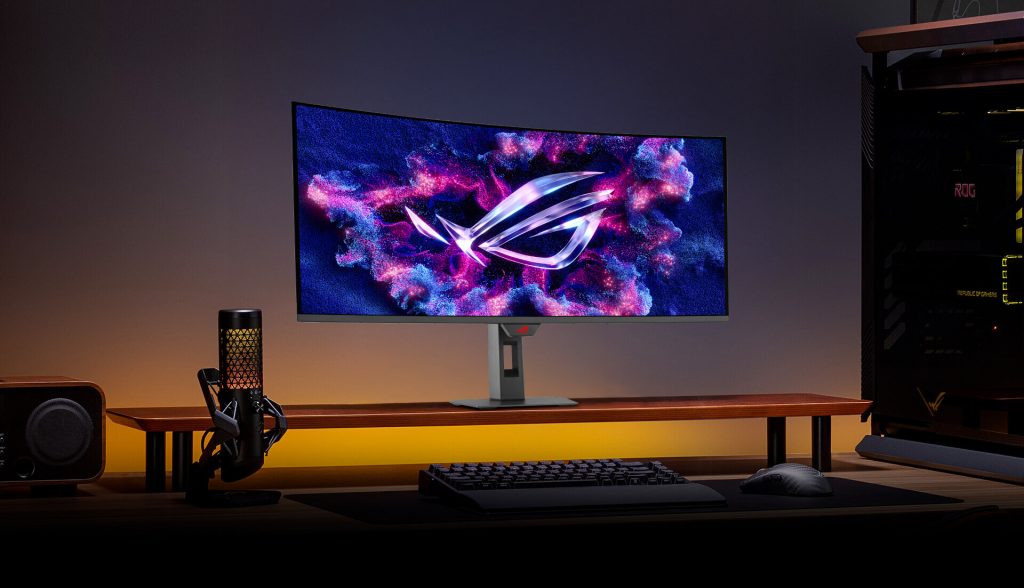
Asus ROG has launched the Strix OLED XG34WCDMTG, a specialised variant of the monitor first announced at CES 2026. While the original XG34WCDMS focused on high-performance gaming, the “TG” model brings a key feature, making it the first dedicated gaming monitor to integrate Google TV functionality natively. Interestingly, this smart monitor has become available for purchase even before the standard version showcased at CES.
As first reported by Notebookcheck, the XG34WCDMTG runs a version of Google TV based on Android 14, allowing it to function as a standalone entertainment hub without a connected PC or console. To support this, the monitor includes Wi-Fi 6 connectivity, a dedicated remote control, voice control features, and wireless projection support. Asus has even pre-installed Nvidia GeForce Now, enabling high-end cloud gaming directly through the monitor's internal hardware.
On the technical front, the monitor is built around a 34-inch ultra-wide QD-OLED panel with a resolution of 3440 x 1440 and a gentle 1800R curvature. It is engineered for high-end performance, featuring a 240 Hz refresh rate and a 0.03 ms GTG response time. While typical SDR brightness is rated at 250 nits, the panel can reach peak highlights of 1000 nits in HDR mode, further enhanced by Dolby Vision support. For connectivity, the monitor provides two HDMI 2.1 (FRL) ports, a DisplayPort 1.4, and a USB-C port that supports DP Alt mode and 90W Power Delivery for charging laptops.
The XG34WCDMTG is currently listed on Amazon for £949 and on the Asus US store for $1,199.
KitGuru says: Asus is clearly taking a page out of Samsung's and LG's playbook by turning the monitor into a multi-purpose entertainment hub. While most PC gamers might find built-in Google TV redundant, it's a nice feature for those in smaller living spaces who want their primary gaming screen to double as a smart TV. However, that convenience comes at a premium.
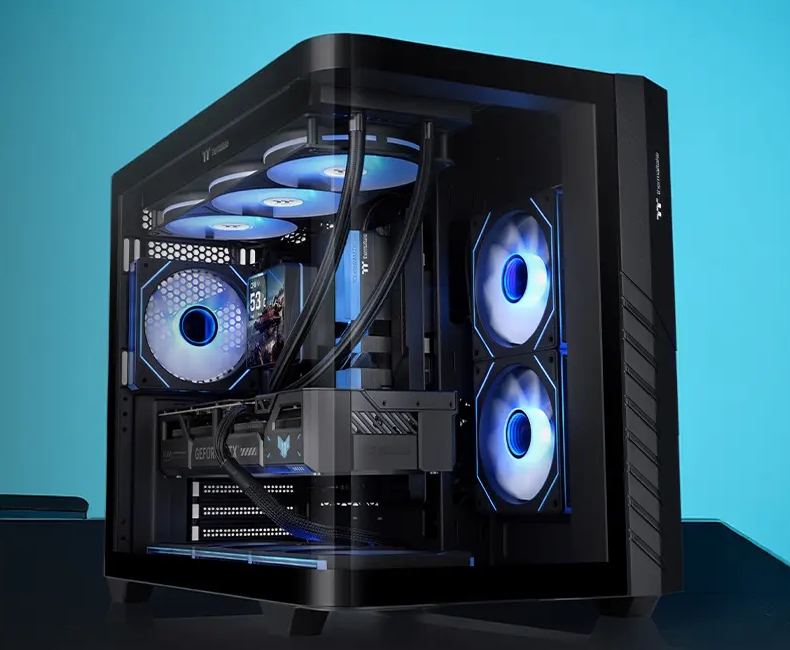
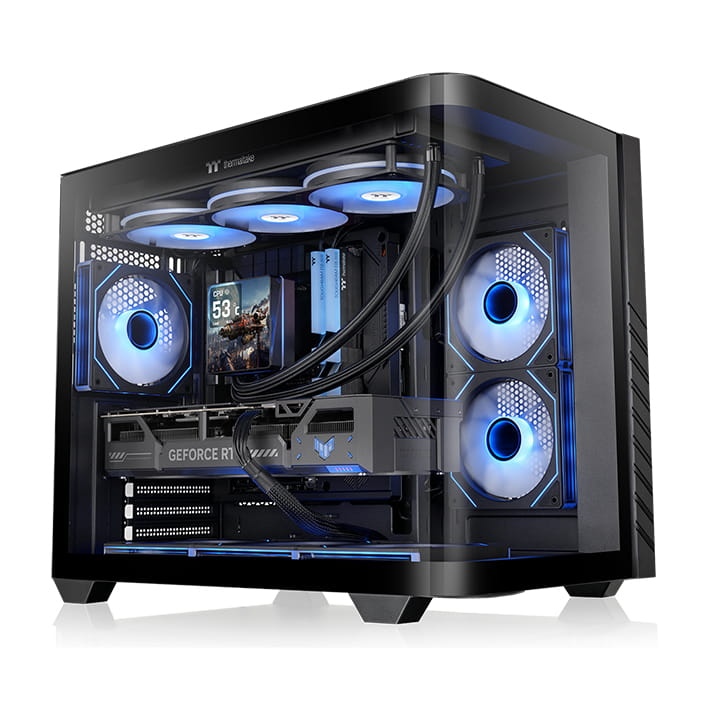
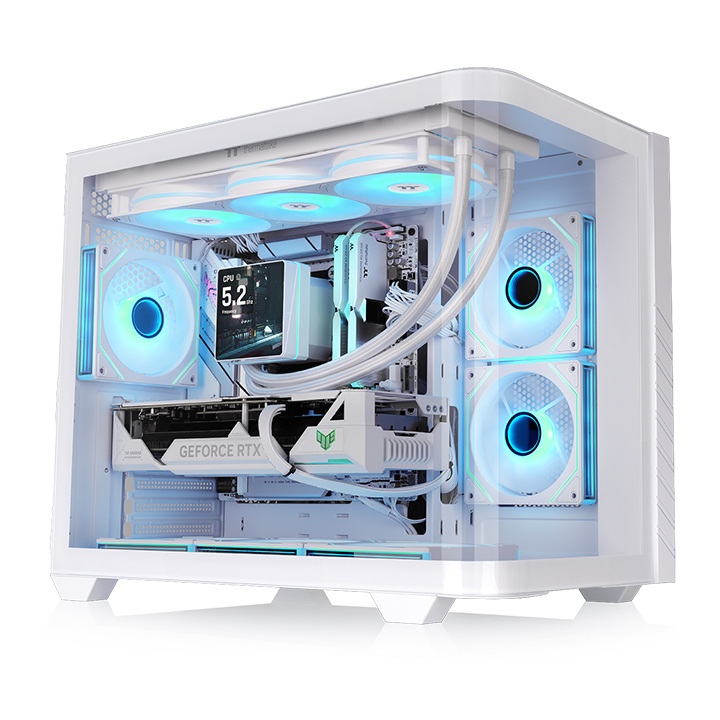
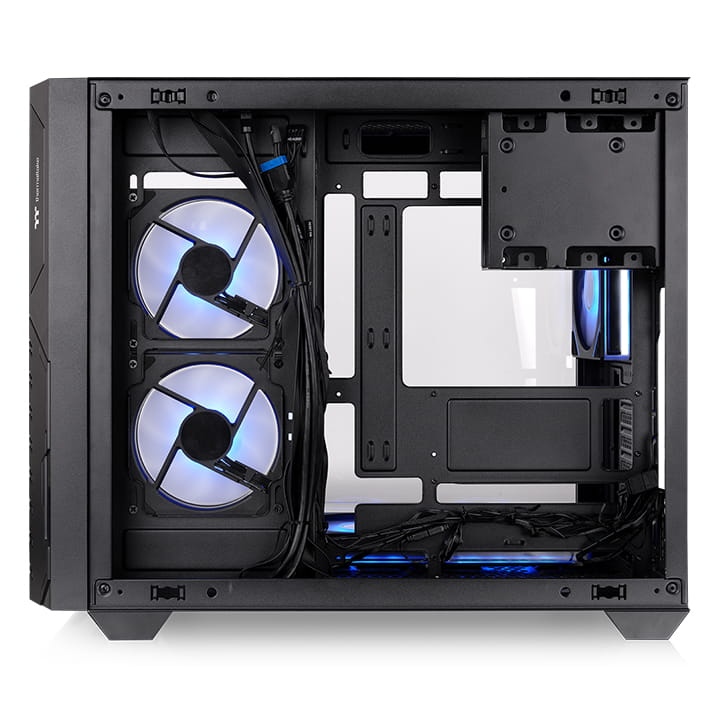
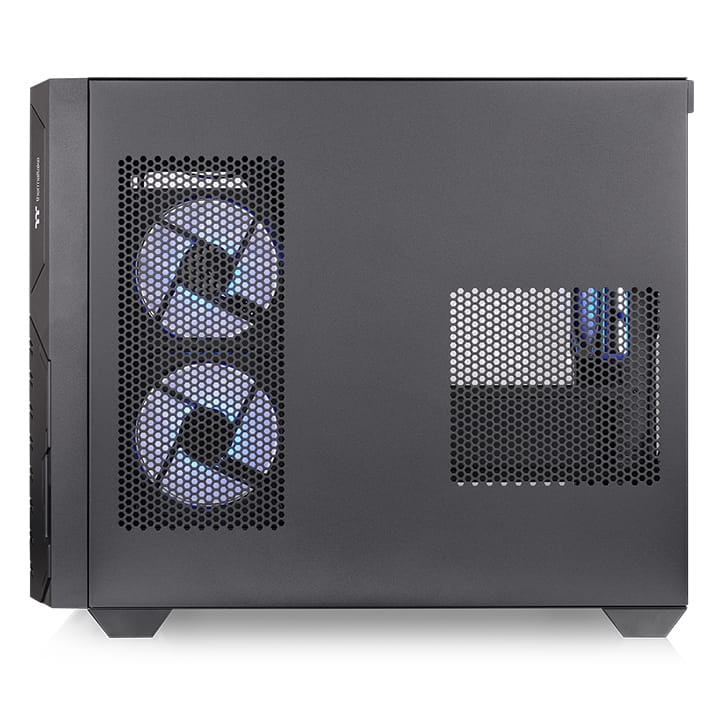
Thermaltake has introduced the Vision 330 CR, a mid-tower chassis that leans heavily into the popular “aquarium” aesthetic while distinguishing itself with a single-piece, curved tempered glass side and front panel.
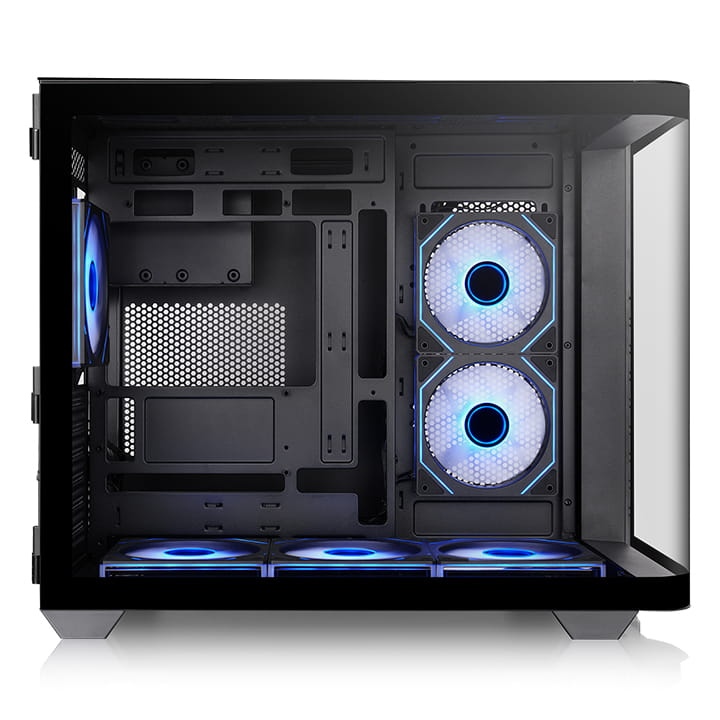
While the two-compartment design follows a familiar industry trend, Thermaltake has prioritised immediate value by equipping the Vision 330 CR (via Club DNS) with six pre-installed ARGB fans. The lighting features an “infinite mirror” effect in both the centre and on the sides of the fans, spinning up to 1500 RPM to ensure significant internal airflow.
The internal layout is designed to accommodate back-connect motherboards, such as the Asus BTF and MSI Project Zero series, though using the top-mounted storage cage may partially obstruct these connections. Still, the case accommodates GPUs up to 420 mm long, CPU coolers up to 175 mm tall, and PSUs up to 250 mm long. Moreover, there's space for a 360 mm radiator on top, a 240 mm radiator on the side, and up to 9x 120 mm fans.
The front I/O is somewhat conservative, offering two USB 3.0 ports, two audio jacks, and a single USB-C port. Storage options are handled by a cage that fits two 3.5″ drives and one 2.5″ drive, with an additional 2.5″ mounting point at the bottom.
KitGuru says: While the curved glass is a beautiful touch, the real selling point is the inclusion of six fans, a rarity in the current market that saves builders a significant secondary expense.
InWin has officially unveiled the W50, a mid-tower chassis that marks a departure from standard boxy designs with its unique architectural “W” aesthetic. The W50 uses a distinctive W-shaped split-line configuration across three tempered glass panels to provide an expansive panoramic view of the internal hardware.
The W50 features two-way mirrored glass that maintains a sleek mirror finish when the system is powered down, but becomes transparent to reveal the system's interior when turned on. The W50 is built for high-performance builds, offering native support for E-ATX motherboards and specialised back-connect ATX motherboards. The interior is quite spacious, accommodating flagship graphics cards up to 435 mm long, CPU air coolers up to 175 mm tall, and PSUs up to 238 mm long. The case also offers 8x expansion slots and an optional modular bracket for vertical or horizontal mounting.
The case ships with four pre-installed Vortex VX120 fans but can accommodate up to nine similarly sized fans. It also supports 360 mm radiators on both the top and side panels simultaneously. An integrated ARGB hub handles the lighting with 19 presets, while the top I/O provides a high-speed USB 3.2 Gen 2×2 Type-C (20 Gbps) port. Maintenance is simplified thanks to the magnetic dust filters on the top and side, complemented by a convenient pull-out filter at the bottom.
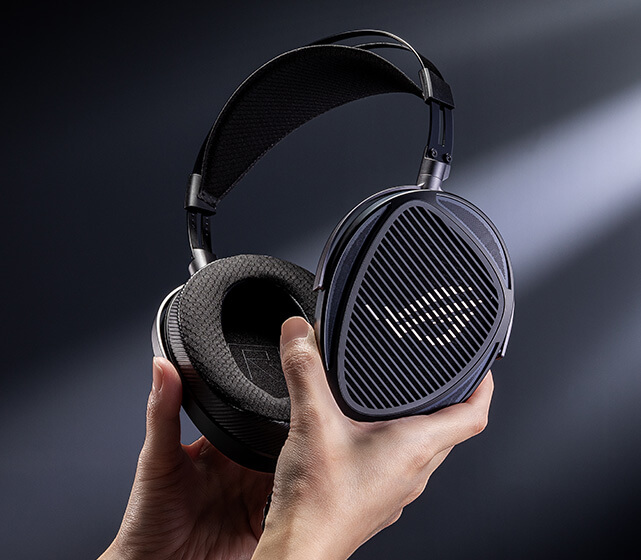
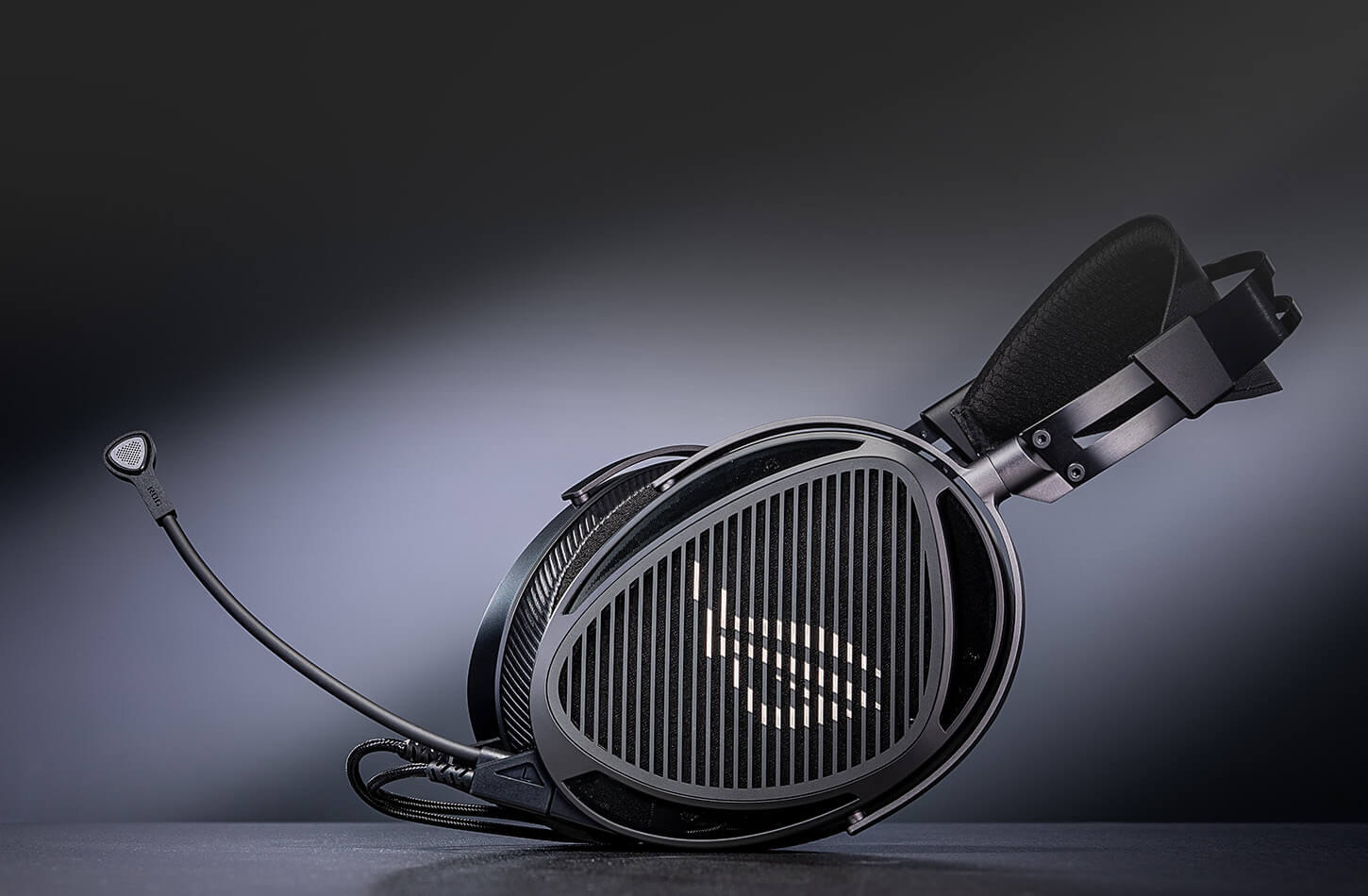
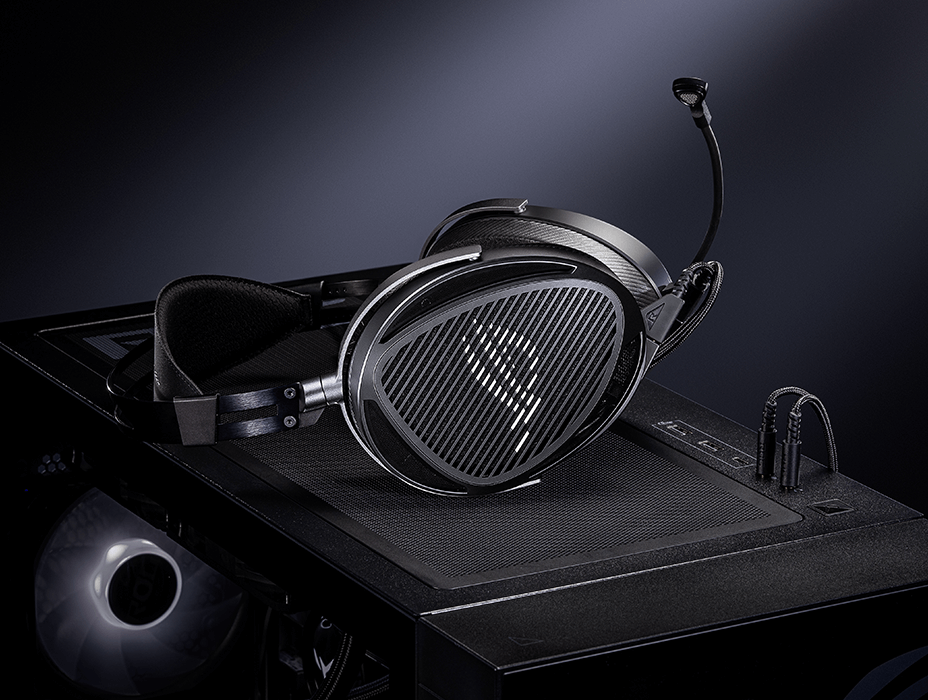
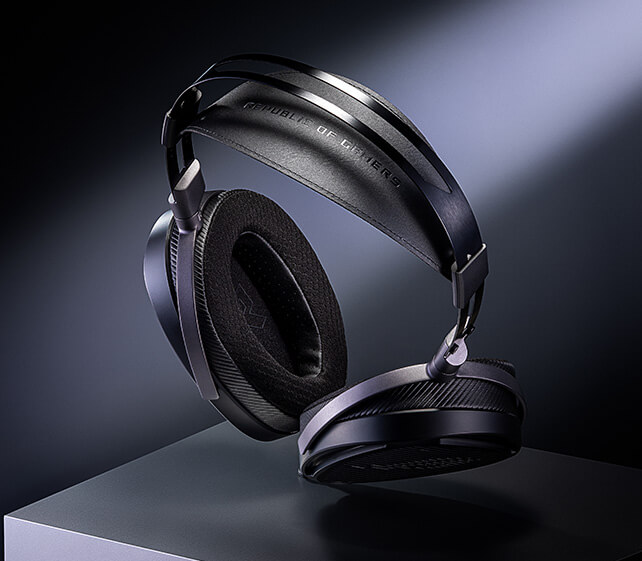
The Asus ROG Kithara marks the company's first high-fidelity planar magnetic headset. Developed in partnership with the audiophile specialists at HIFIMAN, it was designed to deliver an immersive, studio-grade experience.
The Kitara headset features 100mm Hifiman planar magnetic drivers with an ultrawide frequency response of 8Hz to 55kHz, delivering the clarity needed for competitive gaming. The open-back architecture of the ROG Kithara is a departure from traditional gaming headsets, specifically chosen to create an expansive, natural soundstage. By allowing sound waves to pass through the earcups freely rather than reflecting within an enclosed space, the headset prevents overlapping frequencies and muddy audio, resulting in superior sound separation. While this design does not offer passive noise isolation and is best suited for quiet environments, it significantly enhances spatial awareness and imaging accuracy.
For communication, the Kithara features a detachable, full-band MEMS boom microphone covering the 20Hz to 20kHz range. Unlike most analogue headsets, which share a ground for audio and microphone signals, the Kithara's cable separates these signal channels to remove crosstalk. The MEMS technology also provides a higher signal-to-noise ratio (SNR) than traditional ECM microphones.
The headset features a high-quality OFC balanced cable with 3-in-1 swappable plugs. This includes a 4.4mm balanced plug for reduced electrical noise, alongside 3.5mm and 6.3mm single-ended plugs for broad compatibility with DACs, amplifiers, PCs, and consoles. Additionally, it includes a USB-C-to-dual-3.5mm adapter. The ROG Kithara features a metal frame and an aluminium hinge design. The 8-way adjustable headband works in tandem with plush memory foam padding to distribute weight across various head shapes.
The ROG Kithara is available globally, with regional pricing varying. In the United States, the headset is priced at $299.99. In Europe, it retails for €319.90.
Clair Obscur: Expedition 33 has won a ton of awards in recent months. This week, as part of the 29th annual DICE awards, the team at Sandfall Interactive added yet another GOTY trophy to their list of accolades, alongside several other awards.
While Sandfall Interactive dominated the tally, Sucker Punch Productions also had a significant showing with Ghost of Yotei. The Ghost of Tsushima sequel secured three awards, including Adventure Game of the Year and high marks for its original music. Other multi-award winners included Blue Prince and Death Stranding 2: On the Beach, both of which earned two distinctions each. The ceremony also recognised a spread of titles across other genres, with trophies going to Mario Kart World, Arc Raiders, and Hades II.
The full list of nominees and winners can be found below:
Game of the Year
Arc Raiders
Blue Prince
Clair Obscur: Expedition 33 – WINNER
Dispatch
Ghost of Yōtei
Outstanding Achievement in Animation
Death Stranding 2: On The Beach
Ghost Of Yōtei
Monster Hunter Wilds
South of Midnight – WINNER
The Midnight Walk
Outstanding Achievement in Art Direction
Clair Obscur: Expedition 33 – WINNER
Death Stranding 2: On The Beach
Dispatch
Ghost Of Yōtei
The Midnight Walk
Outstanding Achievement in Character
Clair Obscur: Expedition 33 – Esquie
Clair Obscur: Expedition 33 – Maelle
Dispatch – Courtney/Invisigal
Dispatch – Robert Robertson III/Mecha Man
Ghost Of Yōtei – Atsu – WINNER
Outstanding Achievement in Original Music Composition
Clair Obscur: Expedition 33
Ghost Of Yōtei – WINNER
Herdling
Mario Kart World
Sword of the Sea
Outstanding Achievement in Audio Design
Arc Raiders
Death Stranding 2: On The Beach – WINNER
Ghost Of Yōtei
Lumines Arise
Split Fiction
Outstanding Achievement in Story
Clair Obscur: Expedition 33 – WINNER
Consume Me
despelote
South of Midnight
The Drifter
Outstanding Technical Achievement
Arc Raiders
Assassin's Creed Shadows
Death Stranding 2: On the Beach – WINNER
Donkey Kong Bananza
Doom: The Dark Ages
Action Game of the Year
Absolum
Arc Raiders
Doom: The Dark Ages
Hades II – WINNER
Ninja Gaiden 4
Adventure Game of the Year
Blue Prince
Dispatch
Donkey Kong Bananza
Ghost Of Yōtei – WINNER
Hollow Knight: Silksong
Family Game of the Year
LEGO Party! – WINNER
LEGO Voyagers
Lumines Arise
Marvel Cosmic Invasion
POPUCOM
Fighting Game of the Year
2XKO
Capcom Fighting Collection 2
Fatal Fury: City of the Wolves
Mortal Kombat: Legacy Kollection – WINNER
WWE 2K25
Racing Game of the Year
EA Sports F1 25
Kirby Air Riders
Mario Kart World – WINNER
Wheel World
Role-Playing Game of the Year
Clair Obscur: Expedition 33 – WINNER
Citizen Sleeper 2: Starward Vector
Kingdom Come: Deliverance II
Monster Hunter Wilds
The Outer Worlds 2
Sports Game of the Year
EA Sports FC 26
PGA Tour 2K25
MLB The Show 25
NBA 2K26
Rematch – WINNER
Strategy/Simulation Game of the Year
The Alters – WINNER
Drop Duchy
Europa Universalis V
The King is Watching
StarVaders
Immersive Reality Technical Achievement
Ghost Town
Hotel Infinity
Marvel's Deadpool VR
Star Wars: Beyond Victory – A Mixed Reality Playset
Pulsar Gaming Gears and Vaxee have officially launched their jointly developed eS series, marking the start of a strategic partnership to provide high-performance esports equipment to competitive gamers. This initial product wave features the FS-1 gaming mouse, the PD170 mousepads, and a range of arm sleeves, all intended for professional play.
The flagship FS-1 mouse is engineered for stability and consistency, featuring a 56g symmetrical design, 100M-click optical switches, and a 32K XS-1 flagship optical sensor. Also worth noting is the inclusion of the Link 8K Dongle, which acts as an active tournament controller rather than a standard passive receiver. This device allows players to instantly adjust critical settings like DPI, polling rate, and LOD via built-in buttons, facilitating on-the-fly changes without the need for software or flipping the mouse during intense matches. The dongle supports an 8000Hz polling rate, powered by a dual-MCU design, to ensure a stable wireless connection.
Moving on to the eS PD170 mousepads, these are available in XL and XL SQ sizes. Because of their sturdy, hard base, which removes cushion compression, these mousepads allow the mouse to glide more steadily across the surface. The rounded edges should also help reduce wrist interference. Lastly, the series also includes the eS eSports Arm Sleeves, available in M, L, and XL sizes.
The series follows a phased rollout schedule, beginning with a pre-launch event at the VCT NA venue in Los Angeles. The official launch on all Pulsar web stores is set for February 19th, followed by a secondary launch phase on February 25th. In terms of pricing, the eS FS-1 gaming mouse is listed at $179.95/€179.90, while the PD170 mousepads range from $49.95/€59.99 to $59.95/€64.99, and the gaming arm sleeves are available for $19.95/€24.99.
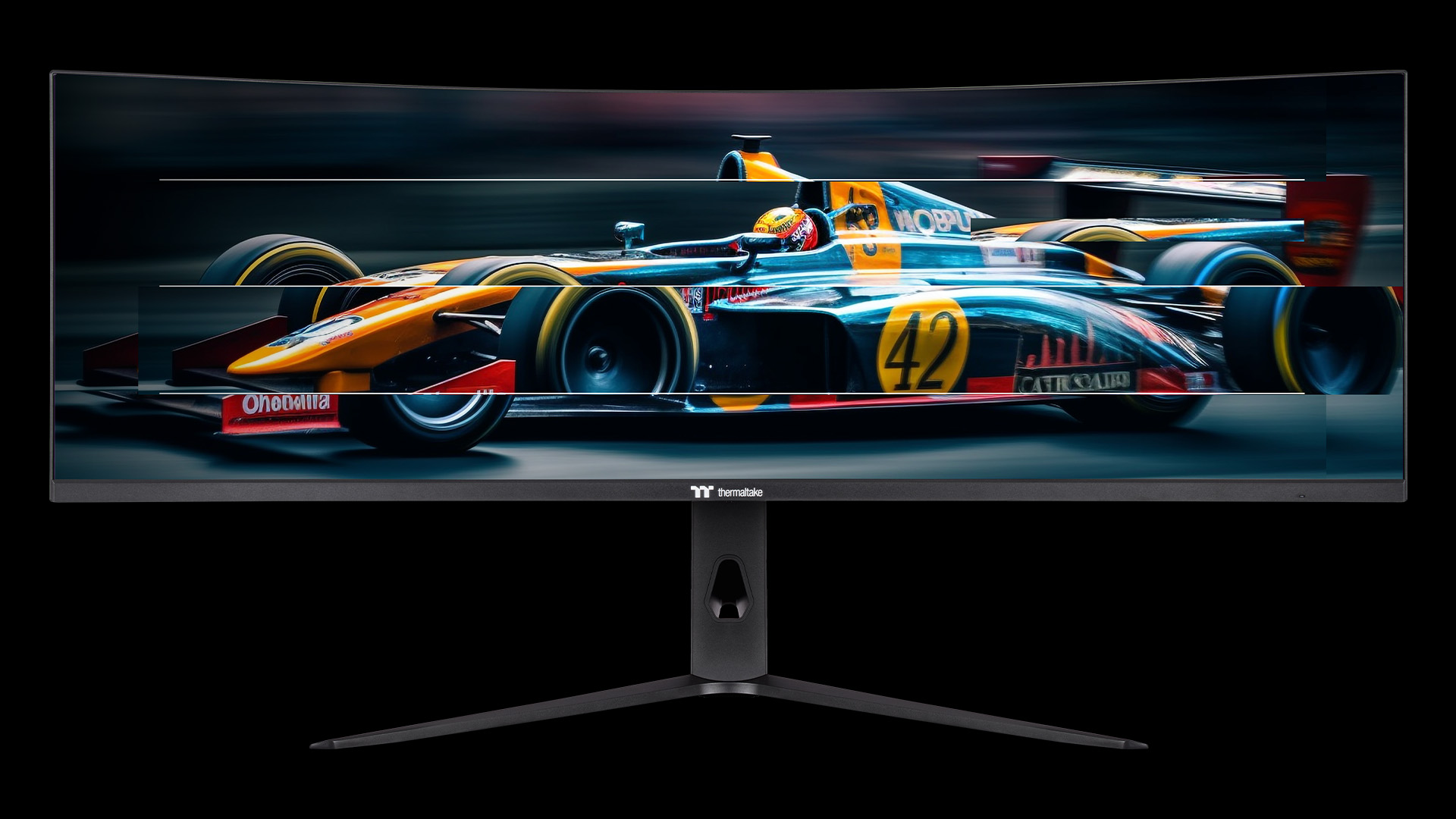
Thermaltake has expanded its high-end display lineup with the TGM-V49CDQ, a 49-inch curved ultrawide that serves as a Fast VA alternative to its existing, similarly sized IPS offering. This monitor is designed to offer the massive screen real estate of a 32:9 “super ultra-wide” aspect ratio while maintaining the high-speed performance required for competitive gaming.
The Thermaltake TGM-V49CDQ (via Abit) is a 49-inch curved ultrawide gaming monitor with a Fast VA panel and a native resolution of 5120×1440, providing the screen real estate of two 27-inch 1440p displays. It is built with high-performance gaming in mind thanks to its a rapid 240Hz refresh rate and 1ms GTG response time. The display is certified for both Nvidia G-SYNC and AMD FreeSync Premium, so you won't see any screen tearing in games, as the display refresh rate will dynamically match the frame rate of whatever game you are playing.
This model is rated for a typical brightness of 400 nits and supports 1.07 billion colours (10-bit colour depth), covering 95% of the DCI-P3 colour gamut. It includes HDR10 support and maintains a standard 1000:1 contrast ratio. The monitor is also equipped with flicker-free technology and a low-blue-light mode to help reduce eye fatigue during extended gaming sessions.
Users will have a strong set of connectivity options, with the monitor including two HDMI 2.1 ports, a DisplayPort 1.4 port, and a USB-C port that supports 90W Power Delivery for high-performance laptops. The integrated KVM switch allows users to control two separate devices with a single set of peripherals, complemented by Picture-in-Picture (PIP) and Picture-by-Picture (PBP) modes for multitasking across multiple devices.
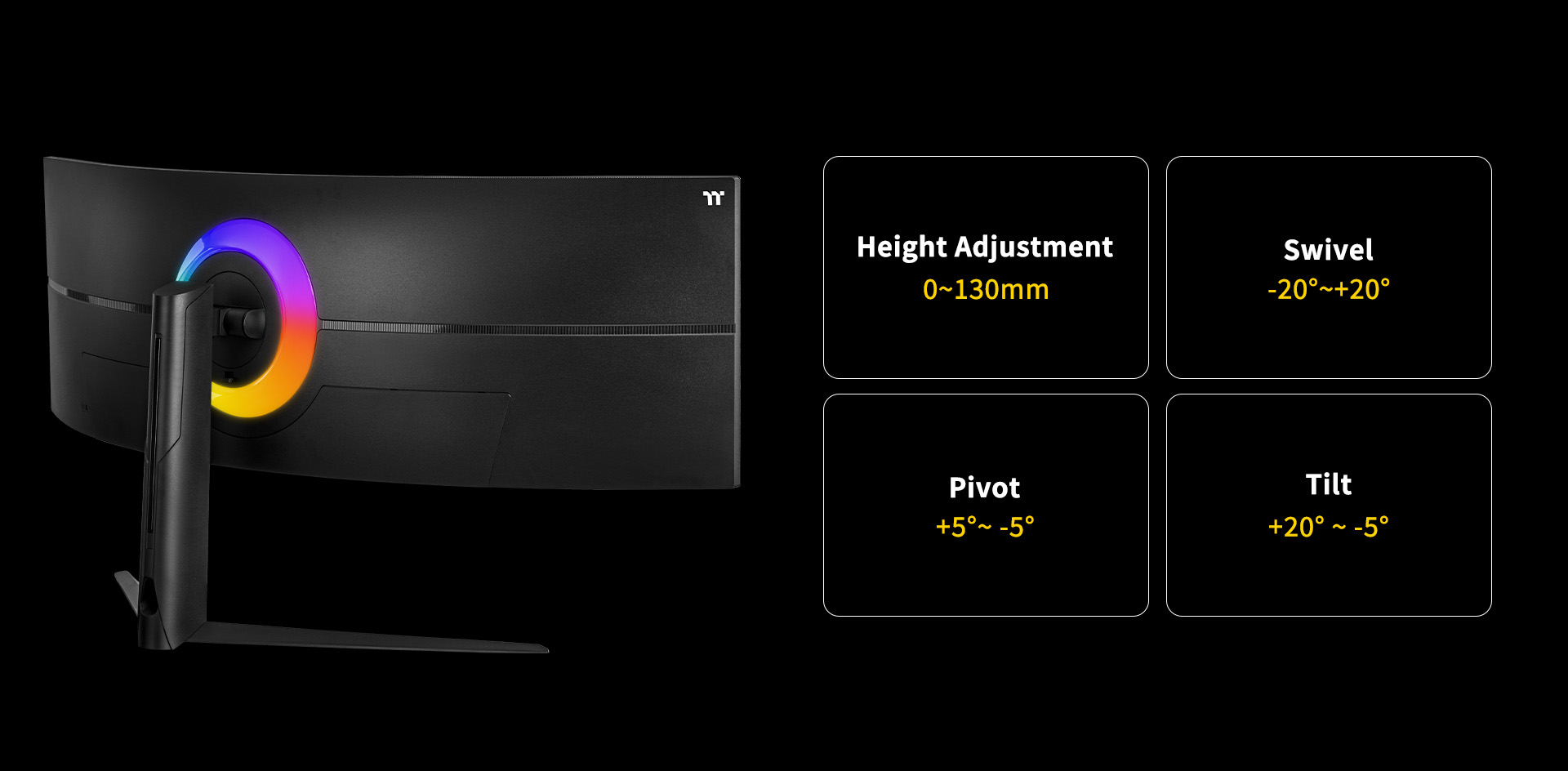
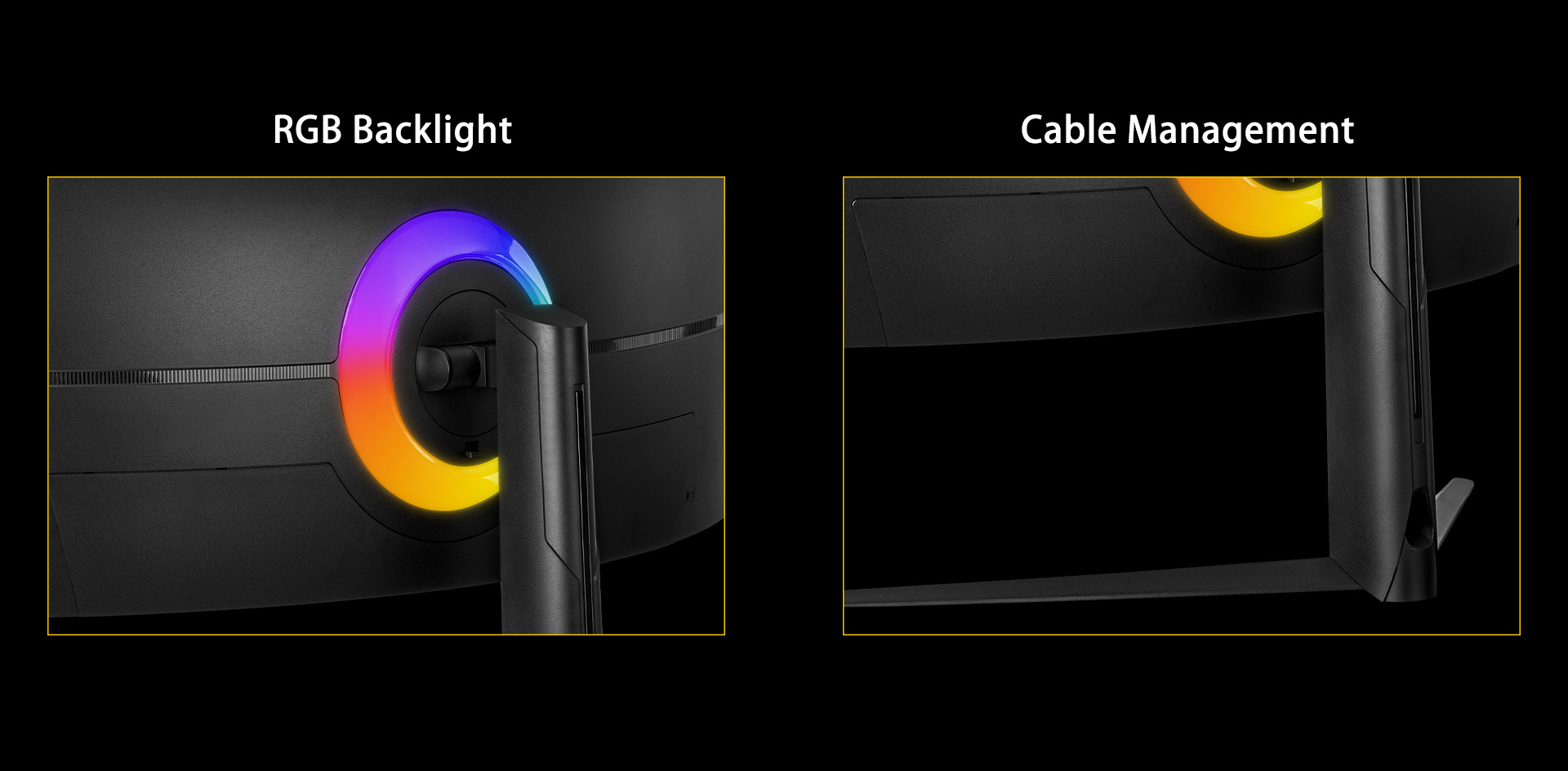
Other nice features include the dynamic RGB ring on the monitor's rear and an ergonomic stand with a built-in cable management tray. For those using aftermarket arms, the monitor is compatible with standard 100x100mm VESA mounting.
Sega looks to have a very busy year ahead, as the company recently confirmed in its latest earnings report that it will have four ‘major new titles' releasing between April 2026 and March 2027.
According to Sega, these four games will be from its “mainstay IPs” but so far, none of these titles appear to have been announced. It is likely that a new major Sonic the Hedgehog game is amongst the titles on the list, as it has been four years since the release of Sonic Frontiers.
As VGC points out, other titles that have been announced but do not yet have release dates include the likes of Persona 4 Revival, Stranger than Heaven, a new Total War Warhammer game and Total War Medieval 3.
When Persona 4 Revival was announced last year, we ended up with a very short teaser trailer, so it is unclear if the game is far enough along in development to be considered amongst the four titles. Other major Sega IPs with new games in development include Crazy Taxi, Golden Axe, Streets of Rage and Alien Isolation.
Marvel Tokon: Fighting Souls, the new fighting game from Arc System Works, finally has a release date. However, despite several playable beta tests already happening, the full game won't be arriving for quite a while yet.
Due to the number of opportunities fans have had to try this game already, we had anticipated a first half of 2026 release date. However, Arc System Works is taking its time to ensure the full roster is balanced and all gameplay sequences are up to the best possible quality bar. As a result, Marvel Tokon: Fighting Souls isn't releasing until August 2026.
The new trailer for the game, released last night as part of the State of Play showcase, there will be 20 iconic Marvel characters available on the launch-day roster, all reimagined with Japanese style art. Post launch, there will be four additional characters released as DLC.
Some of the confirmed characters appearing in the game include Iron Man, Captain America, Storm, Doctor Doom, Spider-Man, Ghost Rider, Wolverine, Star Lord, Magik and Ms Marvel.
 Connexion