↩ Accueil

Vue lecture

TCL unveils 2026 monitor lineup with 1040Hz Mini LED and “OLED+” monitors

TCL held a major display showcase this week, debuting a suite of high-performance monitors that push the boundaries of refresh rate and panel technology. Leading the announcement is the company's first 1040 Hz Mini LED gaming monitor, alongside a premium 31.5-inch 4K OLED model designed in collaboration with Bang & Olufsen. While these units are initially launching in the Chinese market, they represent a significant leap in the “dual-mode” display trend.

The highlight of the event (via Leikeji) was TCL's new 31.5-inch OLED+ monitor, designed to compete directly with Samsung's latest QD-OLED offerings. This screen features a 4K resolution (3840 x 2160) at a 240 Hz refresh rate, but it also includes a “dual-mode” capability that allows it to reach 480 Hz at 1080p. TCL is marketing this as “OLED+” because of its vertical sub-pixel layout, which aims to solve common text clarity issues and reduce the “purple tint” glare typically found on older OLED panels. The display boasts a 1300-nit peak brightness, 10-bit colour depth, a near-instant 0.03 ms G2G response time, and a premium audio system co-designed by Bang & Olufsen.
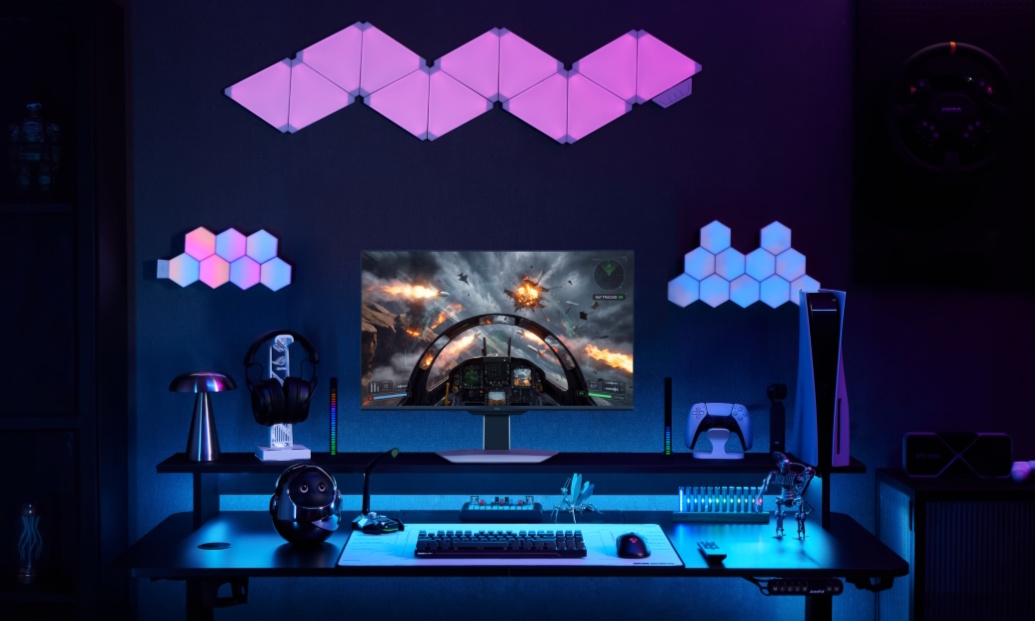
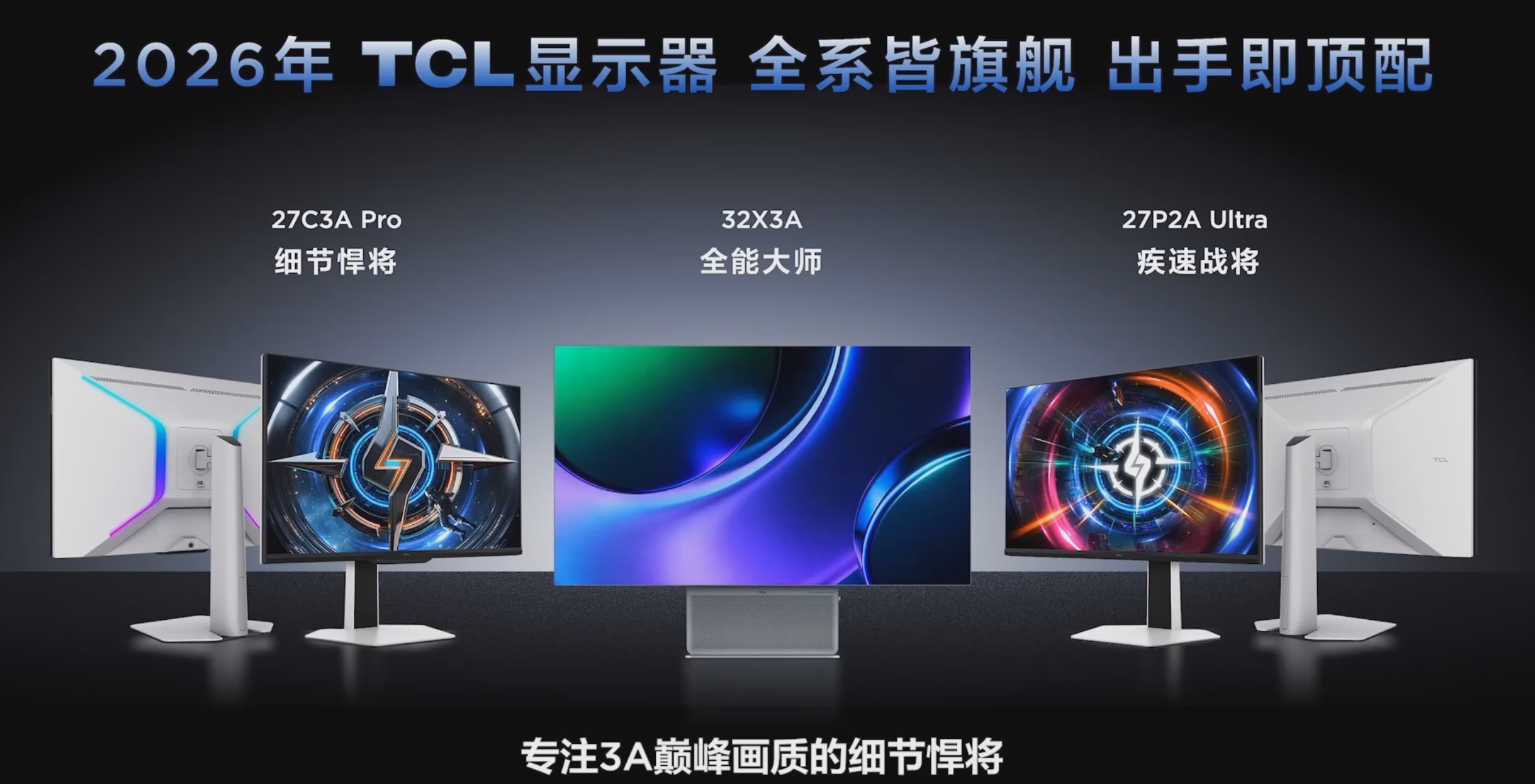
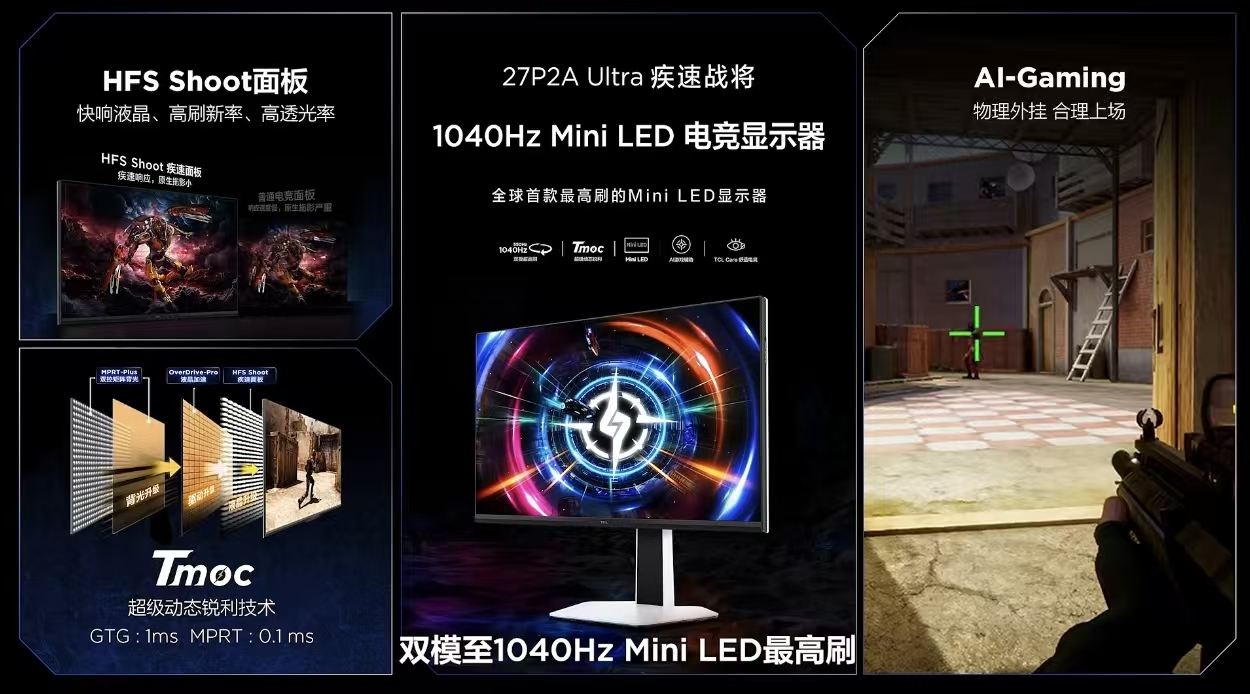
For esports enthusiasts, TCL introduced the 27P2A Ultra Mini LED monitor that sets a new industry standard for speed. While its native resolution is 1440p at 550 Hz, the dual-mode function enables it to reach a staggering 1040 Hz at 720p. This monitor uses TCL CSOT's proprietary HFS (IPS-type) panel and “Tmoc Super Dynamic Sharpness” tuning to ensure motion remains clear even at such extreme frame rates, promising a 1ms G2G response time spec and 0.1ms MPRT. The specific number of dimming zones remains undisclosed.

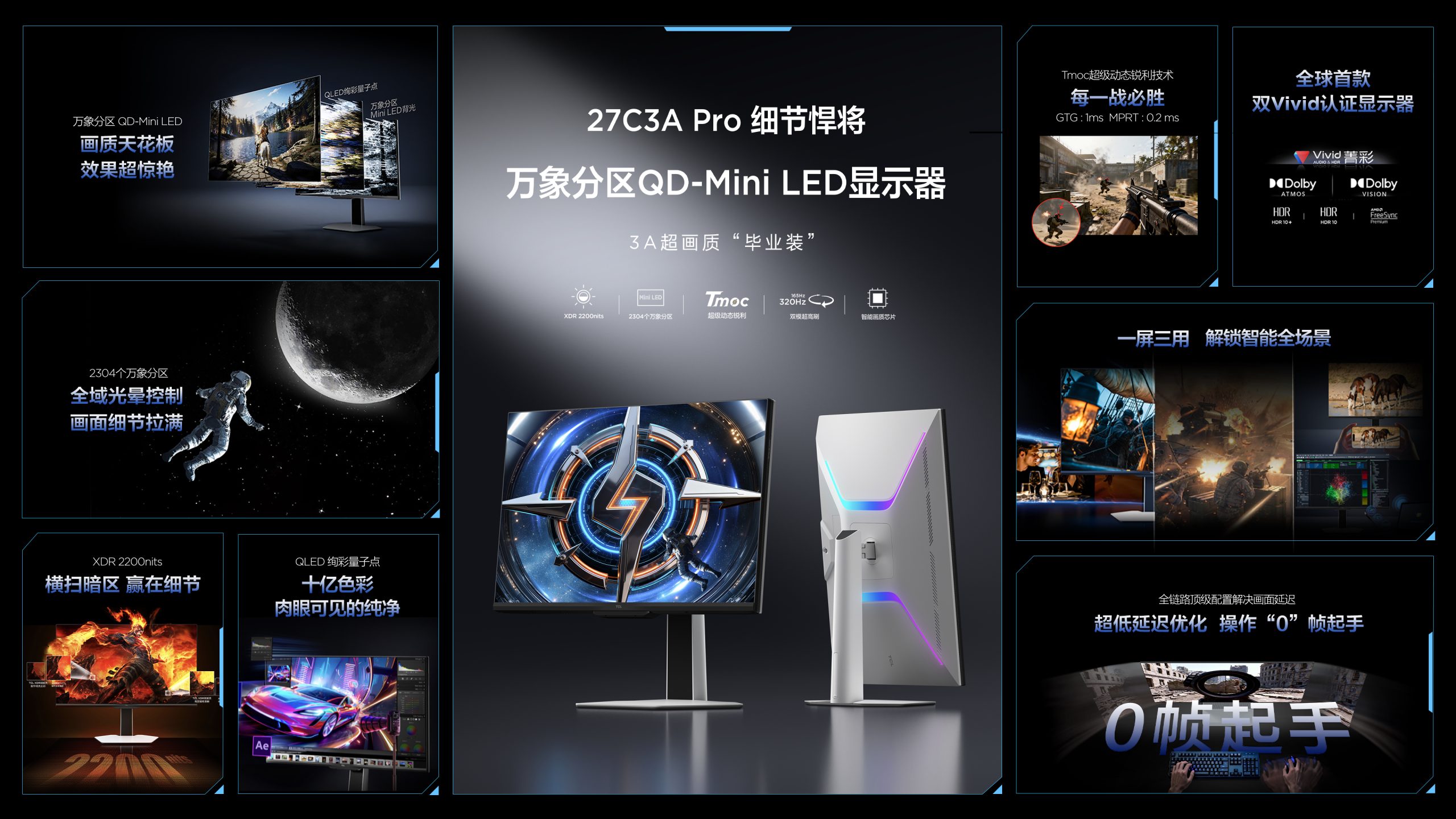
TCL also expanded its mainstream offerings with the 27-inch 27C3A Pro, a more affordable HFS display. The 27-inch model delivers a 4K resolution at 165 Hz (switching to 320 Hz at 1080p) and features 2304 local dimming zones. This provides an exceptional 2200-nit peak XDR brightness, paired with the 1 ms G2G response time spec, a 0.2 ms MPRT spec, and 10-bit colour depth.

Pricing for the P2A Ultra is still undisclosed, but the X3A will cost 5999 yuan, and the 27C3A Pro (£649) will cost 3199 yuan (£346).

KitGuru says: Which of these three new TCL monitors looks the best fit for you?

The post TCL unveils 2026 monitor lineup with 1040Hz Mini LED and “OLED+” monitors first appeared on KitGuru.
  •  

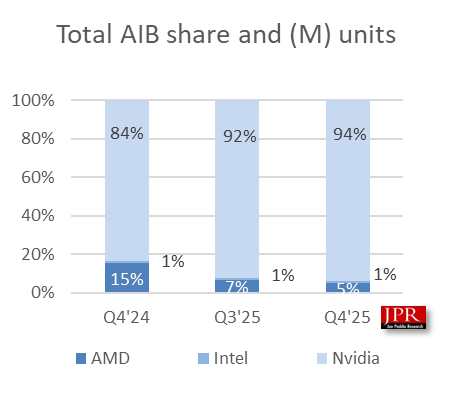
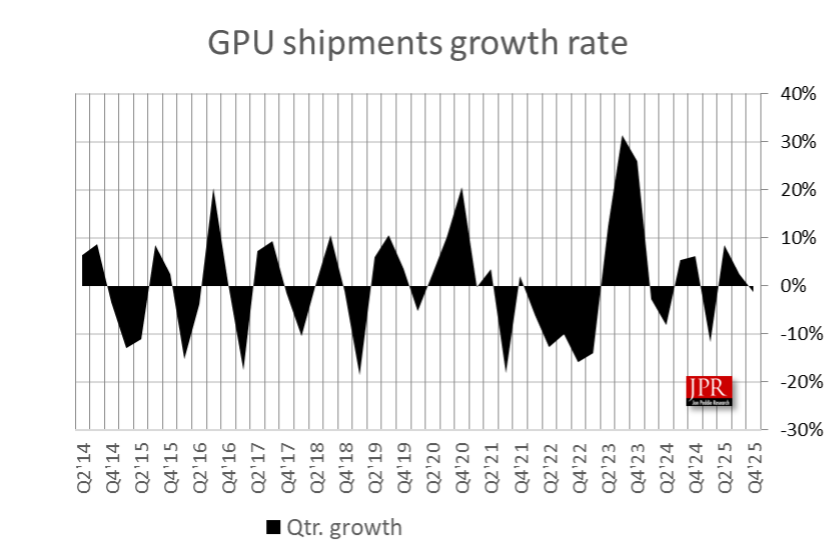
Analysis shows Nvidia GPUs represented about 94% of shipments in Q4 2025

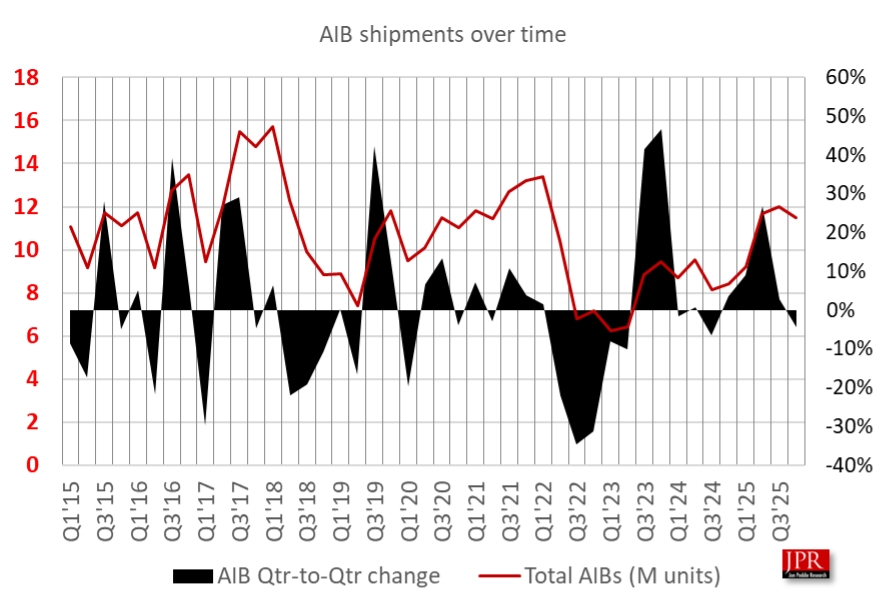
The latest Jon Peddie Research (JPR) report for Q4 2025 paints a picture of a GPU market increasingly defined by a total Nvidia monopoly and a looming crisis for budget-conscious gamers. According to the data, Nvidia now controls a staggering 94% of the Add-In Board (AIB) market, up 10 points from the previous year.

In contrast, the same report claims AMD has plummeted to 5% market share, a 10-point YoY decline. As for Intel, it remains static at a marginal 1%. This shift comes as total AIB shipments fell to 11.48 million units, dropping 4.4% from the previous quarter and signalling a contraction in the consumer desktop space.

Image credit: JPR

The report highlights a growing “bloodbath” in 2026 regarding GPU pricing and availability. While AIB shipments technically increased by 36% compared to the past year, the market is being stifled by rising DRAM prices, global supply chain instability (supply-demand ratio, tariffs, etc.), and more advanced integrated graphics. The ongoing memory shortage is likely the primary culprit, with manufacturers diverting precious GDDR7 and GDDR6X supplies to high-margin AI and enterprise hardware, leaving the consumer gaming segment to fight over scraps. This has led to widespread scalping and price hikes, effectively making the sub-$500 mainstream gaming PC a dying breed.

The broader PC ecosystem is feeling the squeeze as well. While CPU shipments remained relatively healthy at 21 million units for the quarter, the overall “attach rate” of GPUs in desktop PCs dropped to 55%, a 12.3% decrease. This suggests that while people are still building or buying PCs, a growing number of users are opting to skip a dedicated graphics card entirely due to prohibitive costs. With all this taken into account, JPR predicts that in 2026, the PC and AIB markets will decline by “almost 10%”.

KitGuru says: Nvidia continues to boom thanks to the AI gold rush. 

The post Analysis shows Nvidia GPUs represented about 94% of shipments in Q4 2025 first appeared on KitGuru.
  •  

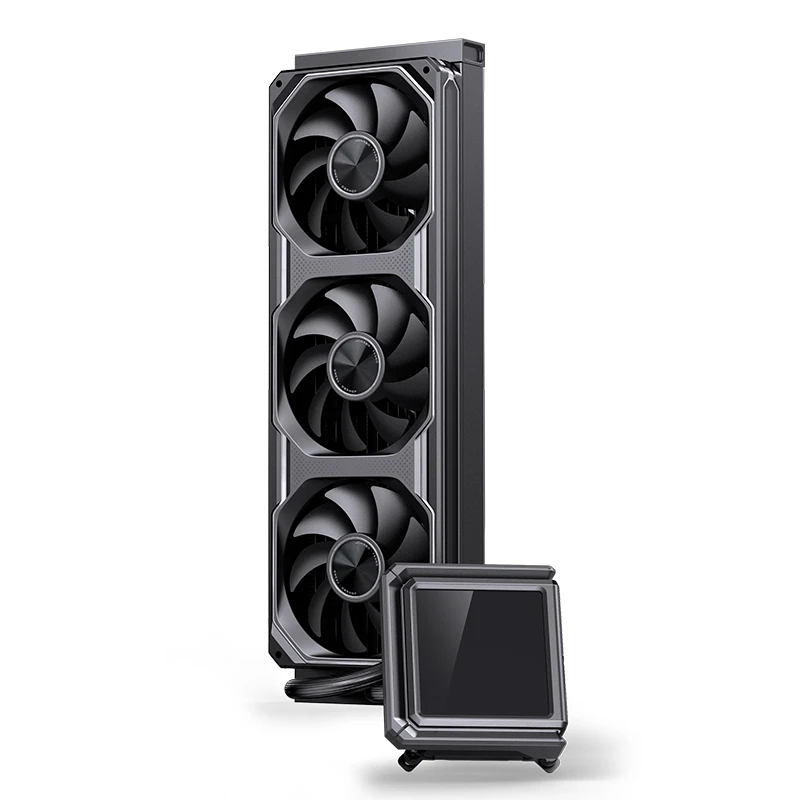
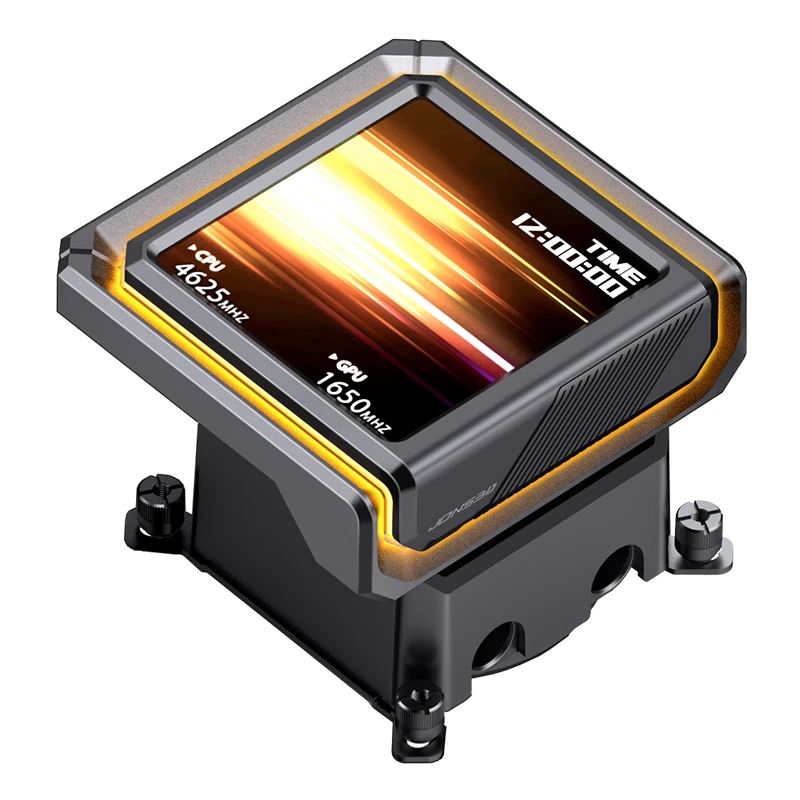
Jonsbo launches TX-360 AIO with integrated 3.95-inch LCD

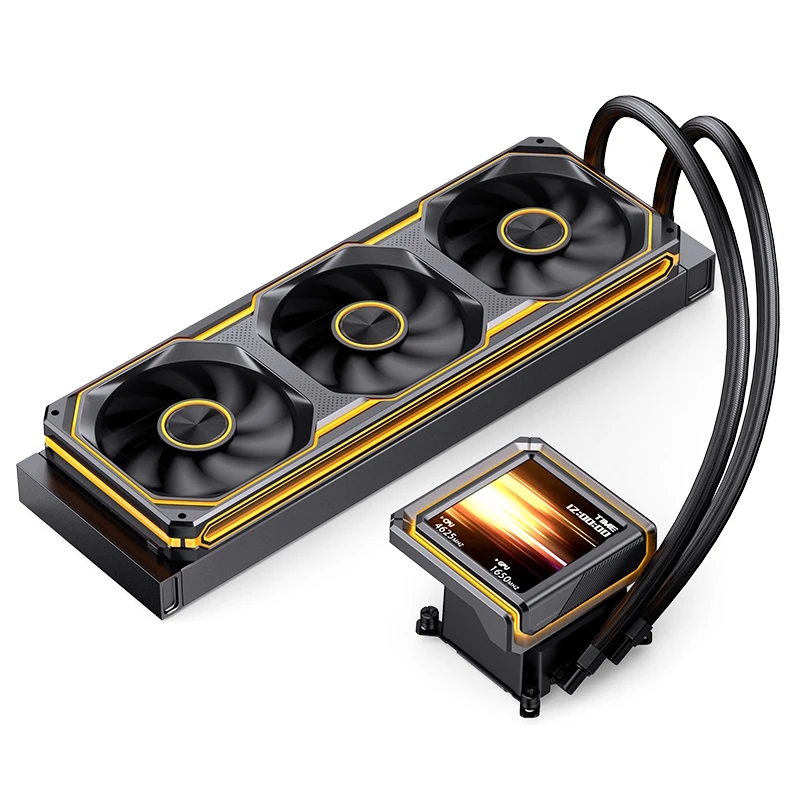
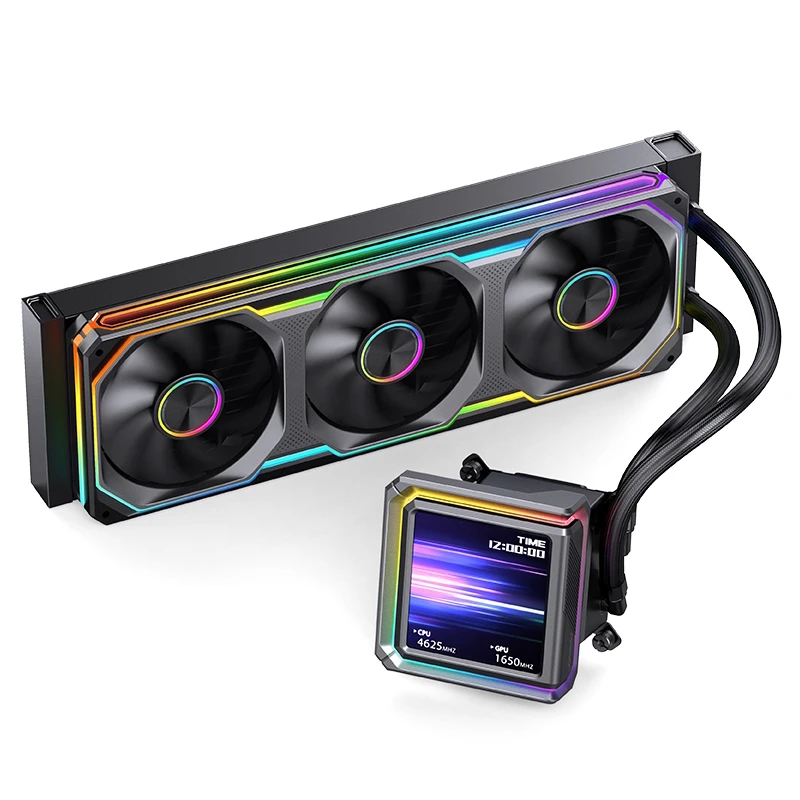
Jonsbo is maintaining its rapid release pace with the debut of the TX-360 AIO liquid cooler. This new flagship cooling solution leans heavily into current aesthetic trends, featuring a high-resolution circular screen on the pump block and an elaborate LED lighting system across its triple-fan array. Following the same design language as Jonsbo's X, D, and BO series cases, the TX-360 offers deep customisation options for both performance monitoring and visuals.

The TX-360 features a 3.95-inch LCD integrated into the pump head. According to Cowcotland, the screen, with a resolution of 480 x 480 and a brightness of 450 nits, is managed via the Jonsbo-AIO software, allowing users to display real-time system metrics, custom images, videos, or clock widgets. In a clever bit of engineering, the screen assembly attaches magnetically to the water block using Pogo pins for data and power transmission. This modular design simplifies the mounting process and ensures a clean look without extra wires trailing from the pump head.

Unlike traditional AIOs with three separate fans, the TX-360 uses a unified triple-fan frame that houses three 120 mm fans. This design reduces cable clutter by using a single output cable with PWM and RGB headers. The lighting is notably complex, with the fan blades featuring centred rings and the frame itself providing an infinite mirror effect when viewed from the side. Performance-wise, the fans operate between 700 and 2,400 RPM, delivering 62.4 CFM of airflow and 2.46 mmH2O of static pressure. While effective, Jonsbo notes a peak noise level of 37.3 dB(A).

While many manufacturers are beginning to sunset support for legacy hardware, Jonsbo is taking a universal approach. The TX-360 includes mounting kits for a wide range of sockets, including AMD AM4 and AM5, as well as Intel 115x, 1200, 1700, and the latest LGA-1851 for Arrow Lake processors.

KitGuru says: Although pricing isn't known yet, Jonsbo usually doesn't stretch its prices too much. Still, considering the feature set and looks, it will likely cost more than an entry-level AIO cooler from well-known brands.

The post Jonsbo launches TX-360 AIO with integrated 3.95-inch LCD first appeared on KitGuru.
  •  

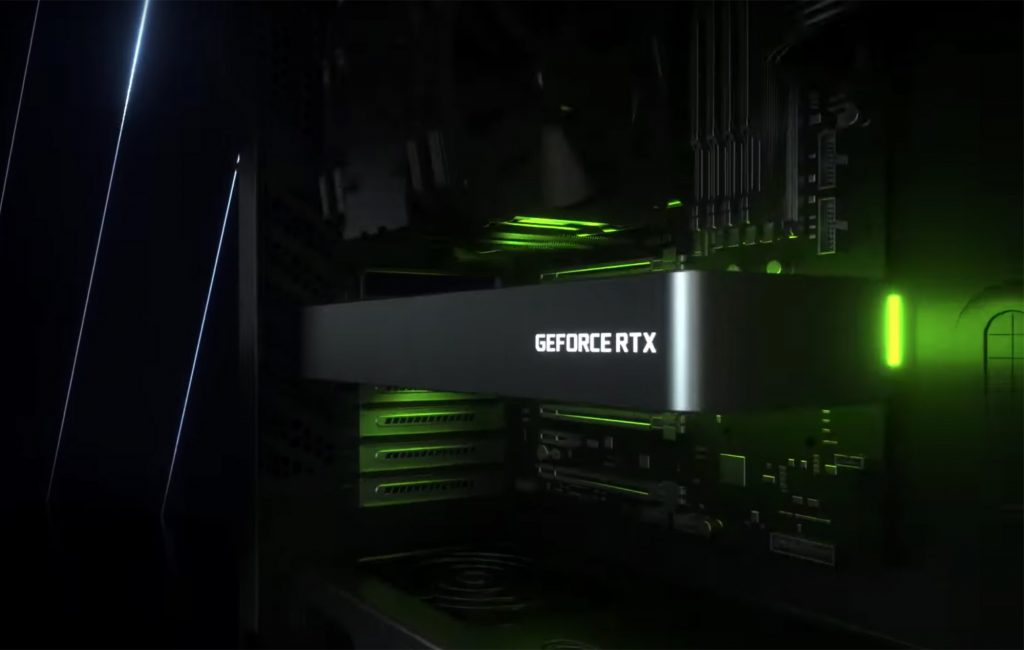
Rumour claims Nvidia might revive the RTX 3060 amid memory shortage

The legendary GeForce RTX 3060 is reportedly set for a mid-March 2026 revival, nearly five years after its initial debut. According to reports, Nvidia is preparing to restock its partners with “installation kits” (GPU die and memory bundles) for the Ampere-based card.

Why the RTX 3060 specifically? Well it is speculated that Nvidia might be facing a ‘node bottleneck', with current Blackwell and Ada GPUs relying on TSMC's 4N node, which is also being used for high-margin AI accelerator GPUs. By contrast, the RTX 3060 uses Samsung's 8nm process node, so there is likely to be more production capacity available for something like an RTX 3060, versus a newer-gen GPU. These older cards also use GDDR6 memory, which may be easier to source right now versus current-gen GDDR7 modules.

According to the Board Channels forum post (via VideoCardz), it remains unclear whether Nvidia will favour the original 12GB (192-bit) model or the later 8GB (128-bit) variant. Providing a fresh supply of 12GB cards would allow Nvidia to offer a “value” alternative that can still handle modern VRAM-heavy titles at 1080p.

If this all proves true, then it is expected that board partners will reuse existing cooling shrouds and PCB designs to bring a fresh wave of RTX 3060 graphics cards to market quickly. For gamers, the success of this relaunch will hinge entirely on pricing. With the RTX 5050 starting at £230, the revived RTX 3060 would need to start below the £200 mark to be competitive against used hardware and other entry-level alternatives.

KitGuru says: In a normal year, a 5-year-old mid-range card returning to production would be seen as regression. However, with the global memory crunch, the entry-level price point is rising, making the RTX 3060 exactly what budget buyers need. 

The post Rumour claims Nvidia might revive the RTX 3060 amid memory shortage first appeared on KitGuru.
  •  

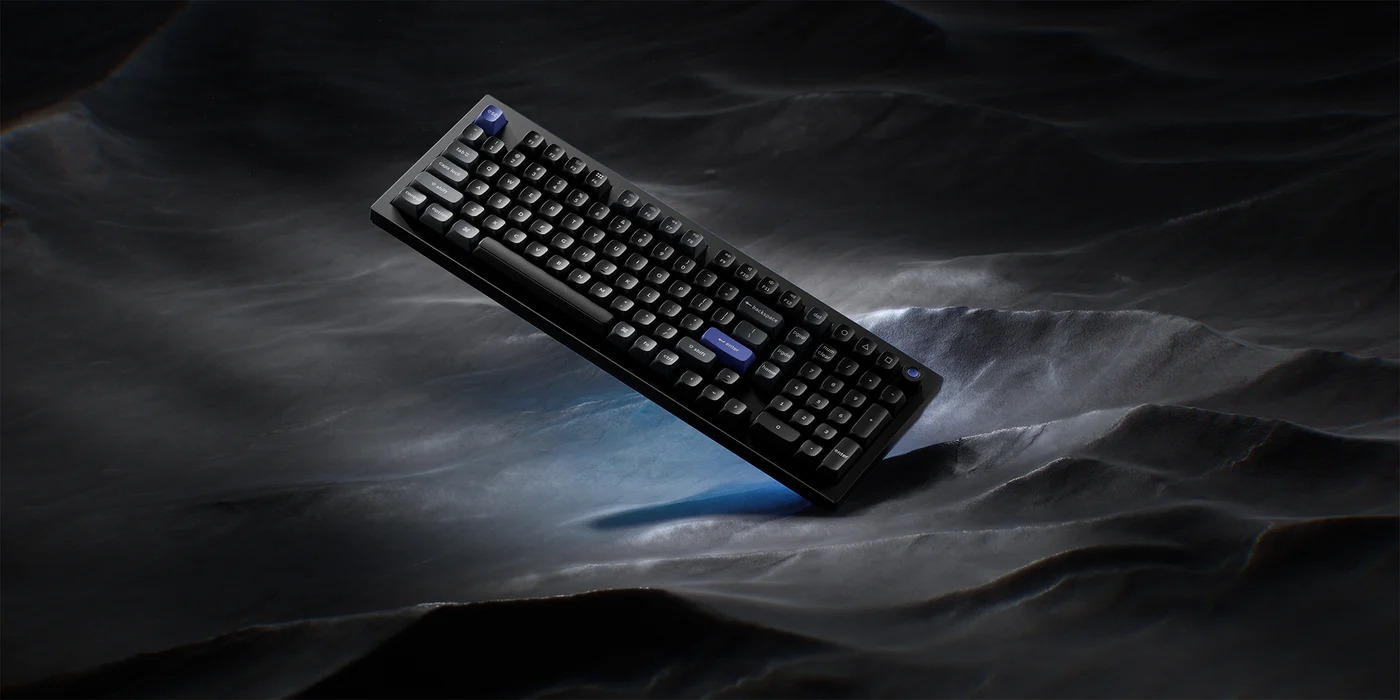
Keychron expands its hall-effect keyboard lineup with the Q5 HE and J2 HE keyboards

Keychron is growing its already enormous keyboard lineup with a couple more entries. In addition to the Q5 HE 8K, the latest addition to the Q HE 8K-series, the company is also introducing its cheapest HE 8K keyboard, the J2 HE 8K.

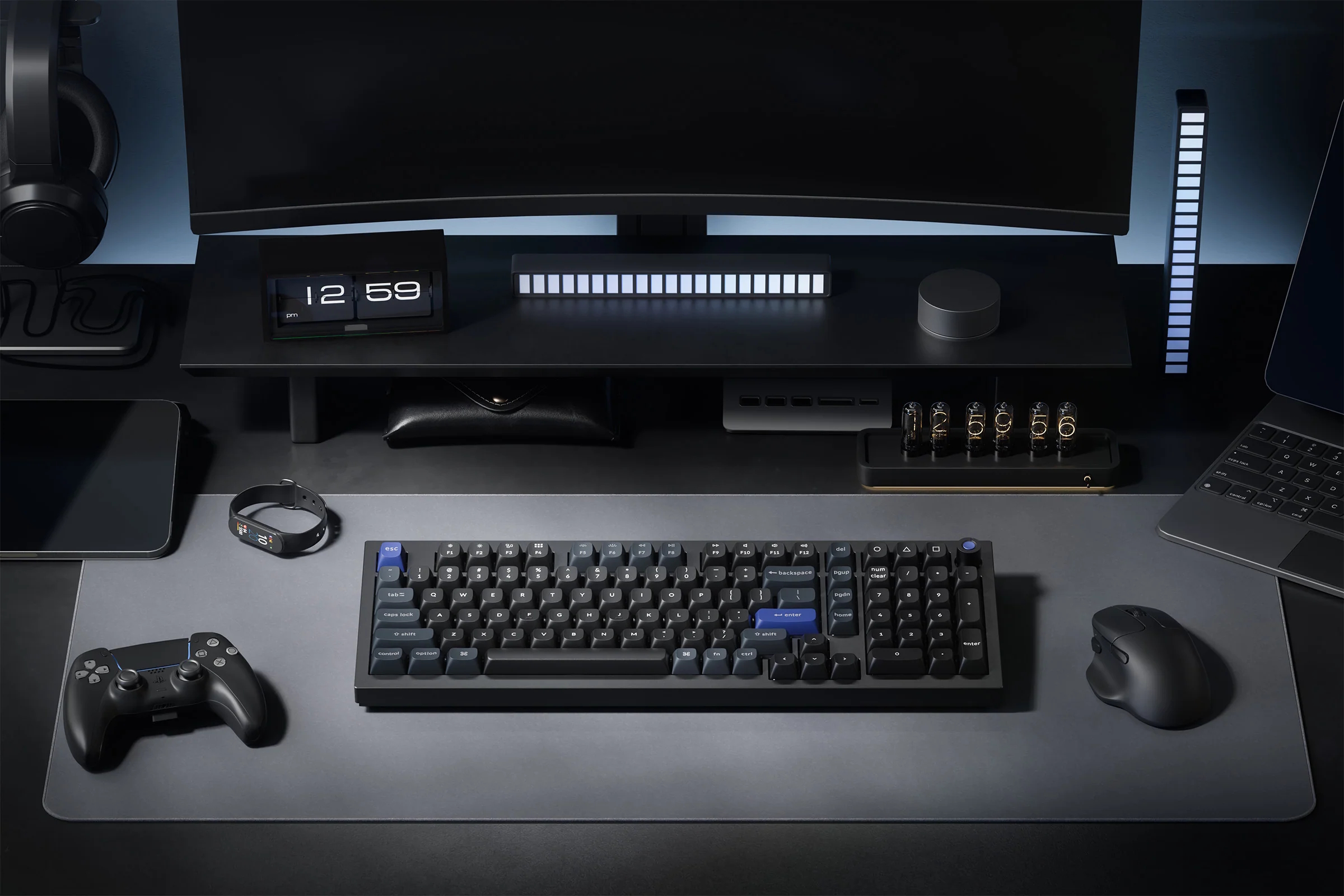
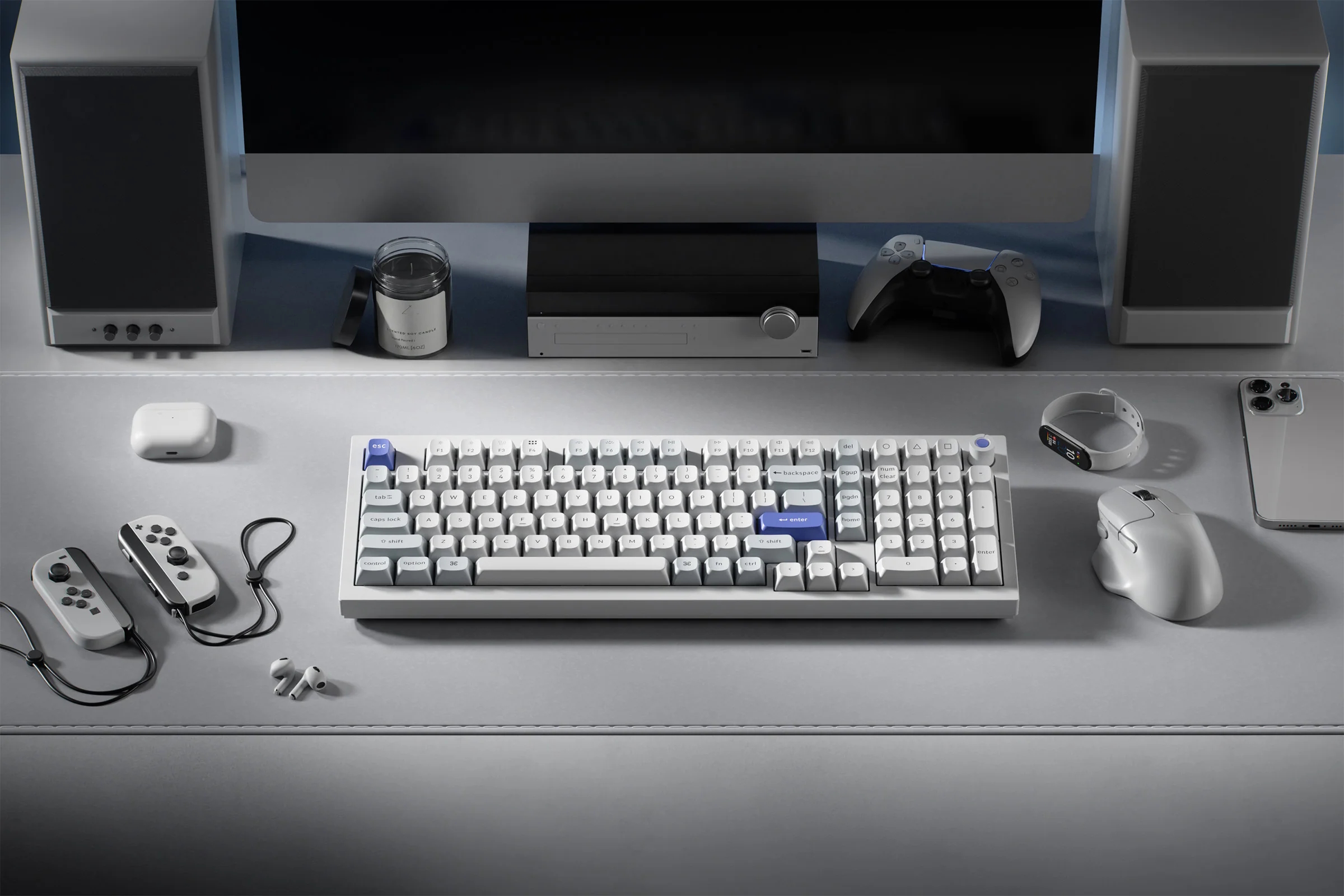
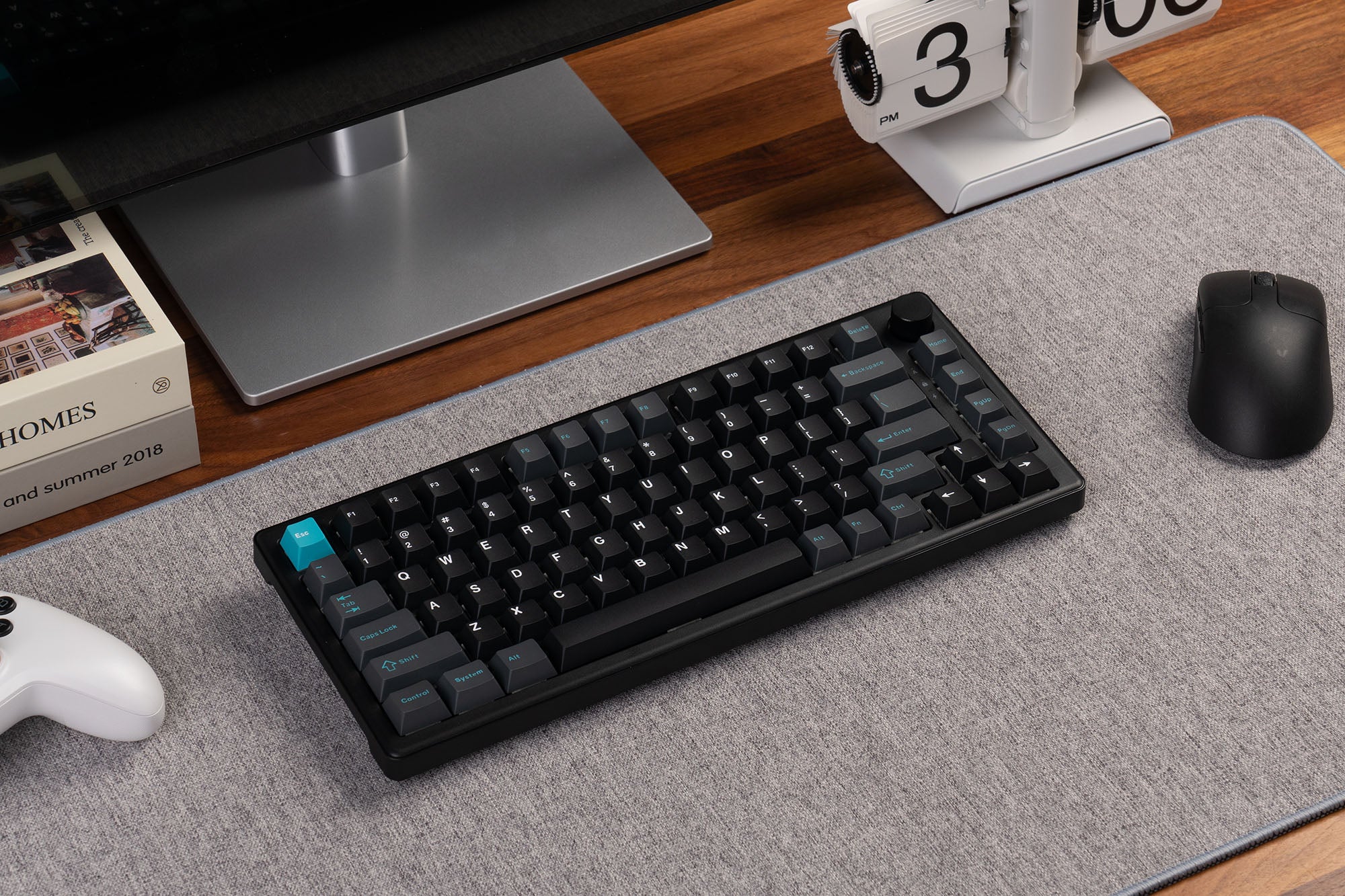
Priced at $239.99, the Q5 HE 8K (via TechPowerUP) targets gamers who require a Numpad but prefer a more streamlined footprint than a traditional full-sized board. The Q5 HE 8K is currently available in black and white and features a compact 1800 layout, which condenses the board to 408 mm in length. Despite its smaller size, it retains a full-sized zero key on the numpad and adds a programmable knob and a row of dedicated macro keys. The board uses Keychron's Magnetic Lime switches and OSA double-shot PBT keycaps, and features south-facing RGB lighting and an 8K polling rate. Because this is a wired-only model, Keychron was able to reduce the front height to 20.6 mm, improving ergonomics for long gaming sessions.

On the software side, the Q5 HE 8K is fully compatible with the Keychron Launcher web app, enabling advanced analogue features such as Rapid Trigger, adjustable actuation points, Snap Click, Last Key Priority (LKP), and Dynamic Keystrokes (DKS). The keyboard also features hardware-level toggles for OS switching (macOS/Windows) and profile selection, ensuring that your custom macros and settings are accessible across different systems without needing background software. As per usual for a keyboard at this price, the Q5 HE is hot-swappable.

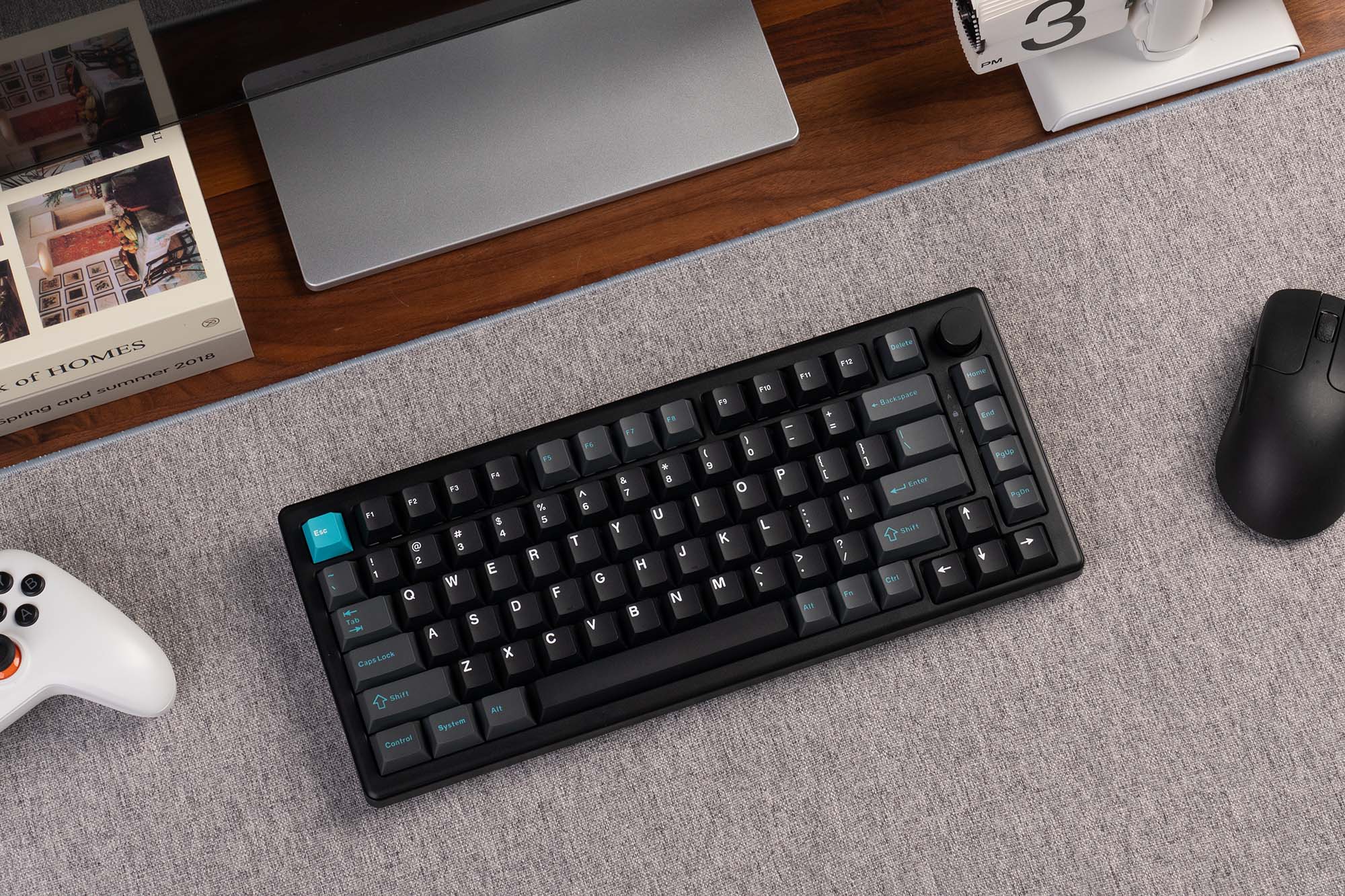
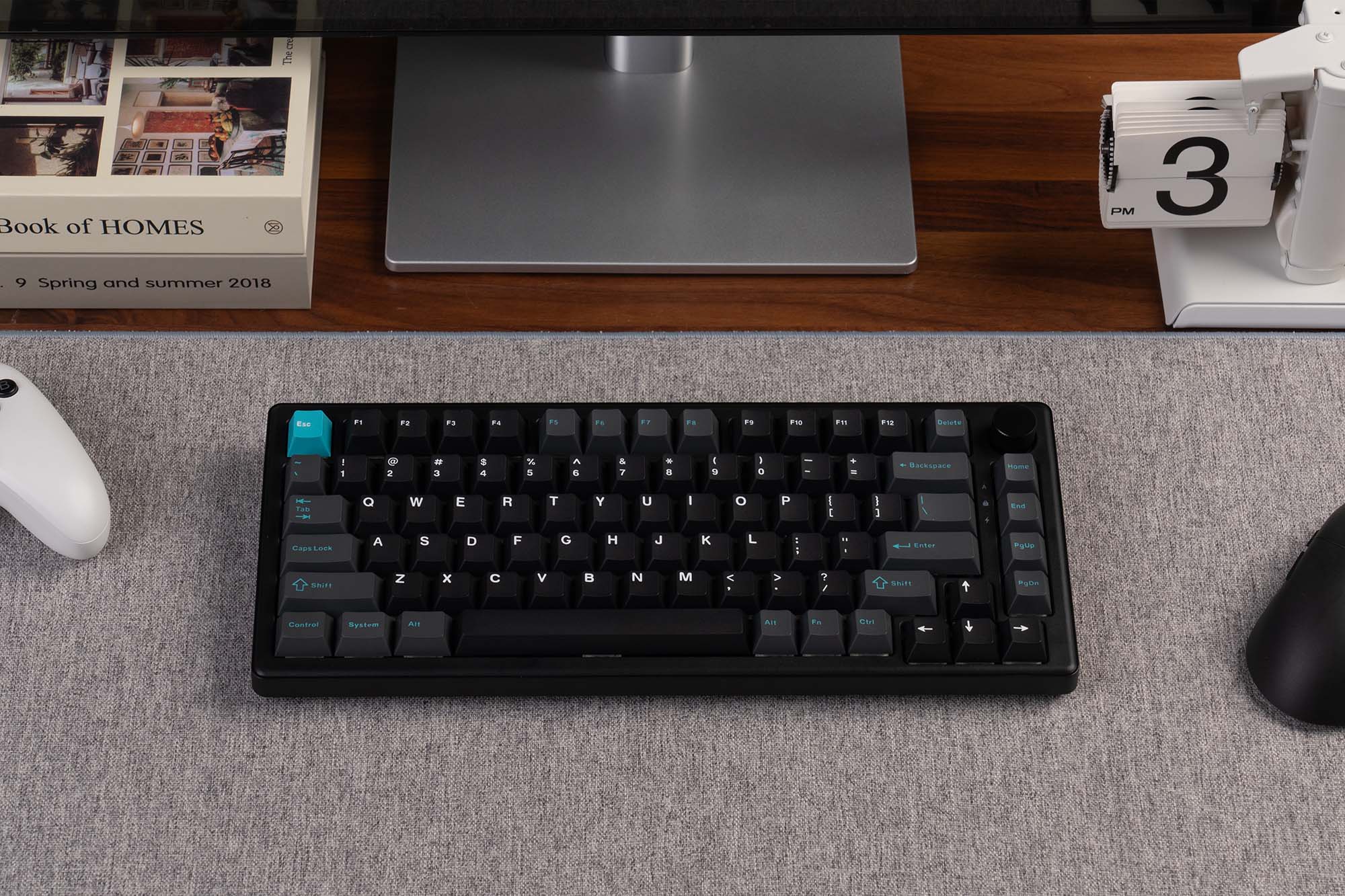
Moving on to the J2 HE 8K, this is a 75% wired keyboard that aims to democratise high-end magnetic switch technology. Priced at just $99.99, the J2 HE 8K brings the performance of its premium Q HE series to a much more accessible price bracket. While the flagship Q-series models feature heavy CNC aluminium chassis, the J2 HE 8K utilises a more streamlined plastic construction to maintain its competitive edge without sacrificing the core internal hardware that defines the 8K experience.

Like the Q5 HE 8K, the J2 HE also comes with hot-swap sockets, double-shot PBT keycaps, and Lime Magnetic switches, allowing it to offer some of the analogue features of the more expensive model, including adjustable actuation points. Also like the Q HE 8K series, the J2 HE 8K is a wired-only device with an 8K polling rate. This design choice ensures the stability and bandwidth required to maintain a consistent 8K signal while keeping the front height lower for better ergonomics.

Customisation is handled through the Keychron Launcher web app, removing the need for bloatware and allowing users to rebind keys, program macros, and configure other settings directly in a browser. The keyboard also features the signature Keychron hardware OS switch, enabling seamless transitions between macOS and Windows layouts. Despite the budget-friendly price, it still includes high-end features like south-facing RGB lighting and the ability to emulate controller inputs.

KitGuru says: Of the two new Keychron keyboards, which one looks the most interesting to you?

The post Keychron expands its hall-effect keyboard lineup with the Q5 HE and J2 HE keyboards first appeared on KitGuru.
  •  

Reikon Games announces Ruiner 2

Polish developer Reikon Games has unveiled Ruiner 2, the sequel to its 2017 cult-classic twin-stick shooter. While the original was a focused, brutal blast of cyber-violence, the sequel is aiming for a broader scope, shifting into a cyberpunk action RPG.

Returning players will find themselves back in Rengkok, but this time the gameplay is built around the Shell System. Rather than being locked into a single class, you play as a hacker capable of hijacking the bodies of fallen heroes. These bodies, also known as Shells, allow you to swap between different combat styles on the go, adapting to every situation.

The depth of the RPG systems in Ruiner 2 appears to be a love letter to theory-crafters. Each Shell comes with four unique skills, each featuring branching progression nodes that fundamentally alter how the ability functions. Balancing your build is a game of logistics, as every piece of equipment draws from a dedicated resource pool of power, CPU, and memory. With no “free” gear slots, every upgrade is a direct trade-off. This is further supported by the Neural Network, a persistent hacker-level passive tree that provides buffs across your entire roster of Shells.

Combat has been redesigned to favour high-speed synergies, whether you are playing solo or with friends. In single-player, you control a team of three Shells simultaneously, switching between them to chain abilities into devastating loops. The sequel also introduces three-player online co-op, where a full team can bring up to six Shells into the fray, creating screen-clearing combos that wouldn't be possible alone. For those who live for the grind, Reikon has confirmed an “endless endgame” featuring escalating tiers of difficulty and loot, ensuring that the only ceiling on your progression is the efficiency of your build.

The minimum system requirements have already been published and can be found below:

  • OS: Windows 10 64-bit
  • Processor: AMD Ryzen 5 2600 / Intel Core i5-8400
  • Memory: 8 GB RAM
  • Graphics: NVIDIA GeForce GTX 1060 (6GB) / AMD Radeon RX 580 (8GB)
  • DirectX: Version 12
  • Network: Broadband Internet connection
  • Storage: 10 GB available space

KitGuru says: Reikon Games is taking a bit of a gamble by pivoting from a twin-stick shooter to an ARPG, but the Shell System looks like a good fit for the franchise. Have you played the original Ruiner? Were you hoping it would get a sequel?

The post Reikon Games announces Ruiner 2 first appeared on KitGuru.
  •  

Mario Kart World seemingly getting new Battle Mode additions in future update

Though Mario Kart World served as a strong launch title for the Nintendo Switch 2, the game has received some criticism for its relative lack of content, especially when compared to the last-gen Mario Kart 8 Deluxe. While World has gotten a few notable updates post-launch, it appears as though Nintendo accidentally leaked the fact that the game is set to receive a pretty significant addition to its Battle Mode.

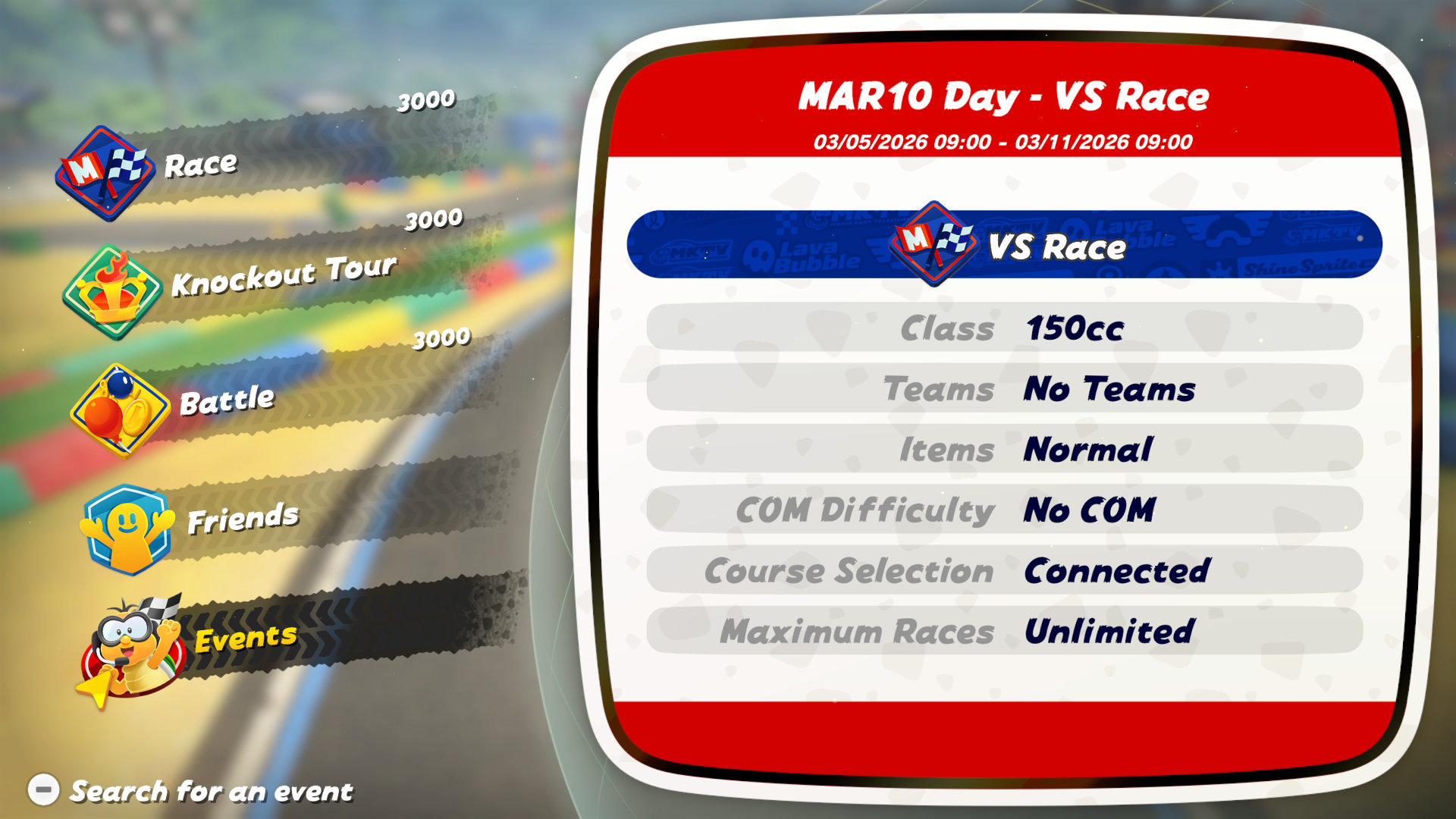
In celebration of their upcoming Mario Day (March 10th) Nintendo announced a bunch of different sales, deals and in-person events.

While nothing new for the console maker, one of the screenshots pertaining to Mario Kart World’s MAR10 events showed an updated Battle Mode icon which seems to suggest that Bob-Omb Blast could arrive as a new option.

Mario Kart Nintendo

Given that Mario Kart World’s Battle Mode in particular is rather barren content-wise, adding Bob-Omb Blast should aid in its replayability.

As mentioned, Mario Kart World has gotten some updates of note since its release, however a majority of the changes were more mechanical and structural in nature – less so about bringing in new content.

As such, here’s to hoping that Nintendo is indeed planning to bring Bob-Omb Blast to MK World; the first of many new potential additions. We will have to wait and see.

Discuss on our Facebook page HERE.

KitGuru says: What did you think of Mario Kart World at launch? How’s Nintendo’s post-launch support been so far? What are your most requested additions? Let us know down below.

The post Mario Kart World seemingly getting new Battle Mode additions in future update first appeared on KitGuru.

  •  

Kena: Bridge of Spirits officially comes to Switch 2 this Spring

Kena: Bridge of Spirits was the impressive debut title from studio Ember Lab. Released back in 2021 for PlayStation and PC, the game resonated with many thanks to its gorgeous visuals, fun combat and overall vibes. Eventually finding its way to Xbox, the title is now set to complete its multi-platform journey as Kena: Bridge of Spirits officially comes to the Switch 2 this Spring.

Making the announcement via a brief trailer, the team at Ember Lab confirmed that Kena: Bridge of Spirits is officially coming to the Switch 2 some time this Spring, though no concrete date was provided.

That said, when it does arrive, the game will feature all of its previously-released Anniversary DLC alongside other prior post-launch updates such as its New Game Plus mode.

In terms of technical specs, the team did not disclose any specifics. That said, the trailer was released in just 1080p and 30fps and so it’s possible that the title will be limited in this regard.

For context, the PS5 version offered two modes, a 30fps option running at 4K (for the most part) and a 60fps option landing around 1440p – then reconstructed up to 4K. For a more apt comparison, the PS4 Pro version of Kena was limited to 30fps while operating at a dynamic 1440p.

Regardless, Kena: Bridge of Spirits is a fun and pretty game worth playing irrespective of what platform you’re on, and so it is exciting to see the title finally coming to Nintendo’s platform. It will be interesting to see whether the recently-announced sequel ‘Kena: Scars of Kosmora’ will find its way to Switch 2 eventually.

Discuss on our Facebook page HERE.

KitGuru says: What do you think of Kena: Bridge of Spirits? Does framerate matter for a game like this? Let us know your thoughts down below.

The post Kena: Bridge of Spirits officially comes to Switch 2 this Spring first appeared on KitGuru.
  •  

LEGO reportedly ‘mandated’ that Horizon Adventures launched on Switch alongside PlayStation

In recent days we’ve heard a ton of insider leaks and rumours claiming that Sony is moving away from its multi-platform strategy, with its first-party single player games no longer being ported over to the likes of the PC. One of the most interesting multi-platform releases was for LEGO Horizon Adventures – a title which was launched day-and-date on the Nintendo Switch alongside PlayStation. Though seemingly an out-of-character decision at the time, it appears as though the Switch port was mandated by LEGO, and was not Sony’s choice.

Following the recent reports which claimed that Sony would no longer be bringing its first-party PlayStation titles to additional platforms (live-service games excluded), game dev interviewer ‘Kiwi Talks’ took to Twitter to reveal some behind the scenes details on the LEGO Horizon Adventures deal, claiming that: “Lego Horizon only released on Switch because it was mandated by the Lego Group.”

When asked whether this was speculation or based on obtained knowledge, Kiwi claimed “no it's not an educated guess, it's info I know. Sony views Nintendo as direct competition.”

PlayStation Horizon

As mentioned, the release of LEGO Horizon Adventures on Switch was interesting, with it being the only non-live-service title from the company to land day-and-date on another platform – with most of its previous ports coming years after their PlayStation debut.

What this means for future potential collaborations such as this is unknown, with Sony reportedly wanting to go back to full PlayStation exclusives. Regardless, while bringing LEGO Horizon Adventures to Switch did make sense, its release was still quite novel at the time. It seems we now know why.

Discuss on our Facebook page HERE.

KitGuru says: What did you think of LEGO Horizon Adventures? Does this mean we are unlikely to get more PlayStation-LEGO projects? Let us know your thoughts down below.

The post LEGO reportedly ‘mandated’ that Horizon Adventures launched on Switch alongside PlayStation first appeared on KitGuru.
  •  

Assassin’s Creed Unity 60fps update reportedly also includes a hefty resolution bump

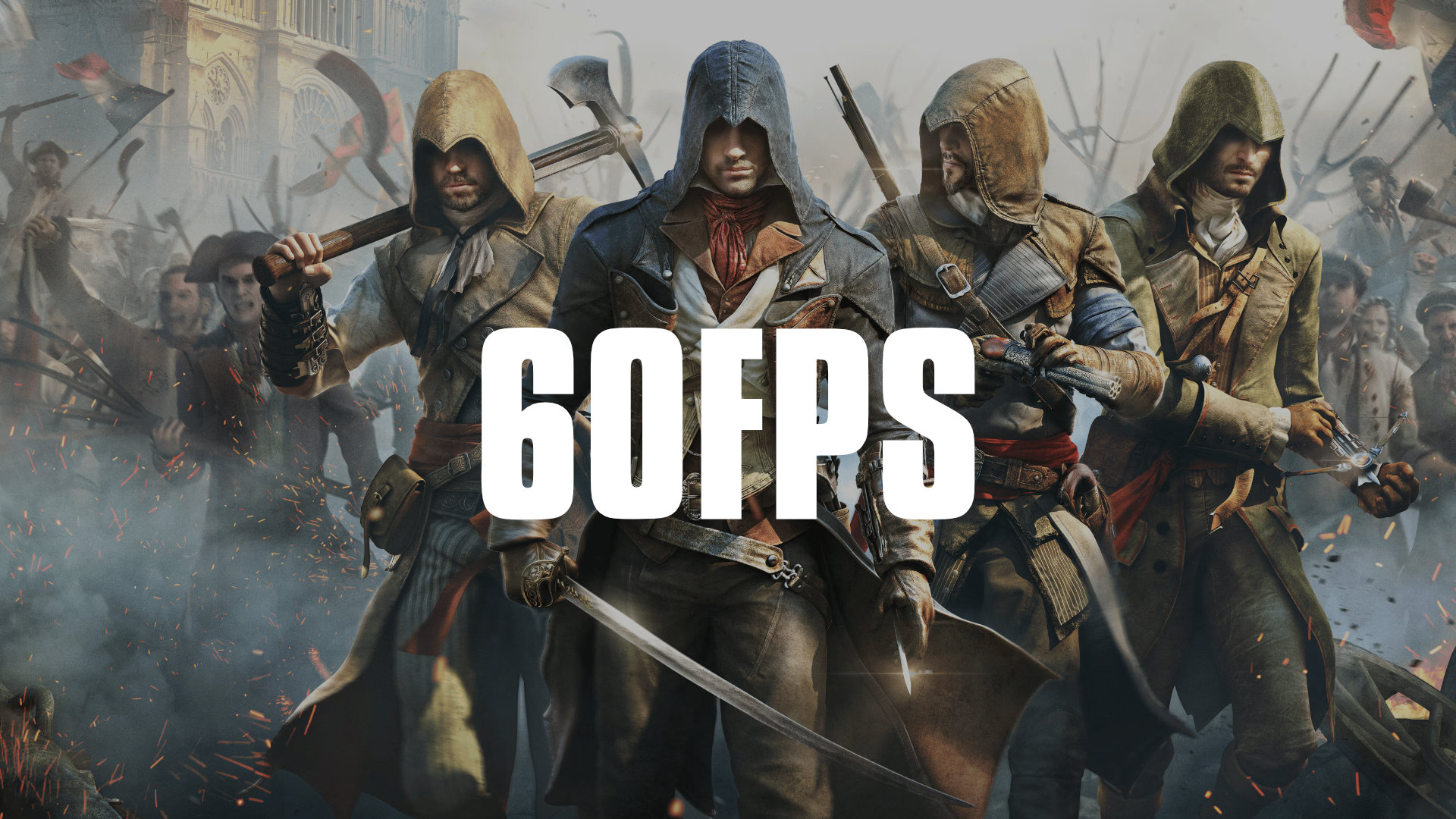
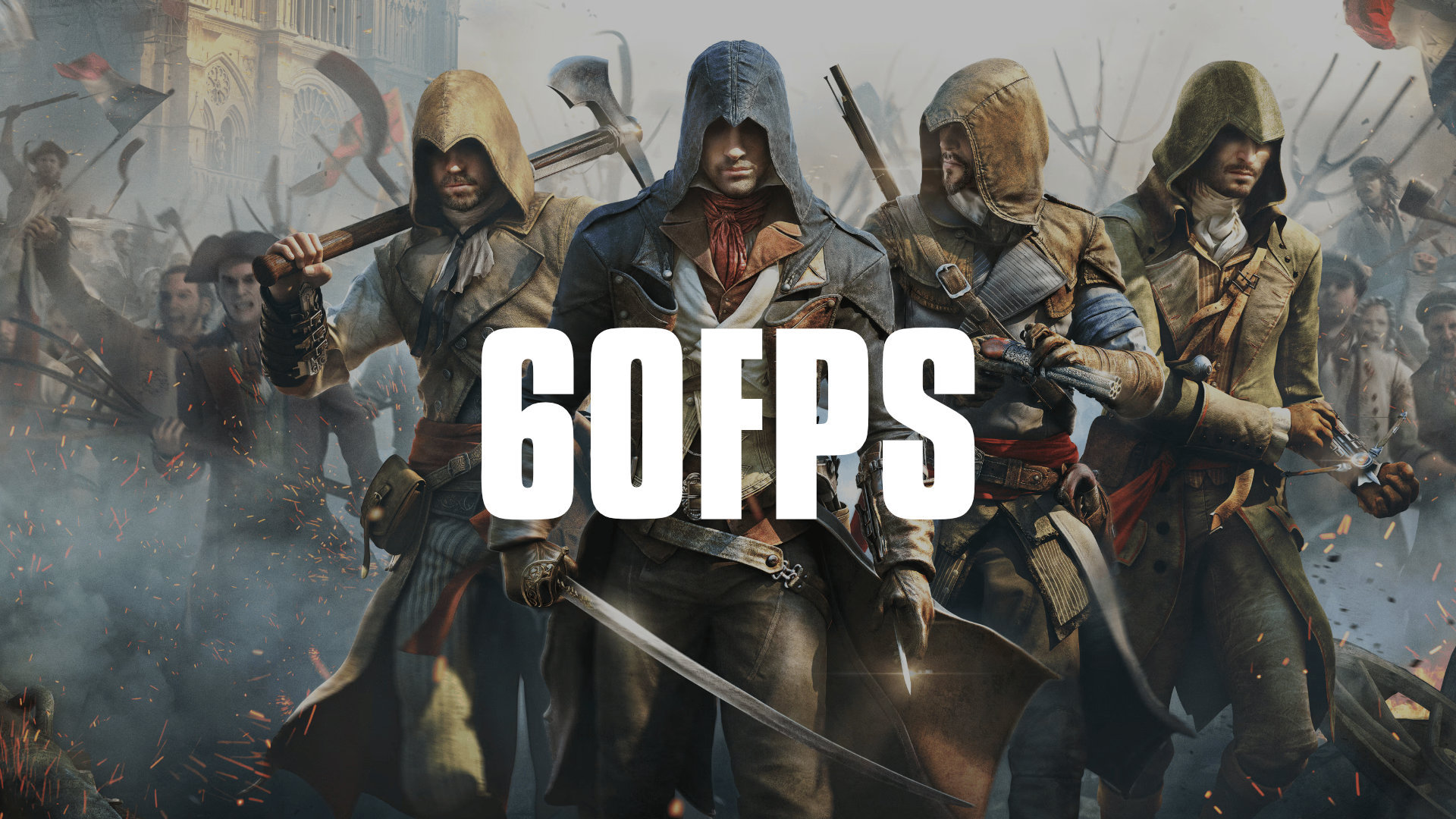
Ever since the launch of the PlayStation 5 and Xbox Series X|S, Ubisoft has slowly but surely updated a large majority of its last-gen titles with support for higher framerates on current hardware. The most recent title to receive such a benefit was Assassin’s Creed Unity. Interestingly, while the update only advertised a boost to 60fps, fans have noticed that the title appears to also include a couple other notable enhancements.

Following the surprise release of Assassin’s Creed Unity’s 60fps update, fans have been checking the title out and noticed that the game’s visuals appear much sharper than expected.

For context, the original AC: Unity ran at just 900p on last-gen consoles, and so it was expected that this would remain the case. That said, while not confirmed, many users have since claimed that the game is running at resolutions far exceeding the aforementioned 900p.

Unity 60fps

Unfortunately, it’s not all good news, with a similar issue seen in AC: Syndicate’s current-gen patch finding its way into Unity – that being the fact that cloth physics are still limited to 30fps. Given that the playable characters themselves are dripped out in various cloaks and hooded outfits, the disparity between the 60fps world and 30fps physics can be distracting.

Still, this update has been long-awaited, and with the game seeing more than just a 60fps boost, playing Assassin’s Creed Unity on current-gen consoles should be a rather refreshing experience.

Discuss on our Facebook page HERE.

KitGuru says: What do you think of Ubisoft’s current-gen support? Would you prefer to get proper next-gen versions as opposed to more rudimentary patches? Let us know down below.

The post Assassin’s Creed Unity 60fps update reportedly also includes a hefty resolution bump first appeared on KitGuru.
  •  

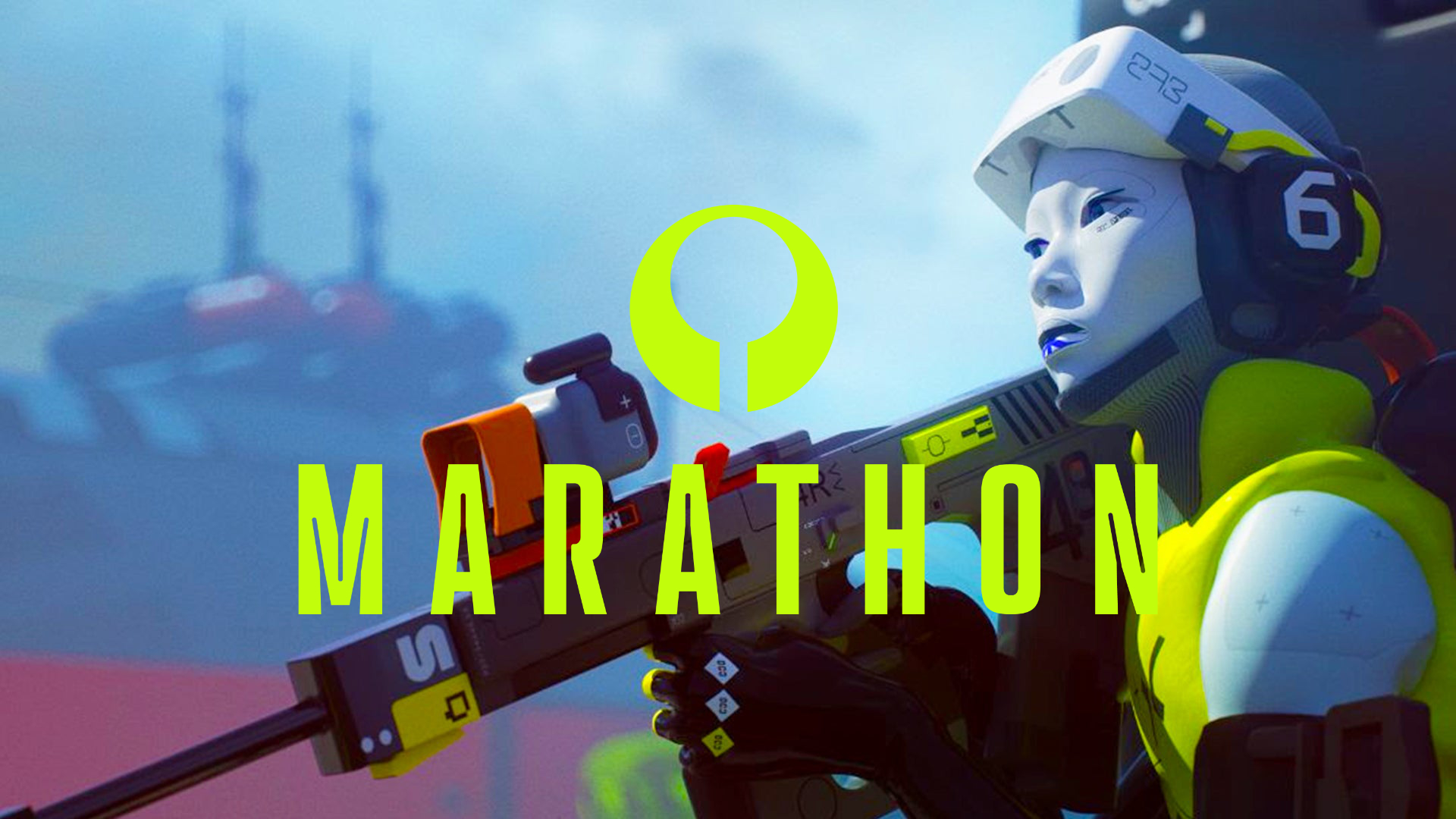
Marathon is off to a good start with ‘very positive’ Steam reviews

Last night Bungie officially launched Marathon, its first brand new game in close to a decade. The game appears to be off to a good start with positive user reviews on Steam, but has it been enough? 

Marathon has launched to a 91% positive user score on Steam, based on just shy of 5000 English language reviews. This is a great sign for Bungie, as there were concerns of a mixed or negative rating for the game, but it appears the studio has managed to stick the landing. As always with a live-service game though, launch is just the beginning, and Bungie will need to keep the pressure on with regular content updates to stop the player base from dropping off, as it has with Destiny 2 over the past year.

Marathon Bungie

At launch last night, Marathon managed to peak at just under 90,000 concurrent players on Steam and will have had many more players logging in on Xbox and PS5. While these are pretty good numbers for a launch, Bungie will be looking to see growth over the weekend as more players get time off work and school to play.

If that growth spurt doesn't hit, then Marathon will be quite a bit behind its closest rival, Arc Raiders, which had a peak player-count of over 460,000 players on Steam during its launch month, and still regularly brings in close to 200K concurrent PC players monthly.

KitGuru Says: Marathon didn't exactly get a burst of momentum over its server slam test last weekend, but that could have been down to progress not carrying over to the launch this week. It will be interesting to see how Marathon does over its first week now that the game is officially out. 

The post Marathon is off to a good start with ‘very positive’ Steam reviews first appeared on KitGuru.
  •  

Capcom is releasing Pragmata early

Just a few weeks ago, Capcom's next shooter, Pragmata, received a lengthy gameplay showcase during a Nintendo Direct, followed by the announcement of an April 24th release date for all platforms. Now, Capcom has decided to release the game a little earlier, bringing the release date forward.

Pragmata will no longer release on April 24th like originally planned. Instead, the game will now arrive a week earlier, on April 17th, for all platforms including PC, PS5, Switch 2 and Xbox Series X/S.

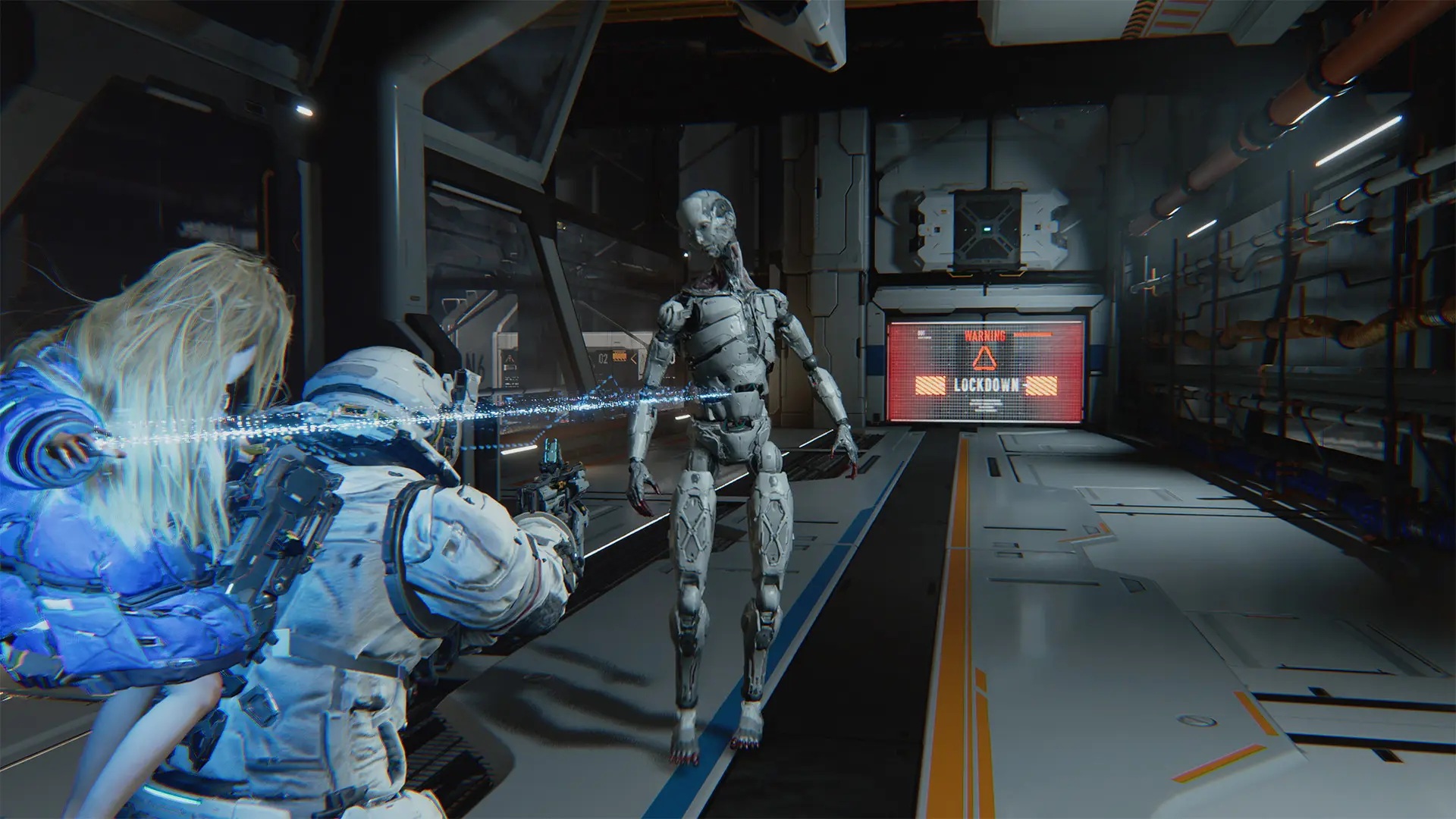
Pragmata stars Hugh Williams, who has been tasked with investigating a lunar research station. As you might expect, things don't go to plan and he ends up injured. In an effort to figure out what is going on and return home safely, he teams up with an Android, Diana, to take down dangerous AI-controlled security bots.

The combat involves a mix of hacking mini games and shooting, with different hacks giving different buffs so you can take down enemies faster, or take down even bigger bosses.

KitGuru Says: Are any of you planning on picking up Pragmata?

The post Capcom is releasing Pragmata early first appeared on KitGuru.
  •  

Microsoft announces ‘Project Helix’ – a next-gen Xbox that also plays PC games

Microsoft has quietly announced its next-generation Xbox console, teasing exactly what we've been hearing for months in rumours – that it will be a PC hybrid with the ability to play Windows games. 

Project Helix is the official codename for the next generation Xbox, following up from Project Scorpio (Xbox One X) and Project Scarlet (Xbox Series X/S). The new console will “lead in performance and play your Xbox and PC games” according to Microsoft.

Unfortunately, we do not yet have a look at the console, its technical specs, or official details about the new custom AMD chip powering it. However, this does mark the first major Xbox announcement from Microsoft under new CEO, Asha Sharma, who took over from Phil Spencer in February.

The next Xbox console is still targeting a 2027 launch, amid a growing memory and storage shortage. This current shortage is believed to be behind a delay for Sony's next console, the PS6, so it looks like Microsoft is hoping to beat them to market by pushing ahead with new hardware anyway.

KitGuru Says: With the next Xbox becoming a PC and devices like the Steam Machine and Steam Deck gaining popularity, it is starting to make sense why Sony suddenly wants to stop shipping its single-player games on PC. 

The post Microsoft announces ‘Project Helix’ – a next-gen Xbox that also plays PC games first appeared on KitGuru.
  •  

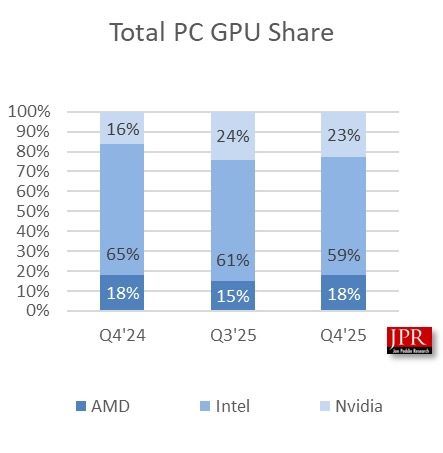
Market research shows GPU market shrank in Q4 2025

The global PC-based GPU market reached a massive 756 million units in the fourth quarter of 2025, even as the industry prepares for what analysts describe as “rough sailing” in the year ahead. While the total installed base is projected to grow to 2,867 million units by 2029, the current climate is marked by significant volatility. Year-to-year total GPU shipments across all platforms decreased by 3.3%, with the notebook segment taking the hardest hit, down 5.2%. On the other hand, desktop graphics saw a modest 1.1% increase.

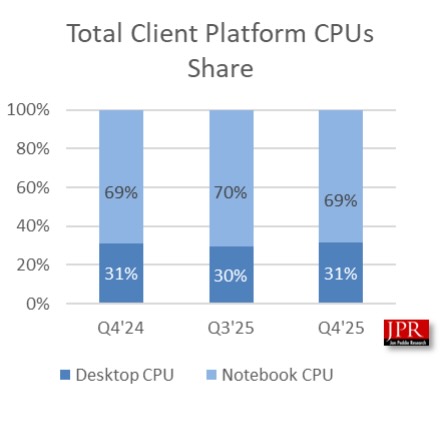
According to JPR, the quarter's most striking movement came from the shifting balance of power between the “Big Three” silicon giants. AMD emerged as the clear winner in terms of momentum, growing its overall GPU market share by 2.6% from the previous quarter. This growth was mirrored in the CPU space, where AMD shipments surged by 11%. In contrast, Intel saw its GPU share dip by 1.2%, and its CPU shipments fall by 1.1%, while Nvidia experienced a 1.4% decline in GPU market share. Despite this dip, the green team remains the only supplier forecasting a strong upcoming quarter, though notably, that optimism is anchored almost entirely in the AI sector rather than consumer gaming.

Image credit: JPR

Looking ahead, the outlook remains clouded by a combination of geopolitical and economic stressors. JPR points to a “perfect storm” of rising memory prices, fluctuating tariffs, and the impact of the newly launched Middle East conflict as primary drivers of instability. While the 10-year average for fourth-quarter growth is typically around 4.7%, this quarter fell short of that benchmark. Market forecasters now warn that the total PC market could decline by as much as 10% in 2026, as memory availability continues to tighten and consumer purchasing power is squeezed by global inflation.

The long-term forecast remains cautiously optimistic, with GPU shipments expected to grow at a compound annual rate of 2.4% over the next four years. Another interesting bit is the projected penetration of discrete GPUs (dGPUs), which is expected to hold at 25% of the PC market through 2029. This suggests that while integrated graphics continue to serve the bulk of the mobile and office segments, the demand for dedicated gaming and workstation hardware remains a stable pillar of the industry, even as manufacturers navigate the logistical nightmare of a transitioning global economy.

KitGuru says: Have your plans to upgrade been put on hold due to current pricing issues? 

The post Market research shows GPU market shrank in Q4 2025 first appeared on KitGuru.
  •  

Nvidia is reportedly working on a GeForce RTX 5050 with 9GB of GDDR7 memory

Nvidia is reportedly preparing a new variant of the GeForce RTX 5050, which will feature an unconventional 9GB memory capacity. According to the report, this new model is designed to sit alongside the existing 8 GB version, offering a slight bump in both VRAM and speed.

As per MEGAsizeGPU's post, while the original 8GB model uses 20Gbps GDDR6 memory on a 128-bit bus, this newer 9GB variant will shift to faster 28Gbps GDDR7 modules. Despite moving to a narrower 96-bit memory bus, the higher clock speeds of the GDDR7 memory result in a total bandwidth of 336GB/s, a roughly 5% improvement over the 8GB model's 320GB/s.

The core specifications for the RTX 5050 9GB are expected to remain consistent with the original model. It will likely leverage the GB207 GPU, which is the smallest die in the Blackwell family. This chip is expected to feature 2,560 CUDA cores and a 130W TDP, making it a prime candidate for compact builds and systems with standard PSUs.

Beyond the 5050, the MEGAsizeGPU also stated that Nvidia will change the GPU die for the GeForce RTX 5060. Due to a reported shortage of GB206 chips used to produce the RTX 5060 Ti, Nvidia is reportedly allowing board partners to use defective GB205 dies (the same as the ones used for the RTX 5070) for standard RTX 5060 production.

KitGuru says: The move to 9GB is an oddity in GPU history – if this proves to be true that is. We've seen plenty of rumours about Nvidia GPUs with odd amounts of memory over the past few generations and they have rarely panned out. 

The post Nvidia is reportedly working on a GeForce RTX 5050 with 9GB of GDDR7 memory first appeared on KitGuru.
  •  

Bungie confirms season passes in Marathon will be permanent

Bungie's Marathon has officially launched today, marking a new beginning for the studio as it branches out into handling multiple live-service games simultaneously. While much of Destiny 2's monetisation was built around FOMO with expiring season passes and limited-time items, Marathon will be going in a different direction.

Bungie has detailed more about its post-launch plans for Marathon. For starters, all seasonal gameplay content will be free for all players. If you want the cosmetics from the premium rewards pass, then you will have all the time in the world to earn them, as rewards passes will not expire and previous seasonal passes will remain purchasable.

Marathon Bungie

This means that you can pick and choose your rewards in a similar fashion to Helldivers 2, or Halo Infinite. Bungie also says there will be no ‘pay for power' elements in the game, which is pretty important for a competitive PvP title.

The in-game premium currency for Marathon, LUX, can also only be used on cosmetic items, with no gameplay items to be purchasable. If you want the high value items, you will have to earn your normal in-game credits the old-fashioned way.

KitGuru Says: Marathon has managed to become the top-selling game on Steam this week following its server slam weekend. Now we'll have to wait and see how it stacks up against the likes of Tarkov and Arc Raiders.

The post Bungie confirms season passes in Marathon will be permanent first appeared on KitGuru.

  •  

Arrowhead replacing Helldivers 2 on PC with new slim build with 85% reduced file size

A few months ago, Arrowhead officially began rolling out a beta version of a new build of Helldivers 2 for PC, one that dramatically shrunk the storage space required to install the game. Now after monitoring user feedback, Arrowhead is officially retiring the original, bloated build of the game.

With the new slim build of the game, the install size of Helldivers 2 was reduced by a massive 85 percent, going from 85GB to just under 24GB. The original build of the game contained a ton of duplicated assets, implemented with the goal of improving the game's performance on holder mechanical hard drives. However, in practise, this wasn't providing any meaningful benefit for players. After figuring all of this out, Arrowhead worked with Sony's PC specialist studio, Nixxes, to remove the duplicated assets and create the new, slim build of the game.

Speaking on the decision to fully move over to the slim build, Arrowhead said: “After extensive testing of our ‘slim' build, weeks of your input and stress testing including a great influx of new and returning players in the ‘Machinery of Oppression’ major update, we are confident that players are having a great experience playing Helldivers 2 on the smaller build.”

As a result, the ‘large' build of Helldivers 2 will be going away as part of the game's next major content update, arriving on March 17th. Once the change has been implemented, you will automatically download the 23GB version of the game, without having to jump into your Steam settings to opt in to the beta.

KitGuru Says: Helldivers 2 went from being a game that I would have to uninstall from time to time, to now being small enough to sit on my system indefinitely. More developers should really put more thought into smaller install sizes, as storage requirements across the industry have gone out of control.

The post Arrowhead replacing Helldivers 2 on PC with new slim build with 85% reduced file size first appeared on KitGuru.
  •  

GeForce Now will get 13 day-one games this month

The next wave of games for GeForce Now have been announced, including a teaser for what's ahead over the rest of March. In total, this month will see 13 new day-one games joining GeForce Now.

There are a few headline releases this week, including the likes of Slay the Spire 2, Legacy of Kain: Defiance Remastered and the newly available Game Pass version of Kingdom Come Deliverance 2. Ahead of the release of Death Stranding 2, Nvidia is also bringing Death Stranding: Director's Cut over to the RTX 5080-powered servers.

Here is the full list of games joining GeForce Now this week:

  • Kingdom Come: Deliverance II (New release on Xbox, available on Game Pass, March 3, GeForce RTX 5080-ready)
  • Legacy of Kain: Defiance Remastered (New release on Steam, available March 3)
  • Esoteric Ebb (New release on Steam, available March 3)
  • The Legend of Khiimori (New release on Steam, available March 3, GeForce RTX 5080-ready)
  • Slay the Spire 2 (New release on Steam, available March 5)
  • Docked (New release on Steam, available March 5)
  • Death Stranding Director’s Cut (Steam, GeForce RTX 5080-ready)
  • LORT (Steam)

Later in the month, new games like Legacy of Kain: Ascendance, Subliminal, Crimson Desert and John Carpenter's Toxic Commando will all arrive day-one on GeForce Now servers.

KitGuru Says: What do you think of this week's GeForce Now lineup?

The post GeForce Now will get 13 day-one games this month first appeared on KitGuru.

  •  

Seagate promises up to 44TB HAMR Hard Drives with Mozaic 4+ tech

Seagate has begun shipping its next-generation 44TB hard drives to major hyperscale cloud providers. These drives are the first to use the Mozaic 4+ platform, which leverages Heat-Assisted Magnetic Recording (HAMR) technology to achieve record-breaking storage densities. By using a nanoscale laser to heat the recording medium during writes, Seagate can pack 4.4TB of data per platter, reaching a total of 44TB in a standard 10-platter configuration.

Unlike older density-increasing methods like Shingled Magnetic Recording (SMR), HAMR does not rely on overlapping tracks. This allows the 44TB drives to maintain predictable performance under mixed read/write workloads, a critical requirement for modern data centres. While official performance specs haven't been finalised, considering Seagate's current 30+ TB drives can achieve speeds of 270MB/s, we assume a similar level of performance.

The jump to 44TB provides massive logistical advantages for enterprise users. Seagate claims that deploying these high-density drives can improve infrastructure efficiency by 47% compared to using older 30TB models. Taking an exabyte-scale deployment as an example, the new drives reduce the data centre footprint by roughly 100 square feet (9.29 m²) and decrease annual energy consumption by approximately 0.8 million kWh.

This launch places Seagate ahead of its primary competitor, Western Digital, which is currently aiming to ship 40TB units in H2 2026. Looking further ahead, Seagate's Mozaic roadmap targets an evolution to 10TB per platter, with the goal of producing 100TB hard drives by 2030.

KitGuru says: If you're a home user, don't expect to see these in your local shop anytime soon, but your cloud backups are likely about to get a lot more room to breathe.

The post Seagate promises up to 44TB HAMR Hard Drives with Mozaic 4+ tech first appeared on KitGuru.
  •  

Fortnite is officially coming back to the Google Play Store as all disputes are settled

For years now, Epic Games and Google have been engaged in a back and forth, with the Fortnite maker seeing its titles removed from Android’s Play Store, necessitating users to find alternate means to play the popular Battle Royale on Android. Finally, after countless court sessions and an evolving environment, Google and Epic have finally settled their differences, with Fortnite set to return to the Google Play Store “soon.”

Taking to Twitter to make the announcement, Epic Games CEO Tim Sweeney confirmed that “Google is opening up Android all the way with robust support for competing stores, competing payments, and a better deal for all developers. So, we've settled all of our disputes worldwide. THANKS GOOGLE!”

As a result, Sweeney revealed that “Fortnite will return to Google Play Store worldwide soon. Epic Games Store continues supporting Android worldwide alongside Windows and Mac, and installation on Android will become much easier later in 2026.”

Fortnite Play Store

Alongside this, Google themselves released a lengthy Android developers blog, confirming the details of this “new era for choice and openness” which includes:

  • Expanded billing choice on Google Play for users and developers
  • A new Registered App Stores program
  • Lower pricing and new programs to support developers

The blog post concluded with a direct reference to the aforementioned Epic Games dispute, with Google stating: “With these updates, we have also resolved our disputes worldwide with Epic Games. We believe these changes will make for a stronger Android ecosystem with even more successful developers and higher-quality apps and games available across more form factors for everyone. We look forward to our continued work with the developer community to build the next generation of digital experiences.”

While there is no denying that Epic Games engaged in this years-long legal battle for self-serving reasons, the final result does seem to be one that will benefit the end users more than before. Full details on these changes and their planned rollout can be found HERE.

Discuss on our Facebook page HERE.

KitGuru says: Who did you think would ultimately come out on top? Is this good for the wider industry as a whole? Let us know your thoughts down below.

The post Fortnite is officially coming back to the Google Play Store as all disputes are settled first appeared on KitGuru.
  •  

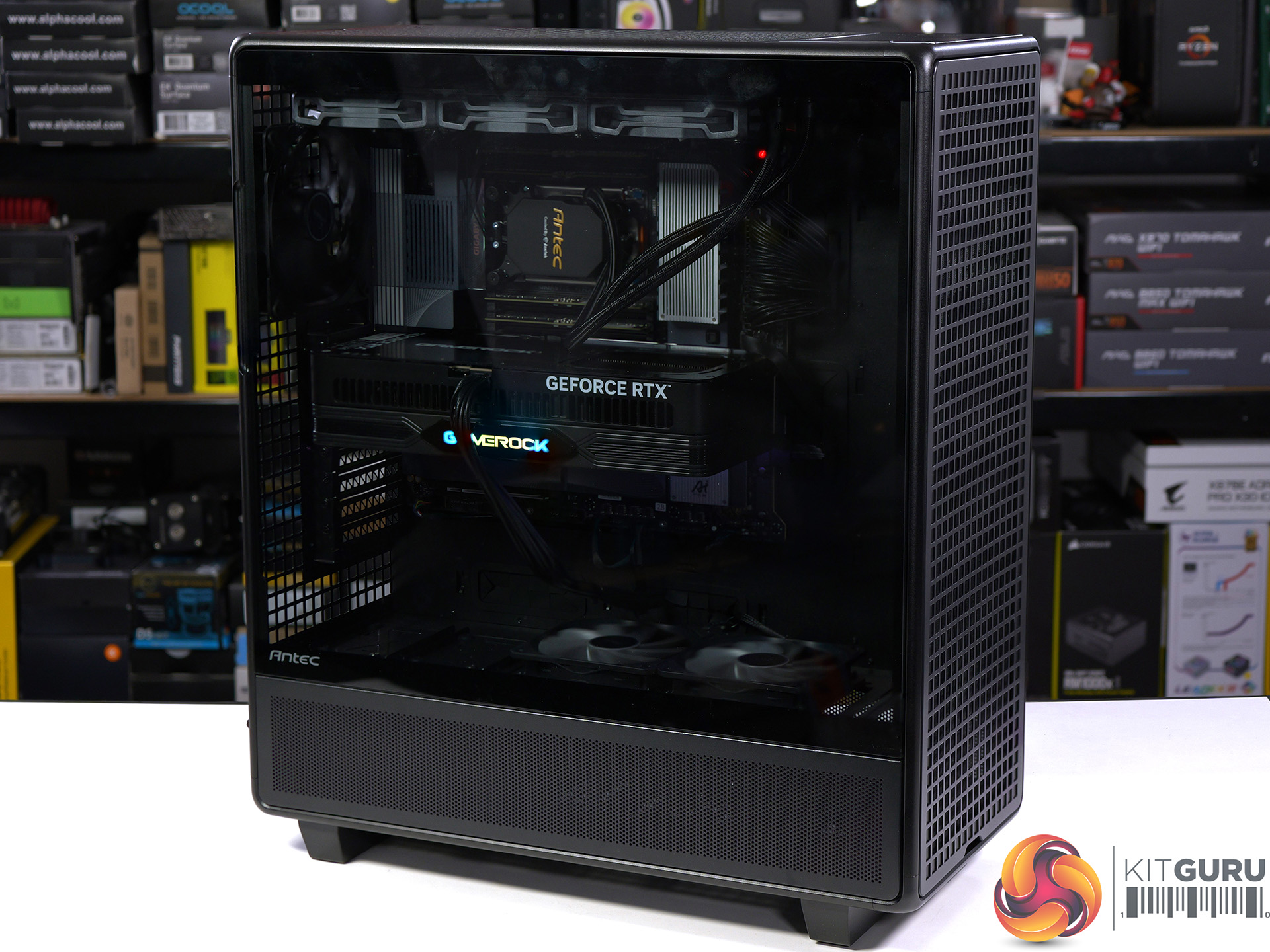
Free-to-play Let it Die will receive a premium offline version following upcoming server shut down

Grasshopper Manufacture is known for having created a bunch of weird and unique games, including but not limited to Killer7; Lollipop Chainsaw and of course No More Heroes. One of the studio’s more forgotten projects however was Let it Die – a free-to-play roguelike released back in 2016. 10 years later and this online-only experience is set to be shut down; though an offline version is on the way.

Taking to their blog to make the announcement, the team at Grasshopper Manufacture wrote: “LET IT DIE is a survival action game that was released in 2016 and has been downloaded over 9 million times worldwide. We have been operating online for over nine years, thanks to the support we have received for our unique environment and gameplay. LET IT DIE will put an end to its nine-year online run and go offline.”

Come the 31st of August, Let it Die will officially die and will no longer be playable online. As mentioned however, the team is working on an offline version of the game which will be made available via a single one-time purchase with no additional DLC or microtransactions.

Let it Die Offline

Given that one of the biggest complaints with Let it Die back in the day was its rather heavy monetisation practices, having a fully-featured offline version of the game which doesn’t require you to buy revive tokens could make for a far improved experience.

All that said, regardless of your thoughts towards Let it Die, having the always-online experience being fully reworked into a premium offline title is welcome to see, and means that Let it Die will not disappear into the ether as so many other free-to-play titles have, come their inevitable demise.

Discuss on our Facebook page HERE.

KitGuru says: Did you check out Let it Die back in the day? Are you surprised the game lasted this long? Should it always have been a paid offline title? Let us know your thoughts down below.

The post Free-to-play Let it Die will receive a premium offline version following upcoming server shut down first appeared on KitGuru.
  •  

Antec 900 Case Review (2026)

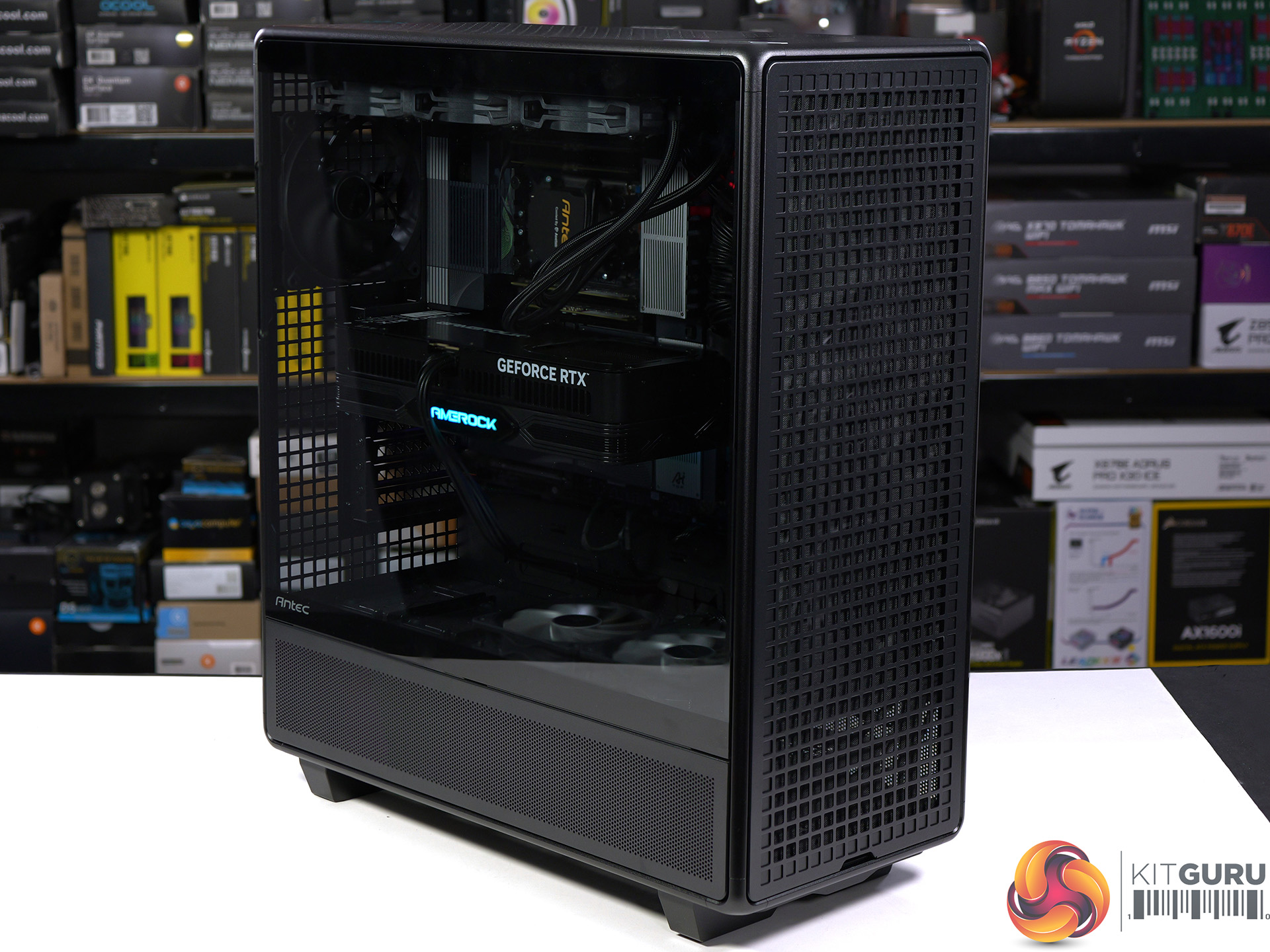
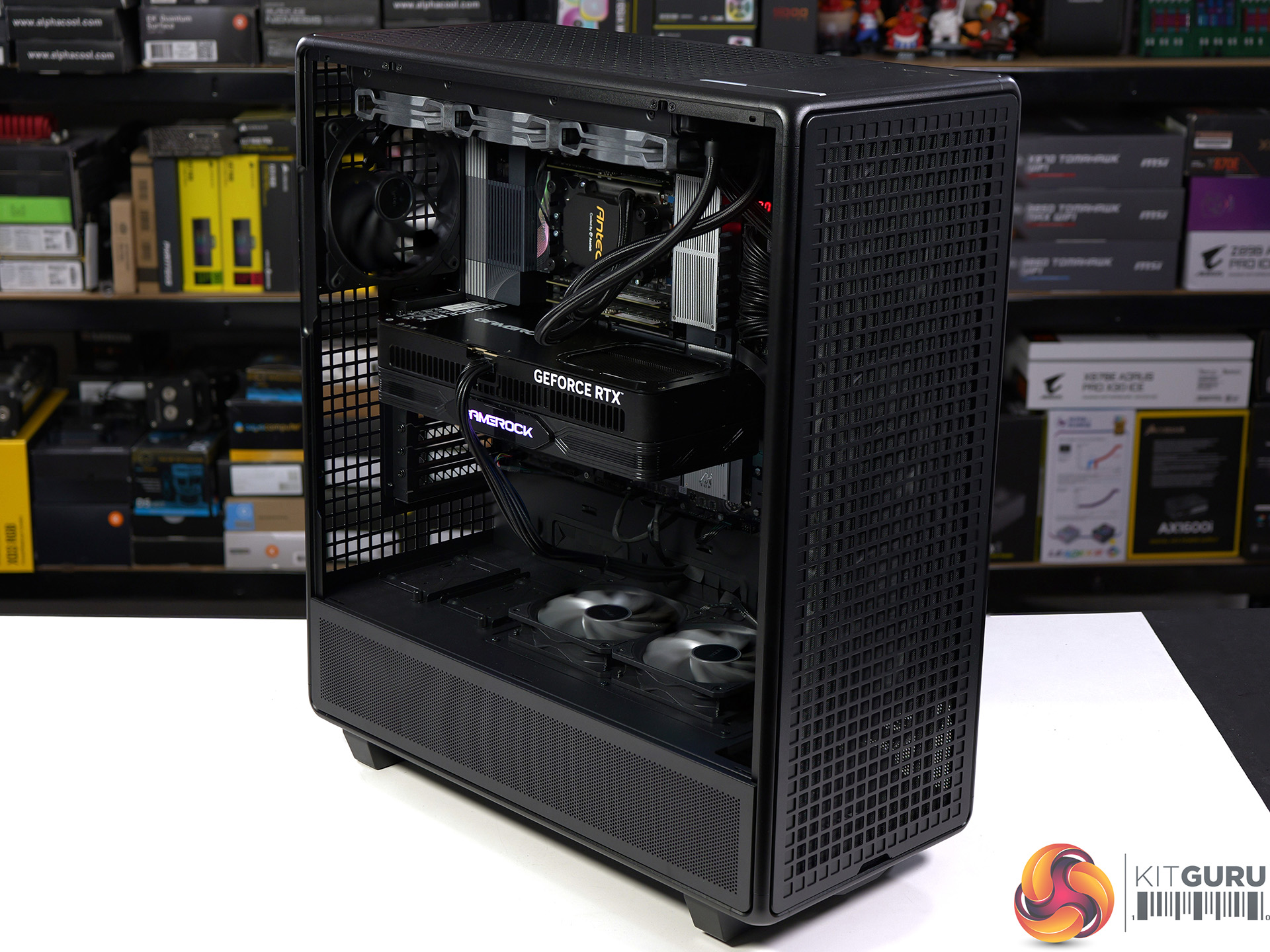
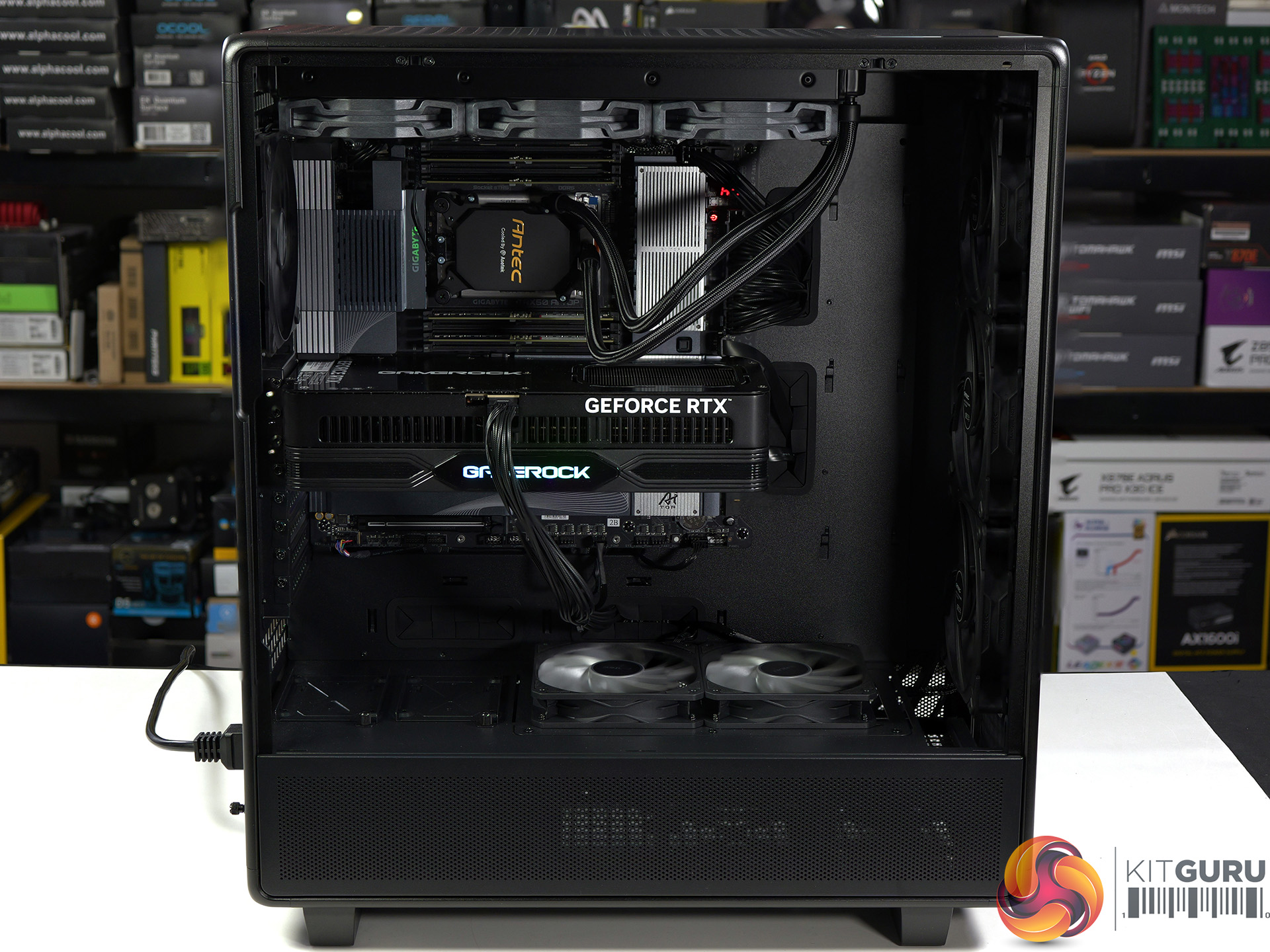
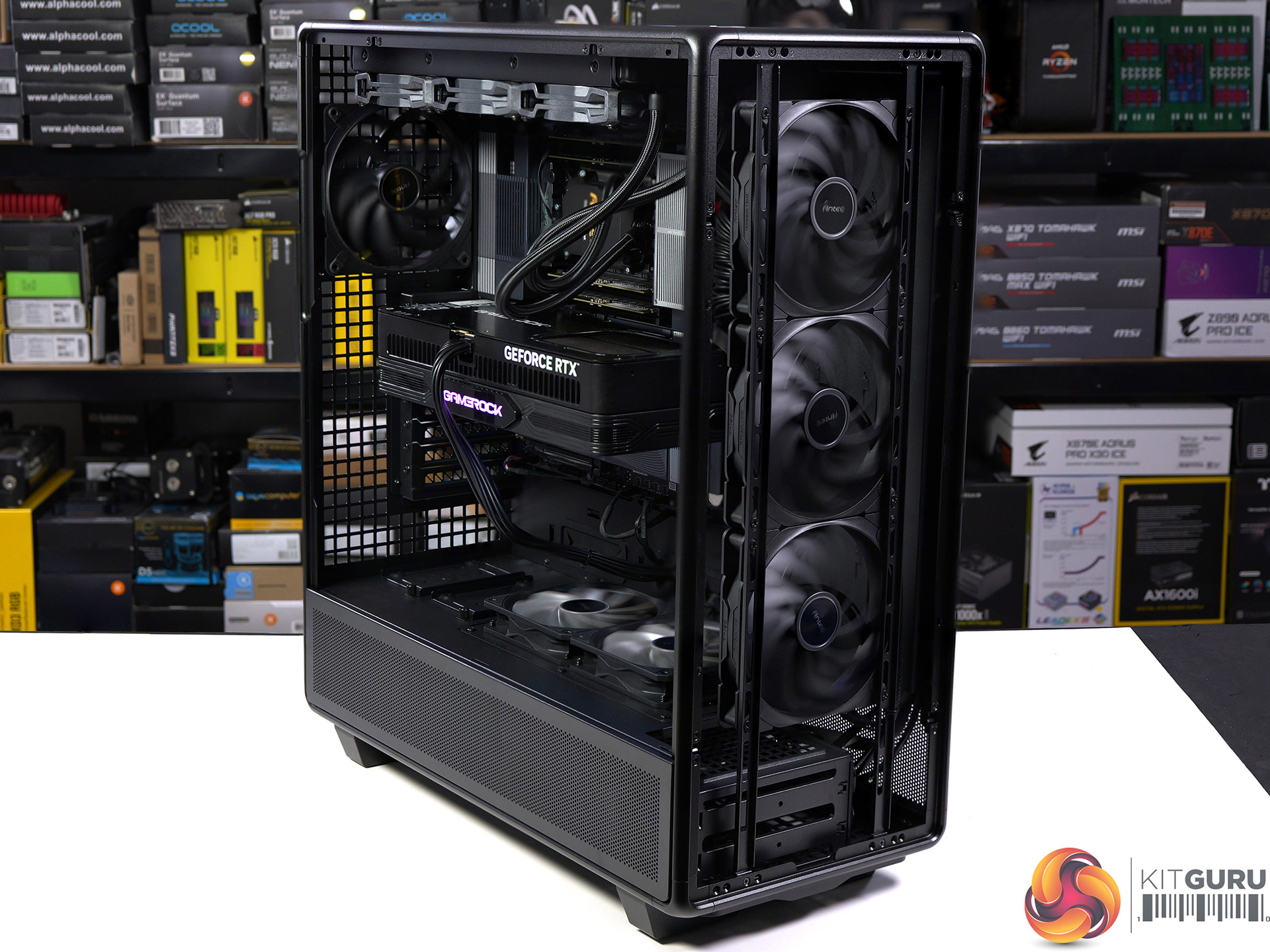
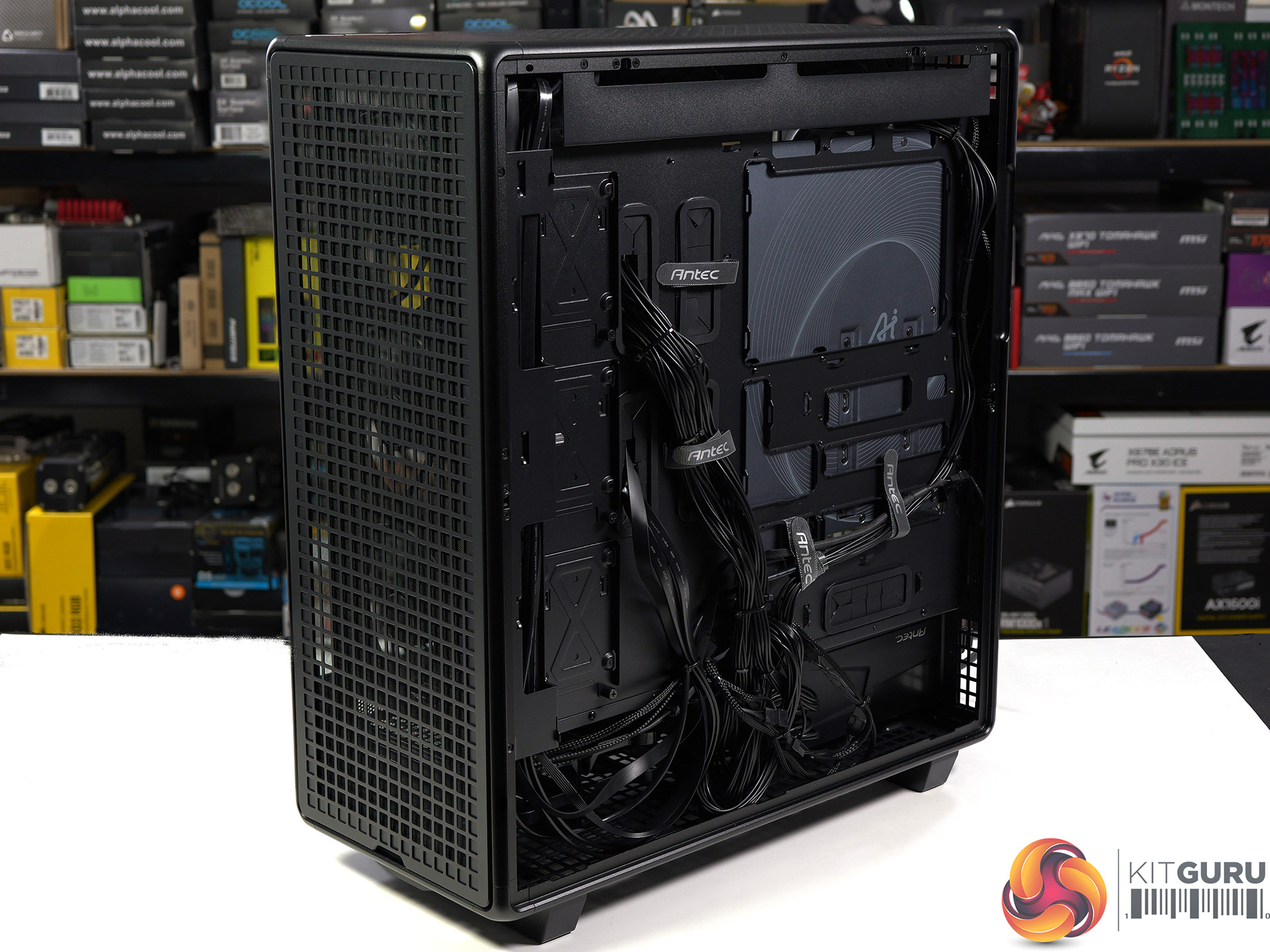
Antec launched the original 900 case way back in 2006 which means this brand new 900 marks the 20th anniversary of this model. The name is the only thing they have retained while everything else has changed, and that is good as the original 900 was a bit weird. One major change is that the original 900 was aimed squarely at gamers while this new 900 is more of a workstation case, with acres of space and huge amounts of cooling.

Time stamps
00:00 Intro
00:39 Starting the tear down
01:55 Getting to the rear
02:23 Storage details
03:23 Fan connections / cooling support
05:39 System hardware
06:46 The PSU iShift kit
09:03 CPU cooler + GPU going in
10:10 Thermal tests
11:33 Closing thoughts

Specification:

  • Motherboard support: ATX, E-ATX, SSI-CEB and SSI-EEB.
  • Power supply support: ATX.
  • Expansion slots: 8.
  • Included fans: 3x 140mm Tranquil front intake, 2x 120mm P12R on the PSU shroud, 1x 140mm Tranquil rear exhaust.
  • Fan mounts: 3x 120mm/140mm or 2x 200mm front, 3x 120 or 2x 140mm roof, 2x PSU shroud, 1x 120mm/140mm rear.
  • Radiator mounts: 360mm/420mm front, 280mm/360mm roof.
  • 5.25-inch optical drive bays: None.
  • Internal drive bays: 4x 3.5-inch/2.5-inch, 5x 2.5-inch.
  • Front I/O ports: 1x USB 3.0 type-A, 1x USB 3.1 type-C, audio.
  • Dimensions: 622mm H x 547mm D x 250mm W.

Testing

To put this case through its cooling paces we will be using a test system consisting of an AMD Ryzen Threadripper 9980X, Palit RTX 5080 graphics and an SSD. This system allows us to produce a substantial amount of heat and effectively test the Antec 900‘s cooling capabilities.

Test System:

  • Processor: AMD Ryzen Threadripper 9980X
  • CPU Cooler: AMD Threadripper AIO cooler
  • Motherboard: Gigabyte TRX50 AI TOP
  • Memory: 128GB G.Skill T5 Neo RDIMM DDR5-6400 in Quad Channel
  • Graphics card: Palit RTX 5080 Gamerock OC 16GB
  • Power supply: Antec Signature 2200 Platinum 2200W
  • SSD: Crucial T705 Gen5 M.2 NVMe
  • OS: Windows 11

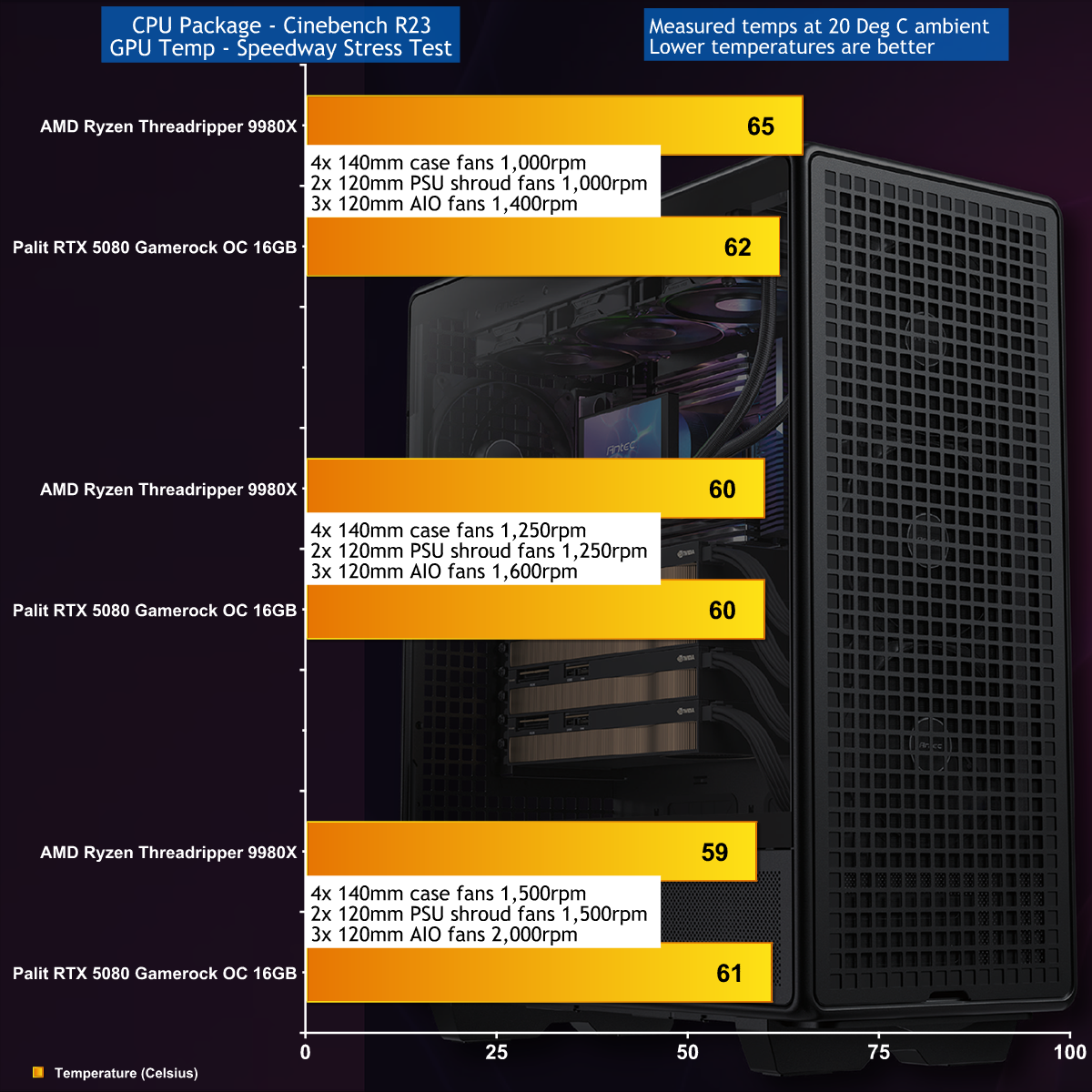
The loads on our test system were very high with a total system power draw of 880W at the wall socket, split evenly between the 64-core Threadripper CPU and RTX 5080 graphics card. We found the Antec 900 was able to cool efficiently without too much noise, however when we ramped up the fans to around 2,000rpm the noise levels became offensive.

Closing Thoughts

In the 20 years since Antec launched the original 900, every single aspect of PCs, gaming and workstations has changed. While we like the nod to the original name we feel it is slightly confusing and best forgotten, as the Antec 900 (2026) is completely different to the Antec 900 (2006), and we mean that in a good way.

You can pack a huge amount of hardware in this cavernous case, and you can see that our huge Threadripper motherboard and mighty Palit RTX 5080 graphics card are somewhat lost in all that space. The upside is that you can run your cooling system low and slow and still get a good temperatures with low noise. On the other hand we recommend you don't move your finished PC around too much as it is likely to weigh a tonne.

MSRP pricing for the Antec 900 is £249/€289 EURO inc VAT.

Pros:

  • Massive main compartment.
  • Smart styling.
  • Easy access to the storage bays and power supply.

Cons:

  • A PWM hub is not included.
  • The position of the top fan/radiator mounts don't have much flexibility.
  • The accessory kit doesn’t include spare catches for the panel mounts.

KitGuru says: The new Antec 900 is big and beefy and well-suited to your next workstation build.

The post Antec 900 Case Review (2026) first appeared on KitGuru.
  •  

Assassin’s Creed Unity finally gets its highly-requested 60fps patch on consoles

To this day, Assassin’s Creed Unity remains one of the most ambitious entries in the series, with the PlayStation 4 / Xbox One title buckling somewhat under the weight of Ubisoft’s dense 18th century Paris. Despite launching with an uncapped framerate, Unity would later be updated with a 30fps cap. While appreciated at the time, fans have been hoping for a current-gen patch for quite a while. Finally, following the likes of AC: Syndicate, Origins; Odyssey and more, Assassin’s Creed Unity has gotten a 60fps update.

Making the announcement as part of a big brand update, the team at Ubisoft unveiled a ton of new details surrounding current and future Assassin’s Creed titles. Alongside updates on the likes of codename HEXE and INVICTUS, Ubisoft confirmed that AC: Unity is finally getting its long-awaited framerate boost on console, writing:

“A free 60 FPS patch for Assassin's Creed Unity is coming to Xbox Series X|S and PlayStation 5 [today]! We know some of you have been waiting for it for a long time, so get ready to re‑experience 18th century Paris and Arno's fancy parkour moves with more smoothness on consoles!”

Unity 60fps

Unfortunately, as with most of Ubisoft’s 60fps upgrades, the game’s visuals have not been touched, meaning even on PS5 users will be stuck at just 900p.

Still, having the game finally run at a locked 60fps is certainly welcome regardless. It will be interesting to see whether they have plans to release similar patches for the few remaining AC titles still locked to 30fps.

Discuss on our Facebook page HERE.

KitGuru says: What do you think of AC: Unity? Was it ahead of its time? Let us know your thoughts down below.

The post Assassin’s Creed Unity finally gets its highly-requested 60fps patch on consoles first appeared on KitGuru.
  •  

Long-rumoured Assassin’s Creed Black Flag Remake officially announced

For quite some time now we’ve been hearing that Ubisoft is working on a full blown remake of their fan-favourite Assassin’s Creed Black Flag. With multiple in-development projects being cancelled at Ubisoft recently however, the game’s future was somewhat unknown. In a surprise franchise update, Ubisoft have now officially confirmed that a Black Flag remake is in the works – though details still remain sparse.

As part of a blog post detailing the future of the Assassin’s Creed franchise in the wake of its recent developer shake-ups, Ubisoft took time to tease what we’ve ‘known’ for a while: that a remake of Assassin’s Creed Black Flag is in the works, writing:

“Speculation around Assassin's Creed is not new, but it's worth repeating: ‘Nothing is true. Everything is permitted.’ Well, except in this case, some whispers have a little more wind in their sails. Keep your spyglass on the horizon.”

Black Flag Remake

Alongside this teaser, the team shared the first piece of concept art for the remake, confirming that it will be called AC: Black Flag Resynced.

As mentioned, we’ve gotten a bunch of different leaks over the years discussing various aspects of this remake. As noted however, the company has recently undergone a great deal of restructuring, and so it’s likely that Resynced could be quite different from how previous leaks described it.

We will have to wait and see, but finally, Assassin’s Creed Black Flag Resynced is officially real and coming at some point in the future. The full blogpost, including the confirmation that AC: Unity is getting a 60fps patch on console, can be found HERE.

Discuss on our Facebook page HERE.

KitGuru says: What do you think of this franchise update? Does it give you more or less hope in the future of AC? What do you want from a Black Flag remake? Let us know down below.

The post Long-rumoured Assassin’s Creed Black Flag Remake officially announced first appeared on KitGuru.
  •  
❌