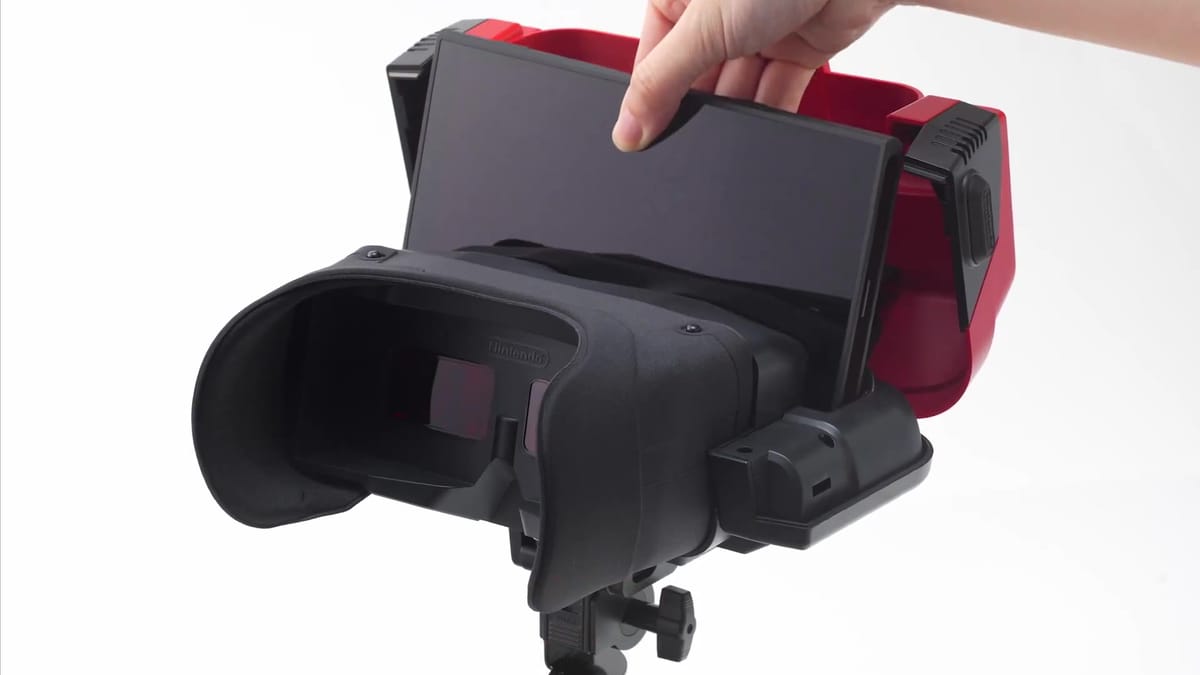
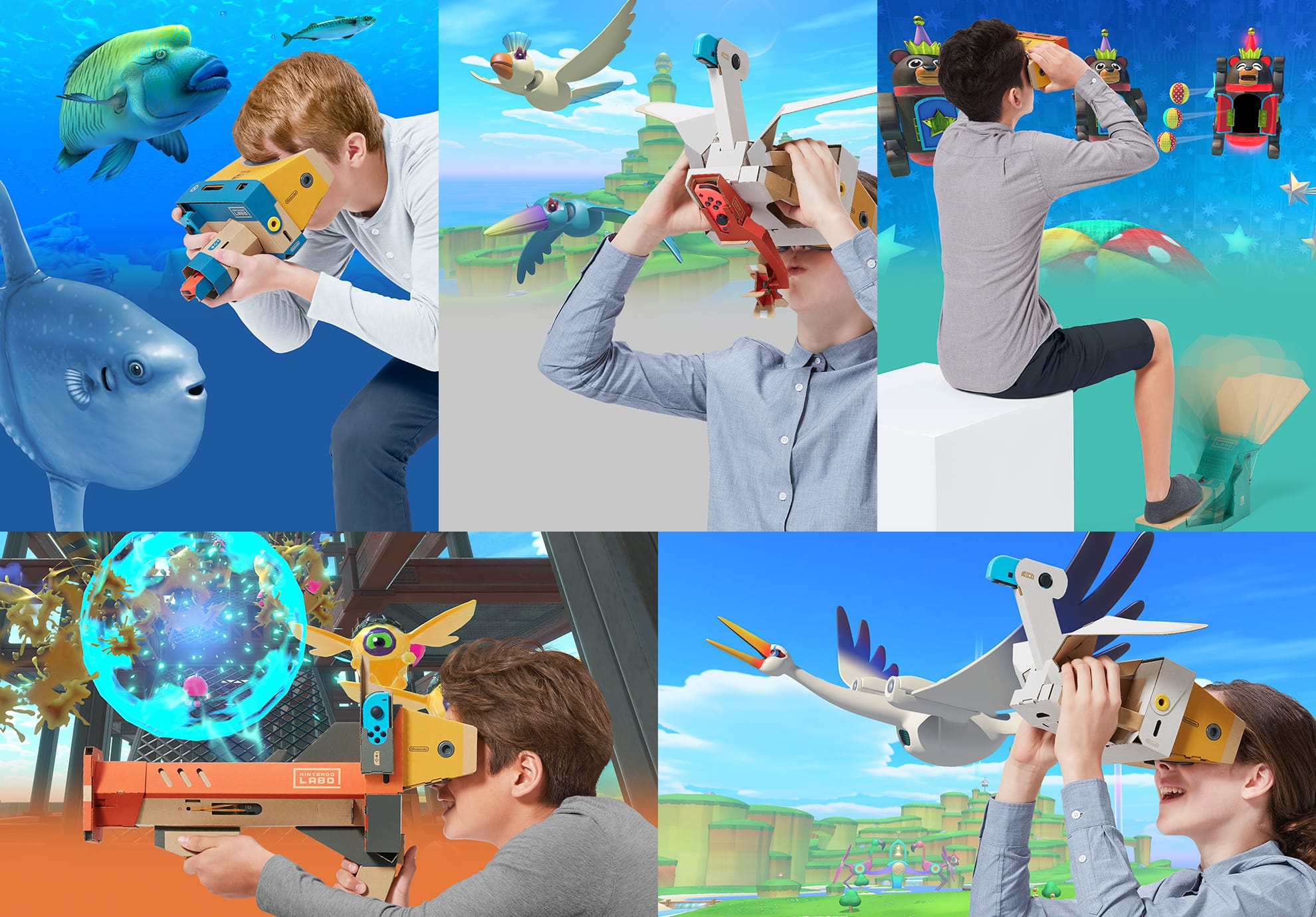
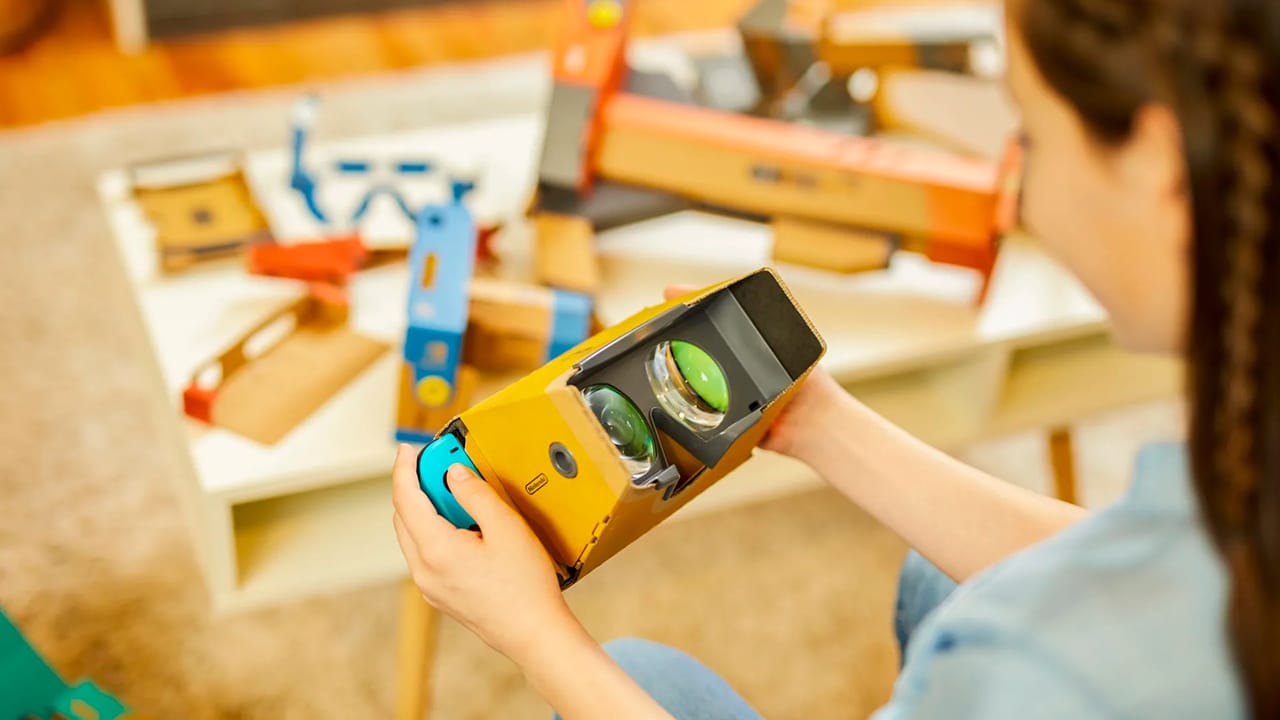
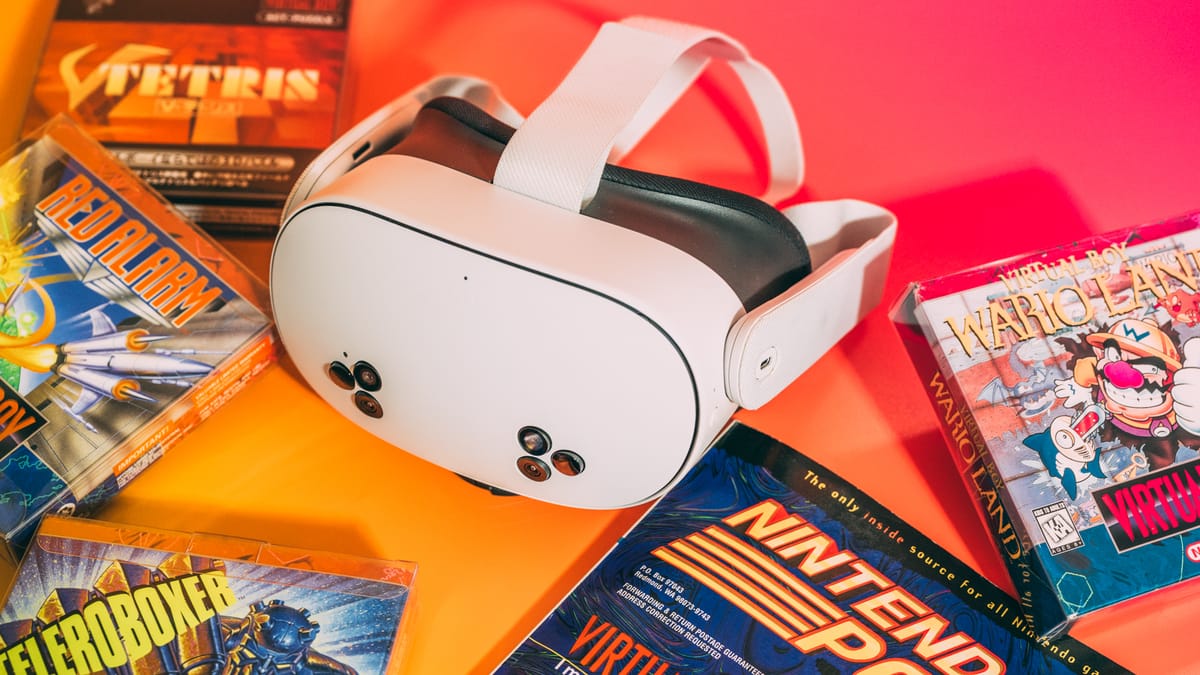
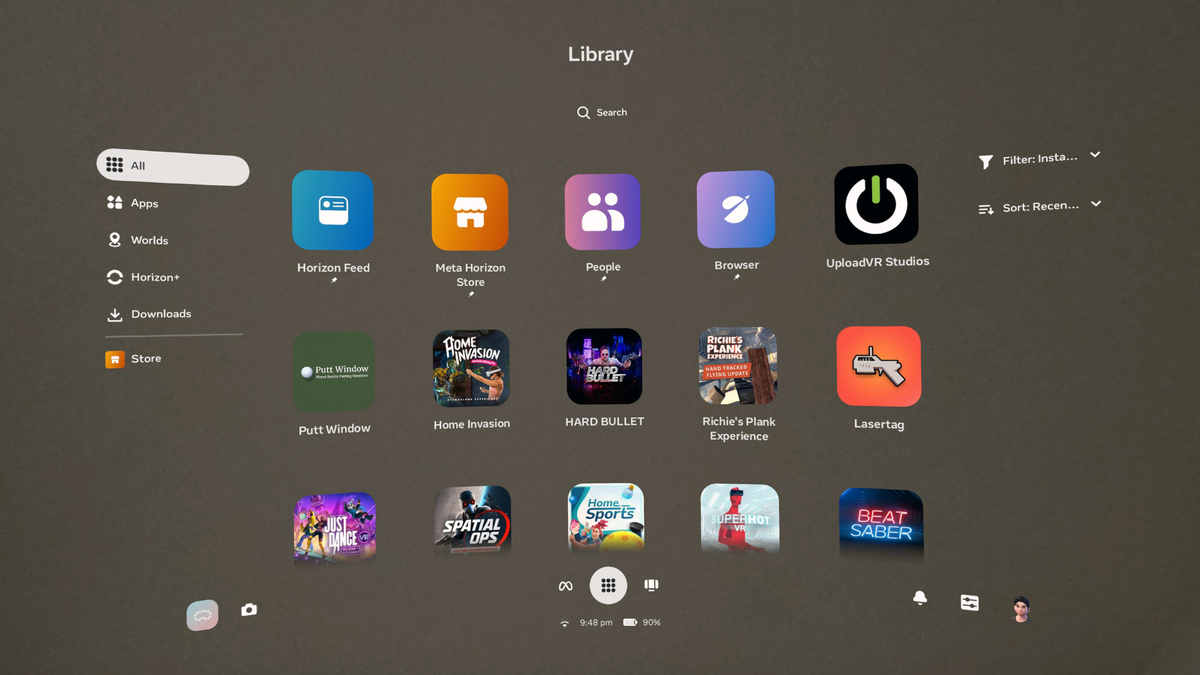
Though not officially supported, Nintendo's upcoming Virtual Boy library may be playable on Labo VR, the DIY cardboard headset from 2019.
Beginning February 17, Nintendo will offer Virtual Boy Classics via their Switch Online subscription service, bringing the concise library of Virtual Boy games to new audiences for the first time in over 30 years.
In order to play these games, which are stereoscopic 3D experiences, users will need to have an active subscription to the Nintendo Switch Online + Expansion Pack service, as well as buy one of Nintendo's official Virtual Boy headsets, which the company is offering in two varieties: The plastic replica Virtual Boy ($99.99 / £66.99), and the cheaper cardboard model ($24.99 / £16.99).
However a third option may exist.
One Nintendo rep recently stated that the discontinued Labo VR, a do-it-yourself cardboard headset that Nintendo released in 2019 as part of their Toy-Con line of Switch accessories, will work just as well as the new cardboard VB headset. However Nintendo was quick to issue a statement saying that this play method is not officially supported, encouraging users to instead buy the new Virtual Boy accessories.
Nintendo's statement, while extremely clear, directly contradicts a previous statement by the company's rep. Of course, that rep could simply have been mistaken, or the company may be keen on everyone forgetting the Labo VR exists so that users buy the new gizmo. It seems the only way to know for sure is to test the Labo VR when Virtual Boy launches on the Switch in under two weeks (which we'll do).
For clarity, Nintendo has stated that Virtual Boy Classics cannot be played on Switch without using a stereoscopic 3D headset.
Unofficial methods for playing Virtual Boy games on modern VR headsets have existed for quite some time. However, this is the first time since the system's discontinuation in 1996 that Nintendo itself has acknowledged the Virtual Boy in terms of releasing a new game product.
Virtual Boy Classics and the two accessory headsets will be available to Nintendo Switch Online + Expansion Pack subscribers beginning February 17th, 2026.
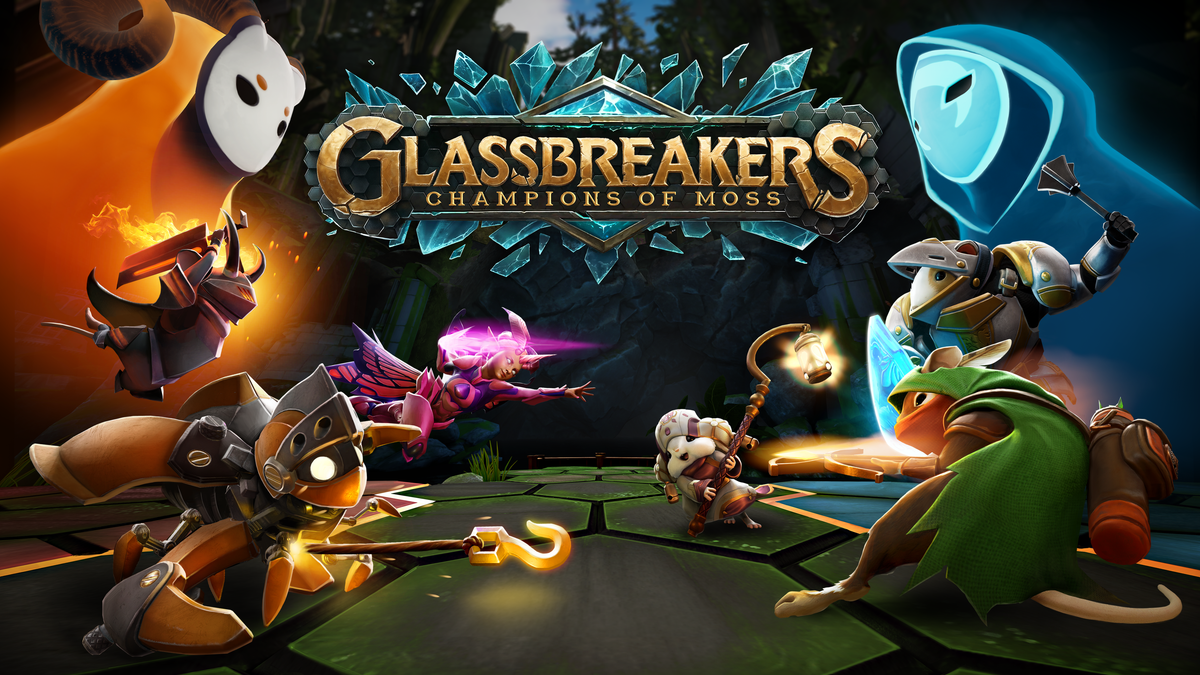
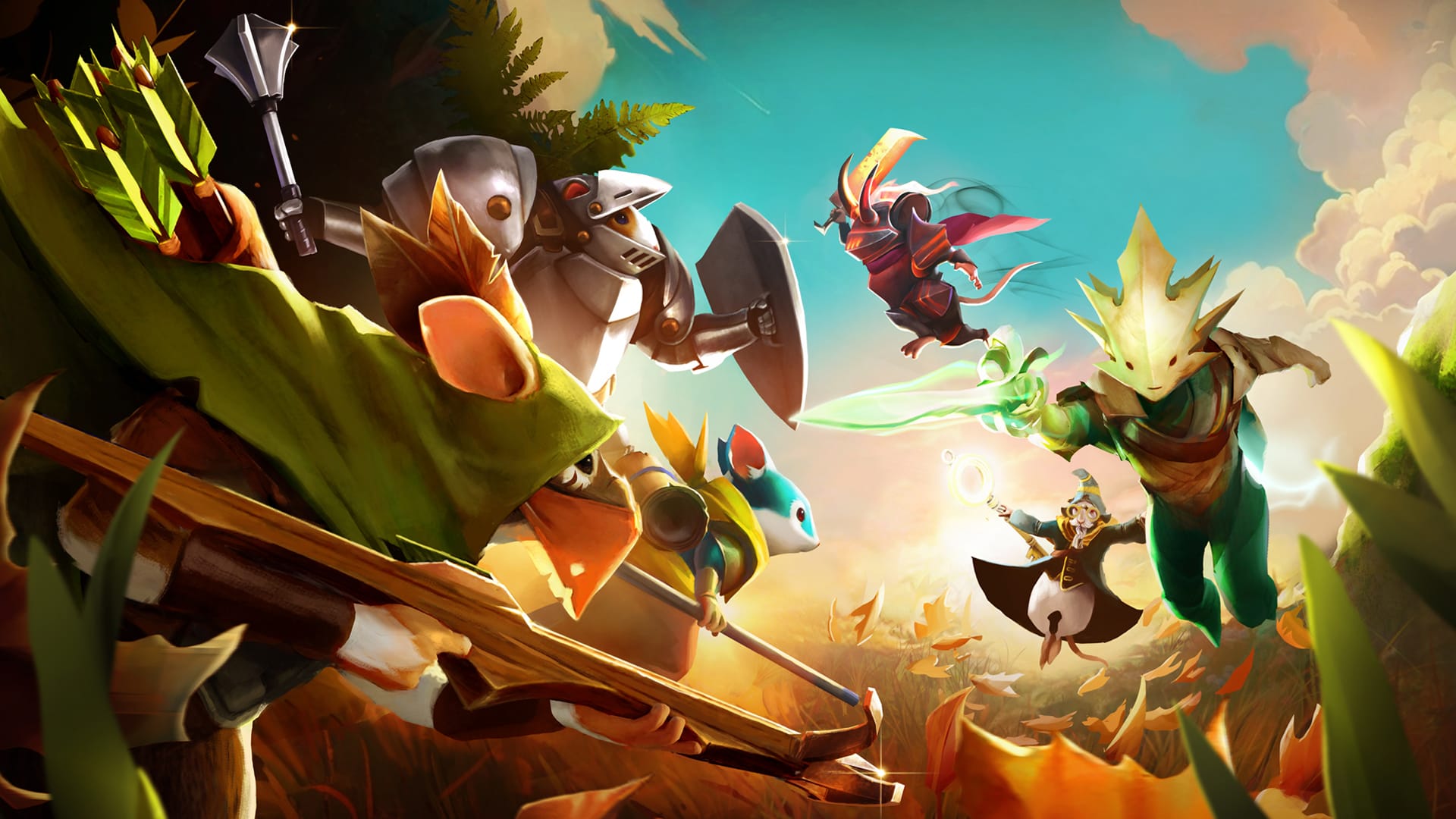
The first official tournament for Glassbreakers: Champions of Moss will cap off a month-long community building campaign for Polyarc Games.
Virtual reality esports, much like the VR ecosystem as a whole, has grown at a slower rate than some would prefer. Companies like Electronic Sports League (ESL) and VRML (Virtual Reality Master League) have been running events as far back as 2019 for a variety of games like Pistol Whip, Blaston, and the now defunct Echo VR, but the overall popularity of esports has never really translated to the VR ecosystem.
Enter Polyarc Games. The developer best known for the Moss series has announced a partnership with VALVR to host its first official tournament, Glassbreakers: Tournament of Champions for its competitive MOBA-like title. Registration is currently open with games scheduled to begin February 15th in the Glassbreakers Discord.
The prizes total $1,000 with $400 going to first place, $250 for second place, $150 for third place, $120 for fourth place, and $80 for fifth place. All players will receive a special cosmetic as a participation reward.
0:00
/1:00
Glassbreakers: Champions of Moss Gameplay Trailer
The tournament is part of a larger, month-long community building campaign with the game being made available to play for free. Glassbreakers is one of February's free featured titles for the Meta Horizon Plus subscription service and Polyarc has also announced a free weekend for SteamVR players running February 5-8.
Glassbreakers: Champions of Moss is currently available on SteamVR and Meta Quest for $19.99 and Apple Vision Pro via Apple Arcade.
Note: The tournament is only open to players on Quest and Steam.
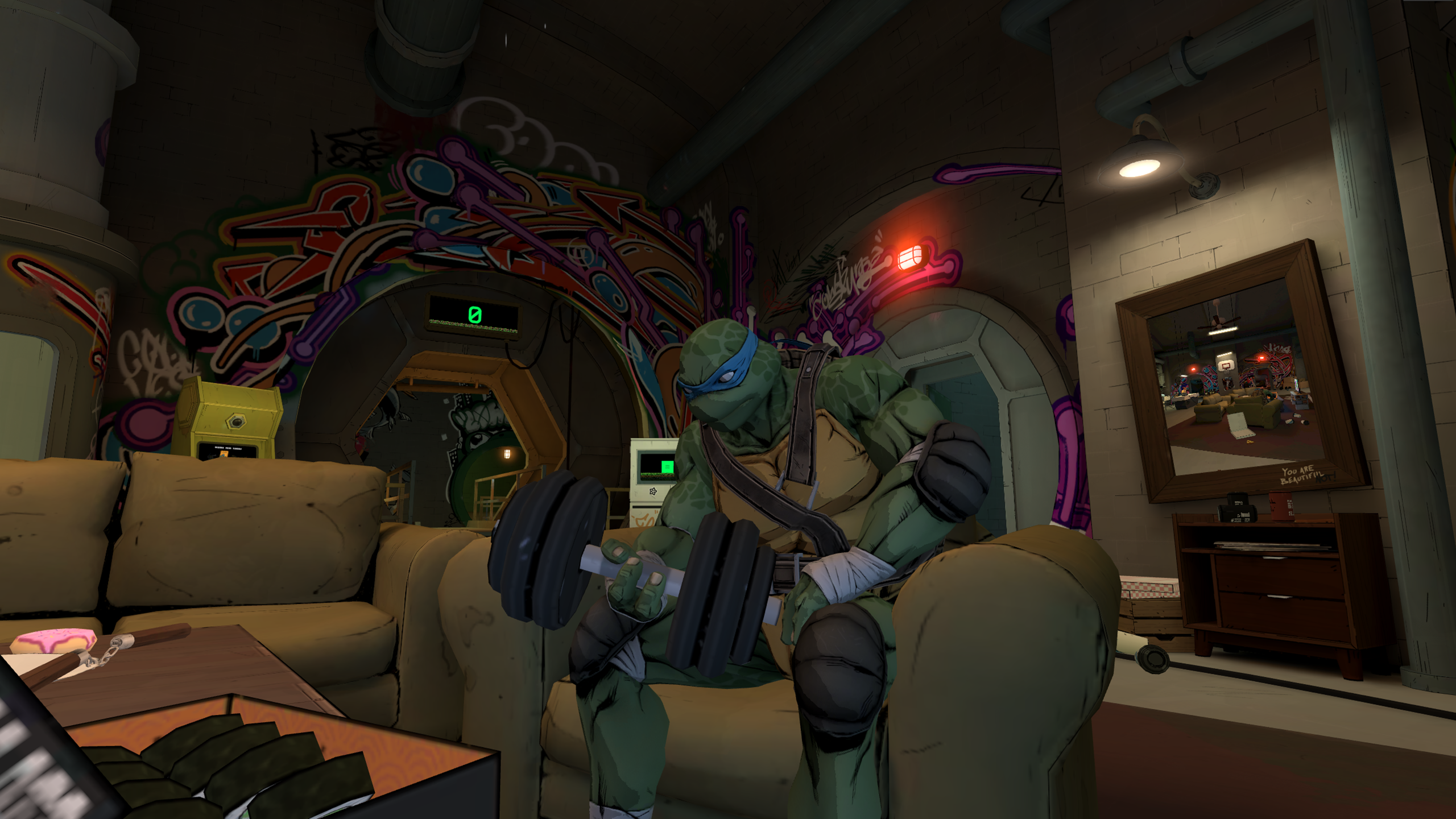
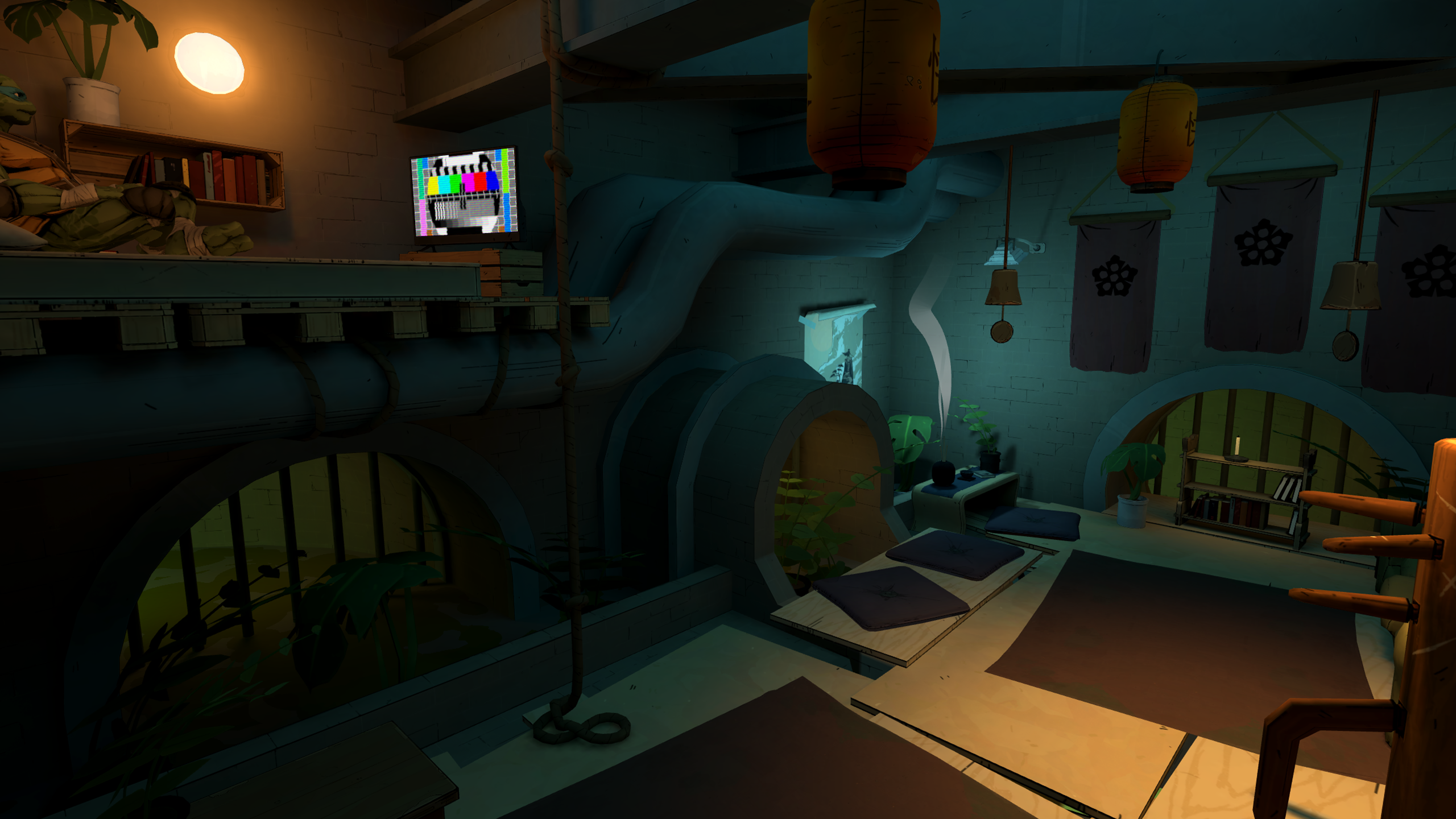
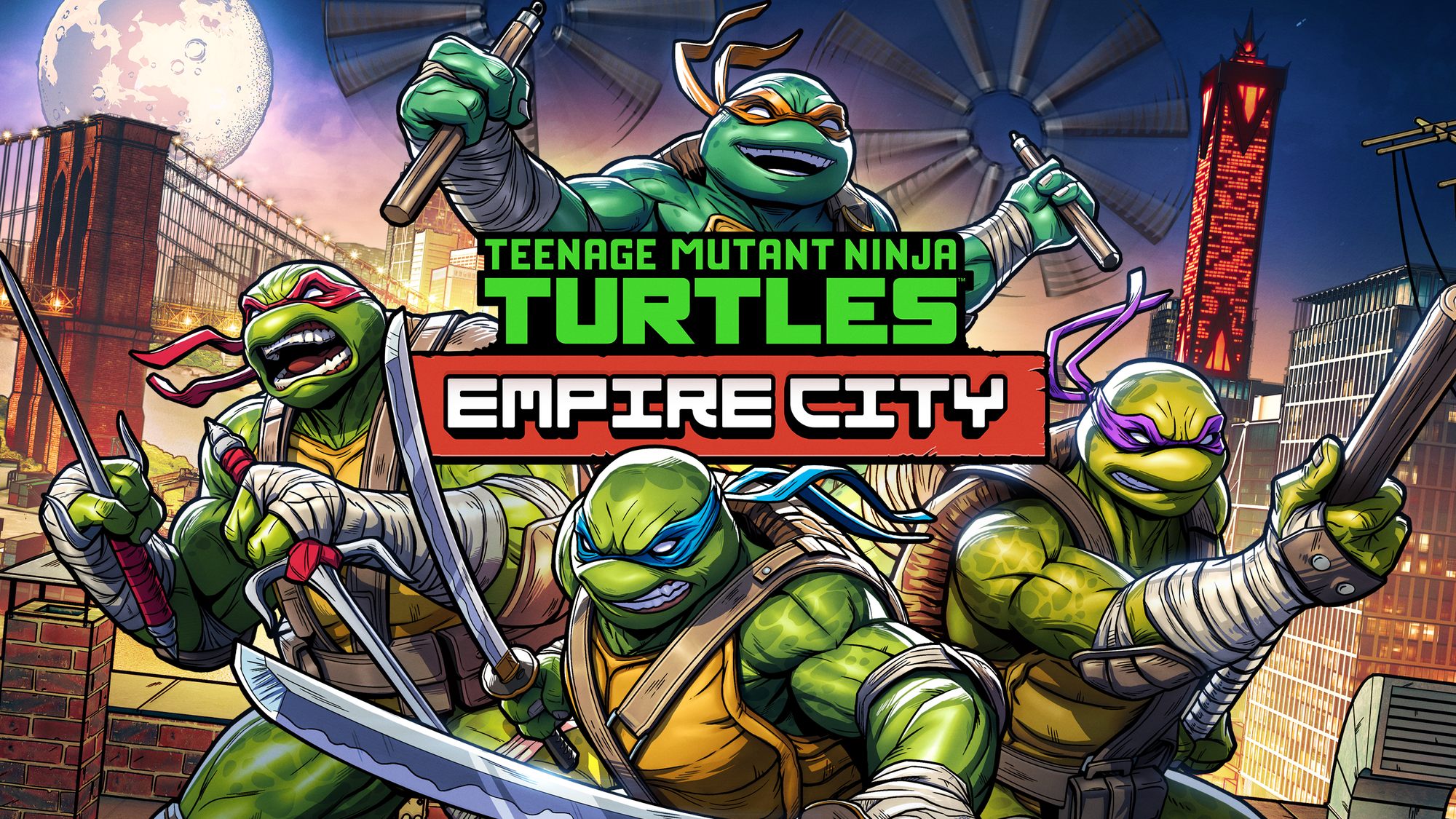
Cortopia Studios and Beyond Frames Entertainment are bringing the Ninja Turtles into virtual reality for the very first time with Teenage Mutant Ninja Turtles: Empire City.
Launching on Meta Quest, SteamVR, and Pico this spring and priced at $24.99, pre-orders are now live on Meta Quest, where buyers can take advantage of a 20% early-bird discount.
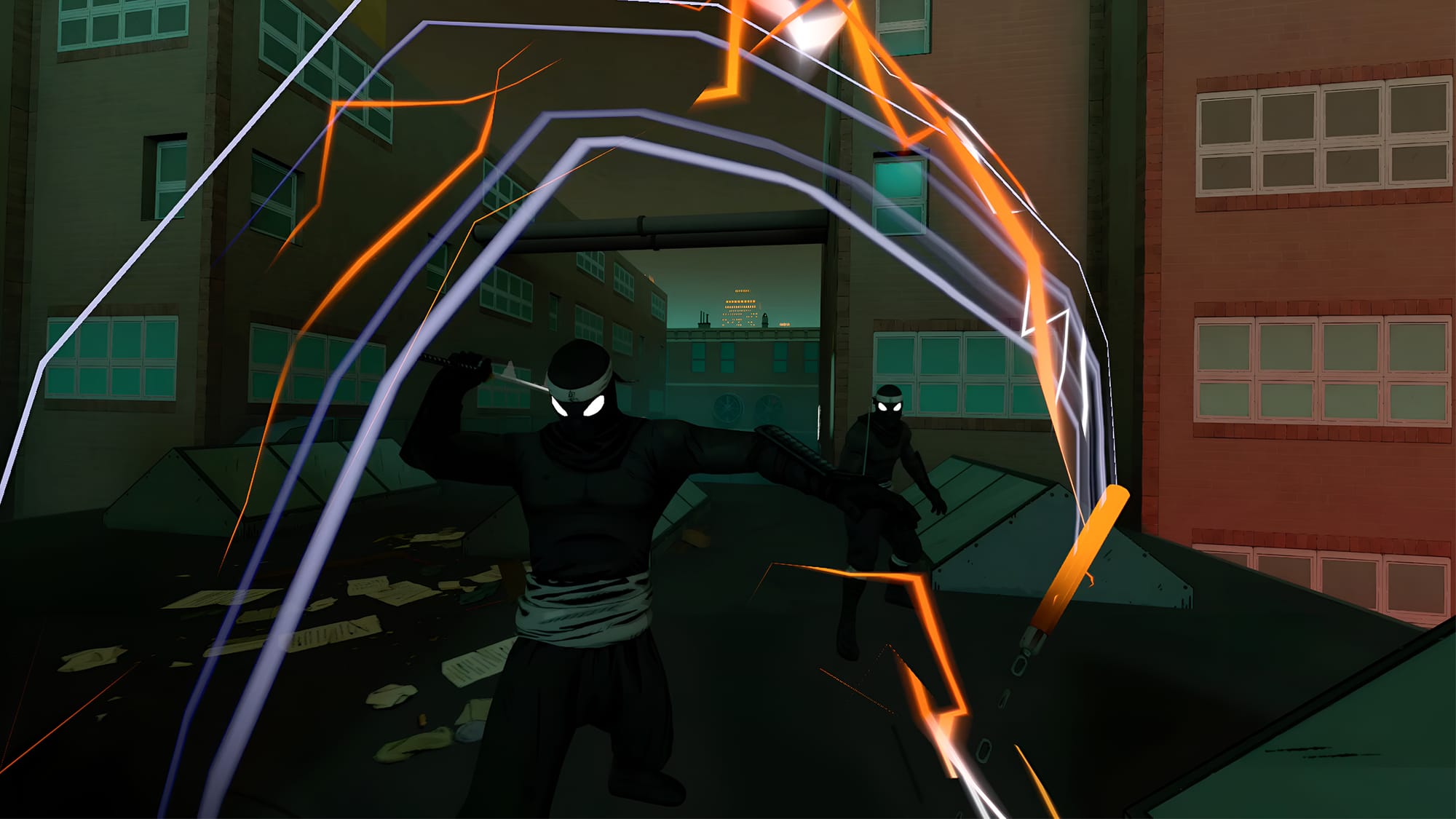
A brand new gameplay trailer has also been revealed, highlighting the ways players will scramble, leap, and sneak through and atop the sewers and roofs of an atmospheric, comic-style New York City, battling the infamous Foot Clan and their villainous leader, Shredder.
0:00
/1:25
Designed from the ground up for VR, TMNT: Empire City focuses on immersion and optional co-operative play.
"Empire City isn't about playing one of the Turtles so much as it's about being one of the Turtles," says Ace St. Germain, the game's Creative Director. "Each Turtle has their different strengths, we don’t have traditional, pre-defined classes. Instead, based on your chosen builds, the gear equipped, and playstyle, you can freely organize how you want your sessions to play out.
The team has also released a new developer diary video which dives deeper into the way that combat, traversal, and co-operative play work in Empire City.
A time-limited single-player demo arrives February 23rd as part of Steam Next Fest, giving players the chance to experience the game's first 15 minutes, and to play as each of the four Turtles. This demo disappears back into the ooze on March 2nd.
Check back as release approaches for more coverage of TMNT: Empire City.
Beat Saber gets Me Porto Bonito (feat. Chencho Corleone) by Bad Bunny in the latest shock drop, now live.
This latest shock drop lands just four days after Bad Bunny's Album of the Year Grammy win, and days before the Latin musician is set to headline the half-time show at the NFL Super Bowl, the USA's most popular televised sporting event.
Though not available on PlayStation VR and PS VR2, where Meta (who owns Beat Saber) is no longer releasing new content, Bad Bunny's Me Porto Bonito is available now on SteamVR and the Meta Horizon Store for $1.99.
Apple acquired Q.ai, reportedly for $1.6 billion, a startup working on converting "silent speech" into text. The technology could be crucial for AR glasses.
If the $1.6 billion value widely reported by mainstream news outlets such as Reuters is accurate, it would represent Apple's second largest acquisition to date, behind only Beats.
Since its founding in 2022, Q.ai has operated in "stealth mode", staying very secretive about exactly what it's working on. But the background of its three co-founders, as well as details in a patent filing, provide strong hints as to what the technology is.
Aviad Maizels, the CEO, previously founded PrimeSense, the company that Apple acquired in 2013 to build Face ID. PrimeSense also licensed some of its technology to Microsoft for the original Kinect. Dr. Yonatan Wexler, the CTO, is a world-class computer vision expert who was the VP of R&D at OrCam, a company which miniaturized high-end computer vision into a tiny device that clips onto eyeglasses.
The idea of "silent speech" is to let you silently dictate text by sensing the subvocal movements of your speech muscles. You could therefore send a sensitive message while in public, completely privately, or direct an AI assistant without other people around you knowing.
The fundamental idea is not new, and another startup, Alterego, is working on a hardware-based approach that uses sensors attached to your jaw.
What makes Q.ai's approach special, if its patents are any indication, is that it's a computer vision approach, using cameras pointed at your jaw instead of attached to it.
For example, the patent Detection of silent speech refers to a "optical sensing head" located "in proximity to a face of the user" that "senses light reflected from the face and to output a signal in response to the detected light".
Apple could potentially integrate Q.ai's technology into future Apple Vision headsets, AirPods stems, and the smart glasses that Bloomberg's Mark Gurman and supply-chain analyst Ming-Chi Kuo claim the company is working on.
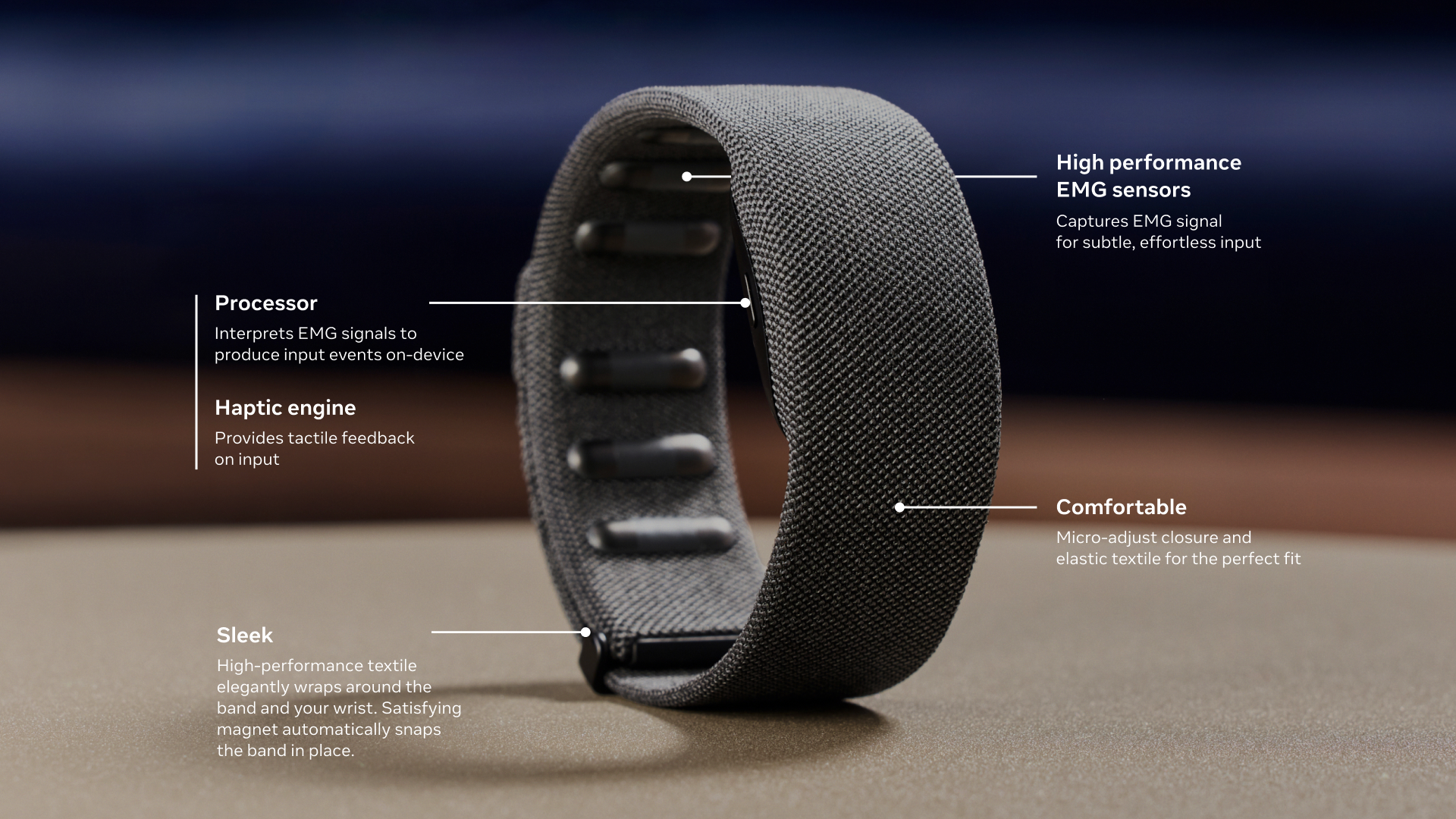
Meta, meanwhile, is betting on letting you scribble letters on a surface such as your leg, sensing it with an sEMG band worn on your wrist.
What's clear already is that regardless of which technology wins out, the ability to enter text privately while wearing smart glasses in public will be crucial if the form factor ever hopes to supplant the smartphone.
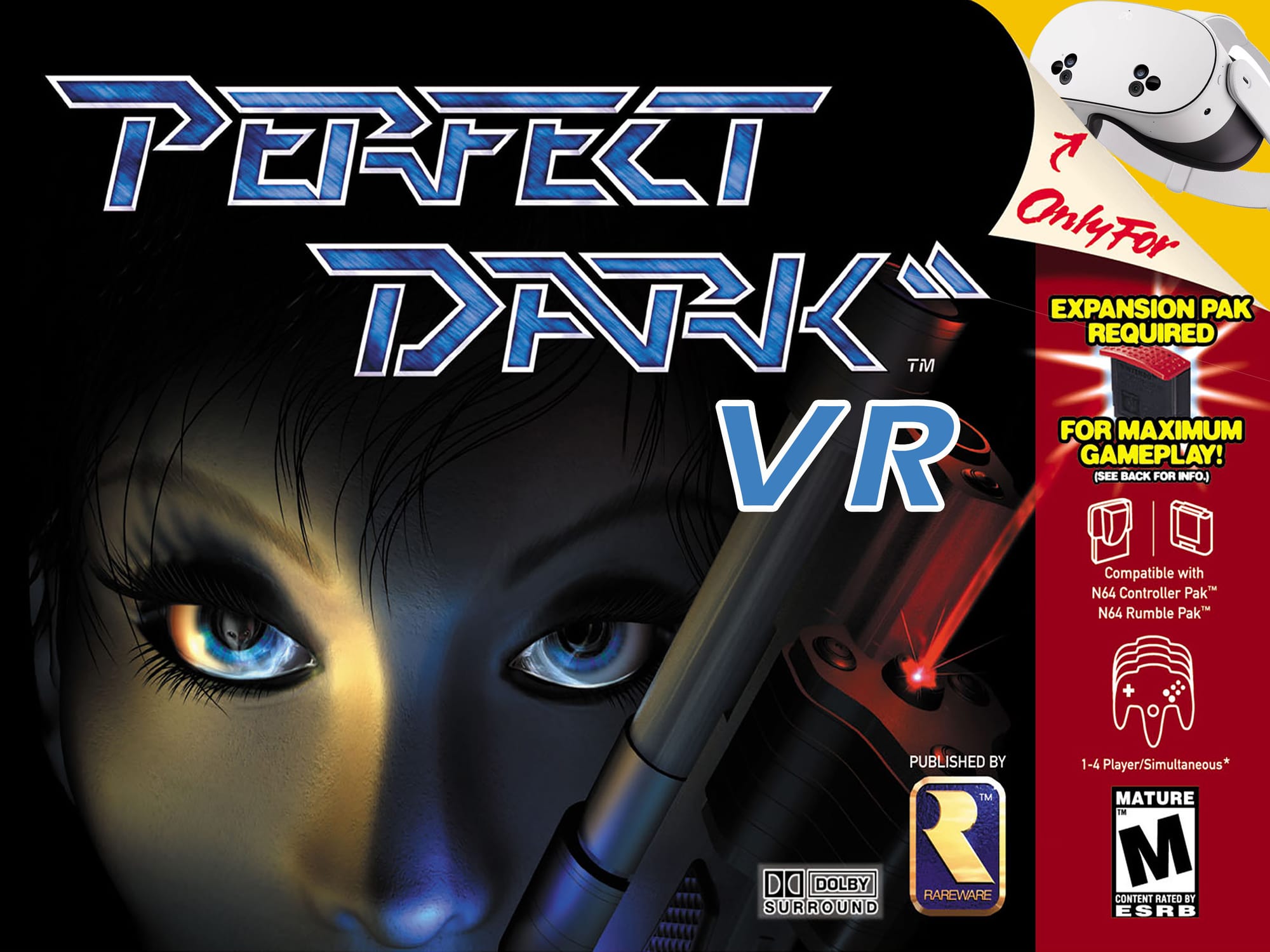
An unofficial VR port of the classic N64 first-person shooter Perfect Dark is well underway.
Created by Alex Le Tux, the VR port will be coming as a standalone app for Meta Quest headsets, and is derived in part from the Perfect Dark decompilation project from 2022.
Alex Le Tux recently uploaded footage of the VR port to their YouTube channel, where the video description lists the build as "experimental" and not suitable for public release. That said, the video, which shows the player running through Perfect Dark's memorable opening level "dataDyne Central: Defection," seems to be running beautifully with head tracking and motion control aiming.
If the response on social media is any indication, the quality of this Perfect Dark port has people pretty excited, with many commenters frothing over the possibility that we'll soon see a fully playable build, plus other VR ports of classic decompiled games.
VR ports of classic games have become an increasingly popular idea in recent years, almost exclusively driven by fans, indie devs, and open-source communities. Among the notable contributions are those from Team Beef, whose unofficial VR ports of classic PC games like id Software's Doom, Quake II, and LucasArts' Jedi Knight games have been so well-received that they even grabbed the attention of id co-founder John Carmack.
Beyond ports alone, excitement around VR emulation of classic games and consoles has also blossomed in recent years. For instance, Virtual Boy Go is an open-source emulator that allows Nintendo's infamous foray into "VR" hardware to live on via Quest headsets. Projects like this demonstrate the ways that VR can serve not only as a preservation tool for classic games, but as a better, more immersive way to experience the classics.
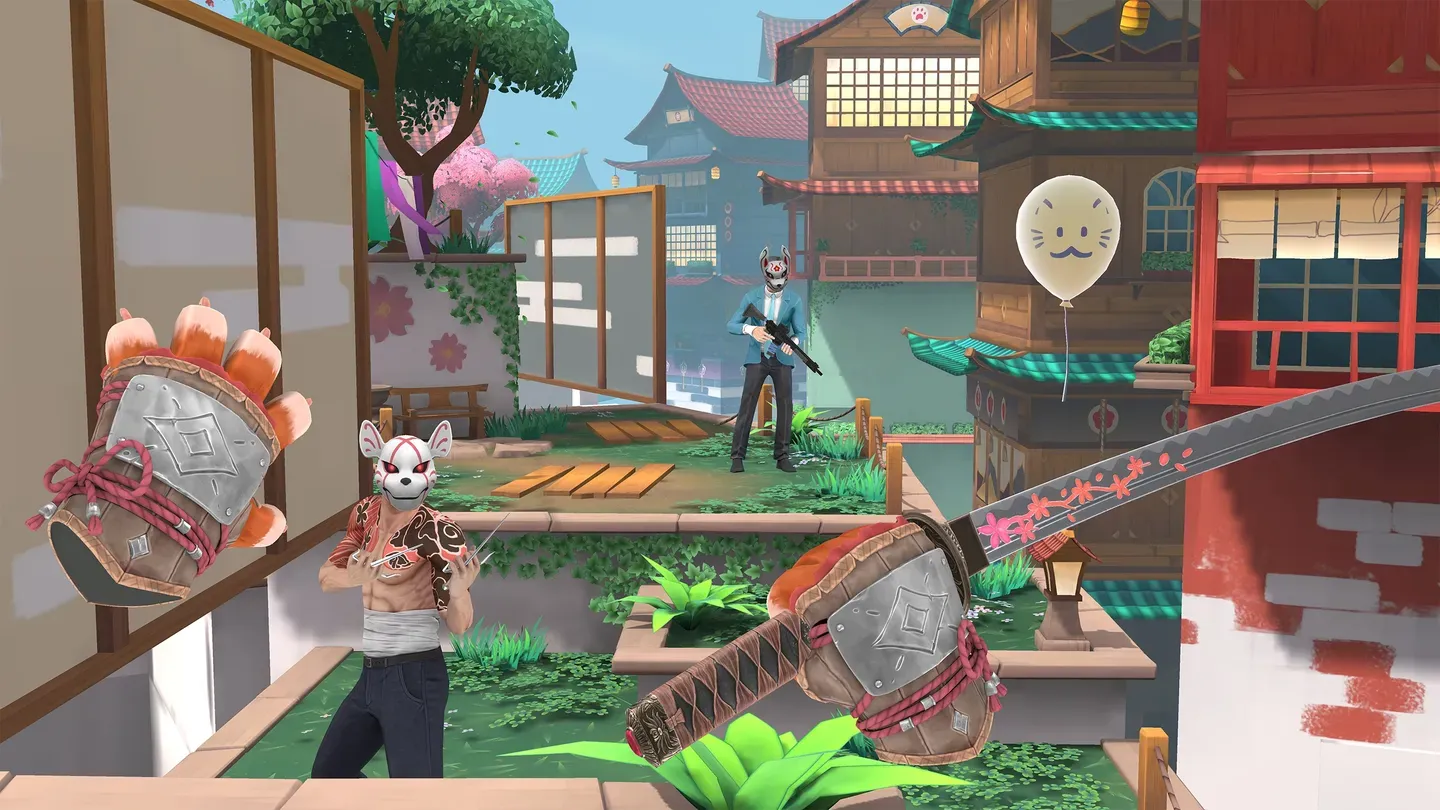
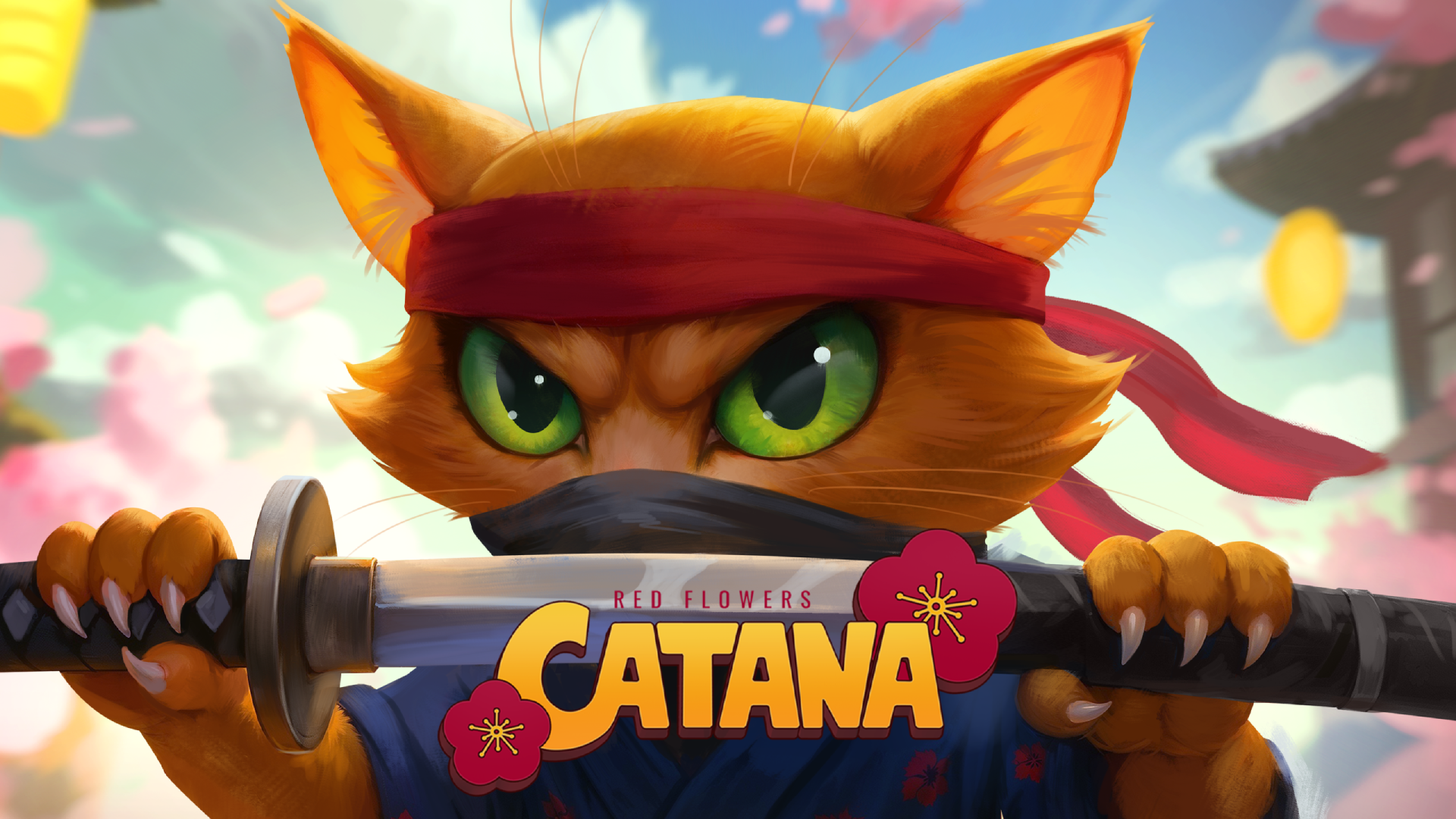
On one hand, Catana: Red Flowers is a violent, fast-paced action game in the mold of Joy Way’s STRIDE, complete with rooftop parkour and katana combat. On the other, it’s a low-stakes restaurant management sandbox in which you cook meals and serve drinks to anthropomorphic aquatic weirdos. Each game mode will appeal to a specific audience. For me, neither quite landed.
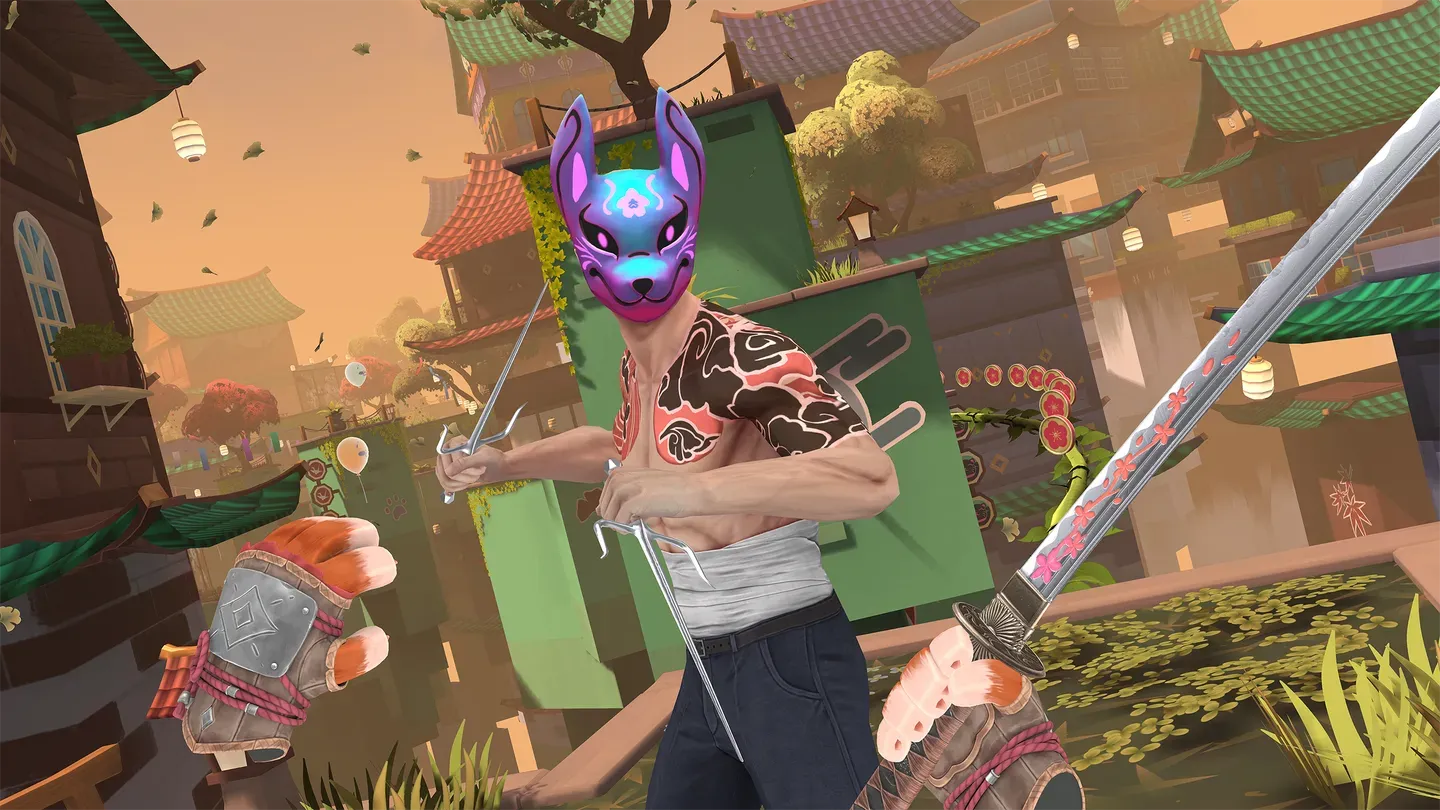
The VR world caught its first glimpse of Joy Way’s Red Flowersduring the 2022 UploadVR Winter Showcase, where it presented as a new take on the studio’s successful parkour action game STRIDE. In the original trailer (and subsequently released demo), Red Flowers allowed players to dash, jump, and scramble their way along the rooftops of an Asia-inspired cityscape, slashing endless Yakuza-like bad guys with a razor-sharp katana. It was dark, violent, and visceral.
As released this past January, Catana: Red Flowers does include some of what we saw in that demo. But it comes with something else, too. In fact, Catana: Red Flowers, as it has eventually arrived, is two games in one.
0:00
/1:38
The fast-paced, violent, parkour action of the original Red Flowers demo is still here, we simply hold our katana with paws instead of hands. That’s because Catana: Red Flowers’ player character is a cat, complete with retractable claws and a penchant for meowing.
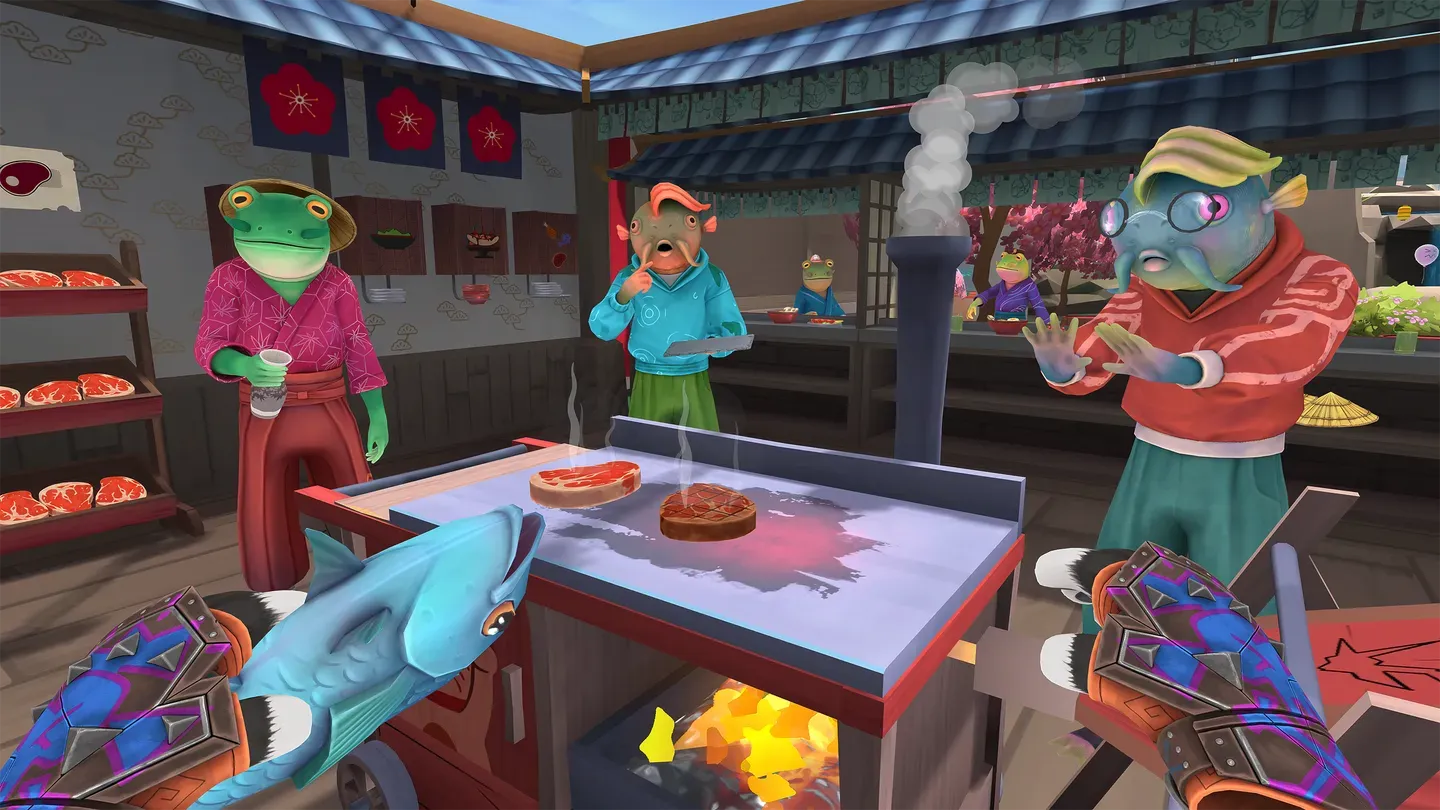
This unexpected tonal shift slightly softens the edges of the original Red Flowers demo (though there’s still an extreme amount of gore unless toggled off in the options menu), but the real departure comes later. When we’ve finished our rooftop scramble, the game reveals its second half. Catana: Red Flowers is also a restaurant management, physics sandbox game.
Between combat runs, players will return to a hub world populated by funny-looking anthropomorphic fish and frogs, who also happen to be customers of the player’s grandfather’s restaurant (weird). Grampa’s sick, or drunk, and it’s up to the player to man (or cat?) the shop in his absence. Here you prep food, cook meals, serve drinks, and fulfill orders under extremely light time constraints. Completing orders earns money, which can be spent on upgrading the restaurant or unlocking cosmetic items.
The hub world also offers a number of optional diversions; a fishing hole, secret areas to explore, special drinks which alter the inhabitants therein (think, low gravity, inflating their heads, forcing them to move in slow motion, etc.), and more. These all provide some much-needed levity to the game’s darker action stages.
On its own, the restaurant mode is solid. The hub world is gorgeous, the music is great, the physics interactions are silly and fun, and running the restaurant is functionally adequate, too. Orders are easy to understand, mechanics work as expected, and the roadmap of progression is clearly articulated. For players who enjoy “chore games,” Catana: Red Flowers’ hub area will be appealing, as there’s always something demanding your attention, always another order to fill.
But this mode never really lands. There’s nothing particularly challenging about the restaurant management portion of the game, nor am I too motivated to grow the business, since the whole thing boils down to simple, endless repetition. They want a fish, cook a fish, serve a fish, repeat forever.
Developer comments in places where the game has been reviewed have indicated that the low-stakes, low difficulty of the game’s restaurant management hub is intentional. It’s designed to be a place to unwind after a few frantic runs through the game’s violent, high-stakes, reflex-fraying parkour kill-a-thons. And I appreciate that. The problem is that I don’t find the action stages of the game particularly appealing either.
While the frantic runs through the visually interesting cityscapes are fast-paced and initially exciting and slicing up Yakuza on the fly can be fun, the novelty quickly wears thin. The controls, while mechanically sound, are tedious. To run, we must pump our hands up and down, which is imprecise, and tiring. Launching to grapple-able objects requires a combination of button presses and physical movements which, while not difficult, is annoying. Dashing is oddly linked to slashing with our katana, which is fine, but just doesn’t feel particularly fun.
For a game mode which essentially hangs its whole identity on speed-runs and timing, the controls just don’t hold up. Call it a skill issue, but there were too many instances of plummeting to my death or failing to medal due to janky controls. Practice makes perfect, but I’m not really motivated to practice.
My criticisms noted, it’s easy to imagine a different response from players who enjoy the speed, action, and violence of Joy Way’s other parkour action games, like the extremely successful STRIDE. And of course, players who enjoy simply being silly in a sandbox or managing a virtual shop will consider the hub world the heart of Catana’s gameplay. Naturally, for players who enjoy both types of games in VR, Catana: Red Flowers is an obvious grand slam.
Gaijin Entertainment knew exactly what it was doing when it came up with the name Aces of Thunder.
Yes it very obviously references its own ubiquitous military mega-arena, but for flight sim fans of a certain vintage, there is a special reverence for what was later marketed as the Great Warplanes Series. These games, for those too young to have experienced them, were a DOS-era series that started with Red Baron and were quickly followed in the early 1990s by Aces of the Pacific and Aces Over Europe. My nostalgia goggles may be a little foggy, but I believe all three were exceptional. Of course, thirty years on, Aces of Thunder can never claim to be part of that great lineage, but just as Red Baron was arguably the greatest WWI flight sim of its day and its sequels were the twin masters of the WWII skies, I’m happy to report that Aces of Thunder continues in that same ancient tradition of being among the very best at what it sets out to do.
The Facts
What is it?: Solo and multiplayer combat flight sim from the makers of War Thunder Platforms: PS VR2, PC VR (Reviewed on Quest 3) Release Date: Out now Developer: Gaijin Entertainment Publisher: Gaijin Entertainment Price: $29.99
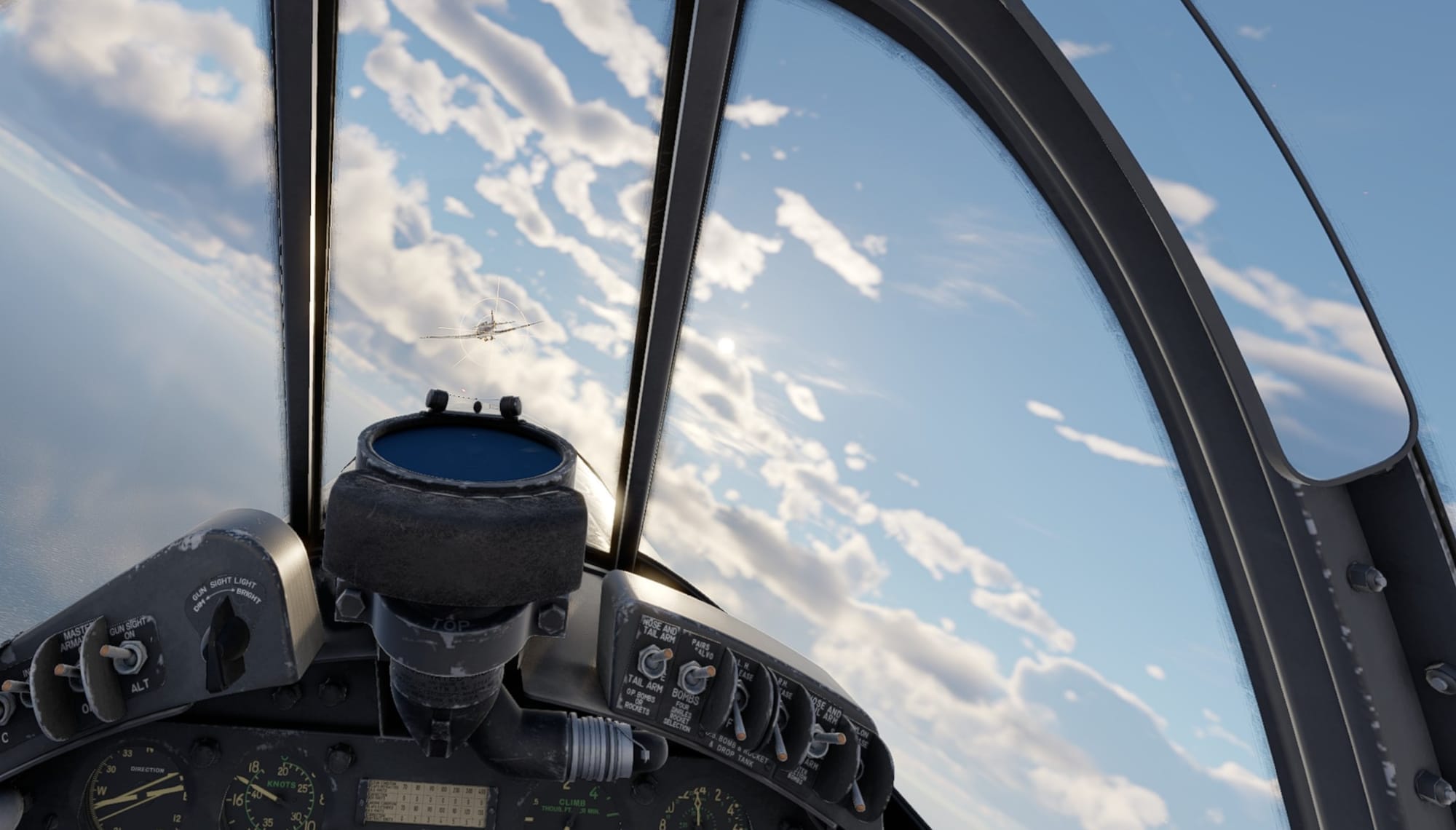
What Aces of Thunder is, very obviously, is a prop-era combat flight sim, designed for - but not exclusive to - VR. Where its sprawling stablemate War Thunder can reliably claim to feature every military fighting vehicle there has ever been (and quite a few that barely escaped the fevered imaginations of their inventors), Aces of Thunder focuses on bona fide World War classics; sadly just four from WWI - including the Fokker Dr.I, naturally - and 20 from the major powers of WWII, including the Mustang, Thunderbolt, Zero, Spitfire and Mosquito, plus equally iconic models from Germany, Japan and USSR that eschewed the enduringly cool naming convention of the western allies. Basically if you, like me, remember life before video games existed, these are all the planes you had dangling from your bedroom ceiling.
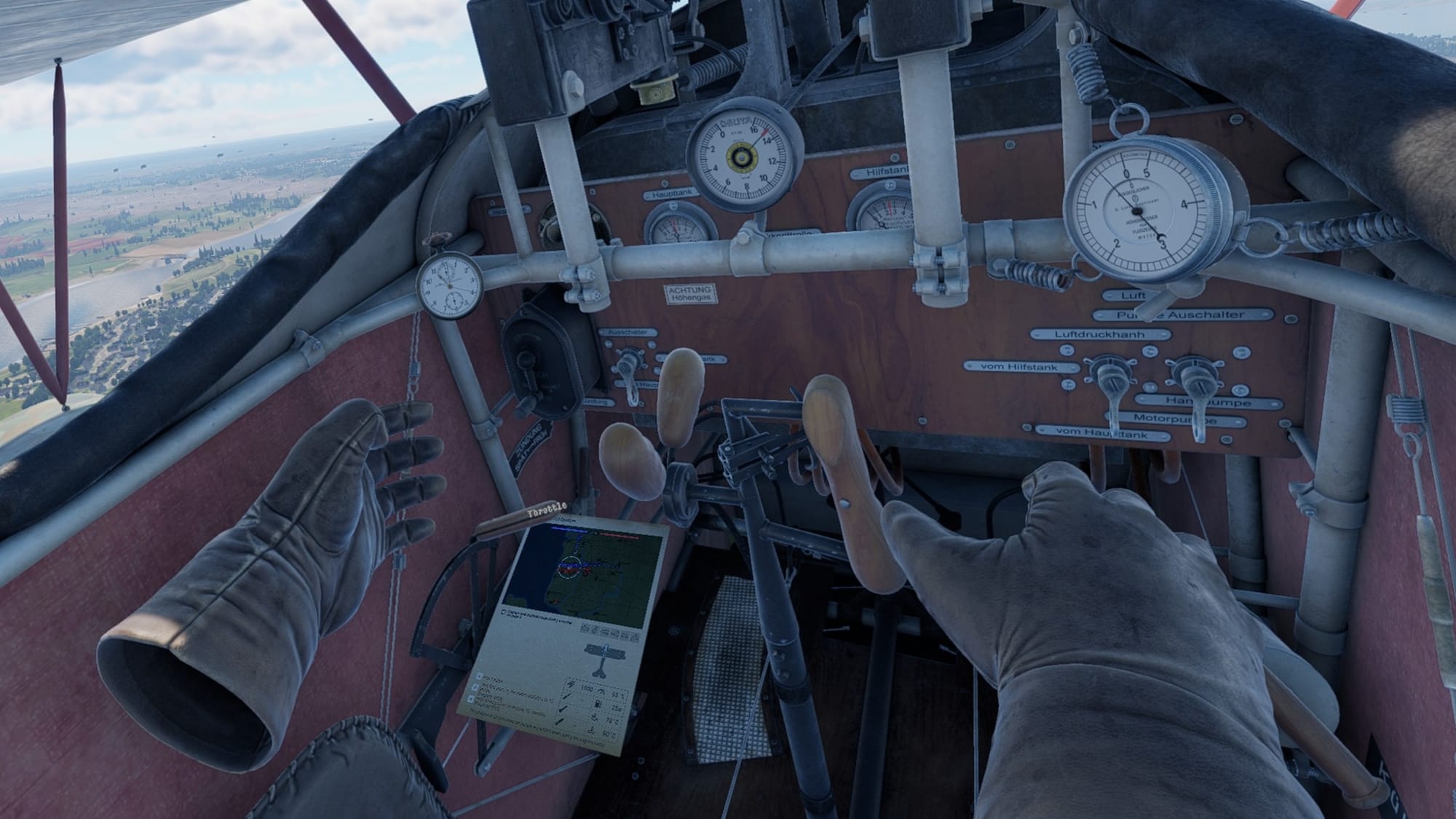
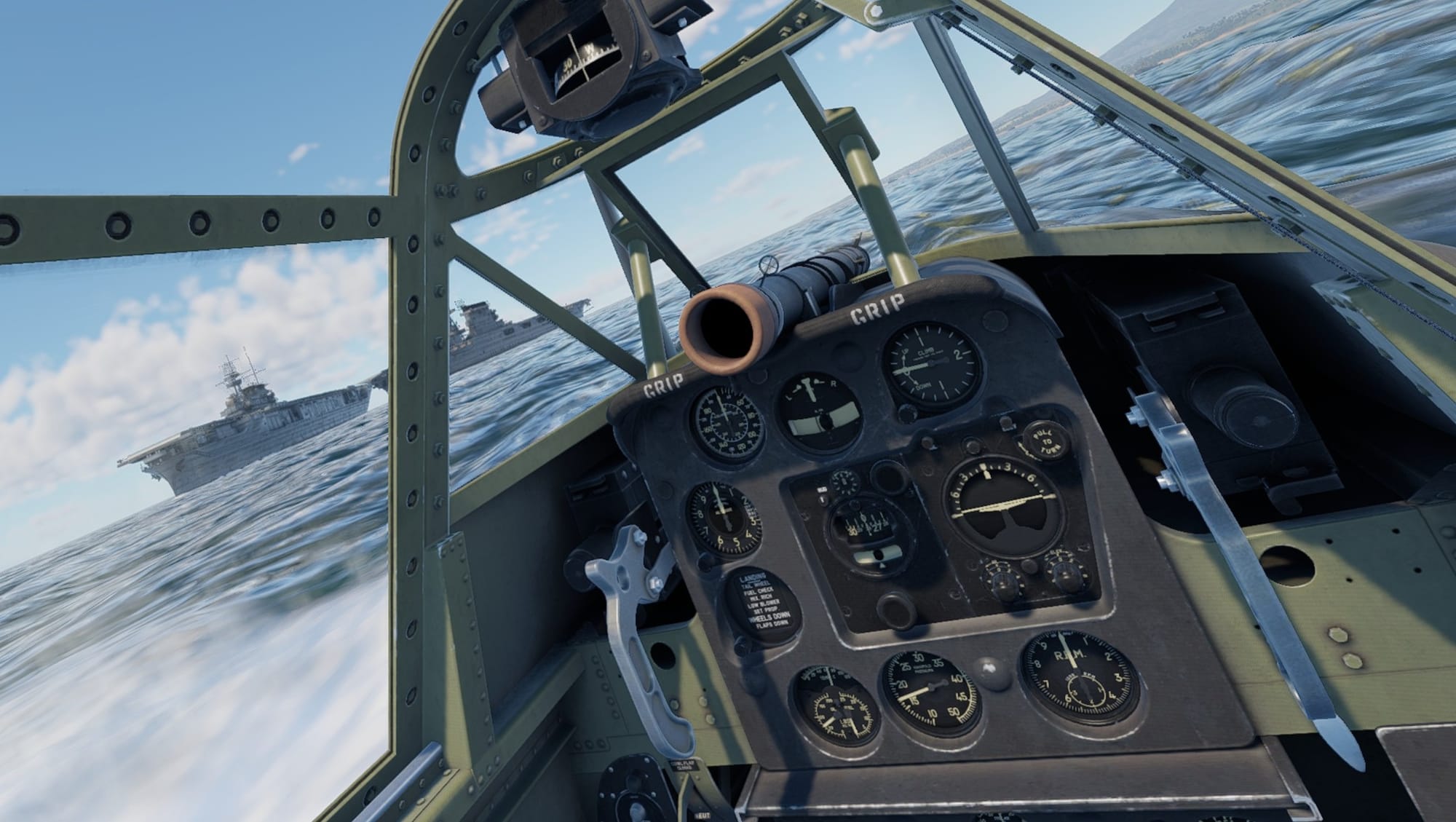
The cockpits are detailed and controls work well, if you avoid the virtual stick of course.
If you wanted to be cynical about Aces of Thunder, you could point out with some self-serving justification that the game is merely an abbreviated version of War Thunder, using more or less the same engine and considerably fewer assets. However, there are two very important distinctions between the two games. One is that while Aces of Thunder’s selection of aircraft is limited to a handful compared to War Thunder’s many hundreds, all of them are accessible from the get-go, with the cost of access being a very reasonable old school price of $30 (or $50 for the Deluxe Edition with five extra warbirds). There is no tedious grind to unlock obscure stopgap aircraft or unnecessary fittings, you simply pick a plane and take to the sky. As rudimentary as that sounds, it’s remarkably liberating and intuitive.
The other difference is just how integral VR is to Aces of Thunder. That may seem an obvious thing to point out, but with a flatscreen version that offers crossplay, Gaijin could so easily have undermined its own efforts by including a superfluous or seemingly harmless HUD element or camera view that favored one group of players over another. Take War Thunder; it has perfectly serviceable VR functionality, sure, but it’s not in the slightest bit necessary or helpful. Here though your only view is from the cockpit. There are no third-person views or chase cameras, no floating icons or voiceover cues to suggest your plane is about to spectacularly break apart, or indeed hardly anything that would constitute any element of a gaming HUD - aside from a map that sits on your lap and I really had to lean into to get anything from. In short, all your feedback about your mission, the state of your aircraft and any potential threats all must come from the timely and judicious use of your Mk 1 eyes and ears. The challenge of the game and why it is so compulsively immersive is because, yes, you have to master the controls, but simultaneous to that is the need to be as aware of what your cockpit instrumentation is telling you as much as the creaking of the airframe or a violently oscillating wing before it snaps off and sends you spinning into the briny below.
Whoops.
As well as multiplayer battles that are Gaijin's stock-in-trade - and which we’ll get to shortly - Aces of Thunder offers a generous selection of solo encounters. There are 14 single-player missions and nine so-called War Stories. Functionally there’s no difference between the two, save the fact that the former can be attempted in any order and are not based on any particular historical encounter. War Stories meanwhile run through the truncated highlights of WWII, from patrolling the White Cliffs of Dover and the seas around Pearl Harbor, to supporting efforts over Normandy and Iwo Jima. There’s no real thread between the missions and many can be completed just by turning up and following the waypoints, which, contrary to what you might think, makes them more replayable than they have any right to be.
The Mission Editor is the real star of the single-player show, partly because it’s a proper throwback to the combat flight sims of old. Here you can select a theater relevant to the plane you have selected, a sector of the map where the action is to happen and how the front line is arranged, then pick the type of engagement you want, the weather, time of day and the skill level you wish to fly with. Admittedly there’s not the compulsion of a properly orchestrated narrative campaign, but if you just want a quick sortie over enemy skies, or to brush up on your ground attack skills against a competent and scalable AI, the options are plentiful.
As you might expect, multiplayer battles play out in much the same way as War Thunder, although with a naturally smaller player population your choice of engagement is much more limited. You pick the aircraft you want to fly and the game will seek out an appropriate battle for you to join, with bots filling the skies in the absence of human pilots. If you want a more tailored experience, Custom Battles can be created and joined with much the same parameters as the single-player Mission Builder, with the added benefit that you can go hog wild and have Sopwith Camels battling over the Strait of Saipan. Naturally I got most of my flying time in before the game went live, so I didn’t get to experience how well the matchmaking held up, but given the developer’s 15-year experience with War Thunder and the many thousands that play it every day, it’s hard to imagine the server architecture being anything other than reliable.
It's the wurst.
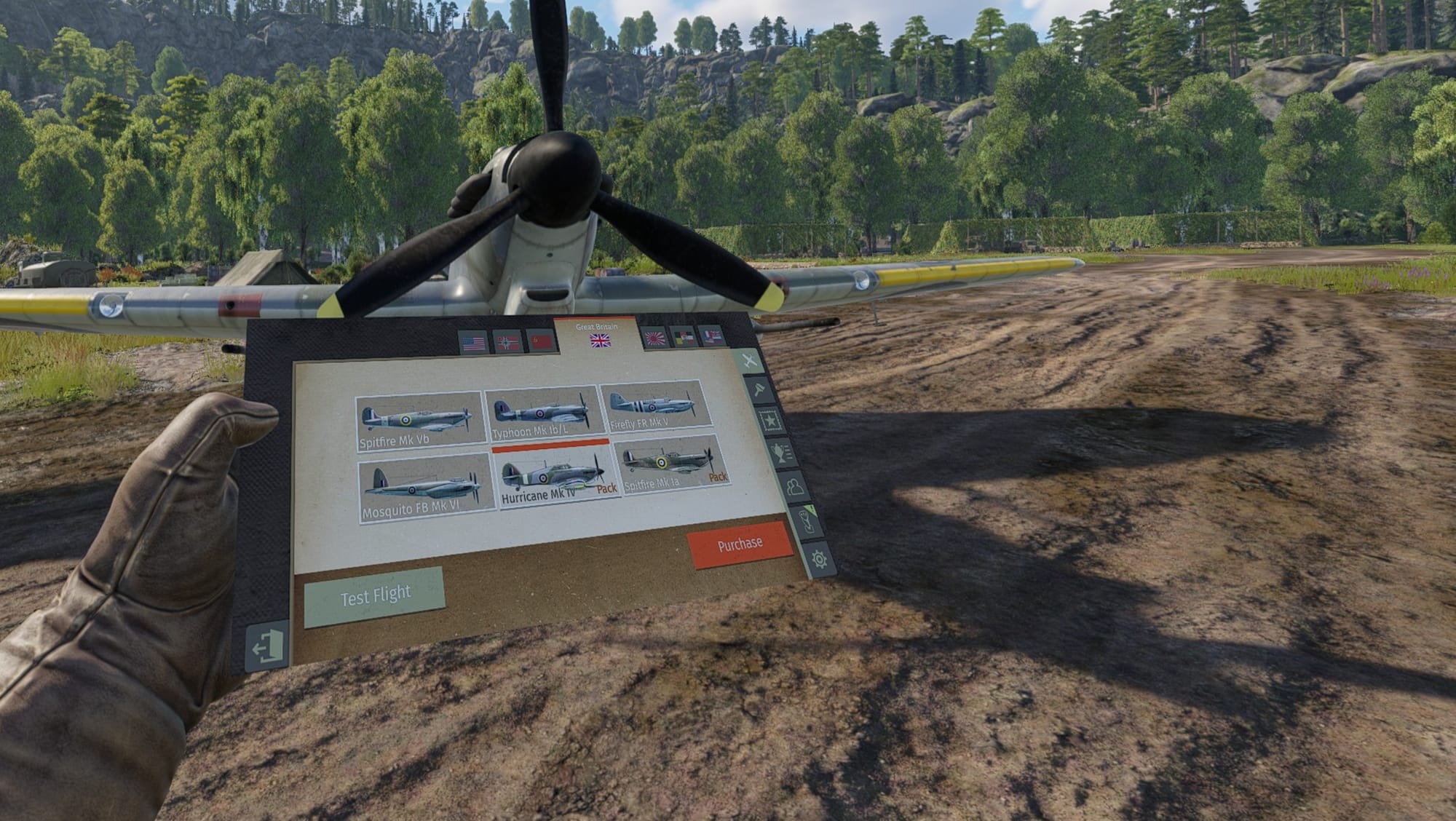
I had only two issues with Aces of Thunder. The first is a natural consequence of enjoying what there is - which is to say I wanted more of everything - WWI planes and maps especially. But my main bugbear was the sparse and often unhelpful presentation away from the meat and potatoes of the main game. There really isn't much assistance to speak of at all - no tooltips, no tutorial - and the game starts without fanfare and dumps you unceremoniously into the middle of a makeshift airfield, with only distant birdsong and some old gramophone dirge to stir you to action. That action in common with many VR games is to make your selections from an unconvincing clipboard that’s been surgically attached to your flying glove. The problem is that navigating the various menus with said glove is clumsy in the extreme. It’s like trying to operate a phone with a sausage. Sure you get used to it - because you have to - and if you just want to pick a plane and take to the skies you can just about accept the lack of a more precise pointer system, but for anything more than that - such as tweaking the graphical settings, or God forbid, reassigning controls to the various axes of your HOTAS and rudder setup, well, prepare yourself for an exercise in fist-shaking frustration. And don’t think it’s any easier reassigning controls in the flatscreen mode either, because it most definitely isn’t.
Comfort
I can't claim to have played the majority of VR games and I'm a little behind on current releases, but I think Aces of Thunder may be the first modern virtual reality video game I've played that has zero comfort options. If you have a problem walking around in games that's not a problem as you're seated 99.9% of the time, but even I, a seasoned space dogfighter, can sometimes feel my lunch rising up when pulling tight turns to avoid ending up in someone else's sights - especially when aboard the game's magnificent WWI flying machines that can turn on a relative dime. Dear reader: you have been warned.
Thankfully, once you have the limited settings just how you like them and your controls have been similarly configured (which, by the way, work well if you avoid virtual stick options and go with your regular VR controllers or gamepad), Aces of Thunder becomes a consistently visceral and thrilling experience, where the term ‘flying by the seat of your pants’ has probably never felt more apt. On my modest PC that just about ticks all the boxes for the recommended spec, I found the visual fidelity and graphical performance to be excellent throughout, with the obvious caveats of pop-up at manageable distances and the odd realignment of foliage as you pass over treetops, but not enough to detract from the game in any meaningful way. I thought the Eastern Front maps to be rather drab, with textures that look like they've been extracted from a '90s Quake mod, and many of the buildings leave a lot to be desired, but that's as much a feature of them being shipped in from War Thunder. The proper detail is in the aircraft and how they handle and this is where the game shines, especially when tracers are flying and parts of someone's wing are pinging past your cockpit. It serves to highlight how wonderfully immersive the game is once you’ve acclimatized to the bare bones presentation and the curtailed features necessary to maintain a level VR playing field.
Put simply, despite lacking in approachability and customization features, Aces of Thunder offers one of the most thrilling venues for combat VR gaming has to offer and is a fitting callback to the classic flight sims of yesteryear.
UploadVR uses a 5-Star rating system for our game reviews – you can read a breakdown of each star rating in our review guidelines.
The best-selling golf game on Quest is expanding in 2026, with new features, new courses, and a port to Steam released PC VR.
Ryan Engle, founder of GOLF+, recently published a fairly ambitious roadmap for the popular golf game, which specifies the addition of a new social lobby, UI improvements, and over a dozen new courses.
Engle announced that GOLF+ will soon be coming to PC VR via Steam, and that this version will sport graphical "enhancements."
GOLF+ is currently available through the Meta PC VR Store, as well as on Meta Quest, where it has sold over 1.5 million copies (as reported in February 2025), and sits at 15th on Meta's all-time best-selling list.
Engle confirmed that the team are targeting a "unified experience" across platforms, with "shared physics, multiplayer, and cross-play" across all platforms.
0:00
/1:01
Additional comment from Engle confirmed that the PC VR port is a critical step toward a potential GOLF+ PSVR2 port. "The work we're doing now will set us up for that," wrote Engle.
GOLF+ is $30 on the Meta Horizon Store for Quest headsets. The game comes with three selectable courses, while 34 paid DLC courses are also offered, or you can access them all for $10/month with GOLF+ Pass.
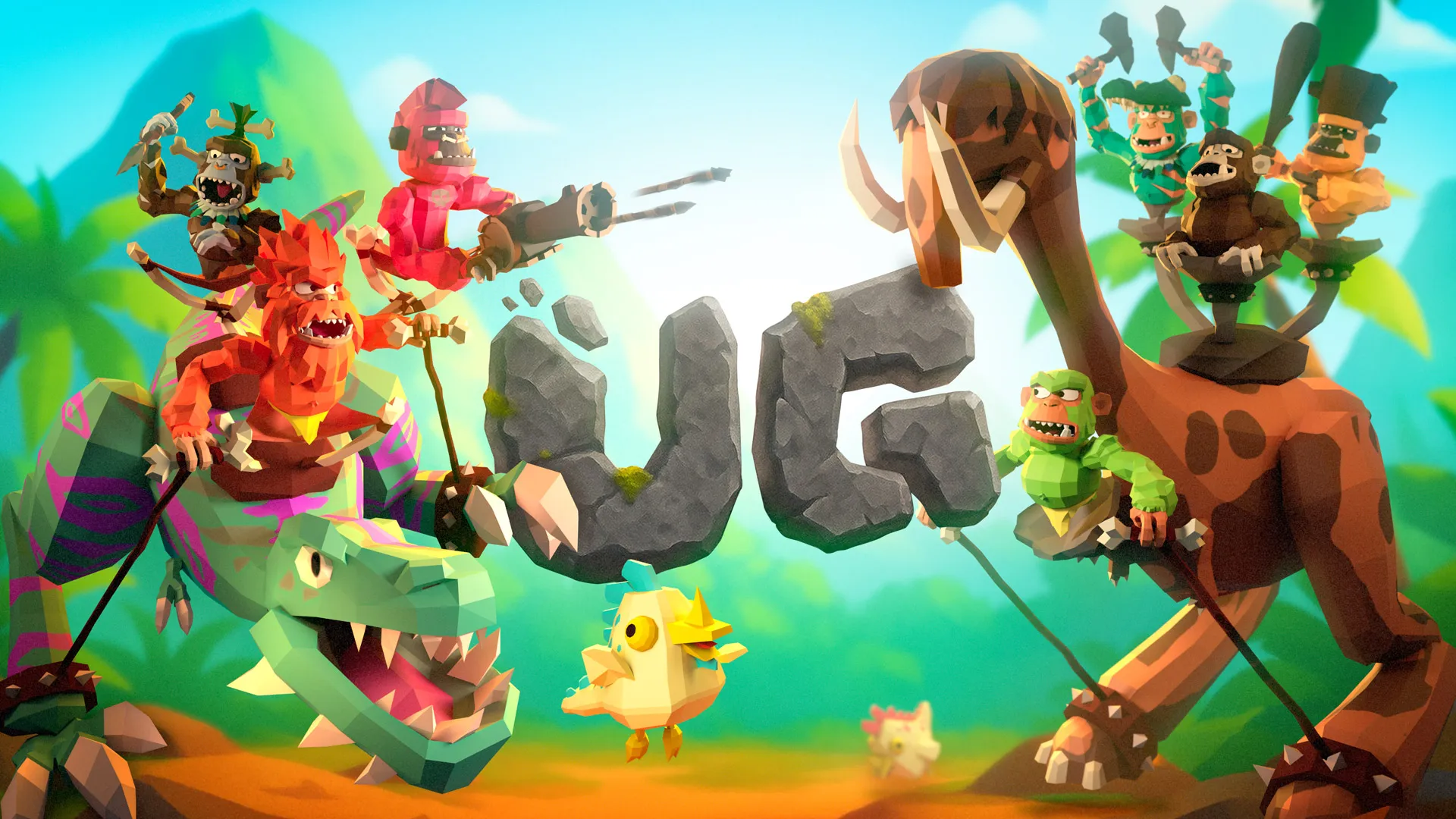
ENVER and Trass Games, who partnered to help fund the top-grossing Meta Quest title UG, have announced a joint initiative to bring new VR games to market.
At the time of writing, ContinuumXR's UG, a social-first title centered on hatching and raising your own dinosaur to go on adventures with, is the number one grossing game on the Quest platform. This is especially impressive given it is above known juggernauts like Beat Saber, Gorilla Tag, Animal Company, and Blade & Sorcery: Nomad.
ENVER, known for MotoX and Scary Baboon, and Trass Games, the studio behind best-seller Yeeps, have confirmed up to two million dollars in investments for 'emerging VR studios' building social-first, original experiences. This follows their success with UG, for which they provided funding as well as advising on marketing.
“UG shows what’s possible when strong developers are backed by partners who understand how VR games actually succeed today,” said Kyle Joyce, ENVER CEO. “This collaboration with Trass Games is about building a repeatable model. We want to find the next studios with real potential and give them the resources and guidance to scale.”
The free-to-play social market has shown more growth in the VR space than any other genre, particularly with younger users. Six out of the top ten grossing titles on Meta Quest are free-to-play titles, with UG joining Yeeps, Gorilla Tag, Animal Company, Roblox, and VRChat at the top of the charts. Beat Saber, Blade & Sorcery: Nomad, Bonelab, and Golf+ are the paid titles rounding out the list.
There is no word yet of which studios and projects are a part of this new initiative.
UG is available on the Meta Horizon Store for Quest headsets.
Developer Pixelity confirmed that Evangelion: Δ Cross Reflections will be shown at the franchise's 30th anniversary event this month.
Korea-based indie studio Pixelity announced a VR game based on the iconic Neon Genesis Evangelion franchise back in February 2025, and now fans have gotten their first teaser image. According to past statements, Evangelion: Δ Cross Reflections will tell an original story set in the world of the classic '90s anime and will be released in three parts.
The first installment in this series is expected to launch at some point in 2026, but a select group of fans will get to try Evangelion: Δ Cross Reflections out for themselves in a hands-on demo during the upcoming Evangelion 30th anniversary event. It will take place in the Yokohama Arena in Yokohama, Japan from February 21 to February 23, as reported here.
📢 25 days until "EVANGELION:30+; 30th ANNIVERSARY OF EVANGELION"!
News of Evangelion: Δ Cross Reflections' presence among the festivities was confirmed alongside a teaser image of the game on social media, which seems to show the player character signing up with the angel-battling organization NERV. This screenshot reveals a cel-shaded art style in a similar vein to games like Persona 5 or Dragon Ball: Sparking! Zero.
As noted before, there is still no official release date for Evangelion: Δ Cross Reflections, nor is there any word on what platforms the game will be available on when it does launch. Late last year, Pixelity announced that it was accepting public Focus Group Test applications ahead of this year's release.
The Utah NeuroRobotics Lab is exploring Meta's Neural Band as an accessibility tool instead of relying on chin joysticks, head switches, and sip-and-puff controls.
Surface electromyography (sEMG) is already being used to interpret intended hand and finger movements for people with limited mobility, but the technology currently used for research can be bulky, awkward, and relatively expensive. The Neural Band is a slim, stylish mass-produced sEMG wristband bundled with the Meta Ray-Ban Display glasses, making it a great option for future research.
Neural signals captured at the wrist can often be detected even when physical movement is limited or impossible. The research includes participants with spinal cord injuries and motor impairments, exploring how reliably those signals can be translated into digital input across different users. It’s early-stage work, but it targets a long-standing problem in human-computer interaction.
Accessibility Research Areas
The Utah NeuroRobotics Lab develops assistive technologies for people with neuromuscular impairments such as stroke, spinal cord injury, traumatic brain injury, ALS, and limb loss. The possible solutions are quite diverse, ranging from robotics and prosthetic limbs, exoskeletons, adaptive wheelchairs, and adaptive skiing systems that restore mobility or sensation.
The benefits could be substantial. Rather than chin joysticks, head switches, and sip-and-puff controls, the Neural Band could decode a person’s motor intention from nerve and muscle signals to control this technology intuitively. The goal is to leverage the Neural Band to control computers, smart devices, and physical devices, greatly expanding ease and functionality.
The University of Utah partnership is focused on understanding signal quality, consistency, and long-term viability. It’s unclear when or if Meta’s Neural Band will launch as a standalone accessory to connect to computers and assistive devices. However, the data gathered here could influence multiple categories of assistive and adaptive technology in the near future.
Testing this technology with users who have atypical neuromuscular signals could increase adaptability. That kind of robustness benefits accessibility first, but it also improves the experience for everyone else.
The Neural Band Is Already Assistive
We recently covered how Meta’s Neural Band can translate subtle signals into text input, effectively enabling handwriting-style interaction without a physical keyboard. Neural Band handwriting recognition focuses on productivity and AR use cases, but the accessibility implications are already clear.
If a system can detect intent rather than completed physical motion, it could enable users to access a variety of devices to type, navigate menus, and interact with interfaces without touchscreens, controllers, or large hand-waving gestures. Neural input offers a silent, private alternative to voice control, which is important in shared and public spaces.
Developer Teravision Games announced through an official statement that Orcs Must Die: By The Blade will now release on February 12, after a brief delay in late January.
Originally set to release on January 22, developer Teravision Games announced Orcs Must Die: By The Blade’s new release date. With the game now launching on February 12, the statement goes on to explain that they had to postpone the original launch due to an issue found during certification. Made for Quest systems, the Quest 2 version had unexpected crashes that made the decision to delay it inevitable. The Quest 3/3S version will now release on that new date, while the older model’s version will be available at a later unspecified date.
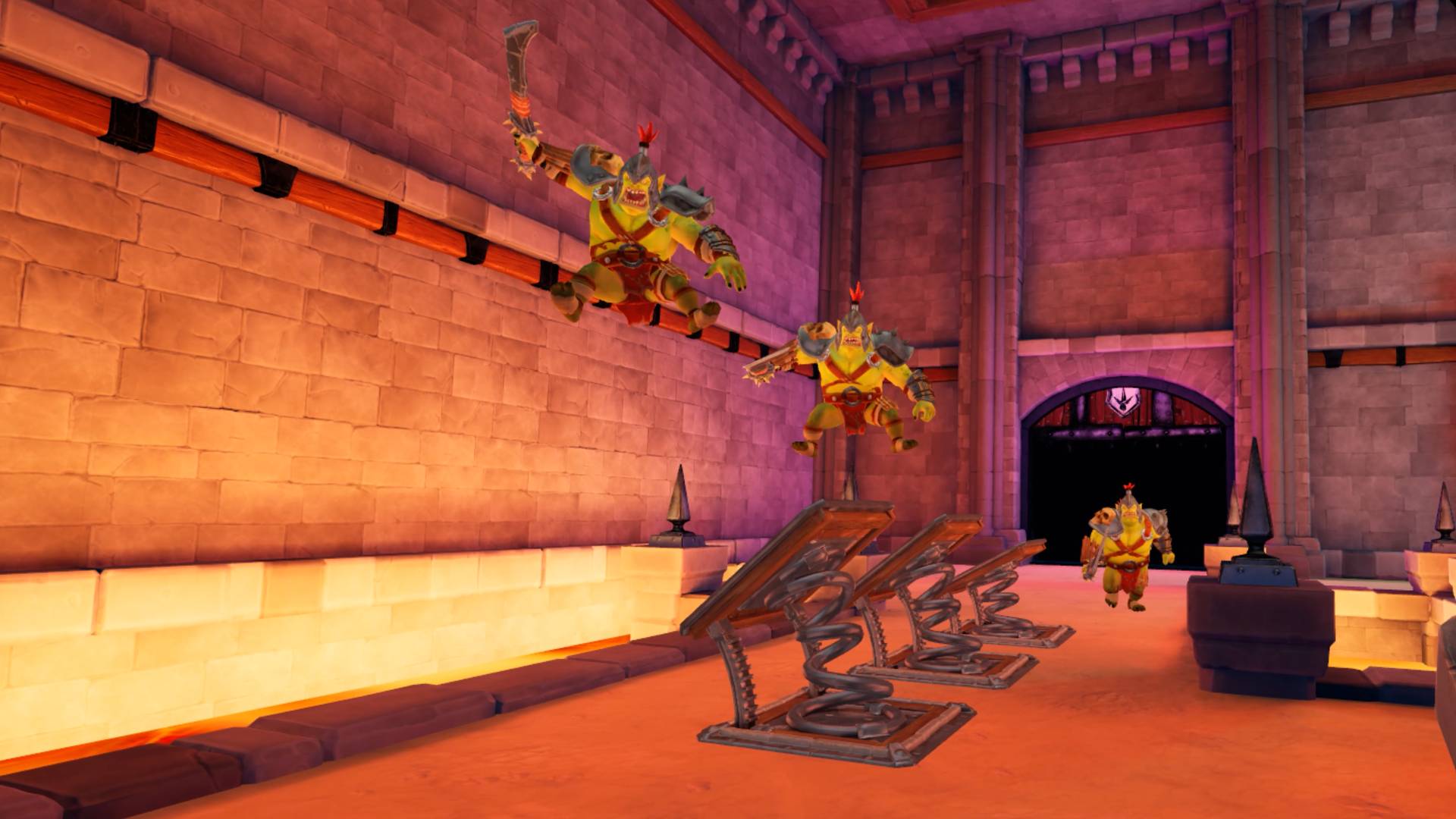
Orcs Must Die: By The Blade is a VR reimagining of the famous tower defense series created by Robot Entertainment. Now featuring from-the-ground-up virtual reality mechanics like physically swinging a sword and timed parries, the medieval campaign will last 12 missions across three chapters. It will also be fully playable in online co-op. Well-placed traps and its trademark comedy will be staples of the experience, with magic, 15 different traps, and 15 weapons at players’ disposal to make short work of the dangerous orcs.
VR veterans Teravision Games had formerly worked on Captain ToonHead vs. The Punks from Outer Space, most recently ported to PlayStation VR2 in 2024. Orcs Must Die: By The Blade launches February 12 on Meta Quest 3/3S, with a Quest 2 version in the works.
With Horizon OS v85 PTC, Quest 3 can turn any surface into a virtual keyboard, and Meta says you can remap the Quest 3S action button.
The Public Test Channel (PTC) is the beta release channel of Quest's Horizon OS. If you opt in, your headset receives a pre-release build of each upcoming version.
Note that there are often features in the eventual stable version not present in the PTC, and occasionally (but rarely) features or changes in the PTC don't make it to the stable version.
Here are 2 key features Meta is testing in Horizon OS v85 PTC:
Surface Keyboard
Text entry is a notorious challenge for XR devices when you're not carrying a Bluetooth keyboard.
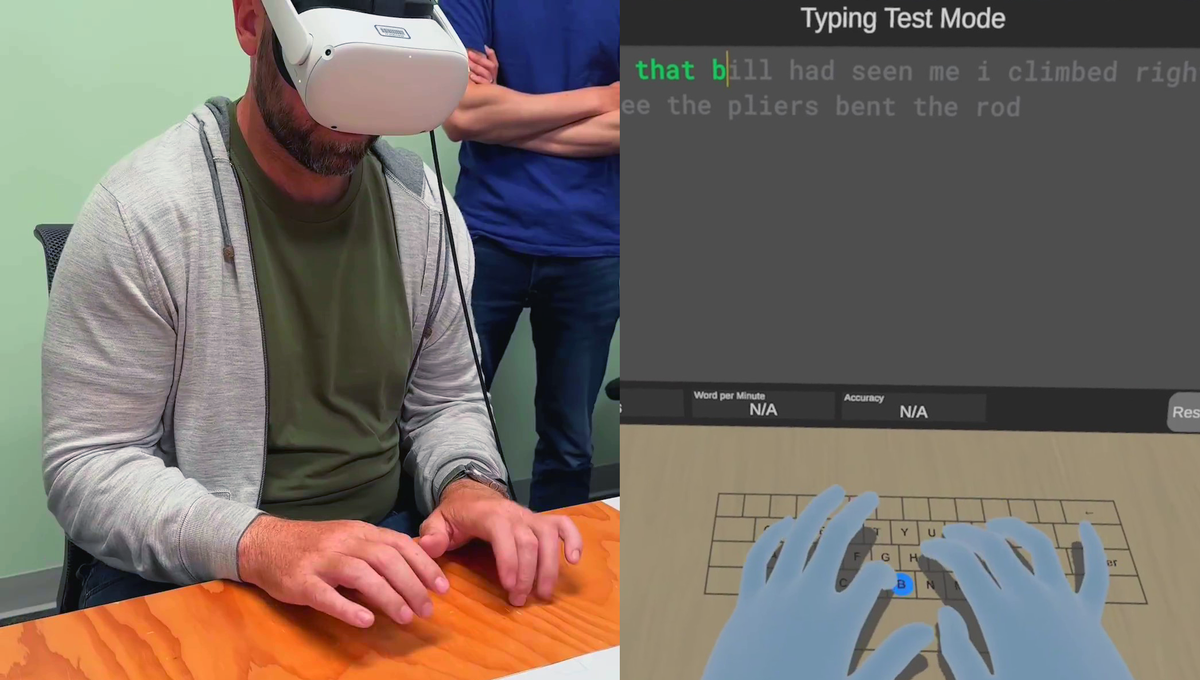
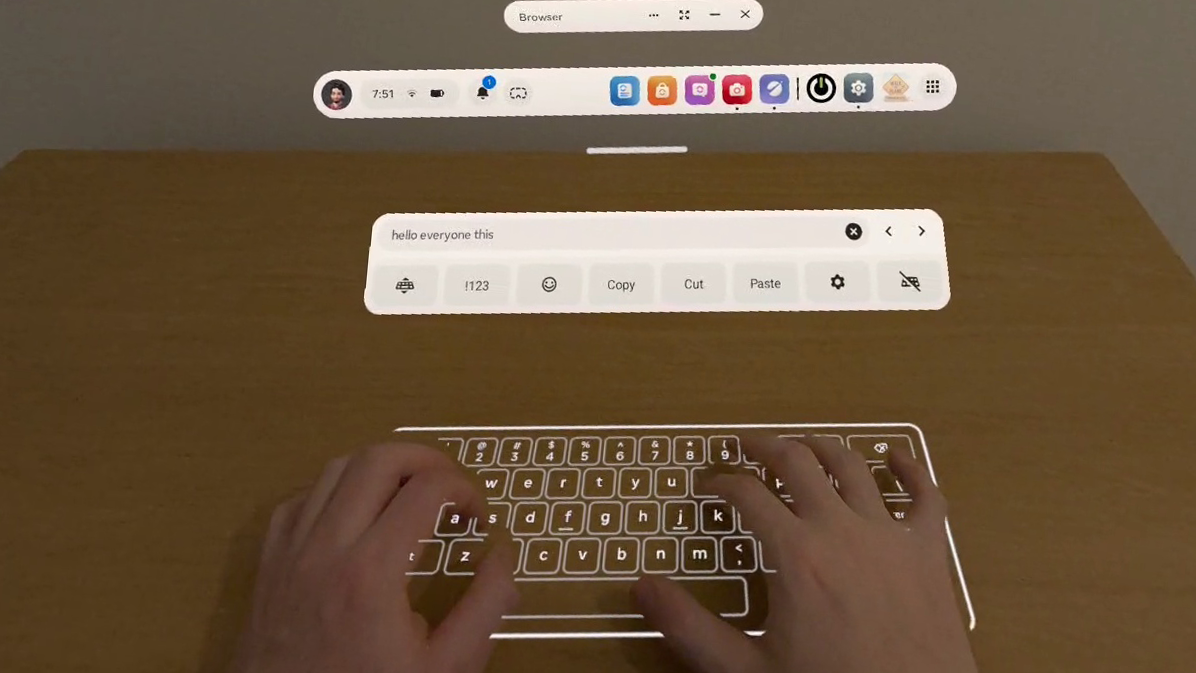
Exclusively available as an experimental feature on Quest 3, Surface Keyboard adds a virtual keyboard with a virtual touchpad on top of any surface, such as a table or desk.
To set it up, you place your hands flat on the table where you want the keyboard to be positioned, and a few seconds later it spawns. This is the height calibration step.
0:00
/1:05
UploadVR testing the Horizon OS v85 PTC Surface Keyboard with Touchpad.
Testing Surface Keyboard out, as you can see in the video above, I found it to be remarkably accurate. The ability to rest my hands makes it far preferable to a floating virtual keyboard, and I can type far faster already. It seems to predict the pressure of your fingers against a surface, not just the contact, making it possible.
I was far less impressed with the virtual touchpad. While it works, and is less strenuous than reaching out your arm to point, it often registers false positive inputs when you're not directly looking at it.
Another notable limitation is that Surface Keyboard only shows up in the Horizon OS home space, passthrough or virtual. Meta has an API for developers to use the floating keyboard, and we'll keep an eye out for any signs of a similar API for Surface Keyboard when the feature launches to the stable channel.
Meta has been researching this technology for at least six years, and executives showed off a well-along prototype in 2023, with Mark Zuckerberg claiming he could reach 100 words per minute. However, that prototype required a tracking marker tag on the table, as could be seen in the clips Meta shared at the time. And the company didn't disclose the error rate of the prototype.
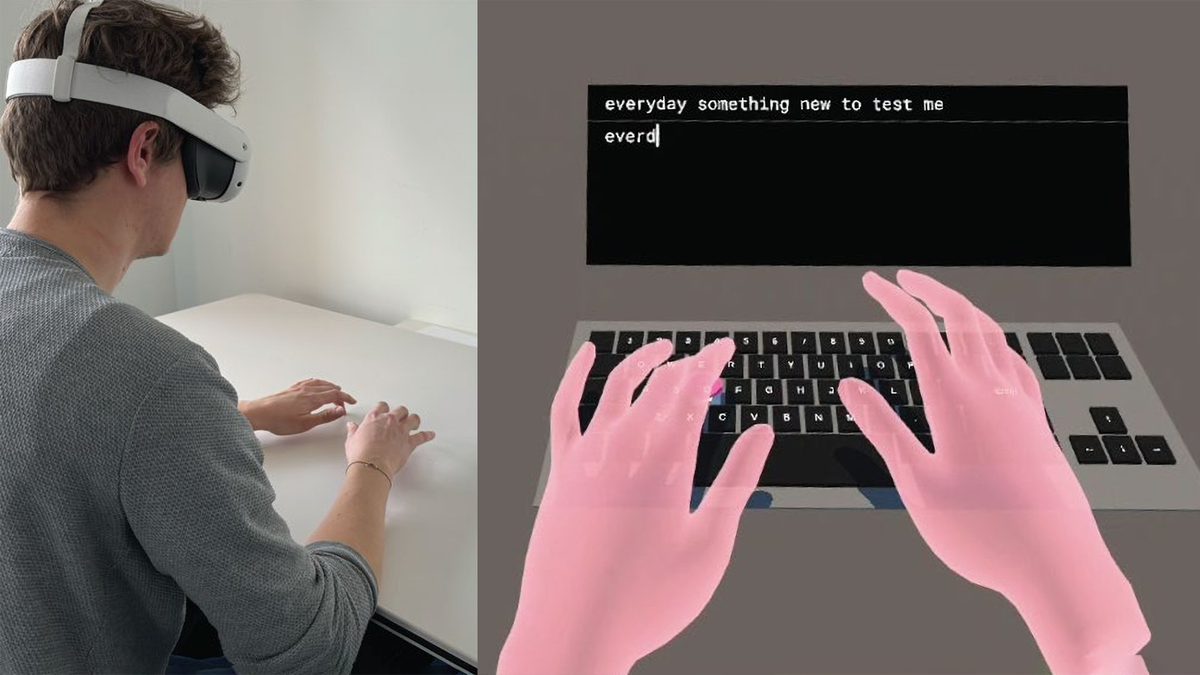
Then, in 2024, researchers from Meta and ETH Zurich said that they had solved the problem of turning any surface into a keyboard, without markers, by combining a neural network that predicts touch events with a language model.
Meta hasn't said whether this research is what led to the shipping feature, but it seems likely to at least be related.
You can find Surface Keyboard in the Advanced settings on Horizon OS v85 if you have a Quest 3.
It's unclear why the feature isn't (yet) available on Quest 3S.
Remap Quest 3S Action Button
While Quest 3S doesn't currently have the Surface Keyboard feature, it does get its own new exclusive feature in Horizon OS v85 PTC, according to Meta.
Quest 3S has an 'Action Button', which, since the headset launched, has served one function: toggling passthrough. Press it while in a VR game and the game will pause and you'll see the real world. It's essentially a "pause VR, I need to see my surroundings" button.
Now, with v85 PTC, Meta says that Quest 3S owners can remap the Action Button.
Our Quest 3S does not yet have v85 PTC, so we don't yet know what it can be remapped to. If you have a Quest 3S running Horizon OS v85 PTC and have this ability, please let us know in the comments below.
Navigator Set To Be Default & Horizon Feed Removed
If you missed it, earlier this week we reported Meta's announcement that "starting" in Horizon OS v85 stable, the new 'Navigator' UI will become the default, and, separately, the Horizon Feed will be removed.
In the PTC build of Horizon v85, at least on my Quest 3, that hasn't happened yet. This is likely another of Meta's very slow "rollouts".
UPDATE February 3: our Quest 3 received a further sub-update adding the Touchpad to the Surface Keyboard feature. This article has been updated to reflect that.
D-Day VR Museum, as its name describes, is a virtual reality exhibition of one of the most pivotal moments in history, using every audiovisual tool to keep the education engaging. Read on for our full thoughts.
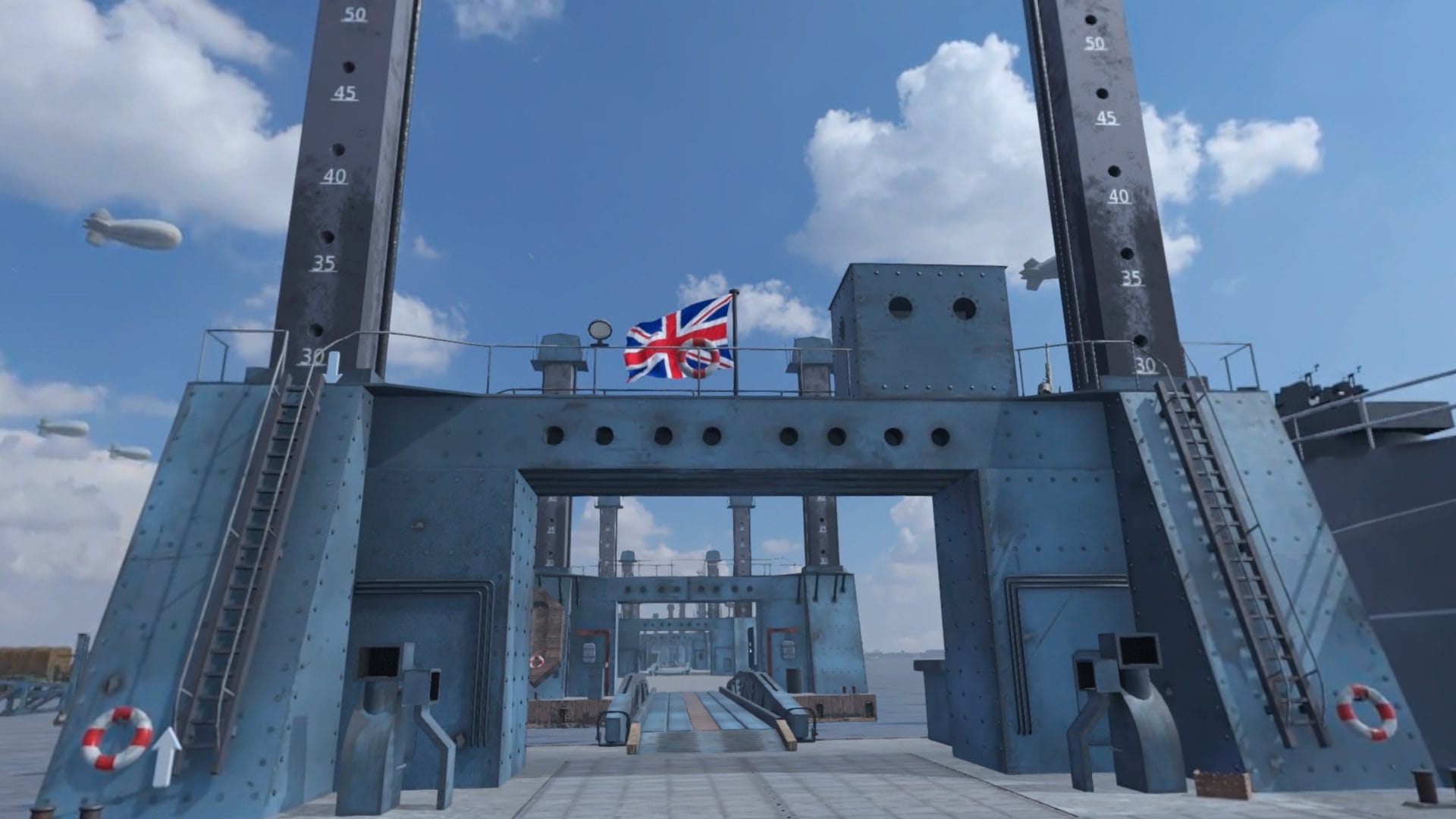
On June 6, 1944, the Allied Forces launched the largest amphibious assault in history, turning the tide on the beaches of Normandy, eventually winning the Second World War against the Axis powers. This defining moment came to be known as D-Day. Countless accounts of it have been recorded since, making it a key point in history where democracy prevailed. In the process, it has spawned books, movies, and now, a vivid virtual reality exhibition called D-Day VR Museum. Where this experience succeeds is in using every possible medium that a headset allows: from a traditional exhibit all the way to walking through recreated iconic locations and making the player relive the paratroopers' airborne landings.
The Facts
What is it?: An interactive VR museum about the D-Day invasion. Platforms: Steam Release Date: Out now Developer: Lichtblau IT Publisher: Diverently GmbH Price: $14.99
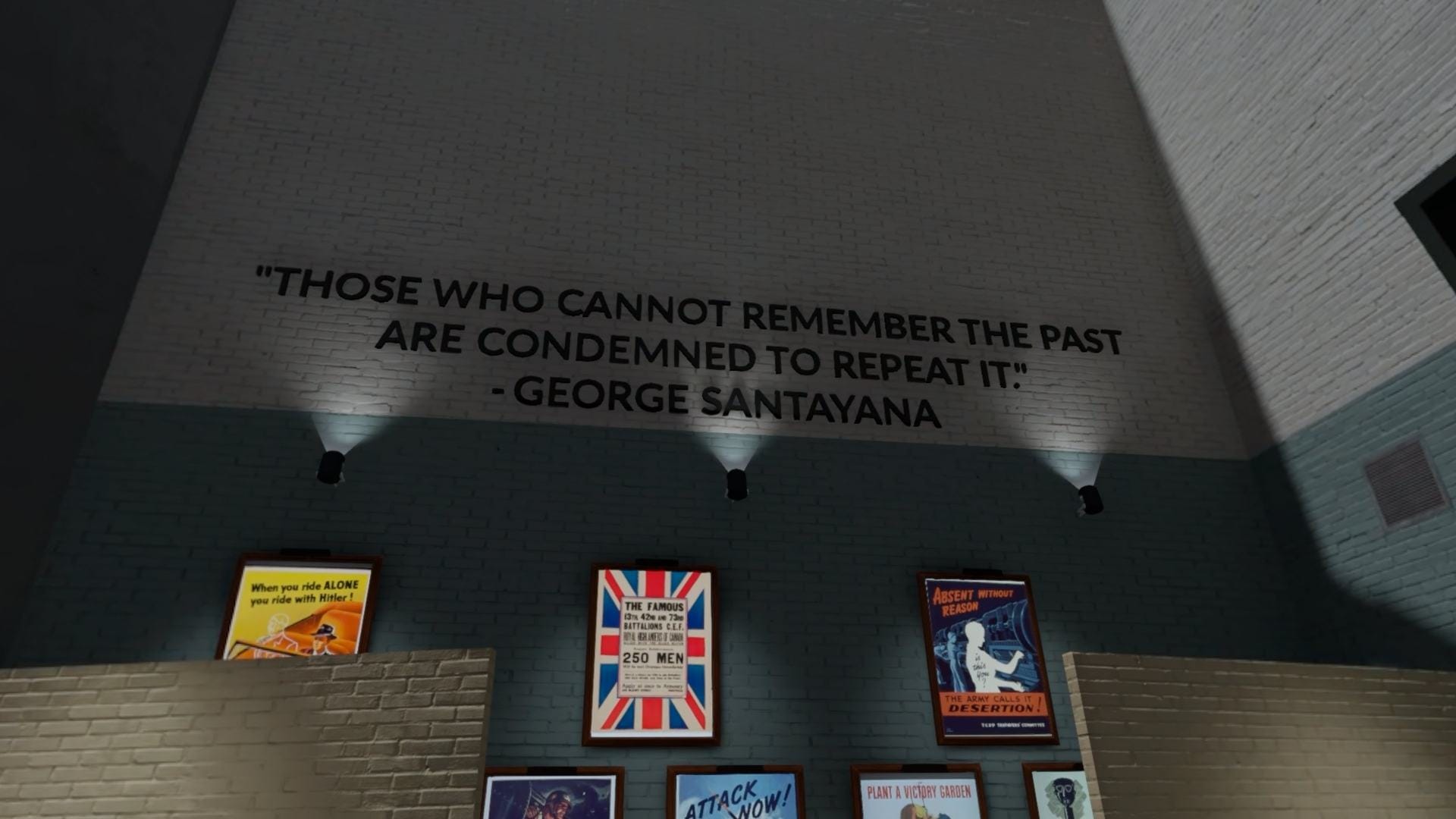
Beginning at a hall with four WWII uniforms and a desk, there are several options to approach: the options menu, the start of the tour, the five beaches invaded on D-Day, and an immersive view through the paratroopers’ lens. The first area is as you would expect in a real museum. Tanks, soldiers, jeeps, and propaganda from the 1940s all adorn the halls to better appreciate the historical stakes. An AI-voiced narration gives a detailed account of every aspect of the operation, including the background, leaders, and geopolitical situation. It only gets more complex from there.
3D-scanned models of real artifacts of the time can be physically held as the narrator explains what they were used for. Holding a Bombe machine, whose code Alan Turing deciphered to reveal strategic enemy communications, or a “Rupert,” which was a decoy parachuted alongside airborne soldiers, enhances the sense of presence of an otherwise normal museum visit. Hearing the stirring speech by Franklin D. Roosevelt on the evening of the decisive military operation while perusing through historical items gives a unique perspective of the era.
PC Specs Used
My gaming laptop uses an AMD Ryzen 7 250 w/ Radeon 780M Graphics Processor, 24 GB DDR5-5600MT/s SODIMM, and an Nvidia GeForce RTX 5060 8 GB GDDR7. This impressions piece was conducted using a Meta Quest 3 via the Steam Link app.
No performance issues were encountered during this playthrough. You can find the minimum and recommended specs on the Steam page to learn more.
What stands out the most about the D-Day VR Museum is, undoubtedly, its interactive element. Watching short video documentaries of the event certainly attunes you to the general feeling of extreme danger of the military campaign, with the entire Western ideology at risk. Visual aids like Google Street View-style 360 images of the current places where these critical events took place help understand the gravity of the situation. Most importantly, full-blown virtual recreations of places and moments hammer home the urgency each young serviceman went through. Being in the plane next to other fighters, listening to them pray, and finally throwing yourself to the uncertainty of what was on the ground is portrayed well here.
Comfort
D-Day VR Museum has the expected features of any virtual reality game. There is either smooth or snap turning and a vignette that can be turned off whose radius you can increase or reduce. The movement along the exhibit can be performed by manually moving the joystick to walk or by teleporting.
There are subtitles for every video documentary if needed, and the Nazi symbols can be removed.
0:00
/0:35
A gameplay video recorded by UploadVR of D-Day VR Museum. It's a scene of what the paratroopers went through.
D-Day VR Museum is a testament to what was at stake, what was lost, and what prevailed thanks to the tenacity of these unwavering soldiers. There is no better way to learn about the sacrifice the Greatest Generation made in order to achieve freedom from those who threatened it. As an interactive experience, it excels as a sobering reminder of this transcendental moment, putting players head-first into an equally entertaining and educational exhibition. As a history lesson, it delivers an emotionally charged remembrance that only VR can provide.
In its fourth major update since release, Thief VR: Legacy of Shadow refines its gameplay mechanics for a smoother experience.
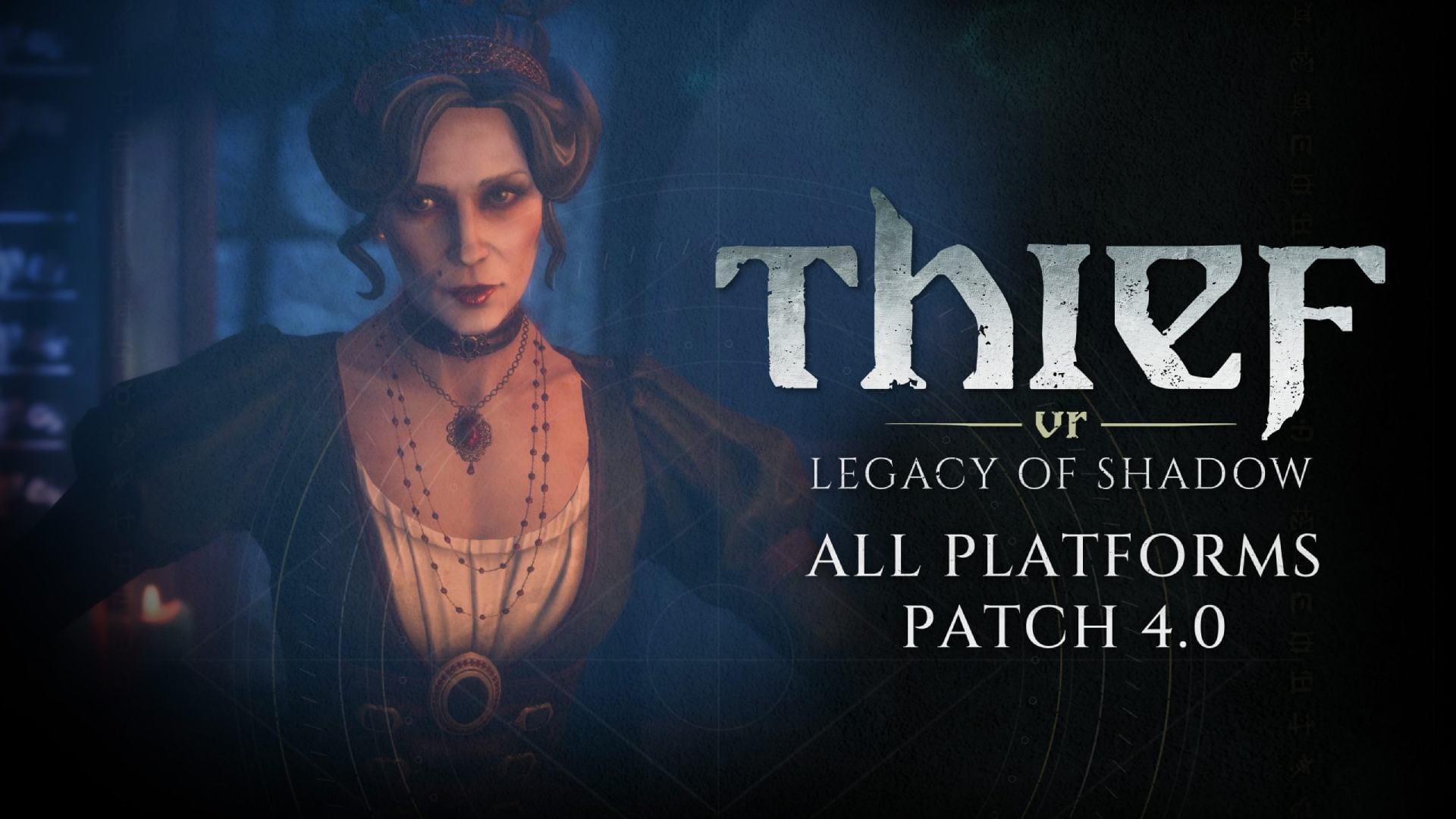
Available now on all major platforms, Thief VR: Legacy of Shadow launched its 4.0 update, focusing on refining the gameplay experience for an overall smoother feel. As its 3.0 patch was released just shy of two weeks ago, it is clear developer Maze Theory and publisher Vertigo Games are on top of things, quick to apply any feedback shared to deliver a better game. Other improvements include more flexible customization options for the Steam version, such as higher-quality dynamic shadows and character models, and general quality-of-life bug fixes.
One of the flagship upgrades to this new patch is revamped crouch mechanics. As a marquee ability, players are supposed to spend a lot of time doing so while hiding in the shadows. While never broken since its initial release, it did feel that certain aspects of the game could have done with more time in the oven, as we mentioned in our review: “Sometimes objects fail to load in properly, like a treasure chest going transparent whenever I face it from the front—or an entire basement visually deloading momentarily if I walk too close to an adjoining wall.”
0:00
/0:38
A gameplay video recorded by UploadVR showcasing patch 4.0.
Previous upgrades mainly brought visual improvements and continued stability to the experience. No DLC or sequel has been mentioned as yet, but this ongoing support is at least a step in the right direction.
Meta CFO Susan Li says the company still has "optimism in the future of VR", and confirmed that it's still "building future headsets".
Li made the comment during Meta's Q4 2025 earnings call this week, in response to a Deutsche Bank analyst asking whether the Reality Labs division would have a "narrow focus on wearables".
"However, consumer adoption of VR has generally been on a slower growth path than wearables, and we are rebalancing our Reality Labs portfolio to reflect this", Li also said, reiterating what CTO Andrew Bosworth declared in Davos last week.
"So, we are meaningfully reducing our investment in VR and Horizon this year, but we’re growing our investment in wearables to capitalize on the momentum that we’re seeing in our position as a market leader", she continued.
Meta first officially confirmed this shifting spending strategy in December. Then, earlier this month the company shut down three of its acquired VR game studios, conducted significant layoffs at a fourth, canceled the Batman: Arkham Shadow sequel, and announced the shutdown of Horizon Workrooms and its Quest headsets for business offering.
That decision came after 2025 saw Quest headset sales decrease compared to 2024, while Ray-Ban Meta smart glasses sales tripled.
Earlier in the Q4 earnings call, Mark Zuckerberg told investors that the company's reduction in spending would make VR "a profitable ecosystem over the coming years".
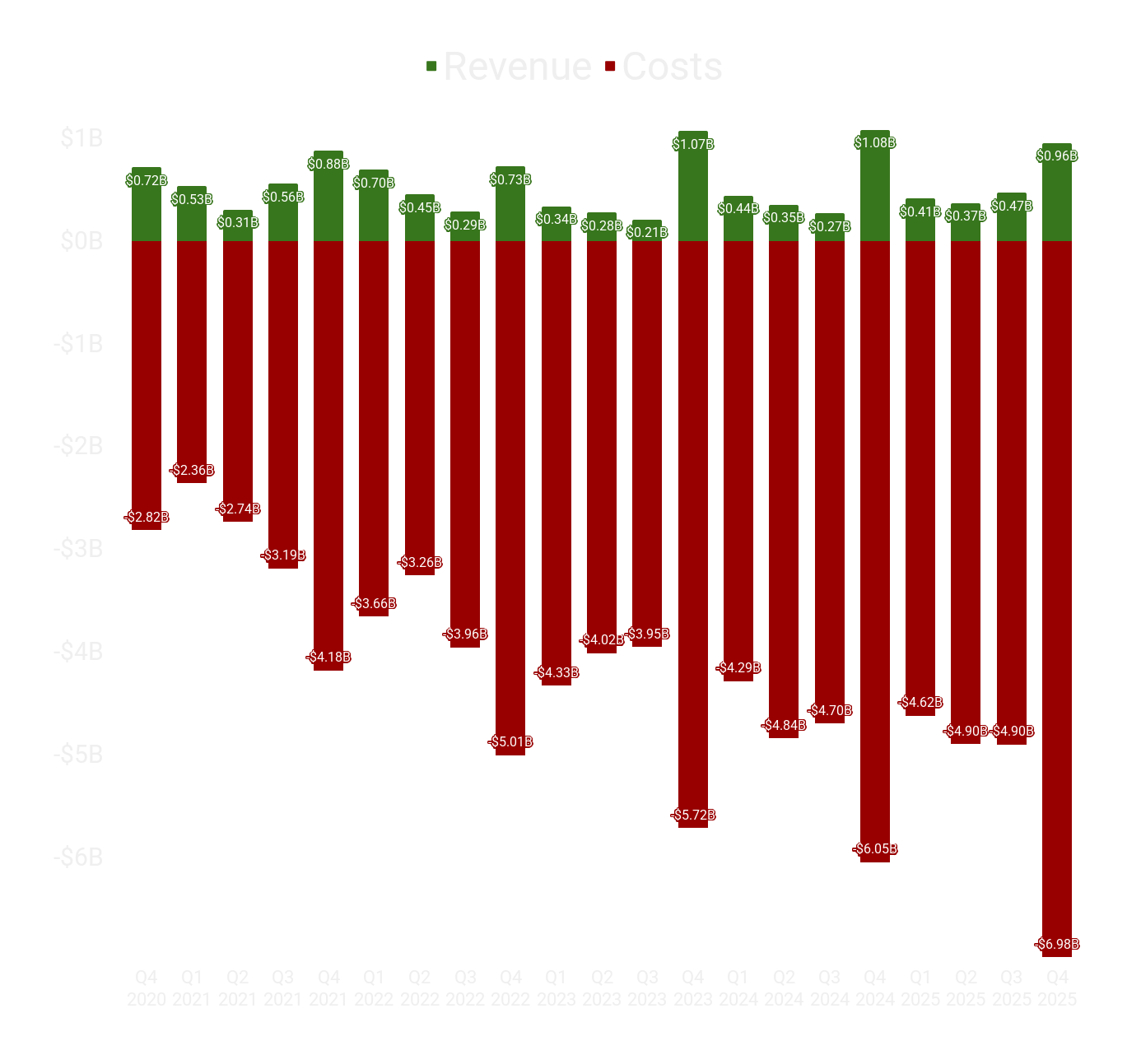
The Reality Labs division of Meta, which handles VR, Horizon Worlds, and smart glasses, recorded record spending in Q4, just shy of $7 billion. Given revenue of just under $1 billion, that resulted in a "loss" of around $6 billion.
Reality Labs continues to be heavily focused on research and development, though, and much of this "loss" is actually the spending towards developing true AR glasses, the consumer tech product that companies like Apple, Meta, and Google believe will define the next wave of personal computing.
Zuckerberg told investors to expect Reality Labs losses to finally peak in 2026, with Li stating that it's Meta's "expectation" that the losses will start to decrease in 2027, depending on how the market develops.
As to the "headsets", plural, that Susan Li was referring to, leaked internal memos from early December revealed that in addition to the widely reported ultralight headset with a tethered puck, Meta was also now working on a traditional new Quest focused on "immersive gaming".
The memo indicated that the headset, which wouldn't be expected until late 2027 at the very earliest, should bring a "large upgrade" over Quest 3, but no longer be subsidized, carrying a higher price. That tracks with Zuckerberg's reference to VR becoming "profitable" for Meta "over the coming years".
Many in the industry have speculated that this headset may have already been canceled in the wake of Meta's other VR cuts, but Li's reference to "headsets" may suggest it's still in the works. Only time – or yet another leak – will tell.
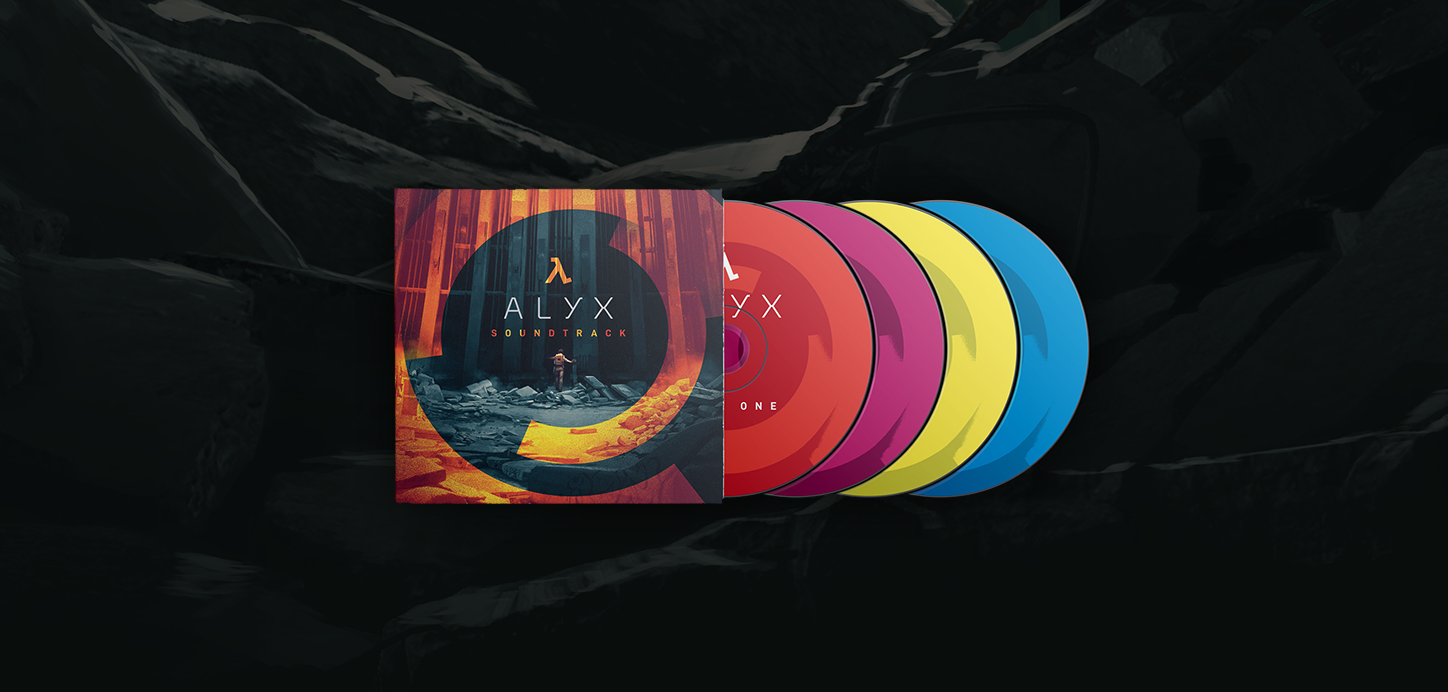
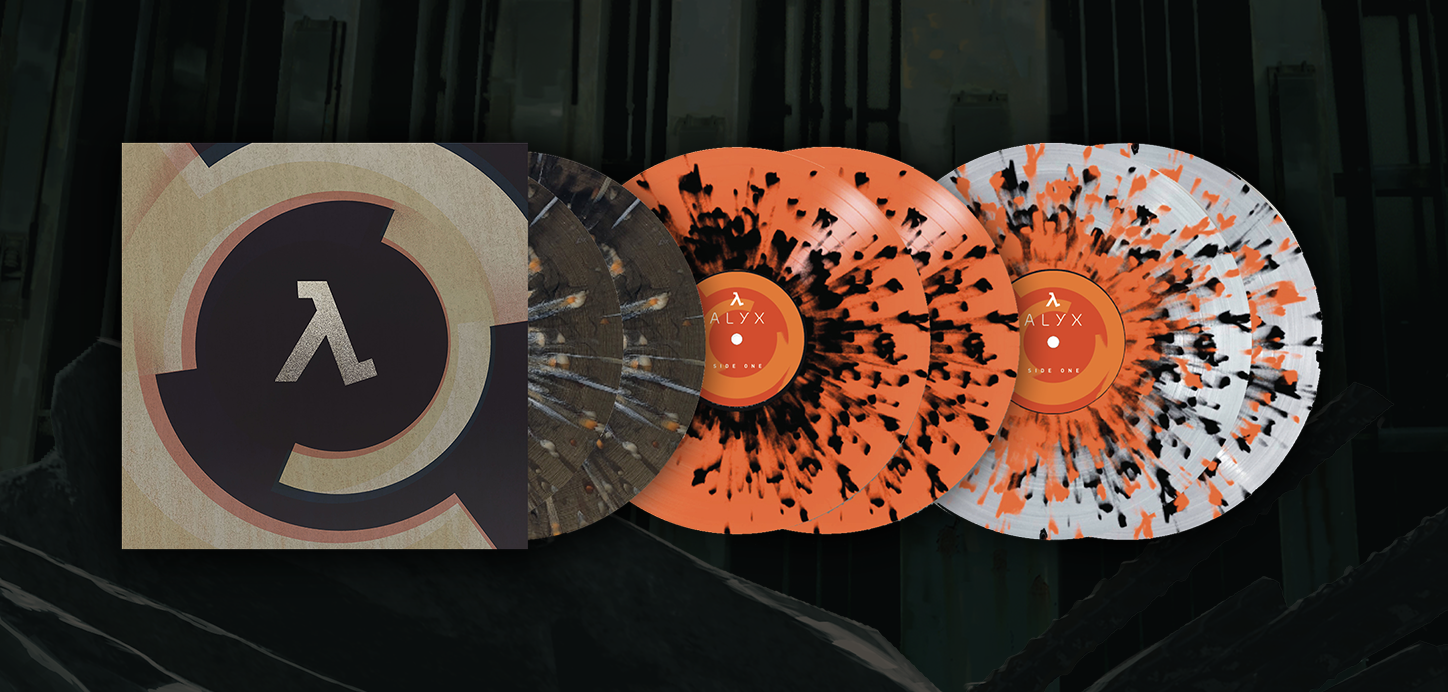
The upcoming physical editions of the Half-Life: Alyx soundtrack arrive in the three following editions:
6 LP Vinyl Box Set Edition - This massive set features the full 72-track soundtrack pressed on six 180 gram heavyweight vinyl LPs. Each record is wrapped in its own unique sleeve, and comes packed into a lift-top box. In addition, the set includes a 24x48" poster and a download card for a digital version of the full soundtrack. This set is limited to just 2,000 copies, and is only purchasable through Ipecac Recordings' online shop.
2 LP Vinyl Edition - This edition, available in three color variants, features 21 tracks from the soundtrack on two 180 gram heavyweight LPs. The set includes a custom jacket, a 24x48" poster, and a download card for the full 72-track soundtrack. This edition is available through Ipecac US, Townsend UK, and Bandcamp.
4 CD Edition - Last but not least, the full 72 track soundtrack is available on four CDs, which come in a foldout digipak case.
Those not interested in collecting physical albums can find the full digital edition on most major streaming platforms, and on Steam, where it's temporarily available at 60% off.
The Magician VR: The Cursed Wand is an upcoming fantasy VR action-adventure for Quest available to wishlist now.
Focused around the idea of real wand-gesture spellcasting in VR, The Magician VR: The Cursed Wand is a new fantasy game that can be wishlisted now on the Meta Horizon Store. Tracing wand gestures in the air to form spell patterns, a variety of spells, as shown in the trailer, will be at players’ disposal, from streams of water to remove fire to more offensive-based attacks. Made by Master Crowd Games, their previous work in the virtual reality space was a game called Rock Invasion VR, also for Quest.
Set in an apocalyptic 20th-century city called Crowville under siege by unknowable forces, The Magician VR plans to offer an arcade-based survival mode based on defeating endless waves of enemies. New magic and upgrades to spells will be earned based on performance on each level, offering replayability to try to survive even longer on each round. Based on the images shown, apart from the ghouls hungry for flesh, much bigger boss-type enemies will be confronted at some point.
The game will also have a campaign, with "structured progression" through key locations.
0:00
/1:39
Aiming to please both casual and hardcore fans, the pick-up-and-play mechanics are promised to be backed by deep gameplay features as the magical powers progress. The stylized visuals and ominous original soundtrack neatly tie the package together, which the developer notes is not completely done and could change by the time the full game releases.
The Magician VR: The Cursed Wand is available to wishlist now on Quest.
Lynx-R2, coming "this summer", is set to have the widest field of view of any standalone headset to date.
French startup Lynx repeatedly failed to meet its deadlines for its R1 headset, which it Kickstarted, and while originally envisioned as a $500 competitor to Meta Quest headsets, the price for new orders rose to $850 and then $1300 as the company pivoted to primarily targeting businesses.
Now, Lynx has revealed the key specifications of its next headset, which it first teased in October.
At the time, Lynx founder Stan Larroque told UploadVR that his company has "learned so much with the R1", and will not do a crowdfunding campaign. A month later, Lynx revealed that Google had "terminated" its agreement to use Android XR, such that it will instead run LynxOS, the company's own open-source Android fork.
Lynx-R2
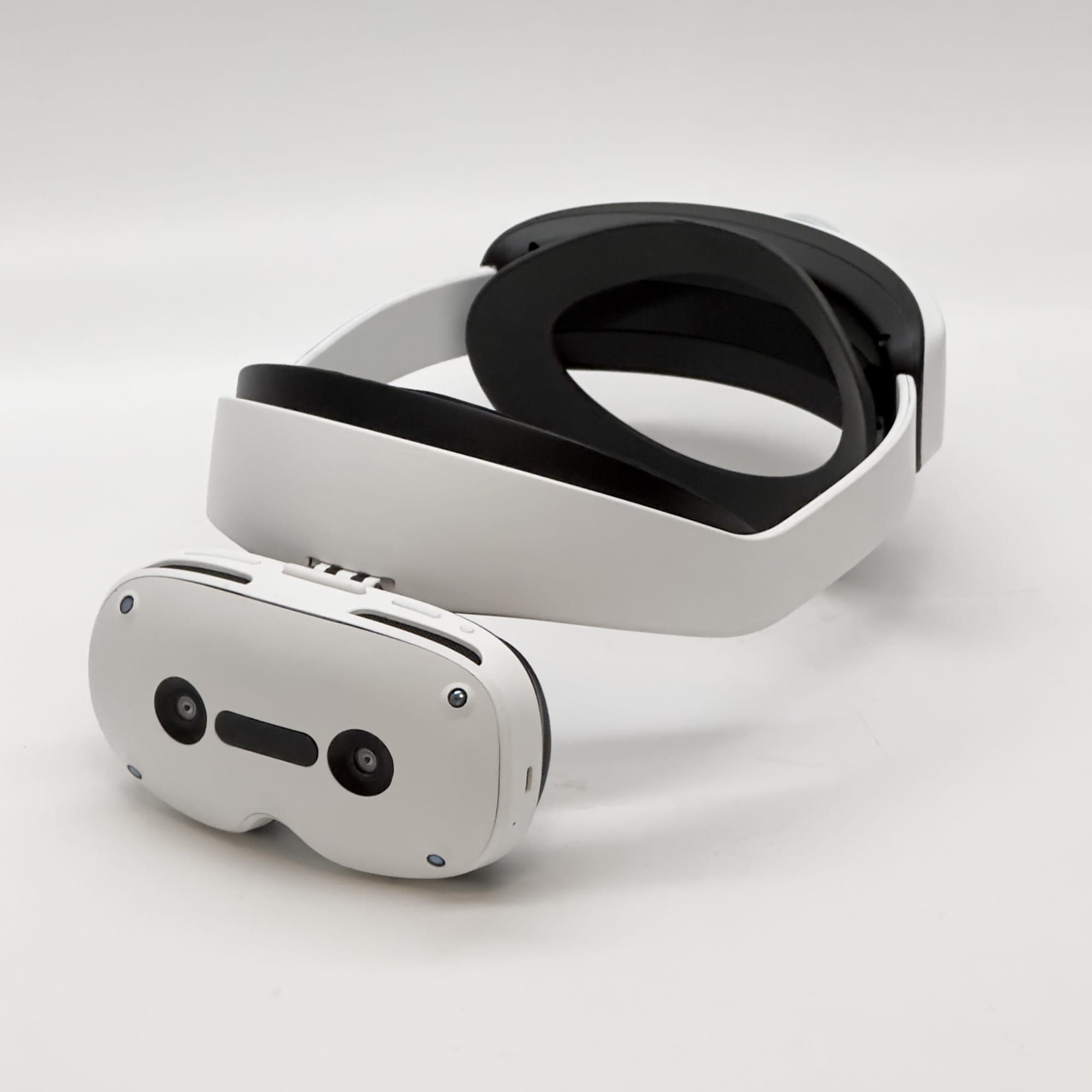
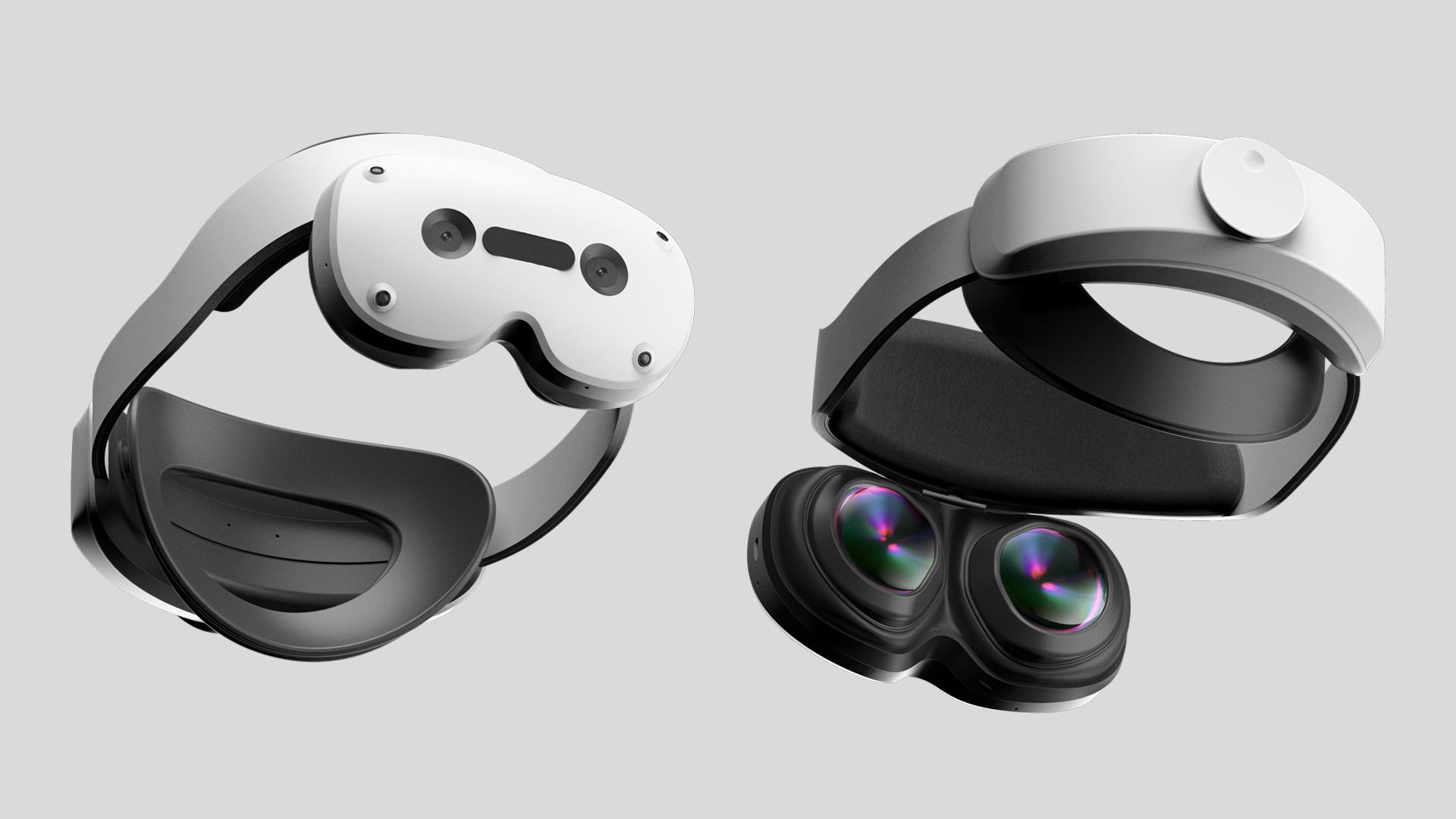
Similar to Quest 3 and Pico 4 Ultra, Lynx-R2 is a fully standalone headset powered by Qualcomm's XR2 Gen 2 chipset and 16GB RAM, with two color passthrough cameras, four tracking cameras, as well as a depth sensor and IR illuminators.
It has an open periphery design, like Samsung Galaxy XR, with the ability to flip the visor up at any time. And it has its battery in the rear, with a total system weight of 550 grams.
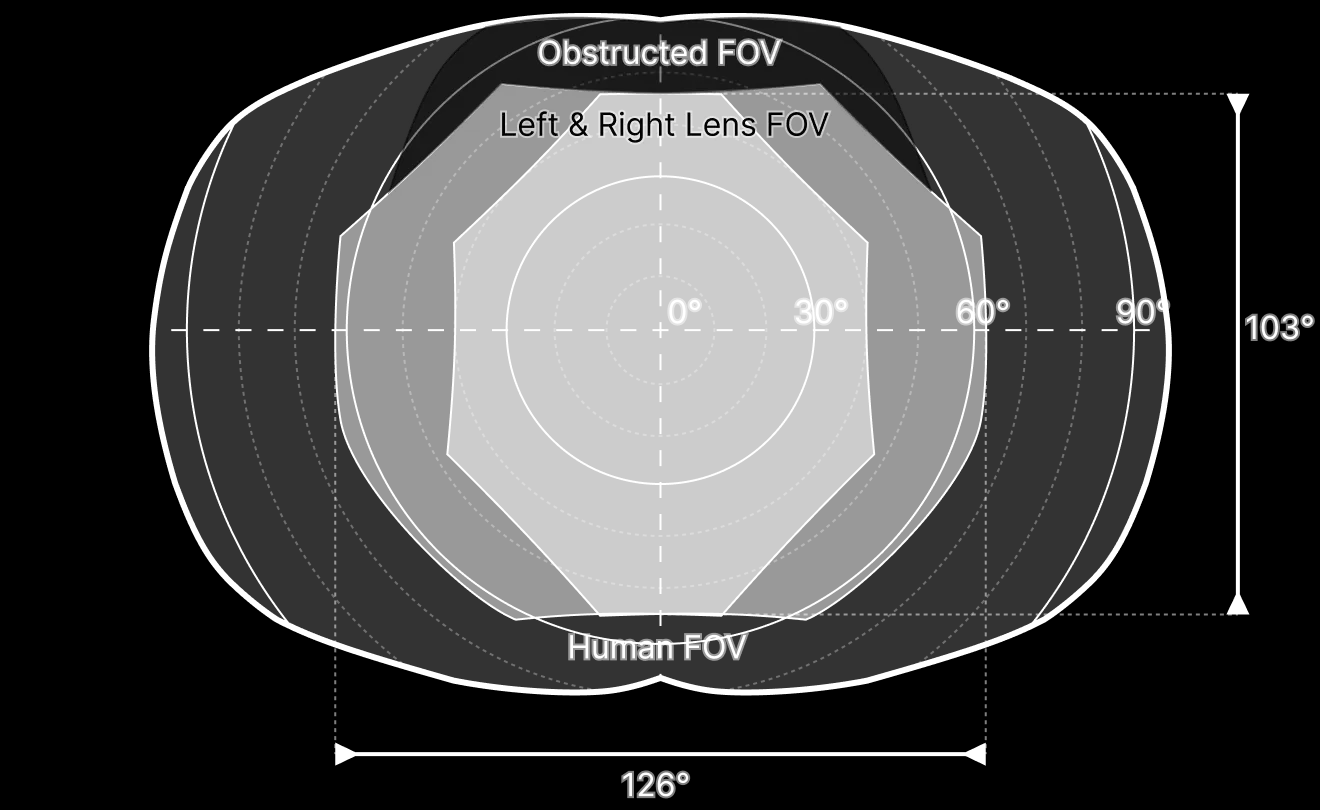
What distinguishes Lynx-R2 from these other standalone headsets is its aspheric pancake lenses, developed in partnership with Israeli startup Hypervision. According to Lynx, R2 achieves a field of view of 126° horizontal and 103° vertical. That would make it one of the widest field of view VR headsets to ship as a product anyone can buy, and by far the widest standalone of any kind.
These remarkable lenses are paired with 2312×2160 LCD displays. And Lynx says it's getting the displays for just $30 each, because its development was paid for by Meta, which according to Lynx, planned to use them in the canceled 2026 Quest 4 candidate.
To achieve a reasonable passthrough image quality over the wide field of view, Lynx is using 3K×3K color cameras, advanced Sony IMX616 sensors capturing 10 megapixels per eye at a 90Hz rate, higher than Apple Vision Pro.
Lynx claims an end-to-end latency of between 12 and 20 milliseconds, compared to the 12 milliseconds of Apple Vision Pro.
It's notable that while other headsets like Quest 3 and Vision Pro have lower camera resolution than display resolution, Lynx-R2 has the opposite.
Further, Lynx says R2 has the slimmest "black line" between passthrough and natural peripheral vision of any passthrough headset, obstructing just 6% of the total field of view of the wearer. This black line is slimmer than even typical smart glasses, the startup claims, and it shared a short through-the-lens video captured by a GoPro with a wide-angle lens.
0:00
/1:59
Through-the-lens shot of Lynx-R2, shot with a wide-angle GoPro.
Meanwhile, the four tracking cameras on the corners of the front enable positional, hand, and controller tracking, while the 0.5 megapixel depth sensor enables 3D room scanning and spatial anchors.
According to the company, Lynx-R2 is designed to be open, modular, and repairable. LynxOS, its Android fork, is open source, and the headset has an open bootloader. Buyers will have raw unrestricted access to the sensors via APIs. Lynx says it will publish IO schematics for developers who want to add additional sensors. And R2 is built with screws instead of glue, with the company planning to sell spare parts like batteries, mainboards, and camera modules to customers.
Lynx R2
Meta Quest 3
Samsung Galaxy XR
Displays
2312×2160 LCD
2064×2208 LCD
3552×3840 micro-OLED
Refresh Rates
90Hz
60-120Hz (90Hz Home) (72 App Default)
60-90Hz (72Hz Default)
Stated FOV
126°H × 103°V
110°H × 96°V
109°H × 100°V
Platform
LynxOS (Lynx)
Horizon OS (Meta)
Android XR (Google)
Chipset
Qualcomm Snapdragon XR2 Gen 2
Qualcomm Snapdragon XR2 Gen 2
Qualcomm Snapdragon XR2+ Gen 2
RAM
16GB
8GB
16GB
Strap
Rigid Plastic (Flip-Up)
Soft (Modular)
Rigid Plastic (Fixed)
Face Pad
Forehead (Open)
Upper Face (Enclosed)
Forehead (Open)
Weight
550g Total
397g Visor 515g Total
545g Total
Battery
Rear Pad
Internal
Tethered External
Hand Tracking
✅
✅
✅
Eye Tracking
❌
❌
✅
Face Tracking
❌
❌
✅
Torso & Arm Tracking
❌
✅
❌
Passthrough
10MP
4MP
6.5MP
IR Illuminators
✅
❌
✅
Active Depth Sensor
iToF
❌
dToF
Price
TBA
$500 (512GB)
$1800 (256GB)
Lynx-R2 is set to arrive "this summer", priced somewhere between Meta Quest 3 and Samsung Galaxy XR. Unlike with R1, Lynx will not be doing preorders this time. According to Larroque, when it's available to buy, it will be ready to ship immediately.
"Starting" in Horizon OS v85, the new 'Navigator' UI will become the default, and Horizon Feed will be "gradually" removed from the OS.
In a Meta Community Forums post, a 'Community Manager' with the handle h.taylor announced the upcoming changes, set to arrive in the next version of the Horizon OS of Quest headsets:
As announced during Connect, we’ve been testing Navigator and will ramp up the rollout later this year, starting in v85. As Navigator rolls out, we’ll also begin gradually sunsetting the Horizon Feed in VR.
What’s changing
• Navigator will become the default landing experience when users turn on their headset.
• Navigator brings experiences, friends and settings together in one place.
• As part of this shift, we’ll be sunsetting the Horizon Feed in VR.
Horizon OS v83 started rolling out in November, and there's no set date for the arrival of v85.
Navigator Becoming Default
Since the release of Oculus Go almost eight years ago, Meta's standalone VR operating system has seen numerous visual changes, but the general interface architecture remained essentially the same.
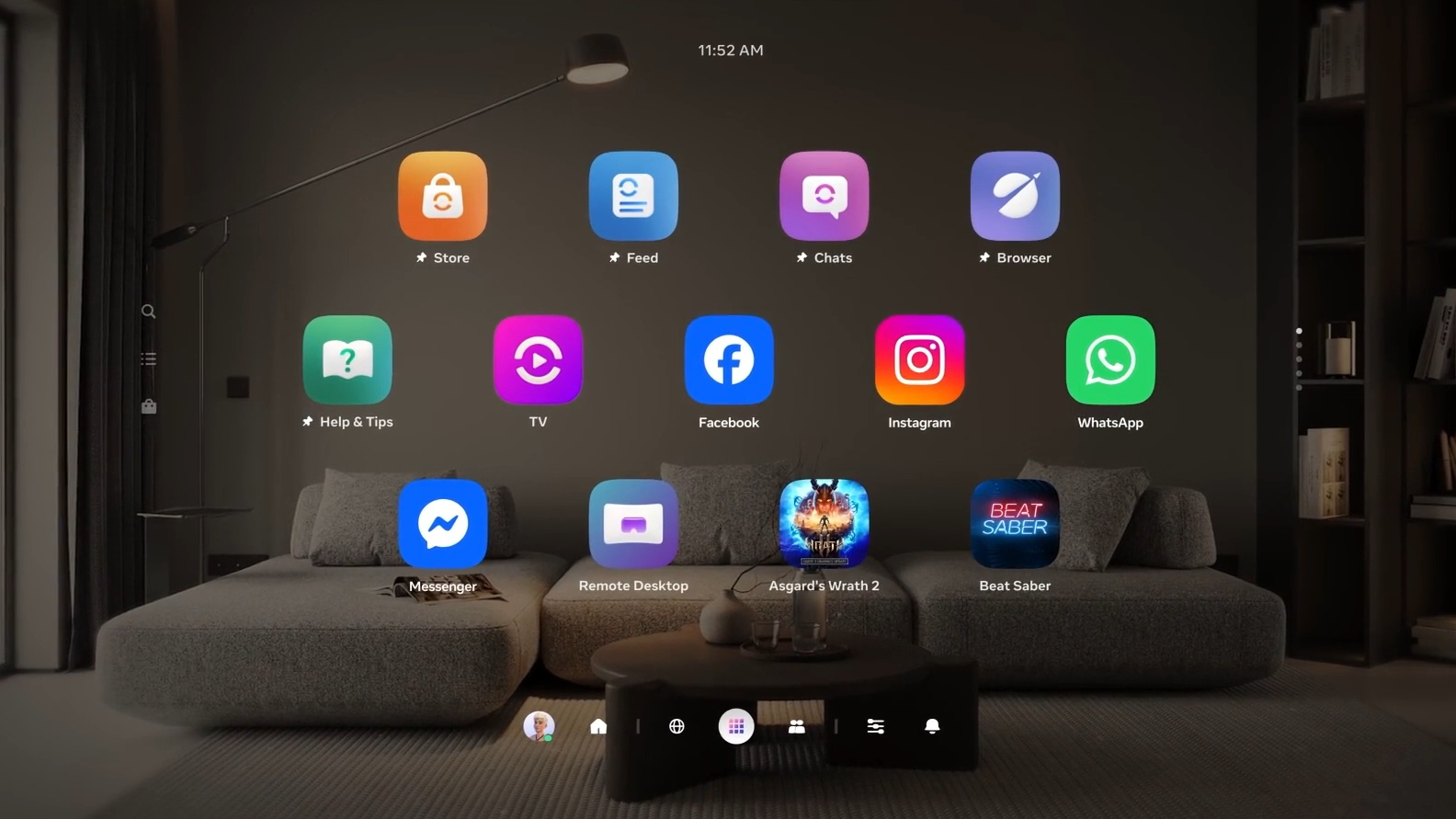
You had a floating horizontal menu bar slightly below you, called the Universal Menu, showing the time and your device battery levels and containing shortcuts to key system interfaces, as well as a combination of your most recent and eventually a few of your favorite apps. All 2D interfaces, including system features like the app Library, Quick Settings, and Notifications, opened as 2D windows, treated like any other.
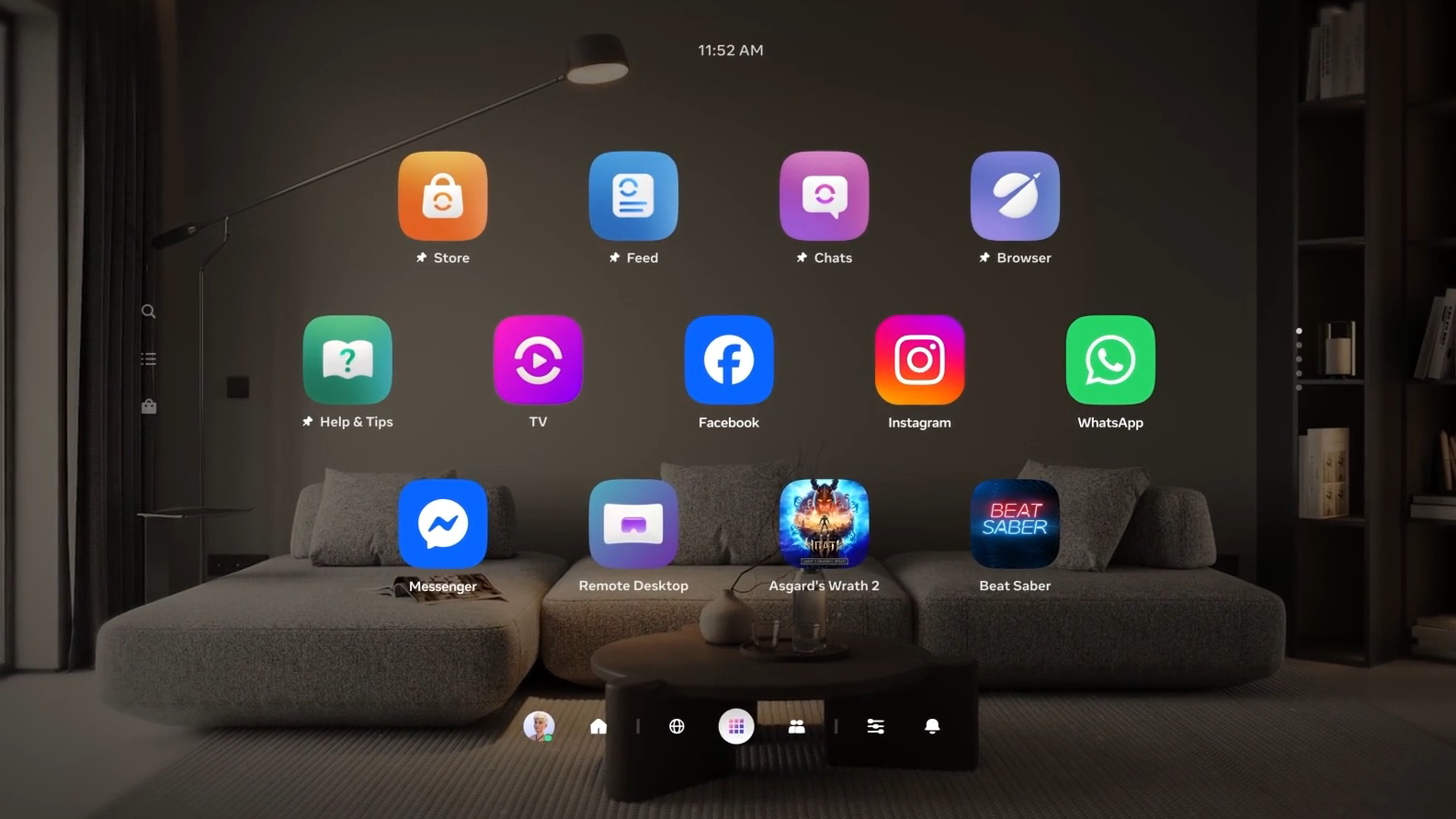
Then, in May last year, Meta started a very slow rollout of a full Horizon OS UI overhaul, called 'Navigator', which moves the main system interfaces like Library, Quick Settings, Notifications and Camera into a new large overlay that appears over both immersive and 2D apps.
With Navigator, system interfaces no longer shift around when opening other windows, and it's easier to launch new apps. Navigator's library also allows you to pin up to 10 items, somewhat akin to the Start Menu on Windows.
At launch, Navigator also had a murky gray background with an oval shape. It was seemingly intended to improve contrast. But as well as obscuring your view of what was behind it, be it passthrough or a virtual world, it just didn't look good. So Meta got rid of that and made bringing up Navigator dim the background instead.
0:00
/1:45
Meta presenting the evolved Horizon OS Navigator UI.
With Horizon OS v83 PTC in October, Meta started rolling out an evolved version of Navigator, which it teased at Connect 2025.
The evolved Navigator has a new Worlds tab for Horizon Worlds destinations, and you no longer see worlds in your app Library at all. Speaking of the Library, it now features interleaving offset rows, similar to Apple's visionOS.
The new Navigator also has a new overlay-level People tab with shortcuts to your friends, as well as a You tab that shows your avatar and lets you change your active status.
Finally, the new Navigator lets you easily hide or show all your 2D windows by double pressing the Meta button on the right Touch controller, or for hand tracking, opening your right palm and double tapping your thumb to your index finger.
Horizon Feed Being Removed
Horizon Feed is the default 2D app that launches when you cold boot your Quest headset.
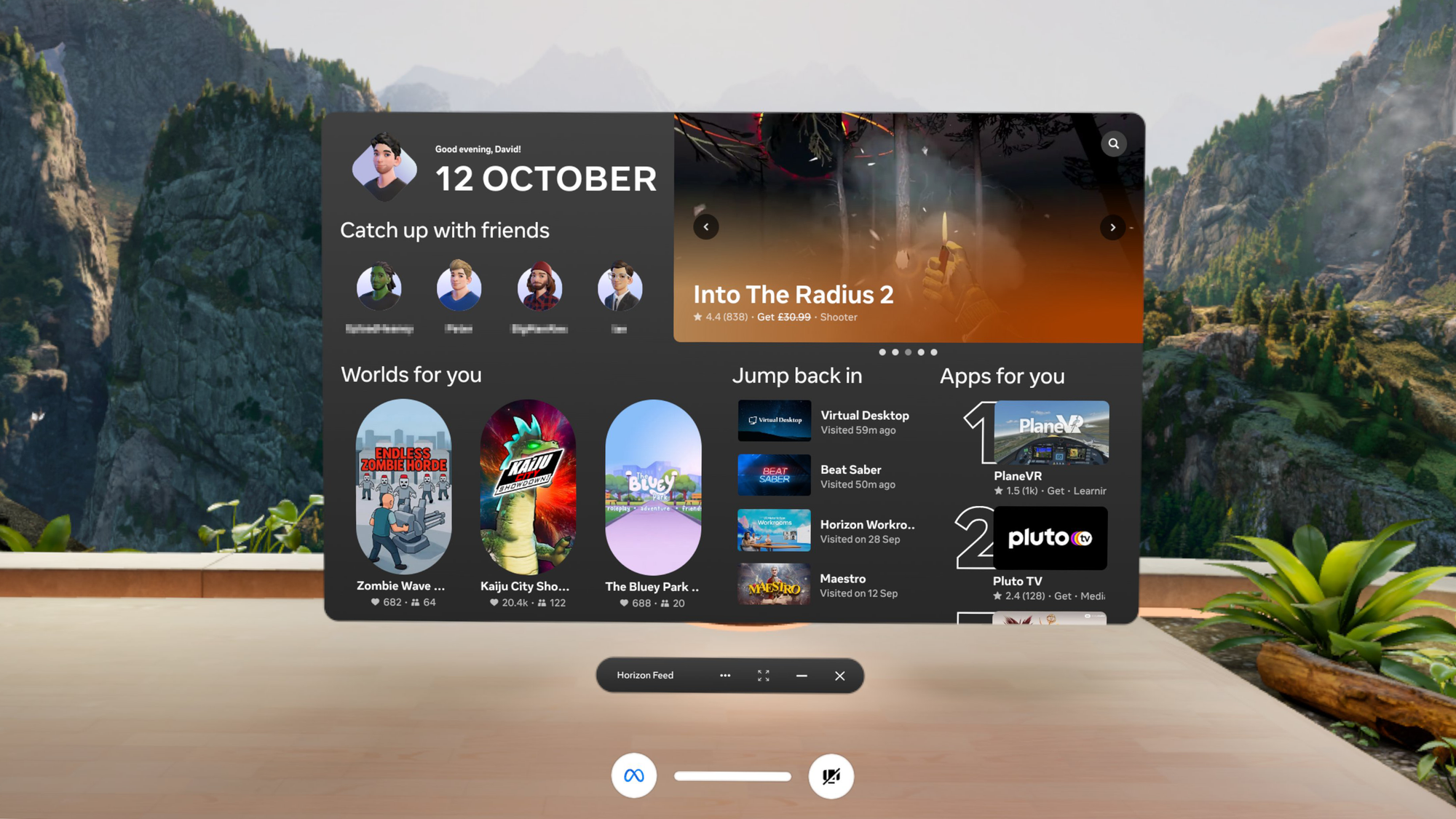
Originally simply called 'Explore', the feed shows you suggested Horizon Worlds destinations, store apps, VR videos, Instagram reels, and online followers, as well as suggested friends to "catch up" with and apps to "jump back in" to.
Screenshot by UploadVR.
The Community Forums post tells developers that the version of Horizon Feed inside the headset "is not a high-intent surface, and users often see it without a specific intent to browse or purchase apps".
"Because of that, it historically has not driven strong entitlement conversion, and we don’t expect significant revenue impact for the vast majority of developers", the post reads.
That essentially seems to be Meta admitting that Horizon Feed is something that most Quest owners just close immediately on booting the headset, like an unwanted popup, and wasn't successful at getting people to buy the apps that it suggested.
The coming removal of Horizon Feed from Horizon OS comes as Meta CTO Andrew Bosworth suggested that the company's repeated push to Quest owners to use Horizon Worlds came at "an expense of user experience", vowing to "let VR be what it is, what it does" and "focus a lot more on the third-party content library, the ecosystem that's developed there".
Watching an NBA game in the Apple Vision Pro feels like a glimpse of where sports and entertainment need to go, even if the path forward is still taking shape. Apple is clearly experimenting with what watching sports can feel like when you are no longer locked into a flat television broadcast.
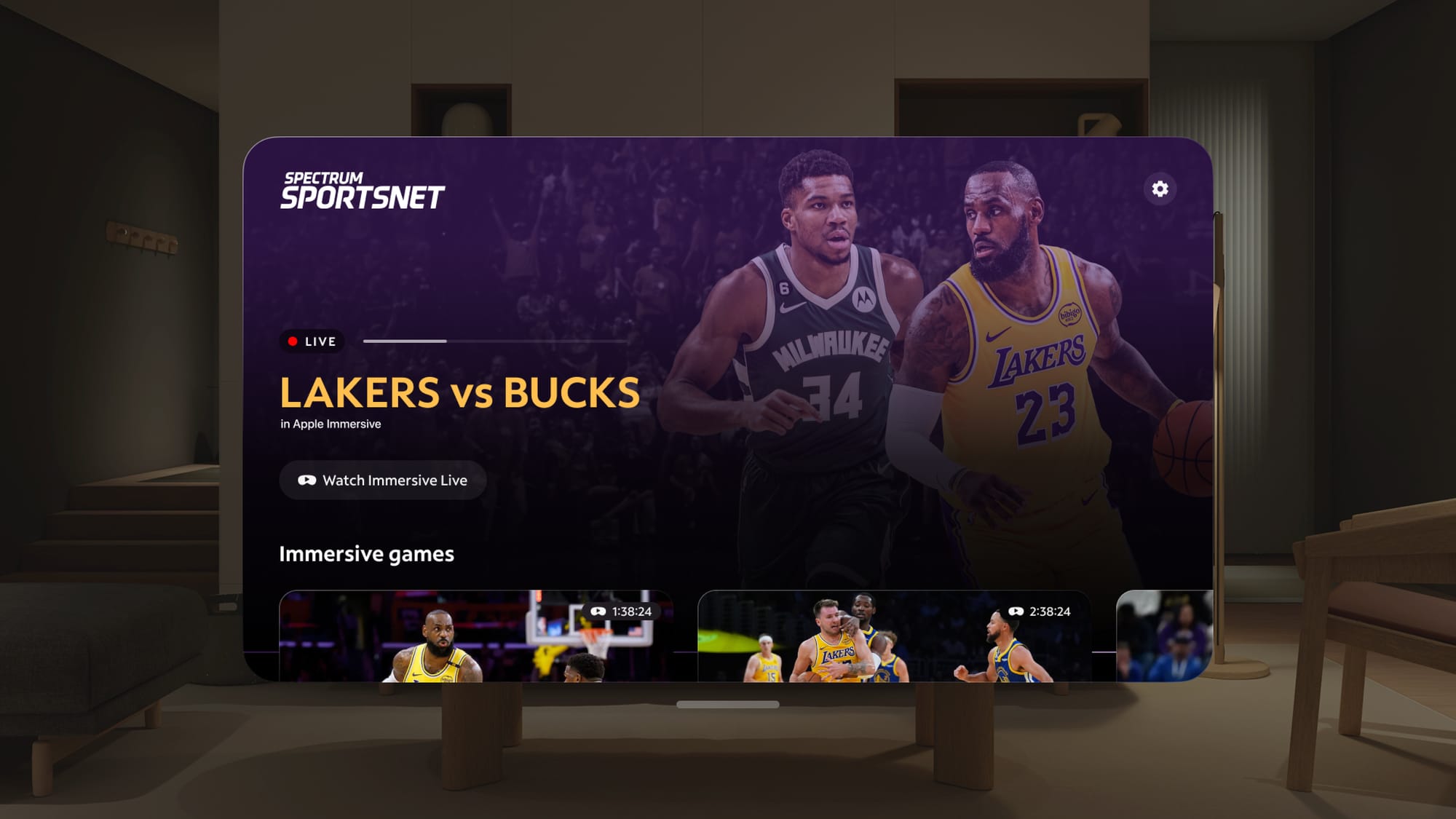
I recently went onto the court at an immersive Lakers game from the confines of Ian Hamilton's Vision Pro I borrowed from him in New York City. This was not a live broadcast, I watched the game on demand via the Spectrum SportsNet app, after the fact, in guest mode on his headset wearing my own personal Dual Knit Band. The experience leaving my Quest 3 behind and spending extended time in an immersive Apple experience left me both impressed, and conflicted.
Presence Or Floating In Space?
Viewers are given a choice about how to watch an NBA game in headset.
You can watch the game on a floating virtual screen, which already feels cleaner and more cinematic than a traditional TV. Or switch into fully immersive 180-degree 3D view for a full two-hour cut-together view of the game from start to finish. That second option is where the experience shows the most potential, but we also shouldn't dismiss the first mode. That first mode can be more easily shared in mixed reality with other apps and people, making the experience of watching there a bit like an IMAX version of an NBA game that's simultaneously without any of the typical distractions. Ian showed me a Jupiter environment in his headset too, and I could've watched the game there, surrounded by the gigantic planet and glimmering stars. All that said, instead, I dropped into the immersive mode for most of my time with the game.
In immersive mode, you are limited to a small set of camera perspectives and a singular timeline through the game. There are cameras mounted beneath each basket at opposite ends of the court, a ground-level center-court view, and a wider angle from up in the stands. Those angles are sufficient for following the game. Most intriguing about my time in this mode is that some of the most compelling moments had little to do with the action on the court.
The cutaways to commentators and sideline reporters stood out immediately. Interviews are presented in 3D and human scale, and that changes how you perceive the people on screen. You see their entire bodies rather than a cropped head-and-shoulders shot, and they feel more like they're standing right there talking to you. The sense of scale is immediate and lasting. You can also tell how tall these players actually are and start noticing details you would never catch on television, like a birthmark on a shoulder or sweat collecting along an arm.
An Apple Immersive NBA broadcast feels intimate in a way traditional broadcasts are not. That intimacy is powerful, but it also highlights a challenge immersive sports production will have to solve. At one moment, feeling present on the court can be a good thing, and the next it can feel uncomfortably close. Immersive broadcasts still need to learn where that line is, and how to stay on the right side of it from moment to moment. In something like the recent Tour De Force MotoGP documentary, the immersive filmmakers had quite a bit more time to prepare around a very specific narrative, and you can feel the difference moment to moment.
For basketball, the immersive cameras provided terrific close-up views of plenty of interesting things outside the game too. Instead of watching commercials you're watching the Laker Girls during breaks, and their performances in 3D at human scale again reinforces the difference from television. You feel as if you are standing there, close enough to appreciate movement, spacing, and physicality. During commercial breaks, you can watch the crew wipe down the court, see players and staff milling about, and catch the in-between moments that usually disappear when the feed cuts away. Those behind-the-scenes details add texture and strengthen the feeling that you are actually inside the arena, not just consuming a polished broadcast.
The experience shows more friction once active gameplay ramps up. When using the center-court camera, the action constantly moves left to right and back again. That means repeatedly turning your head to follow the play unless the feed switches to one of the basket cameras. Over time, that motion becomes tiring.
I found myself wishing for more camera options, or better yet, the ability to manually switch views during the replay. An Immersive Highlights clip separate from the full broadcast pulls together some of the best moments seen from Apple‘s cameras over the course of the game, and at less than 10 minutes long, it offers a great way to see some of LeBron James’ best moments from behind the backboard without giving too much time to neck strain. Basketball broadcasts have always been built around wide shots that let you see the entire floor at once. In immersive VR at certain angles, the constant side-to-side motion means your head and neck are doing more work than they ever would in front of a TV or even at the game itself.
Even with the Dual Knit Strap, the Vision Pro is heavy and coming from extended daily use with a Meta Quest 3, I felt the Vision Pro's weight immediately pushing down on my face, and it stayed there throughout my time. For shorter sessions, it is manageable. For longer viewing, headset weight may be the biggest thing holding this use case back even if it isn't the only thing.
Immersive Broadcasts And Lighter Headsets
Immersive viewing isn't just the future of sports, concerts, and entertainment – it's here today, to quote William Gibson, just "not evenly distributed." The sense of presence here is too compelling to ignore. What feels less certain is how quickly the hardware evolves, how the technical implementation will improve, and how it will scale to become mainstream.
Ian's hands-on experiences with Steam Frame would suggest a much more lightweight experience that could be worn for extended periods, and he showed me how slim the Bigscreen Beyond headset is, which takes the minimal small and light form factor to the extreme. He also hasn't worn the Frame for an extended period, yet, and neither Apple nor the headset manufacturers have shown any indication that Apple's top tier immersive programming is coming to any headset other than one with an Apple logo shown at startup.
So, much as it was in 2016, and in 2024, right now immersive sports still feel like a glimpse of the future even if it works now. It is not a default viewing mode. What Apple is doing with Vision Pro and Apple Immersive is not a finished product. It is a preview. And as previews go, this one is strong enough to make me want more, even as it makes clear how much work remains to create a mass-market experience.
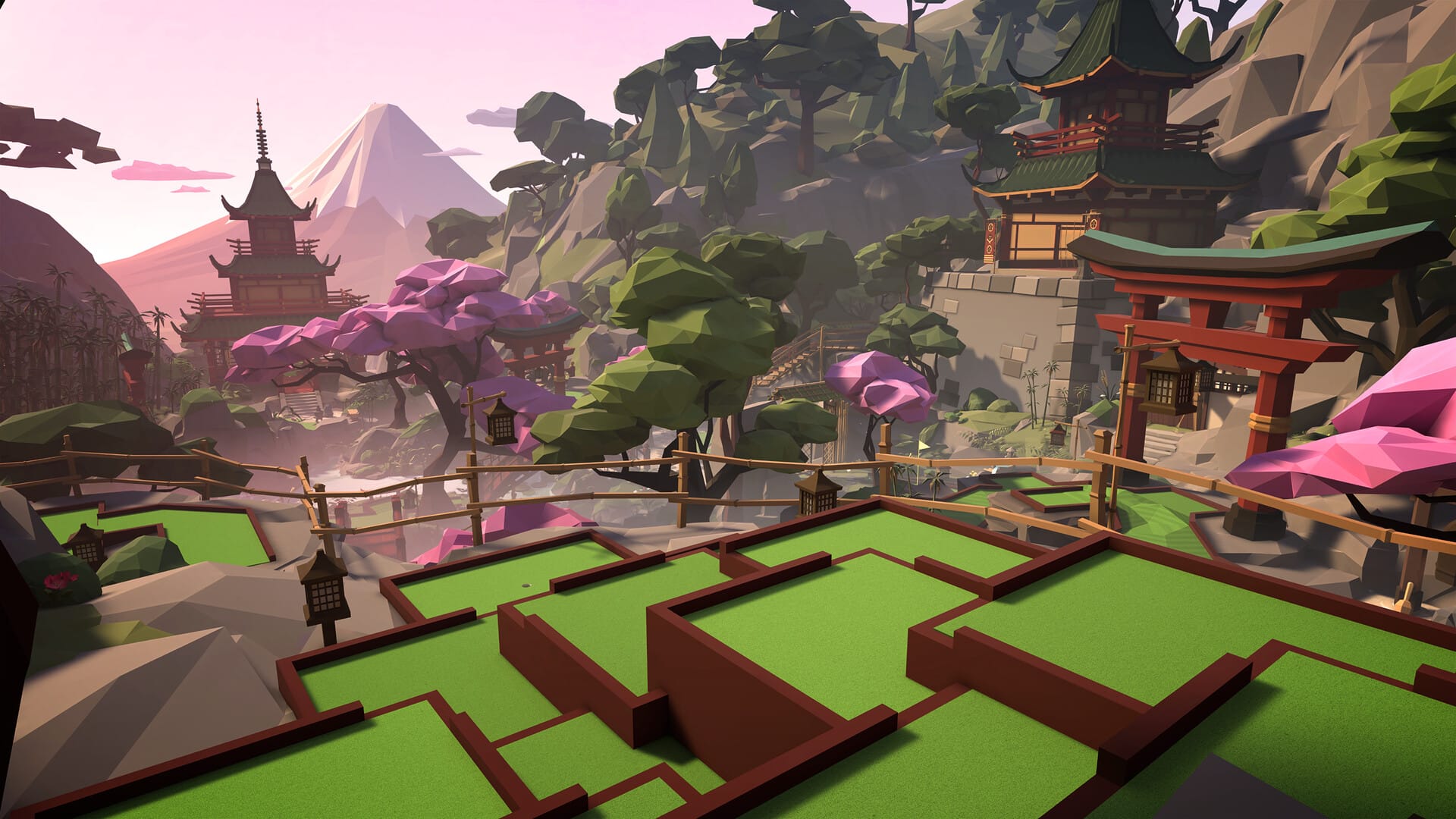
The studio behind Walkabout Mini Golf confirmed layoffs and a course correction to strategy in the wake of Meta's shifting platform ambitions.
Mighty Coconut joins Cloudhead Games and many others in layoffs, with the studios representing two ends of a spectrum of focused VR development that has been influenced directly or indirectly by the shifting spending and priorities at Facebook and Meta. Cloudhead's Pistol Whip and Mighty Coconut's Walkabout Mini Golf remain two of the best ways you can spend your time in a VR headset, but the engines of creativity behind those works keep changing.
Mighty Coconut posted contact information for several former workers to LinkedIn in an attempt to see them recruited elsewhere, and confirmed to UploadVR roughly eight jobs ended in the change with 27 continuing full time.
"We’re feeling the economic pressures of the VR space. It’s an incredibly rewarding place to build games—but it’s also a tough one, especially for studios of our size," a statement reads. "After a lot of long conversations, trimming expenses, and careful number-crunching, it became clear that reducing our size by about 25% was the only sustainable path forward. As a result, we’re losing some immensely talented people that would be an asset to any studio. "
New DLC courses will be priced $4.99 in virtual reality with the parallel Pocket Edition for iPhones seeing a full pause to development, so no new courses outside VR. Existing paid DLC courses will remain $3.99 in VR.
"We’d like to keep crossplay between VR and mobile functional for as long as we can, but we will also be sunsetting that at some point," a development update note explained. "We will be sure to announce that in advance once we do."
When it comes to scheduling, Mighty Coconut is also planning a bigger pause to the release schedule over summer to leave them with one less course in their planned schedule for the year, even as work continues on courses for 2027.
Additional activities in the game like chess and slingshots remain functional but further development is being put into new courses first.
"We feel confident that with these changes, Walkabout Mini Golf will be around for many, many courses to come," the note reads.
Walkabout Mini Golf was shown at standalone headset demo events powered by operating systems from Google and Valve, but Galaxy XR launched with limited controller availability and Steam Frame is still distributing development kits.
In a series of interviews at Davos, Meta's CTO explained why the company is reducing its investment in VR.
If you somehow missed it: last week Meta shut down three of its acquired VR game studios, conducted significant layoffs at a fourth, canceled the Batman: Arkham Shadow sequel, and announced the shutdown of Horizon Workrooms and its Quest headsets for business offering. These actions came a month after the company officially confirmed "shifting some of our investment from Metaverse toward AI glasses and Wearables".
At the World Economic Forum in Davos, Meta CTO Andrew Bosworth has finally made public statements about the VR layoffs and shutdowns, via a series of interviews.
One of the interviews was with veteran tech reporter Alex Heath. While Heath hasn't yet shared the interview (this is set to happen in the coming days), he has published an article with key quotes wherein Bosworth declares that "VR is growing less quickly than we hoped".
“We’re still continuing to invest heavily in this space, but obviously, VR is growing less quickly than we hoped,” Bosworth apparently told Heath. “And so you want to make sure that your investment is right-sized.”
According to Heath, Bosworth claimed that Meta has seen “really, really positive pickup” in Horizon Worlds on smartphones, and plans to double down on this with continued investment in Horizon on mobile.
“You've got a team that actually has product market fit in a huge market on mobile phones, and they're having to build everything twice. They're building it once for mobile phones, and building again for VR. There's a pretty easy way to increase their velocity: just let them build for mobile. So Horizon is very focused now on mobile — not exclusively, but almost exclusively,” Bosworth is quoted as saying.
Another interview, available in full on YouTube, was conducted by Axios' chief technology correspondent Ina Fried.
In it, Bosworth gave a very similar explanation for Meta's shift in strategy.
"It's like any investment, you're gonna look at how you do over the course of years and you're gonna reinvest in some areas and trim your losses in others.
For us, we're seeing tremendous growth of our metaverse on mobile. You know, Horizon is this thing that started on VR headsets. But obviously there's much more users today on mobile phones. We've been pivoting over the last year to focus on the mobile market and it's going really well, and so you kinda wanna double down on that."
Bosworth also seemed to suggest that Meta's significant investment in the VR side of Horizon Worlds, and repeated pushes to convince Quest headset wearers to use it, came at "an expense of user experience".
"We're gonna let VR be what it is, what it does", Bosworth said. "We're gonna have focus a lot more on the third party content library, the ecosystem that's developed there."
That seems to suggest that Meta will pull back on pushing Horizon Worlds for VR users and on making its own content, leaving the content ecosystem to third-party developers and letting headset owners choose the content they want.
 Connexion
 UploadVRDavid Heaney