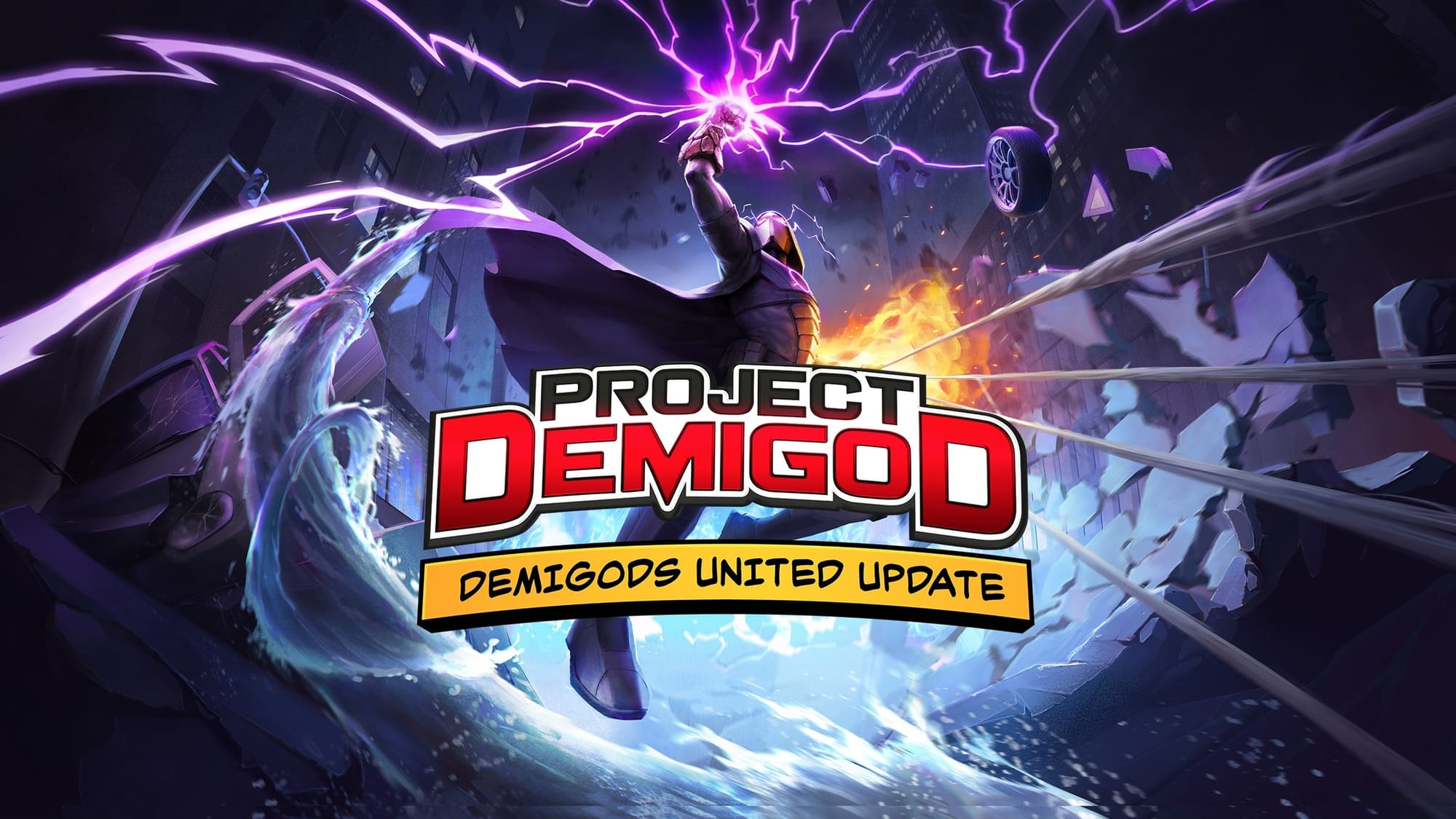
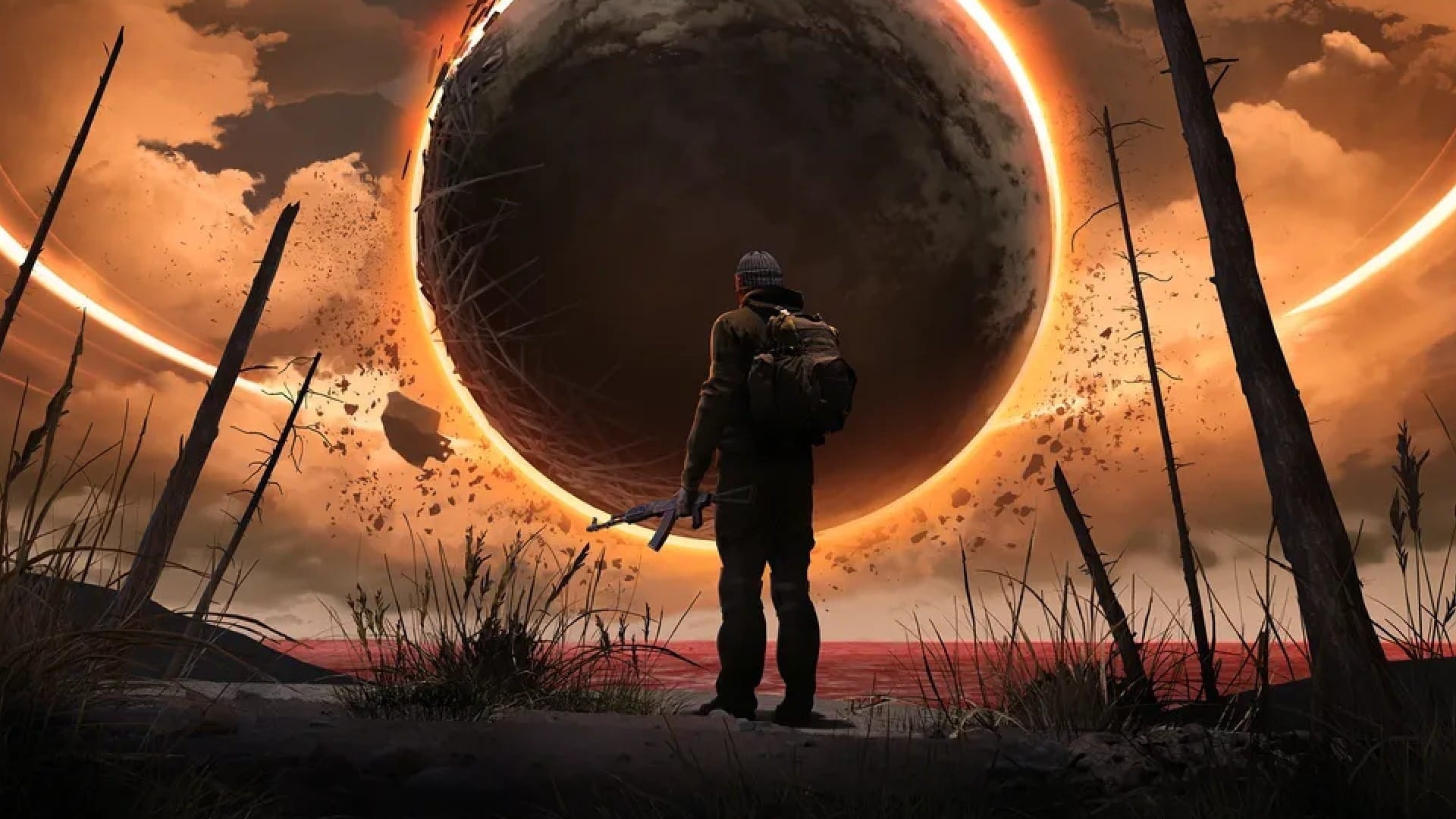
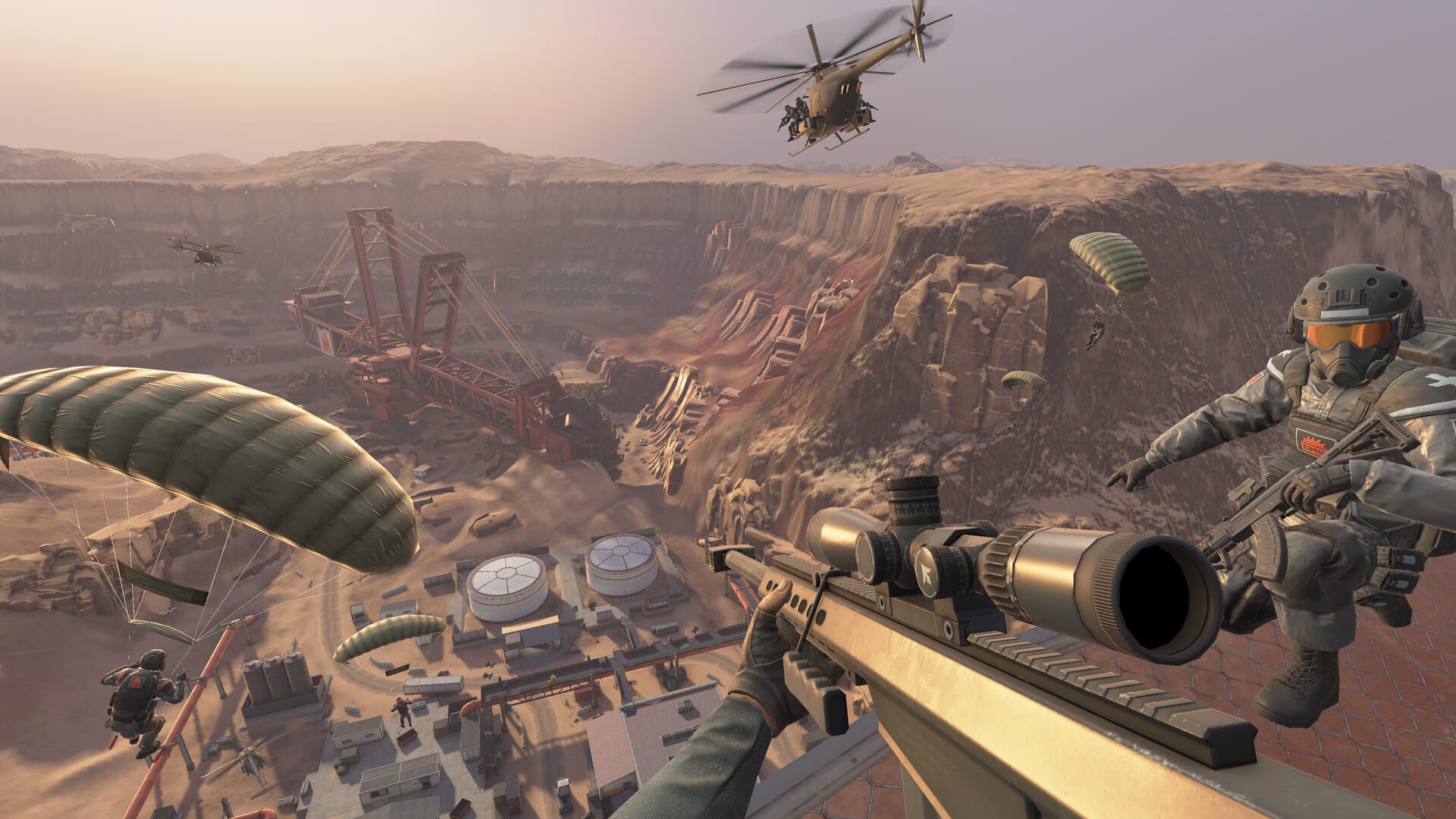
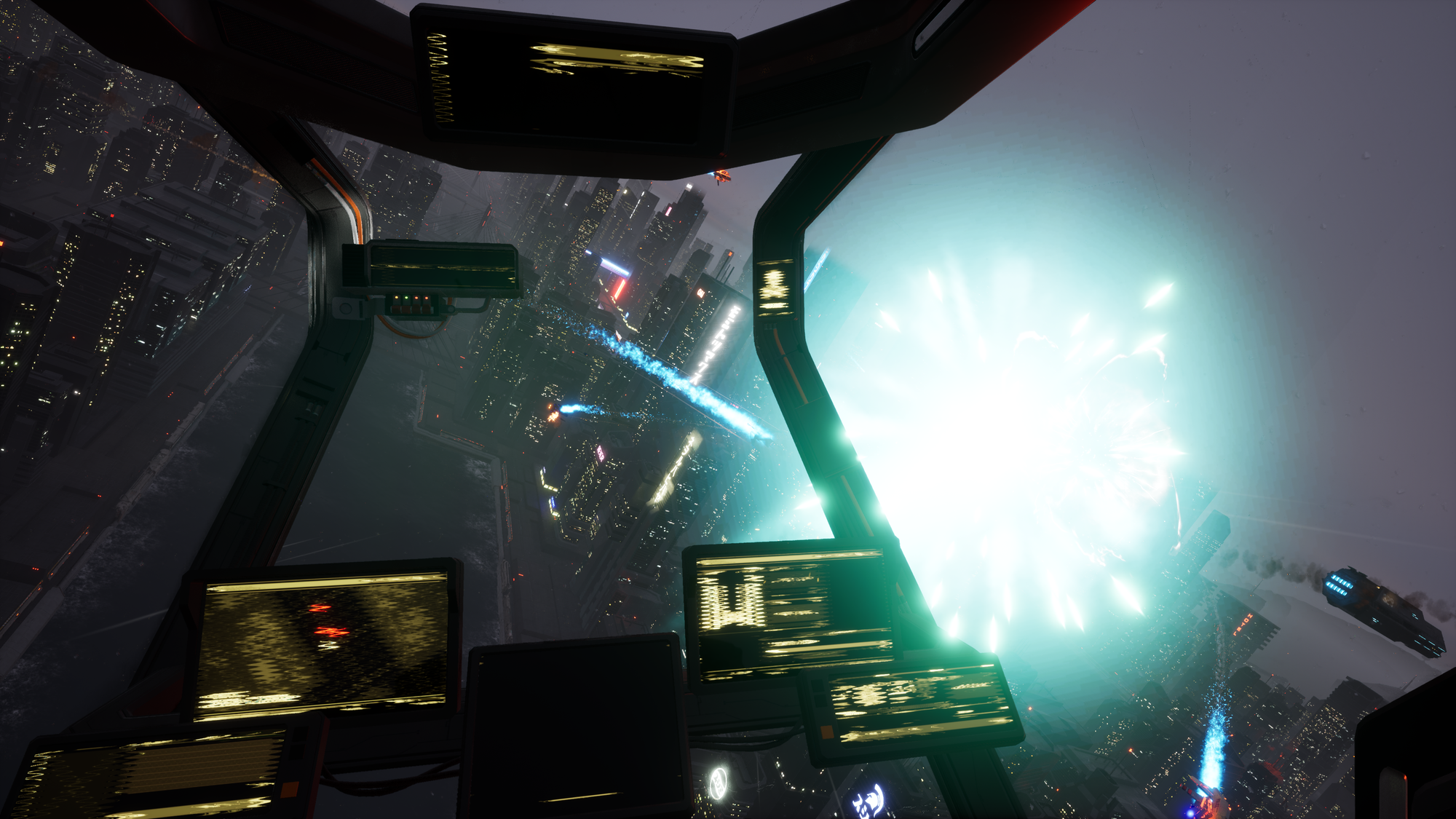
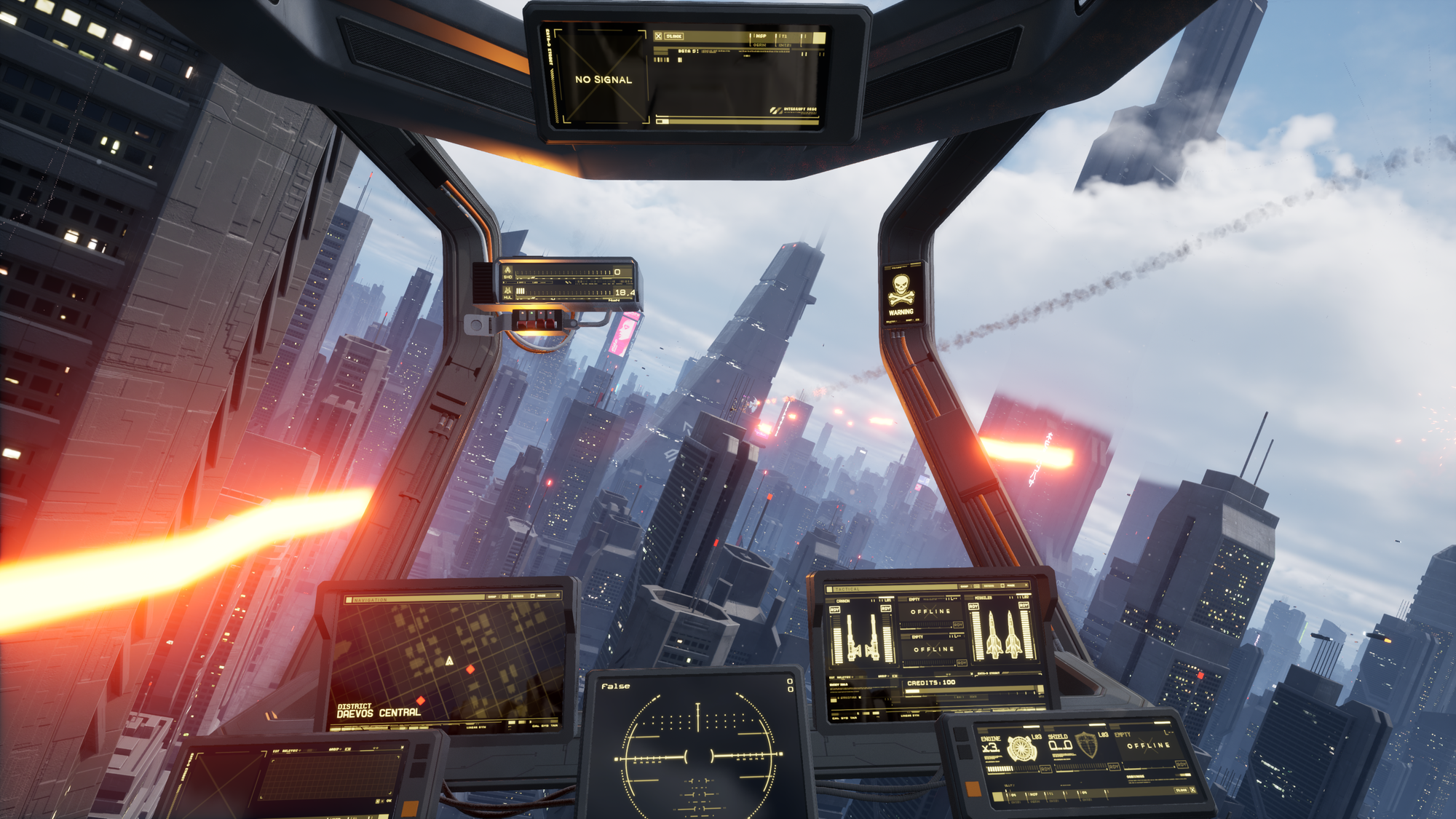
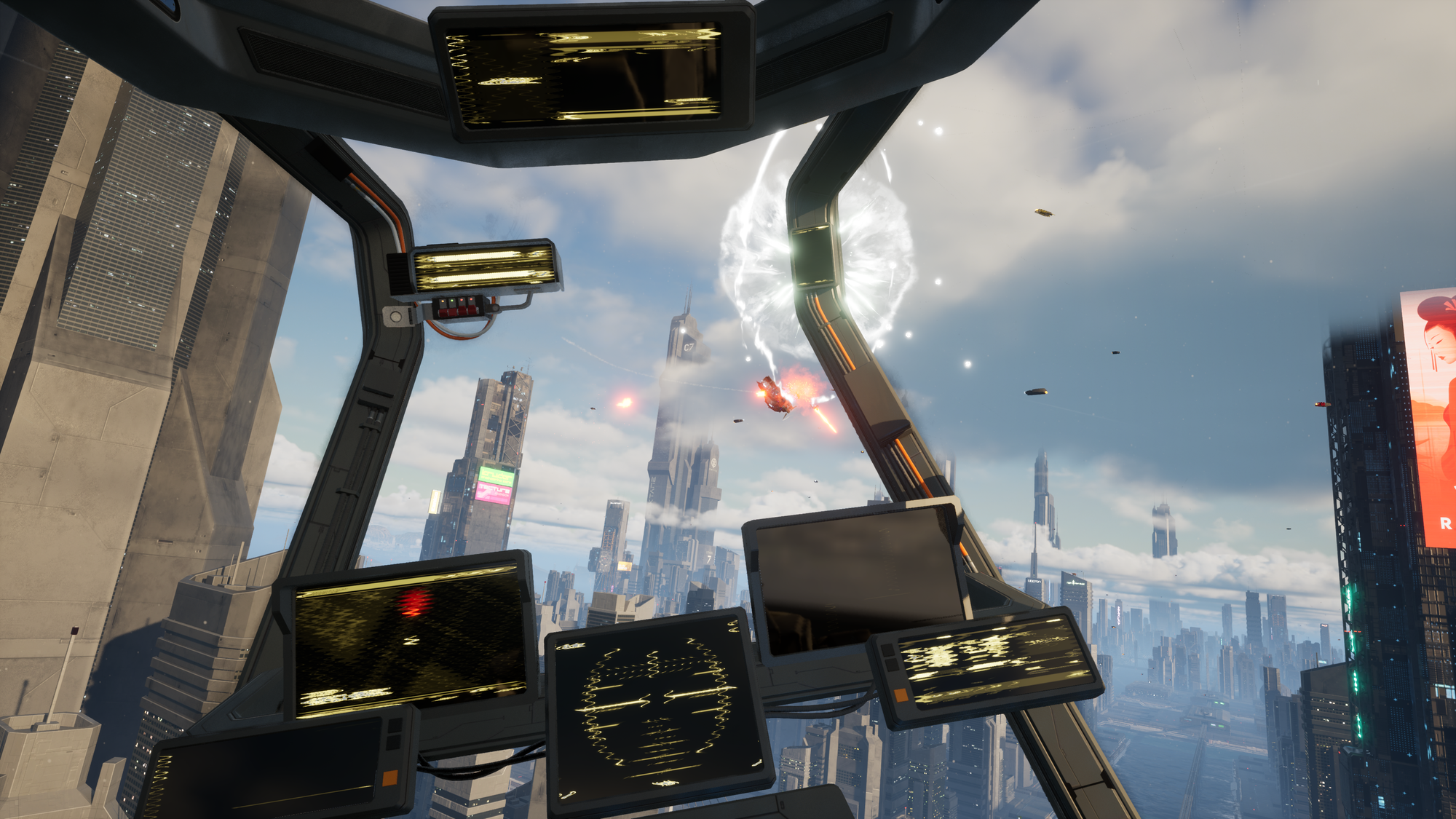
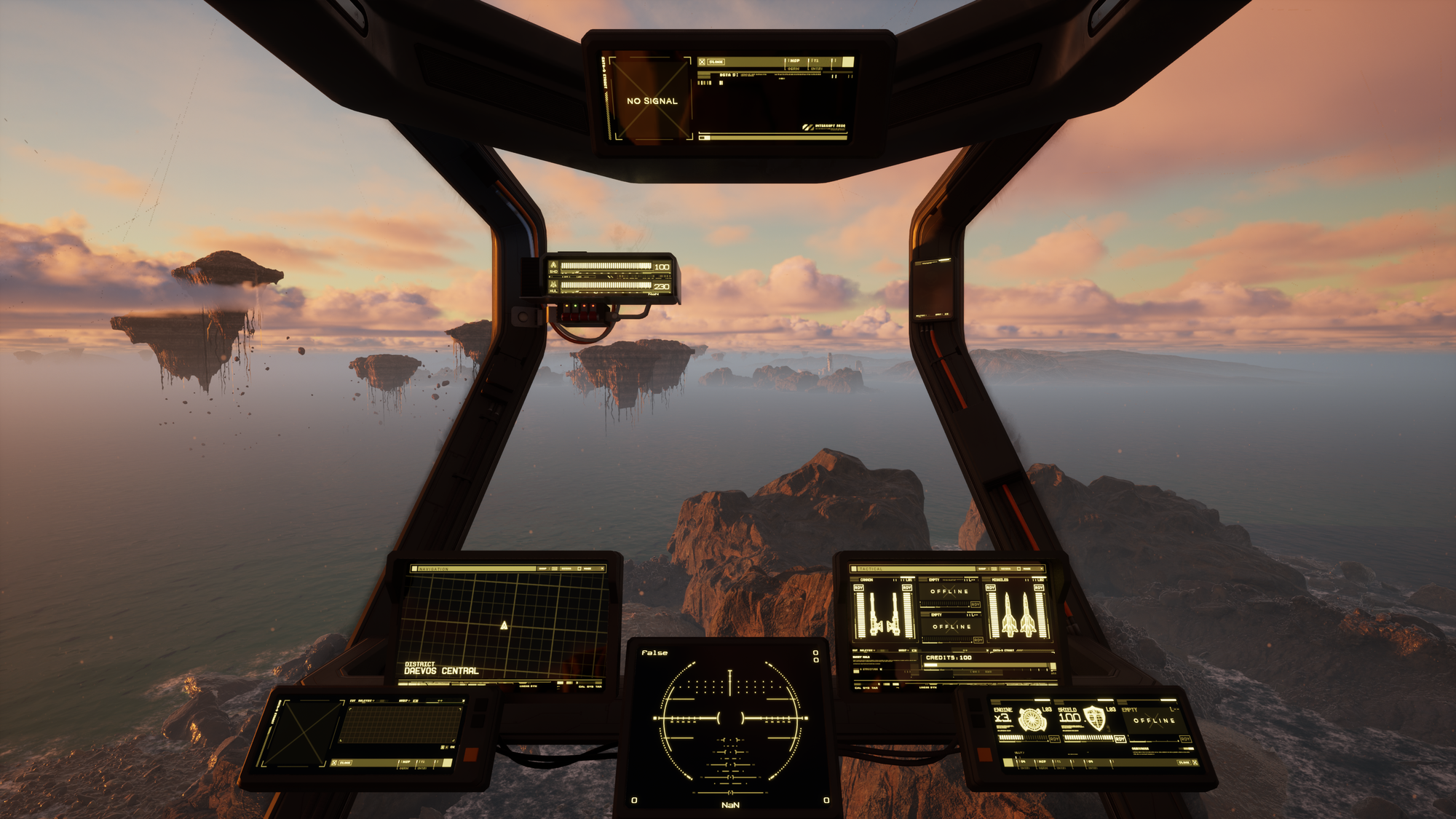
Superhero sim Project Demigod now has a multiplayer mode on Quest and Steam.
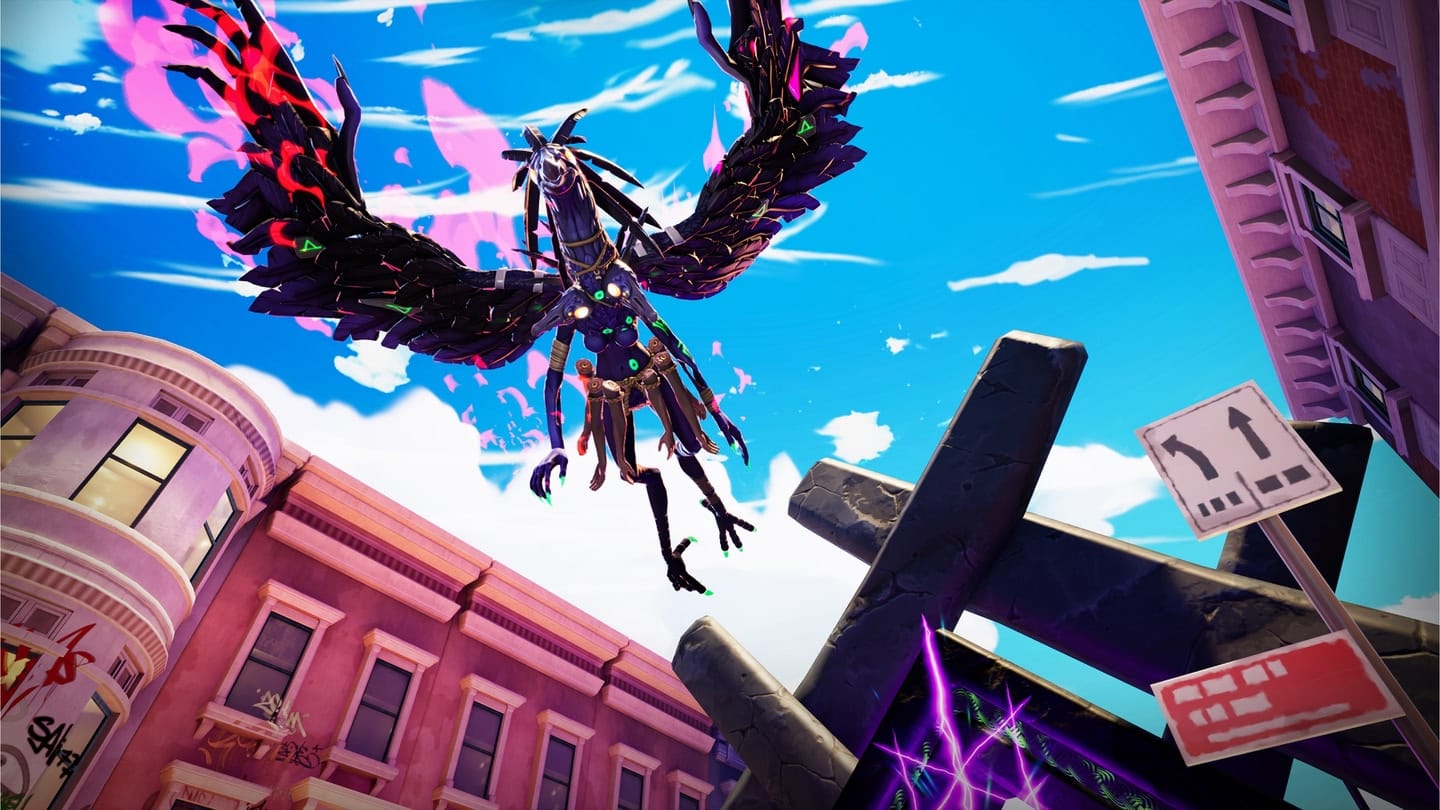
Developed by Omnifarious Studios, you may recall Project Demigod entered full release in February 2024 after an initial early access launch. It's a physics-based superhero sandbox with modding support that gives you a range of powers such as super strength or flight, where you can take on enemies and bosses across different missions.
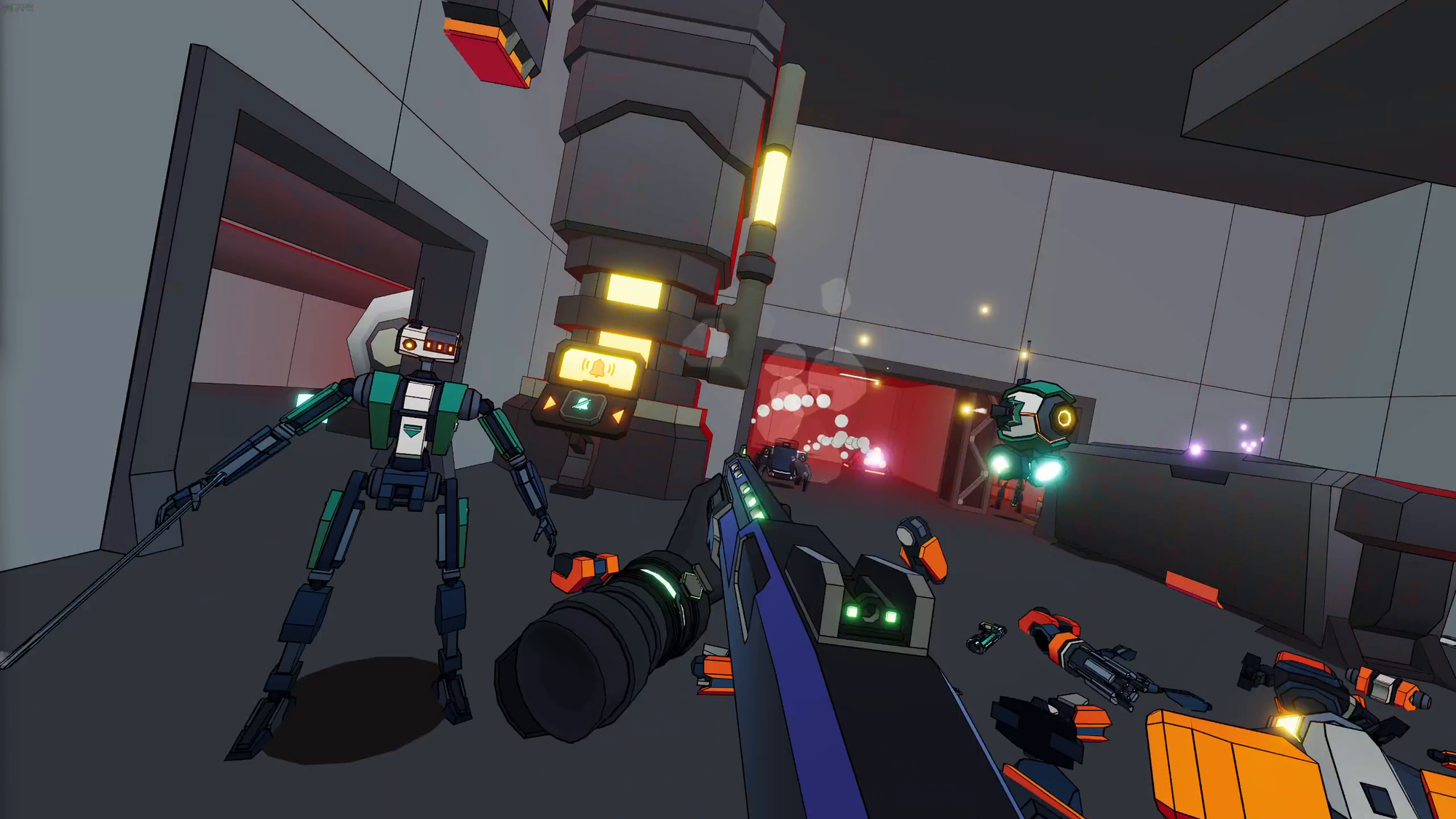
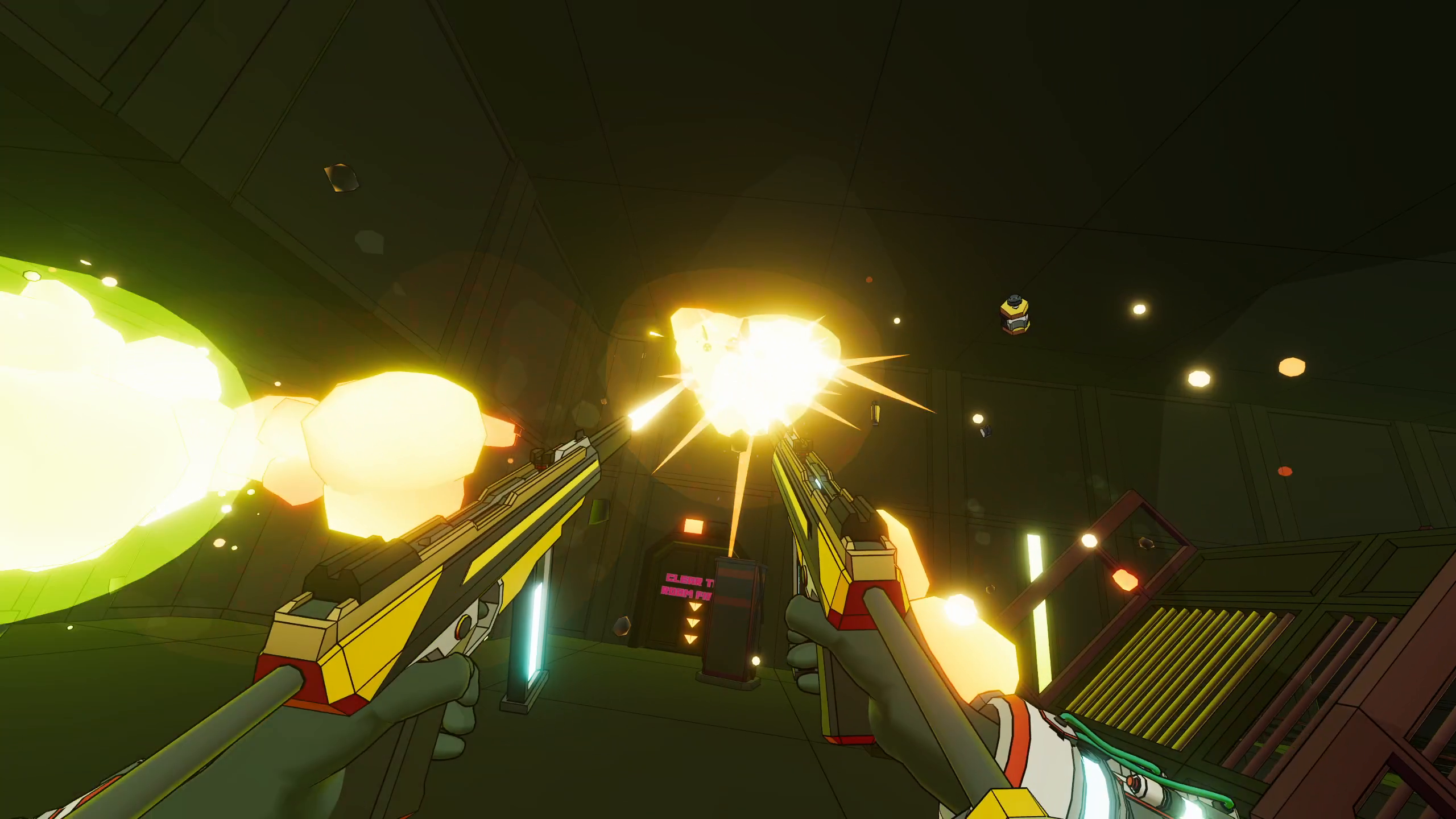
Now, Project Demigod has recently launched the 'Demigods United' update with two major additions. Social multiplayer lets you hang out with others across the city, with “full enemy combat” coming soon in a future update. Drone combat is also available, where you can fight against drones, turrets, and attack helicopters.
Demigods United marks the latest patch in a series of post-launch updates. Previous updates include adding giant enemies, a 'Demi-Mod' patch that upgraded the modding SDK, and the 'Armory Update' with new weapons and other changes. This April's 'Lights, Camera, Action' update also included the LIV Creator Kit and power color customization.
Project Demigod is out now on the Meta Quest platform and PC VR.
During a recent trip to New York, Walkabout Mini Golf game director Lucas Martell sat down with me as well as some fans and students for an in-depth Q&A session.
Walkabout launches its 37th course this week with Alice's Adventures in Wonderland alongside a new size-changing mechanic that will quickly turn a VR outing into a mad tea party. Work has already begun on Walkabout's 50th course. At publication time, Martell, art director Don Carson and a few other members of the Mighty Coconut art team are in Gravity Sketch roughing out ideas for courses that will open starting in 2027.
I've lightly edited the first half of the session featuring questions for Martell aimed at covering how he transformed the project from an effort he worked on solo before the pandemic to something dozens of artists contribute to from their homes.
What is the 'Walkabout Path'?
We hop into Gravity Sketch once we figure out what the course is gonna be and we actually start designing the course. And one of the very first things that we do is a yellow line that goes through the entire course that represents the path that the players will take to get to holes one through 18. That is the core thread of gameplay of how it all works, and sort of how we decide what areas you're gonna get to when, what is the sort of narrative that's gonna unfold.
How did you decide to build VR that way?
Gravity Sketch is a tool in VR that allows you to basically sketch in 3D space. So you could just be sketching lines, you could also do full models. A lot of our courses, we actually do the final models in Gravity Sketch, or we'll use it to place an asset library — all of the grass and rocks and stuff that you would see is probably just someone grabbed a little library of grass and they're like, oh, put that one there, put that one there. It gives it a very organic feel because, it's not perfect, it has a little bit of that hand-feel to it. And the other really cool thing about Gravity Sketch is that you could have multiple people in the same room working at the same time. We've added a fourth designer to the team within the last year here, and so we will all be in there and literally sketching and be like, oh, we need to have a table. And so Don tends to do a lot of the prop work and he'd be like, oh, let me go do that really quick. He'll literally like do a rough table in just like 20 seconds. “Like this? What if we'd made it longer, made it more oval?” He'll make the tweaks and we're literally going through and making it. He might just be like, ‘Oh, here, I replaced the chair. Can you go put this around?” And I'll grab his chair and place it and stamp it all over the place. So it's a very interactive way of working and it allows us to sort of work in 3D in a very sketchy way. And we have really found that sort of like the instinct a lot of people have is to try to make something look good. And what we've learned is try to stay as messy as long as possible. And that's where the "Walkabout Path" kind of came in, is that we want to think about what the overall experience is like, kind of like you would doing storyboards for a film. You want to be fast, loose, you want to capture it as quickly as you can so you can start finding what works and what doesn't work, so you don't spend a whole lot of time polishing something that's gonna end up on the cutting room floor.
How did you decide the trigger pull mechanic to teleport to the next hole?
The game started off as a solo project. So this would've been mostly during the pandemic. There was actually a little bit of work that was done on it before the pandemic, but that's really when it kicked into full gear. And it was just me for probably about nine months full time, although there's probably about three months spaced out of work that had been done in the year or two prior. And the two big things that I had always felt was, to me, mini golf, half the fun is not necessarily the game, it's actually the course itself. It's walking through the pirate ship. It's walking through the cave, it's seeing the blue, weird water. It's the environment that's around you. And yes, the game itself can be fun, but to me the path with all of that stuff takes it from even being like a hike into almost being like a theme park, but it's almost like a guided tour through the theme park.
The trigger to get to your ball, the one other big kind of like idea that I had is that I wanted people to be able to play the game with a single button. And so even to this day, you can play the entire game with just the trigger button. And so if you're ever trying to teach someone how to do it, that's the only thing you have to. And part of that came from just having done mobile games before, or just having done some other things where you have to keep it so, so simple that it shouldn't take long. And now you can't pick up the lost balls, you couldn't fly. But the actual, the core game mechanic is just one button.
Can you list off all the things that you can do in Walkabout now?
When it launched it was just four courses. Teleport only. There was no music, there was no settings menu cause there weren't any settings to adjust. There were no fox hunts and there was night mode and there were lost balls, but it was just four courses, night mode, no avatars, you were just gray. So flying became a thing. Smooth locomotion became a thing. We added music and fox hunts at the same time with the new putters. And then all the other activities that we've done as well. So that would be slingshots, mini mode, giant mode. I don't know if people have played recently, but there are a lot more sort of like game modes. You can play chess now in Venice, Upside Town and Welcome Island. And if you just go up to it and it's the same idea, it is just a trigger. You'll just get like a little sort of like an eyedropper thing that you can just grab whatever piece you want and place it wherever you want.
Are we gonna get hand tracking at some point?
We're definitely looking at it and I will say that the hand tracking has to be really good in order to do golf, but there's a lot of other things that don't, like picking up that chess piece, could theoretically work really nicely without some of that.
Why did you build your workplace the way that you did?
We were an animation and visual effects studio for a really long time, mostly doing vendor work. I came from the film world, mostly animation, pitching, setting up projects, got a couple of things made. So we came at this not as traditional game designers and we have kind of inherited a lot of things from animation. So one of the things that we do very, very differently than most other game design companies is that normally, when you were building a world like this, you would have artists building individual pieces. They would build that table, they would build that whiteboard, they would build the trash can and then someone else would be assembling it all in the engine. We do it all more like the film world where everything is just built in Gravity Sketch, Blender, it's all basically there. So you can do the entire world at any point in the process. Anyone can come along and be like, I don't like that railing right there, and move the whole thing. And it gives a lot more freedom to the team and there's a lot more trust. But also, because it's low poly, it also allows them to help create the world and maybe not get lost so much in the detail. Because one of the things that I've seen a lot of game studios struggle with is just if people are hyper-focused on making a version of that phone, they're gonna want to keep adding detail and detail and detail. And our point is more like, let's stop adding so much little detail to every single item. Yes, you could sort of make that phone look perfect, or you can have the table set up that clearly it looks like there's been a party. There's like a bunch of chip bags, there's a couple that have been opened. It actually feels like this big space is lived in, and that you only get when people are not focused on the micro, they're focused on more of the big picture stuff.
What does your funding model mean when recruiting talent – is it difficult or easy to hire?
I have to say it's a lot easier because I think that everyone who works in the games industry has struggled with what happens when funding gets pulled. Just a year ago, especially with some of the Embracer group stuff, like there were so many projects that got canceled just because, not cause the project was bad, but just because financing blew up or everyone has horror stories of all that happening. So the fact that we call it “player funded” because I sunk about a year of my personal time into it, but there was no like hard dollars that were into that. It was just the effort involved. And then since then it's just been sale of the game and sale of the DLCs that has fully funded the entire thing. I think that does put us in a really unique spot where we, when we say player-first, we really do mean it because we need those players to keep coming back and keep supporting the game.
Who is Don Carson?
Don joined us, I think probably about number 10 or 12, somewhere in there. So he was earlier on, he was an Imagineer, he was the senior art director on Splash Mountain, Mickey's Toontown. A couple of different, pretty big things. So he came from the theme park world and since then he's worked on Dragons and Mario World and he had worked on a bunch of other stuff, much of it five, 10 years ago and it's just now actually getting finished and seeing the light of day because theme parks just take so long to do. But Don had embraced VR pretty early on as a design tool because he was creating spaces. It was just the best way for him to do that. And he's always been very, very sort of like tech-forward, and Don reached out to us just because, I think it was in Bogey’s Bonanza, which is course number six or seven, somewhere in there. Why don't you come talk? So we had kind of had him into an all-hands meeting. He just came in and did a presentation. It was like 45 minutes or so, talking about theme park design and what he did. And we just played a couple of rounds and kind of kept talking.
It was like, "would you ever consider coming to, to work for us?" He jumped at the opportunity. It really has sort of changed a couple things about how we do. We've definitely kind of embraced some of the theme park design in what we do, and a lot of that comes down to environmental storytelling, and the way that you can kind of create these different stories. For folks like me, coming from the film world, I always had a very, a very sort of like linear idea of what storytelling was. And he really helped us understand that it's almost more about, you need to have a very, very general conceit about what the world is and why it is that way. But then it's about all the details that you put in there that sort of support that. And it's not a linear story. It's sort of like all these little things that you might find as you go around. So I feel like once Don came on board, Nautilus or 20,000 Leagues was the first one that he was super involved with, and I think you kind of feel that...that sort of like, it really took a, a big leap at that point, from these are cool worlds to being sort of like, no, this is inhabited. It feels like a place.
What is the value of virtual reality to you?
I think that being able to go into another world, that was the thing that sort of like really drew me there. And I feel like space is such an important thing to me and I love that ability of basically just being able to like fully immerse yourself in a world. Also, I think that games like this that also maybe feel a lot less like games. That it is almost more of a space. And yes, there is a game activity, but that is almost like the lightest of — it’s an excuse to get in. A lot of times people aren't even coming for the game. They're coming more to spend time in the world. There's a significant number of people who do use it just as almost like kind of meditation or just sort of like a way to just like wind down at the end of the day.
But then the social side of things. When I was doing this, Quest 1 was the only headset that was really out there at the time. And Oculus had talked, we didn't take any money, but they were just like, we know it's coming up, we really think you should add multiplayer. This is like two months before launch. I was like, okay. I didn't know any better. Luckily mini golf turned out to be one of the easier things to do multiplayer with just because you don't have some of the interactions. So I basically coded up a really crude multiplayer implementation and the very first time that I played I was like, I need someone to play with. So my dad, it was height of the pandemic. He grabbed the other headset, went upstairs and we played a game together. And it was mind blowing how being in the same space as someone else really sort of like – it felt alive. And it felt like you were sort of sharing that, that place with someone. It gets to you in a way even more so than FaceTiming someone would.
How often has the subject come up of selling the company?
It came up and there was definitely a period, especially three years ago when all the VR stuff was really hot, that we were getting approached quite a bit. And yeah, I think that ultimately, none of the prospects brought anything to us that was really of interest outside of money. But it was also one of those things that we weren't trying to pay anything off. The game has already paid for itself. And because we're already set up that the game is paying for all of the artists, it does put sort of an upper limit on our burn rate. I don't know that we could make more mini golf faster in a way that would really be better for anyone. I feel like we've really found a nice sort of like a nice pace and cadence with all that. But sure you could spend more time on any individual course adding more stuff. But even then, there's a polygon budget that we have to hit. There's only so much that we can put into any one thing anyways. I feel like if we reduced the number of courses, if we went to like one every quarter or so, I feel like then we would be in a weird boat where we would have to be so much more precious about every single one of them. If you're spending twice as much as what we're spending on this certain course, now you're getting into a version of AAA where now it's like, ‘okay, now like everything has to be a raging success in order to just break even.’ As opposed to, we can make an Upside Town and maybe some people will hate it, but taking those risks, I think is one of the things that the independence has allowed. And it lets us sometimes try some stuff, and we don't have to deal with a lot of the bureaucracy.
When you're playing with people in like Ice Lair, where you get turned into an ice cube, which is intentionally kind of a little annoying that you're putting a cube now. When you're playing with people, you're sharing the laugh and when it turns into a cube, and then it bounces and then suddenly rolls off to the wrong side, everyone is laughing and having a good time. I'm reminded of something Elan Lee, the Exploding Kittens creator, talks a lot about making it so that it's not about making the game funny, it's about allowing the other players to be. And the more you can get one of the other people who are playing to be funny or to have a good time, then it's sort of like, then that's what's infectious.
All your artists work from home?
Yeah. We do technically have an Austin office and a Boise office where a couple of our tech folks in the QA team are, but almost everybody's working remotely.
How do we make more places like Mighty Coconut?
I definitely think that being driven by the creative is kind of a big part of that. And I think that some of it goes back to what we were talking about earlier in terms of sort of like giving people the latitude to contribute things like that. Because part of the reason that we've got so much of that in there is that it comes back to how we're fundamentally set up so that someone owns the entire course at any given point for usually multiple weeks. And so they have opportunities to add capybara in, to add those little scenes, to create those little moments that were never really intended. And I feel like when I'm doing my job as sort of a game director, I wear a few different hats, but like the game director side of me when I'm doing my job right, is really early on sort of like, "here's what the course is." I'll call it sandbox directing. It's sort of like my job is not to describe the sand castle that's gonna be. My job is to sort of like create the sandbox and it's like, “here's how big the sandbox is.” Here's a few of the toys that you have to work with inside of there. Okay, focus here, and as long as you stay within the walls, then we're good. And by doing that and then trusting people to make something cool, I think that's where you get some really interesting stuff that no one person on the team could have possibly come up with. And even the courses that I've designed myself, a lot of the things that make them the most memorable are the things that other people add. And yeah, just embracing that. I think that a lot of it does come just down to being creative-led and trusting and knowing how to hire the right people that have that right sense of taste.
Please consider becoming a member or patron to support UploadVR's work directly.
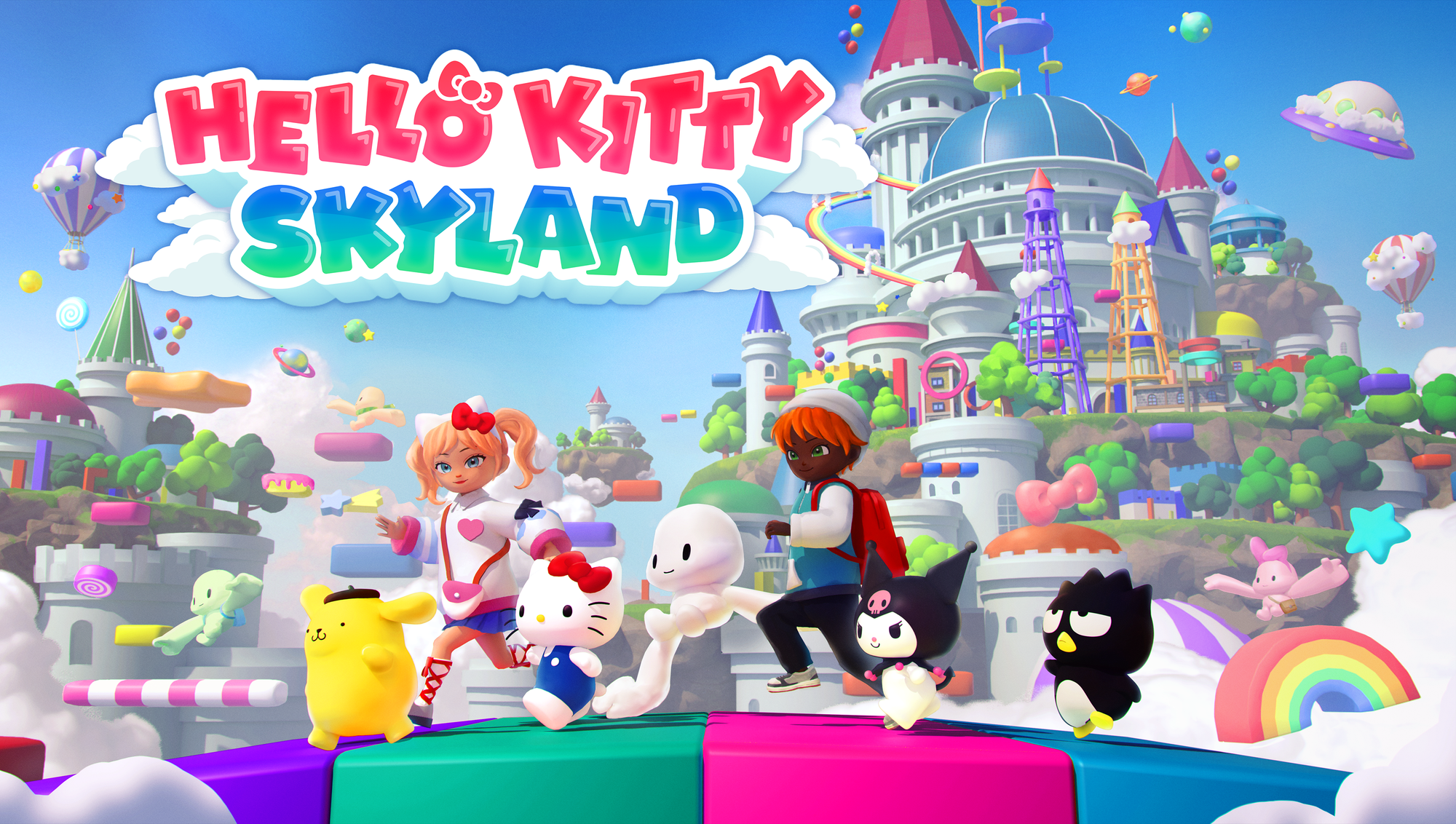
Hello Kitty Skyland, a free-to-play social VR experience based on Sanrio's iconic mascot, enters early access later this month on Quest.
Originally announced in September, Hello Kitty Skyland is being developed by Thirdverse (Soul Covenant, X8). Set in a virtual world called 'SKYLAND' with various Sanrio characters, the early access release features a central online lobby and a full-body multiplayer racing game called 'Sky Dash,' which seems to use Gorilla Tag-style locomotion. You can see that below with today's trailer.
Other features available in this month's early access launch include an avatar dress-up system, using various original outfits. Limited-time costumes themed around Hello Kitty, Kuromi, and My Melody are also included, though it's unknown how long they'll be available for.
It's currently unknown what further features will be added for the full release of Hello Kitty Skyland, and a targeted release window for that wasn't provided; Thirdverse only states that “the development team will gather player feedback and continue adding content toward the full release.”
Hello Kitty Skyland enters early access on December 22 on the wider Meta Quest platform (store page currently down) as a free-to-play release with in-app purchases.
Gran Turismo 7 launches its free Spec III update and the Power Pack DLC tomorrow on PS5 and PlayStation VR2.
We've known since September's State of Play presentation that Polyphony Digital planned to launch its Gran Turismo 7: Spec III update. Celebrating the wider series reaching 100 million sales, this free update comes with two new tracks - Abu Dhabi's Yas Marina Circuit and Canada's Circuit Gilles-Villeneuve - alongside eight new cars. You can see that in action below.
Like before, these cars aren't unlocked immediately and require purchasing from different shops in Gran Turismo 7. Here's the full list of cars being added: Ferrari 296 GT3 ’23, Ferrari 296 GTB ’22, FIAT Panda 30 CL ’85, Gran Turismo F3500-B, Mine’s BNR34 GT-R N1 base, Mitsubishi FTO GP Version R ’97, Polestar 5 Performance ’26, and the Renault Espace F1 ’95.
These aren't the only free additions in update 1.65, either. PlayStation Blog confirms other changes include Dunlop tires, a raised collector level cap, seven new events across World Circuits, and more weekly challenges. A new 'Data Logger' is accessible in non-racing modes, while further Café Menus and featured curations in Scapes mode are also included.
With the Power Pack DLC, Polyphony Digital states that it's “based around the theme of real racing.” The studio confirmed this offers various motorsports challenges such as full racing weekend formats, 50 new events across 20 categories, and 24-hour endurance races.
This DLC also exclusively contains the latest version of Gran Turismo 7's AI agent, Sophy 3.0, and completing Menu Book No.9 Championship unlocks the Power Pack pavilion on the world map, represented by a sailboat icon. Unlike Spec III, that's a paid content update costing $29.99 and includes 5,000,000 in-game credits.
Searching for new VR games and upcoming releases? You're in the right place.
Recent years have seen more VR games than ever before. Major titles continue reaching Quest 3, Steam, PlayStation VR2, and Pico, with PC VR looking set for a renewed boost when Steam Frame launches. While Apple Vision Pro and Samsung Galaxy XR don't prioritize gaming, you can expect the odd release every so often. Whatever your headset, there are plenty more upcoming VR games to pick from.
Our aim is to keep this wider list that we will regularly update, so you can better plan ahead or remind yourself of the upcoming VR games you had perhaps forgotten about. If we notice a game getting repeatedly delayed just before launch, said game will be placed in the 'TBC' section until a firm commitment is made.
This also won't replace our more in-depth monthly round-ups – you can find more specific information about new VR games for December 2025 below.
If there's a game we've missed that you'd like us to add or the information is incorrect/outdated, please email tips@uploadvr.com or use our Contact Us page to get in touch.
* denotes a game that either is currently available in early access on that platform, or a game that will have been released in early access by that time.
** denotes an early access launch.
*** denotes a game currently available (or will be available at that time) but without VR support yet.
Evangelion: Δ Cross Reflections will host in-person focus group tests across the US and Japan this month, opening applications today.
Initially announced in February before September's name reveal, Evangelion: Δ Cross Reflections is an official VR game based on Neon Genesis Evangelion. Offering a new story set around episodes 1-11 of the original anime TV series, developer Pixelity Inc. announced that it's accepting public Focus Group Test applications before next year's launch.
Japan's test is scheduled to run from December 19 to 21, and that's being hosted in Tokyo. The United States is only hosting this for one day on December 19 in California, and applications are being accepted through Evangelion: Δ Cross Reflections' X account.
Supporting VR and mixed reality gameplay, Evangelion: Δ Cross Reflections is the first installment in a planned trilogy that aims to cover all 26 episodes of the TV series. Instead of using existing protagonist Shinji Ikari, Cross Reflections focuses on an original character who dreams of becoming a pilot, establishing connections with new characters and linking in with “key episodes” from the anime.
Evangelion: Δ Cross Reflections will arrive next year on unconfirmed platforms, and a public demo is scheduled to launch in the first half of 2026.
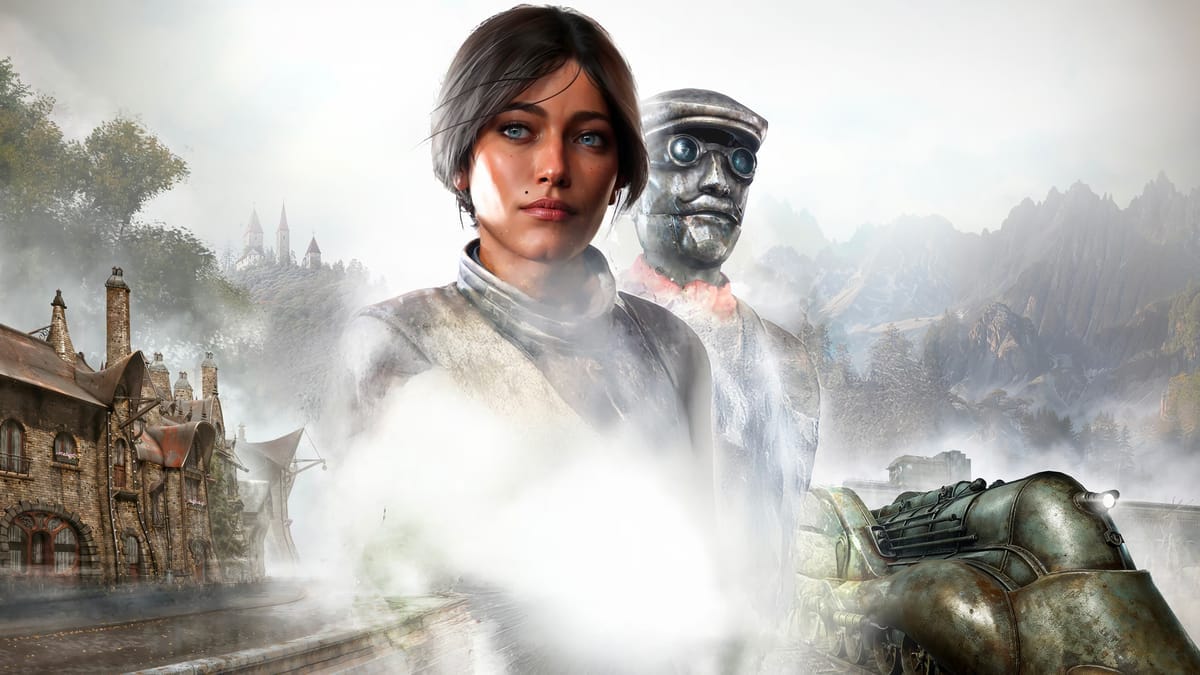
Syberia VR captures much of what made the original title a special game, but numerous immersion-breaking flaws leave me yearning for more polish.
The original Syberia was an unusual game, even in its own time. Released in 2002, an era dominated by games like Grand Theft Auto: Vice City, Halo, and Metroid Prime, Syberia was a counterpoint to pop gaming. It was a ponderous, quiet, and eccentric point-and-click adventure filled with obtuse puzzles in a clockwork-powered alternate Europe. Yet Syberia thrived, selling over 500,000 copies. It launched a series to satisfy a small but loyal fandom drawn to the game’s unique melancholy charm and otherworldly art direction.
Much of the original game’s magic stemmed from its creator, the late Belgian writer, comic artist, and game developer Benoît Sokal. Known early in his career for creating Inspector Canardo, Sokal soon began writing and developing video games based on a fictional, interconnected, and whimsical universe, of which Syberia is a part. Sokal died in 2021 during the development of Syberia: The World Before, and it’s a small comfort that his work lives and continues to evolve.
The Facts
What is it?: A ground-up VR remake of 2002's classic point-and-click adventure game Syberia. Platforms: Meta Quest 3/3S (reviewed on Quest 3S) Release Date: Out now Developer: Virtuallyz Gaming, Microids Studio Paris Publisher: Microids Price: $29.99
0:00
/1:11
Which brings us to Syberia VR, an ambitious remake of the original game built from the ground up for Meta Quest 3. We've seen this sort of thing attempted before, most notably with Cyan Worlds' Myst VR. In that instance, the resulting game was a great achievement. For the first time, we could manipulate the beloved point-and-click adventure game's many puzzles that once only existed on flat screens.
But does it work with Syberia?
The answer is… sometimes. In its best moments, Syberia VR is a beautifully crafted interactive objet d’art to be held and handled and loved. But at other times, it’s a broken game, a rusted grandfather clock puking its cogs out in the corner of the room.
A Haunting Mystery
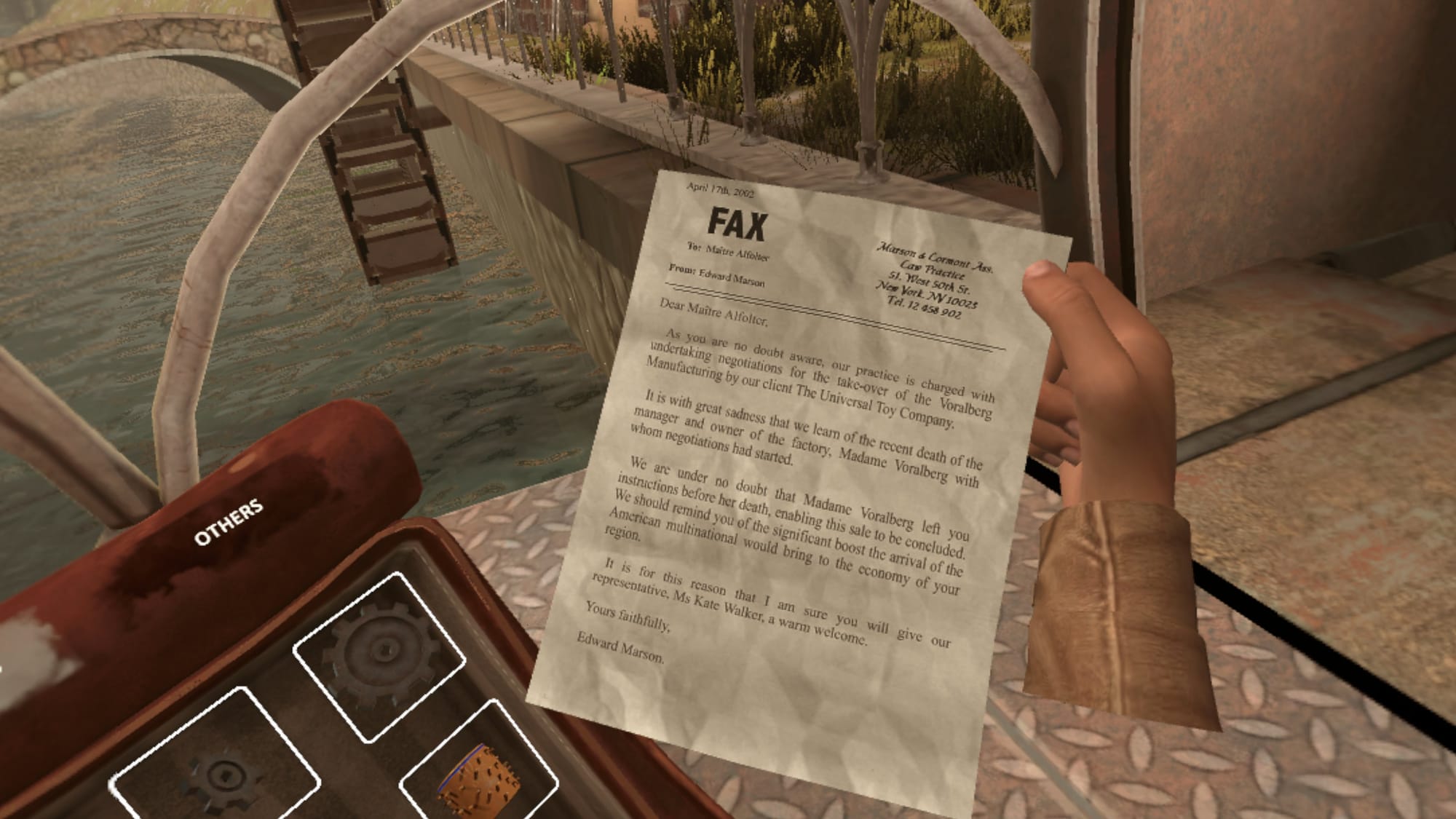
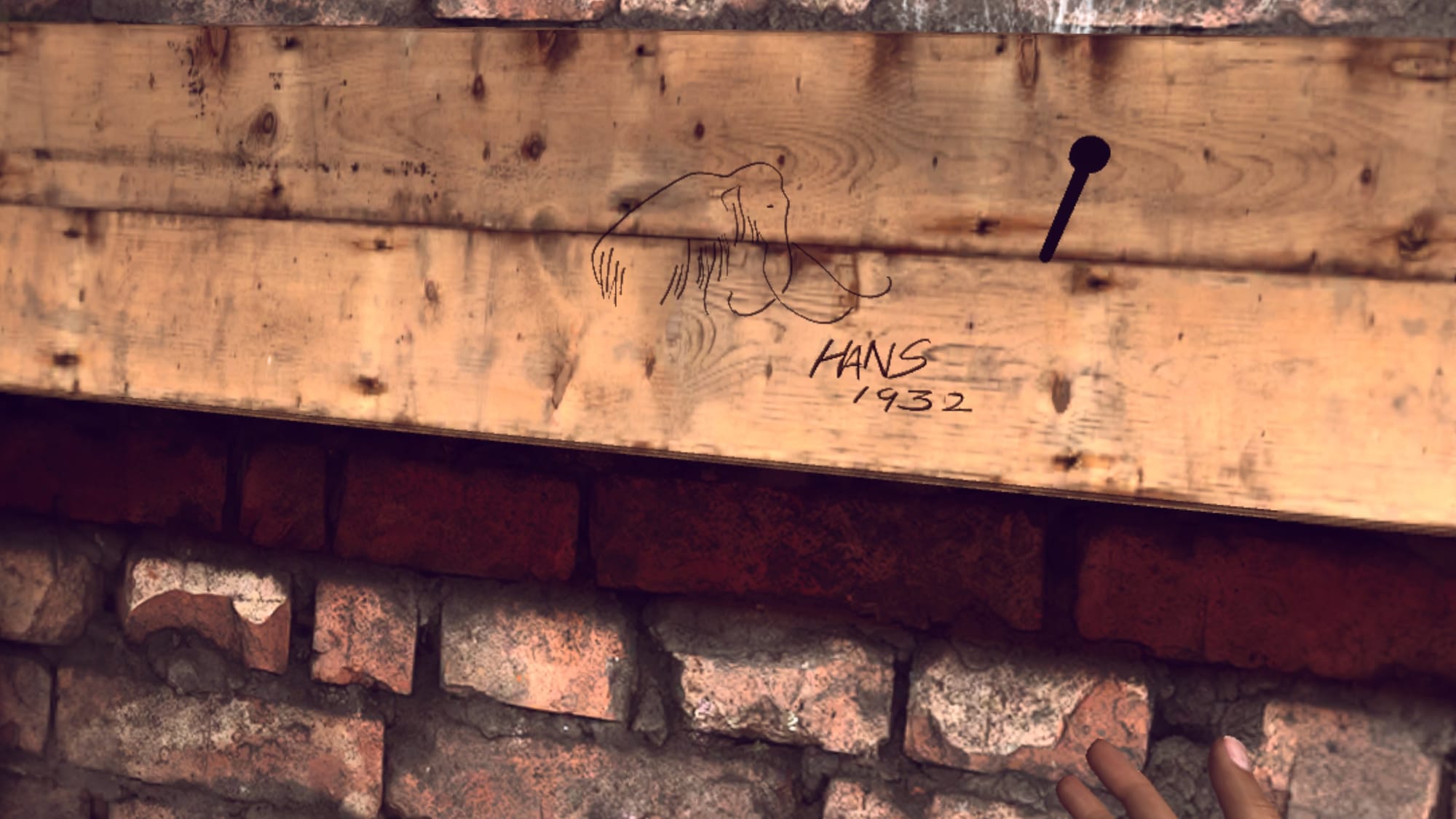
The plot of Syberia is unique, to say the least. We play as American lawyer Kate Walker, who's arrived in the (fictional) French village of Valadilene to finalize the sale of a once-glorious automaton factory to a United States-based toy company. Kate must secure the signature of the owner of the factory, Anna Voralberg, except on arrival, Kate discovers that Anna has just died, leaving ownership of the factory to Hans, her brother. Hans is missing, Kate must find him, and this leads us on a sprawling journey across the European continent with a dozen twists and turns. And I'd be remiss not to mention the woolly mammoths.
That’s right. The beating heart of Syberia’s plot is one man’s lifelong obsession with prehistoric pachyderms.
0:00
/2:00
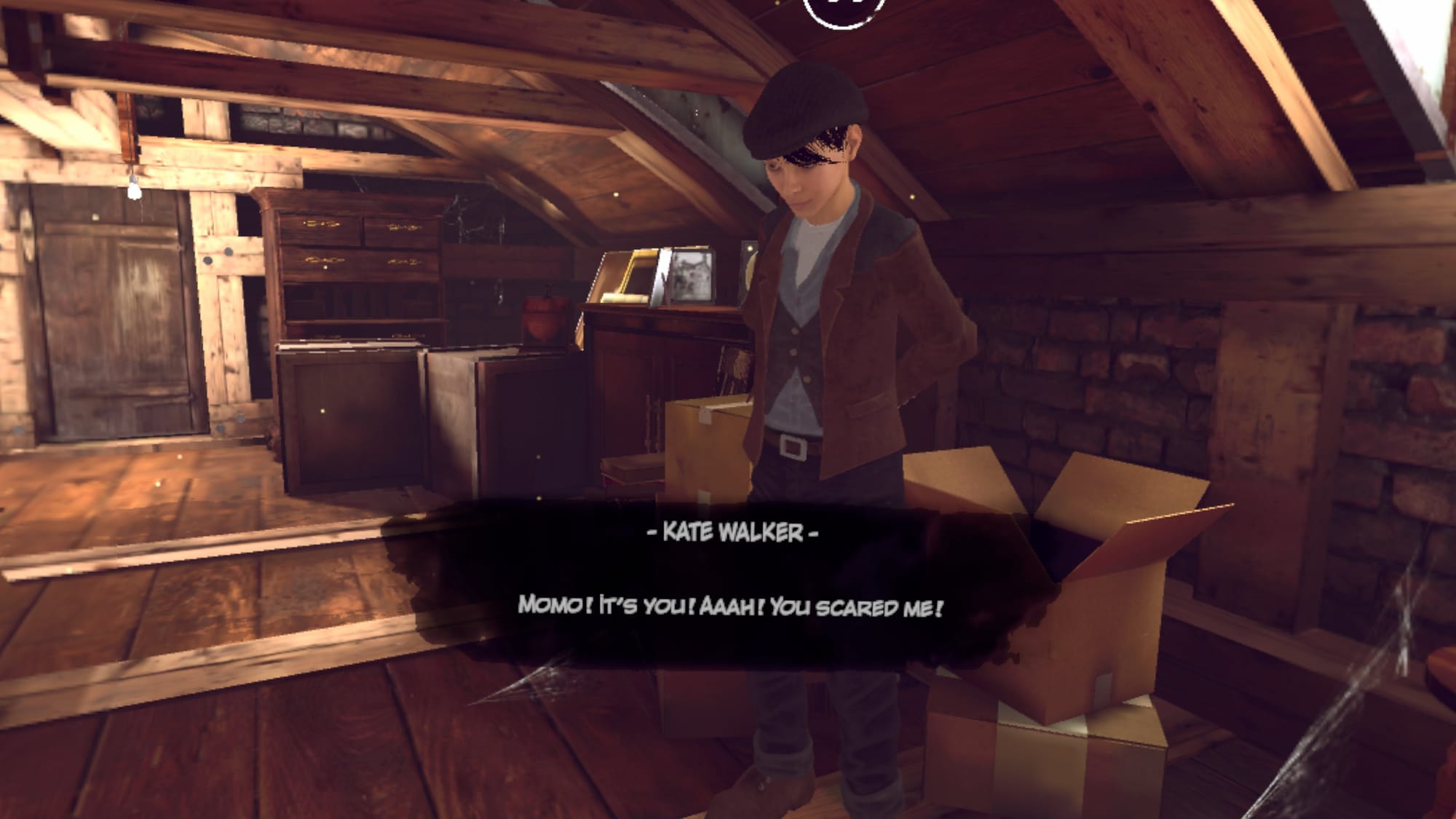
Meanwhile, in the real world, the mysteries around Kate deepen as she becomes entangled in the lives and secrets of Anna, Hans, the childlike Momo, and the automata “living” in the decrepit factories and creaking estates.
Screenshots taken by UploadVR on Quest 3S
Stepping into Sokal’s World
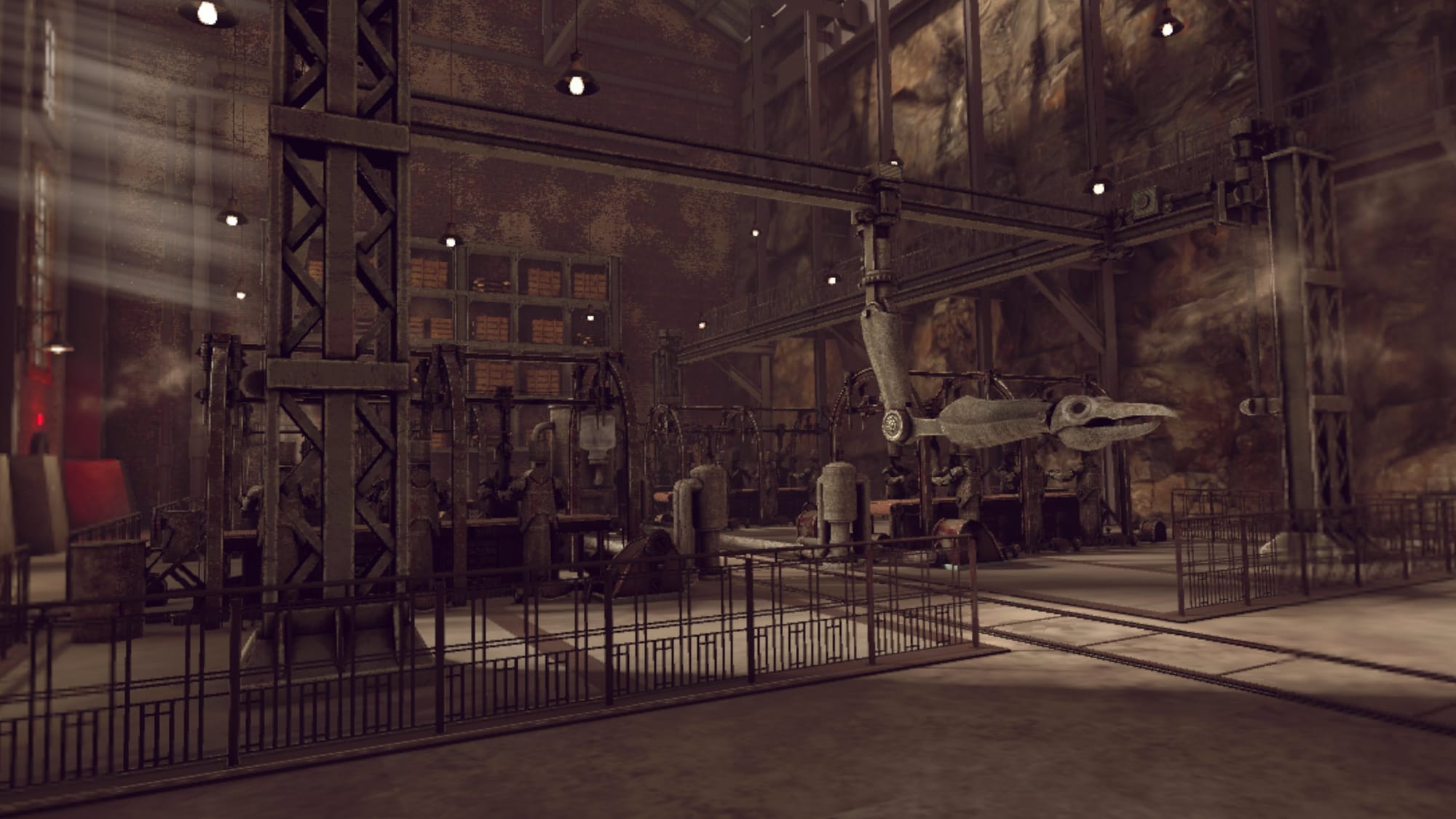
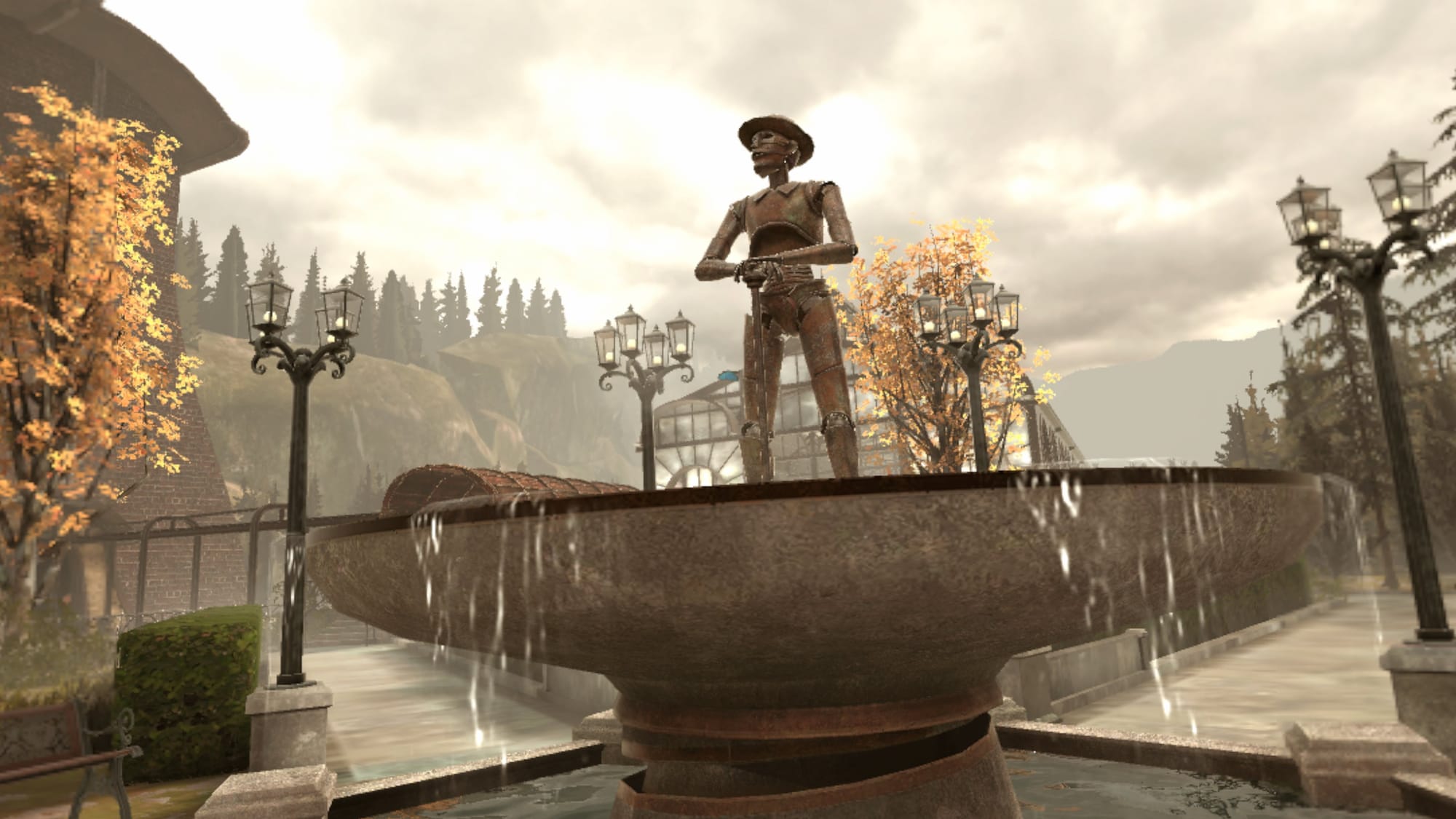
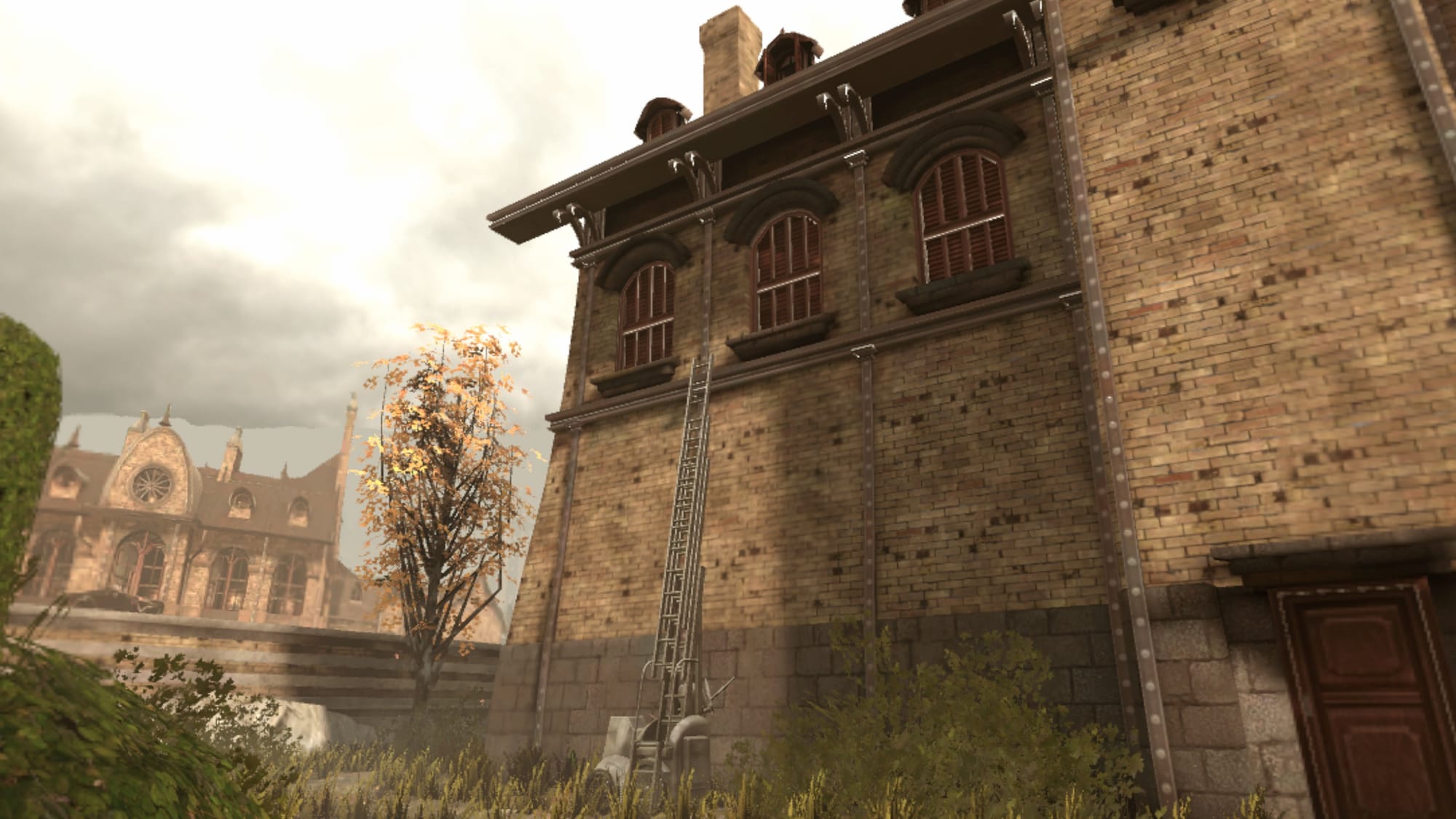
Jumping from flatscreen to VR is naturally Syberia VR’s greatest gamble, and in this attempt, it gets many things right. Environments are gorgeous and atmospheric. The cobbled streets, aging workshops, oak-paneled offices, and rickety railcars are all rendered with remarkable care, and all are defined by that specific blend of desolation and eccentricity that made the original’s art style so remarkable. Everything in Syberia is just a little off and vaguely lifeless, like a weird dream.
Walking through Valadilene in VR is eerie in the right way. Houses tower above, while the factory squats with unsettling purpose. The automata feel uncomfortably alive as their brass heads and glassy eyes follow you in physical space, making them more disquieting than they ever were in the series’ flatscreen games.
On Quest 3S, Syberia VR looks great with its dramatic lighting and painterly detail. However, there’s also noticeable draw-in on textures, especially at distance, where things look brutally low res. At other times whole sections of the game fail to render (mostly behind the player). They pop in, rather, a moment after we turn to look. These graphical glitches often occur, and they’re pretty annoying.
Screenshot taken by UploadVR on Quest 3S
Puzzles and Bugs
Syberia has always relied heavily on mechanical puzzles, and VR naturally transforms these into tactile interactions. You twist knobs, slide levers, insert keys, and manipulate contraptions by hand.
Tasks are presented in a non-linear way, meaning that we’re free (to an extent) to pursue solving puzzles and advancing our story in whatever order we like. You can head to the graveyard and unravel the mystery of the supposedly dead Hans first, or you can choose to explore the factory grounds first. It’s up to you, and when it all works, it works well. The glaring issue is that Syberia VR regularly breaks down.
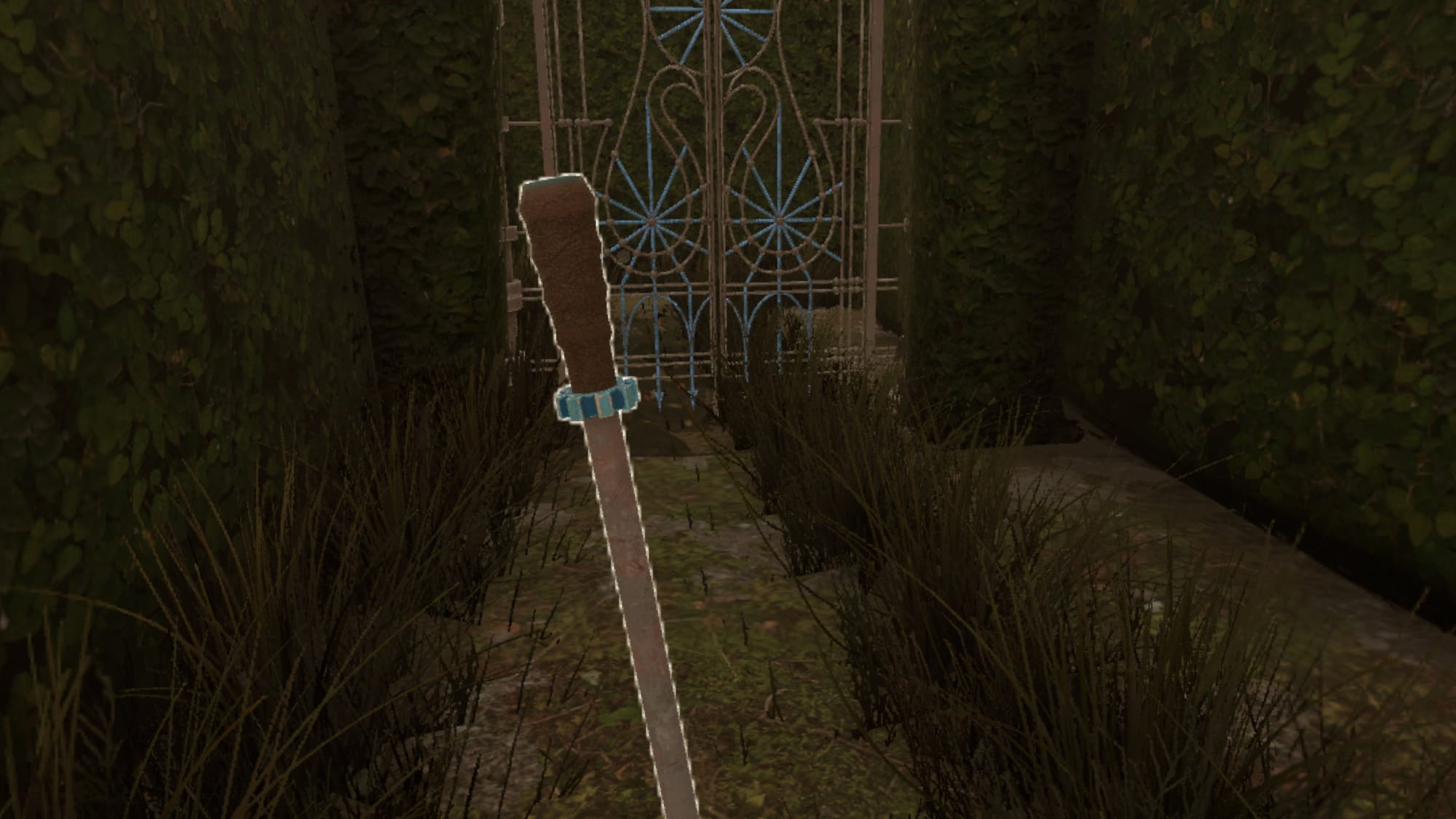
For example, early in Syberia, we come across a hedge maze with lever-operated, color-coded gates. To reach the center of the maze, we must navigate to the correct colored levers and open the correct gates. This eventually leads us to a special key that can operate a machine, which in turn allows us to climb a ladder into Anna’s attic. In VR, this should feel tactile and fun. Unfortunately, my key is bugged. Grabbing it and inserting it into the machine ended up being impossible, with the key dropping away and falling out of the environment altogether. This ruins my sense of immersion as I restart the game.
0:00
/1:51
Elsewhere, a certain character delivers a line of dialogue and a request. After that, he freezes in place when handing me a crucial quest item. I couldn’t talk to him again or use the quest item. And though said item does then appear in my inventory as intended, I wasn’t able to interact with the next step of the quest at all. The puzzle soft-locked and only a full game restart fixed it.
This is a terrible problem, given that VR experiences inherently depend on smooth and realistic object interaction. When Syberia VR breaks down, it breaks down hard.
Screenshots taken by UploadVR on Quest 3S
Exploration and Movement (or Lack Thereof)
The beauty of Syberia’s environments is compelling. Navigating through them is not. There’s no delicate way to say it; Syberia VR currently needs a patch or two.
Kate’s walking speed is so sluggish that it’s almost parody, and while there is a sprint button, it’s hard-mapped to clicking and holding the left analog stick. On the Quest controller, this becomes painful as there's no “toggle to run” option.
Turning options are likewise limited to snap turning only, which feels archaic compared to modern VR titles that almost universally include a smooth turning option. While Syberia VR features a hybrid control scheme that lets me teleport to where I want to go, these environments really should be explored as fluidly as possible, and that’s just not possible with the current scheme.
Comfort
Presently, Syberia VR allows adjustment of the following comfort settings:
Main hand: Right / left
Position: Stand / sit
Movement: Teleport / Free Move / Hybrid
Look Control: Snap
Vignette Intensity, Blink Duration, and Height Offset sliders
Music, Sound, and Atmosphere
If there’s one element that never falters, it’s found in the game’s soundscape. The music is enchanting, a blend of melancholy piano, airy strings, and subtle, almost fairy-tale motifs. These ebb and flow behind an ambient foley of scraping metal, grinding of gears, rumbling train engines, and an ever-present distant wind sweeping leaf litter across vast and empty courtyards.
While Kate is a smart, competent, and internally conflicted character who’s just a bit brittle from years of trying to be the perfect employee, the perfect daughter, and the perfect romantic partner, she's surrounded by a cast of truly heinous jerks. Her boyfriend, mother, and boss are all insufferable, demanding, and selfish, as they tug and howl at Kate from across the sea. In all cases, the voice acting is excellent. Put on headphones and the world of Syberia simply lives.
Syberia VR - Final Verdict
As it stands, Syberia VR has a few too many game-breaking bugs, movement and comfort settings that leave much to be desired, and flaws that frequently strain player immersion in ways that VR can’t afford. Yet the soul of Syberia is found in its dreamlike melancholy, its exploration of death and autonomy, its sadness and light, and all of these things live on.
Though it's a flawed game, Syberia VR is also beautiful, atmospheric, and captivating in a way that few games can manage. It preserves Benoît Sokal’s unique vision and lets us inhabit his game worlds more fully than ever before. If it gets patched to address the controls, bugs, and comfort issues, I'd be inclined to give a higher score.
UploadVR uses a 5-Star rating system for our game reviews – you can read a breakdown of each star rating in our review guidelines.
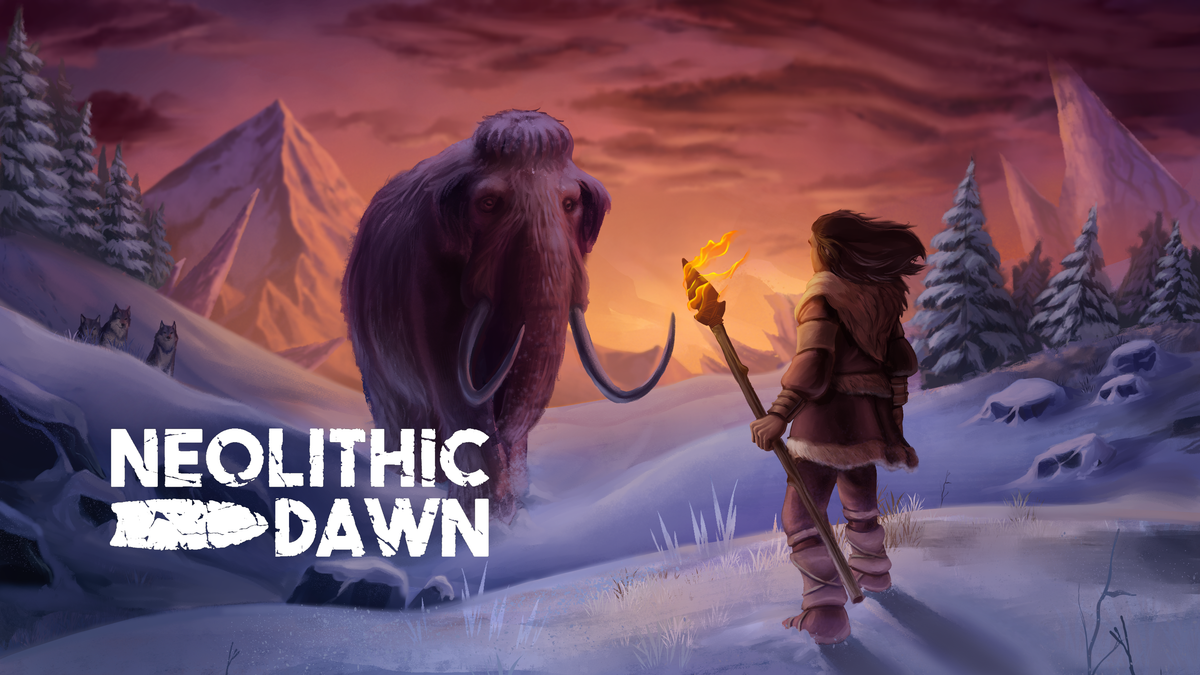
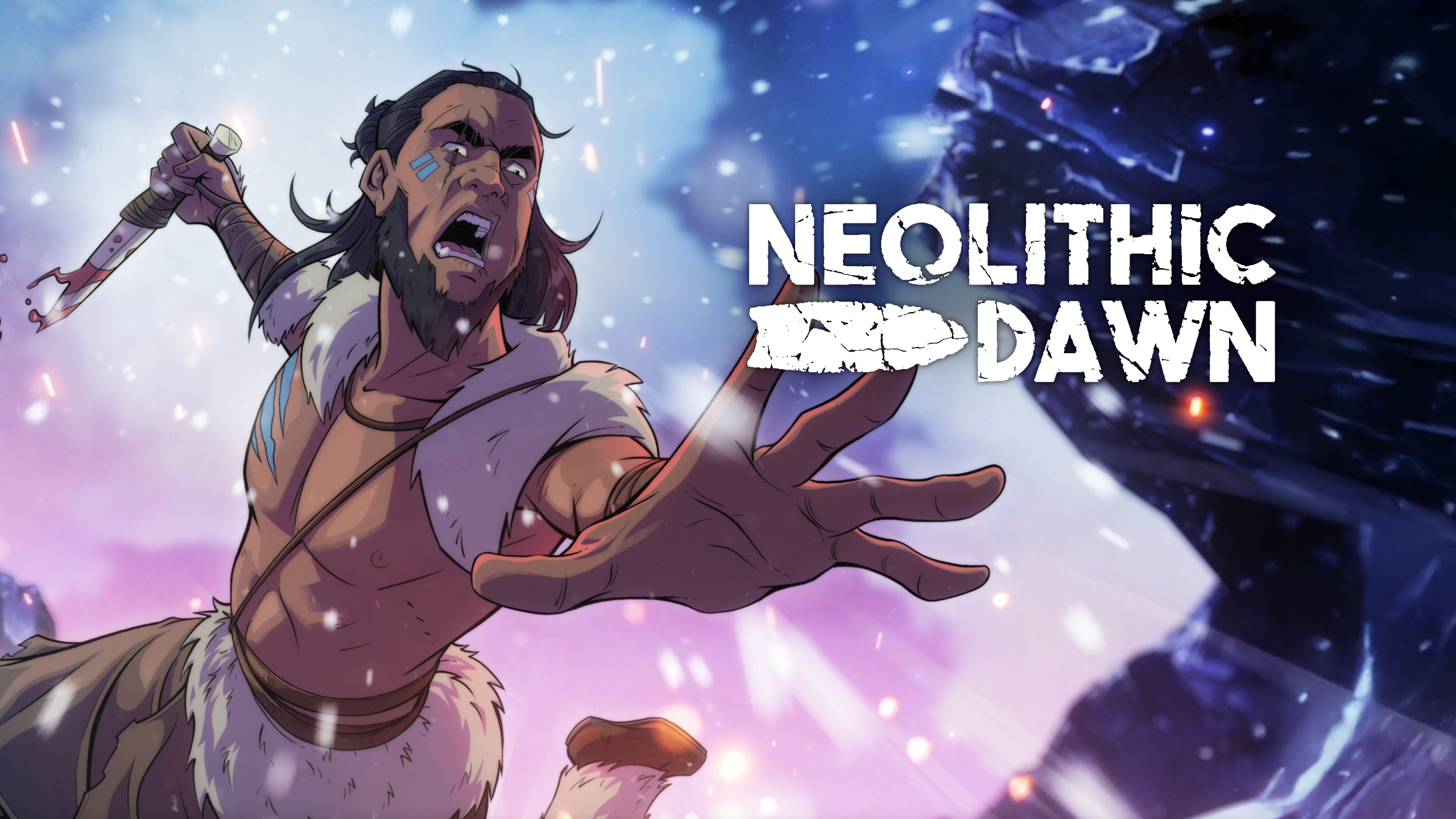
Neolithic Dawn, a VR survival game set in the New Stone Age, will receive its full release next week on Quest.
Created by Neolithic LLC, Neolithic Dawn was initially released into Early Access on Quest this year before reaching Steam. Announced today, the historical survival experience is launching into version 1.0 soon, providing players with an opportunity to test their perseverance and grit in 10,000 BC North America. You can check out the announcement trailer below:
0:00
/0:54
In Neolithic Dawn, your job is to manage your primal needs like hunger, thirst, energy, and warmth while attempting to build a thriving civilization. To survive this task, you'll craft tools like spears, stone axes, and bows, and fight off, or charm, era-specific beasts, including bears and wolves. When you inevitably die, you return as your descendant with any progress made before your demise remaining.
Beyond hunting, you'll also need to gather and explore by scaling cliffs and rummaging through organic flora-filled maps. There's also an in-depth story tutorial that puts you in the shoes of your ancestor as you try to protect a baby version of your character while navigating an ice cave. Version 1.0 will add quality-of-life changes, and menu design overhauls are also promised.
During our early access hands-on in July, we were compelled by Neolithic Dawn's unique setting. “If you’re a fan of survival games, enjoy the physicality of physics-based VR, and can forgive a few janky moments, Neolithic Dawn offers a fascinating, frightening, and sometimes beautiful escape into a forgotten era,” we said at the time.
Neolithic Dawn is available now in early access on Meta Quest and Steam, with version 1.0 reaching Quest on December 11. A full PC VR release date is unconfirmed.
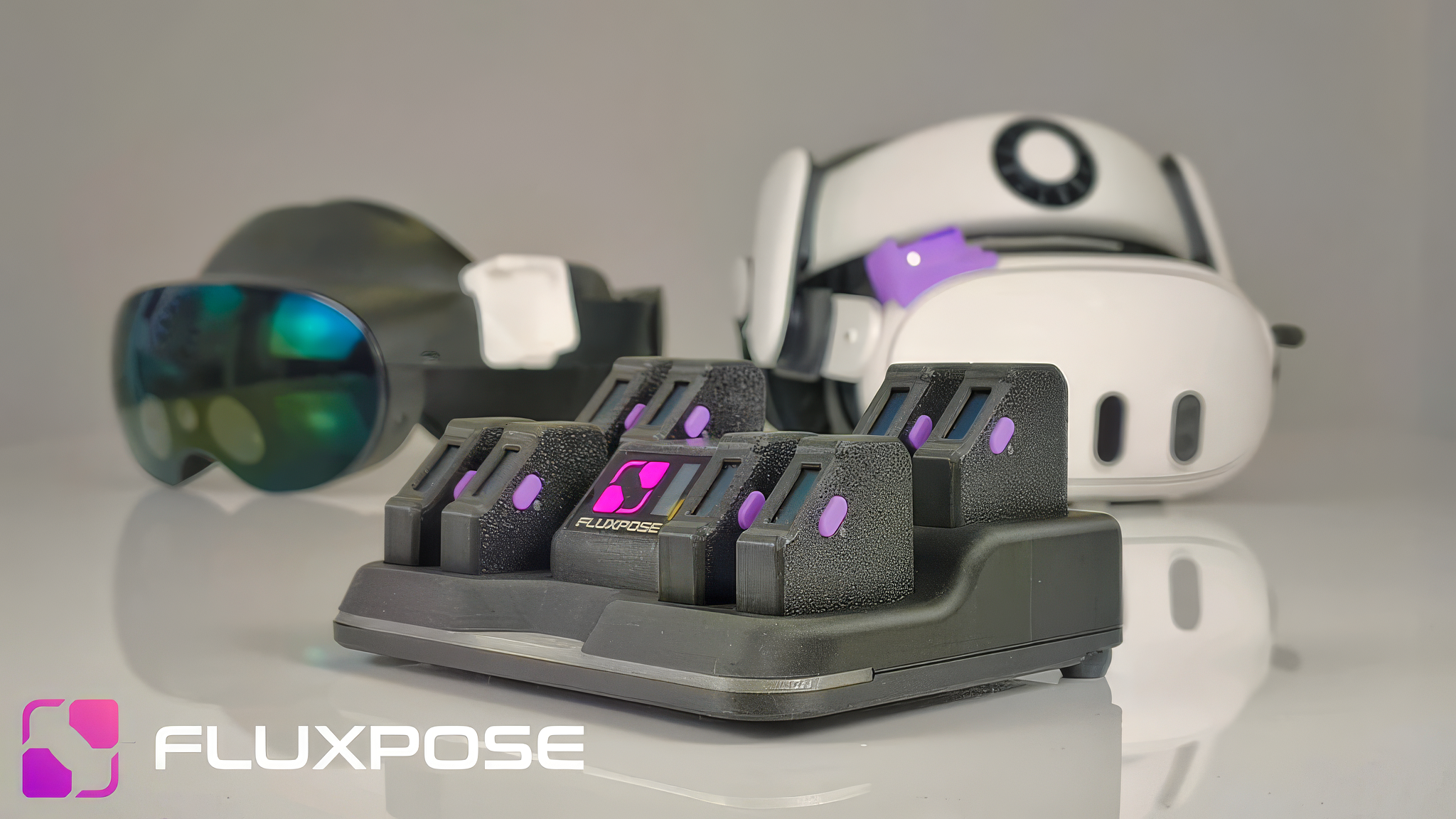
FluxPose wants to be the new 6DoF VR body tracking system of choice, and its Kickstarter campaign has already raised over $2 million.
With Valve itself abandoning its "Lighthouse" SteamVR Tracking system in favor of inside-out computer vision in Steam Frame, the future of VR body tracking is in flux (no pun intended). Computer vision has made setting up VR fast, easy, and portable, all at a lower cost, but cameras on a headset have only a partial view of your body.
Further, like all optical systems, Lighthouse tracking is subject to occlusion. With the standard two base stations, there will be angles at which your tracked objects are blocked. To mitigate this, some enthusiasts add a third or even fourth base station. Lighthouse is also heavily affected by any reflective surfaces in the room, especially mirrors, which cause tracking issues.
0:00
/3:05
FluxPose in VRChat.
Over the weekend, Spanish startup FluxPose launched a Kickstarter campaign for what it calls "the first affordable, truly portable, occlusion-free tracking solution with absolute positioning".
FluxPose uses electromagnetic tracking, with trackers that sense the magnetic field generated by a base station, and thus is not subject to occlusion at all.
We've seen electromagnetic tracking systems in VR before. Razer Hydra for example, early 6DoF VR controllers often used with the Oculus developer kit headsets, with their small tracking volume and 4-foot cable between each controller and the base station. And in 2013, the company that built the tech behind Hydra launched a Kickstarter for a tracking system called STEM, with many of the same core promises as FluxPose. But in 2018 STEM was canceled, with backers refunded.
0:00
/0:41
Through-the-lens demo of FluxPose.
A key reason that STEM failed, why Razer Hydra had such a short tether, and the core difference of FluxPose, comes down to the nature of magnetic fields and where you put the base station. With Hydra and STEM it sat on your desk, and because magnetic fields decay with the cube of the distance, beyond a few feet they would deliver jittery and inaccurate poses.
With FluxPose, the base station (which it calls the beacon) is attached to your hip. This effectively creates a portable occlusion-free tracking sphere around your body, with a radius of just over 5 feet, that, according to the startup, can support an "unlimited" number of trackers within it. It's a clever solution to the electromagnetic distance problem, and the beacon also acts as a hip tracker.
As with every VR tracking system, FluxPose also heavily relies on feeding the data from the IMU on the trackers, the tiny chip which contains the accelerometer and gyroscope, into a sensor fusion model.
FluxPose claims a real-use accuracy of less than 5mm, compared to the less than 2mm of SteamVR Lighthouse, with an update rate of between 50Hz and 300Hz depending on the power mode.
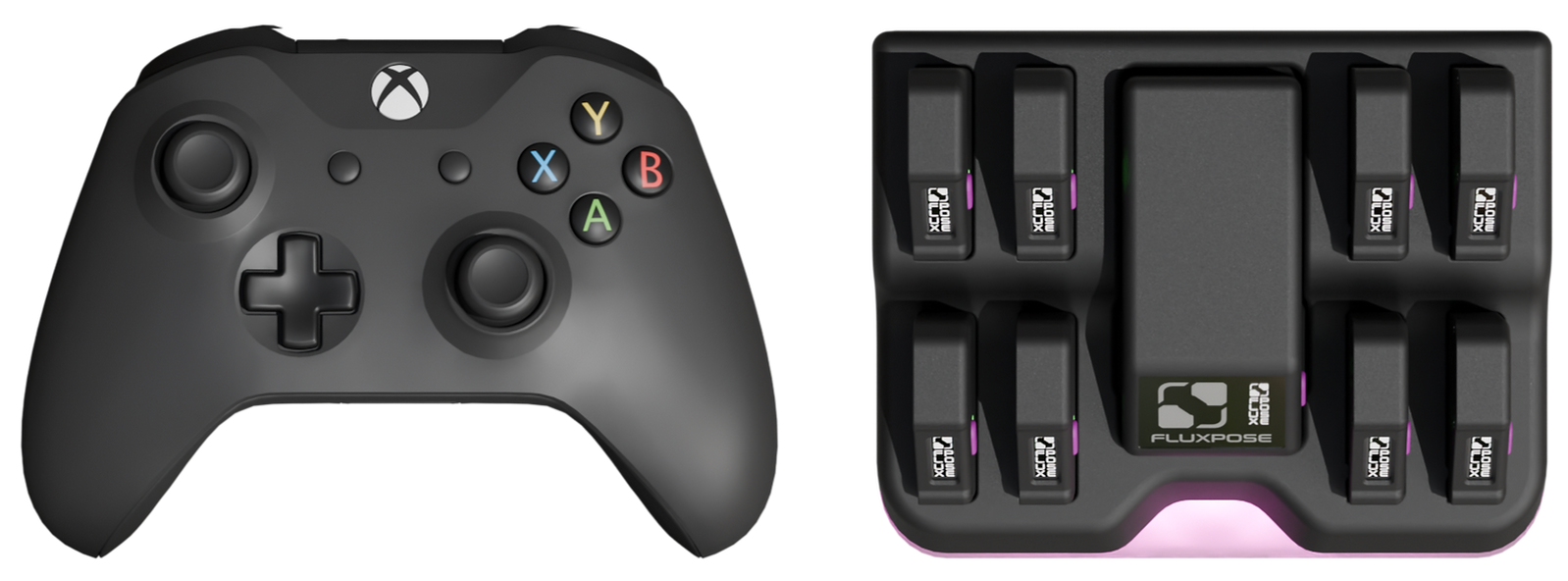
FluxPose size comparison with an Xbox controller. The trackers are tiny.
On the Normal power mode, the beacon's battery should last around 12 hours. There's also a Low power mode for "standing, sitting or laying" which should last 24 hours, and a Performance mode for tracking controllers or gloves, in which the beacon should last 6 hours.
The trackers themselves weigh just 15 grams and last for 24 hours, FluxPose claims. That's just one-fifth of the weight of a HTC Vive Tracker. And remarkably, despite that low weight, FluxPose trackers have a tiny monochrome OLED screen for displaying status, as well as a haptic feedback actuator.
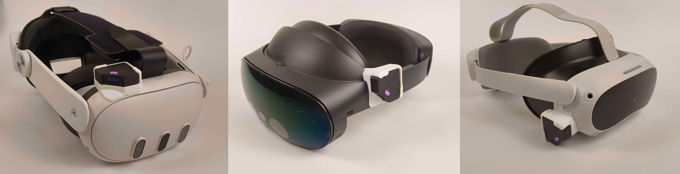
FluxPose mounts for Quest 3, Quest Pro, and Pico 4.
You attach one of the trackers to your headset, with a custom adapter mount, while the others strap to the parts of your body you want to track. Mounts are available for Quest 2 and newer, Pico 4 and 4 Ultra, Samsung Galaxy XR, Valve Index, and both Bigscreen Beyond generations. FluxPose says it will have a mount for Steam Frame too.
Because of the headset-attached reference tracker, FluxPose claims its tracking system doesn't require any calibration, and "never" drifts. The tradeoff is adding some weight to your headset.
Both the beacon and trackers charge on the included dock, which also acts as the data dongle, delivering the tracking poses to SteamVR on your PC via USB-C. From a PC's USB port it should recharge everything within 3 hours, while on a PD charger this can drop to 1.5 hours.
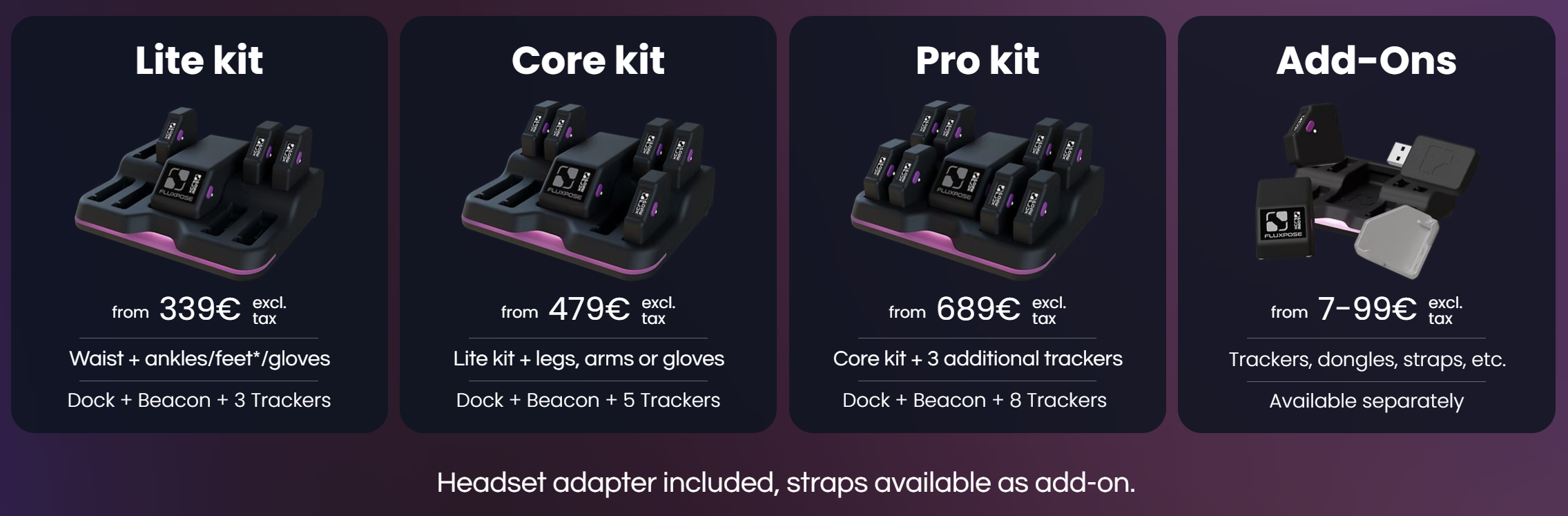
On Kickstarter, you can pledge for three kits: Lite, Core, and Pro. Lite is priced at €339 before tax and comes with 3 trackers, Core at €479 with 5 trackers, and Pro at €689 with 8 trackers. Additional addons like straps are available separately.
FluxPose says it has already built 300 devices for early testers, and launched the Kickstarter to advance to scale production. It intends to start shipping the first "early bird" units in August 2026, and for most backers to receive their units in October. After the Kickstarter, prices will increase.
As with all crowdfunding campaigns, we must warn you that a Kickstarter pledge is not a preorder. There is no guarantee you will receive anything at all, and the company has no legal obligation to provide you with a refund if it doesn't deliver.
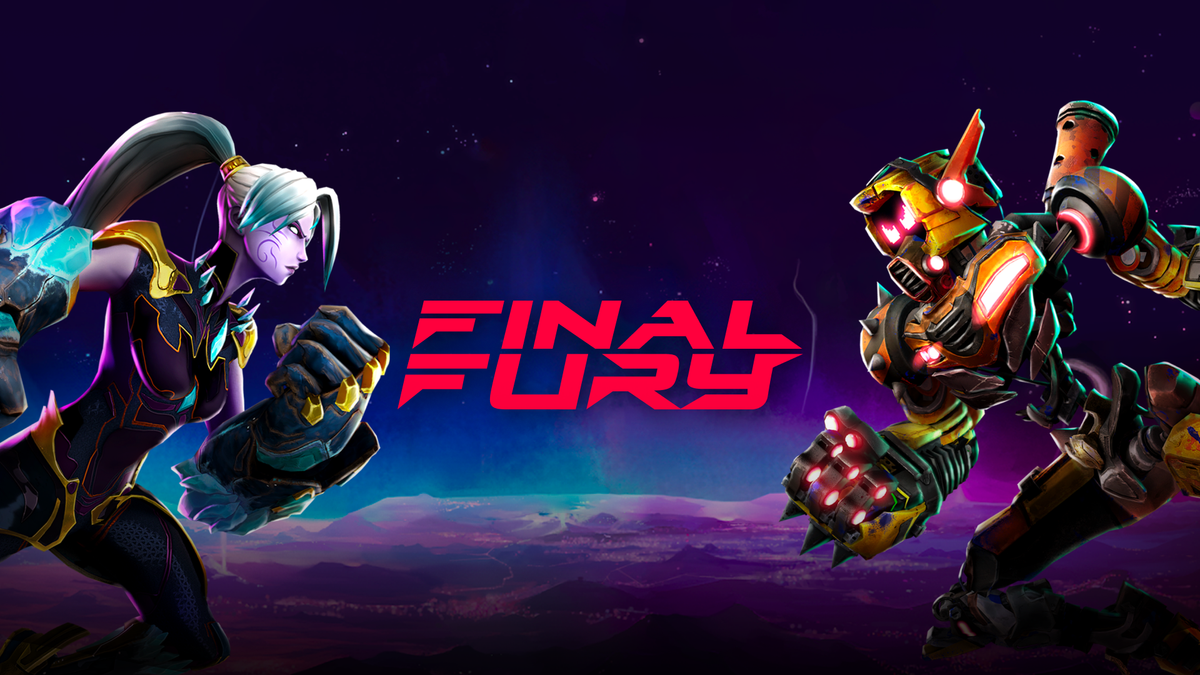
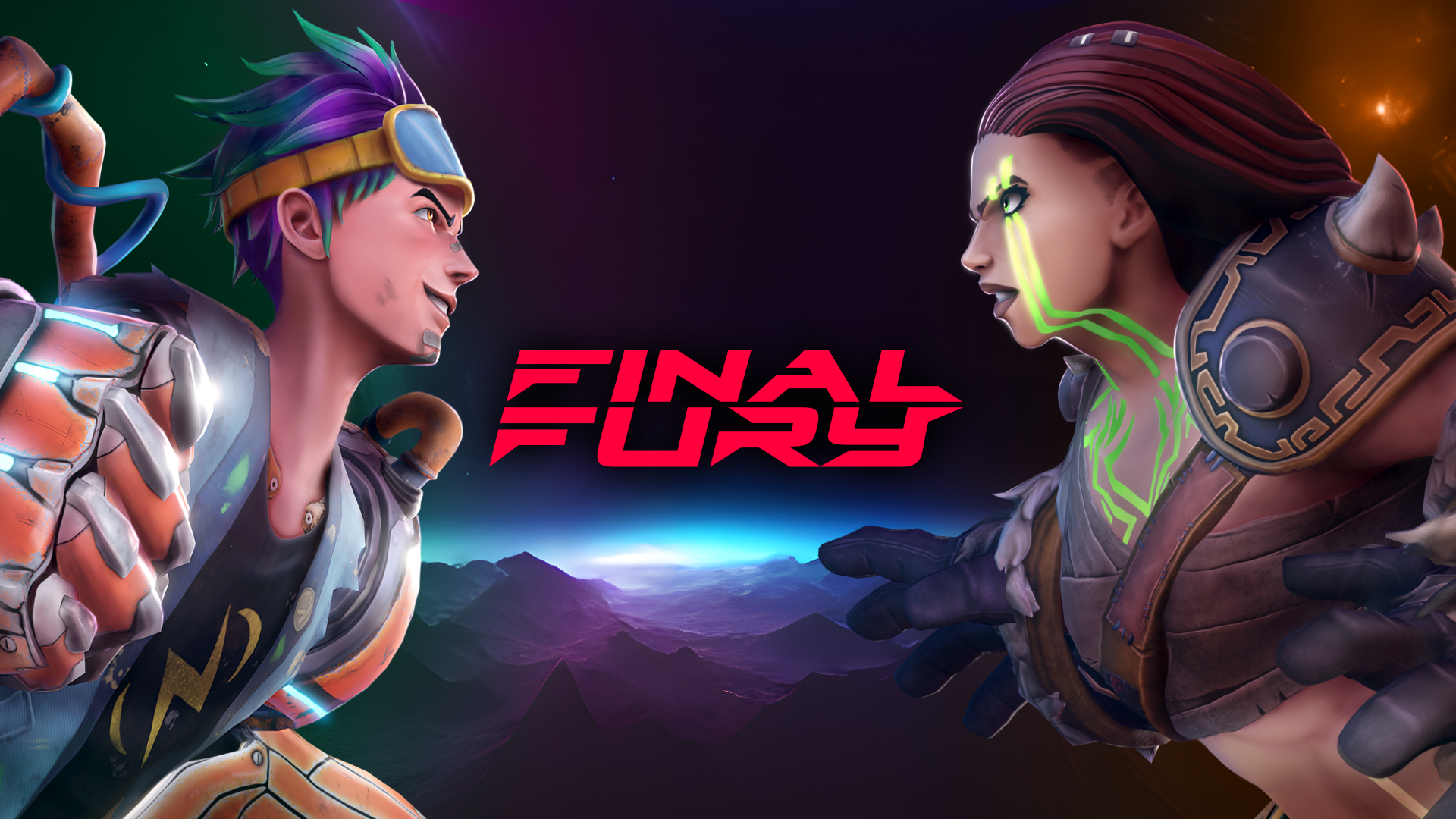
Final Fury gives the VR arcade fighter new attacks, more moves, and ranked events in today's Tides of Vygor update.
Following May's early access launch, Kluge Interactive (Synth Riders) is now releasing what it calls the “biggest update yet” for Final Fury. The Tides of Vygor update now allows you to use dive kicks and uppercuts, alongside a “full set of Vygor-powered special attacks” that the studio states will open up new defensive and combo options.
Tides of Vygor also introduces 'Ranked Events,' a series of weekend tournaments that deliver new cosmetics and avatar rewards for competitors. Bonus prizes will also be awarded to top performers. Kluge states December's lineup includes the titular festival and a festive-themed showdown, Festive Fury, to mark the year's end.
We enjoyed Final Fury in our early access hands-on in May. Though we considered the launch content to be rather slim, we believed it offered “a strong foundation that is approachable to newcomers while having the same kind of mechanical depth that will appeal to traditional fighting game players.”
Final Fury is out now in early access on Steam and the Meta Quest platform.
Tactical Assault VR and Smash Drums are this December's Horizon+ monthly games on Quest.
What Is Meta Horizon+?
The $8/month Horizon+ subscription lets you redeem two Meta-selected Quest games each month as well as access the dozens of titles in its Games Catalog. The service was formerly called Quest+.
Redeeming the monthly games lets you play them while your subscription remains active. Should you cancel the subscription, previously redeemed games won't be playable until you resubscribe.
Meanwhile, you get access to all Games Catalog and Indie Catalog games upon subscribing until your subscription ends. Unlike monthly titles, these games do not remain in your library once they've been removed.
Horizon+ is available on Quest 2, Quest Pro, Quest 3, and Quest 3S.
With 2025 nearly over, it's time for the last monthly redeemable games on Horizon+ this year. November brought us Moss: Book 2 and UBOAT: The Silent Wolf, and those will continue being accessible in your library if you redeemed them while remaining subscribed. Black Friday sales are still on if you're looking to buy discounted Quest games or a new headset, too.
Here's what you need to know about this December's selection.
Smash Drums
0:00
/1:15
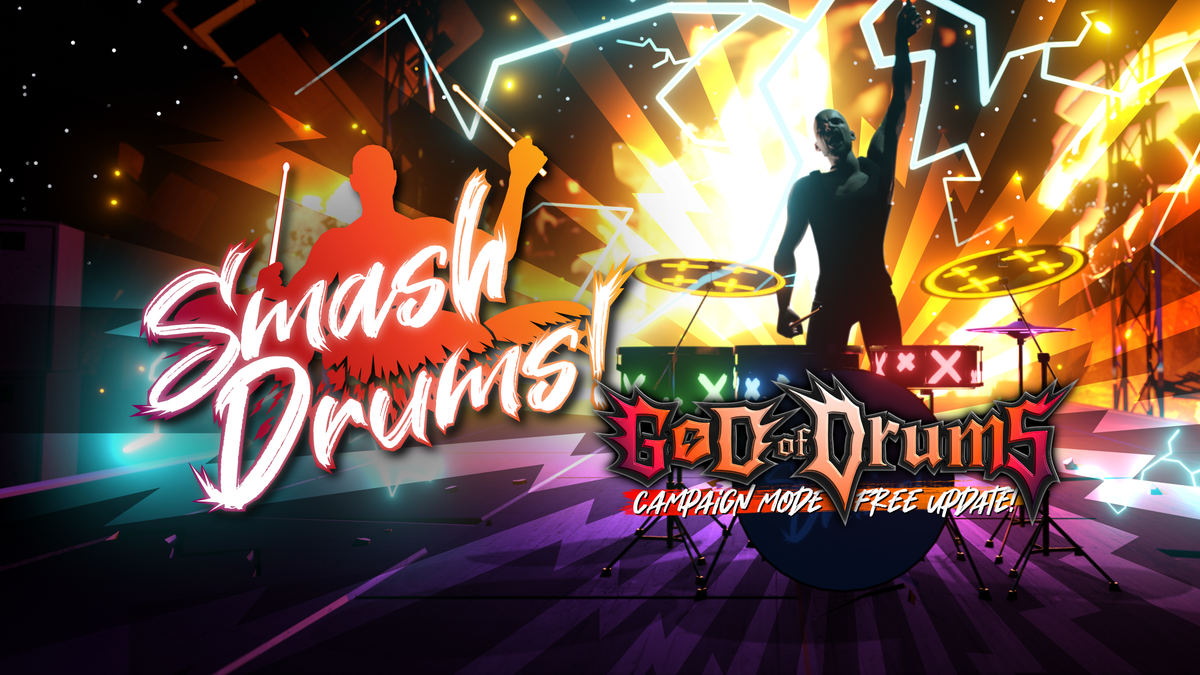
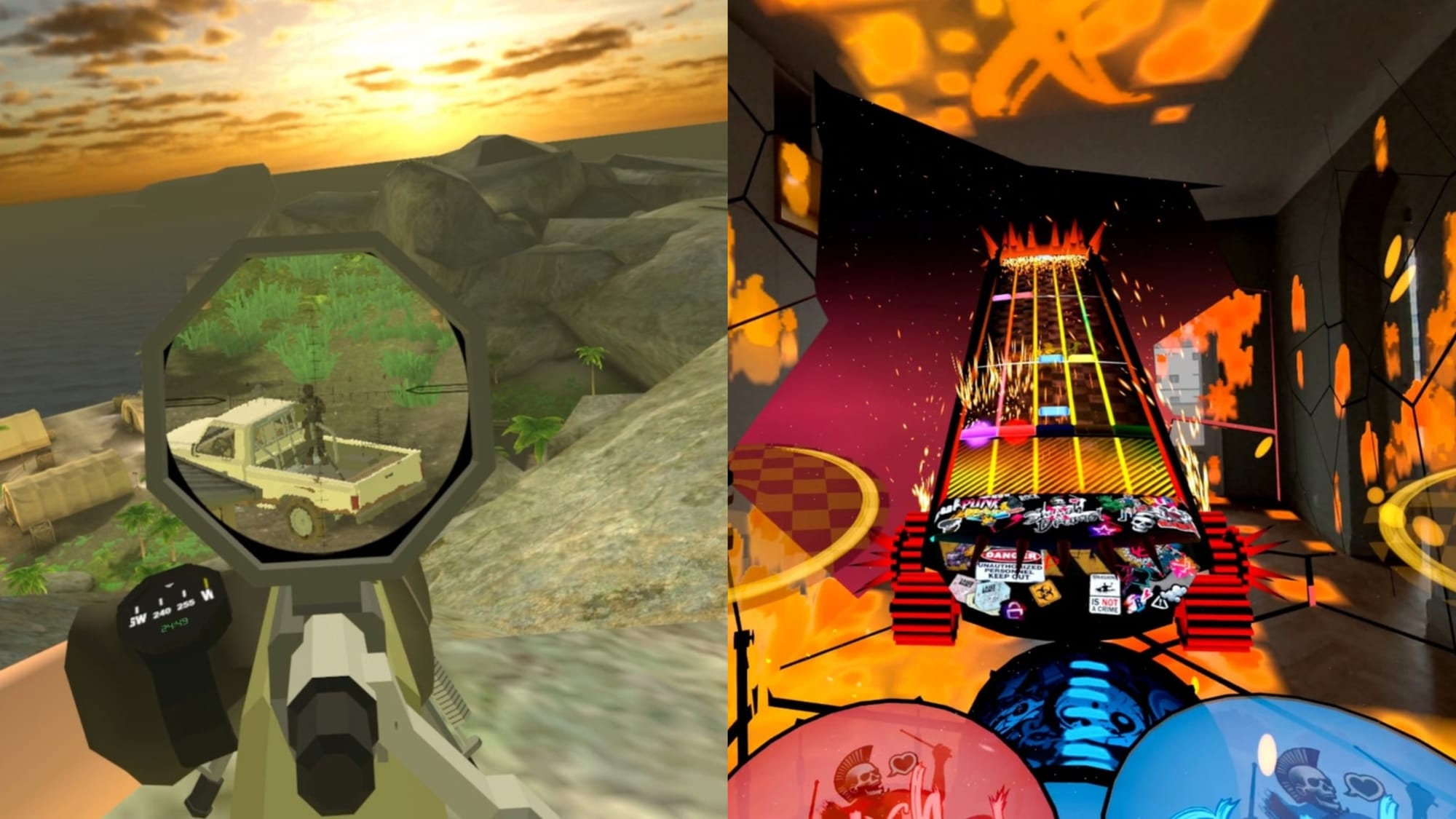
VR rhythm game Smash Drums has seen continuous post-launch support since appearing in 2021, and this month's appearance follows the recent early access launch of its 'God of Drums' campaign mode. PotamWorks added missions where you can choose one of three songs, new in-game rewards, and more.
Currently in early access, Tactical Assault VR from HammerFire Interactive is a hardcore FPS military sim where you can play alone or in co-op with up to six players. This comes with various scenarios like bomb defusal, hostage rescue, or high-value target (HVT) eliminations, and this follows the SWAT Expansion launch in September.
Horizon+ Games Catalog Games
Horizon+ continues offering a Games Catalog of Quest titles that any subscriber can access. Meta can remove and add new games from the catalog at any time, and here is the current Horizon+ Games Catalog in the US:
Angry Birds VR: Isle of Pigs
Asgard’s Wrath 2
Bartender VR Simulator
Blacktop Hoops
Cook-Out
Cubism
Deisim
Demeo
Drop Dead: The Cabin
Dumb Ways Free For All
Dungeons of Eternity
Eleven Table Tennis
Exploding Kittens VR
Final Fury
Fruit Ninja 2
Fruit Salon
Ghosts of Tabor
Grimlord
Guardians Frontline
Human Fall Flat VR
iB Cricket
I Expect You To Die 3
In Death: Unchained
Into the Radius
Job Simulator
Kingspray Graffiti
Les Mills Bodycombat
Maestro
Medieval Dynasty New Settlement
Moss
Onward
Pets & Stuff
Pistol Whip
Pixel Ripped 1995
Premium Bowling
Project Demigod
Puzzling Places
Racket Club
Red Matter
Red Matter 2
Starship Home
Synth Riders
Tetris Effect: Connected
The Climb 2
The Thrill of the Fight
Thief Simulator VR: Greenview Street
Titans Clinic
Townsmen VR
Walkabout Mini Golf
War of Wizards
Zero Caliber: Reloaded
Horizon+ Indie Catalog Games
A separate Indie Catalog entered beta testing in October, though it's unclear if access has become more widely available. You can find those games here.
Alvo
Apex Construct
Arcade Paradise VR
Battlenauts
Bocce Time!
Cactus Cowboy - Desert Warfare
Coffee Quest VR
The Curious Tale of the Stolen Pets
Cybrix
Darksword: Battle Eternity
Disc Frenzy
Discovery 2
Elysium Trials
Espire 1: VR Operative
Final Overs - VR Cricket
Galaxy Kart
Ghost Signal: A Stellaris Game
Gravity League: Galactic Football
Iron Guard
Ironlights
Laser Thief
LAX VR
Make It Stable
Motion Soccer Pro
Noun Town Language Learning
Operation Serpens
Rogue Ascent VR
Rogue Piñatas: VRmageddon
RUNNER
Space Elevator
Squingle
Stupid Cars
Sushi Ben
Tactica
Taiko Frenzy
The Pirate Queen
The Secret of Retropolis
Tiny Archers
Towers and Powers
Ultimate Swing Golf
Underworld Overseer
Vibe Punch
The Wizards
Update Notice
Hours after publication, Meta updated the Horizon+ indie catalog with more games. We've updated the article to include these new entries.
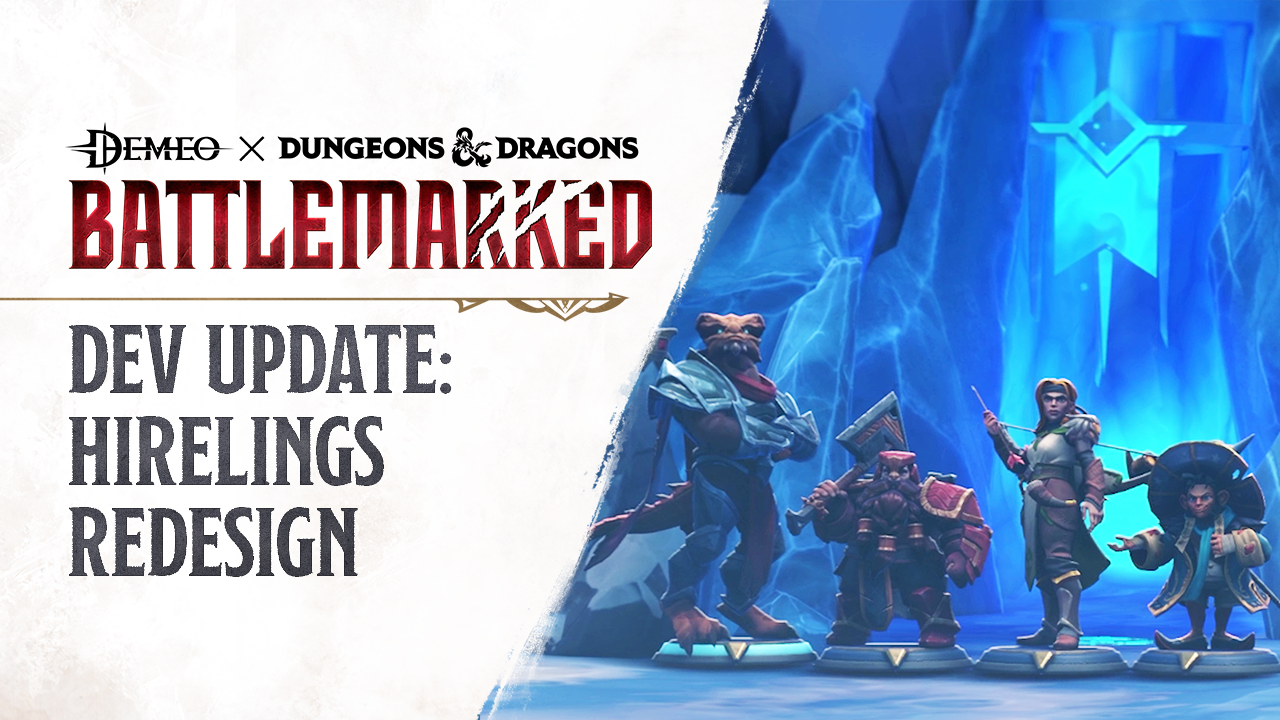
Demeo x Dungeons & Dragons: Battlemarked will update the Hirelings system so they can also level up during campaigns.
Recently launched on most major VR platforms, Demeo x Dungeons & Dragons: Battlemarked is a co-op tabletop experience that we praised as a “natural crossover and a fitting evolution” of the original Demeo. Following two smallerupdates, Resolution Games confirmed it's planning a wider overhaul for Hirelings - additional characters used to fill out your party if you don't have four players.
Currently, you can't level up Hirelings alongside your main character during campaigns, something we criticized in our review. Stating it's addressing player feedback across two phases, Resolution will begin with single-player campaigns by letting you use customized heroes who can gather XP and level up, stating Phase 1 “will be prioritized for release as quickly as possible.”
Phase 2 will bring this to Battlemarked's multiplayer, though the studio calls this “much more complex” to implement because of how other players can join, leave, and rejoin campaigns. Calling this a “much larger task” from both a technical perspective and for the user interface design, this will arrive in a later update.
Demeo x Dungeons & Dragons: Battlemarked is out now on Steam, PlayStation VR2, Quest, and flatscreen platforms.
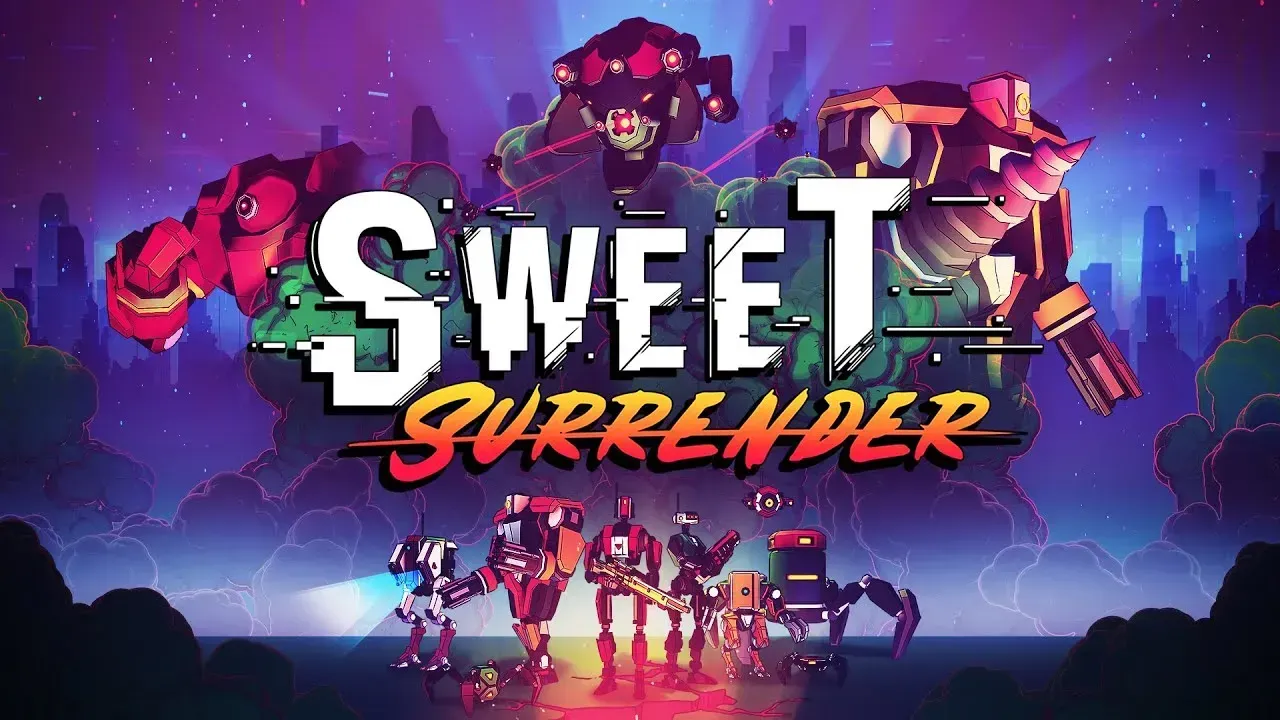
Yacine Salmi is the founder of Salmi Games, the Munich-based studio behind Sweet Surrender. He works across design, tech and production, with a focus on VR-first gameplay and building for longevity. Here's his breakdown of what they learned, what surprised them, and what they'll be doing differently next time.
We recently launched Sweet Surrender on PS VR2, and I wanted to share our experience, partly to help other developers and partly to give a transparent look at how things actually went.
Sweet Surrender originally released on Quest and SteamVR in late 2021, and we've spent the last four years updating it with 14 major updates so far. It’s not a perfect game, but it’s a good one: on Quest we’ve held a 4.6 rating across 700+ reviews, and the PS VR2 players who have picked it up so far have responded in a similar way.
Around April this year, we decided it was finally time to bring the game to PS VR2. We passed certification in late July, announced it on October 9th, and launched three weeks later on October 30th. We kept testing and polishing all the way until release.
Our expectations were modest. If we could have managed 2,000 units in the first month, that would have been a solid success for us.
Reality was sadly very different: 84 sales on day one, and just under 350 units after four weeks.
That’s… not good. And this post-mortem tries to unpack why.
Key Metrics
Units sold: 84 on day 1, ~200 by the end of week 1, ~330 by week 4
Wishlists: ~1,800 at launch, ~2,100 by week 2
Team size: 6 during original development (2020-21); PS VR2 port averaged ~1 full-time developer for six months
Port duration: ~6 months, including major Unity upgrades and transition to OpenXR
Estimated port cost: ~USD $50k (personnel, QA, PR support and platform-specific work)
Certification: 3 rounds (each takes ~4 days)
Why We Chose PS VR2
A few reasons PS VR2 looked like a sensible platform for us:
The port was relatively low-cost compared to building a new title from scratch.
The PS VR2 community has been consistently asking for more high-quality games.
We expected PS VR2 to be a strong “second-wave” platform with decent long-tail potential.
Sweet Surrender’s accessible, arcadey shooter style felt like a natural fit for a console audience.
The opportunity felt reasonable. The risk felt manageable. The audience felt right.
What Went Right
Sweet Surrender isn’t a hardcore roguelike shooter; it’s arcadey and meant to be accessible while still offering a challenge to more hardcore shooter players.
We Delivered a Strong PS VR2 Version
We made full use of the hardware:
Native 90fps with no reprojection
Adaptive triggers
Solid headset/hand haptic feedback
A Platinum trophy (players really care about this)
A wide set of comfort and gameplay options
We did miss capacitive support for the grip button, but that’s planned for an update.
Overall, we hit the technical expectations of PS VR2 players.
We Got Coverage from the Right People
We reached out to everyone, and we were lucky that most of the major PS VR2 creators covered us:
Our announcement and launch trailers appeared on official PlayStation YouTube channels (16k and 34k views), plus PlayStation Japan. Our PR team ensured we reached press and influencers, and we maintained a steady cadence of posts and high-quality clips across social media.
A Smooth Launch (really)
Anyone who has shipped on PlayStation knows how easy it is for something to go wrong in the backend configuration. We planned for the worst, double and triple-checking everything. In our case, the game went live globally, on time, and with no region stuck in a delayed “coming soon” state.
Technically, the build was solid at launch. This was a big contrast to our 2021 Quest launch, where a rare grenade tutorial bug could quietly break the entire game for affected players without crashing. The PS VR2 launch had none of that.
It’s a Good Game
Sweet Surrender has its limitations, but the core experience is solid and has proven itself over several years. The feedback we’ve received on PS VR2 so far reflects what we’ve consistently seen on other platforms: players who click with the game really enjoy it, and the updates we’ve added over time have made it noticeably stronger than the 2021 version.
What Went Wrong (or: what we learned)
Most of our missteps were strategic rather than technical.
Timing (we misjudged it across three dimensions)
This was our biggest mistake.
1. We launched into a very crowded holiday window
Players told us directly:
“I want your game, but there are too many new VR releases and I have to pick.”
October/November saw a surge of strong PS VR2 releases that we underestimated and maybe shouldn’t have. We’ve heard from other developers that we should do our best to avoid Q4 altogether. There will always be a rush of developers trying to release games before Christmas, and that can only dilute the possible attention you can receive.
2. We launched one week before Roboquest VR announced a release date.
Roboquest VR is an excellent and far more visible roguelike shooter. Its VR release date announcement landed right after our launch, and many players explicitly told us they were waiting for it.
3. We launched late in the PS VR2 lifecycle
A developer friend uses the “time-to-closet” metric - how long before a headset ends up unused forever.
PS VR2 is approaching three years old. The active addressable market feels smaller, and this mirrors trends we see across other VR platforms.
If we could redo anything: launch a year earlier, or even better - within the first three months of PS VR2’s release.
Pricing (we anchored ourselves to 2021)
We priced it at $25, the same as our original Quest launch.
But in 2025:
COMPOUND (a common comparison point) is less expensive.
The Light Brigade and Roboquest are priced similarly to us but are larger games.
We stuck to our original price out of principle, but realistically, a $15–20 price point would likely have helped first-month traction.
I still dislike the general “race to the bottom,” but pricing also has to reflect the current landscape, not what made sense four years ago.
Wishlists and Store Page Timing
We only announced Sweet Surrender for PS VR2 three weeks before launch because:
We wanted to pass certification first.
We wanted the store page to go live with the new trailer.
We didn’t want to announce “too early.”
In hindsight, this was a serious mistake.
It’s not discussed much, but the PlayStation Store is wishlist-driven, almost exactly like Steam.
We should have published our store page in May, let wishlists accumulate naturally, and then done a release-date announcement later.
Release-date featuring from PlayStation would have been the same, but we would have entered launch week with far more momentum.
Visual Expectations
Sweet Surrender was originally built for Quest 1. We designed a stylized, low-texture, outline-heavy look that worked well for standalone headsets. Last year we modernized the pipeline with Bloom, HDR, and improved particles.
Despite that, some PS VR2 players commented on the lack of shadows and the overall “Quest-first” look. Others praised the smooth performance, but visuals still divided opinions.
If you're targeting PS VR2, expectations lean toward modern rendering features, even for stylized art.
Platform-Specific Learnings
Working with PlayStation’s backend can be intimidating at first because it spans multiple systems and tools (store configuration, metadata, age ratings, trophies, builds, submissions, etc.). But once you understand how the pieces connect, the workflow is relatively logical.
Sony clearly put effort into making PS5/PS VR2 development more approachable and self-service than it used to be. Documentation is solid, and whenever we ran into issues, we were able to get guidance quickly. Getting modest promotional visibility (YouTube upload, some social support) was straightforward once we had our trailer and store assets ready.
Overall, our experience with the platform was positive. The real challenge was timing and visibility, not Sony’s systems.
Moving Forward
There are several things we would approach differently in a future PS VR2 or console VR release:
Open the store page months in advance - even before certification - and treat wishlist growth as the primary objective (just like on Steam).
Announce earlier and build long-tail visibility, rather than doing a tight three-week announce-to-launch cycle.
Be more aggressive with pricing strategy, anchoring to the current market rather than our 2021 launch.
Avoid crowded windows and major competitor landings, especially in the shooter or roguelike space.
Target the early lifecycle of any VR platform, not the late one.
None of these would guarantee success, but they would have significantly improved our starting position.
While disappointing, this release isn’t catastrophic for us. Our company’s survival is (thankfully) not affected by it. Wishlist numbers are healthy, and the game may still find a second wind during future sales.
We will keep improving Sweet Surrender, though we’re unsure how long we can sustainably support it. The release did give us something extremely valuable: fresh external feedback from first-time players after years of working in the same ecosystem.
The PS VR2 community has been generous and supportive. This outcome isn’t their fault, and I don’t think it’s necessarily a commentary on the VR industry as a whole. It’s just the reality of a late-cycle release combined with some strategic mistakes on our part.
The VR-dev community has helped us more times than I can count. I hope in turn this write-up will help others avoid a few mistakes, or at least go in with clearer expectations.
UploadVR takes occasional unpaid guest posts from professionals on topics of interest in virtual reality. You can reach out to our editors over email if you have a subject you'd like to write about. We don't guarantee publication and we ask that posts feature original writing by a specific author that illuminates some unique aspect of their work or this industry.
The year's almost over, but more new VR games continue coming. Keep an eye out for the UploadVR Winter Showcase on December 5 for more reveals on our YouTube channel, and we'll update this list across the month. As always, our upcoming VR games list remains regularly updated for a brief rundown on everything else.
It's worth noting that we're excluding Star Trek: Infection for now. While Bloober Team previously confirmed a December 11 launch, last month's trailer and the store pages only say “coming soon.” We've contacted the publisher and will update this if we learn more. We've also removed The Amygdala Protocol after repeated delays, as well as games down as 'Q4 2025' or 'winter 2025.'
Right now, here are our highlights for new VR games this December on Quest, PC VR, and PlayStation VR2.
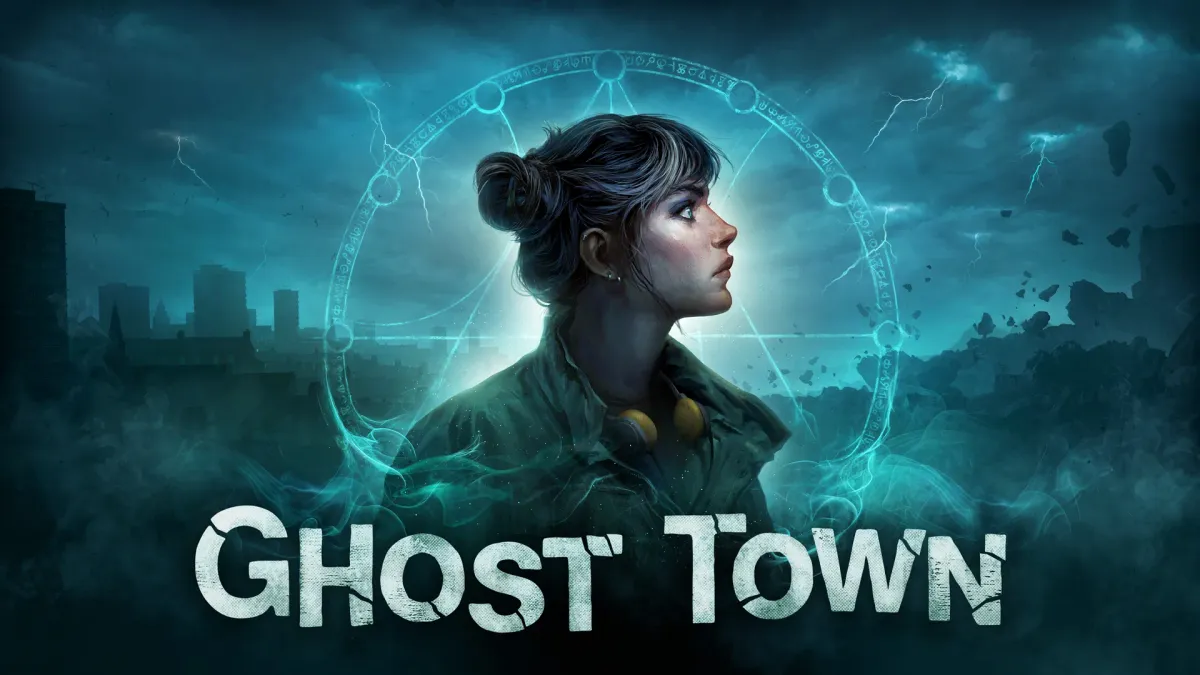
Ghost Town - December 1 (PS VR2)
Ghost Town is the latest VR title from UK studio Fireproof Games (The Room VR). Set in the '80s, this story focuses on a witch turned ghost hunter and exorcist called Edith Penrose, who now heads up a paranormal detective agency with her flatmate across London. Previously released on Steam and Quest, it's now coming to PlayStation VR2.
God of Riffs: Battle for the Metalverse - December 1 (PS VR2)
Originally launched in 2022 on Quest and Steam, God of Riffs: Battle for the Metalverse is an arcade rhythm game with a heavy metal focus. Using twin guitar axes, you're tasked with taking down swarms of skeletons, flying beasts, and more as you build up combos.
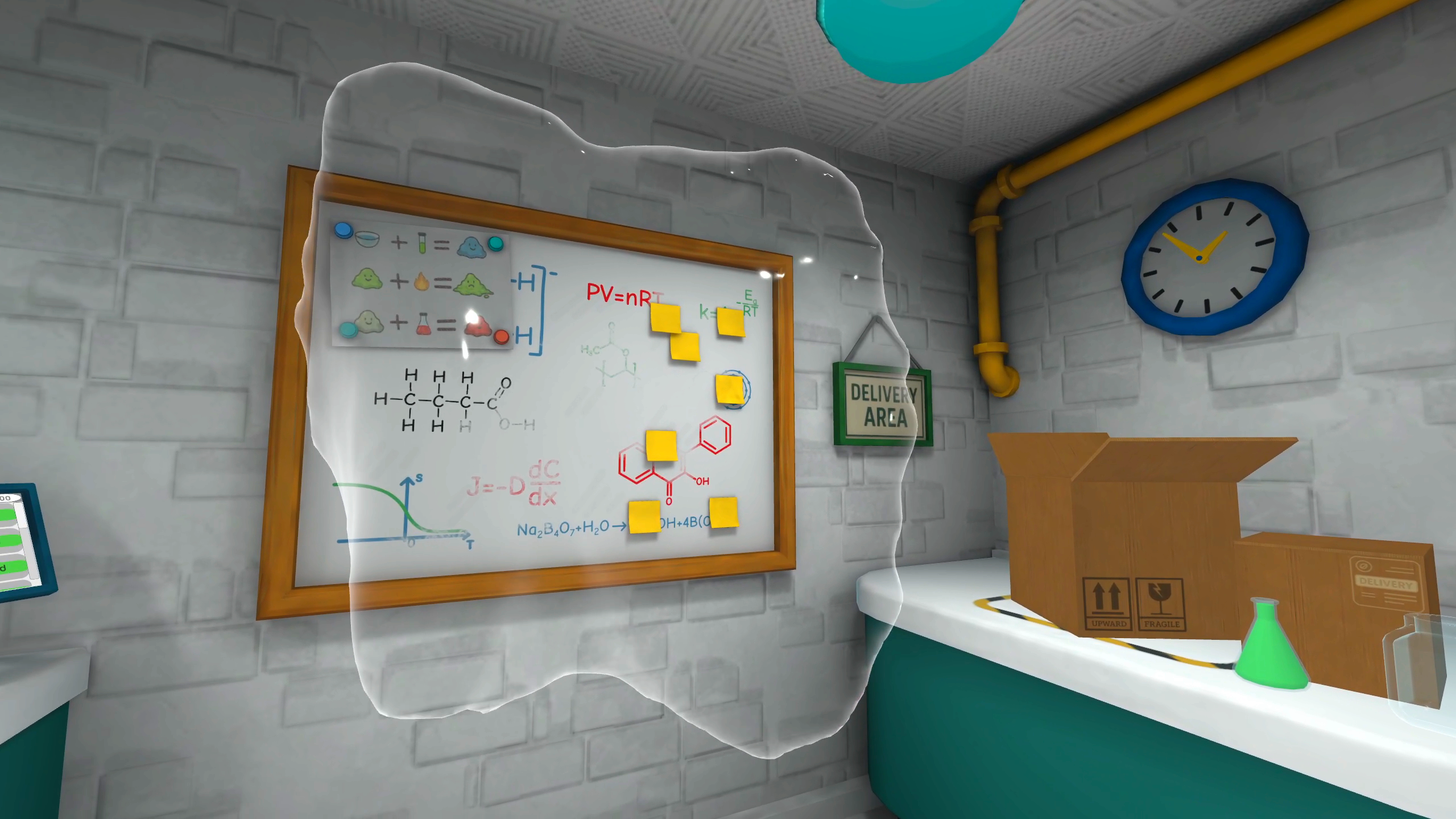
Dark Ride: The Feline Fix is a family-friendly escape room game that deliberately leans into a low-poly aesthetic. Set in a potion shop, you're tasked with curing a village-wide cat transformation. Taking roughly 30 minutes to complete, it's now coming to Steam following a recent Quest launch.
Deadly Delivery is a comedy horror game where you and up to three friends take on postal jobs to earn cash as cel-shaded goblins to pay off your student debts. Developed by Flat Head Studio (We Are One), this involves ferrying goods across procedurally generated maps using proximity-based voice chat to communicate.
How to God by Thoughtfish (Living Room) is a deity-themed sandbox experience that's launching in early access. This lets you train as a deity, completing quests and expanding your powers while managing a mini society, where you can choose to be benevolent or cruel to your people.
Thief VR: Legacy of Shadow - December 4 (PC VR, PS VR2, Quest)
Developed by Maze Theory and published by Vertigo Games, Thief VR: Legacy of Shadow is a new entry set directly between the original Thief trilogy and its 2014 reboot. Starring a new protagonist called Magpie, you find yourself fighting back against the city's tyrannical ruler, Baron Ulysses Northcrest. We'll bring you our full review as soon as we can.
Released for PC back in April, Lushfoil Photography Sim is receiving a free PC VR update later this month. This experience comes with several nature maps you can explore to obtain the perfect photo, also letting you tweak various environmental settings like weather or find new cameras.
Men in Black: Most Wanted is a new entry in the comedic sci-fi franchise by VR veterans Coatsink (Jurassic World Aftermath, Augmented Empire) that's heading to Quest soon. Set in the early 1990s, you play as Agent I while joined by your partner, Agent L, to confront the Cylathians, a hostile alien race. We'll bring you our full review soon.
Originally launched on mobile platforms, free-to-play racing game Boom Karts is now heading to Quest with cross-platform multiplayer. This arcade racer sees you try to secure the win using power-ups and traps, sabotaging rivals along the way. Multiple tracks, various game modes, and progression systems are promised.
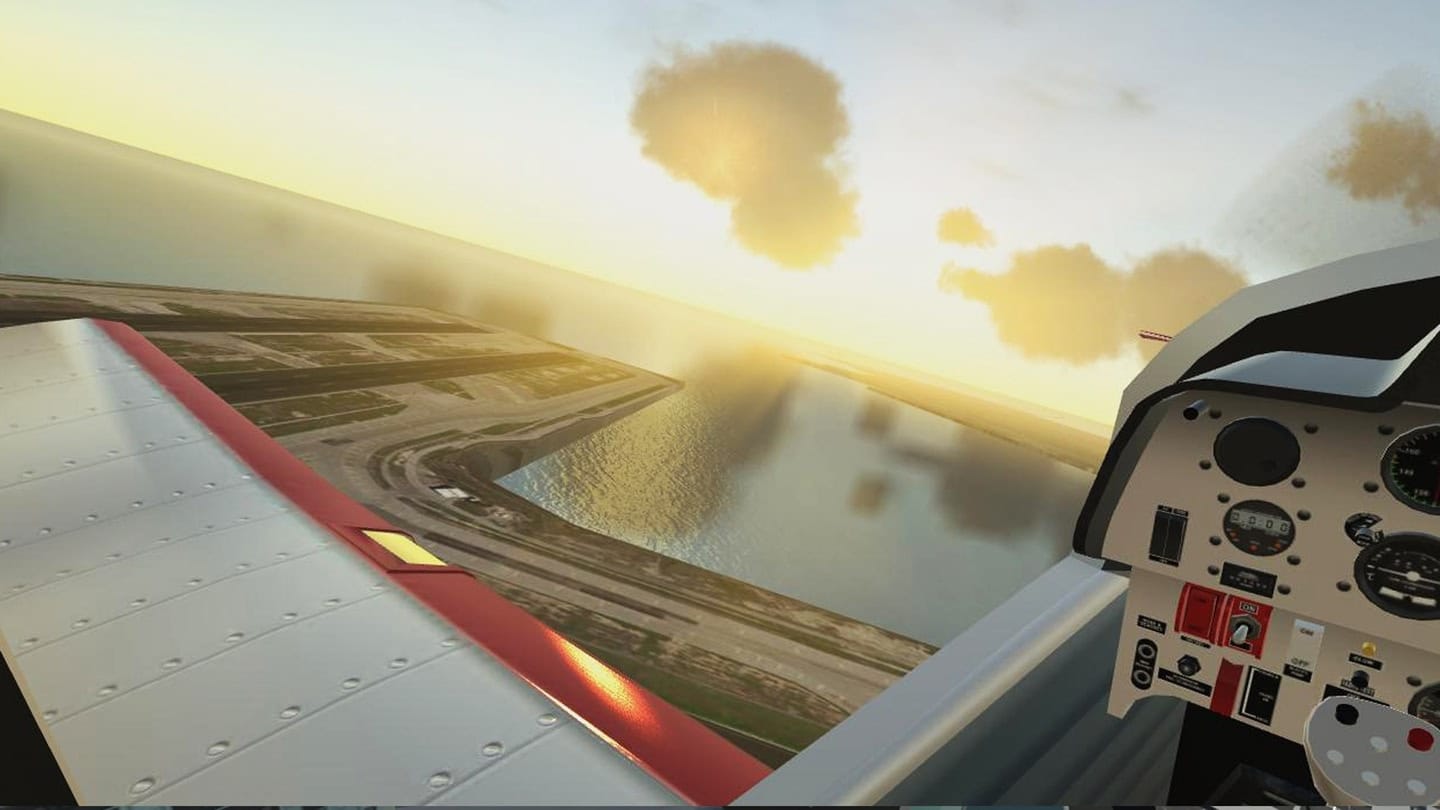
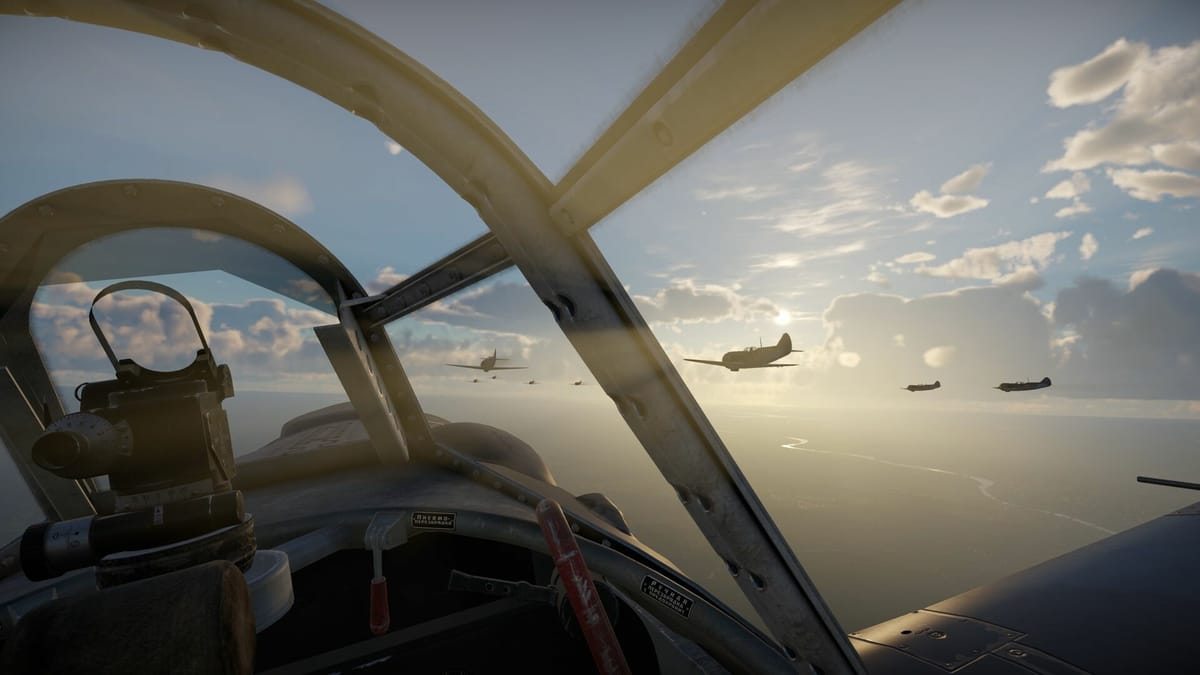
Created by TAS Systems, Flight Unlimited is aiming to be the first “full-fledged” flight simulator available standalone on Quest headsets. This comes with 10 aircraft that promise “4K HD cockpits,” aiming for a wider scope than the studio's previous story-based flight simulator, Flight 74.
Developed by ROTU Entertainment (Eolia), Healer sees players become planetary defenders, wielding their wits and helpful hand cannons against a joy-devouring evil called the Entropic Virus. From a gameplay perspective, this means shooting at undulating orbs, solving 3D puzzles, and fighting off alien creatures to earn high scores.
Pocket Lands is the latest game from Vermillion creator Thomas van den Berge, which lets you build miniature worlds in your home in mixed reality. Letting you resize this diorama to fit your entire living room, hand-tracking controls allow you to grab building material with your hands before jumping in at any moment to explore in first person through fully immersive VR.
Developed by Rogue Sun and IPHIGAMES, Tin Hearts is a Lemmings-style game that explores the story of a fictional Victorian inventor, Albert Butterworth. Guiding toy soldiers through this Dickensian world with block-based puzzles, VR support arrived in a post-launch on PS VR2 and Steam last year. Now, it's coming to Quest with an episodic release that begins on December 11.
Developed by Risa Interactive, VR Giants originally launched on Steam Early Access in 2023, where one person plays on a flatscreen using a gamepad as a tiny companion called David, while the VR player controls Goliath to assist him. Now, it's heading to Quest with the option for both players to jump in using VR headsets.
Salmon Man is a platformer reminiscent of the punishing flatscreen hit Getting Over It with Bennett Foddy. Using only a paddle for locomotion, you have to navigate upstream, and a single mistake can send you back to the start. A Quest demo can be accessed by joining the official Discord server, and there's also one on Steam.
Developed by Digital Lode, Espire: MR Missions originally began life as a mixed reality mode to Espire 2: Stealth Operatives in 2023. Now expanding upon that with new missions and additional systems, it's getting a standalone release later this month. Anyone who owns Espire 2 on Quest before launch will receive MR Missions for free.
Initially debuting on Japanese TV as Sasuke in 1997, Ninja Warrior is a reality TV series that has since received regional remakes across more than 20 countries. Designed as a test of skill and endurance, it's now being adapted as Ninja Warrior VR by MyDearest (Brazen Blaze, Dyschronia) using familiar courses and stylized ninja-like characters.
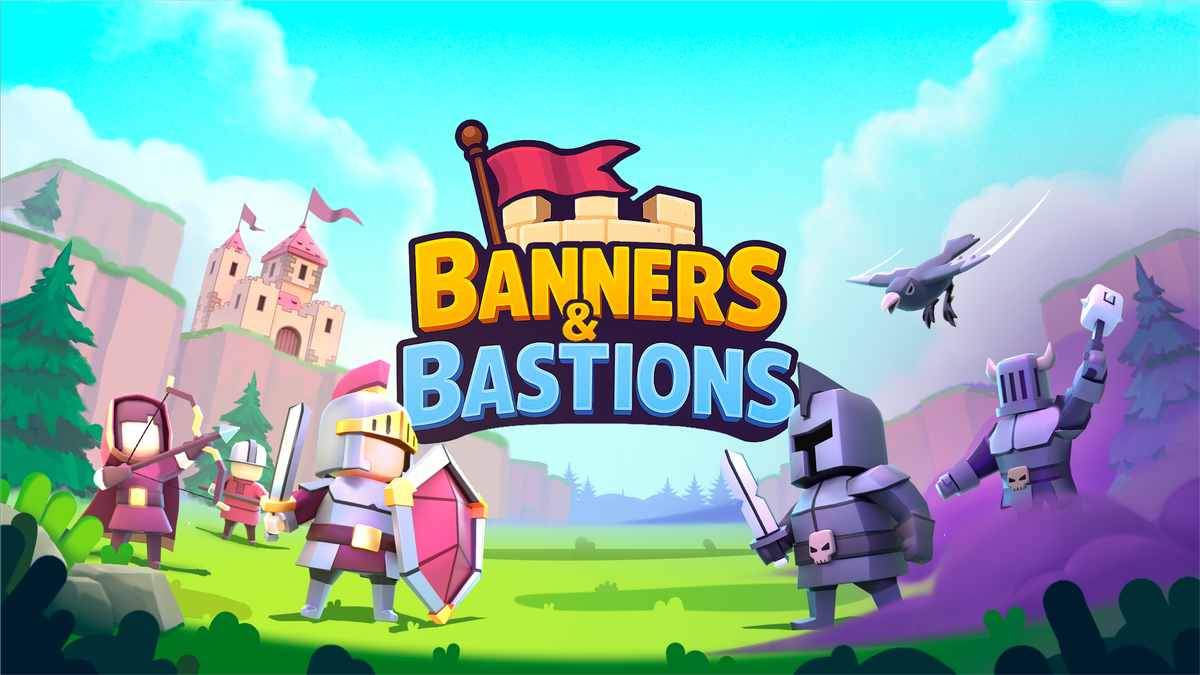
Created by Not Suspicious (Airspace Defender), Banners & Bastions is a mixed reality tabletop roguelite with hand-tracking controls that's currently available in early access. Following its addition of controller support and a recent content update, it's entering full release this December.
Developed by Odders Lab, Les Mills XR Dance is a fitness program that features over 40 dance routines, one that partners with EDM record label Monstercat for the soundtrack. Featuring five different presenters and four difficulty levels, it's choreographed for different music styles like pop, club, and more. First released on Quest and Pico, it's now heading to PC VR.
Reave is a dark fantasy PvPvE VR extraction game from Alta (A Township Tale) where you battle terrifying creatures and rival players alike as you seek to escape with your riches. It's heading to Quest this December, but it's unclear if the PC VR release will also launch alongside it; that's listed as “coming soon,” but you can request playtest access on Steam.
Shadowgate VR: The Mines of Mythrok - December 2025 (PS VR2)
Shadowgate VR: The Mines of Mythrok has been around since 2021, delivering a fantasy action-adventure set in the world of Kal Torlin. The dungeon crawler's new port runs at a native 120Hz and uses foveated rendering. Headset and Sense controller haptics are supported with adaptive triggers, and eye tracking is also integrated into the gameplay.
Smasher is a cyberpunk shooting action game where you fend off hordes of enemies, forcing you to switch weapons between rounds as you go from protective magic to void cannons. While the Quest store lists a December launch, it's unclear if it will arrive at the same time on Steam.
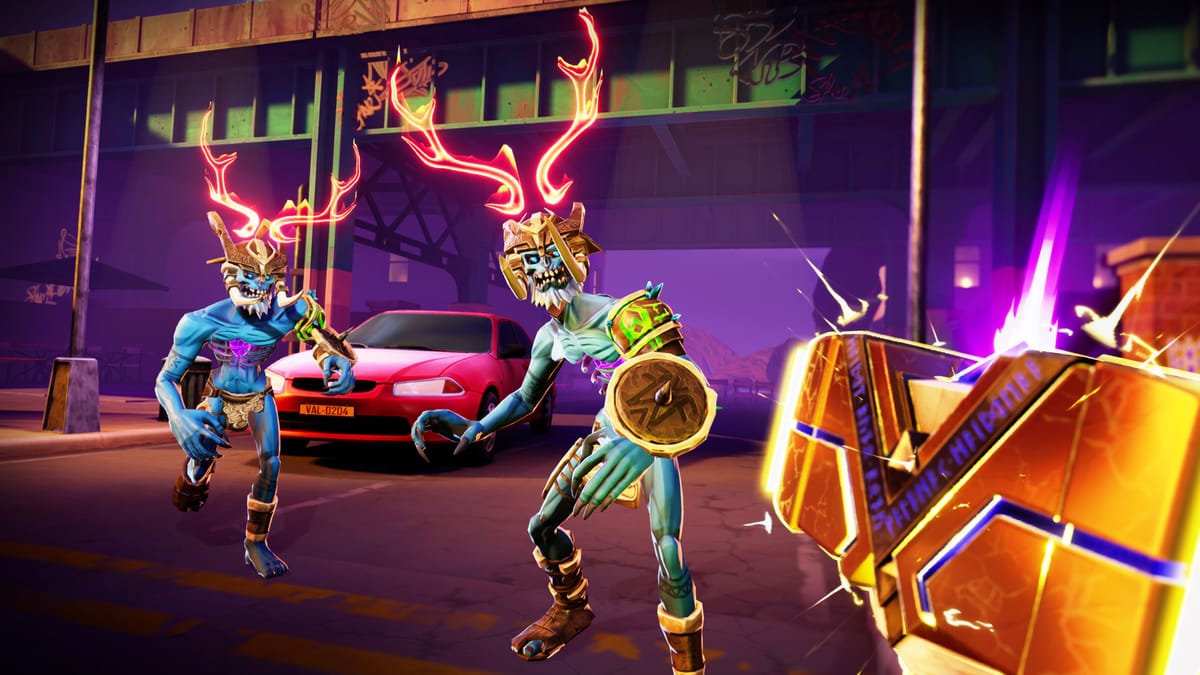
A VR action roguelite set in the collapsing streets of New York, Street Gods sees you wielding Mjolnir as you attempt to restore your reality. Using comic-book themed visuals and physics-driven combat as you smash through enemies, you can check out our Gamescom preview below to learn more.
Developed by True Axis, True Surf is a VR port of the mobile game of the same name, allowing grommets and pros alike to carve waves and paddle through iconic locations while climbing the surfing ranks. An official game for the World Surf League, it's launching on Quest soon.
If you're releasing a new VR game we should know about for this article or future monthly roundups, you can use our contact page or email tips@uploadvr.com with details.
Interested in learning about more upcoming VR games? Take a look at our complete list below, which covers upcoming Quest, PC VR, PlayStation VR2, Pico, Apple Vision Pro, and Android XR games:
Considering jumping into VR this Black Friday, or gifting a headset to a friend or relative so they can join you? Here are the best deals available.
Meta Quest Headsets
Meta Quest headsets are the ideal way to get into VR and mixed reality for most people. They are fully standalone, meaning you don't need any external device (other than a phone app to initially set them up), and they can also wirelessly connect to SteamVR on a gaming PC, if you have one, for a higher fidelity experience.
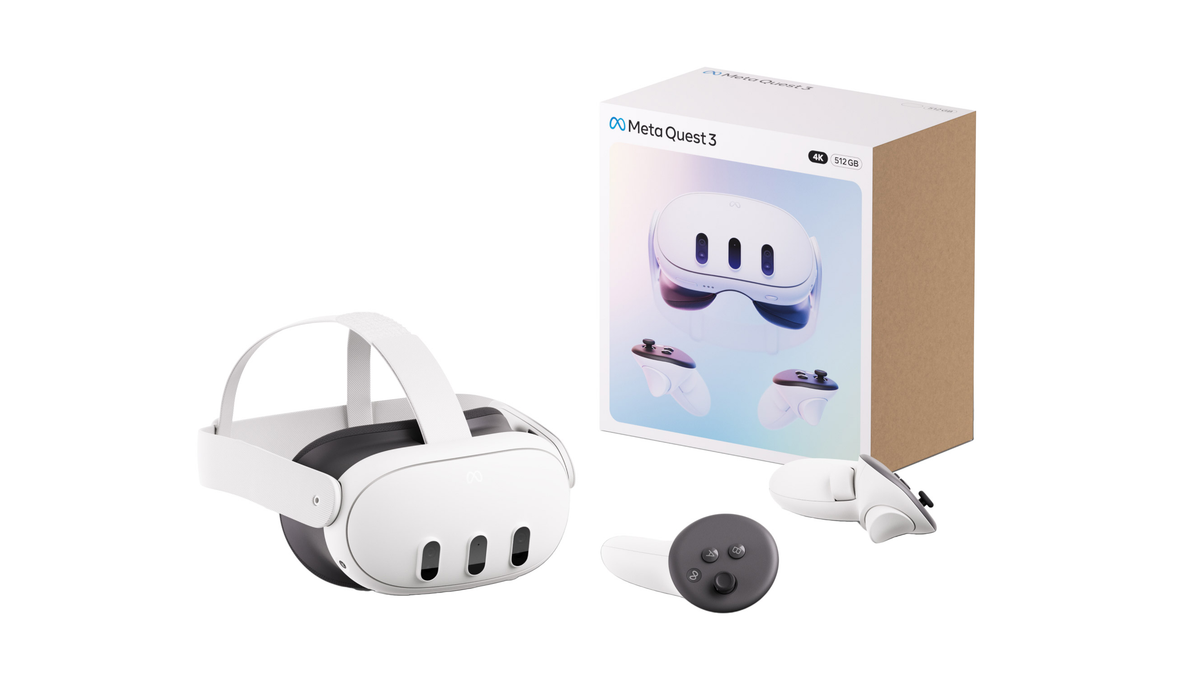
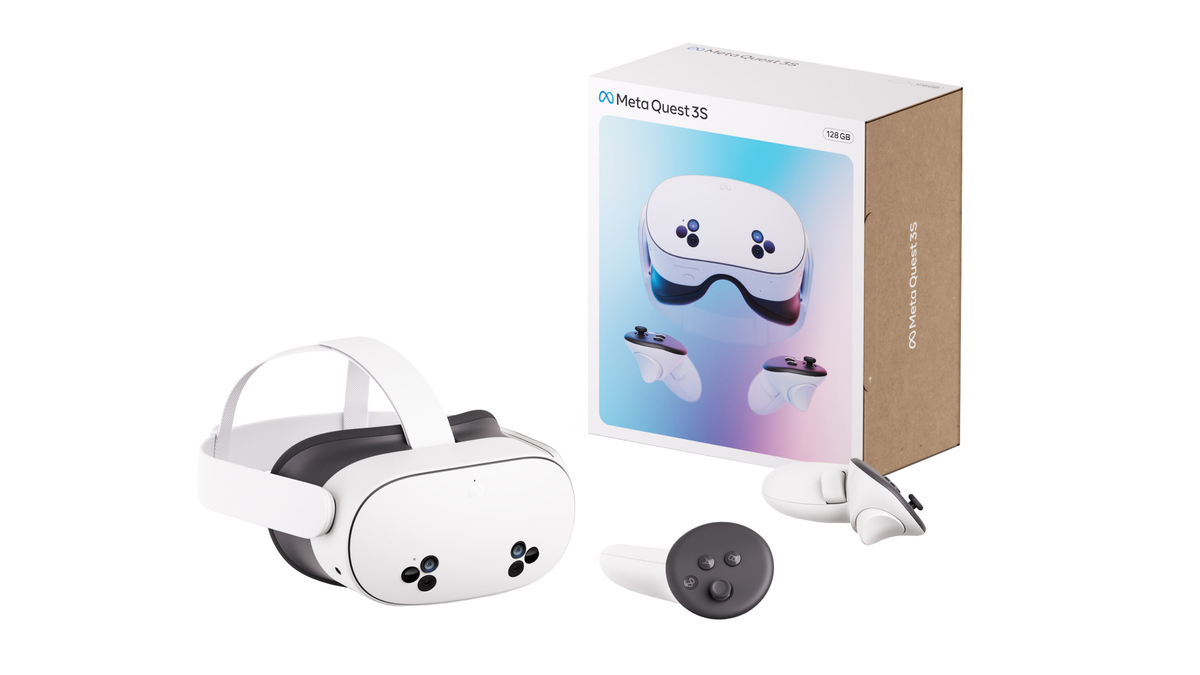
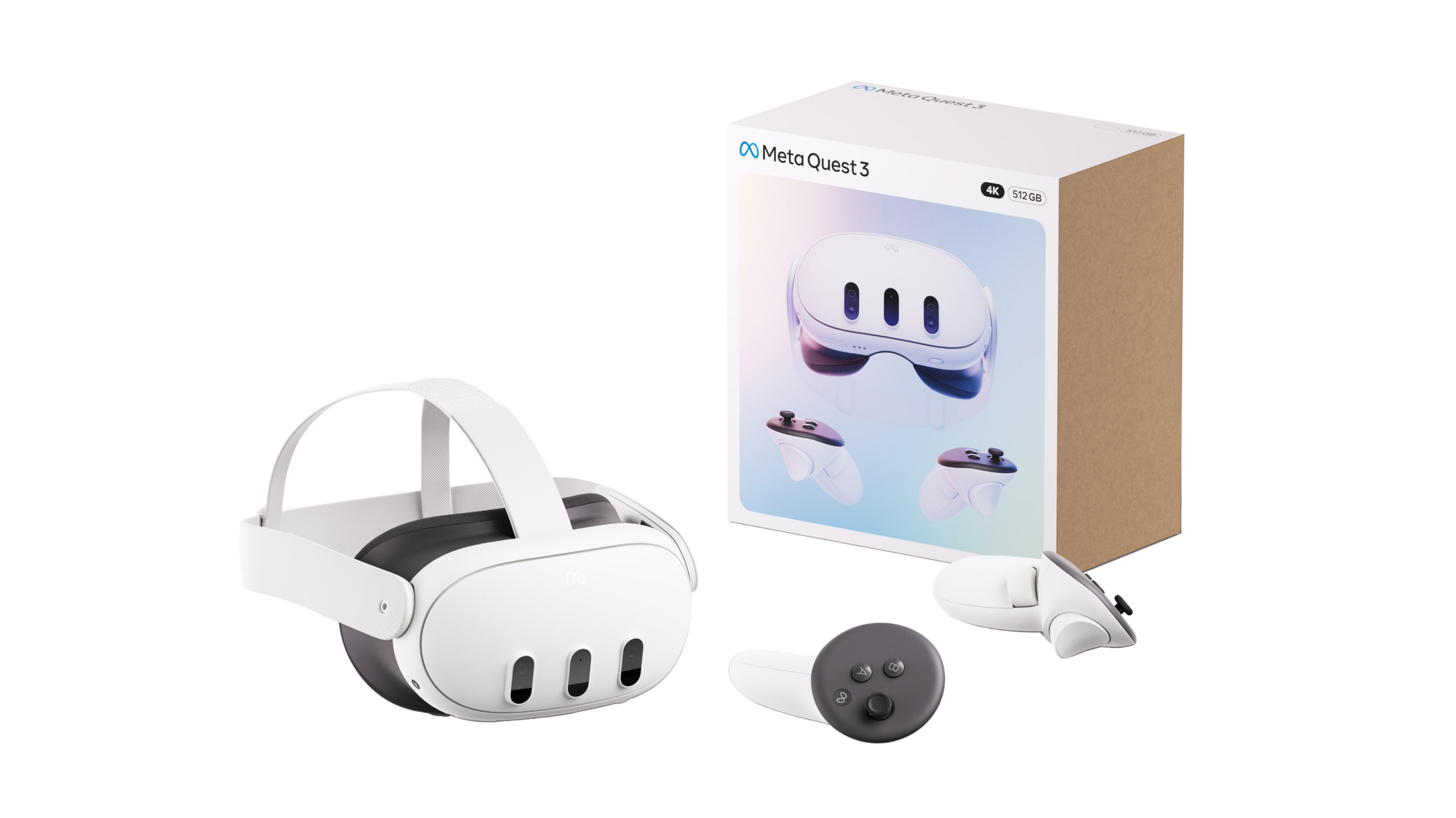
There are currently two headsets in Meta's lineup, the budget Quest 3S and the higher-end Quest 3. Quest 3S is normally $300, while Quest 3 is normally $500.
The excellent Black Friday 2025 deals for Quest 3S offer both a lower price and added perks, making it an ideal holiday gift, while there's only one Quest 3 deal we're aware of, and it only offers a perk.
Still, if you have the funds, we always recommend the proper Quest 3. While Quest 3S reuses the old fresnel lenses from Quest 2, Quest 3 features Meta's advanced pancake lenses which are clearer and sharper over a wider area, have a wider field of view, and have precise separation adjustment, making them suitable for essentially everyone's eyes. These pancake lenses also enable Quest 3 to be thinner, which makes the headset feel slightly less heavy.
Quest 3
Best Buy: $75 Gift Card & 1 Month Of Xbox
Best Buy is offering a $75 gift card and 1 month of Xbox Game Pass Ultimate with Quest 3 purchases.
You could, for example, use the Best Buy gift card to get a rigid strap and softer facial interface – upgrades which can make the headset feel more comfortable to wear.
Horizon+ includes a Games Catalog with some of Quest's best VR games, including Asgard's Wrath 2, Cubism, Demeo, Dungeons of Eternity, Eleven Table Tennis, Ghosts of Tabor, Job Simulator, Maestro, Onward, Pistol Whip, Red Matter, Synth Riders, The Climb 2, and Walkabout Mini Golf. It also lets subscribers redeem 2 monthly games pre-selected by Meta.
The Costco deal lasts through December 2, the coming Tuesday, so make sure to grab it soon if you want to affordably bring a friend or relative into VR.
Best Buy: $250 With $110 Of Perks
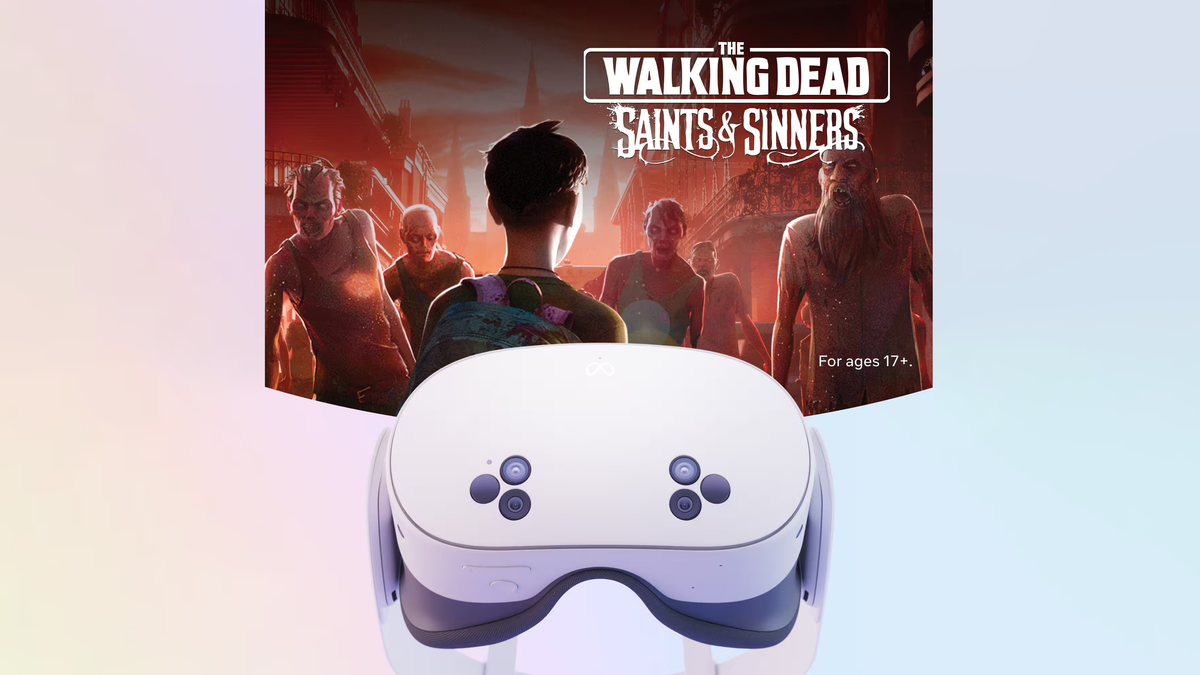
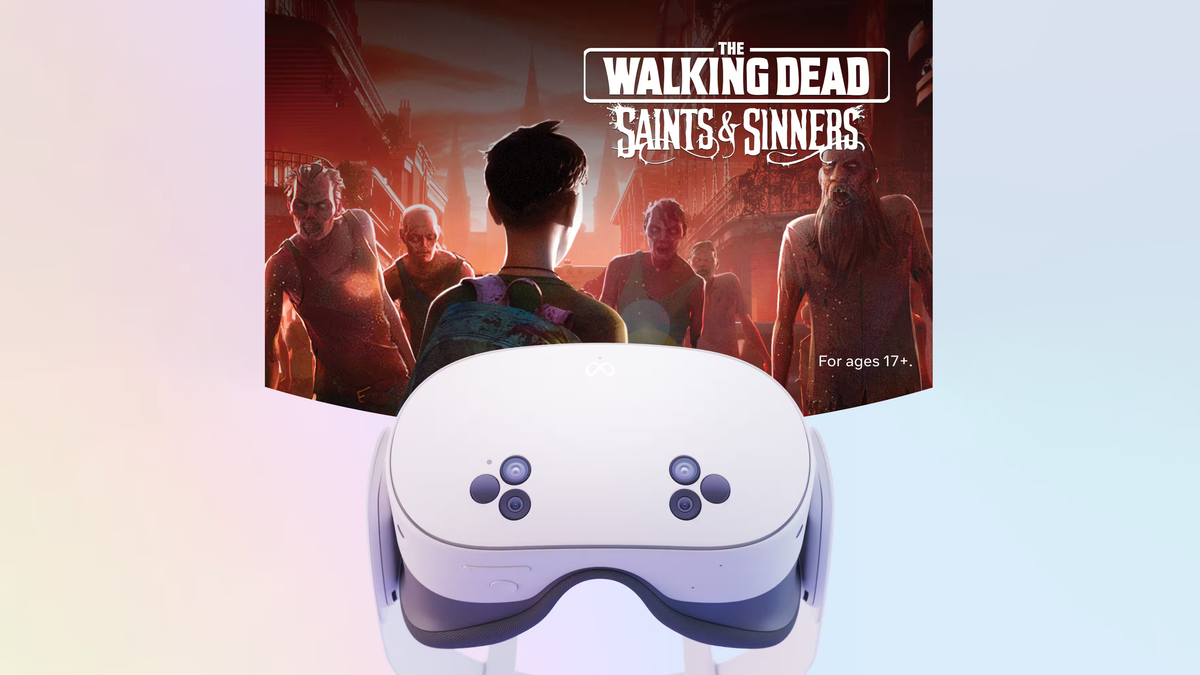
Quest 3S is $250 at Best Buy, and the retailer is offering a $50 Best Buy gift card, 1 month of Xbox Game Pass Ultimate, and The Walking Dead: Saints & Sinners VR game.
That's a $50 discount from the headset's regular $300 price, and the three perks together are worth $110. You can find the deal for the 128GB base model of Quest 3S here. A similar offer is available for the 256GB storage model, with a $330 price ($70 off) and the same perks.
You could use the $50 Best Buy gift card to get the Elite Strap to make the headset more comfortable for just $20, for example, while during the 1 month of Xbox Game Pass Ultimate (normally $30) you can play popular flatscreen games like Call of Duty on a giant virtual screen.
As for The Walking Dead: Saints & Sinners, it's also normally $30, and it's widely considered to be one of the best VR games of all time due to its physics-based combat system, earning an 'Essential' score in our review.
PlayStation VR2
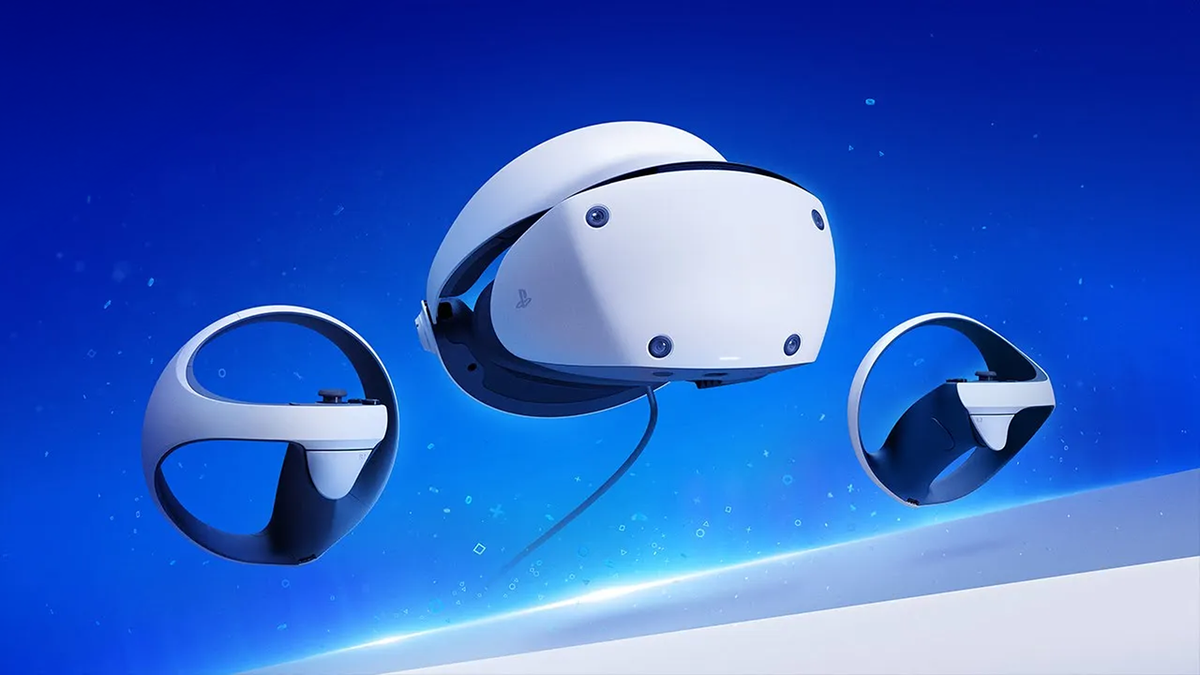
PlayStation VR2 is $300 at all official retailers until December 19, its lowest price ever.
PlayStation VR2 is not a standalone headset, and it has a cable which needs to be connected to a host device. It connects to the PS5 or PS5 Pro console out of the box, and can alternatively connect to a gaming PC with the sold-separately PC adapter.
This price applies to both the regular SKU and the bundle with Horizon Call of the Mountain, so you should always grab the latter if it's in stock.
At this discounted price, PlayStation VR2 is an ideal option for a PS5 owner heavily invested in the PlayStation ecosystem, or, with the adapter, a PC owner interested in sim racing, flight sim, or other seated games.
The PS VR2 discount is available for another three weeks, so there should be plenty of time to grab one in time for Christmas.
Pico 4 Ultra
Pico 4 Ultra is a Quest 3 competitor from ByteDance, the Chinese tech giant behind TikTok. It isn't sold in North America, so if you're in the US or Canada you can ignore its existence.
For those who are in a region where Pico 4 Ultra is sold, the Black Friday 2025 deal prices it at €400, and comes with 2 VR games and a season pass for Premier League Player.
The headset is normally priced at €600, so this is a massive €200 discount. And the 2 VR games and season pass are worth €100 together, meaning the total extra value here is €300.
Pico 4 Ultra holds up relatively well to Quest 3, but while the Pico Store has a decent chunk of the content available on Quest 3, it still lacks many of the games you'll find on Meta's platform, particularly the blockbusterexclusives.
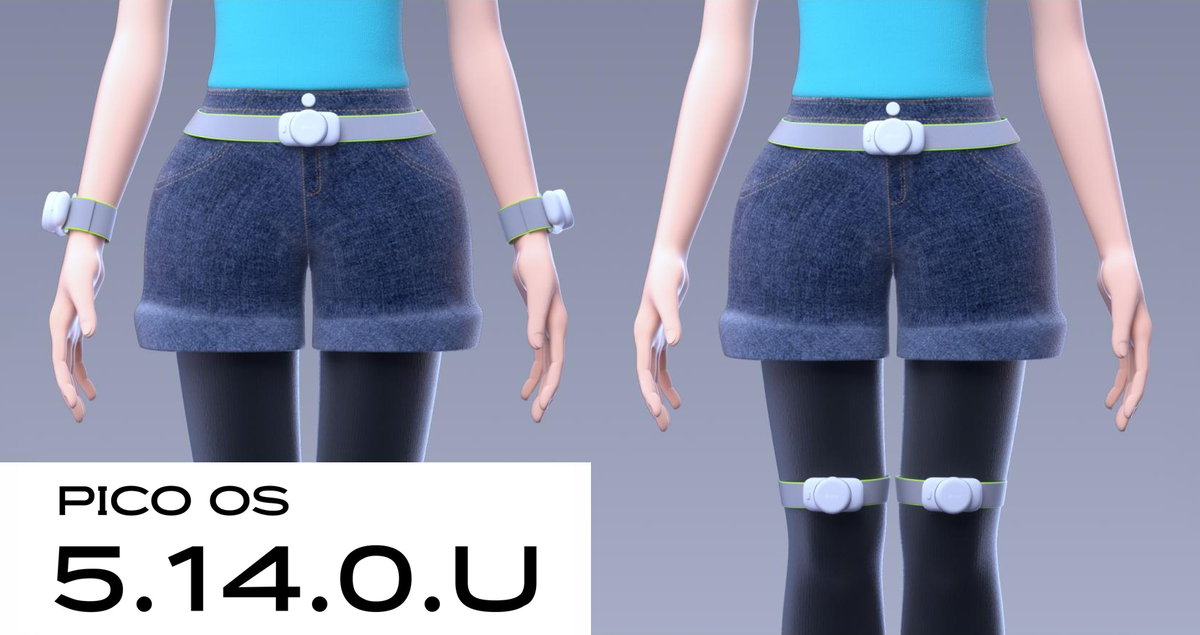
However, ByteDance has a unique offering which Meta has ruled out making an equivalent of: Pico Motion Trackers. They're lightweight wireless pucks that you can strap to yourself to add various levels of body tracking in supported titles.
For Black Friday get a pair for €70 to strap to your ankles to add leg tracking. Then, you can add the 'Waist Version' for €40 to improve the quality of body tracking and get a true orientation for your waist. And if you want to go even further, you can now get a second €70 pair for your upper leg or forearms, improving leg or arm tracking, for a total of 5 trackers.
Supported titles for Pico Motion Trackers include VRChat (both standalone and via wireless PC VR) and Blade & Sorcery: Nomad.
The realistic surfing simulator, True Surf, is making its Quest debut this December.
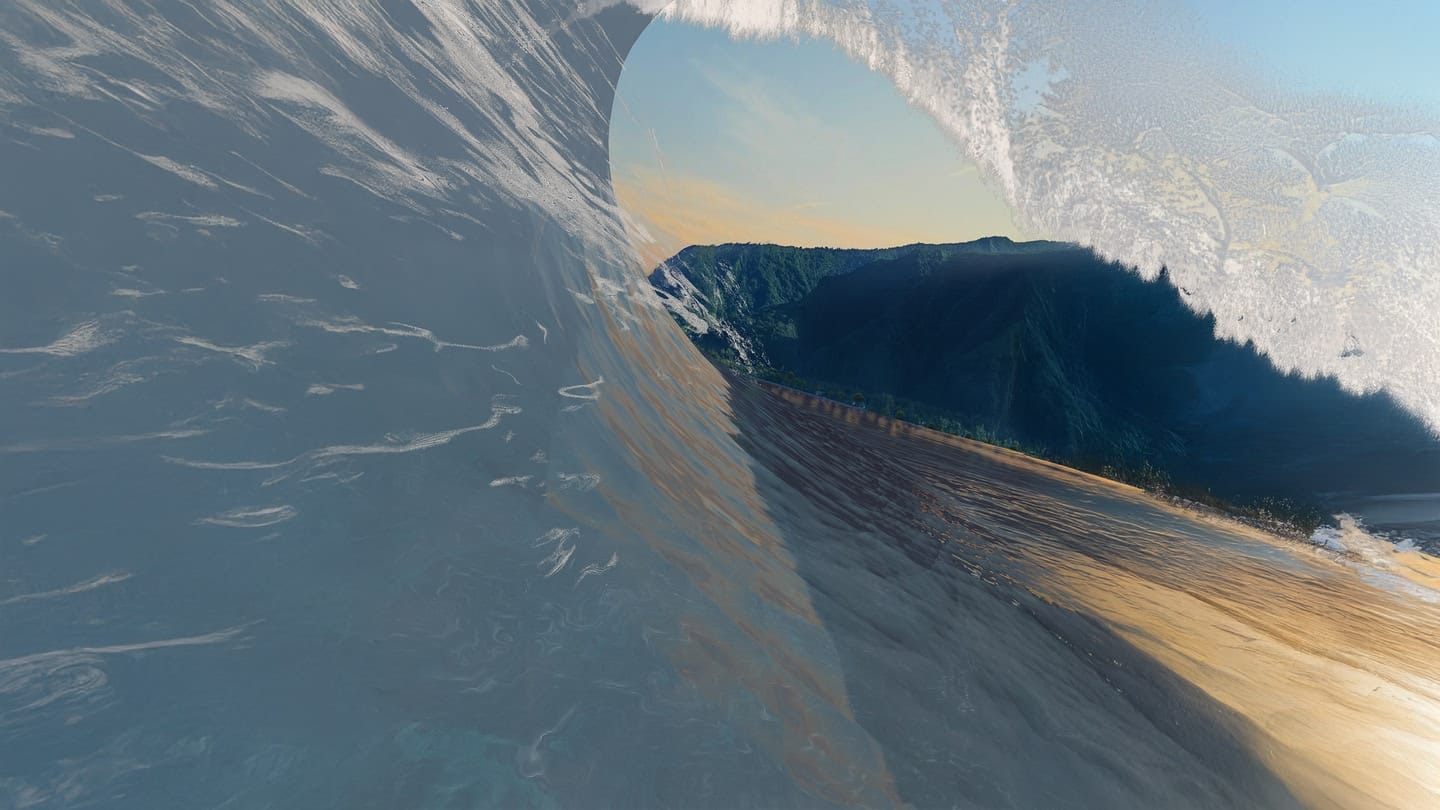
Developed by True Axis, True Surf is a VR port of the mobile game of the same name, allowing grommets and pros alike to carve waves and paddle through iconic locations while climbing the surfing ranks. An official game for the World Surf League, it's launching on Quest next month, and you can check out gameplay below:
In True Surf, you monitor a live swell map, which comes courtesy of data provided by real-world surf forecasting organization Surfline, before picking a spot to ride the waves. Then, if you'd like, you can control the weather to boost the swell's strength for a greater challenge. As you complete missions and rack up high scores, you'll generate 'Shaka,' which can be used to unlock more locations.
Included locations in True Surf span the globe, featuring famous spots like Waikiki in Hawaii, Bells Beach in Australia, and Puerto Escondido in Mexico, to name a few. Each location also includes wildlife to glide alongside, such as dolphins, fish, and turtles. Those looking to customize their character will also find branded gear options across various boards and apparel.
Best Buy is offering a $75 gift card and 1 month of Xbox Game Pass Ultimate with Quest 3 purchases for Black Friday.
With this deal, you could, for example, use the Best Buy gift card to get a rigid headstrap and softer facial interface – upgrades which can make the headset feel more comfortable to wear.
During the 1 month of Xbox Game Pass Ultimate (normally $30) you can play flatscreen games like Call of Duty on a giant virtual screen.
As with all new Meta headset purchases, Quest 3 from Best Buy also comes with 3 months of Horizon+, Meta's VR games subscription which includes a Games Catalog with some of Quest's best VR games, and also lets subscribers redeem 2 monthly games pre-selected by Meta.
We've seen a lot of deals for Quest 3S recently, Meta's cheaper budget headset, with Best Buy for example offering a $250 price with a $50 gift card, the month of Xbox Game Pass Ultimate, and a top-rated VR game. But we still highly recommend choosing the proper Quest 3 if you have the funds.
While Quest 3S can run all the same content as Quest 3, and has the same fundamental capabilities (including the same XR2 Gen 2 chipset and 8GB RAM), it reuses the old fresnel lenses from Quest 2. Quest 3, on the other hand, features Meta's advanced pancake lenses which are clearer and sharper over a wider area, have a wider field of view, and are fully horizontally adjustable, suitable for essentially everyone's eyes. These pancake lenses also enable Quest 3 to be thinner, which makes the headset feel slightly less heavy.
At $500, there's a steep price premium for Quest 3 over Quest 3S, especially with the discounts, so Best Buy's Black Friday deal somewhat softens the financial blow.
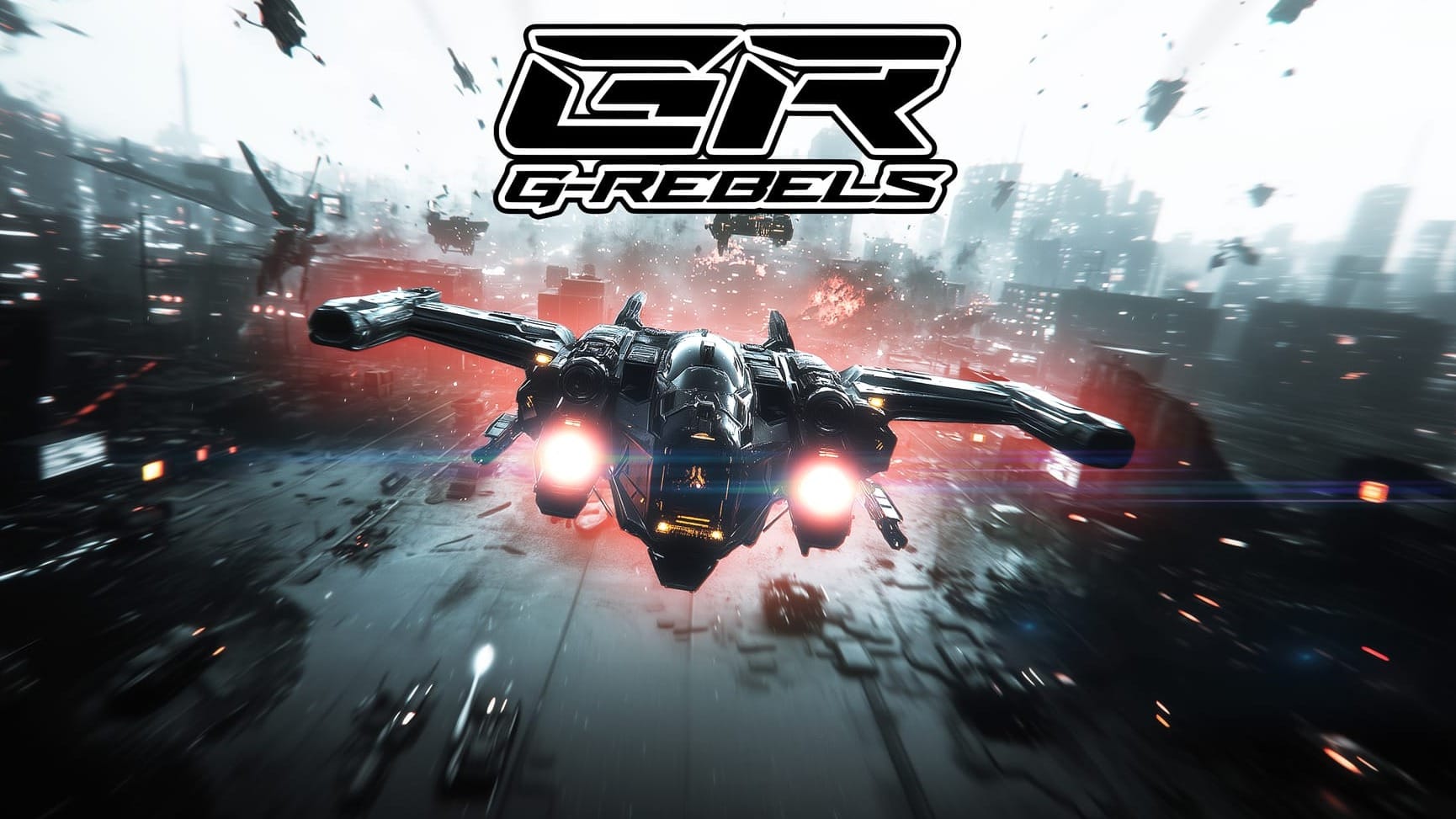
Action flight sim G-Rebels will get day one PC VR support in early access, and it's launching early next year.
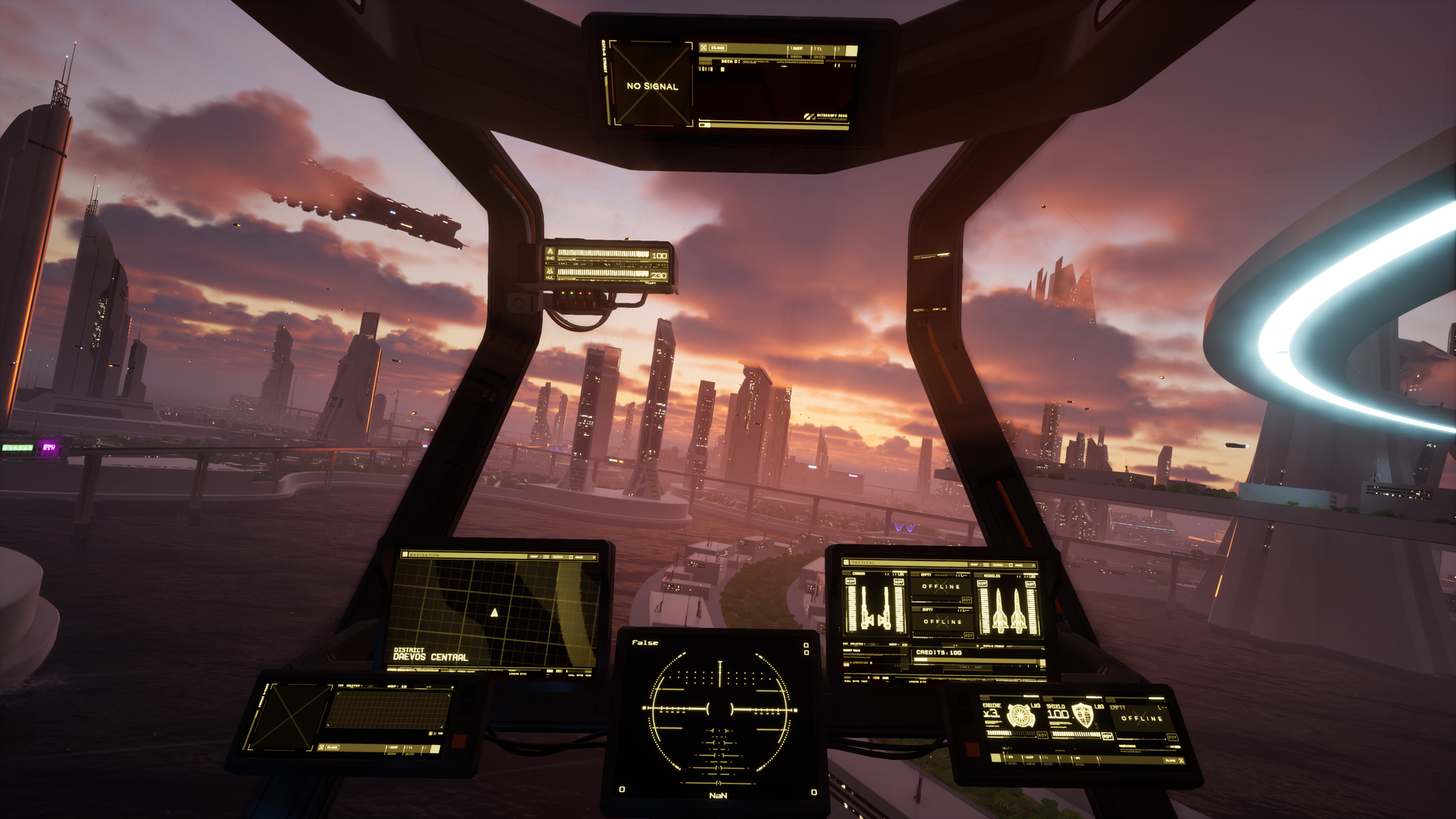
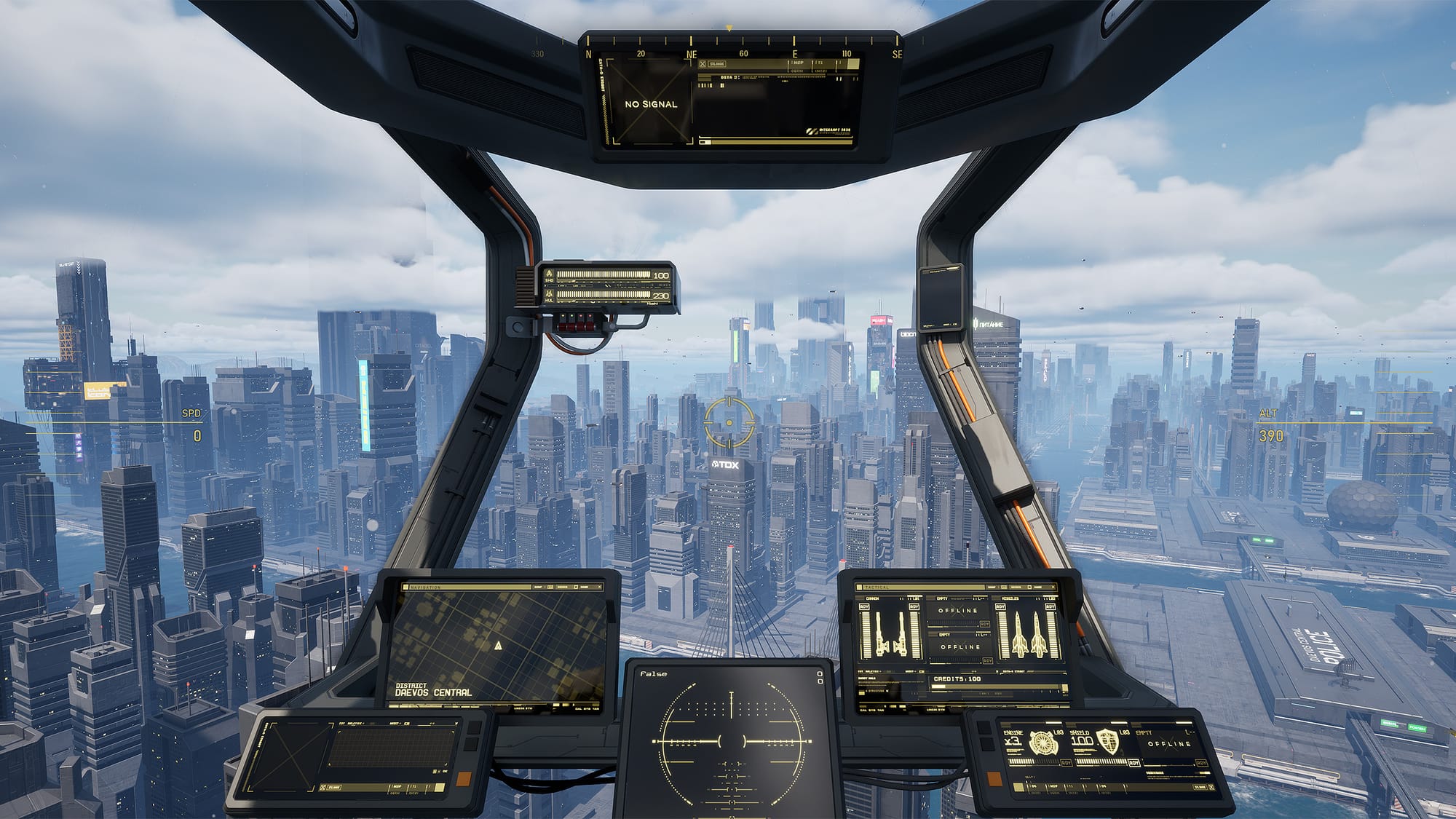
Developed by Reakktor Studios and published by Senatis, G-Rebels is a spiritual successor to 1997's PS1 combat flight sim G-Police by Psygnosis. Originally announced last year as a flatscreen game, the studio exclusively revealed to UploadVR that it's receiving official PC VR support straight away with its upcoming early access launch.
Set in the year 2684, this dystopian open-world combat game takes place across floating megacities covering 12,000 square kilometers, as these cities compete for natural resources. You play as an elite unit in the most powerful city-state, helping to ensure law and order before a secret mission leaves you questioning your loyalties.
In early access, G-Rebels promises 10 main missions that range between collecting bounties, police chases, handling new contractors, and races, also featuring combat missions, outpost battles, mining, and more. Multiple regions will be available to explore and you can customize your ship, while Reakktor Studios also promises dynamic weather and a day-night cycle.
VR mode has a full cockpit view and first-person flight controls, and PC VR support will get further optimizations across early access. A content disclosure also confirms “some of the intercom dialogs are using AI generated/modified voice overs.” The studio also mentions “experimental support” for HOTAS (hands-on throttle-and-stick) and HOSAS (hands-on stick and stick) controllers.
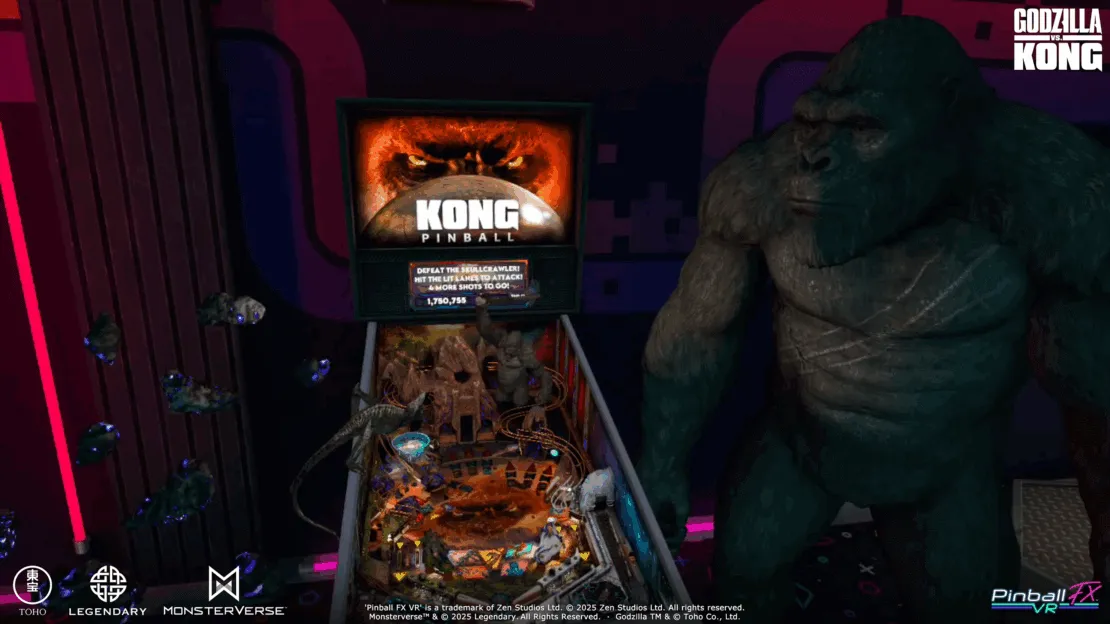
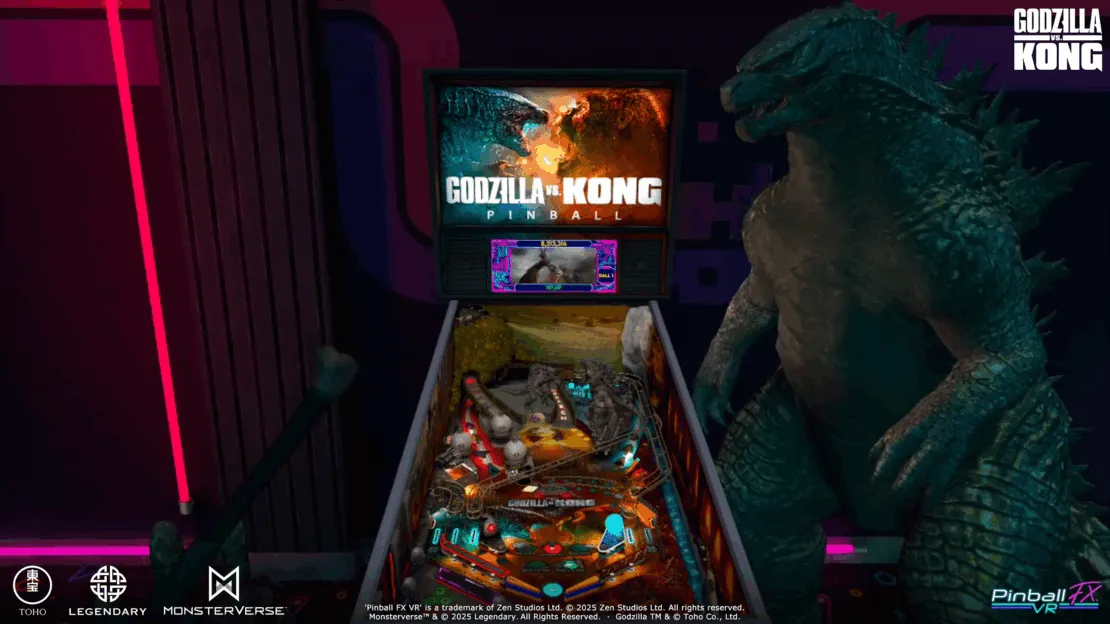
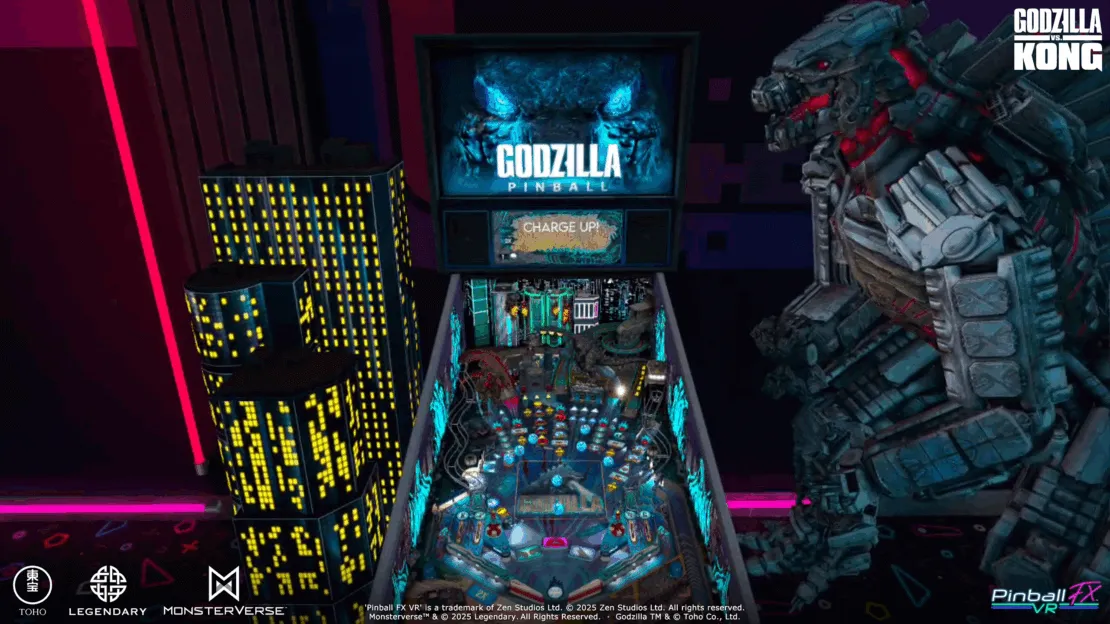
Pinball FX VR is adding six new tables next week for Godzilla vs. Kong, Peanuts, and more.
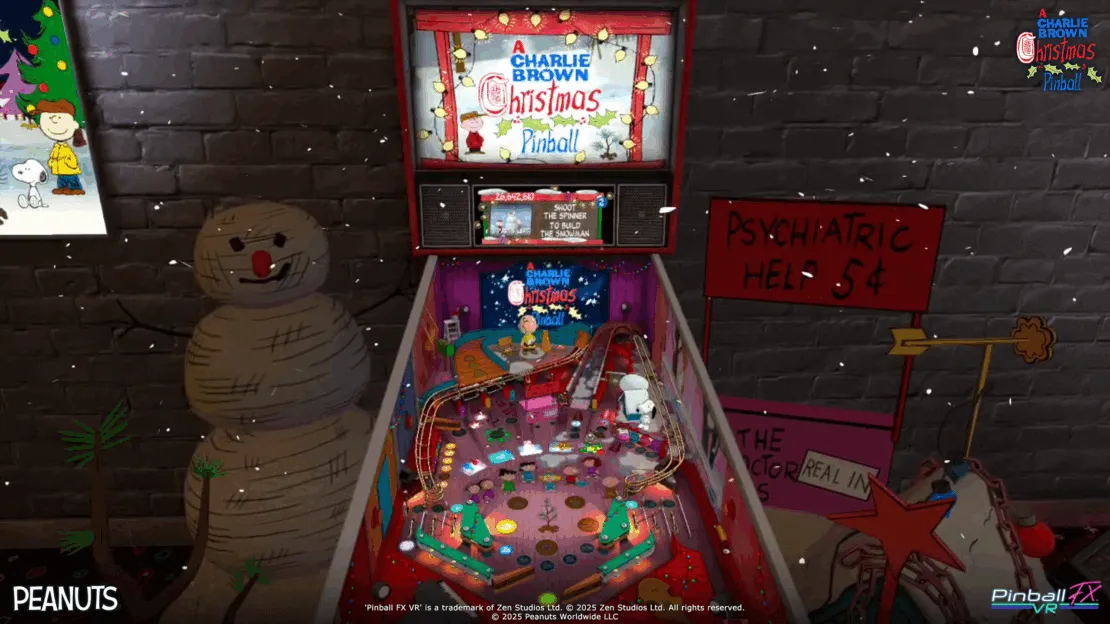
Continuing its stream of post-launch expansions, Zen Studios has revealed that Pinball FX VR is getting six new DLC tables on December 4. Most prominent is the Godzilla vs. Kong pinball pack, adding three tables that bring Kong, Godzilla, and Mechagodzilla into the room. There's also a festive-themed “A Charlie Brown Christmas” table coming, based on the famous comic strip Peanuts.
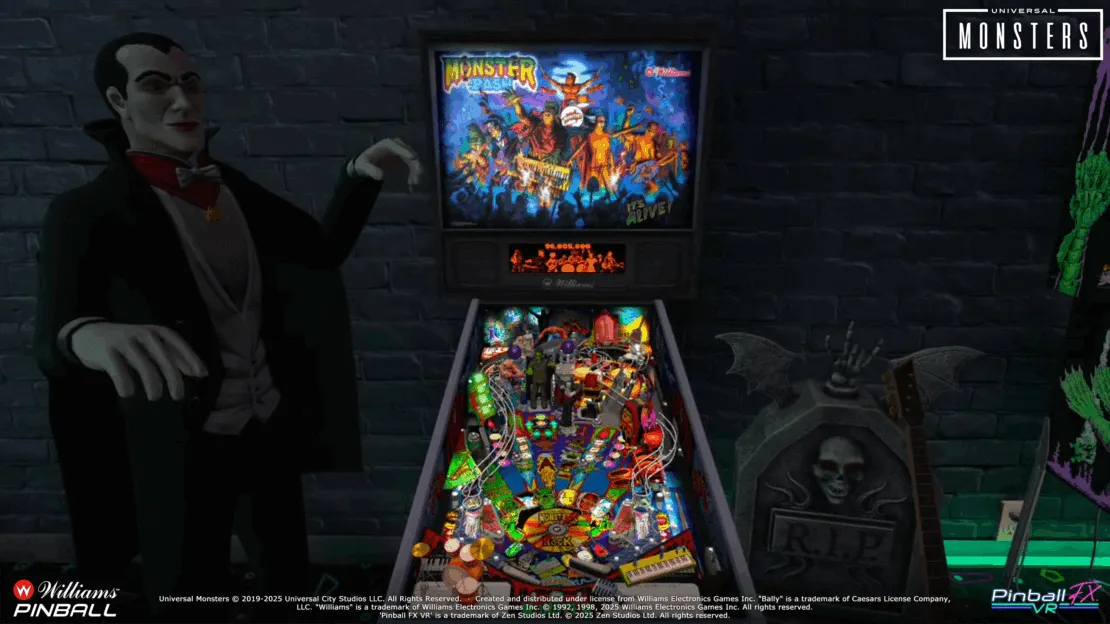
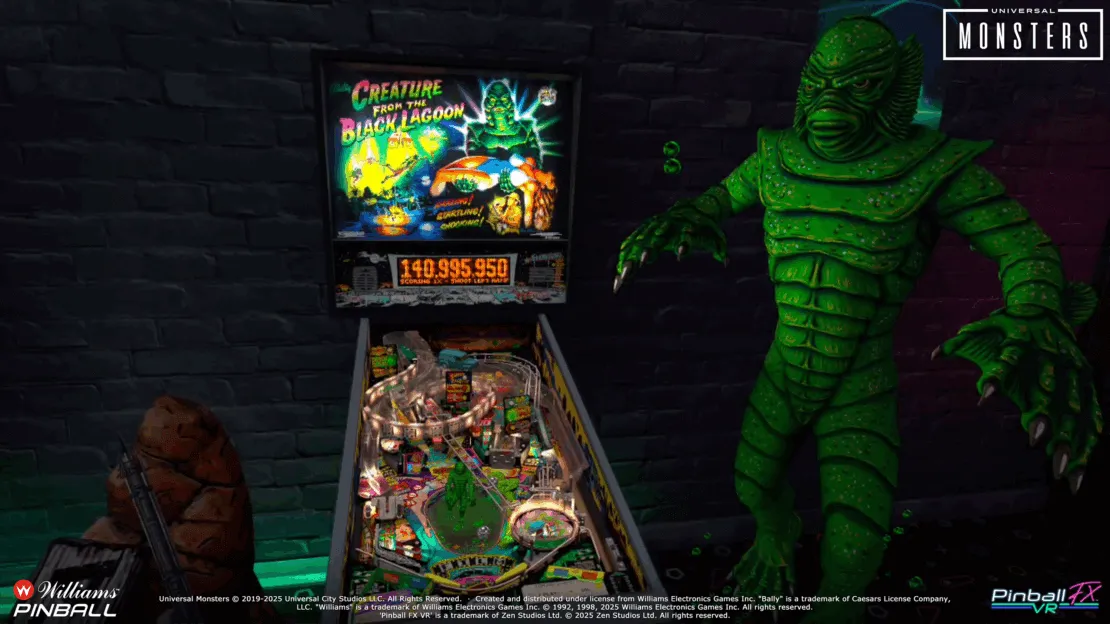
Elsewhere, Zen Studios is bringing over two Williams and Bally tables into this VR release with the Universal Monsters Pack. First up is the Monster Bash pinball table with familiar names like Frankenstein, the Mummy, and Dracula. That's completed by the Creature from the Black Lagoon table, based on Universal's 1954 monster horror movie.
We've seen no end of DLC collaborations since Pinball FX VR launched, usually adapting existing tables from the flatscreen game. Halloween added two new tables based on horror icon Elvira, alongside variousofficial Williams tables. Other previous crossovers include Tomb Raider, Indiana Jones, Twilight Zone, The Addams Family, and Star Trek: The Next Generation.
Pinball FX VR is out now on the Meta Quest platform, and the six new DLC tables will launch on December 4. DLC prices are currently unconfirmed.
Letting people teleport into your home via Horizon Hyperscape feels like magic, though the scans are lower quality than the old cloud-streamed solo system.
If you missed it, last week Meta started rolling out an overhaul of its Horizon Hyperscape technology, letting you share new captures as unlisted Horizon Worlds and invite people to visit them as Meta Avatars.
These Hyperscape worlds are also rendered on-device on Quest 3 and Quest 3S, in contrast to the cloud-streamed approach previously used for Hyperscape. Up to 8 people can be in a single instance, and the system also includes support for mobile users via the Meta Horizon app.
After receiving the update on his Quest 3, UploadVR's Kyle Riesenbeck rescanned the downstairs living, dining, and kitchen area of his home. A few hours later, the Hyperscape world was ready, and so he invited me over to visit.
Appearing as a Meta Avatar, Kyle gave me a guided tour of this huge section of his home, pointing out the details the capture kept, as well as the ones it doesn't quite resolve.
Compared to the previous cloud-rendered solo Hyperscape system, there's a clear drop in quality. For starters, the rendering resolution is lower, with visible pixelation and aliasing for anything far away. As well as this, the Gaussian splat density appears to be lower, blurring some of the finer details captured by the previous implementation of Hyperscape. And despite these regressions, the performance was not always solid, with the frame rate dropping when a large enough section of the scan was in my field of view.
Still, these complaints aside, I still had a strong feeling of being in Kyle's home, and could still see relatively minute details like the place names on the badges and pins that he and his wife had pinned to a board after their travels. Further, it's amazing that this experience is even possible at all on an affordable mobile chipset from 2023, and we're due an XR2 Gen 3 next year that should make the experience a lot sharper and smoother.
If you own a Quest 3 or Quest 3S, or have the Meta Horizon app on your phone, and want to visit Kyle's home too, here's the link: Kyle's Home on Meta Horizon Worlds. Let us know what you think of it!
After visiting Kyle's home, I also scanned the living room and kitchen area of the apartment I live in, and found the resemblance to be remarkable. In fact, visiting it in VR while in my office induced such a strong feeling of presence that I tried to walk through my virtual kitchen, and thus bumped straight into my office wall. As someone who has been using positionally-tracked VR for well over a decade, I thought the days of mistaking the virtual for real like this were far behind me. But I was wrong. And it's a testament to just how realistic Hyperscape scans can feel, especially for places you're familiar with in reality, even in this lower quality on-device version.
Meta says it's still "rolling out" the Hyperscape sharing and social update, and keep in mind that any scans you make before your headset gets it won't be able to be shared or visited. Once you do get the update though, be sure to give it a try, as the ability to scan, share, and co-inhabit realistic reconstructions of real-world spaces with headsets that go on sale for as little as $200 is a truly remarkable technological achievement.
Smash Eat Grow, a free-to-play VR multiplayer playground where you eat opponents to win, enters early access today on Quest.
Originally announced in September, Smash Eat Grow is a family-friendly title by XR Games (BEATABLE) and Obstinate where you play as hungry alien creatures called Smashers causing havoc across a fully destructible Earth. Eating objects lets you grow larger, and you'll eventually grow big enough to consume your rivals to become the biggest player on the map.
0:00
/0:55
Completing matches earns BUX, which can be used to unlock new cosmetics and enter tournaments. As for its early access roadmap, both developers previously advised there's an ongoing roadmap to further expand Smash Eat Grow that includes additional maps, game modes, Smashers, powers, and customizations.
Elaborating further in a new statement, Storm Griffith, Obstinate's CEO and founder, advised a holiday update is in the works. This upcoming update promises new Smasher abilities, further cosmetic customizations, more biomes, and private friend lobbies. An exact release date is currently unconfirmed, though we know it's launching in December.
Smash Eat Grow is out now in early access on the wider Meta Quest platform.
Quest's Horizon OS v83 brings System Positional TimeWarp (SysPTW) and Temporal Dimming as experimental features, as well as improved scene understanding.
A test version of v83 started rolling out to the Horizon OS Public Test Channel (PTC) last month, testing these features and the evolved 'Navigator' system UI, which remains experimental. Now, a month later, a stable build of v83 is rolling out to all supported Quest headsets.
Meta's rollouts happen gradually, so it may take a few days or even weeks for your headset to get the v83 update. Further, Meta rolls out some features separately from the main update itself, so even having the v83 update doesn't guarantee having everything listed here yet.
Read on for a rundown of the key changes Horizon OS v83 brings compared to v81, the previous stable release:
System Positional TimeWarp (SysPTW)
Just before displaying every frame, all major XR operating systems rotationally reproject (warp/skew) it to match the tiny change in orientation of your head since the frame started rendering.
This is done to eliminate the latency you'd otherwise perceive as you pan your head. And when the running app fails to complete rendering a new frame in time for the next display refresh, the previous frame gets rotationally reprojected further instead of just repeating it. This avoids rotational judder, which is sickening in VR.
With Horizon OS v83, Meta has added an experimental setting called System Positional TimeWarp (SysPTW). When enabled, it applies to all apps at all times, extending the system-level reprojection to be positional, not just rotational.
According to Meta, SysPTW "uses real-time scene depth to reduce visual judder and lag when apps drop frames".
"This feature automatically activates when needed and works across all apps, with no impact on regular performance", Meta claims.
Application SpaceWarp (AppSW), the SDK feature developers can enable for their apps to run at half framerate by generating every other frame synthetically, has already had Positional TimeWarp built-in since launching 4 years ago, so AppSW games won't see any changes here.
For apps that don't use AppSW, enabling SysPTW should both reduce positional latency and significantly dampen the positional judder you normally experience when a game drops a frame.
Temporal Dimming
Back in v69, Meta added an experimental option called Content Adaptive Brightness Control (CABC) for Quest 3 headsets, which dynamically dims the backlight of the LCD displays in darker scenes to achieve deeper blacks that are closer to true black than the murky grey typically delivered by LCD.
Now, in v83, Meta has added a second but distinct experimental option called Temporal Dimming for Quest 3 and Quest 3S.
"This feature gradually dims your display brightness during each session, helping reduce eye strain, extend device battery life, and improve display performance—all without noticeable impact on your experience", Meta explains.
A scrolled-down view of the Horizon OS Experimental settings as of v83.
Meanwhile, the description of the setting in Horizon OS reads "Dynamically adjusts screen brightness to further reduce power consumption during idle periods, with minimum impact on user experience".
While CABC is very noticeable, with the screen brightness visibly adjusting, from briefly testing Temporal Dimming, it seems to be a far more subtle effect, with brightness seemingly changing over a greater time period.
We'll keep an eye on whether Meta moves Temporal Dimming out of Experimental in future releases, something it hasn't yet done for CABC. Meta may even make it the default eventually, with the aim of getting the most out of its plain LCD displays.
Improved Scene Understanding
Quest 3 and Quest 3S create a 3D mesh of your room during mixed reality Space Setup. Since launch, Meta's system has been able to infer the positions of your main walls, floor, and ceiling from this 3D mesh, and since v64 it has also generated labeled bounding boxes for doors, windows, beds, tables, sofas, storage (cabinets, shelves, etc.), and screens (TVs and monitors).
Quest developers can access these bounding boxes using Meta's Scene API and use them to automatically place virtual content. For example, they could place a tabletop gameboard on the largest table in the room, replace your windows with portals, or depict your TV in a fully VR game so you don't punch it.
Generic Meta depiction of Scene Understanding.
Now, with Horizon OS v83, Meta says Space Setup will also incorporate "more complex architectural elements like multi-height floors, slanted ceilings, and inner walls".
A significant drawback of Meta's Horizon OS compared to Apple's visionOS and Google's Android XR is that its default web browser isn't available on traditional device platforms. On Samsung Galaxy XR you'll have access to all your Chrome passwords and bookmarks, and on Apple Vision Pro you'll get the same for Safari – but the Horizon OS browser is only available on Quest.
The Horizon OS browser does have LastPass, and Meta is gradually rolling out Bitwarden, NordPass, Proton Pass, and Dashlane to it too, but switching to a supported password manager is a big ask for your VR headset.
Now, with Horizon OS v83, Meta says you can log into "certain websites" via your phone by sending a link to the Meta Horizon smartphone app.
Currently supported websites include "Roblox and Tiktok", Meta says, without disclosing exactly how other web developers can implement this, or whether it's based on a web standard.
Starvault, a competitive 5v5 VR shooter with MOBA elements, enters full release today on Quest.
Previously available in early access, Starvault by Theia Games is a first-person team-based game that aims to mix gameplay mechanics from hero shooters and MOBAs (multiplayer online battle arenas). Set in a sci-fi fantasy universe, this takes place across 5v5 battles where you pick one of 12 champions with varying weapons, abilities, and playstyles.
Set across large battlefields, this involves pushing through enemy lanes as you capture vision obelisks to gain map control before eventually taking down the opposing team's Energy Core. Defeating enemies and clearing camps awards experience points and credits, which can then be used for unlocking abilities or buying artifacts.
Regarding what's new with the Version 1.0 launch, Theia Games didn't elaborate on specifics before today's launch. The studio confirmed that it'll remain free-to-play with the full release, and it's getting a “full Battle Pass system” with more cosmetics. Promised improvements were also mentioned for stability, progression, and “overall gameplay feel.”
We had positive impressions when the open beta originally launched, believing Theia Games was “taking steps in the right direction to find its audience.” We criticized its lack of a memorable soundtrack, and though we've yet to see if that's been addressed with the full release, we considered Starvault to be a “valiant effort” making effective use of VR.
Starvault enters full release today on the wider Meta Quest platform, while a PC VR release is also planned in Q1 2026.
VR survival game Bootstrap Island is heading to PlayStation VR2 next year.
Launched in early access last year on Steam, Bootstrap Island is a 17th-century survival game where you play as Daniel, a castaway who's become stranded on a tropical island. Featuring a reactive roguelike environment with different biomes, a day-and-night cycle, shelter building, progression systems, and more, that's now heading to PS VR2 in 2026.
Revealing more about this upcoming port on PlayStation Blog, developer Maru VR detailed its planned PlayStation VR2-specific features. Bootstrap Island will use eye tracking for foveated rendering, headset haptic feedback during storms and near-death encounters, and adaptive trigger support for your weapons.
Today's news follows this month's PC VR launch of the Visions update, which marks Bootstrap Island's last major update before next year's full release. This introduced a new sickness and hallucinations system that warps reality as the illness spreads, a story-driven tutorial that reveals more about Daniel's backstory, new environmental features, and more.
Bootstrap Island: Visions is now live on Steam Early Access, with a full release targeting Q1 2026. The PlayStation VR2 edition will follow “in 2026,” though it's unclear if this will arrive simultaneously with the PC VR edition's full release.
 Connexion