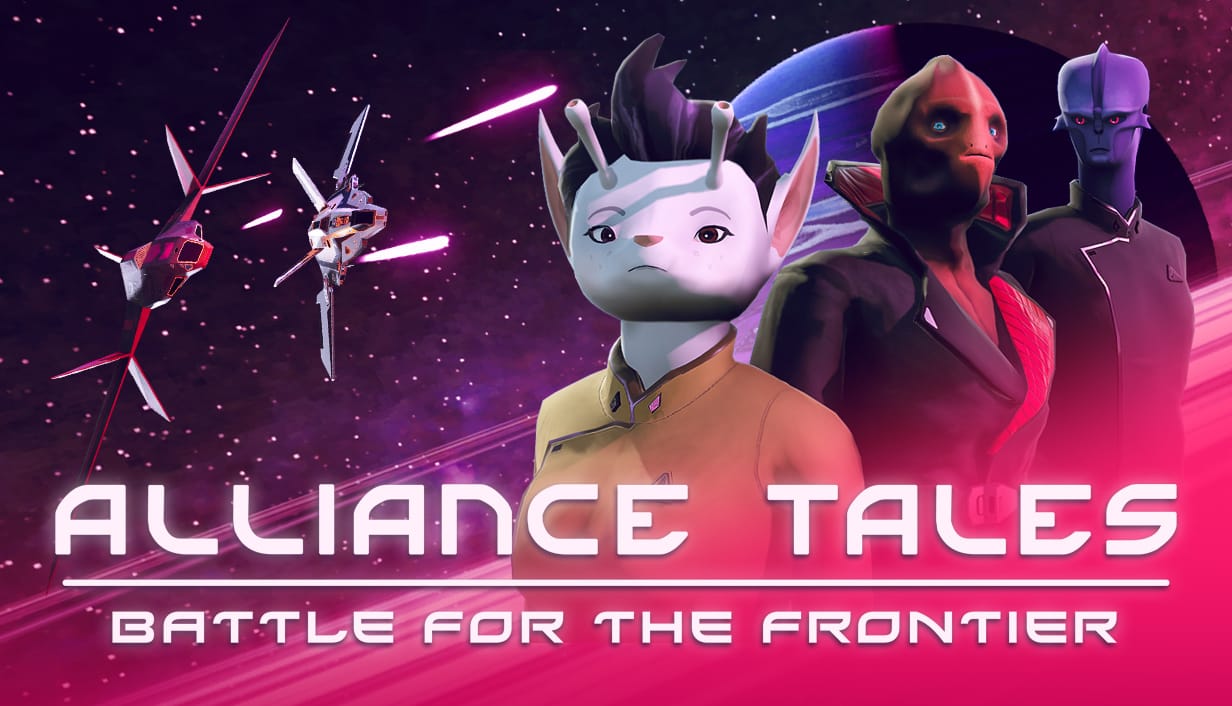
Alliance Tales: Battle for the Frontier is a standalone mission pack in the Alliance Peacefighter universe, and it's heading for PC VR in Q1 2026.
Announced during the UploadVR Winter Showcase, Alliance Tales: Battle for the Frontier is a story-centric combat sim inspired by Wing Commander and Star Wars: TIE Fighter. Players step behind the wheel of a spaceship, managing power and shields alongside a group of quirky alien comrades. You can see gameplay in the announcement trailer below:
0:00
/1:11
Alliance Tales: Battle for the Frontier's campaign centers around a squad of pilots who, in searching for their lost friend, uncover a plot to overthrow the Alliance colonies. Here, avid cosmonauts will have to manage their ship's power and shield distribution to survive frantic battles.
Those who have played Alliance Peacefighter will also recognize some familiar characters, as well as a host of new faces. Notably, Urban Logic Games confirmed that playing the original game is not necessary to experience this spin-off. Support for VR motion controllers and HOTAS joysticks is also confirmed.
Alliance Tales: Battle for the Frontier is launching on Steam in Q1 2026 with optional PC VR support. A complete list of all the announcements made during the UploadVR Winter Showcase will be available after the show.
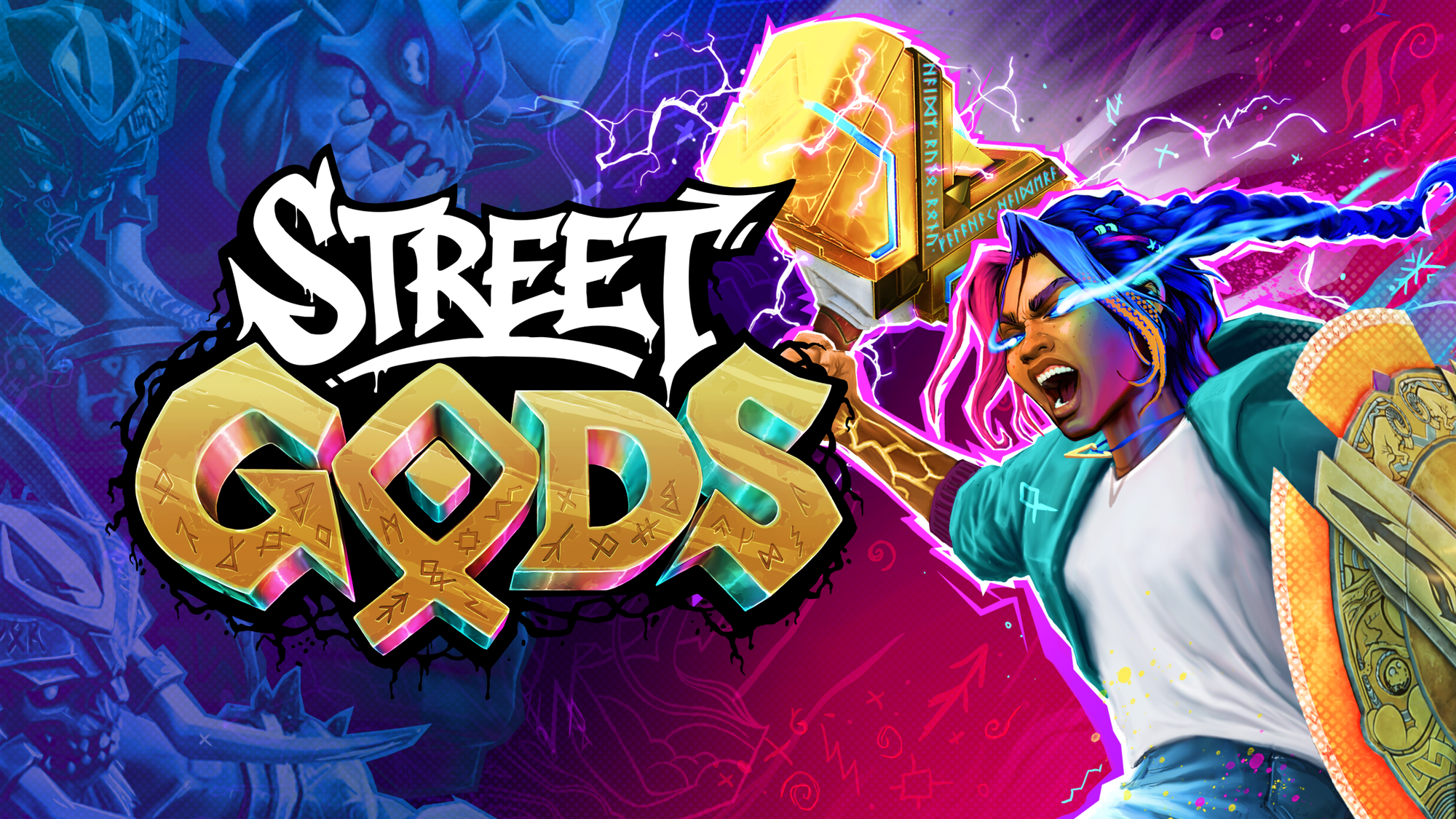
VR roguelite Street Gods will launch in two weeks on Quest 3 and 3S.
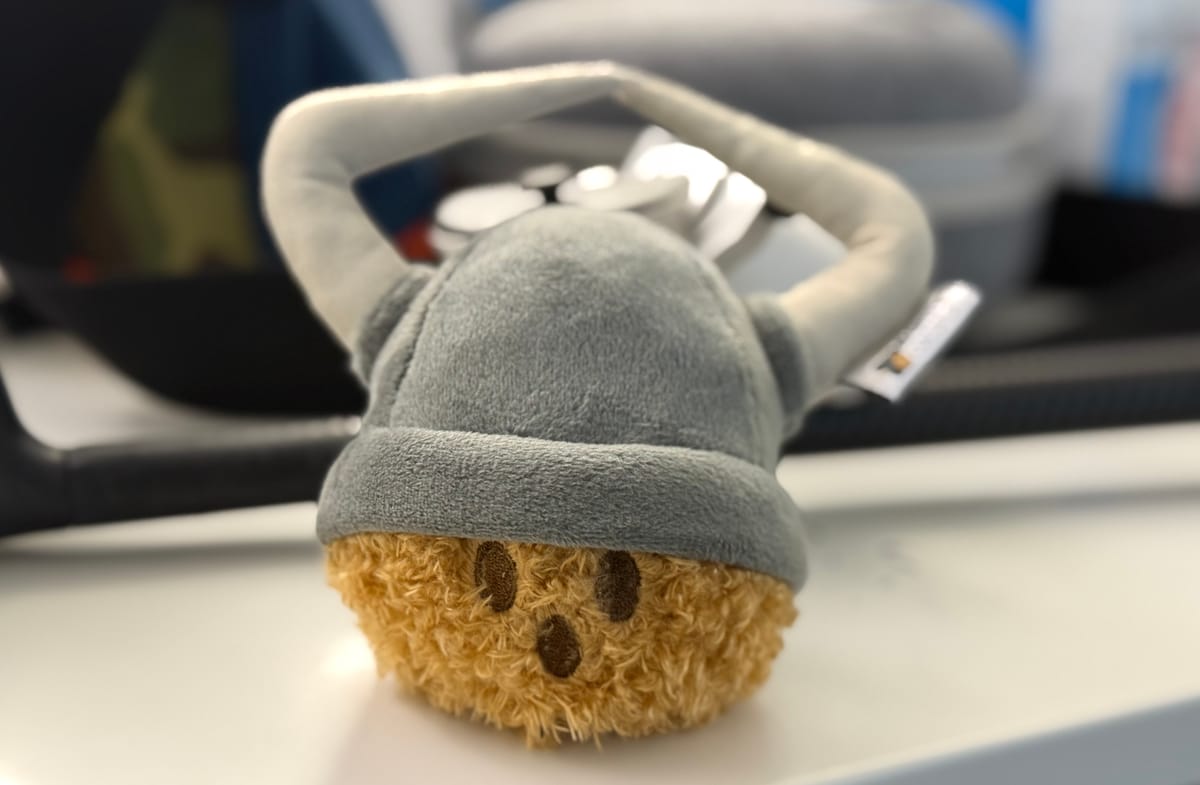
Street Gods puts players in the shoes of Val, a graffiti artist who the Norse hammer Mjölnir chooses to be its keeper. The caveat here is that Thor is trapped inside the hammer and the nine realms are now collapsing into the real world, summoning hordes of villains with it. To stop Ragnarök, you must master the powers of this mythical weapon and destroy these foes once and for all.
0:00
/1:33
Street Gods' gameplay centers around frenetic combat, and you'll be able to perform a range of offensive and defensive moves including charged attacks, stun effects, and aerial control. These actions are all controlled by physical movement, with more unlocking as you progress.
In addition to Mjölnir, there are three additional weapons to wield. That includes Gleipnir for whip-based attacks, the defensive shield-like Svalinn, and the aggressive Duo Hammer. Prowess with these tools opens the door to Runic Blessings, which can be used to bolster your arsenal through permanent skill upgrades.
“Street Gods focuses on agency and progression through skill,” explained Soul Assembly Lead Game Designer Jim Norris in a prepared statement. “We wanted players to feel their growth in power through mastery of movement, combat, and decision-making, not just through passive upgrades.”
Street Gods arrives next week on December 18 for Quest 3 and 3S. All the news from today's showcase will be rounded up in a neat 'Everything Announced' list, so check back in after the show.
Stellar Cafe, a game built around voice-first input and unscripted AI conversations with NPCs, arrives next week on Quest.
First revealed in August, Stellar Cafe is the upcoming game from AstroBeam, a developer led by former Owlchemy Labs CEO Devin Reimer. It promises an experience built around voice-first input as you interact with robotic characters across a sci-fi café. AstroBeam states it's using human-crafted NPCs that interpret your voice, providing real-time responses via large language models.
0:00
/1:27
As confirmed in today's UploadVR Winter Showcase, it's now heading to Meta Quest 2, 3, and 3S on December 11. While Reimer previously confirmed to UploadVR that Stellar Cafe won't be exclusive to Quest headsets, today's announcement didn't reveal anything further about additional platforms.
The upcoming game only supports hand tracking controls, and AstroBeam's using licensed technology from Owlchemy Labs. In our hands-on preview back in August, we considered it “a bold idea for a virtual reality game,” comparing it to Job Simulator but if the older hit's bots expected you to directly talk to them.
Stellar Cafe reaches the wider Meta Quest platform on December 11.
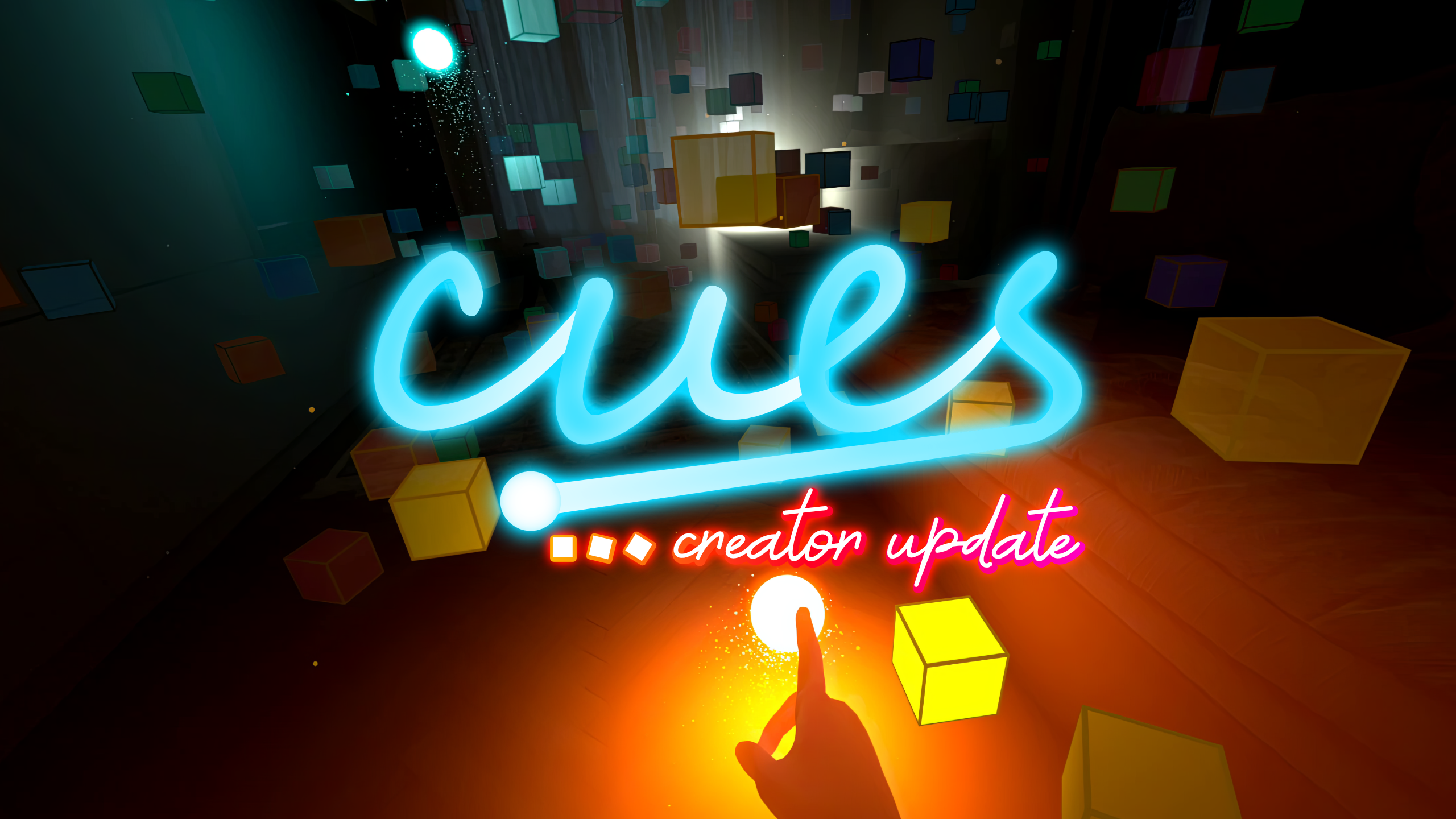
Mixed reality block breaker Cues gets a new Creator Mode in today's free update.
Developed by No Ragrets Games, Cues is a roomscale mixed reality game with hand tracking controls where you bounce light orbs into colorful cubes to gradually create a dynamic symphony. As seen during today's UploadVR Winter Showcase, it's now receiving a free Creator Mode on its first anniversary. Here's the announcement trailer.
0:00
/0:50
As the name suggests, Creator Mode allows you to freely build your own layouts within the game across your living space, ranging from small models to larger fortresses. This joins the existing 'Free Play' and 'Puzzles' modes, the latter of which contains different puzzles with an increasing number of cubes as you progress.
We had considerable praise during our initial Cues hands-on in early access, calling it a “highly relaxing experience” with an approachable premise you can quickly understand. “The controls feel natural, these pleasingly colorful visuals are great, while the procedural symphonic music reacts to your movements well,” we said at the time.
Cues - Creator Mode is available today on the Meta Quest platform as a free update.
Mixed reality tactical roguelite Banners & Bastions confirmed its full release date on Quest.
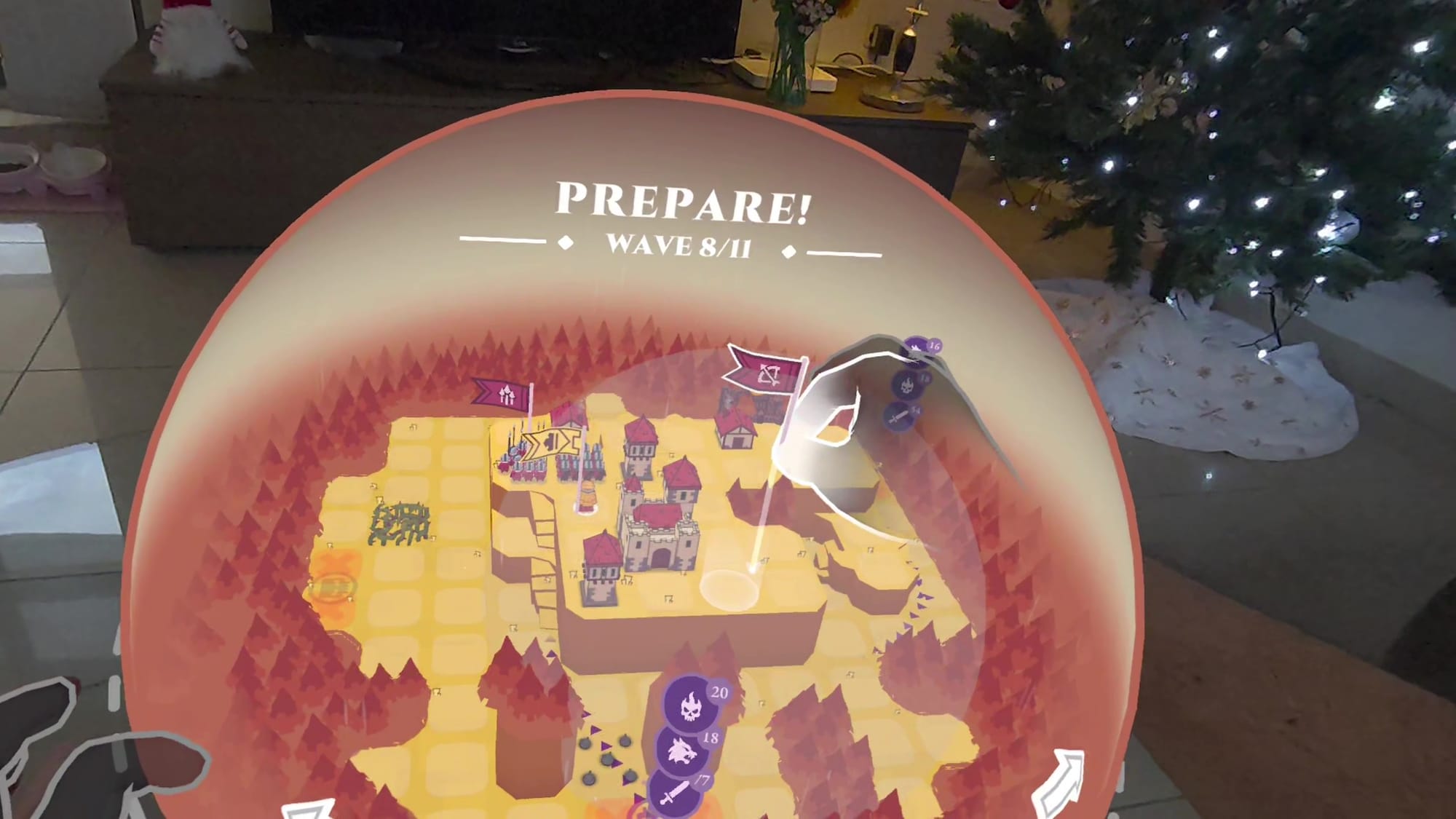
Created by Not Suspicious (Airspace Defender, Tablecraft), Banners & Bastions is a tabletop roguelite with hand-tracking controls that's available in early access. Today's UploadVR Winter Showcase revealed that it's entering full release on December 15, with the 1.0 Update adding new hero units with unique special abilities, a new bestiary, an autumn battlefield biome, and more.
Version 1.0 follows a continuing series of updates across early access. Following October's addition of controller support, last month's content expansion added a new dragon boss battle and more foes. The latter update introduced a new playable Minefield card and two new enemy types - the Witch (ranged) and the Elite Swordsman (melee).
Battles occur across procedurally generated maps as you defend your kingdom, with tougher foes gradually emerging across fresh waves. You can continue investing in your local economy or fortifications, while your troops range from spearmen, knights, archers, and more.
Banners & Bastions is out now in early access on the Meta Quest platform, with the full release coming on December 15.
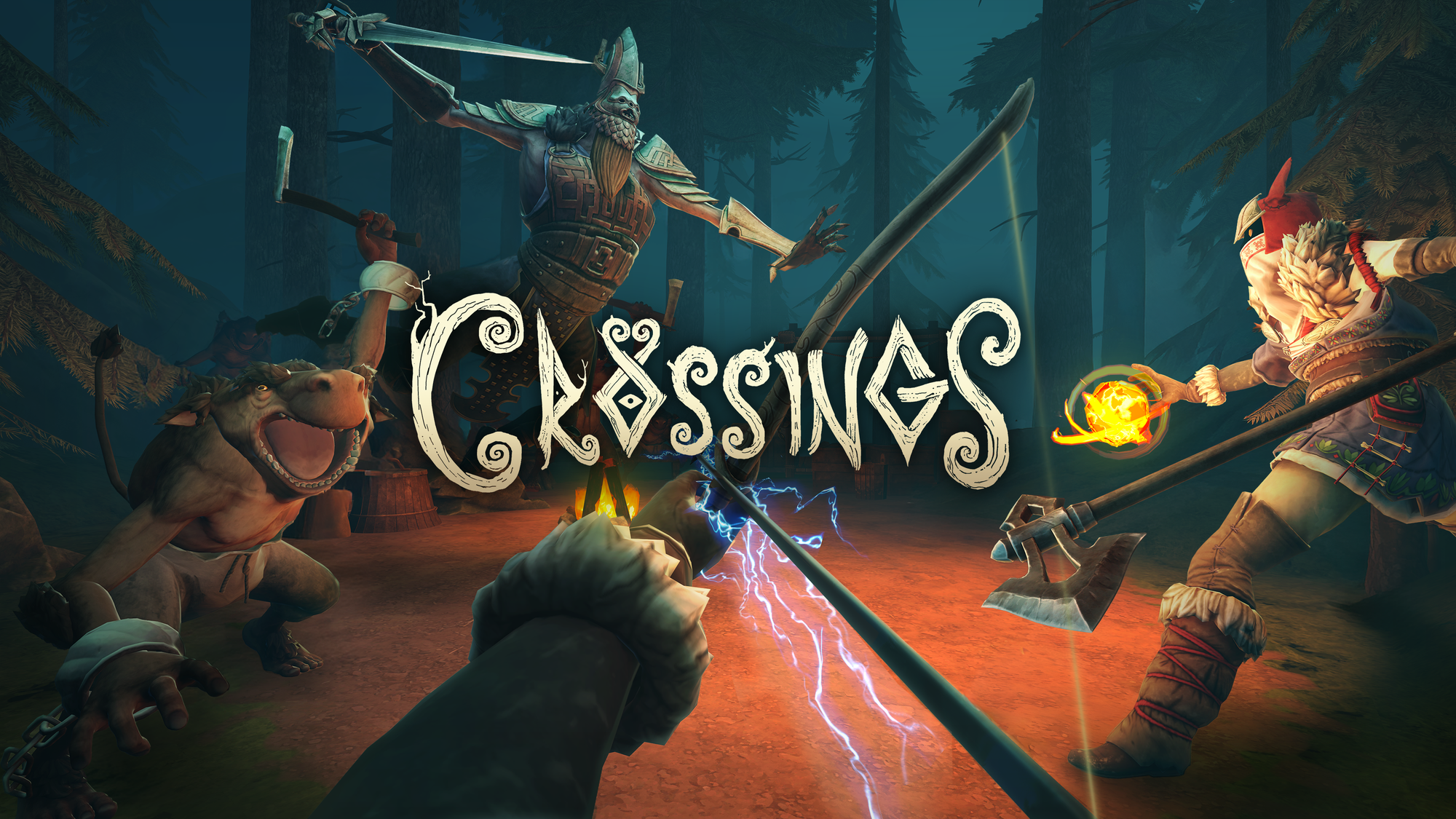
Norse-inspired soulslike Crossings will launch on Quest and Steam later this month.
Developed by Neat Corp, Crossings is an action-adventure soulslike that asks players to exact their vengeance in the afterlife. Playable solo or with a friend in co-op, you'll take on mythic evils and face off against mythic bosses as you expand your arsenal and repeat runs. Revealing its release date at the UploadVR Winter Showcase, you can check out the latest trailer below:
In Crossings, you manage a handful of combat inputs, including a dodge, strike, and block, while facing off against thematic enemies including trolls, ghosts, and Draugr. As you progress, you'll also earn spells and upgrades, as well as unlock new weapons like blades and bows that bolster your attempts. The world is open to exploration, with a range of biomes to investigate, from eerie caves to forests and ruins, each hiding stories that illuminate the lore underpinning Crossings' Norse-inspired story.
Crossings will be available on Quest and Steam on December 18. We'll be rounding up all the reveals from the UploadVR Winter Showcase in a complete list, so check back after the show for more details.
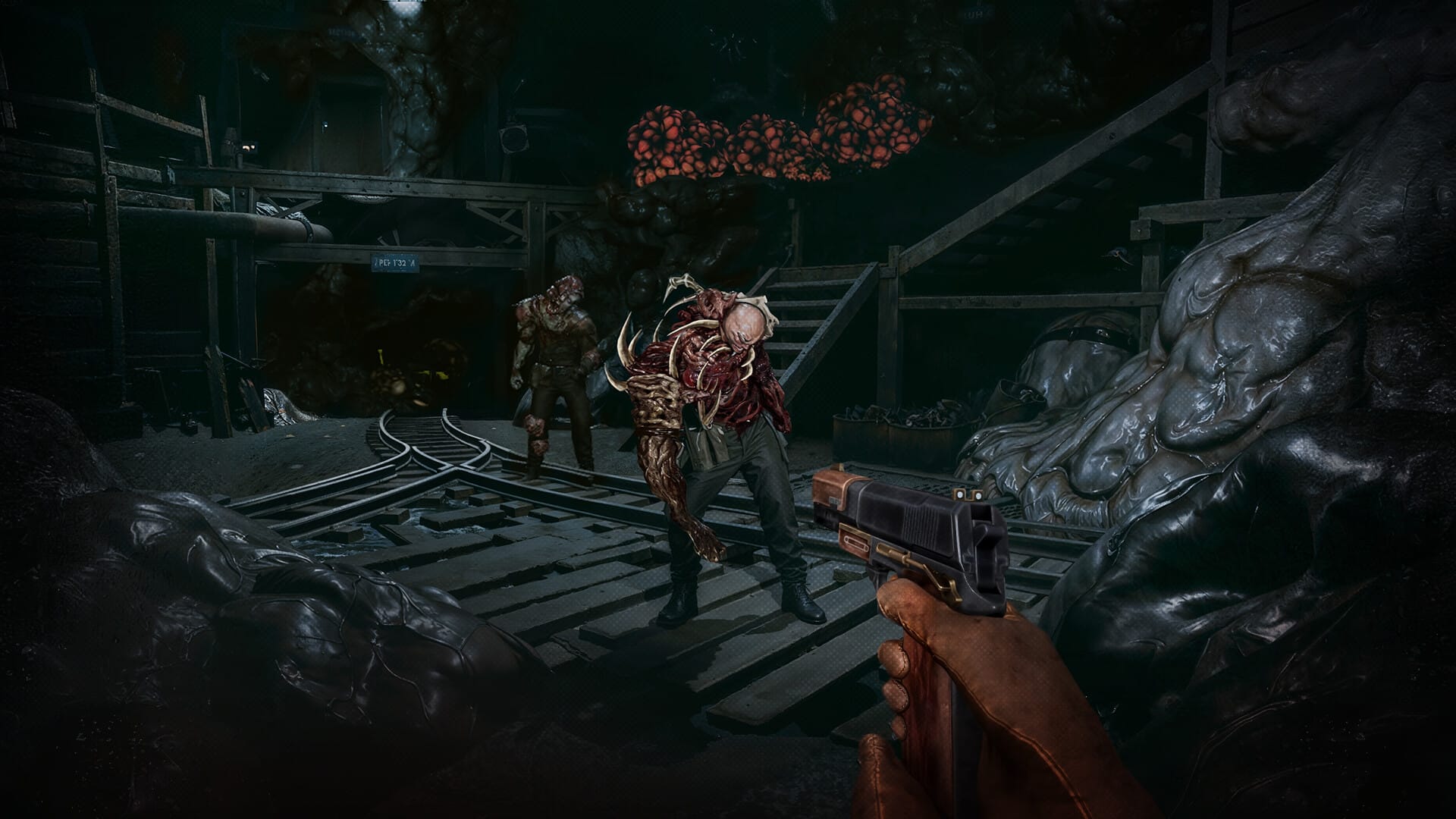
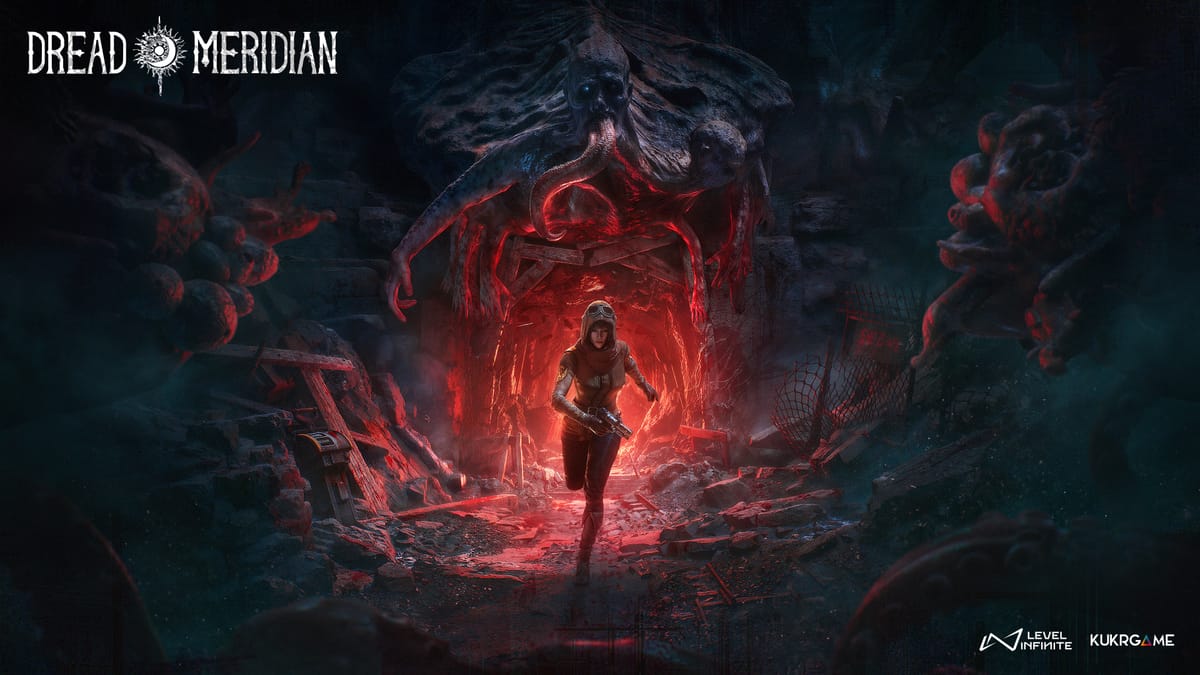
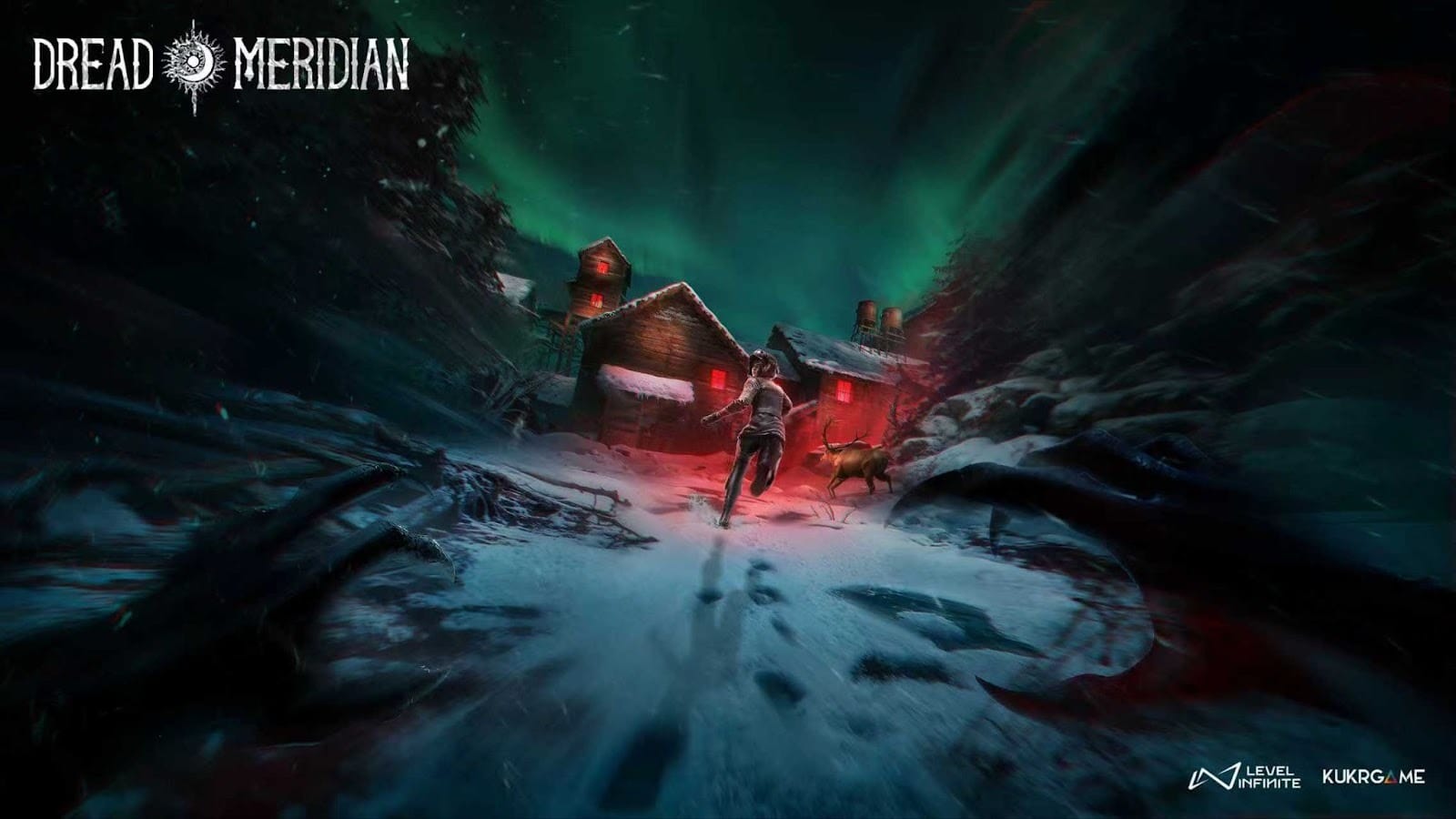
Upcoming VR horror game Dread Meridian is getting a multiplayer mode alongside its solo campaign with next month's launch.
Developed by KUKRGAME, Dread Meridian is an atmospheric VR survival horror game set across the island of Oglanbyen. Focused on a researcher called Daniella, we arrive at this remote arctic island searching for her lost twin sister, Isabella, solving puzzles and fending off strange creatures. As seen in today's UploadVR Winter Showcase, it's now confirmed multiplayer support, with a playtest coming before the end of the year.
While today's trailer didn't reveal much else about the upcoming multiplayer mode, the Dread Meridian development team revealed more to UploadVR in a written Q&A. The studio tells me it's considered multiplayer since the beginning, though focusing on Daniella's story was the priority before exploring how multiplayer could work across Oglanbyen.
“We wanted to make sure that we brought something new to the table with the elements that made Dread Meridian unique. Once we knew we were on the right path with our single player, then we started to experiment with how we could bring the exciting features of the world, the setting and especially the creepier elements to multiplayer.”
Dread Meridian has one multiplayer gameplay mode that supports four players per match, splitting your group into two teams. Cross-platform multiplayer support isn't available at launch, “but it's an important feature we plan to add in the future.”
You play as either the human survivors trying to escape Oglanbyen, or the monsters looking to hunt them down using special abilities. The developers confirmed that a full match takes place over multiple rounds, and you take turns playing between the humans and monsters.
“When playing as the humans, your goal is to destroy the monster's nests and escape through the extraction point. You must search for ammo and resources in order to survive the constant threat of the monster team. As a monster, you play as one of the unique twisted creatures with their own special abilities that are used to hunt, trap and defeat the human team.”
Asked about its long-term plans for supporting multiplayer, the studio states that it first plans to gauge the community's reaction and develop this mode further based on feedback. Calling this “such a different type of game mode from what's commonly seen in VR,” the studio says this means there aren't any best practices in place right now.
“We want our game to stand out, and not just build towards what is popular right now.”
Finally, I queried how the team plans to address feedback following mixed reception to Dread Meridian's previous playtests. Our own PC VR demo impressions praised the Lovecraftian adventure's body horror and unsettling mood, though we encountered numerous glitches that hampered our experience.
The developers highlighted positive responses to the game's immersion, art, and environments. However, they conceded that “we had several bugs that we had overlooked that caused negative experiences for our playtesters,” sometimes causing crashes. The studio advised it's since identified and resolved key issues behind these problems, stating it's now “dramatically improved” overall stability.
Dread Meridian will launch this January on PC VR and Quest, with pre-order skins available as a bonus.
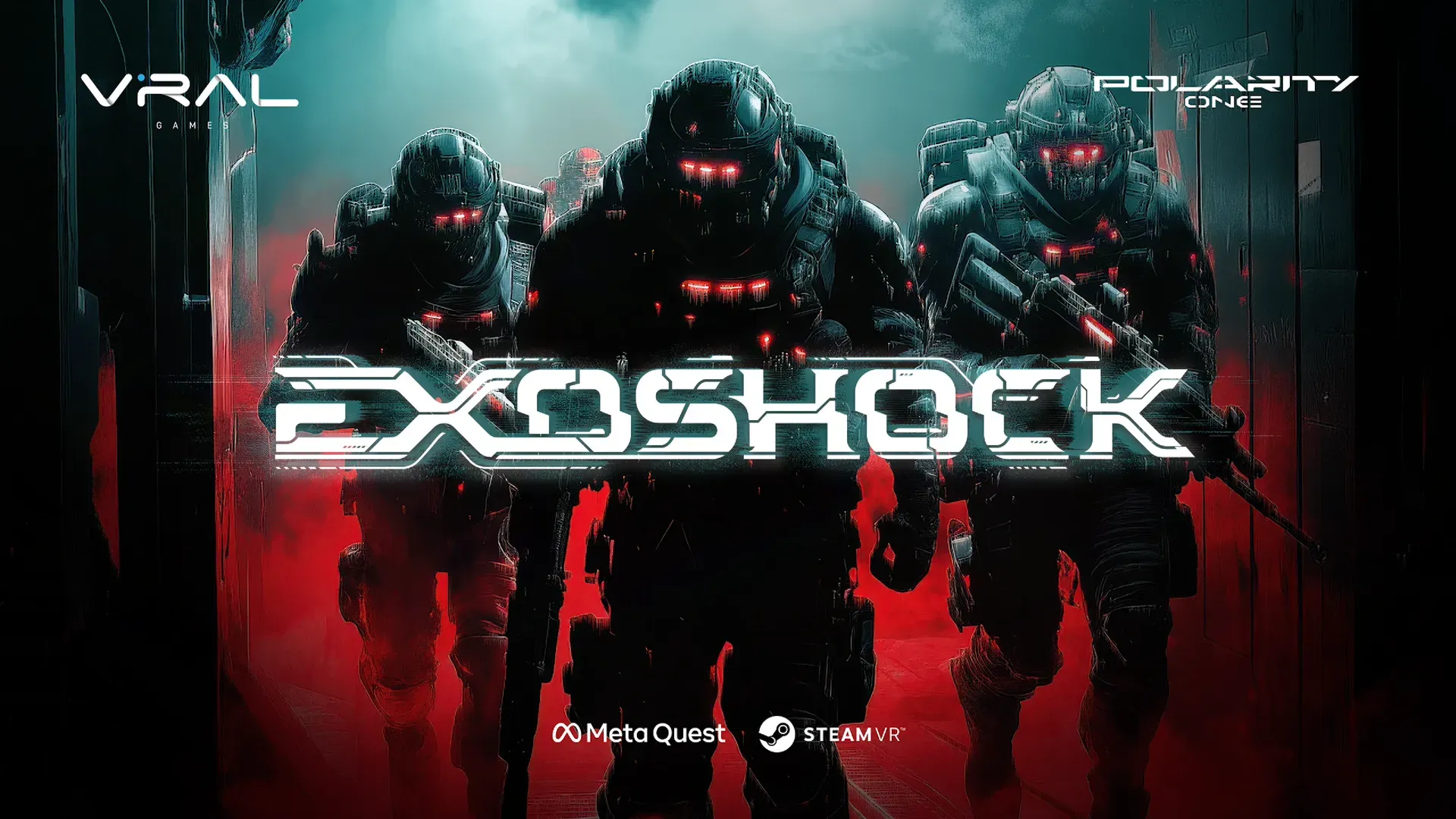
Exoshock released a new gameplay trailer, confirming the VR co-op shooter will get an optional flatscreen mode.
Developed by POLARITYONE, Exoshock is a cooperative sci-fi PvE shooter with a gritty dystopian setting that's inspired by Warhammer 40k. This upcoming FPS promises intense firefights as you enter active war zones, prioritizing squad tactics for up to four players as you adapt using customizable loadouts. As seen in today's UploadVR Winter Showcase, that's received a new gameplay trailer.
0:00
/1:07
Notably, today's trailer also confirmed that Exoshock will receive an optional flatscreen mode on Steam, stating the game is “VR first with flat support.” It's unclear if this mode will be available straight away when the game launches, and we'll update this article if we learn more.
Though the full game isn't scheduled to launch until next year, Exoshock has recently been hosting alpha playtests through a free, limited-time Playtest App. The app provides immediate access to the Exoshock Staging Area, which allows you to try out every weapon straight away. Access can be requested through Steam, or the official Discord server for Quest.
Exoshock is heading to PC VR and Quest in Q1 2026.
Meta has officially confirmed "shifting some of our investment from Metaverse toward AI glasses and Wearables", following reports of an up to 30% budget cut for Reality Labs.
Reality Labs, if you're unaware, is the division of Meta behind its Quest headsets, Horizon software, smart glasses, and sEMG wristband, as well as researching future technologies such as Codec Avatars and true AR glasses.
Yesterday, Bloomberg first reported that the division is facing up to 30% budget cuts that would primarily target VR and Horizon Worlds.
Following Bloomberg's report, other mainstream news outlets including The New York Times, The Wall Street Journal, and Business Insider have published their own reports corroborating the general claim, with slightly differing details, and the NYT and BI even received an official prepared statement from Meta, which the company confirmed to UploadVR.
"Within our overall Reality Labs portfolio we are shifting some of our investment from Metaverse toward AI glasses and Wearables given the momentum there," the statement reads. "We aren't planning any broader changes than that."
Business Insider's report suggests that the cuts will primarily hit Horizon Worlds, and that employees are facing "uncertainty" about whether this will involve layoffs. One likely cut BI's report mentions is the funding for third-party studios to build Horizon Worlds content.
The New York Times report, on the other hand, seems more definitive in stating that these cuts will come via layoffs.
Meta's funding shift from Horizon Worlds and VR to smart glasses comes just over a year after a leaked memo from Meta CTO Andrew Bosworth told Reality Labs staff that 2025 will determine whether their projects are "the work of visionaries or a legendary misadventure".
In the memo, Bosworth described 2025 as "the most critical year in my 8 years at Reality Labs", and told staff they "need to drive sales, retention, and engagement across the board but especially in MR". Note that at the time, Meta was using MR to refer to VR too, a nomenclature that it ended earlier this year.
"And Horizon Worlds on mobile absolutely has to break out for our long term plans to have a chance", Bosworth followed that sentence with.
Since then, Reality Labs saw its highest-ever quarterly revenue in Q4 2024 with the launch of Quest 3S, which was the top-selling console on Amazon US for Christmas. But this momentum did not carry through into 2025 at all.
The first two quarters of 2025 saw Quest sales decline year-over-year, revealing that while Quest 3S was a popular stocking stuffer, it simply is not a successful year-round product. While Q3 saw a rebound, Meta explained that this was due to retailers stocking up on Quest 3S for this year's holiday season.
Next year, our sources suggest that Meta has prioritized shipping an ultralight Horizon OS headset with a tethered compute puck instead of a traditional form factor Quest 4, and the company will be closely tracking how it performs in comparison to Quest 3 and Quest 3S through 2027.
Meanwhile, Meta has continued to push its Horizon Worlds "metaverse" platform with multi-million-dollar creator competitions, especially focused on smartphone-only worlds, as the company hopes to scale the platform from a social VR space to a cross-platform Roblox and Fortnite competitor. But this doesn't seem to have gained much traction.
Meta is set to roll out its Horizon Studio world creation toolset, powered by the Horizon Engine it built to replace Unity in Horizon Worlds, and the company will be closely tracking whether this meaningfully improves engagement.
This relative stagnation in its Quest and Horizon Worlds efforts comes as the company is seeing skyrocketing sales and significant public and investor interest in its smart glasses.
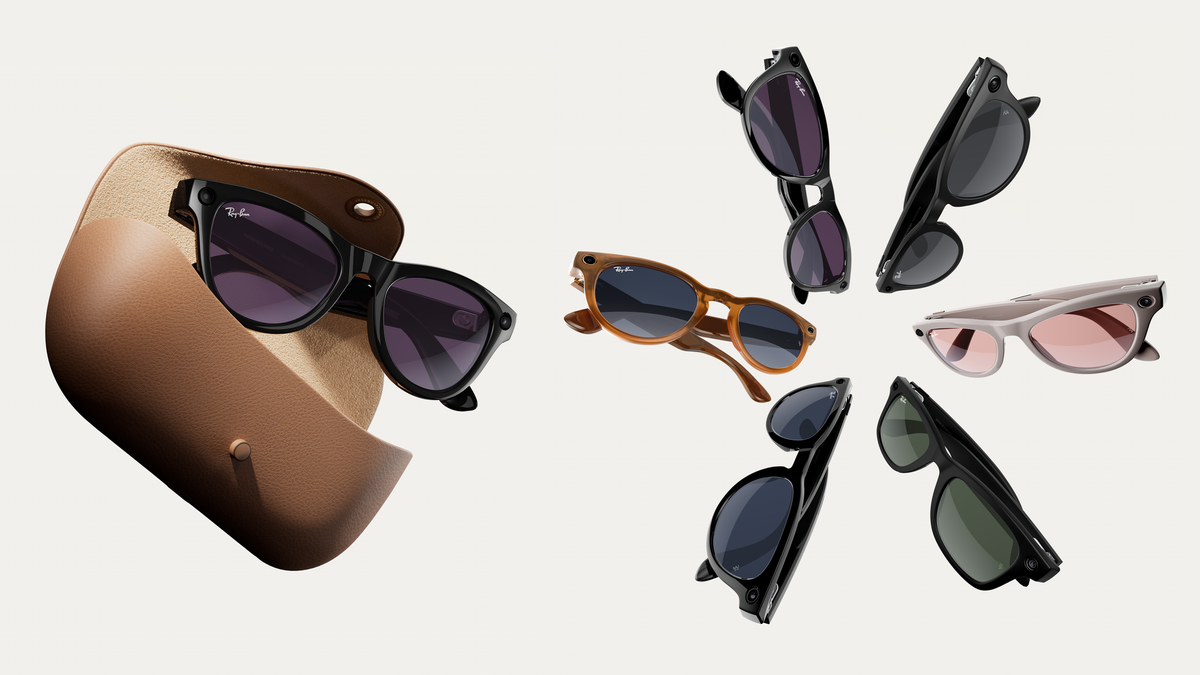
Back in February, in its Q4 2024 earnings call, Meta's partner EssilorLuxottica said that the Ray-Ban Meta glasses had sold 2 million units, and in its Q2 2025 call in July said that sales had more than tripled since last year, performing "exceptionally well".
In its Q2 2025 call in July, the company said that the glasses were performing "exceptionally well" in the market, with sales having more than tripled compared to 2024.
During the February call, the company also announced that its annual production capacity for smart glasses would be increased to 10 million by the end of 2026. And in its Q3 2025 sales call in October, it said that it was accelerating this target to reach the 10 million annual production rate sooner, as smart glasses drove more than a third of its quarterly growth.
This combination of significant success in the smart glasses space and relative failure in growing its VR headset and metaverse platform business is likely the driver of the company's decision to shift some funding to the former, hoping to further establish itself as the leader in the space before rival products from Apple and Google arrive.
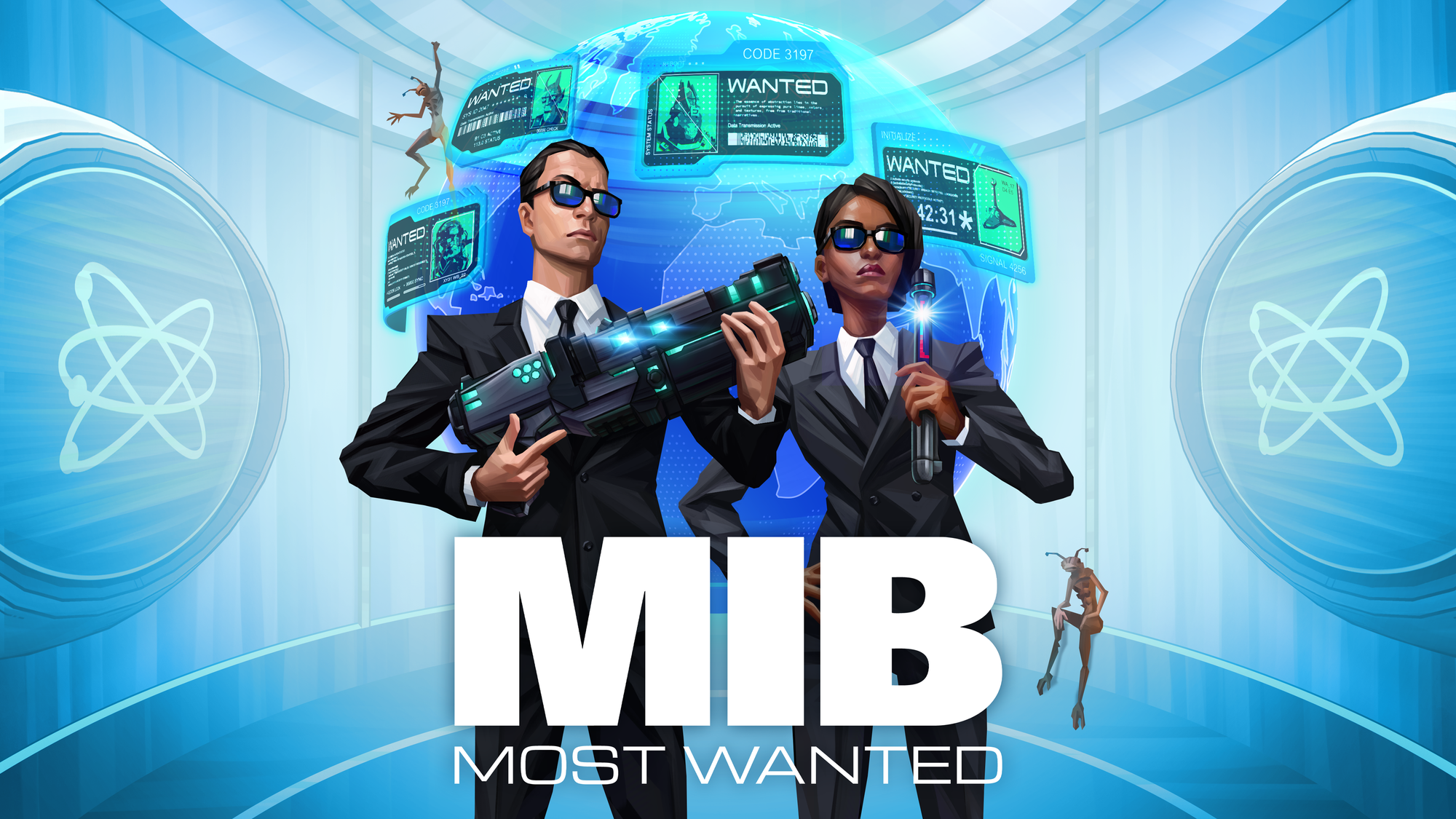
Men In Black: Most Wanted, the latest pop culture IP to make its way to VR, mostly succeeds by remembering that a recognizable franchise means nothing without good gameplay to back it up. Read on for our full review.
In mid-November, Coatsink, best known for stealth thriller Jurassic World Aftermath, surprised VR players with the reveal of Men In Black: Most Wanted, a new title coming exclusively to Meta Quest today. This 1990s-based action-shooter has players donning the franchise's famous suit and sunglasses for a mission-based campaign set in the titular world of extraterrestrial law enforcement. One could be forgiven for approaching this title with trepidation, given the short time between announcement and release, coupled with previous entries like Stranger Things and Attack on Titan being divisive at best.
The Facts
What is it?: A story-based shooter based on the Men In Black comic and film series. Platforms: Quest (reviewed on Quest 3) Release Date: Out Now Developer: Coatsink Publisher: Sony Pictures Virtual Reality Price: $24.99
You play as Agent I, who has been part of the organization for some time when the game begins. A brief VR tutorial teaches you how to walk, turn, run, and climb using your controllers. You also learn how to use telekinetic grab using your magnet gloves. After this, it's right into the fire (literally) with a brief tutorial mission. Here, you wake up with no recollection of who you are and your partner, Agent L, quickly informs you that you have been neuralyzed, a franchise term for having your memories erased with a tool called a neuralyzer, and you're under attack from aliens.
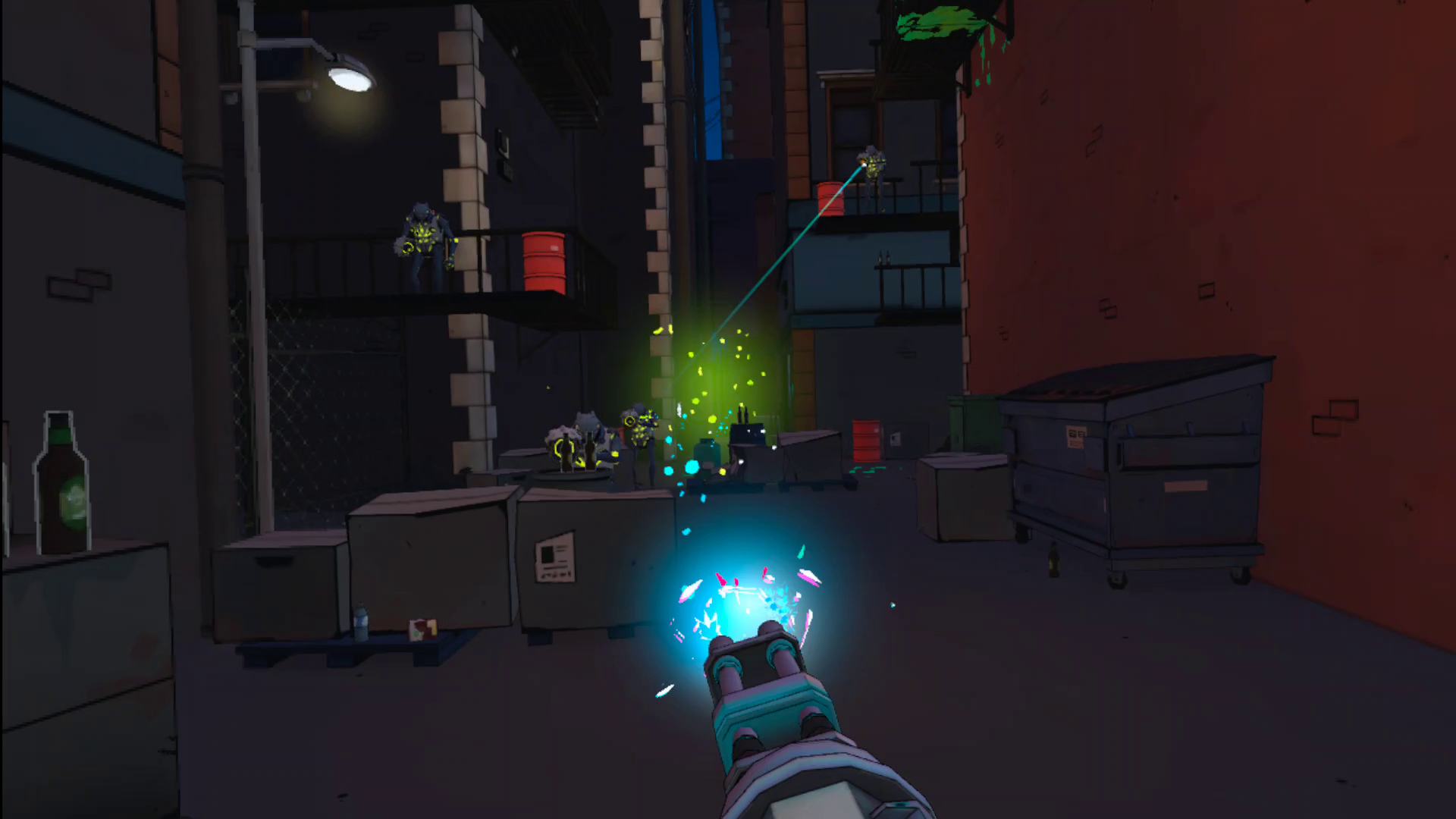
What follows is an exhilarating, albeit brief, chase sequence through back alleys that reinforces the artificial stick-based movement and culminates with a Gatling gun shootout against a wave of aliens. This whole sequence lasts just a couple of minutes and effectively sets the tone of the rest of the game.
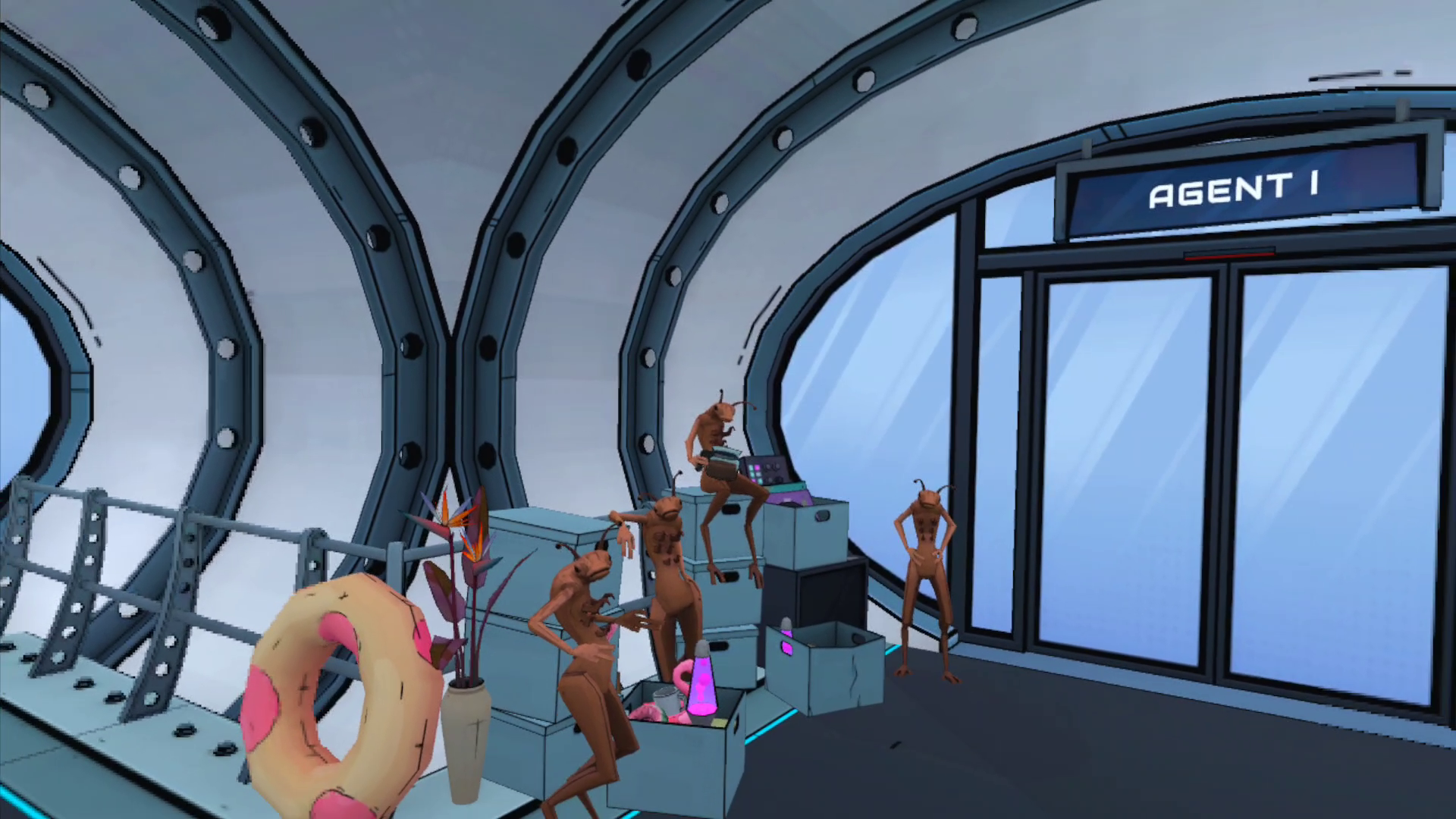
From here, the game settles into a familiar loop of briefing, mission, debrief, and repeat. Between each mission, you spend time at the MiB headquarters, interacting with transient aliens and fellow agents. Players familiar with the franchise will find several hallmarks here, most notably the infamous worms hanging out in the kitchen and the armory. Your supervisor is Agent O, transplanted from the 2019 film, Men In Black: International. You'll wield several items from the films as well. For anyone who is a fan of the franchise, the wish fulfillment factor is high, other than driving the car. You can also change the appearance and voice of your character via a terminal in your office.
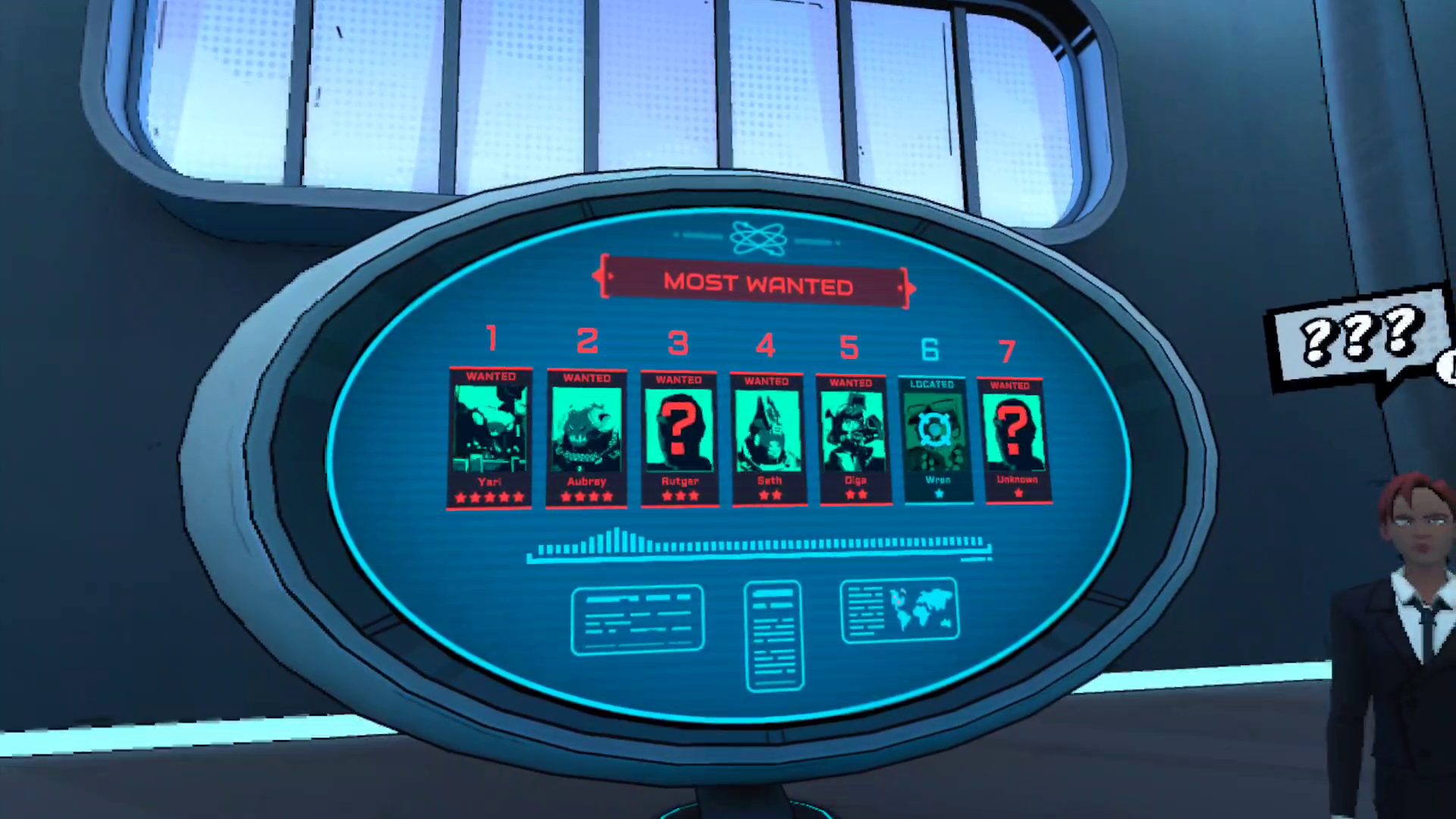
Men In Black: Most Wanted screenshots captured by UploadVR on Meta Quest 3
Your partner, Agent L, has an injured shoulder and hangs back in the car, communicating with you via radio. Your loss of memory at the start of the game works as a serviceable B plot, while also allowing the character to unravel the game's mysteries alongside the player. I found myself longing for a way to replay conversations. It's quite easy to get distracted in early parts of missions when you're trying to find your way and there is no option to revisit prior conversations to see what you overlooked. I found myself reloading my save a few times because I forgot what my partner told me I needed to do next, and the single-line objective that is always accessible does not paint a clear enough picture.
The 'Most Wanted' moniker in the game title refers to the murderer's row of aliens each mission tasks you with tracking down. Several missions also end with a boss fight with the aforementioned Most Wanted, most of which require more than just a "shoot until they go down" tactic. This world isn't just chock-full of aliens looking to kill you though. The game is based out of New York and hosts a colorful assortment of characters, human and alien, to interact with. The story itself is rather perfunctory and it's really the voice performances, particularly all of the aliens, that keep the entertainment up when you're not in shootouts. It's not groundbreaking by any stretch, but the campaign stays entertaining throughout its six to eight hour runtime.
0:00
/0:30
Fighting the evil Cylathians in Men In Black: Most Wanted. Captured by UploadVR on Quest 3
Several missions have you infiltrating various locations, talking to and sneaking around NPCs to gain access to hidden areas. If you are somewhere you should not be, a 'trespassing' warning flashes. Being caught doesn't result in a game over and reset, though. Instead, you're either attacked by aliens or you have to neuralyze the innocent humans that spotted you. Occasionally, you have to 'interrogate' an alien to get the information you need, which involves either destroying some of their possessions or slapping them around.
Once you make it past the opening location, stealth and investigation immediately give way to action, with shootouts against numerous aliens, most prominently a race called the Cylathians. There are about a half dozen different versions of these foes, all with different weapons and some requiring a specific takedown method. These aren't your only enemies, but they comprise the bulk of your opposition.
Each mission also has a slew of hidden collectibles, including artifacts and comic books to display in your office, aliens disguised as coffee mugs that bolt if you come up on them too quickly, and discs that can be used to upgrade your weapons. After finishing a mission (and getting a rating), it becomes immediately replayable from the assignment screen, so completionists will be inclined to dive back in to get top marks and find all of the hidden goodies.
You start with a basic set of tools, a pistol with infinite ammo, a radar for scanning alien remnants, a healing spray, and the neuralyzer. As the game progresses, you're summoned to the Armory between missions to acquire and learn to use new tools and weapons. As you acquire new tools, subsequent missions present obstacles and relatively mild puzzles those tools are required to solve.
0:00
/0:33
Using the Neuralyzer in Men In Black: Most Wanted - Captured by UploadVR on Quest 3
Comfort
Men In Black: Most Wanted is not recommended for new VR users as it primarily utilizes artificial stick based movement with no exclusive teleport option.
The settings menu offers a host of comfort choices to alleviate potential motion sickness. Players can choose between snap or smooth turning, with multiple range/speed settings for each.
A vignette is available with slider bars for various positions (crouching, walking, running, turning, etc.). For those sensitive to eye strain from brightness, there are also brightness and contrast sliders to adjust each scene in the game to the player's preference.
There is some VR jank, particularly with opening and closing doors, and occasionally I would get stuck on an object and have to physically step aside to 'free' myself, but the overall experience is refreshingly bug free.
Visually, the game has the same cel-shaded art style as Jurassic World Aftermath. Aesthetically, it feels like being in a comic book which, given the original source material, is fitting. Anyone seeking a more realistic looking game is likely to be disappointed here. I should also point out that the settings offer sliders to change the brightness and contrast levels of the visuals. You will want to do this as missions alternate between night and day. There were points where I turned the brightness and contrast up during a nighttime mission, only to turn it back down when I got back to the notably bright MiB HQ. It's a very welcome comfort setting, particularly on the Quest, which can sometimes struggle with darker scenes. It would be great to see more games offer such settings.
Finally, there's the single and multiplayer Invasion mode that is essentially a wave based horde mode. I did not get a chance to try the Invasion mode with other players for purposes of this review while playing prior to release. You eliminate enemies in waves and earn points for each kill that can be cashed in during the 90-second break between waves for upgrades, perks, and heals. Occasionally, you have to stand within a specific zone to charge a device to clear a level. This is nothing revolutionary, but like the collectibles in the campaign, it gives anyone who enjoys the game a reason to keep firing it up.
Men In Black: Most Wanted Review - Final Verdict
Overall, Men In Black: Most Wanted is an enjoyable, if somewhat lightweight, action game. Nothing in this game reinvents the wheel, but it's all executed very well, with smooth performance throughout and responsive controls. That's enough for me to easily recommend it for fans of the MiB franchise and anyone looking for a solid action game to hop into.
UploadVR uses a 5-Star rating system for our game reviews – you can read a breakdown of each star rating in our review guidelines.
Deadly Delivery is great fun experienced with friends or online with others. Frantic, darkly funny, and bursting with exquisitely timed scares, it has many of the best elements that make VR so compelling.
You are a lowly goblin. But don’t worry. As the game’s eponymous Deadly Delivery Corp office morale poster loudly proclaims from its place on the wall of the virtual breakroom/multiplayer lobby, you can still be useful!
In your new role as “Delivery Goblin” you’ll spend your life (and many, many deaths) delivering parcels to ominous doorsteps buried in labyrinthine caves and dungeons. In return, you’ll earn gold for the company, fill your three-day quota, and survive to deliver again. It’s a dirty job, but you know the rest.
The Facts
What is it?: An online co-op comedy horror game about delivering parcels into haunted mines. Platforms: Meta Quest, Steam (reviewed on Quest 3S) Release Date: Out now Developer: Flat Head Studio Publisher: Flat Head Studio, Creature Label Price: $9.99
Gameplay Loop and Mechanics
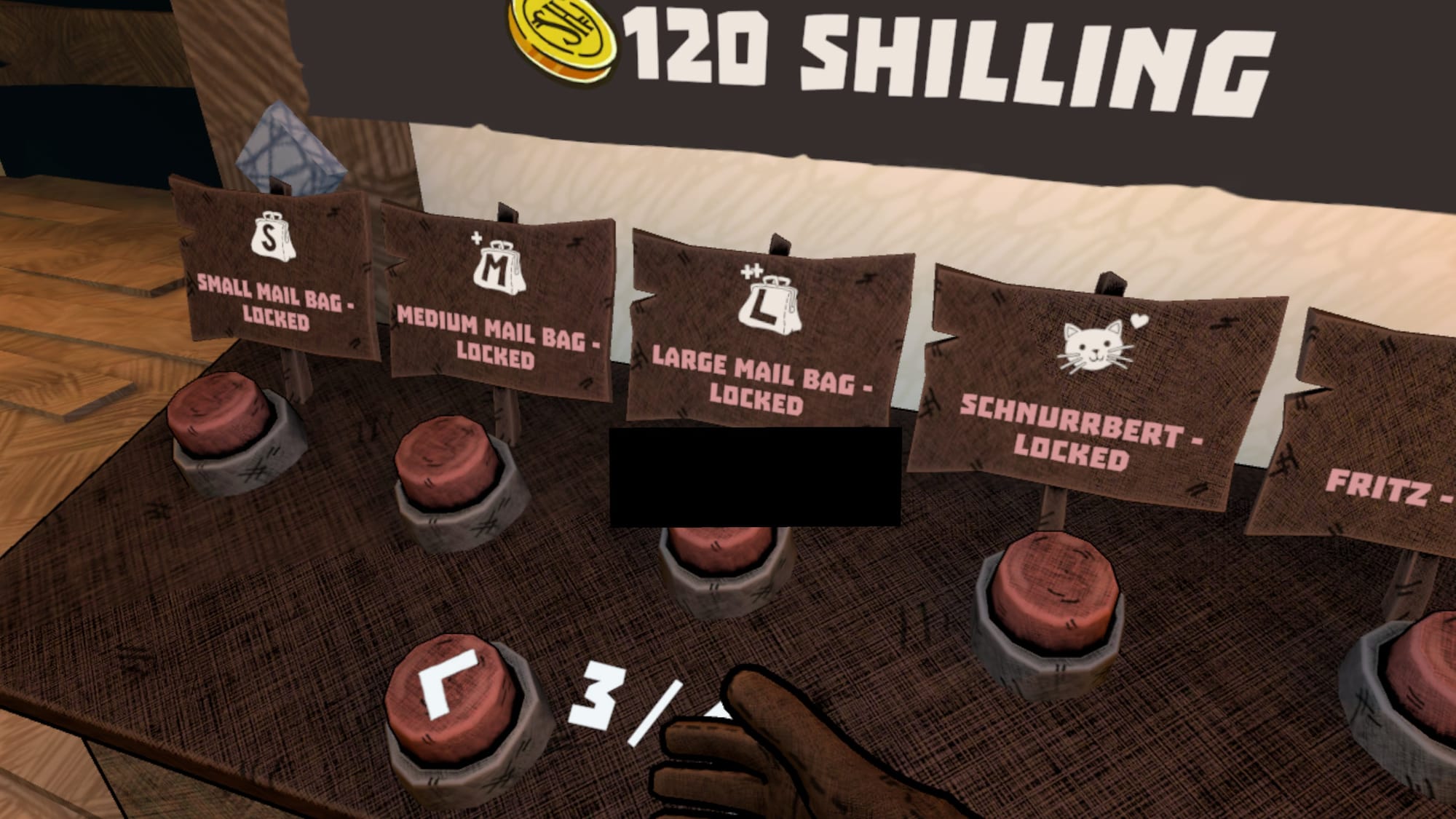
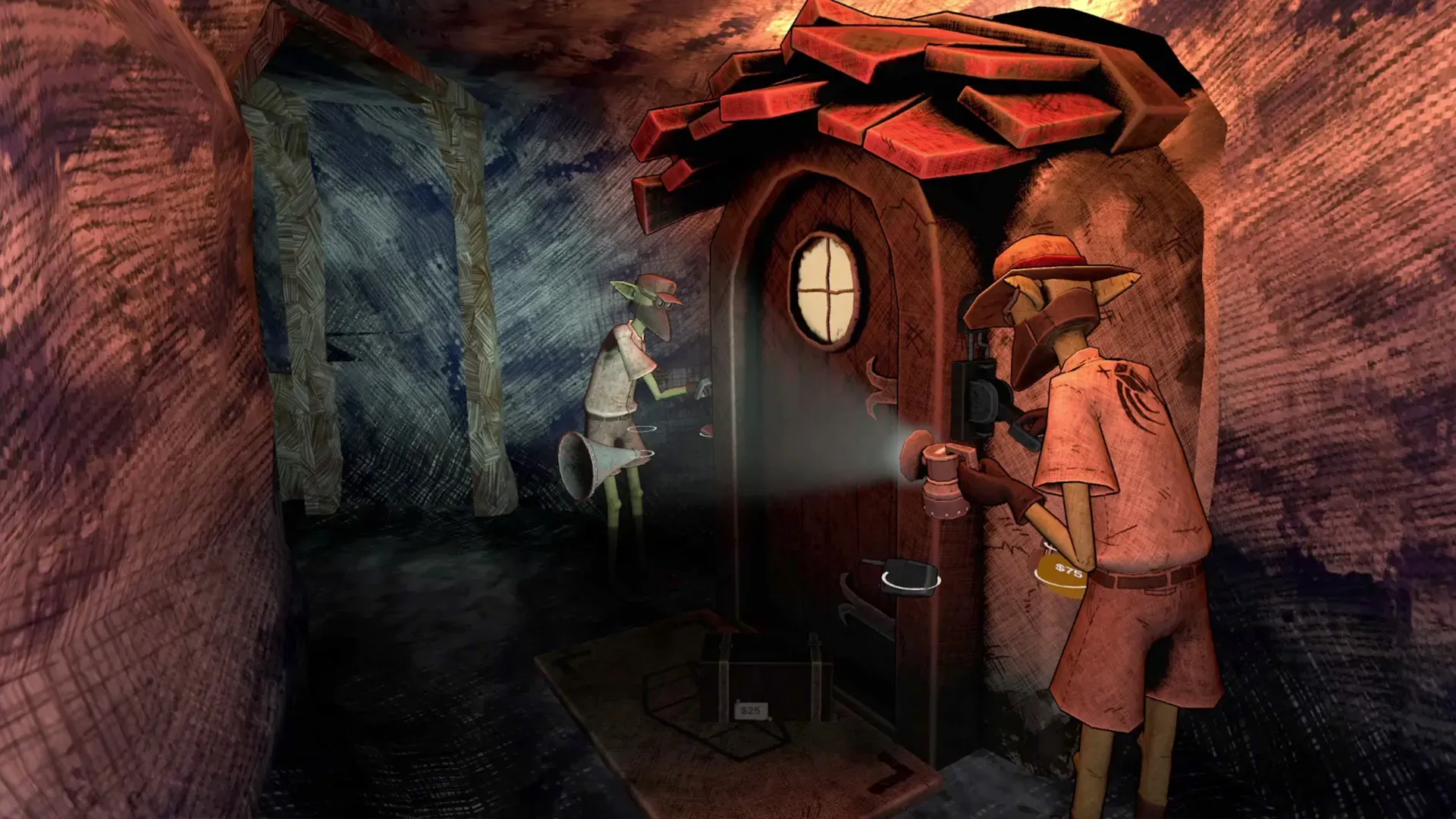
We begin each session of Deadly Delivery in a sort of prep area where we can hang with our teammates, change outfits, gamble with the team’s communal pool of cash, buy items and cosmetics and tools, and choose a biome/dungeon to explore. From here we grab packages of various shapes, sizes and weights, and head out to make our deliveries.
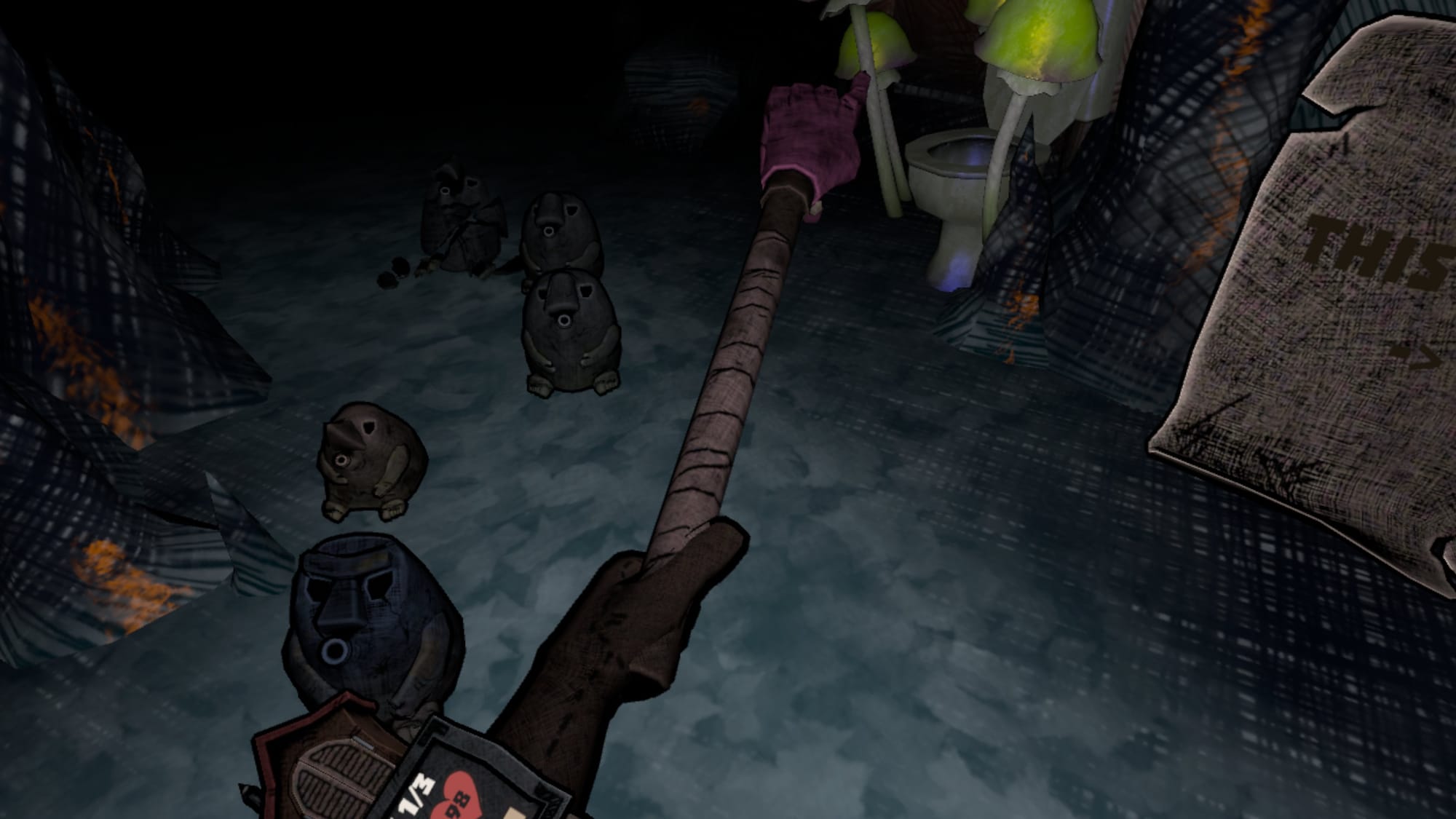
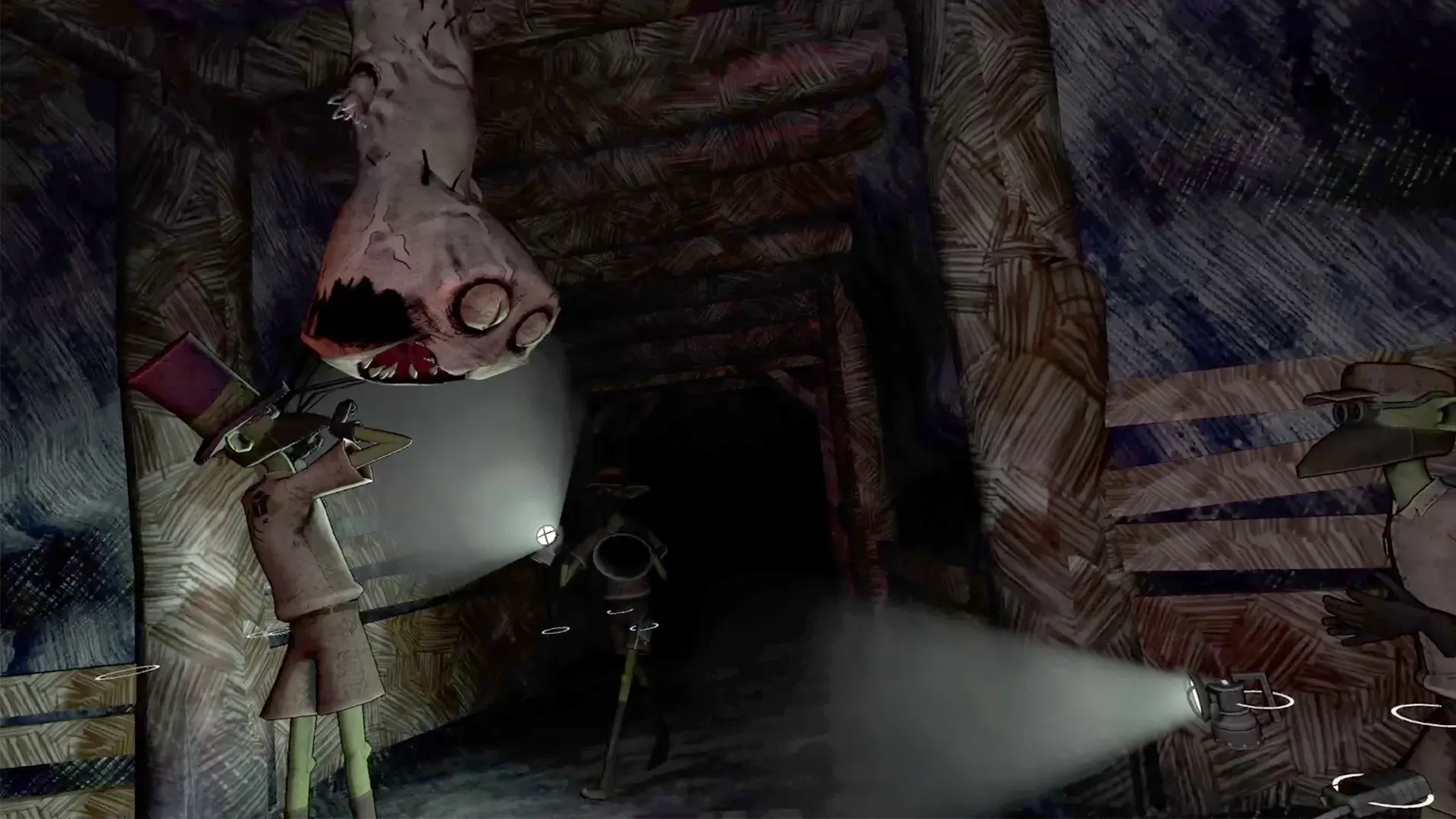
The challenges and laughs come from the silly tools, physics-based mechanics, and absolute horrors that dwell in the dungeons. These range from environmental obstacles, perils, and traps, to the bloodthirsty living terrors that patrol the maze-like corridors. There are monstrous worms, haunted totems, spike pits, exploding skulls, a terrifying Krampus… It’s all quite scary, but retains a special comic softness that horror games are often lacking.
You'll carry your chosen parcel to a doorstep, drop it on the mat, and ring the doorbell to complete the delivery. Sometimes this goes smoothly, and sometimes it doesn't, but each successful delivery awards gold. Earn enough gold to fill the quota within three days, and you'll proceed to the next biome/dungeon. But fail, and the corporation has no use for you. You know what that means.
0:00
/1:44
It’s a brilliant premise that will feel familiar to those who have played games like Lethal Company, and like that silly/scary game, Deadly Delivery delivers both constant tension and foolish slapstick.
Controls and Polish
Deadly Delivery is a mechanically solid game. Grabbing, throwing, and manipulating objects feels direct and precise, and everything in-game is weighted and balanced with a logical physics engine. The tactility of toggling a flashlight or walkie-talkie, or fending off a monster, or climbing hand over hand up the rungs of a ladder, all feels great. Movement is tight and responsive, walk/run speeds are well-modulated, and plenty of options exist for comfort, view, and control.
The gameplay loop feels balanced and intelligently implemented. The learning curve is gradual and progression feels linear. All told, it’s a thoughtfully designed game.
Style and Atmosphere
Deadly Delivery’s visuals are similarly polished. The cel-shaded, comic-book graphics give the fantasy world a cartoony yet rich personality. Environments, characters, and objects look great at any distance, but up close they really shine with delightful detail.
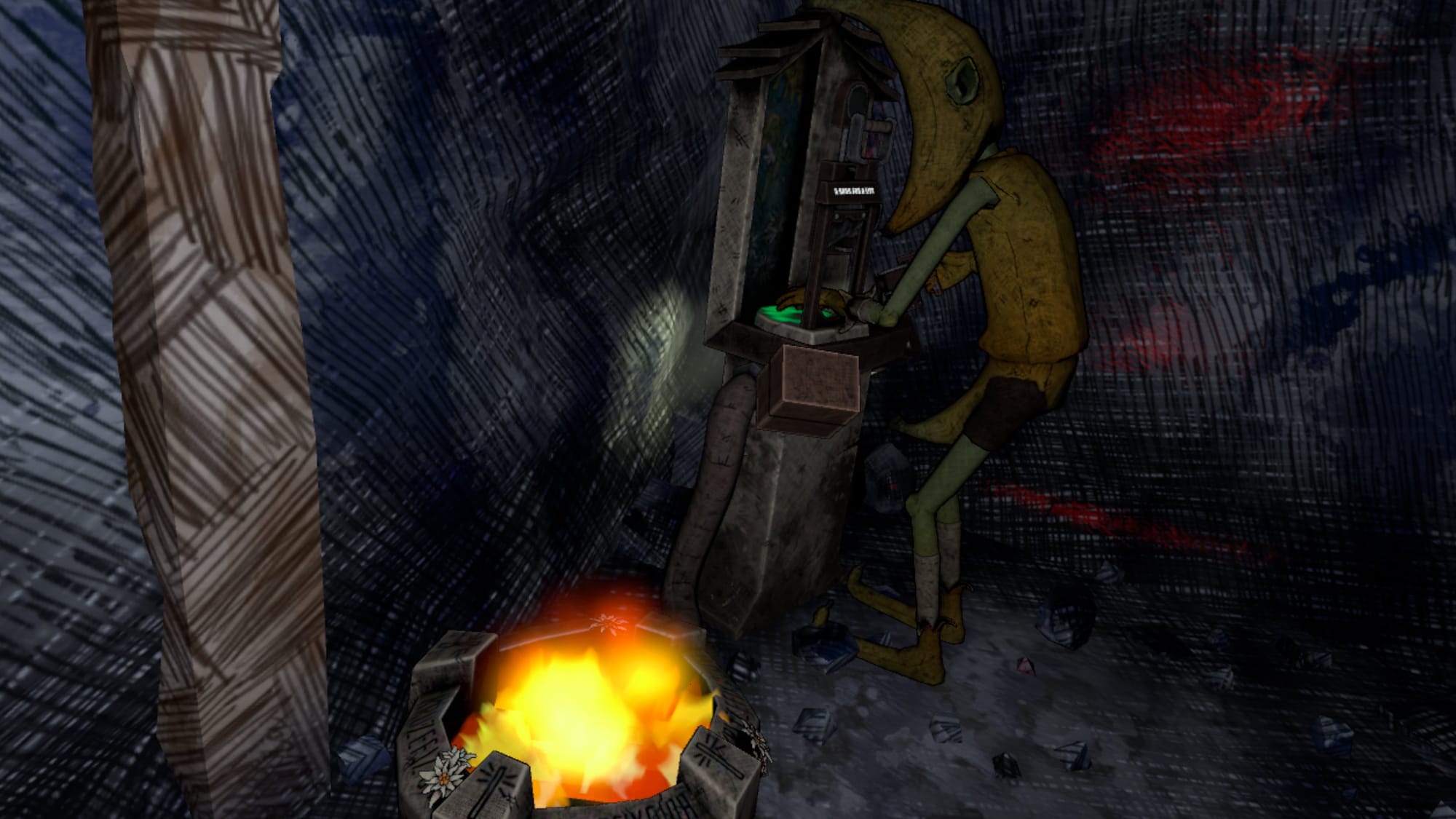
Our home base and the biomes’ dungeons are all lovingly crafted. While the pre-game meeting rooms feel warm and safe, with comically sarcastic corporate messaging plastered on every wall, the dungeons and caves feel claustrophobic and frightful by contrast. Visibility in these spaces is limited, unless we’re carrying a flashlight or huddled by a fire, which helps to ground us in the experience and hone our attention. This makes the waiting terrors even more startling.
But you won't need to have your cardiologist on standby. The game is certainly scary and startling, as mentioned, but we need to remember context. This isn't a horror game in the hardcore sense. Its main objective is to make you laugh while you scream, and players expecting the blood-chilling experience of something like Resident Evil or The Exorcist may come away disappointed.
0:00
/0:58
Comfort
Deadly Delivery features plenty of comfort customization including:
Smooth turning and snap turning options with adjustable turn speed and vignetting, plus a sitting and standing option with adjustable height offset.
Social Dynamics
Deadly Delivery is absolutely best as a co-op experience, which is both a blessing and a curse. For those gamers with a solid roster of friends able and willing to plumb the mines, nothing but joy awaits. For those who find it tough to get friends together for a round of VR, and who may not want to join strangers in a public lobby (a viable option here), Deadly Delivery will be dead on arrival.
For those with a squad on call, however, we're more golden than the game's Fortnite-riffing unlockable banana suit. Teamwork makes the dream work, and Deadly Delivery does a fabulous job encouraging multiplayer antics. Anyone can do anything anytime, which is funny and chaotic, but there's also enough intelligent design here to ensure that strategy actually matters. The most successful teams will work together to bring the most useful tools, carry the most expensive packages, and deliver the goods in the safest way. There’s light combat, and teams who fight together will do better, too.
If the game has a problem, it’s that the single-player experience is never going to be as fun as multiplayer. If you don’t have friends who play the game and you’re averse to gaming with strangers, Deadly Delivery will lose a lot of its charm.
0:00
/0:31
Deadly Delivery - Final Verdict
Deadly Delivery is a clever, effective, and genuinely funny VR co-op that nails the feel of physical play in a spooky, comic world. Its controls and polish make the mechanical side of things feel just right, while its blend of fearful atmosphere and inherent silliness leads to sessions equally packed with legitimate screams and belly laughs.
Deadly Delivery is not designed for solo sessions played alone, and those looking for a pure horror experience may be let down by the game's silliness. But for co-op gamers and those who enjoy their jump-scares served with a side of slapstick, Deadly Delivery delivers.
UploadVR uses a 5-Star rating system for our game reviews – you can read a breakdown of each star rating in our review guidelines.
Meta is rolling out the ability to link your account to Discord to share what Quest app or Horizon World you're currently in.
At Connect 2025, Meta announced that Discord was coming to Quest in 2026, including the ability to share your status to show friends what you're playing.
The Discord app for Quest is still set for 2026, so isn't here yet. But what is now "rolling out", seemingly ahead of schedule, is the status sharing feature.
You can set it up on the web in the App Connections section of the Meta Accounts Center on the web, or in the mobile app at Accounts Center --> Your information and permissions --> App connections.
If you don't see Discord listed yet, it means it hasn't rolled out to your account yet, so you need to check again at a later date.
Meta says that the rollout is "gradual" in case there are any issues or bugs.
Note that for the app or world you're in to show up you'll need to have your Horizon Active Status set to Online or Joinable, and you can thus hide your current activity by switching to Offline.
Tracked: Shoot to Survive now lets you continue exploring after completing the story.
Following last month's release on Quest 3 and 3S, Incuvo has continued patching its latest survival adventure Tracked: Shoot to Survive. The first patch introduced visual upgrades, bug fixes and a new sleeping feature, and its second post-launch update, Patch 1.2.0, is now live. This lets you continue playing and exploring after rolling credits, spawning you back at your father's cabin.
Patch 1.2.0 for TRACKED is live! 🔥 Continue exploring after the story, never lose key items again, enjoy better nights, smoother crafting, a sharper knife… and tons of fixes across the whole game!
Other changes largely focus on UX improvements and further bug fixes, such as changes to prevent you from losing critical narrative items. Knife damage has been buffed, new markers on the Fast Travel boards show currently active quest locations, missing sound effects have been fixed, and autosaves “should no longer occur at inopportune moments.” You can read the full patch notes here.
It's welcome news for Incuvo's latest VR game, as we came away with mixed impressions during our 3/5-star review. While we believe Tracked: Shoot to Survive offers an engaging survival adventure and praised its VR-focused crafting mechanics, we criticized its launch build for issues with its presentation, enemy AI, and performance.
Tracked: Shoot to Survive is available on Quest 3 and 3S.
Legendary Tales gets its first DLC with 'Dawn of History' next year on PC VR and PlayStation VR2.
Developed by Urban Wolf Games, Legendary Tales is a dark fantasy RPG that received its full release in February 2024. Featuring physics-based combat with a quest-driven storyline, this comes with skill trees, explorable dungeons, crafting and more. Now, nearly two years after its full launch, it's lifted the curtain on its first DLC expansion.
Detailing the news on Steam, Urban Wolf Games states the DLC's name signifies a new beginning and marks “a new chapter” for Legendary Tales, also offering a nod to the game's ending song. Its content preview offered a look at three currently unnamed maps and three additional enemies: Fallen Warrior, Nangdo, and Succubus.
New item categories were also highlighted, with rings and two new types of weapons: Book and Staff. This upcoming DLC will also introduce five new legendary weapons, new 'Seal' features, and a quick slot for potions. Additional passive skills will be added, like the ability to reduce your casting time when using a different spell to the previous one.
To coincide with this announcement, Urban Wolf Games also announced that Legendary Tales has received a price reduction on both PlayStation VR2 and Steam. While it was previously available for $54.99, that's now been permanently reduced to $39.99.
Legendary Tales is out now on PS VR2 and Steam, and Dawn of History reaches both platforms in Q1 2026.
Meta Reality Labs is facing up to 30% budget cuts, Bloomberg reports, higher than the 10% Mark Zuckerberg normally asks for during budget cycles.
Reality Labs, if you're unaware, is the division of Meta behind its Quest headsets, Horizon software, smart glasses, and sEMG wristband, as well as researching future technologies such as Codec Avatars and true AR glasses.
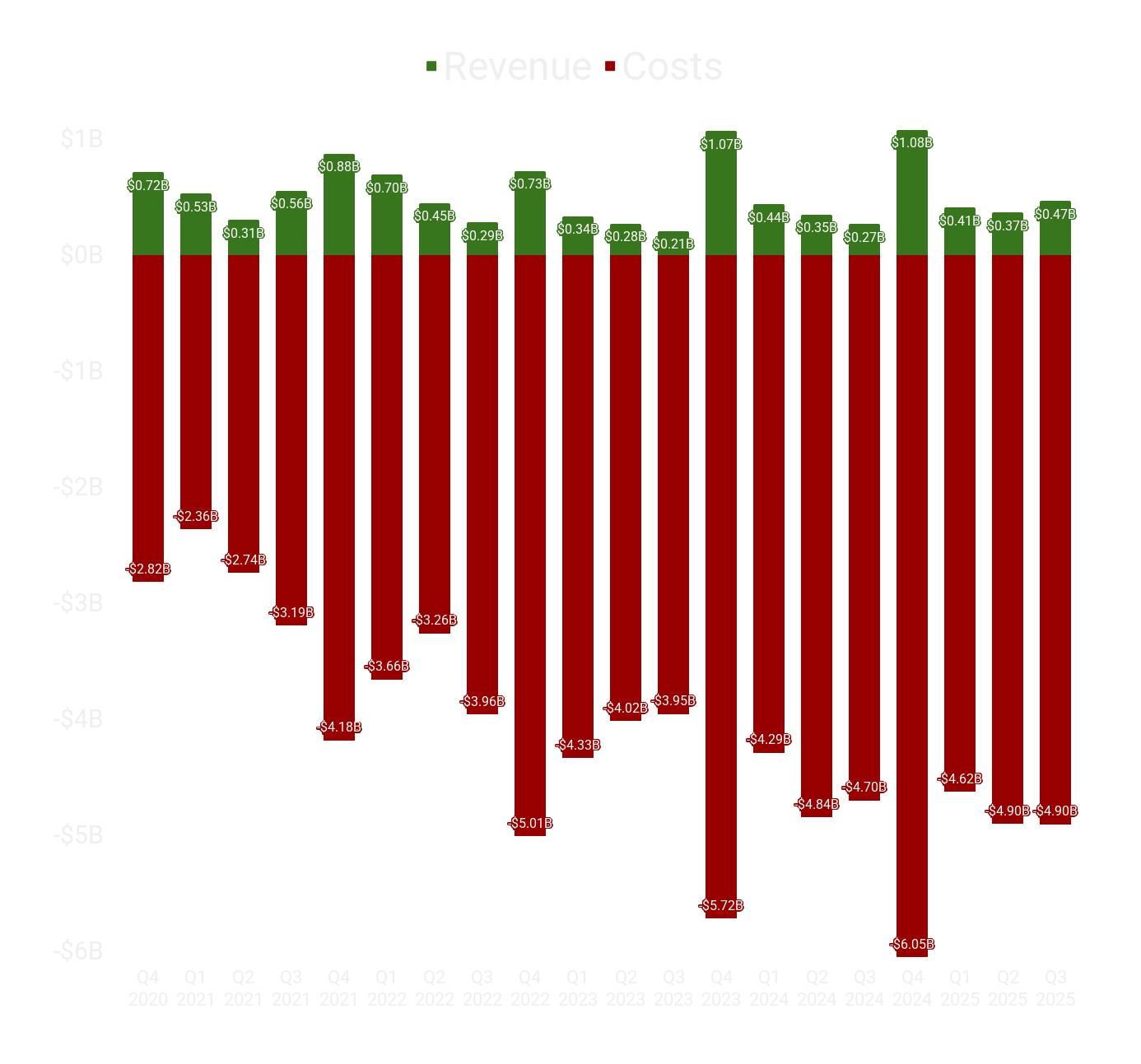
Since Meta started breaking out the financial results of Reality Labs in its earnings calls in Q4 2020, it's been public knowledge that the division spends significantly more than it brings in, resulting in a financial "loss" that has been the fuel for countless clickbait articles each quarter.
But while describing this as a "loss" is technically correct in an accounting sense, much of it would be more accurately described as long-term investment. XR headsets like Quest are still a relatively early technology. Further, as of 2022 more than 50% of Reality Labs spending was on the research and development of AR glasses, and the company has yet to even launch a true AR glasses device.
Still, Meta is a business, and at some point, it wants Reality Labs to be profitable, a goal that will involve spending less, transitioning from a bloated research and development group to a viable business.
In July 2024, The Information reported that Reality Labs was told to cut spending by 20% by 2026. But the first three quarters of 2025 have seen Reality Labs spend roughly the same as it did in 2024.
Bloomberg's new report comes as Meta is planning its budget for next year. According to the report, executives are "considering" a cut "as high as 30%" for Reality Labs, with associated layoffs that would arrive as early as January.
Proposed cuts would primarily target VR and Horizon Worlds, according to the report, at a time when Meta is hoping to scale up its smart glasses ambitions.
The company, with its partner EssilorLuxottica, is still selling many of its smart glasses models as fast as it can make them. Simultaneously, it has seen Quest headset sales decline in 2025 compared to 2024, with Quest 3S proving only a hit during the holidays, and underperforming during the rest of the year.
This combination of significant success in the smart glasses space and relative failure in growing its VR headset business is likely the driver of the company's decision to focus cuts on the latter, and it will be paying close attention to the sales of its next headset to decide how to invest through the rest of the decade.
When Don Carson was hired by Lucas Martell in September 2021 to work as an artist on Walkabout Mini Golf, the former theme park designer mentioned a name and place he wanted to see in virtual reality.
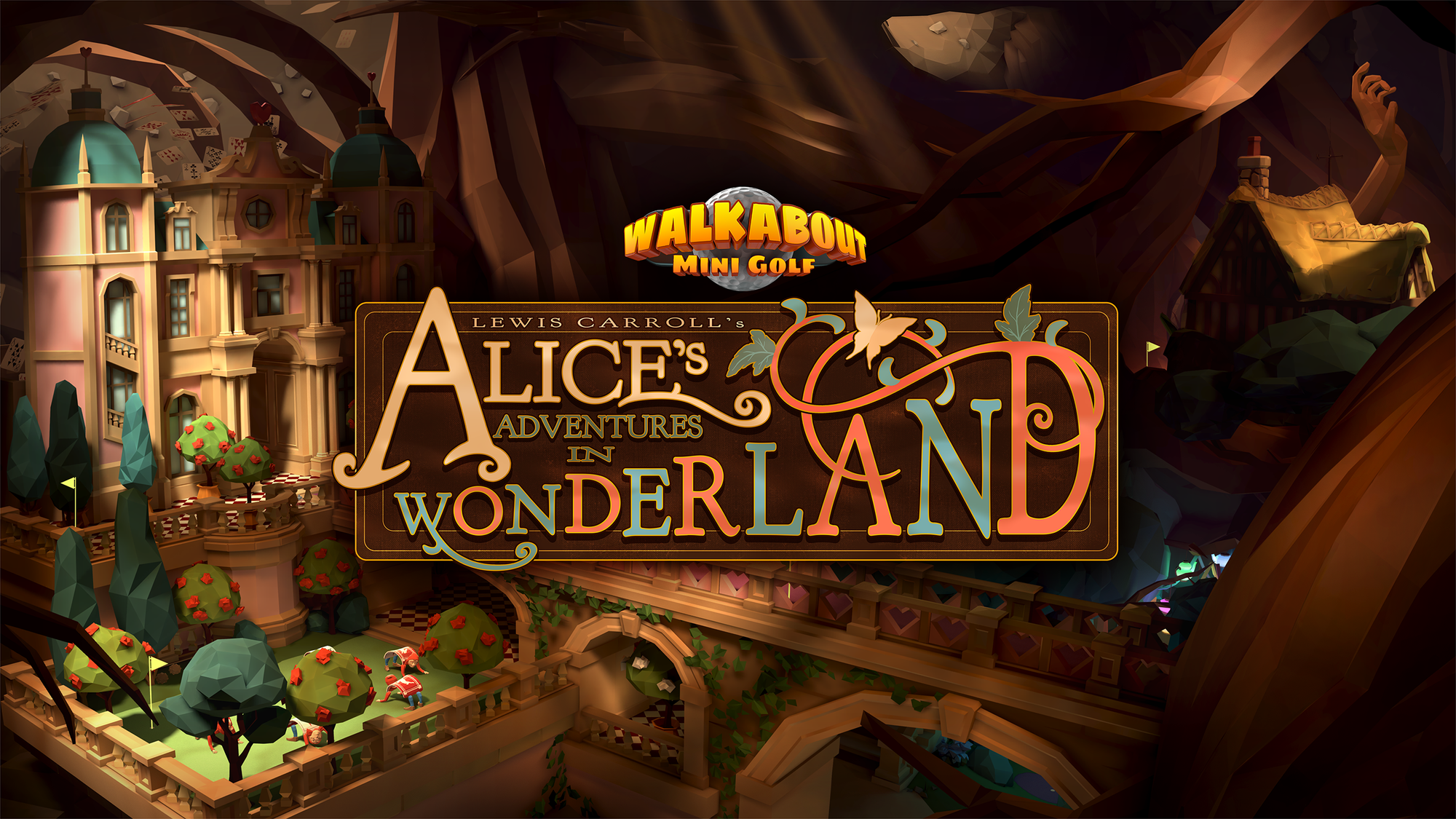
Carson's dream space opens to the public in VR this week. In Walkabout Mini Golf, the final paid add-on course of 2025 from studio Mighty Coconut finds visitors at the bottom of a rabbit hole following Alice on a journey growing curiouser and curiouser.
0:00
/2:21
When he was a child, Carson loved Alice's Adventures in Wonderland by Lewis Carroll with illustrations by John Tenniel. First published in 1865, Alice's series of encounters with strange creatures has seen every kind of adaptation from those original words and images. From release on December 4, 2025, Carson's course design for Martell's Walkabout with holes by Henning Koczy will see people leaning in to look through the keyhole at a royal garden beyond. Then they'll follow Alice's trail of dropped bottles, growing small and large along the way in a mad laughing party of their own.
As the course opens, Walkabout's core design team convenes at Carson's home studio in the Pacific Northwest to rough out ideas for the game that will open in 2027. Below is an image of the Walkabout Path for Alice's Adventures In Wonderland drawn by Carson as an early concept in 2024.
Pen and ink drawing by Don Carson of an early draft of the "walkabout path" through Alice's Adventure's In Wonderland.
First shown publicly in our coverage of the game's 36th course, the Mother Goose-inspired Forgotten Fairyland, the "Walkabout Path" for each course starts as a continuous circuitous block carved in virtual reality with Gravity Sketch. At the same time visitors follow Alice's finalized path for the first time, Walkabout's designers meet in the physical world to wear VR headsets together in the same space as they rough out places as a kind of team-building exercise of pure spatial creation.
You can watch our full 27-minute tour of Alice's Adventures in Wonderland with Carson and Koczy taking us along Alice's adventure from the Cheshire Cat to the Jabberwocky and Queen, and find all of our coverage of Walkabout at UploadVR.com/Walkabout.
Each new course from Walkabout features 36 new hole designs, 18 each in easy and hard modes. I only briefly glimpsed the eye-catching new visual effect shown in Wonderland's hard mode, but in my tour video above you can see Koczy himself – the designer of all the holes – putting right into a Mad Tea Party. I won't spoil what happens in that video if you're waiting to experience it for yourself.
There are well beyond 1,000 unique hole designs in Walkabout now, many of them designed by Koczy. At the Mad Tea Party he's a wizard in Wonderland channeling something into Walkabout I first experienced almost a decade ago.
I enjoy sitting on Amalthea around Jupiter and Pistol Whip's levels are still dreamy, but to my personal taste a Walkabout Mad Tea Party with friends played like Alice in Wonderland may be the best experience in all of virtual reality now.
Meta's Wearables Device Access Toolkit, which lets smartphone apps access the camera of its smart glasses, is now available as a public preview.
That means that developers can download it and integrate it into their iOS and Android phone apps, and can test it on their own glasses, but they cannot yet ship it for general public use.
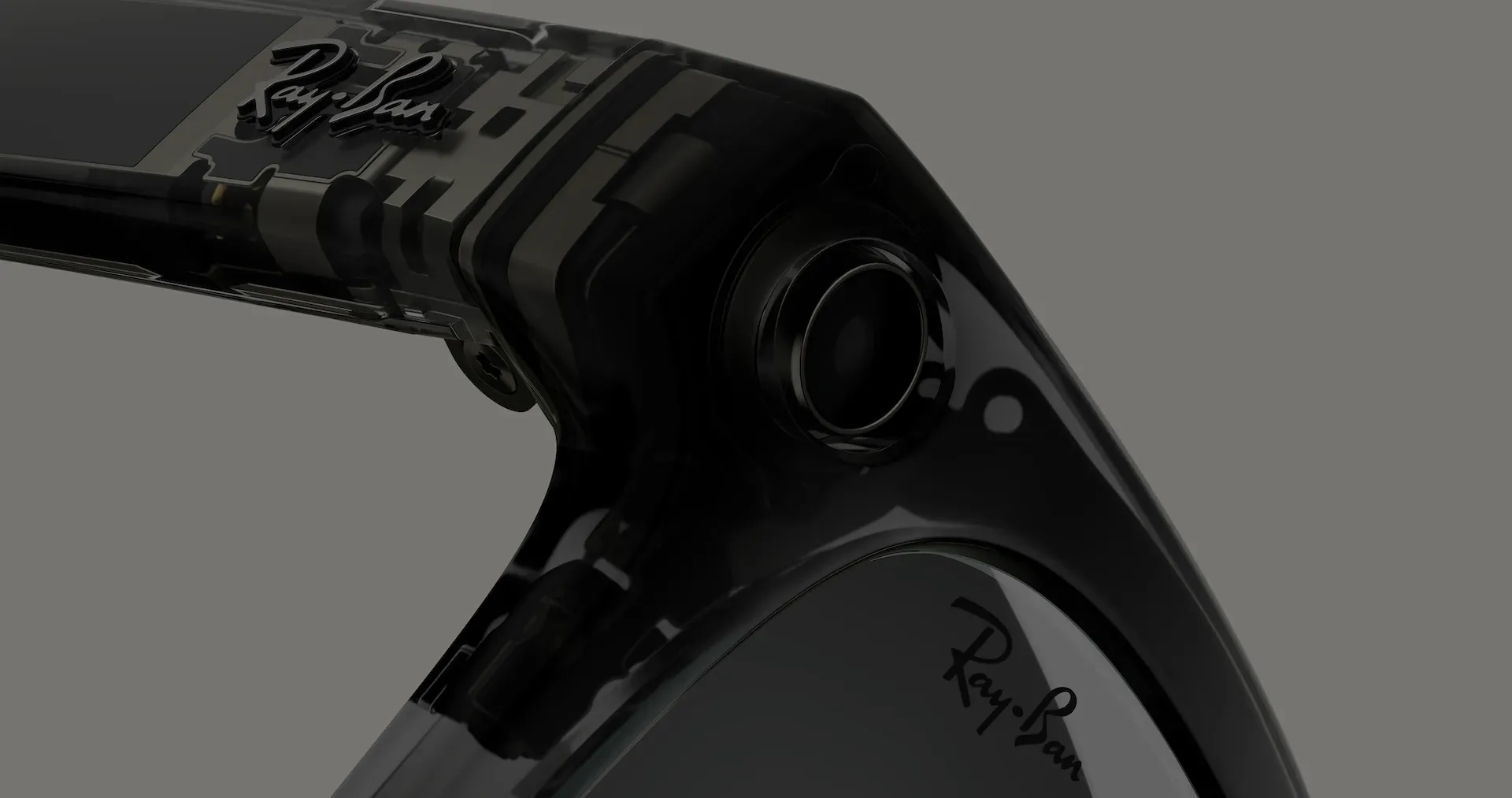
Announced at Connect 2025, Wearables Device Access Toolkit lets phone apps capture a photo or initiate a video stream from the glasses. The app can then store or process the frames it receives. And since Meta smart glasses function as Bluetooth audio devices, developers can combine this visual capability with audio in and out.
Developers could, for example, leverage the SDK to add first-person livestreaming or recording features to their apps. Or they could feed the camera imagery to a third-party multimodal AI model to analyze what you're looking at and answer questions about it.
Hi AI devs!
In case you were wondering how the workflow looks like and what you can do with the Meta Wearables Device Access Toolkit (DAT) right now: The Meta AI app acts as a bridge between your glasses and your app, handling all connections and permissions!
For a video stream, the maximum resolution is 720p and the maximum frame rate is 30 FPS, a limitation related to the use of Bluetooth. And when Bluetooth bandwidth is limited, the resolution and frame rate will be automatically reduced.
Ray-Ban Meta and Oakley Meta HSTN glasses are currently supported, with support for Oakley Meta Vanguard and Meta Ray-Ban Display coming in the near future. But to be clear, support for the latter will only include receiving camera imagery, not displaying anything on the HUD.
Meta provided an early version of the Wearables Device Access Toolkit to a handful of developers several months ago, including Twitch, Microsoft, Logitech Streamlabs, and Disney.
Twitch and Logitech Streamlabs are using the SDK to let you livestream your first-person view on their platforms, just as you already can on Instagram, while Microsoft is using it for its Seeing AI platform that helps blind people navigate and interact with the world around them.
0:00
/0:40
How 18Birdies is using the toolkit.
One particularly interesting use case comes from 18Birdies. The golf app is experimenting with using Meta Wearables Device Access Toolkit for real-time yardages and club recommendations, helping golfers without requiring them to take their phone out of their pocket.
Another is from Disney's Imagineering team, which explored using the toolkit to give guests a personal AI guide in Disney parks.
Oh My Galaxy! is a new mixed reality arcade puzzler that's out today on Samsung Galaxy XR.
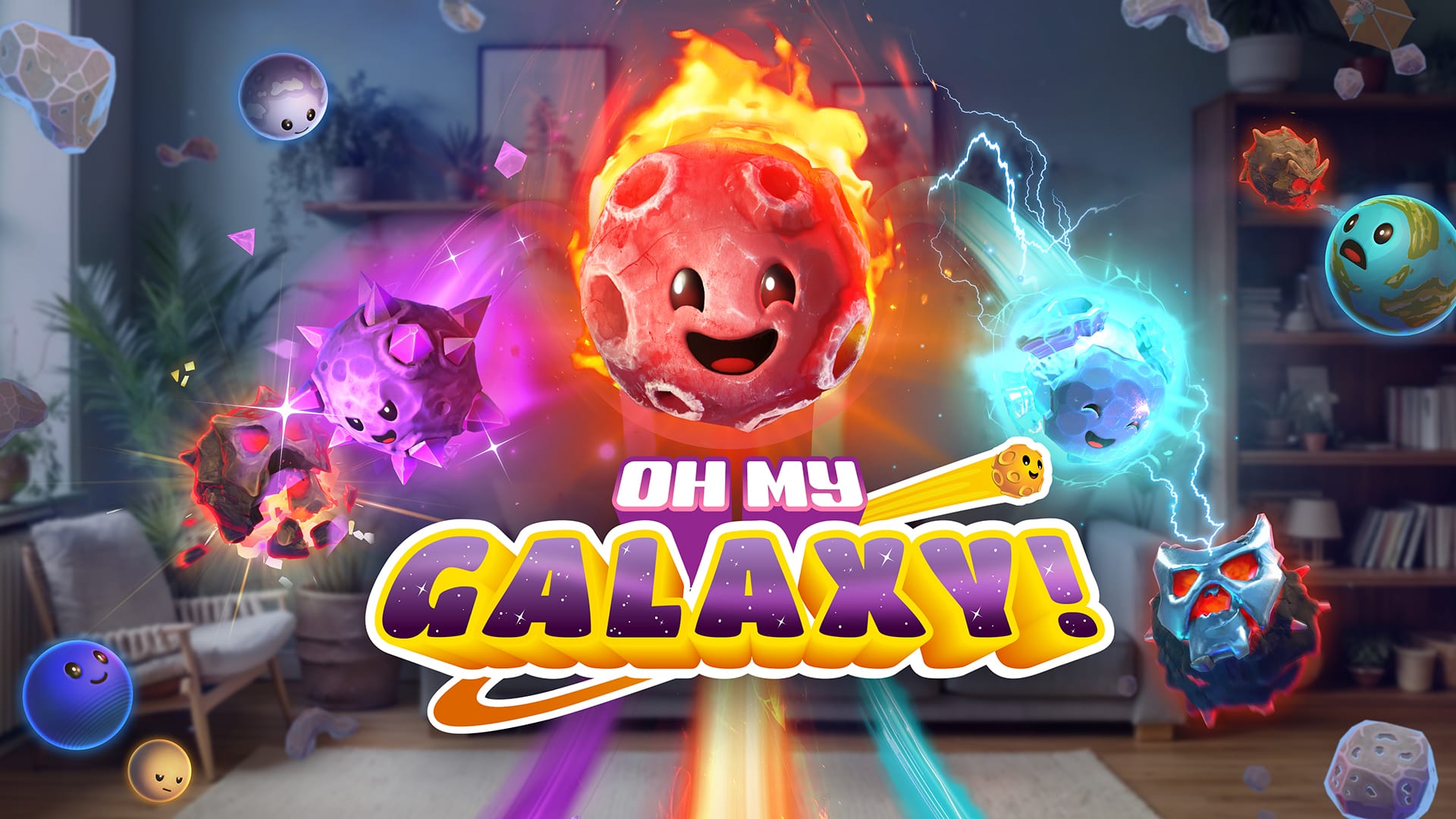
Marking its first launch on Samsung's headset, Oh My Galaxy! is the latest game from FRENZIES developer nDreams Near Light. The premise involves transforming your room into an interplanetary playground, tasking you with saving planets from alien attackers using hand tracking controls to fling asteroids at them.
Near Light states there are over 100 increasingly difficult stages split across three main chapters, promising physics-based gameplay with various objectives. Defeating these aliens requires using different asteroids with unique abilities, ranging from the “high-explosive Boom Boulder to the six-part Splitter Stone.”
nDreams calls this one of the first “original titles” for Samsung's headset, joining launch titles Enigmo and Inside [JOB] as one of three currently exclusive Android XR games. However, while Enigmo is a timed exclusive that's coming to Quest, no further platforms were mentioned in today's announcement, so it's unknown if Oh My Galaxy! will eventually arrive elsewhere.
Oh My Galaxy! is available now on Samsung Galaxy XR for $9.99.
Apple's head of user interface design is leaving the company, after almost 20 years, to lead design at Meta Reality Labs.
Alan Dye joined Apple in 2006, and since 2015 had been the VP in charge of the company's software design, including the user interfaces of its operating systems and the design language it encourages developers to follow. He was a key figure in the iOS 7 redesign and watchOS, and led work on the iPhone X swipe interface, AirPods pairing interface, CarPlay, Dynamic Island, visionOS, and Liquid Glass, as well as key Apple apps like the App Store, Safari, Maps, TV, Notes, and FaceTime.
Reality Labs, if you're unaware, is the division of Meta behind its Quest headsets, Horizon software, smart glasses, and sEMG wristband, as well as researching future technologies such as Codec Avatars and AR glasses.
Bloomberg's Mark Gurman first reported Dye's move, and a few hours later Mark Zuckerberg confirmed it in a post on Threads, stating that Meta is forming a new top-level "creative studio".
Dye will be joined by Billy Sorrentino, who was one of his deputies at Apple since 2016, and Joshua To, who previously led interface design at Reality Labs.
Here's Mark Zuckerberg's explanation of the new design studio's role at Meta Reality Labs:
"The new studio will bring together design, fashion, and technology to define the next generation of our products and experiences. Our idea is to treat intelligence as a new design material and imagine what becomes possible when it is abundant, capable, and human-centered. We plan to elevate design within Meta, and pull together a talented group with a combination of craft, creative vision, systems thinking, and deep experience building iconic products that bridge hardware and software."
"We're entering a new era where AI glasses and other devices will change how we connect with technology and each other. The potential is enormous, but what matters most is making these experiences feel natural and truly centered around people. With this new studio, we're focused on making every interaction thoughtful, intuitive, and built to serve people."
The claim that Meta plans to "elevate design" is particularly notable, given that the company's Quest headsets have long been criticized for their confusing, scattered, and clunky user interface. Meta started rolling out a design overhaul earlier this year, but it's still experimental, and far from complete.
We also criticized the interface of Meta Ray-Ban Display in our review, pointing out that it takes far too many swipes and taps to accomplish many common tasks.
It will likely take years, or at the very least many months, before the results of Dye's new design team arrive in Meta products. But it could, if all goes well, be a crucial ingredient for Meta's hopes to stave off competition from Apple and Google in the smart glasses and XR headsets market as the technology matures and scales to hundreds of millions of users in coming years.
Announcing his departure from Apple in an Instagram story, Dye quoted Steve Jobs: “I think if you do something and it turns out pretty good, then you should go do something else wonderful, not dwell on it for too long. Just figure out what’s next.”
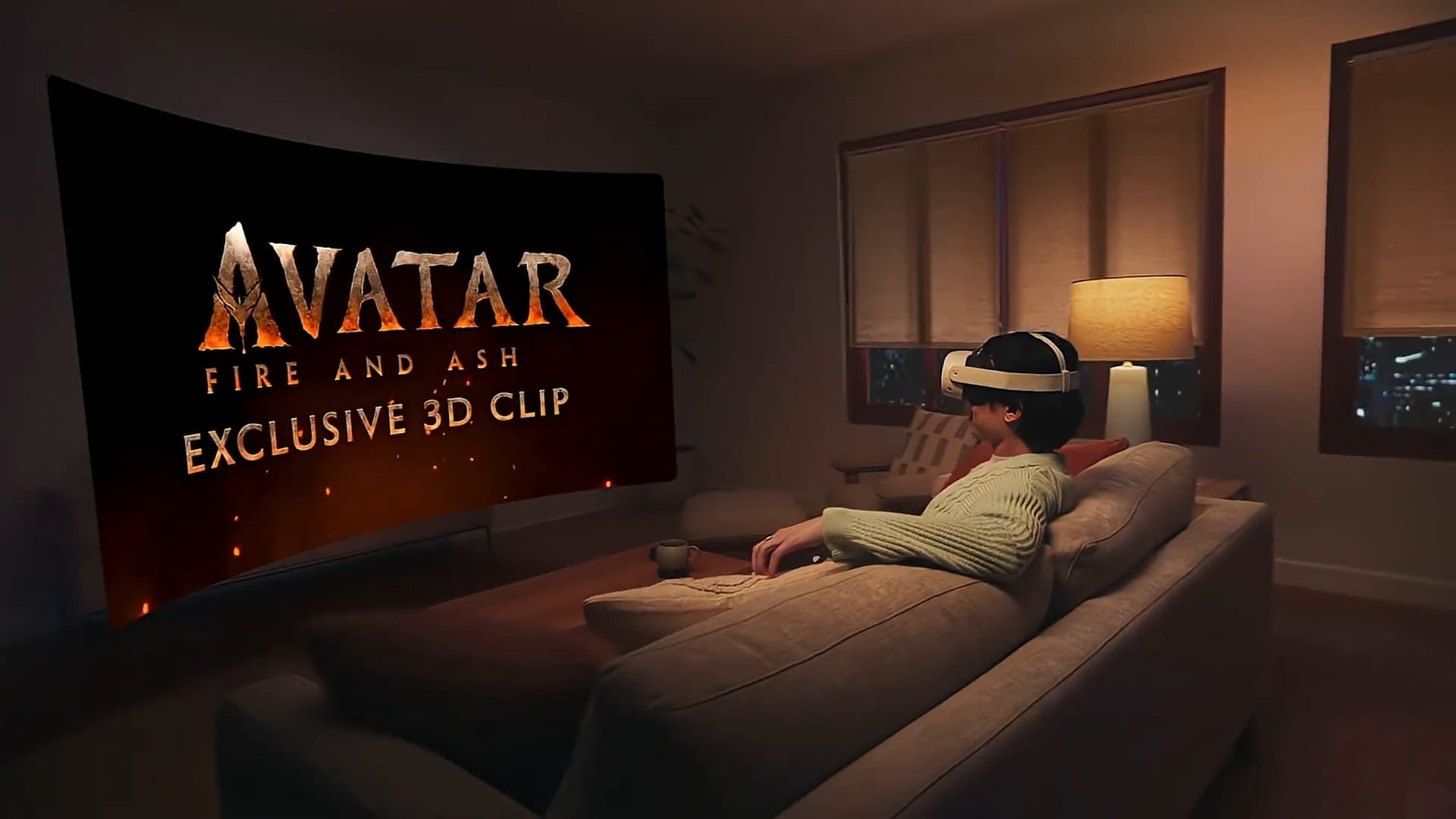
Quest headsets now have a second exclusive 3D clip from Avatar: Fire and Ash.
It comes just under three months after the first exclusive 3D clip from the movie arrived on Quest headsets just after Meta Connect.
0:00
/0:30
The short 3D clips are the first results, albeit small, of Meta's exclusive multi-year partnership with James Cameron's new company Lightstorm Vision, which has the goal of "making stereoscopic technology ubiquitous for all visual media by enabling stereoscopic 3D content creation in as seamless a manner as traditional 2D".
The partnership, announced almost exactly one year ago, should help bring significantly more 3D video content to Quest headsets. At the time, Meta said it will bring "world-class 3D entertainment experiences spanning live sports and concerts, feature films, and TV series featuring big-name IP" to Horizon OS.
James Cameron appeared on-stage during the Meta Connect 2025 keynote for around twelve minutes, where he reiterated his views on how VR headsets are the ideal viewing platform for 3D content.
Apple's competing visionOS offers hundreds of 3D movies through Apple TV and Disney+, but Meta's platform currently lacks an equivalent offering.
Exploration sim Cave Crave added an arcade mode and new horror map in its recent update, and a PC VR release will follow next week.
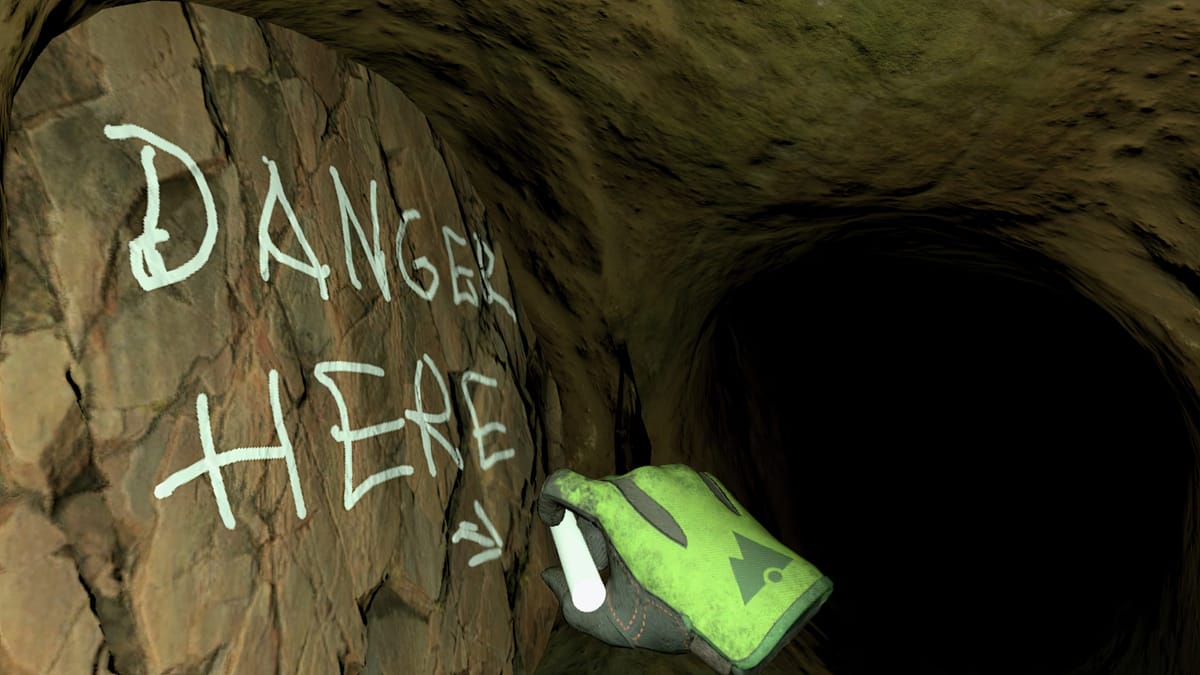
Developed by 3R Games, Cave Crave sees you exploring tight tunnels and caves as you try to find an escape, marking walls with chalk and using various tools. While this update will arrive “soon” on PS VR2, Quest players can now jump into a new Arcade Mode that turns this into a competitive race against time, where you aim for the quickest run on the online leaderboards.
As for Cave Crave's optional Horror Mode, that's been updated with a brand new map called 'Abyss,' where your goal is to simply make it back alive. 3R Games says that it's been “inspired by cosmic dread and subterranean monstrosities straight out of a Lovecraftian nightmare,” warning of something “ancient and malevolent” hiding in the dark.
This follows the addition of Utah's Nutty Putty Cave as a free update on both platforms, a real-life cave closed in 2009 after the death of John Edward Jones. 3R Games says this was recreated using the official cave map and additional data without gamifying it, stating its aim to offer a “respectful, authentic way” to explore this permanently closed site.
For the PC VR release, 3R Games confirmed it's now arriving on December 12 with almost all the Quest version's previously released updates - Arcade Mode is coming "shortly after launch." The developer also promised improved visuals like advanced lighting and shadows, dynamic water reflections, and sharper textures.
A Chinese startup with former Apple and Meta engineers built a coprocessor that enables ultralight headsets, and its reference design is the lightest ever shown.
The startup is called GravityXR, and includes engineers who worked on the R1 chip at Apple, the coprocessor present in both Vision Pro headsets to date, as well as others who worked on hardware at Meta, Huawei, and Amazon.
GravityXR's investors include Goertek, the Chinese company that manufactures Meta headsets, as well as ByteDance, the owner of Pico, and VC firms like Sequoia China and Lenovo Capital.
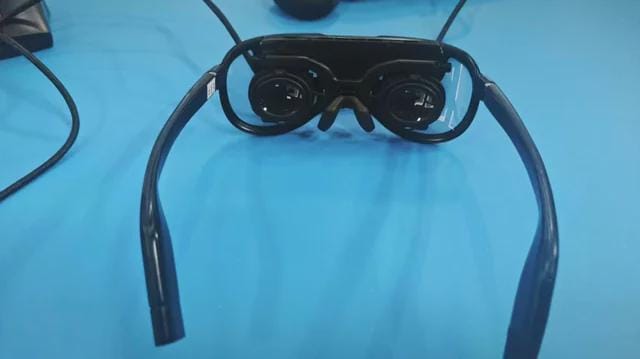
Rear angle of the GravityXR M1 reference design headset.
The chip that GravityXR built is called G-X100. It's a 3 watt TDP chip built on a 5nm process node, has a 10-core DSP, and achieves 200 TOPS for ML inference. Crucially, it has a memory bandwidth of 70 GB/s, letting it handle an array of many cameras and sensors – up to 15 simultaneously. And it can output to dual 4K displays at 120Hz.
G-X100 is designed to be onboard ultralight mixed reality headsets, handling the latency-sensitive image processing and computer vision tasks like camera passthrough, positional tracking, hand tracking, and reprojection, with a claimed 9 milliseconds of photon-to-photon latency.
This allows the general-purpose chipset, such as a Qualcomm Snapdragon, to be moved to a tethered external puck.
And with its TDP of just 3 watts, G-X100 can be passively cooled, eliminating the need for the heavy heatsinks and fans that make up a significant chunk of the weight of standalone headsets today, which aim to cool 10-20 watt chips.
Another angle of the GravityXR M1 reference design headset.
To prove out this approach of using G-X100 to offload the primary chipset, GravityXR built a reference design headset called GravityXR M1. It's a passthrough headset, using pancake lenses, 2.5K micro-OLED displays, four tracking cameras and two passthrough cameras, yet weighs less than 100 grams.
That makes GravityXR M1 the lightest headset ever – lighter than even Bigscreen Beyond 2. Its form factor arguably reaches the point that it might be better described as "mixed reality glasses".
And unlike with see-through birdbath devices like Xreal and Viture, as a passthrough system GravityXR M1 has a field of view of 90 degrees, close to current VR headsets, and it can render fully opaque virtual objects without dimming your view.
The G-X100 chip also supports reverse passthrough, as in Apple Vision Pro's EyeSight feature, but the reference design headset doesn't include this.
To be clear, GravityXR M1 is just a reference design, and no company has yet publicly committed to using G-X100 in a product.
But rumors suggest that both Meta and Pico intend to launch ultralight headsets next year, and both companies are likely to take a similar engineering path to what GravityXR is showing. Just last week, a Pico executive said that the company had developed its own R1-style chip internally, for example, and Meta has a multi-year partnership with Qualcomm to work together closely on XR-specific chip solutions, alongside its own custom chip teams.
It seems that, across the industry, mixed reality headsets are set to significantly shrink from half-kilogram facebricks into sleek glasses-like visors relatively soon. And a split-chip architecture, alongside an open periphery design that sacrifices some field of view, is how that remarkable jump will be possible.
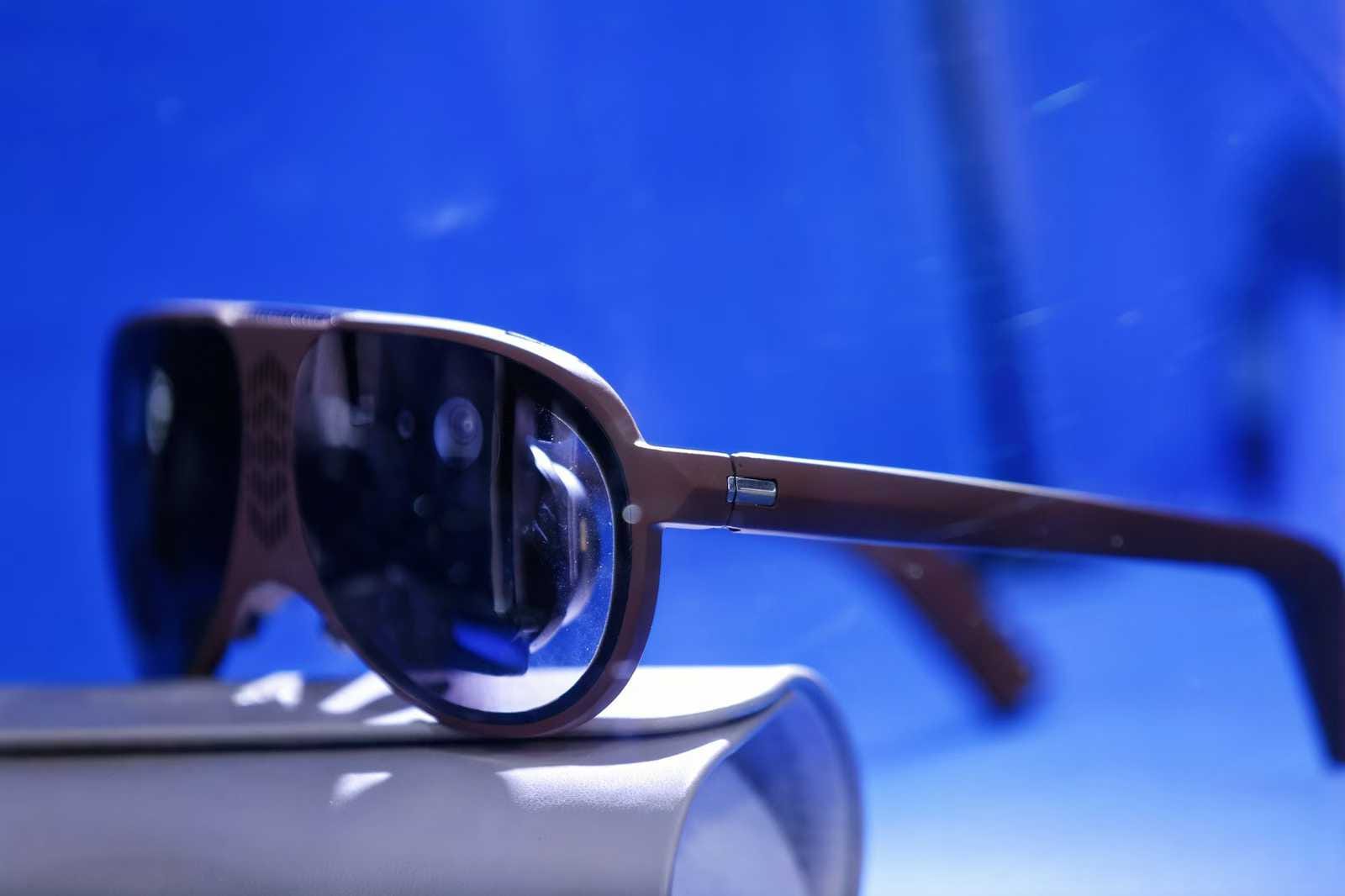
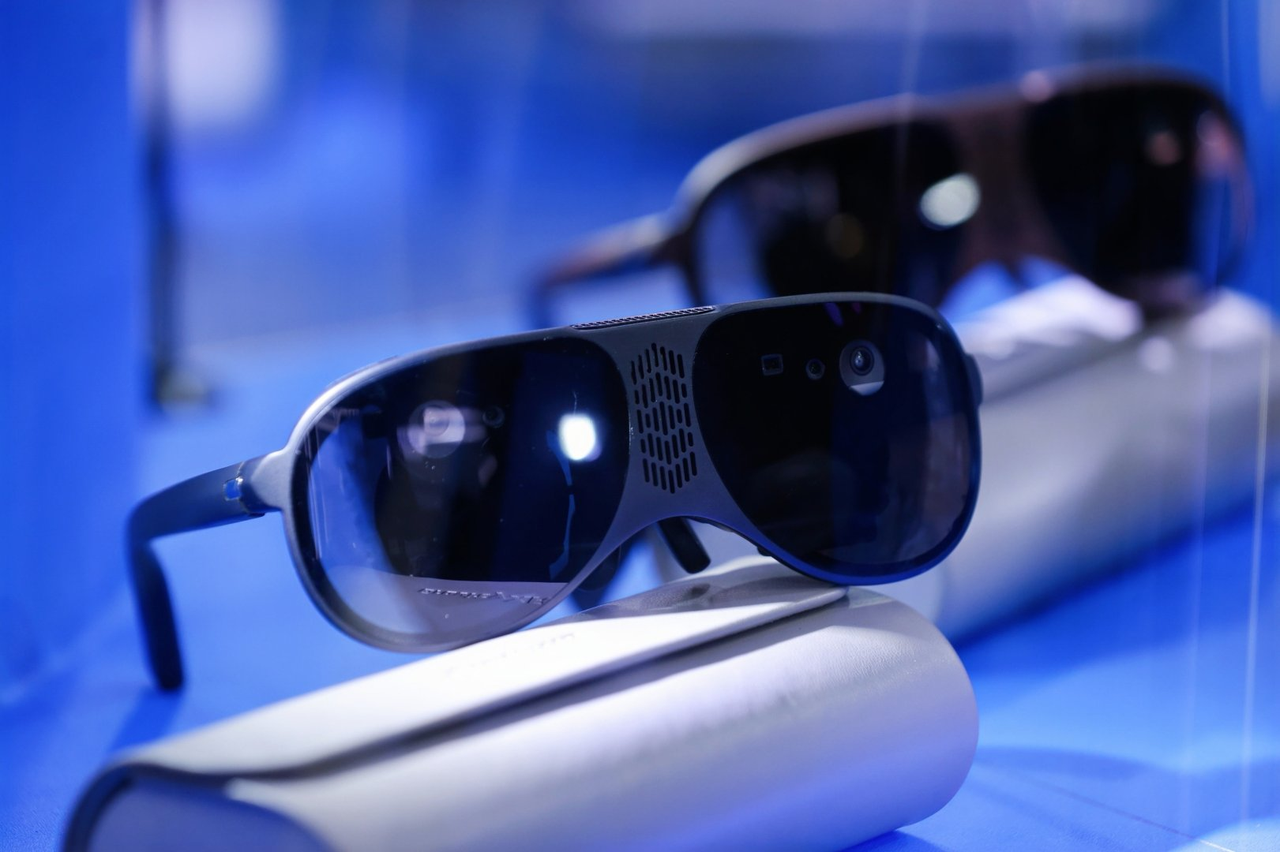
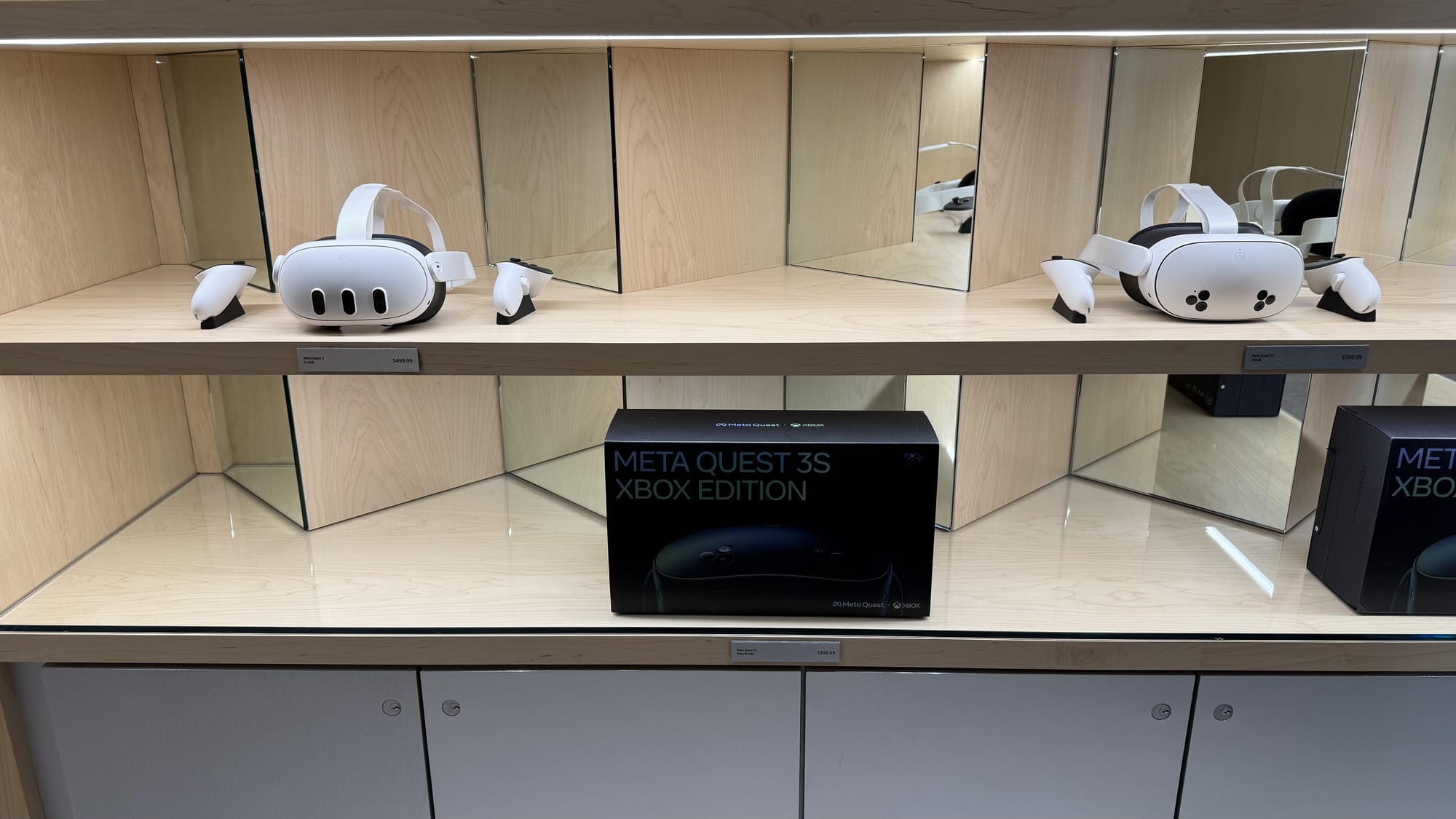
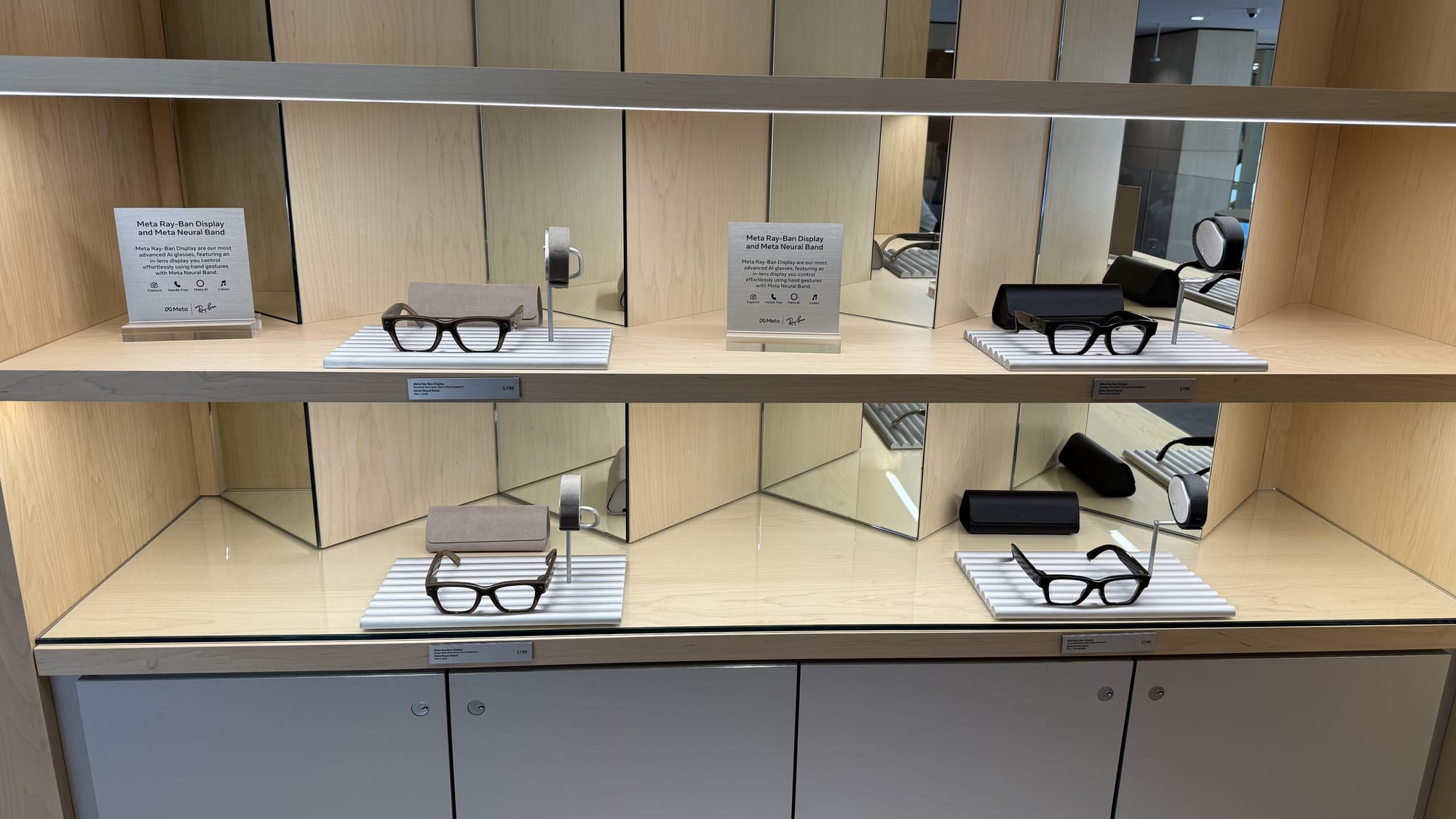
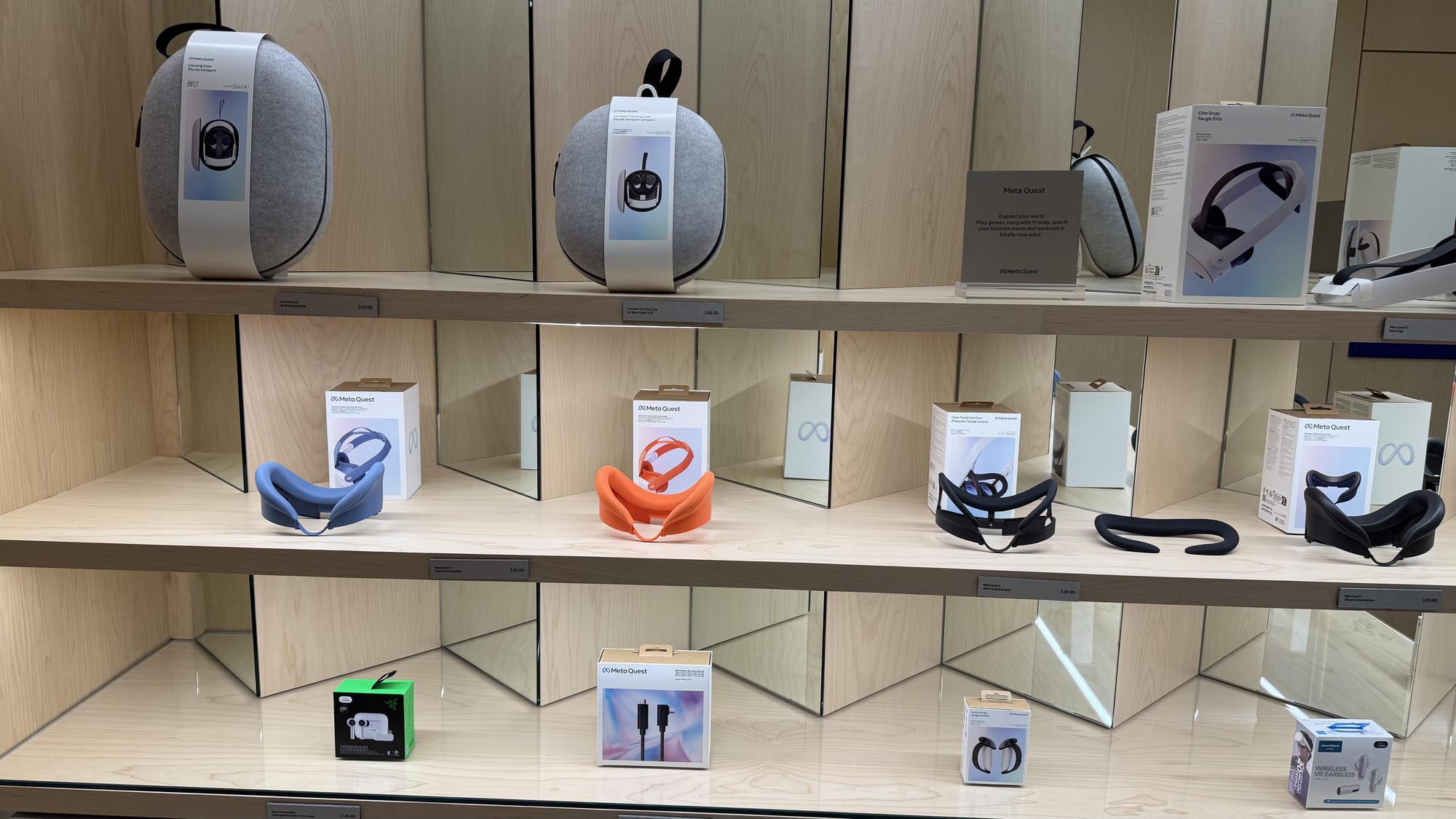
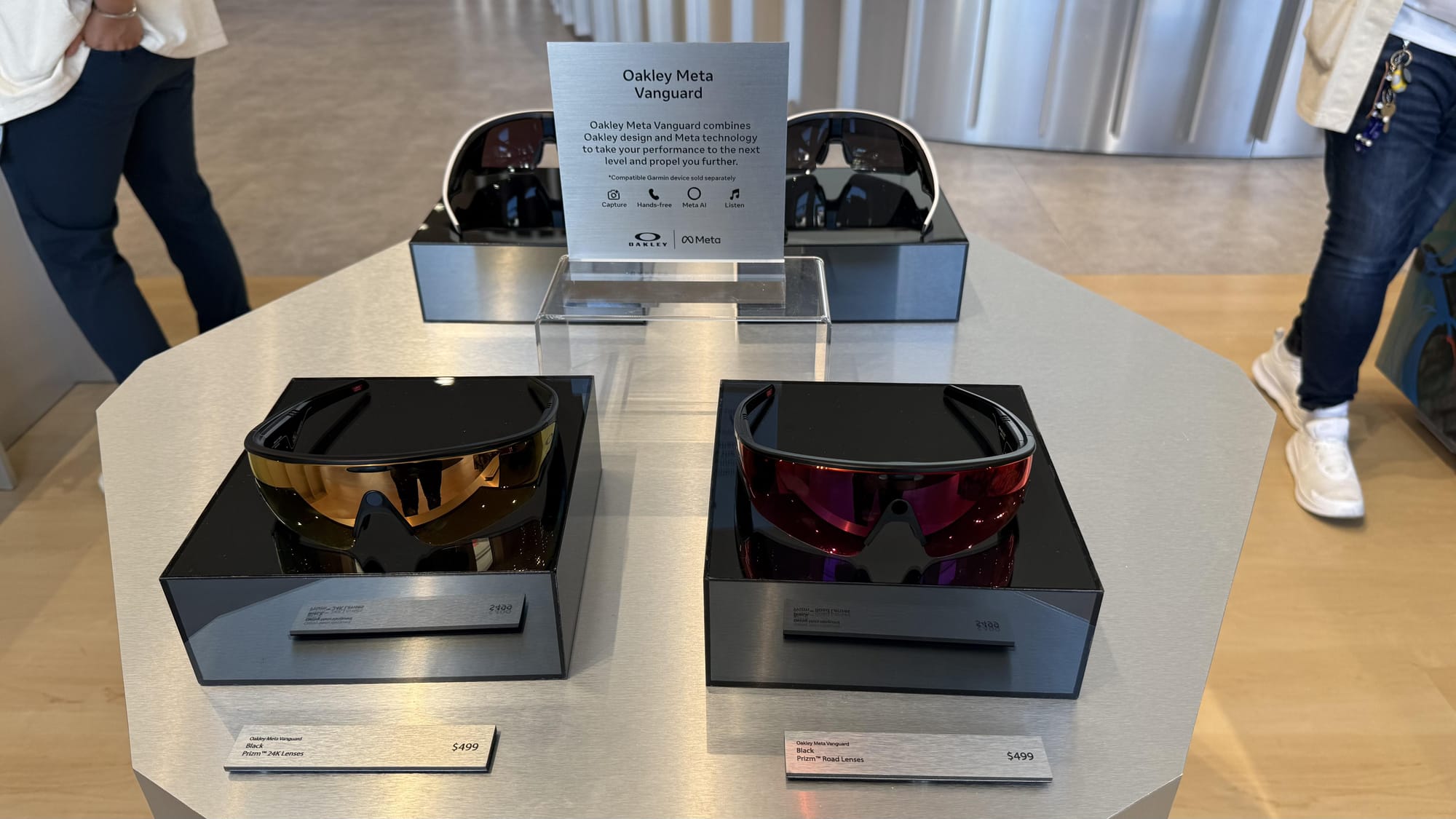
In West Hollywood, Meta recently launched a permanent store to showcase, demo, and sell smart glasses and Quest headsets. So how exactly is the company choosing to showcase its hardware to prospective buyers on the fence?
Walking up to the new Los Angeles Meta Lab location, it's difficult to avoid the obvious comparisons to Apple stores. The moment you step inside, however, the difference in design sensibilities could not be any more obvious. Instead of a clean and simple aesthetic, Meta's approach aims for something considerably more busy.
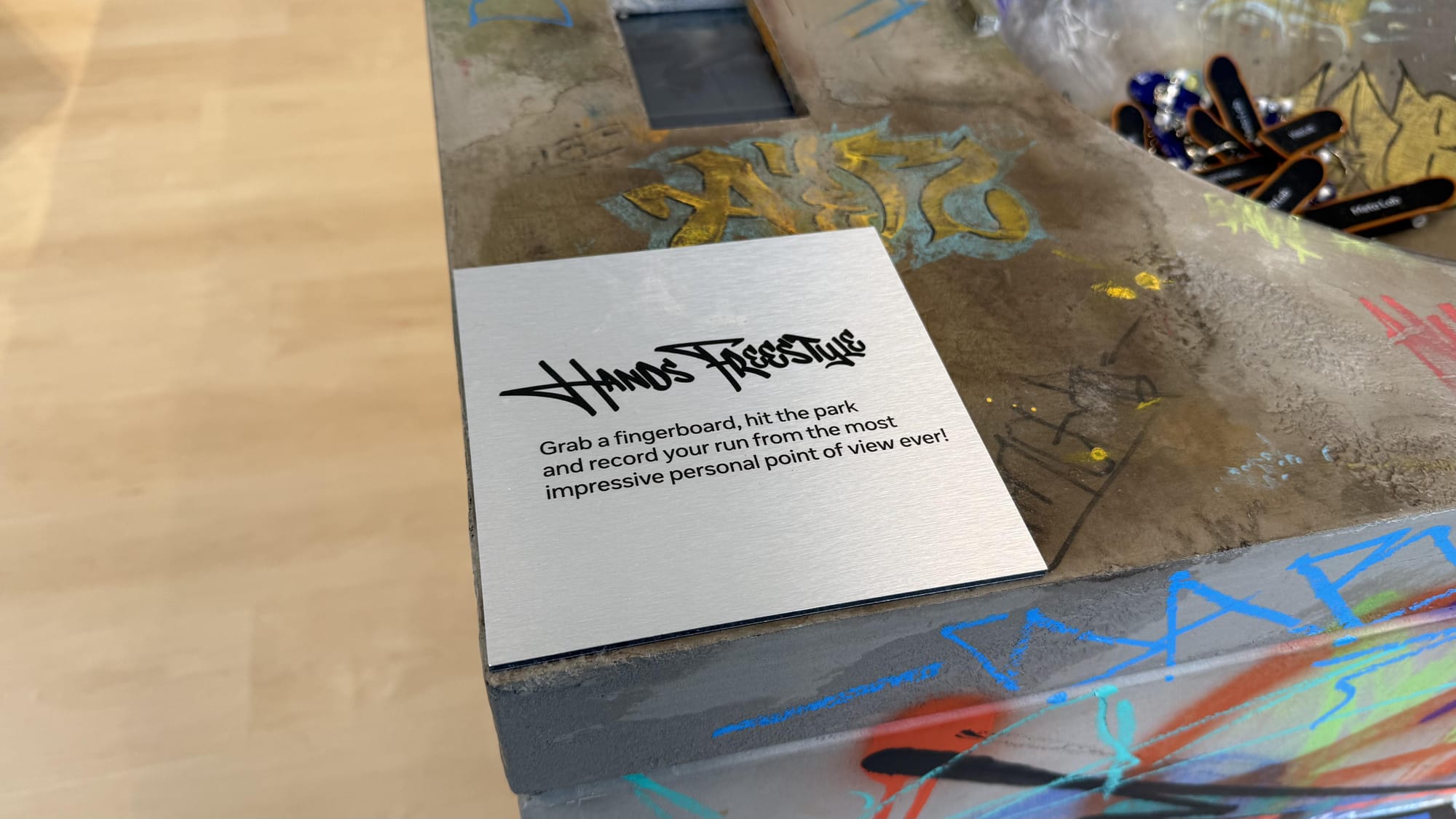
In an attempt to tie into the culture of Southern California, Meta Lab Los Angeles channels skateboarding as the primary theme - with numerous demos making use of the iconography.
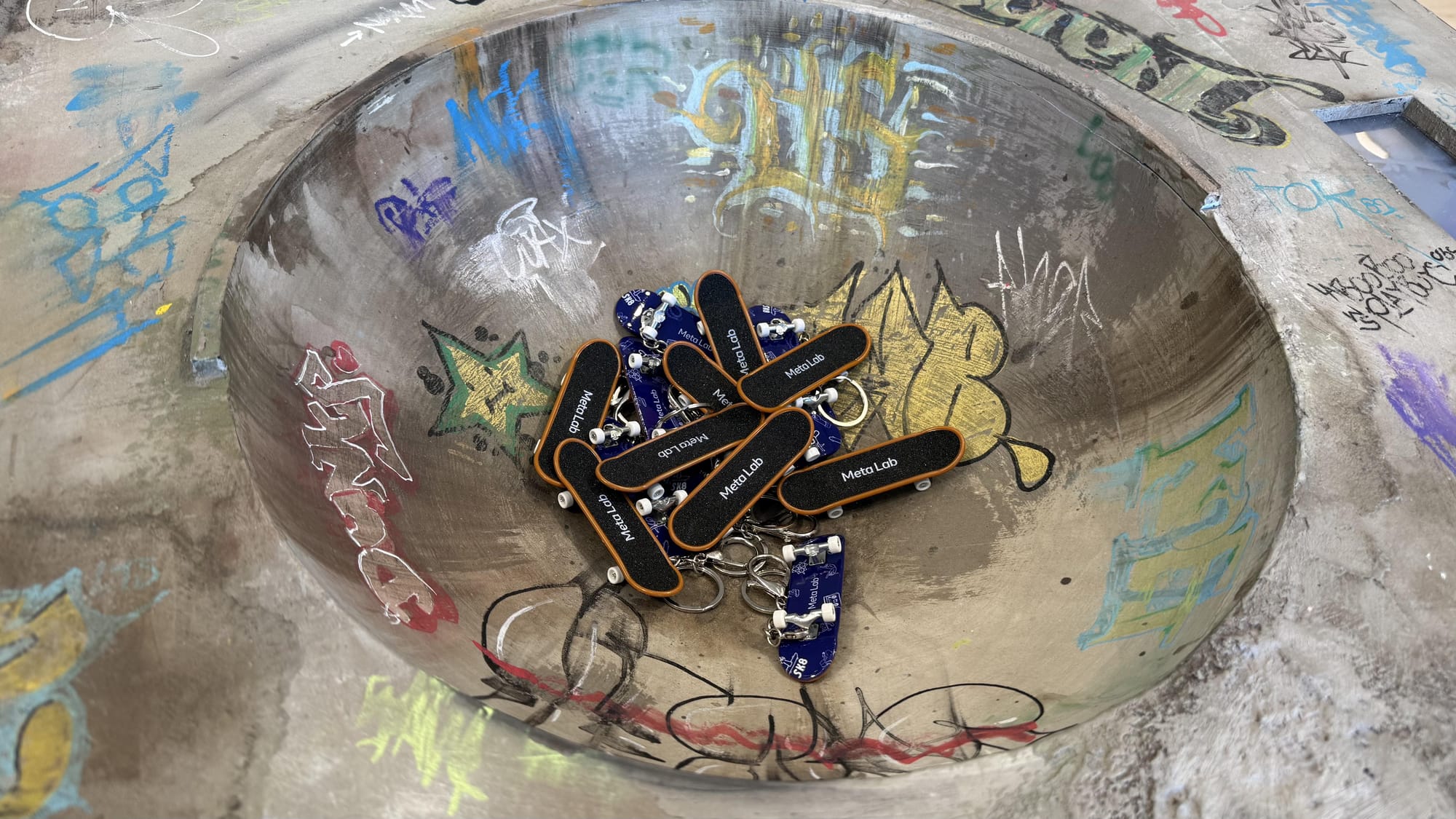
Near the entrance, prospective customers can grab Meta-branded fingerboards à la Tech Deck - and are invited to record their "sick tricks" using a pair of glasses by running their board through a miniature fingerboard skate park.
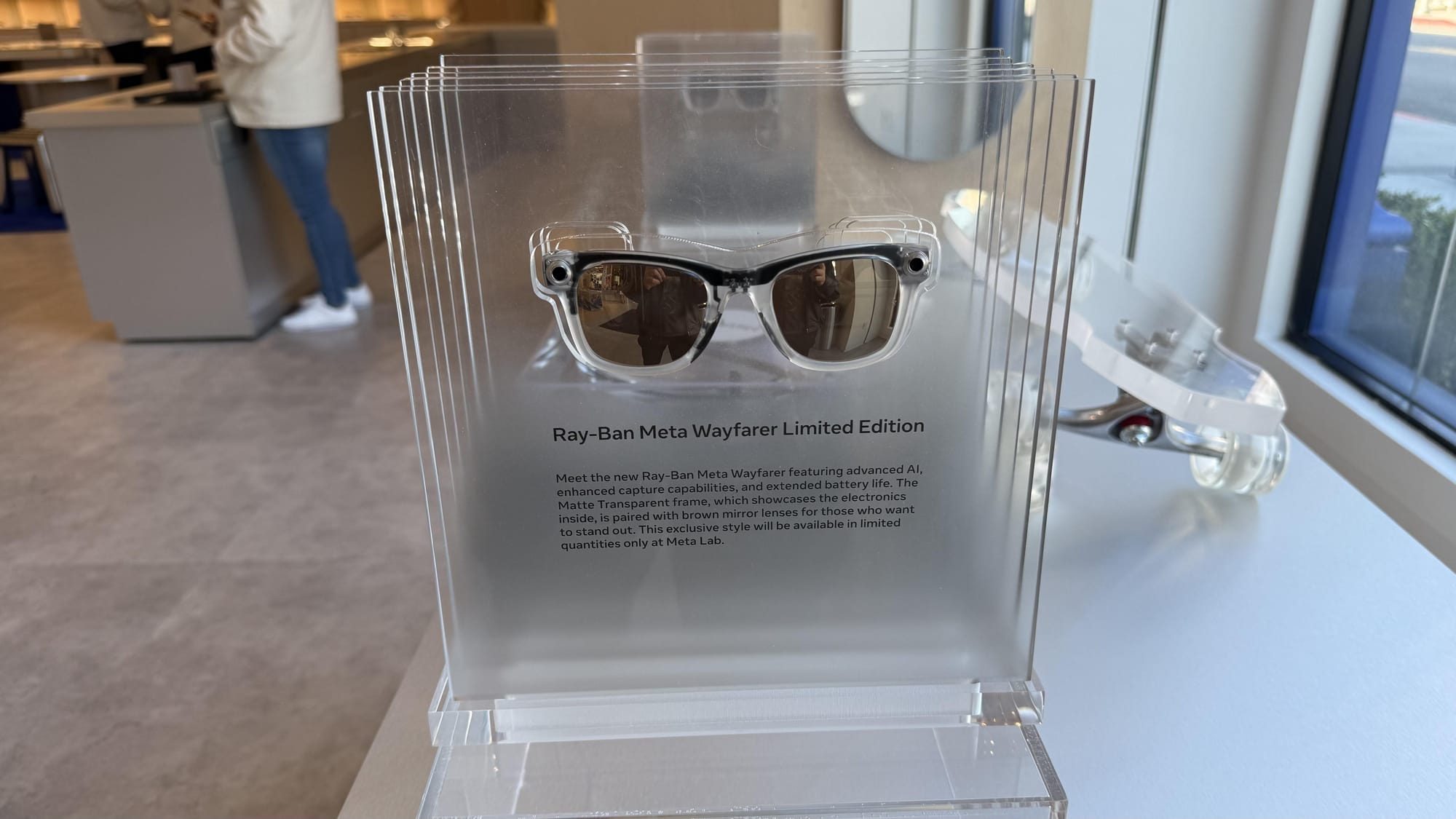
On either side are arrays of smart glasses. Right near the entrance is a showcase of the transparent limited edition Ray-Ban Meta glasses, sold in limited quantities at the store. Flanking the display of glasses on either side is a set of cases showing a variety of skating and SoCal-themed memorabilia.
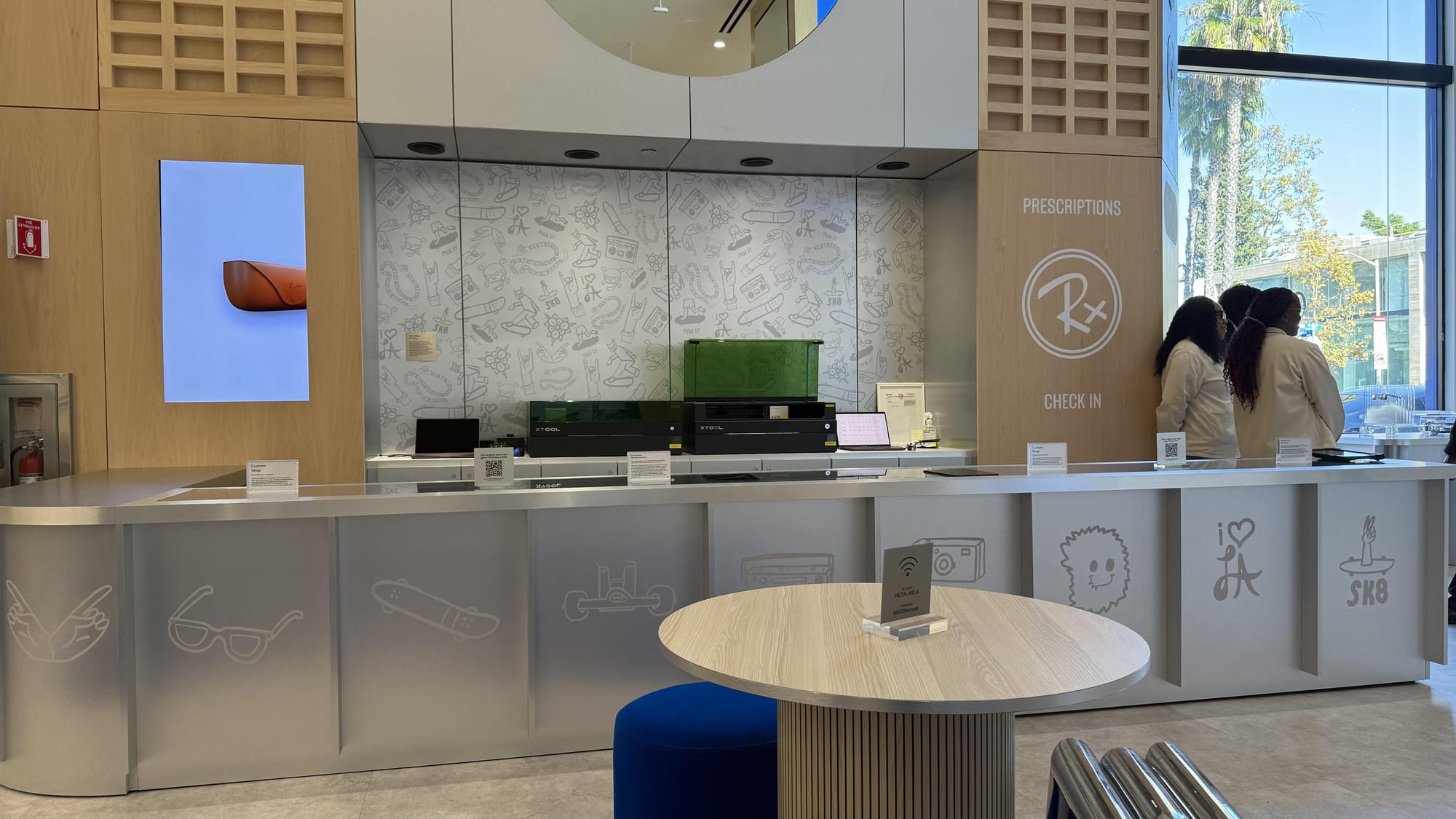
To the far right of the entrance, you're able to share your glasses prescription - if you have one - to fit your desired pair with the correct lenses for a test drive.
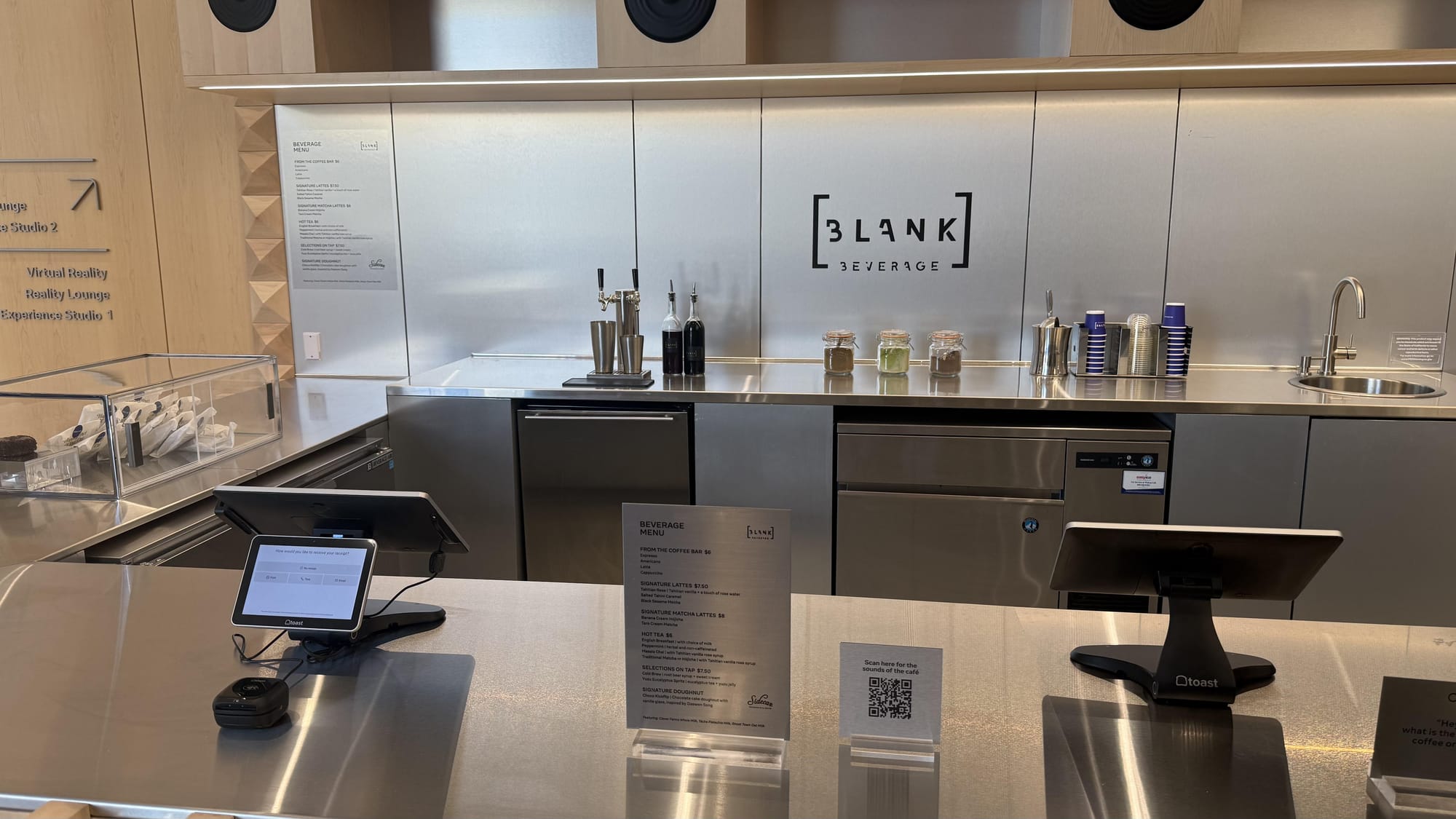
While you wait for your glasses to be prepared, a nearby cafe offers a number of appropriately expensive drinks, as well as free donuts, assuming you arrive early enough in the day that any are left. It's unclear whether that's a permanent fixture of the cafe, or if these pastries will eventually cost money after the store's opening celebrations.
Once you've been fitted with your glasses, to the far left from the entrance an "Experience Room" is fitted to take advantage of some of the AI glasses' features.
You might be wondering where the Quest headsets, and their associated demos, are found. Straight back from the entrance is a set of stairs to a second floor. Here is where you'll find the Quest 3 demos, including yet another miniature skate park, this time making use of the mixed reality functions of the nearby Quest 3 to overlay a virtual fingerboard rolling through the park.
Nearby you can find a selection of Quest 3 headsets and accessories for sale; Meta employees also are at the ready to help prospective buyers test out VR or mixed reality for themselves.
According to the handlers for the demo station, there's nothing specifically exclusive to this location; they choose a variety of apps and games to showcase depending on factors such as prospective use cases, and age. As far as games are concerned, Beat Saber is a popular showcase - and for anyone 16 and older, a demo for Batman: Arkham Shadow is also available, though the team usually stresses that walk-ups should not play Batman without prior VR experience.
Also available for demo on the second floor is the new Meta Ray-Ban Display, which I opted to test out - though my specific circumstances did showcase a potential issue for other walk-ups looking to test or grab a pair for themselves.
The supported prescriptions for Meta Ray-Ban Display is considerably less than the rest of Meta's lineup, and it just so happens that my own prescription - which is supported for Quest 3 inserts - is not currently supported for the HUD glasses, so I can't speak to the full visual experience.
What I can say, however, is that Meta Lab Los Angeles gives off a strong impression. Even if the Quest is clearly only a small part of the store's lineup, Meta seems quite confident in what they have to show for the general public.
For those of you within the Los Angeles area that have been looking to check out a demo for Meta's current hardware, I can easily recommend stopping by to give things a look. If nothing else, it should be a memorable time.
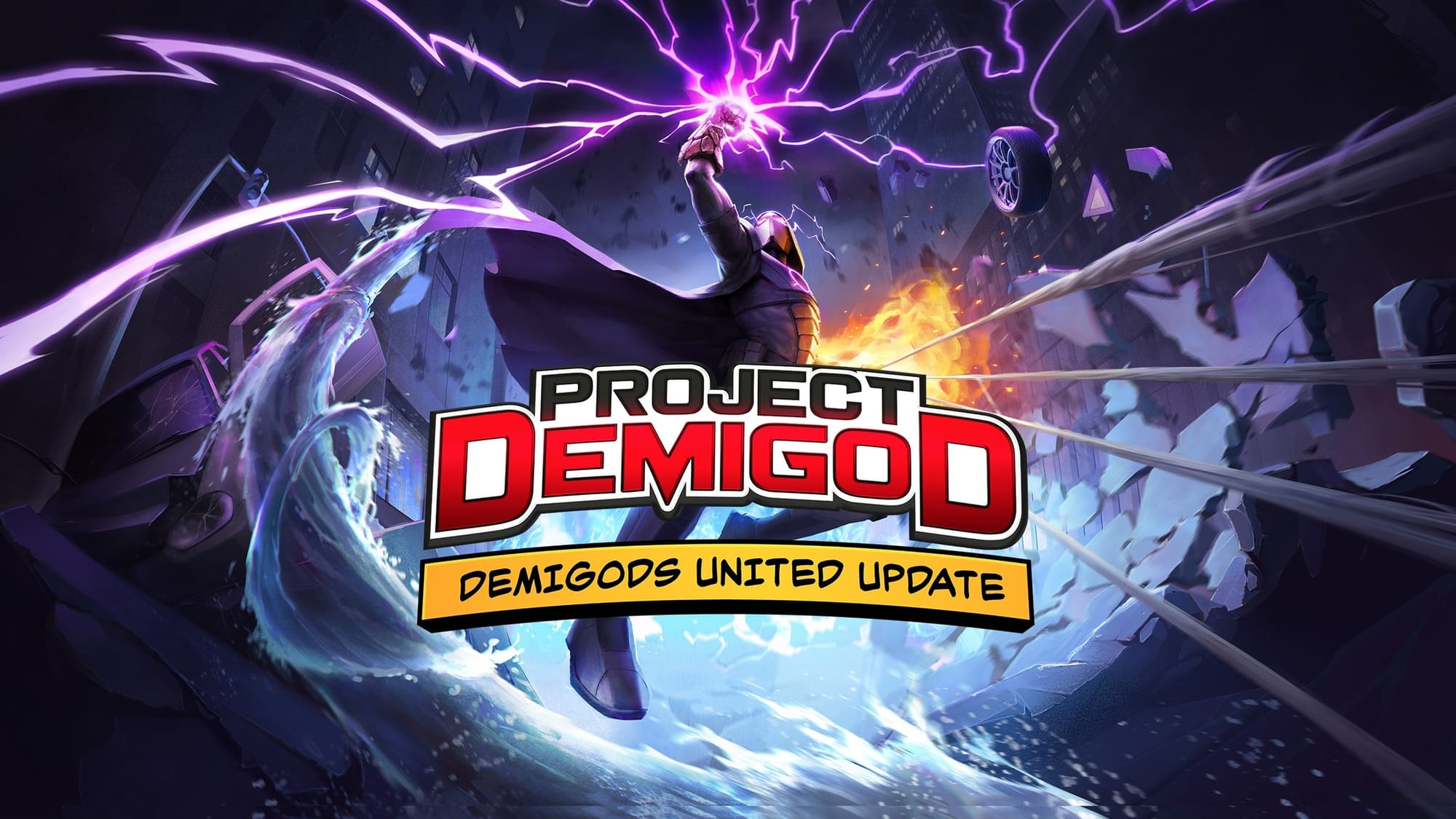
Superhero sim Project Demigod now has a multiplayer mode on Quest and Steam.
Developed by Omnifarious Studios, you may recall Project Demigod entered full release in February 2024 after an initial early access launch. It's a physics-based superhero sandbox with modding support that gives you a range of powers such as super strength or flight, where you can take on enemies and bosses across different missions.
Now, Project Demigod has recently launched the 'Demigods United' update with two major additions. Social multiplayer lets you hang out with others across the city, with “full enemy combat” coming soon in a future update. Drone combat is also available, where you can fight against drones, turrets, and attack helicopters.
Demigods United marks the latest patch in a series of post-launch updates. Previous updates include adding giant enemies, a 'Demi-Mod' patch that upgraded the modding SDK, and the 'Armory Update' with new weapons and other changes. This April's 'Lights, Camera, Action' update also included the LIV Creator Kit and power color customization.
Project Demigod is out now on the Meta Quest platform and PC VR.
 Connexion
 UploadVRRichie Shoemaker