Connexion
Amelia's Escape Impressions: A Bit De-Myst-ifying

Reality Syndrome Symphony's upcoming escape room puzzler has promise, but issues with controls and puzzle readability make this a release we'll need to see more before recommending.
I love puzzle games, as I'd imagine most VR players do; it comes with the territory. I also love narrative puzzlers like Myst, and have played more than a handful of escape rooms. So, when Reality Syndrome Symphony offered us a chance to take an early look at the upcoming Amelia's Escape, I was pretty stoked to see what the game had in store - yet what I've played leaves me concerned and excited for the final release in equal measure.
What is it?: An escape room puzzler, where players must task Amelia with escaping an unknown warehouse.
Platforms: Quest (Previewed on Quest 3), Steam
Release Date: TBA
Developer: Reality Syndrome Symphony
Publisher: Reality Syndrome Symphony
Price: TBA
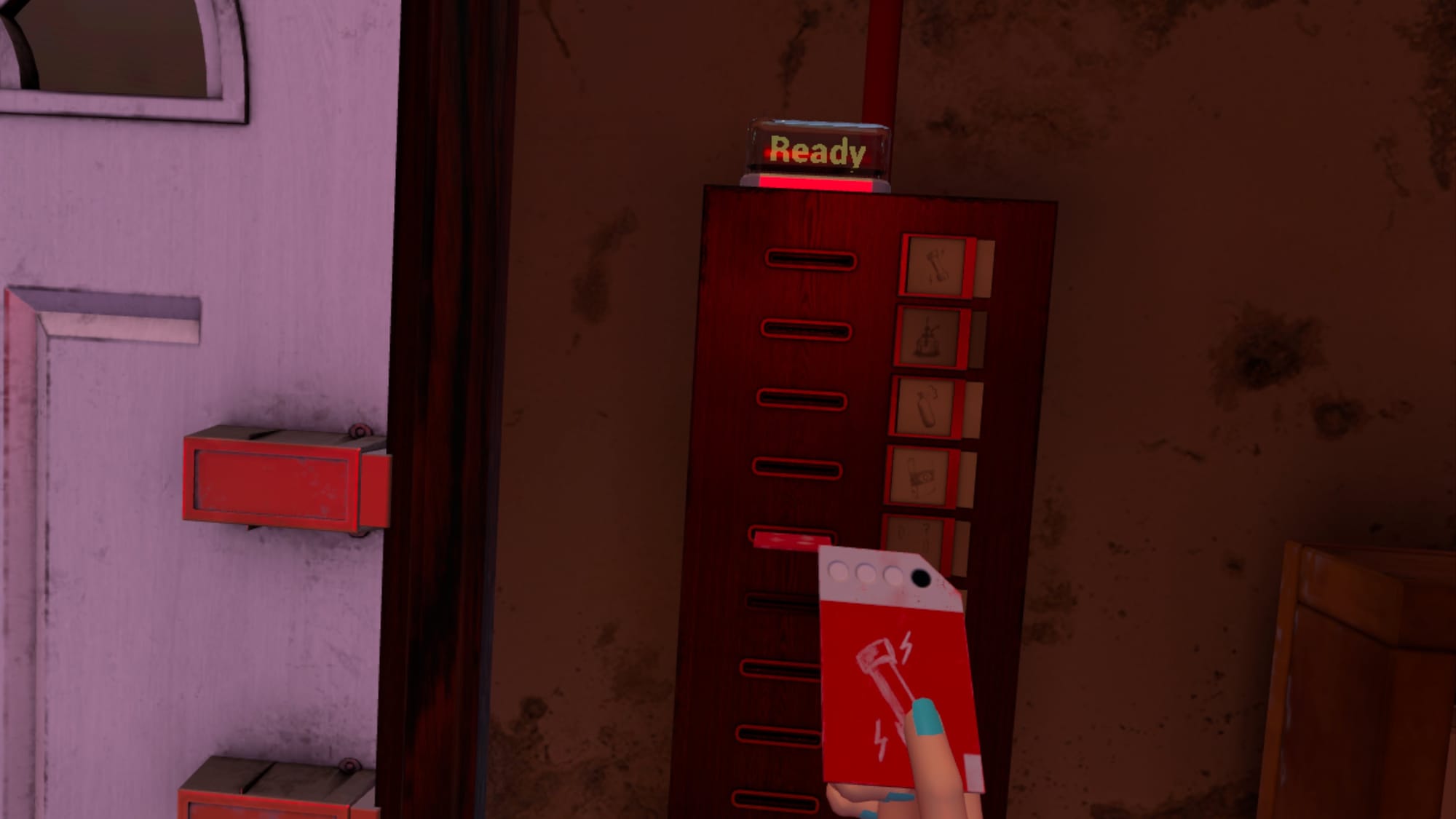
Let's start with some of the obvious; starting up the demo, players find themselves - Amelia - locked in a warehouse filled with puzzles, and after some brief exposition discover they must complete a number of puzzles and gain keycards to unlock a door to allow their escape. You accomplish this by searching the warehouse for items to interact with, some obvious and others less so. Two major issues immediately reveal themselves, one hopefully exclusive to this demo build, and another which isn't inherently exclusive, but with any luck will be patched before launch.
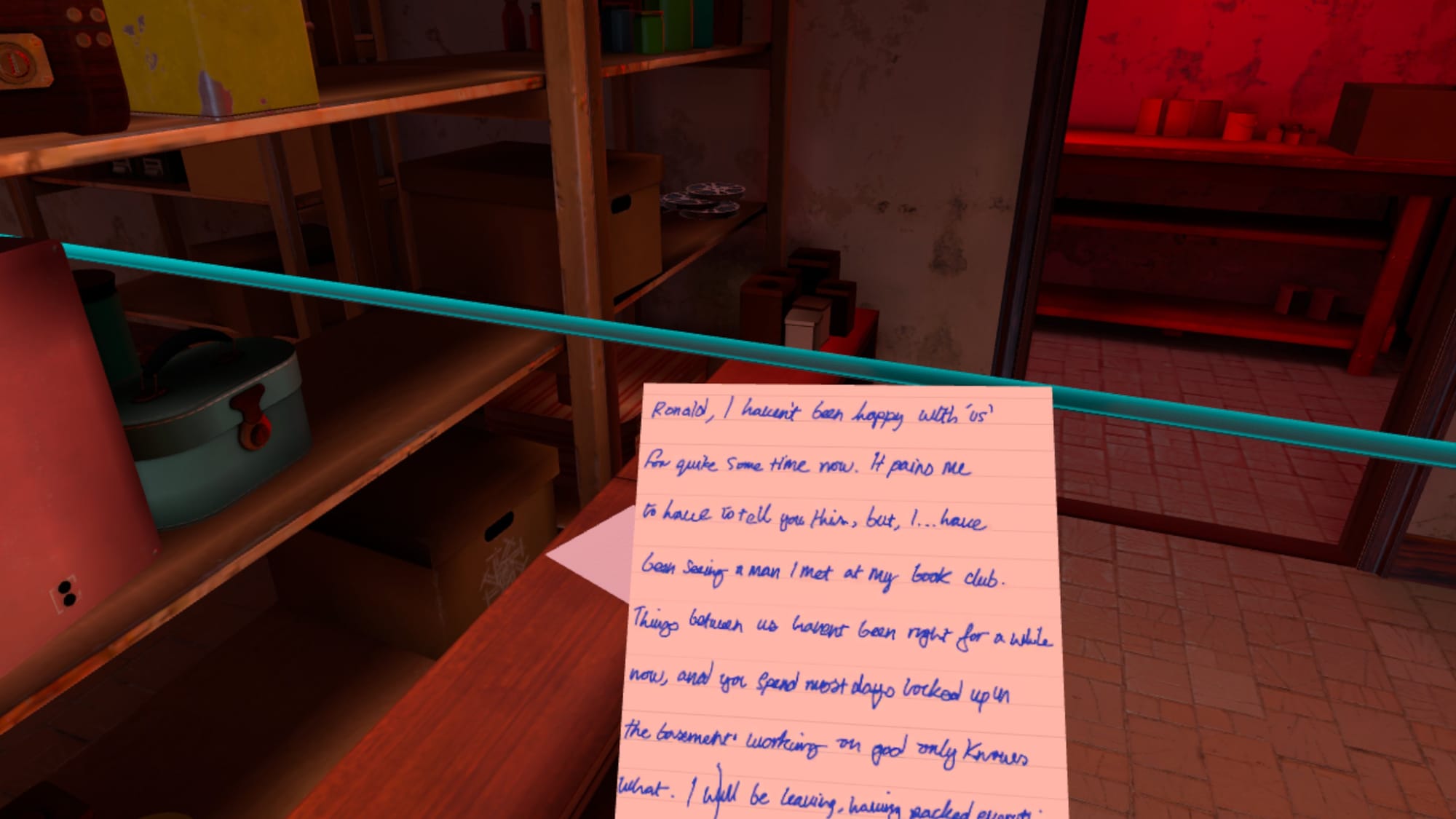
I must confess that I found myself stuck on the second of the demo's puzzles for an unreasonably long amount of time, to the point where I eventually ended up emailing the developers to figure out if I had run into a progression blocker, or some other known issue. I hadn't, but I did learn that the build I played came with a few quirks; while the warehouse is dotted with all manner of objects, all but a few of them actually do anything in this version of the game. The rest are "red herrings" that will be used in the full release.
On its own, I can't say I'm a fan of this tactic. Some of these objects, like air canisters that Amelia will comment on when interacted with can be filled with air, leading the player down a dead-end. Others, then, don't even offer this luxury - even if Amelia will comment on them all the same, suggesting that they do offer a use. Ultimately the solution I was missing all along I'd glanced over due to a weird interaction; you're meant to bridge a connection with a metal spanner, but placing it when the fuse starts the power flowing will do nothing, even if you place the spanner in the right spot.
Frustrating detection for controls.
I'd hope in the final release the game can prevent you from placing the spanner when the power is on - ideally making it clear that, yes, you're on the right track in the process. This ties into my second issue with the game, not tied to the demo; sometimes the game's controls, and which objects the player can interact with, are inconsistent. For the most part, objects that the player can interact with are a brighter shade than objects surrounding them. Yet, at the same time, this logic is inconsistent. Sometimes darker objects can be picked up and interacted with just fine. Other times, brighter objects are stuck in place and in the end players are left scratching their heads and scrambling their hands across entire shelves of the warehouse in search of objects they can pick up.
Comfort
Unsurprisingly, Amelia's Escape doesn't offer too many comfort options - mostly because there's little need to. As it is a slow-paced puzzle game, players can choose between stick-based locomotion and teleport movement. At least at this stage these options aren't very granular; what you see is what you get.
Even worse, while players have to actively use the grip button to interact with most objects, switches do not - and the sensitivity with which they're activated is ridiculous. Returning to that electricity puzzle; the same box you place the spanner in has two levers the player can interact with. They will react to your hands even from what feels like a foot away, and it's almost impossible to finely control which of the two is activated at any given time.
On a more positive note, and perhaps unsurprisingly the game looks and runs great on a Quest 3 headset. Even if this demo left me with far more questions than answers, with any luck the final release will manage to fix the issues I've had with this early build. I hope the next time I check out the game, things will be in a better - and more easily recommendable - state.