↩ Accueil

Vue lecture

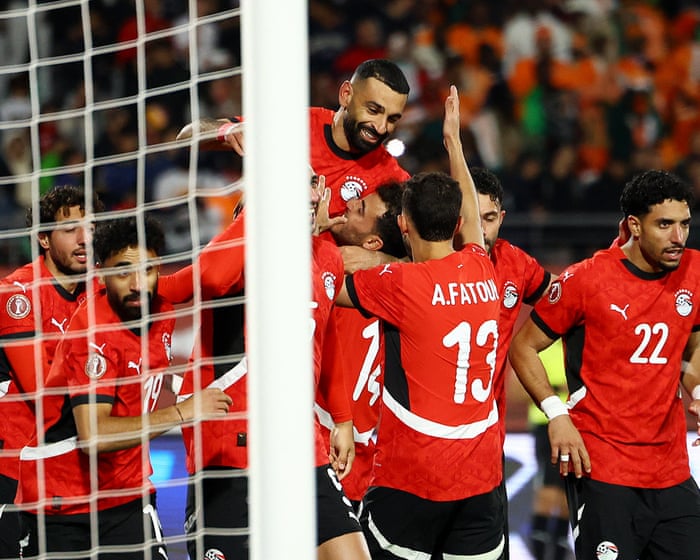
Salah inspires Egypt with energy recalling golden generation to evoke recent history | Jonathan Wilson

Liverpool forward will face his former teammate Sadio Mané in Afcon semi against Senegal after arguably the Pharaohs’ best performance since 2008

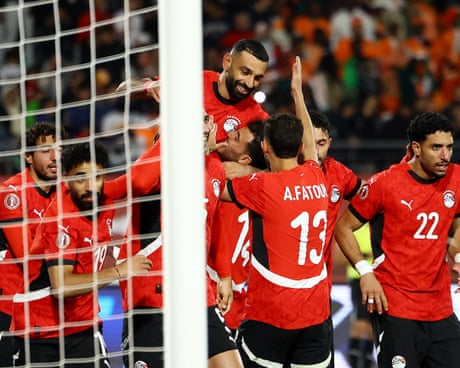
It is a long time since Egypt had a night this good. There have been two World Cup qualifications since their golden age of three successive Cups of Nations came to an end in 2010, and they’ve got to the finals of two Cups of Nations since, but this had a different feel to the knockout phases in 2017 or 2021 (played in 2022). This wasn’t grinding through, doing just enough (across the knockouts in 2017 and 2021, Egypt won one game without needing extra time or penalties; a grim 1-0 against Morocco in the 2017 quarter-final). It was taking on one of the giants of African football and beating them well. A 3-2 victory over Côte d’Ivoire was probably Egypt’s best single performance since they beat the same opposition 4-1 in the semi-finals of Ghana 2008.

That game in Kumasi was always going to cast its shadow over this quarter-final. Saturday’s coaches were on opposite sides when Egypt beat Côte d’Ivoire on penalties in the 2006 final in Cairo – Hossam Hassan as a 39-year-old squad captain and unused sub and Émerse Faé in the centre of midfield – but it was the semi-final two years later this game most resembled. The 4-1 hurt Côte d’Ivoire far more than the final had, the image of a bewildered Kolo Touré running away from Amr Zaki as he scored Egypt’s third a symbol of the Pharaohs’ superiority that night. Within four minutes on Saturday, Odilon Kossounou had got in a similar mess, legs tangled as Omar Marmoush sped by him to put Egypt ahead.

Continue reading...

© Photograph: Siphiwe Sibeko/Reuters
© Photograph: Siphiwe Sibeko/Reuters
© Photograph: Siphiwe Sibeko/Reuters

  •  

Beyond Keane’s stick-it-up-your-bollocks, there isn’t much else to Saipan | Jonathan Wilson

Why is the film of Ireland’s 2002 World Cup falling-out not a documentary but a drama that takes liberties with events?

All history is to some extent narrative. You cannot tell a story without in some way editing it, reducing it, compressing it. Which means that anybody telling a story about a historical event, particularly one from the relatively recent past, risks outraging those who have studied it or who remember it. Often those complaints are pedantic, trivial, but sometimes they are not. It’s one thing to elide two minor characters or to tweak the timeline to simplify a story, quite another to imply misleading motivations.

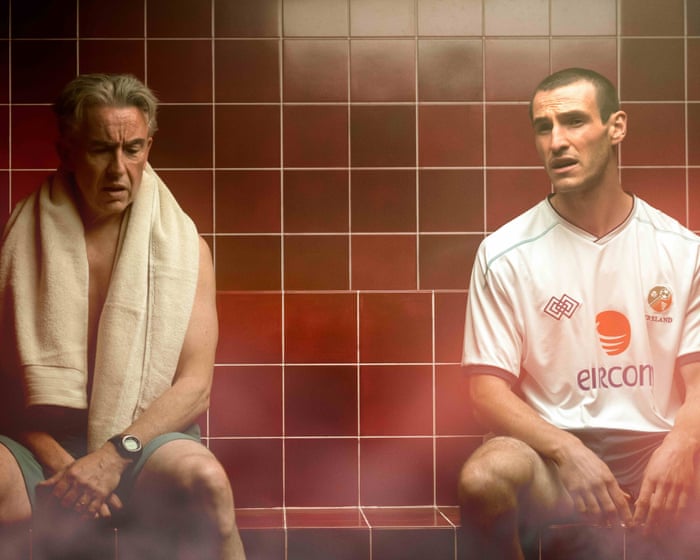
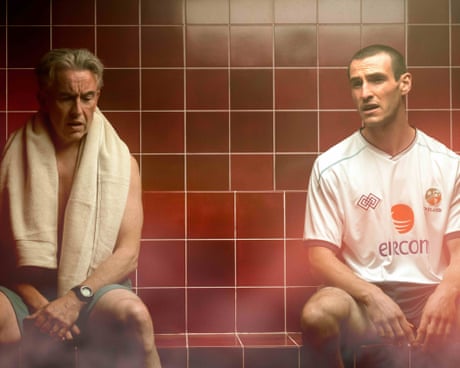
Saipan, Glenn Leyburn’s and Lisa Barros D’Sa’s film about the cataclysmic row between Roy Keane and Mick McCarthy shortly before the 2002 World Cup, came out in Ireland on Boxing Day and will be released in the UK on 23 January. It is obsessed by detail: the tracksuits, the sweatshirts, the kits are all right. It’s startling when the film cuts between reproductions of interviews and press conferences and actual footage to realise just how accurately these scenes have been recreated. Which raises two questions. What is the point? And how can such care have been taken over the look of the film when there are such grotesque inventions and inaccuracies in the plotting and motivation?

Continue reading...

© Photograph: Aidan Monaghan/PA

© Photograph: Aidan Monaghan/PA

© Photograph: Aidan Monaghan/PA

  •  

Morocco sail into Afcon semi-finals as Díaz sparks fine win over Cameroon

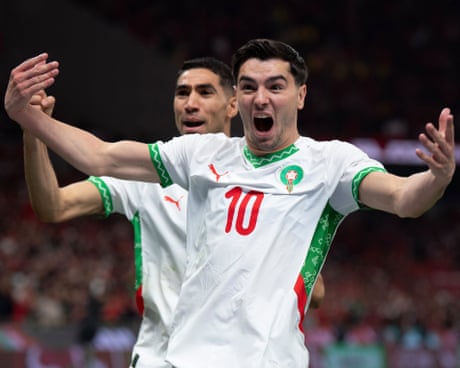
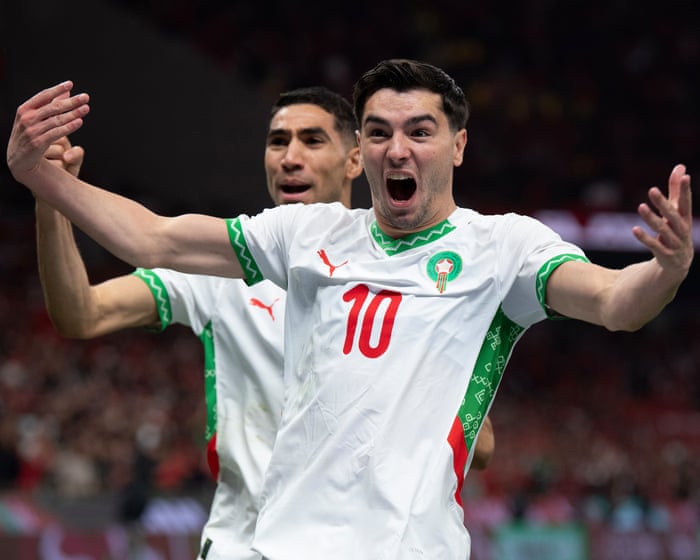
At last, Morocco have arrived at the tournament they are hosting. For four games they had played scratchy, crabbed football. Finally, in a spiky, ill-tempered quarter-final, there was something more like the Morocco that reached the semi-finals of the World Cup two years ago. If the game wasn’t fluent, that was largely Cameroon’s doing as they spoiled and delayed and sought treatment for injuries. But the hosts, for the most part, retained their cool, protecting a lead earned with verve in the first half with maturity in the second.

In previous games, Morocco had looked tense, limbs leadened by the expectation of a country that last won the Cup of Nations 50 years ago and that has spent a vast amount on football-related infrastructure as it prepares to co-host the 2030 World Cup. The coach, Walid Regragui, was even booed in the last-16 victory over Tanzania, his football deemed overly cautious despite a record of only four defeats in his 46 games as national coach before this quarter-final. “I always say that we are a family,” said Regragui. “Even if many people don’t believe in us or in me … that’s OK. We play for the country and for the supporters who want to see Morocco at the top.”

Continue reading...

© Photograph: Visionhaus/Getty Images

© Photograph: Visionhaus/Getty Images

© Photograph: Visionhaus/Getty Images

  •  
❌