Rappel de deux modèles d'écouteurs sans fil pour risque de lésions auditives


Les empreintes vieilles de plus de 200 millions d'années ont été découvertes dans les Alpes italiennes.


The Meta Horizon Store's 2025 Holiday Sale discounts blockbuster Quest games for the next three weeks.
You can currently get the Quest versions of titles like Alien: Rogue Incursion, both Arizona Sunshine games, Asgard's Wrath 2, Skydance's Behemoth, Metro Awakening, Reach, and Resident Evil 4, for between 20% and 65% off.
You'll also find discounts on a range of indie titles, such as Arken Age, Bonelab, Dungeons of Eternity, Eleven Table Tennis, Figmin XR, GOLF+, Into Black, Myst, Pistol Whip, Titan Isles, Walkabout Mini Golf, and VRider SBK.
The sale ends at 11:59pm PT on January 4, just under three weeks from now, giving plenty of time for people receiving a Quest headset as a gift this Christmas to get some of the top titles at a discounted price.
UploadVRDavid Heaney
Here's a list of just some of the games you can grab on sale:
Separately, Meta is also offering 15 sale bundles, letting you get multiple games and/or DLC together for a lower price than buying them individually:
If you already own one of the games in a bundle, the price is lowered to reflect that.


Il existe des applications premium pour iOS et Android qui sont disponibles gratuitement pour une durée limitée. Ne tardez pas à profiter de ces offres, car elles ne seront peut-être plus disponibles demain ! Nous vous avons suggéré plusieurs apps et jeux pour que vous puissiez en profiter.
Der Beitrag Ces applications Premium sont gratuites alors profitez-en ! erschien zuerst auf nextpit.
Mozilla's new CEO confirms Firefox will become an "AI browser", with opt-out features. The aim is to raise money. But what does this pivot means for users?
You're reading Mozilla’s New CEO Confirms Firefox Will Become an “AI Browser”, a blog post from OMG! Ubuntu. Do not reproduce elsewhere without permission.
La NASA prévoit envoyer quatre astronautes en orbite autour de la Lune à partir du 6 février 2026.

Puzzling Places adds Journey Mode, remastered puzzles, improved hand tracking and more in a free update.
The Realities.io developed VR jigsaw game, known for turning real-world locations into tactile 3D puzzles, is rolling out a large update for the holiday season. Its headline feature is Journey Mode, a new way to play designed to offer a calmer, low-effort experience.
Rather than the game's normal loop, where the player gets all the pieces of a disassembled puzzle at once, Journey Mode begins with a single central piece and offers only a small set of pieces to add at a time. Players then attach pieces to grow the center, allowing the scene to gradually assemble in an almost guided progression.
Today's update also overhauls hand tracking, which Realities.io says has been optimized for sharper responsiveness and more intuitive reactions. Updated tutorials have been added, as well as “natural gestures” like poking puzzle pieces to inspect them, dragging them to switch tabs, and a “throw-back” motion to return pieces to their staging area.
Quality of life updates are also promised. These include the addition of a new in-game menu, an updated start screen with quick-start options, personalized stats, and tailored puzzle pack recommendations. Puzzling Places' library features more legible thumbnails for easier browsing, and puzzle and pack ratings are now visible directly from the storefront.
Lastly, the base game's lineup of puzzles has been refreshed, swapping out older puzzles for community favorites. Four puzzles have been remastered with new animations and effects as well.
Puzzling Places' Holiday Update is available now as a free download on Quest, PS VR2, and Pico. The game is also available on Apple Vision Pro, and coming to Steam at a later date.

On Dec. 21, 2025, Ebenezer Scrooge will be haunted for the last time by disembodied spirits wearing Quest 2 or newer headsets.
Thereafter, the first fully embodied telling of A Christmas Carol by Charles Dickens in consumer VR will play on loop around the holiday each year, replaying the spatially captured performance by Agile Lens.
"One of our white whales we finally achieved this holiday was a method for perfectly recording EVERYTHING that happens during a live show," wrote architect and producer Alex Coulombe over direct message. "Mocap, show cues, audio, even everything the audience does. And we can play it back completely on demand."
Since 2021, Agile Lens has put together the experimental VR telling of A Christmas Carol using the latest cutting edge capture and streaming technologies, including Unreal's MetaHuman avatars. The production, along with other Agile Lens projects like a gigantic holodeck selling real estate in Texas, led the group to develop a tool called "Stage Presence" for the creation of future theatre-based productions in VR.
"We have no plans to shut down the app at this time— after the all-day VR replays on Christmas Eve, likely we’ll leave it as a bit of a museum where you can visit Charles Dickens’s study and see our old “Next Show in…” counter," Coulombe wrote. "Who knows? Maybe someday we’ll find a good reason to bring it out of retirement."
Tickets are free in Quest 2 or newer VR headsets to the final live showings held from Friday to Sunday. The performance stars Ari Tarr as Dickens and Scrooge with Debbie Deer as the ghosts, both of them wearing Quest Pro headsets for face and body capture. You’ll become a ghost yourself during the tellings this weekend, and visible to Scrooge as a disembodied spirit helping him come to terms with his behavior.
"I'm really proud of it. I'm going to miss it a lot. It's been such a joy and such a useful resource to come back to," said Kevin Laibson, who worked as a producer on the production. "You really can't mess up a Christmas Carol – everyone knows it and loves it."
"Likely next year we’ll pick a few dates to trigger some shared VR replays," Coulombe wrote. "The 'live' audience will be there as ghosts of the “present” right alongside the audience ghosts of the “past”— it will all get very meta."

We're extremely curious to see what Agile Lens and their creators do next with theatre in VR and with their Stage Presence tool. There have been some impressive theatrical experiences like The Under Presents and The Tempest and much more made in VR by others, but nothing that's been able to keep a troupe of actors employed continuously.

"VR live theatre is wonderful in terms of accessibility, but it’s still far from the ideal of actual breathing people in the same venue gasping and laughing together," Coulombe wrote. "And so we’d love the chance to combine our mixed reality theatre toolset with our virtual reality theatre toolset for a production that caters to an on-site audience while also inviting participants from around the world to join in. That’s the goal of Stage Presence— a modular toolkit to service a wide range of live XR productions."


Stealth shooter Espire: MR Missions gets a standalone release in early access, and existing Espire 2 owners get it for free.
Revealed last month, Espire: MR Missions expands upon the mixed reality mode previously seen in Espire 2: Stealth Operatives. This comes with 29 different missions that dynamically adapt to your home, taking out guards and navigating traps between 21 small-scale single-room missions and eight large-scale multi-room missions. That's out now for the wider Quest platform.
Detailing its reasons for making this a standalone launch, developer Digital Lode advised that it's “proven very difficult to maintain the MR mode within the larger Espire 2 VR game” as mixed reality technology evolves. The developer also believes that roomscale mixed reality offers a different appeal compared to Espire 2's fully immersive VR missions.
As such, Espire 2: Stealth Operatives will return to being 100% focused on VR and its existing MR support will eventually be removed. Because of this, anyone who bought Espire 2 on Quest before today's launch will receive MR Missions for free, while all future Espire 2 owners will get a discounted rate.
As for its latest additions, the early access release of MR Missions comes with five new missions and a new target shooting game mode. Digital Lode advised that its core 'Espire Spatial Adaptation System' for adapting levels to your space has seen “tonnes of improvements,” while some mechanics have been simplified. There's also a new user interface that's been designed for mixed reality.
Espire: MR Missions is out now in early access on Quest for $8.99. A full release date is unconfirmed, though the studio advised that it's preparing a roadmap of “new missions, modes, features, and content.”

Zero Caliber is now available on PlayStation VR2.
Originally released in early access in 2018, Zero Caliber by XREAL Games is one of VR's older FPS hits that have since appeared on most major VR platforms. This comes with a campaign that supports single player and up to four-player co-op, PvP game modes, and a Zombies mode. Having originally targeted a December 12 launch, it's now arrived on PlayStation VR2 following a brief delay.
We've yet to go hands-on with this new edition, so we're unsure whether this features any PlayStation VR2-specific enhancements at launch. In a social media reply, the studio confirmed that adaptive triggers support would arrive “either in a day-1 or week-1 patch.” We've contacted the studio asking for further details, and we'll update this article if we learn more.
It's the first time we've seen the Zero Caliber series reach PlayStation, and you may recall a port was planned for the original PlayStation VR. The studio later confirmed this was based on the Quest edition, Reloaded, citing “hardware limitations” as to why it couldn't port the PC VR version. This ultimately never materialized, and today's release is based on the PC VR edition.
As for what's next, XREAL Games previously advised it's planning to bring the sequel, Zero Caliber 2, to Sony's headset following October's PC VR remastered launch. However, a specific release window is currently unknown. Elsewhere, the studio released a new Zero Caliber 2 quality of life update on Quest with new weapons, and a Steam update for Remastered is also arriving soon.
Zero Caliber is out now on PlayStation VR2 and PC VR, while Zero Caliber: Reloaded is on Quest and Pico.

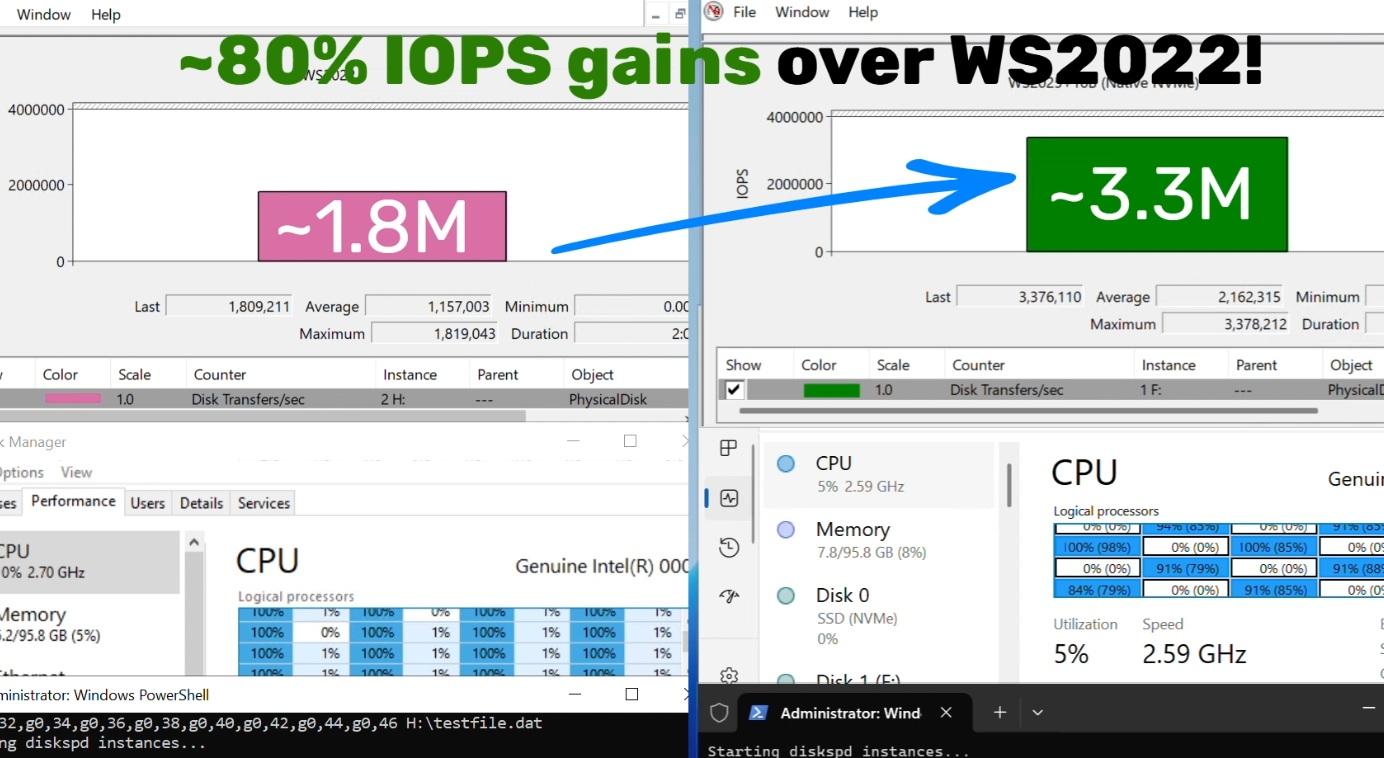
En mars et avril 2024, Microsoft faisait miroiter d’importants gains de performances pour les NVMe sous Windows Server 2025, par rapport à Windows Server 2022, grâce à une prise en charge native. Il était alors question d’une diminution de l’usage CPU, non quantifiée, assortie d’une hausse de 70 % des performances en IOPS... [Tout lire] Physicists searching for signs of quantum gravity have long faced a frustrating problem. Even if gravity does have a quantum nature, its effects are expected to show up only at extremely small distances, far beyond the reach of experiments. A new theoretical study by Benjamin Koch and colleagues at the Technical University of Vienna in Austria suggests a different strategy. Instead of looking for quantum gravity where space–time is tiny, the researchers argue that subtle quantum effects could influence how particles and light move across huge cosmical distances.
Their work introduces a new concept called q-desics, short for quantum-corrected paths through space–time. These paths generalize the familiar trajectories predicted by Einstein’s general theory of relativity and could, in principle, leave observable fingerprints in cosmology and astrophysics.
General relativity and quantum mechanics are two of the most successful theories in physics, yet they describe nature in radically different ways. General relativity treats gravity as the smooth curvature of space–time, while quantum mechanics governs the probabilistic behavior of particles and fields. Reconciling the two has been one of the central challenges of theoretical physics for decades.
“One side of the problem is that one has to come up with a mathematical framework that unifies quantum mechanics and general relativity in a single consistent theory,” Koch explains. “Over many decades, numerous attempts have been made by some of the most brilliant minds humanity has to offer.” Despite this effort, no approach has yet gained universal acceptance.
There is another, perhaps deeper difficulty. “We have little to no guidance, neither from experiments nor from observations that could tell us whether we actually are heading in the right direction or not,” Koch says. Without experimental clues, many ideas about quantum gravity remain largely speculative.
That does not mean the quest lacks value. Fundamental research often pays off in unexpected ways. “We rarely know what to expect behind the next tree in the jungle of knowledge,” Koch says. “We only can look back and realize that some of the previously explored trees provided treasures of great use and others just helped us to understand things a little better.”
Almost every test of general relativity relies on a simple assumption. Light rays and freely falling particles follow specific paths, known as geodesics, determined entirely by the geometry of space–time. From gravitational lensing to planetary motion, this idea underpins how physicists interpret astronomical data.
Koch and his collaborators asked what happens to this assumption when space–time itself is treated as a quantum object. “Almost all interpretations of observational astrophysical and astronomical data rest on the assumption that in empty space light and particles travel on a path which is described by the geodesic equation,” Koch says. “We have shown that in the context of quantum gravity this equation has to be generalized.”
The result is the q-desic equation. Instead of relying only on an averaged, classical picture of space–time, q-desics account for the underlying quantum structure more directly. In practical terms, this means that particles may follow paths that deviate slightly from those predicted by classical general relativity, even when space–time looks smooth on average.
Crucially, the team found that these deviations are not confined to tiny distances. “What makes our first results on the q-desics so interesting is that apart from these short distance effects, there are also long range effects possible, if one takes into account the existence of the cosmological constant,” Koch says.
This opens the door to possible tests using existing astronomical data. According to the study, q-desics could differ from ordinary geodesics over cosmological distances, affecting how matter and light propagate across the universe.
“The q-desics might be distinguished from geodesics at cosmological large distances,” Koch says, “which would be an observable manifestation of quantum gravity effects.”
The researchers propose revisiting cosmological observations. “Currently, there are many tensions popping up between the Standard Model of cosmology and observed data,” Koch notes. “All these tensions are linked, one way or another, to the use of geodesics at vastly different distance scales.” The q-desic framework offers a new lens through which to examine such discrepancies.
So far, the team has explored simplified scenarios and idealized models of quantum space–time. Extending the framework to more realistic situations will require substantial effort.
“The initial work was done with one PhD student (Ali Riahina) and one colleague (Ángel Rincón),” Koch says. “There are many things to be revisited and explored that our to-do list is growing far too long for just a few people.” One immediate goal is to encourage other researchers to engage with the idea and test it in different theoretical settings.
Whether q-desics will provide an observational window into quantum gravity remains to be seen. But by shifting attention from the smallest scales to the largest structures in the cosmos, the work offers a fresh perspective on an enduring problem.
The research is described in Physical Review D.
The post Motion through quantum space–time is traced by ‘q-desics’ appeared first on Physics World.

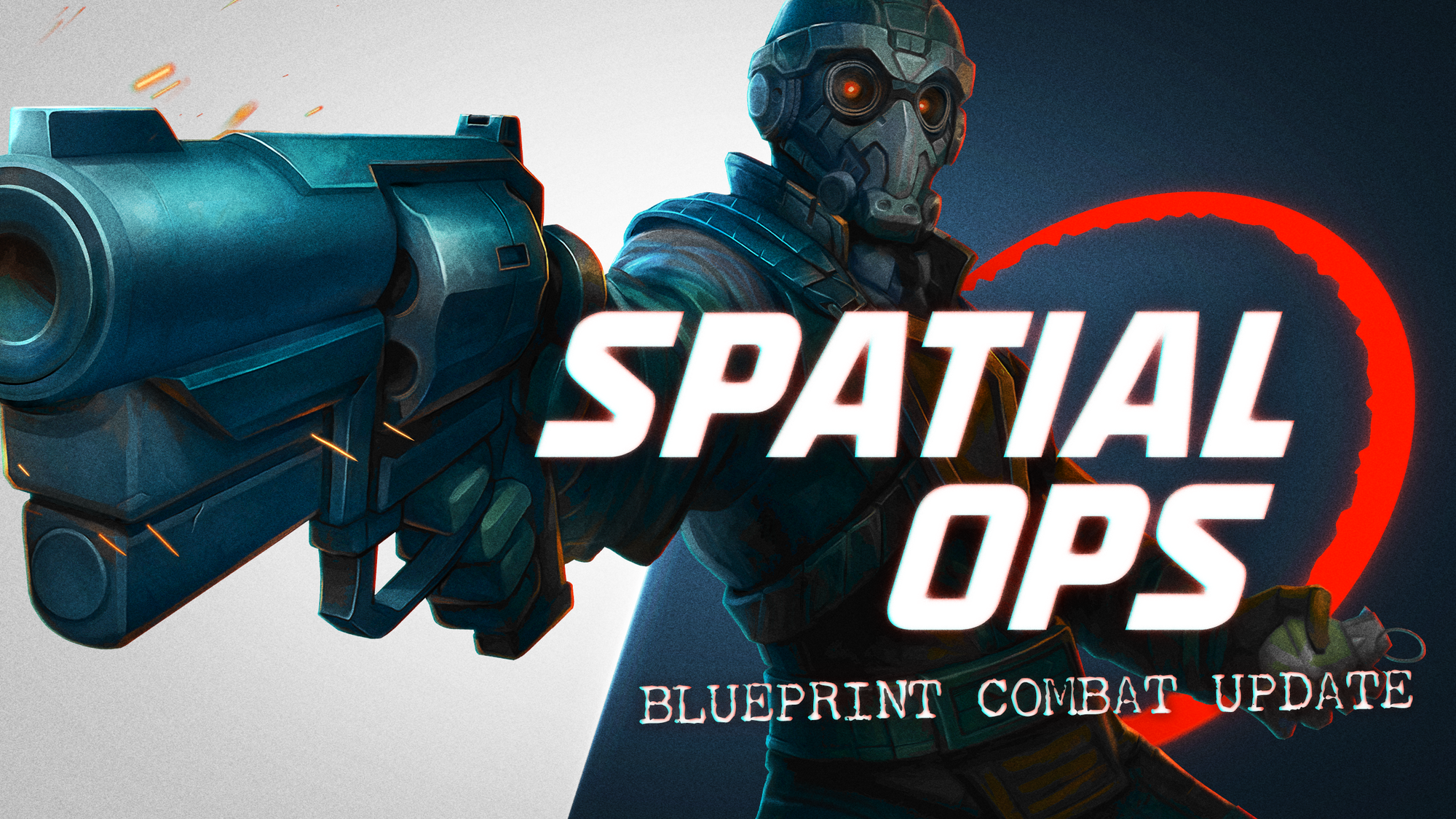
Spatial Ops expands the mixed reality FPS's map creation tools in today's free update on Quest, also adding custom rulesets and a new co-op survival mode.
In the 'Blueprint Combat Update', developer Resolution Games has introduced the ability to edit Spatial Ops maps in real time before beginning a multiplayer match, where everyone can see the changes immediately. This also adds 'Undo' and 'Redo' tools, hazardous damage zones that slowly drain health, floating barriers, and the option to place text in levels to better guide players.
As for other changes, Spatial Ops now features an online map library, the ability to save a host's map, and new map templates. Custom rulesets can now be saved to individual maps, letting you tweak elements like bot difficulty, friendly fire toggles, weapon tuning, armor visibility settings, and more.
It's also getting a co-op survival mode for taking on challenges together with other players. Supporting this is a new 'Enemy Spawner' object to determine where foes appear, alongside a Flashbang weapon. Finally, there's also a new paid DLC called the “Corrupted Technology Theme,” offering unique props for your toolkit.
It's the latest post-launch update since Spatial Ops entered full release last year, and this August saw Resolution Games release the 'Pulse Protocol' update. That introduced bHaptics support for the TactSuit, TactSleeve, and TactVisor, in-game achievement tracking, campaign rebalancing, an extra large map template, and new features for the Quest-exclusive Arena Mode.
Spatial Ops is available now on the Meta Quest platform. While it didn't receive today's update, a 'Campaign Edition' is also on Pico.


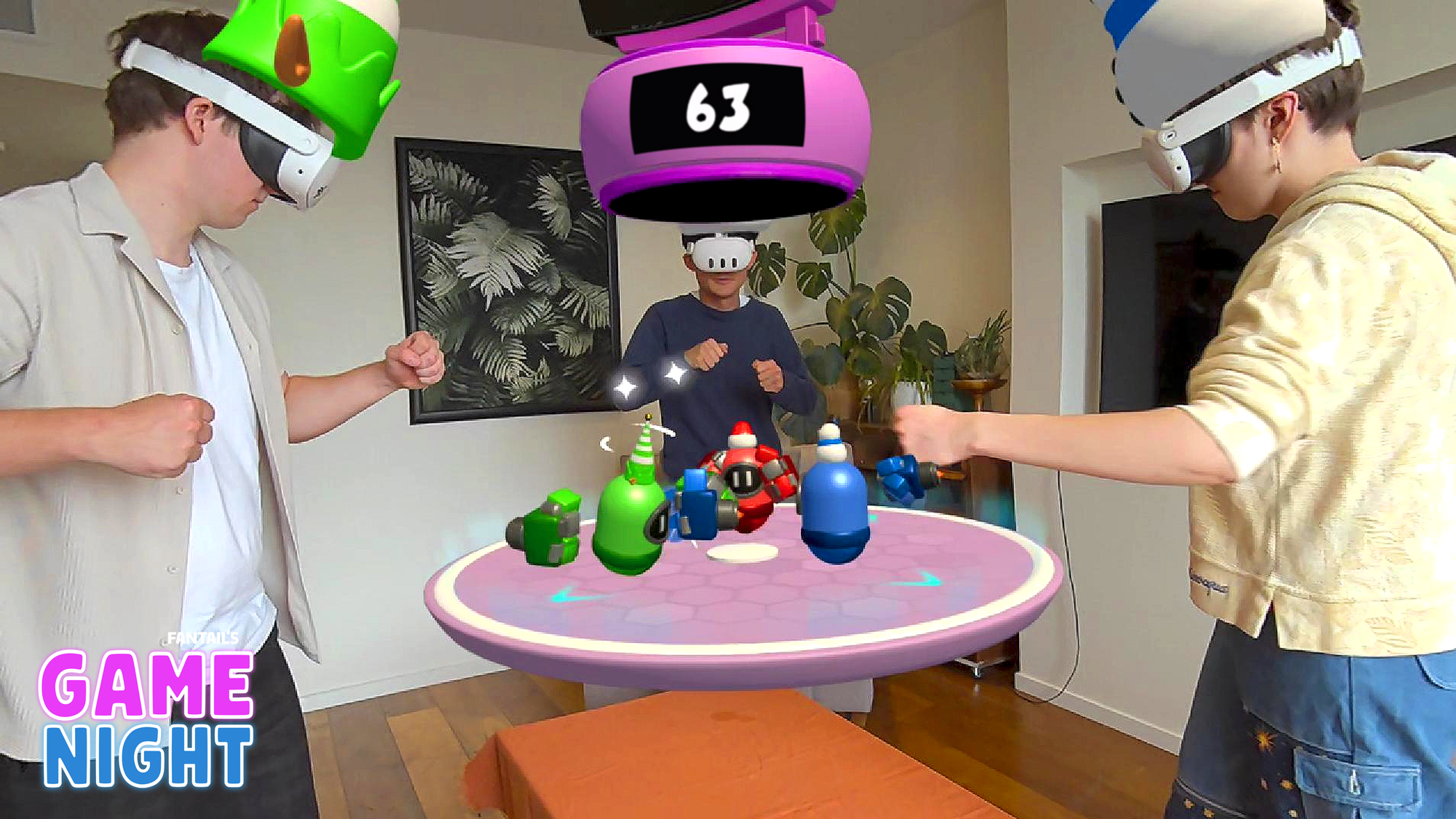
Game Night's new minigame blends Rock ’Em Sock ’Em Robots boxing with Sumo, and it's out now for the co-located mixed reality party title.
Released last year in early access, Game Night by New Zealand studio Fantail Games is a family-friendly roomscale title that's playable solo or with up to four players locally. Joining this minigame collection as a free update, Final Throwdown only uses hand tracking as you directly control the fists of your robot avatar to punch opponents out of your shared arena.
Designed around “short, high-intensity rounds,” Final Throwdown sees you knocking other players out of the ring to score points. Throwing them into hoops earns bonus points, while bosses force you to decide whether to cooperate with your opponents or use the disruption to your advantage. Arena height adapts to the shortest player, which allows for seated play. Fantail also states arm reach is normalized to give adults and children equal advantage.
Final Throwdown marks the seventh minigame so far in Game Night, and the fourth it's received since last year's early access launch. Other featured games include Fishing Frenzy where you scoop up and deliver fish, a match-3 spatial puzzler where you connect matching plushies in a conga line, penguin ice hockey, a Whack-A-Mole game to test reactions, and more.
Game Night is out now in early access on the Meta Quest platform.


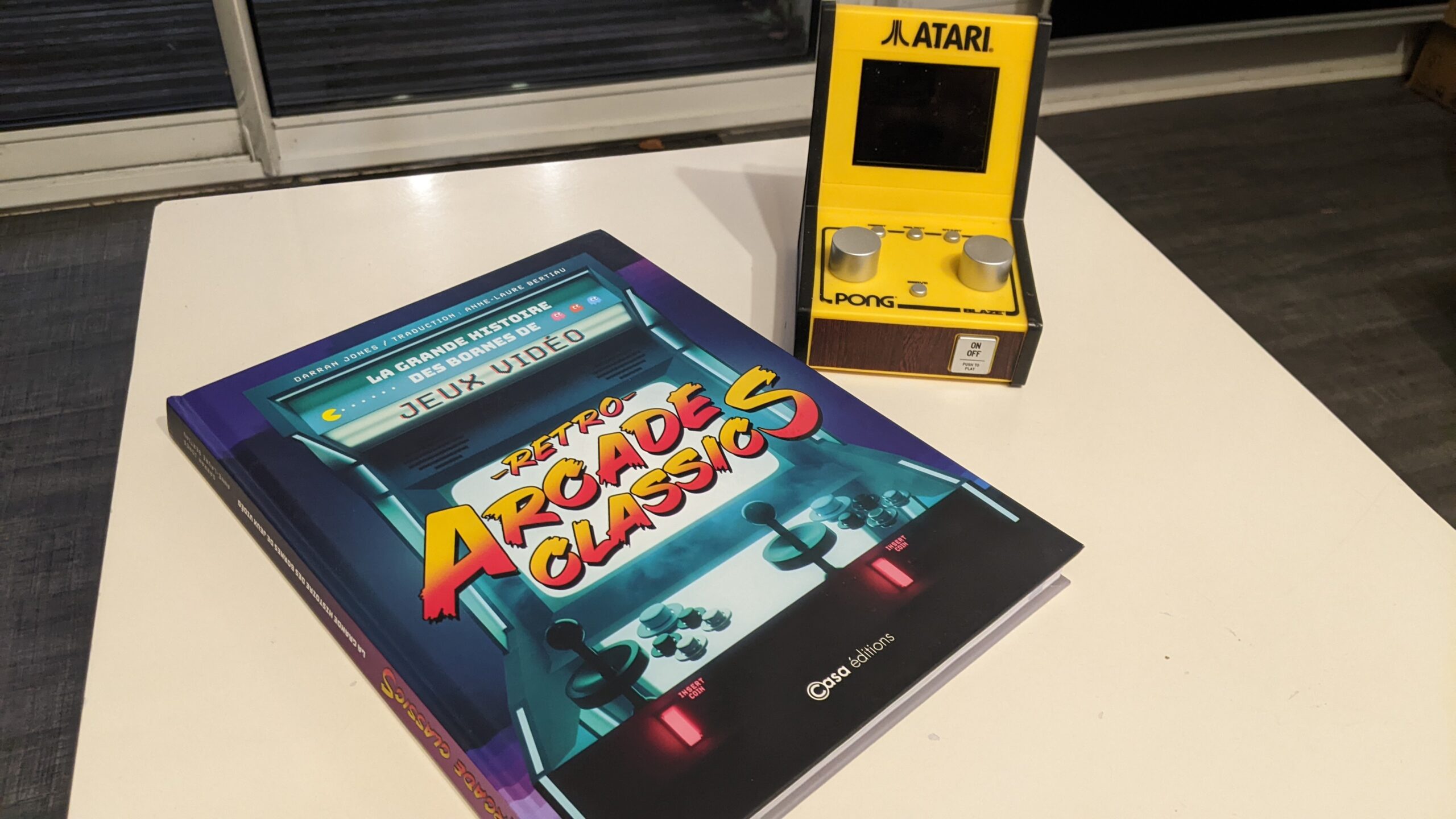
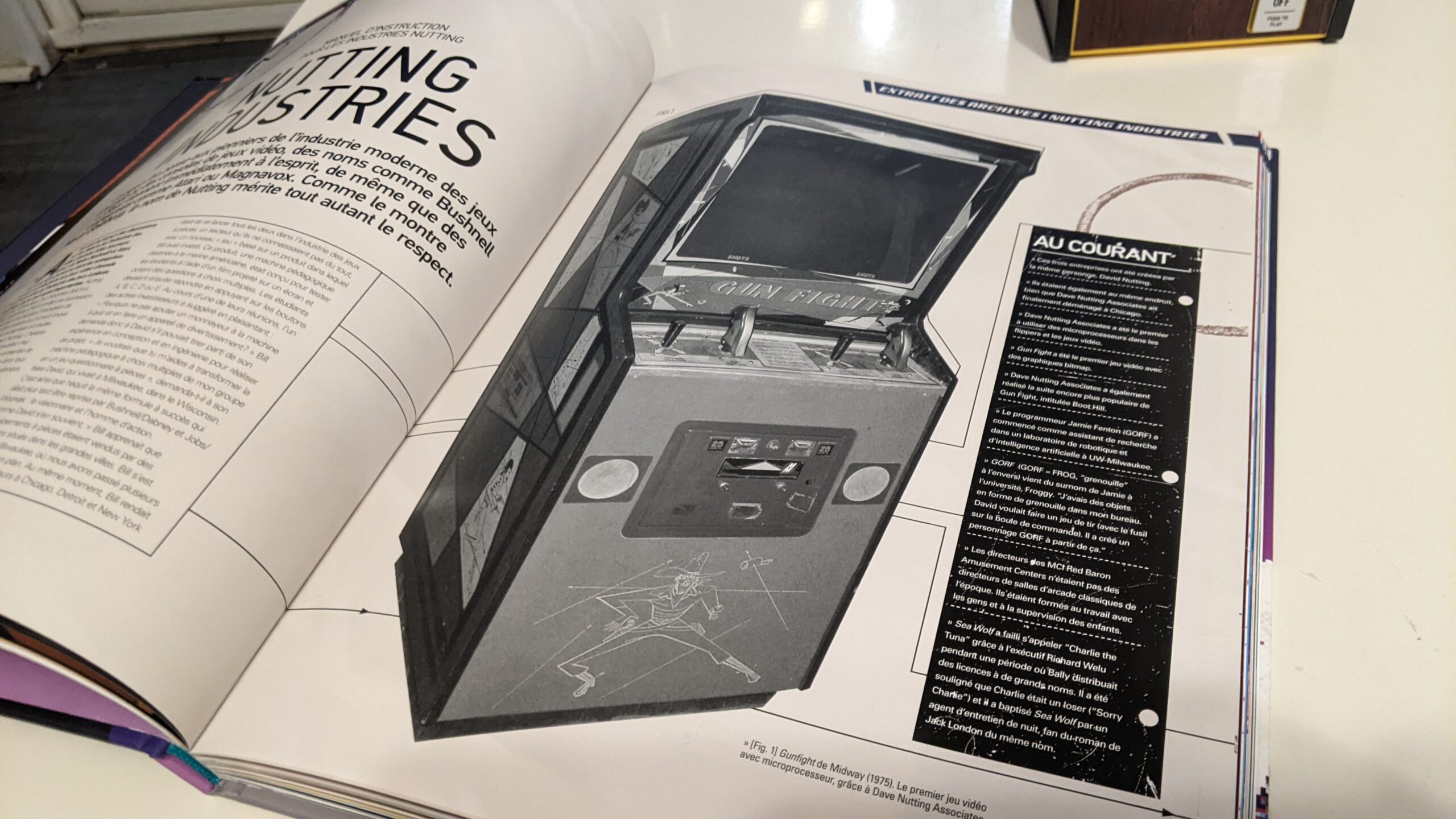
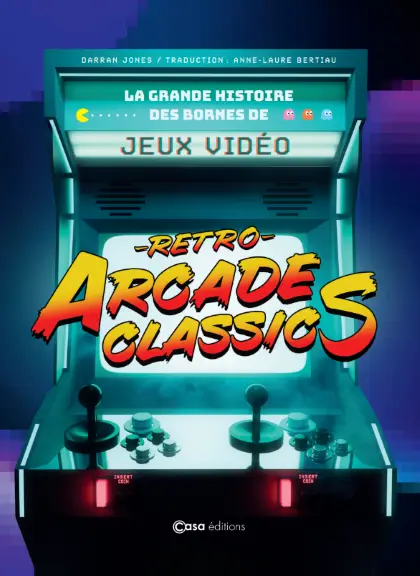
Ce livre de Darran Jones, enfin traduit en français par Anne-Laure Bertiau, est une mine d’infos sur l’histoire des jeux vidéo en bornes arcade. Retro Arcade Classics fourmille d’infos, de photos, de screenshots (souvent très petits malheureusement…) dans une mise en page riche et agréable à parcourir. On trouve des sprites et autres éléments visuels de jeux mythique allant de Pac-Man à Ghouls’n Ghosts en passant par Street Fighter et Burger Time.
Depuis les années 1970 l’histoire de ces machines qui mène à l’arrivée des premiers ordinateurs personnels ou des premières consoles est passionnante. Le livre fait la part belle à ces bornes d’antan et aux salles d’arcade en faisant le focus sur des titres phares. Car on peut citer aussi Pong, Donkey Kong ou Space Invaders bien sûr…
Un must-have pour tous les fans de jeux vidéo dispo chez Casa éditions.


Cet article RETRO ARCADE CLASSICS est apparu en premier sur Insert Coin.

Si vous avez aimé le film d’animation Chicken Run qui mettait en scène des poules enfermées dans un poulailler à la manière de La Grande Évasion, vous allez fondre pour ce nouveau jeu vidéo, Chicken Run: Commandodu. En solo ou à plusieurs en local on peut prendre le contrôle de Molly, Rocky, Frizzle et leurs amis, le but étant encore une fois de s’infiltrer à travers cinq fermes toutes plus dangereuses les unes que les autres pour sauver les poulets capturés. Il faut donc éviter les caméras, les gardes et autres pièges. On peut se cacher ou se déguiser… Au final on a un jeu fun et efficace, parfait pour jouer en famille pendant les fêtes de fin d’année. Dispo sur consoles et PC.

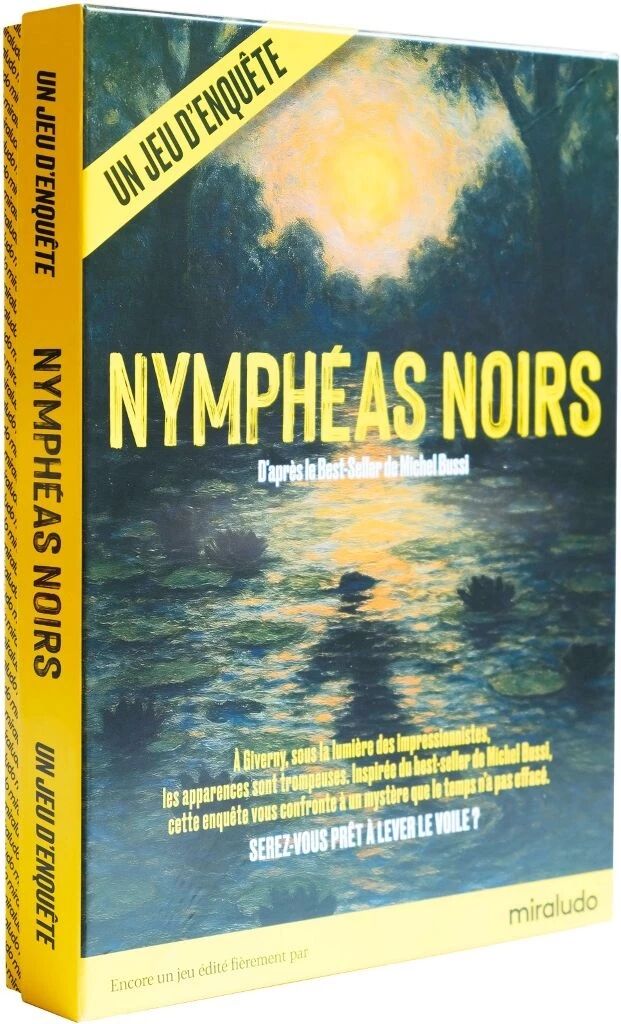
Voici une nouvelle enquête à faire à la maison. Celle-ci bien de chez Miraludo et propose une intrigue inspiré d’un des plus célèbres romans de Michel Bussi. Si vous avez lu le livre Nymphéas Noirs, rassurez-vous, l’intrigue est différente mais toujours dans le même univers, ainsi la surprise reste intact et le travail d’enquête peut commencer avec tout plein de documents à éplucher (rapports de police, photos, procès verbaux, rapports d’autopsie, lettres, articles de journaux, plans, objets…). On adore ce principe d’enquêtes. Elle est jouable de 2 à 12 enquêteurs à partir de 12 ans et dispo au prix de 29,90€.

Ce livre de Darran Jones, enfin traduit en français par Anne-Laure Bertiau, est une mine d’infos sur l’histoire des jeux vidéo en bornes arcade. Retro Arcade Classics fourmille d’infos, de photos, de screenshots (souvent très petits malheureusement…) dans une mise en page riche et agréable à parcourir. On trouve des sprites et autres éléments visuels de jeux mythique allant de Pac-Man à Ghost’n Goblins en passant par Street Fighter et Burger Time. Un must-have pour tous les fans de jeux vidéo. Dispo chez Casa éditions.

A la manière d’une enquête ou d’une chasse au trésor IRL, Le Jugement de Salomon se présente comme un roman dont les 100 pages sont imprimées dans le désordre… Elles sont détachables et il va donc falloir faire le tri dans tout cela pour élucider plusieurs meurtres et donc trouver autant de coupables… Inspirée par l’énigme de Torquemada, cette enquête vous demandera beaucoup d’investissement en temps et en recherche. Il faut être à l’affût du moindre indice que ce soit une expression, un nom propre ou bien une phrase qui semble étrange… Attention, c’est réservé aux initiés et ceux qui peuvent vraiment se plonger dans l’investigation. Mais c’est en tous cas un support d’enquête original.

Pour les plus jeunes, ce jeu vidéo dans l’univers de Peanuts nous propose d’enquêter avec Snoopy et ses amis dans la ville et tout ce qu’elle comporte (école, gymnase, etc…). Dans une sorte de petit open-world en 3D on évolue donc à la rechercher d’indices par des missions successives souvent simples mais toujours astucieuses et agréable à résoudre. On est assez vite épaulé par nos amis Peppermint Patty, Lucy, Marcie, Schroeder, Franklin et bien d’autres encore, chacun nous faisant bénéficier de compétences spéciales. Tout ce petit monde est personnalisable et les jeunes gameuses et gamers y trouveront leur compte pour jouer à son rythme dans un univers fun et coloré. On trouve également d’amusants mini-jeux pour prolonger le plaisir.

Dispo sur Steam uniquement pour le moment, Puzzle Parasite est un jeu vidéo qui mise sur le coop. C’est une aventure de réflexion sci-fi où vous utilisez des pouvoirs télékinétiques et une batte de cricket pour propulser des noyaux d’énergie, activer des technologies alien et éviter des lasers mortels pour découvrir des secrets enfouis. Une sorte de Portal qui innove un peu par son approche. Une belle surprise à découvrir et à offrir pourquoi pas à un gamer PC!
Cet article IDÉES CADEAUX DE NOËL! est apparu en premier sur Insert Coin.

L'attente est terminée : One UI 8 Watch se déploie sur les Galaxy Watch FE et Watch 5 (Pro), offrant des fonctionnalités Wear OS 6, des mises en page plus épurées et des performances améliorées. Découvrez les plus grands changements et pourquoi vous devriez l'installer immédiatement.
Der Beitrag One UI 8 transforme les montres bon marché de Samsung erschien zuerst auf nextpit.

Mise à jour 31/12 — Il semble que la plupart des promotions chez Crucial s’achèvent ce soir. Certaines références sont déjà en rupture de stock, tandis que d’autres sont mises davantage en avant depuis quelques jours.
Voici les modèles encore en promotion : Crucial X9 :
Crucial X10 :
Crucial X10 Pro :
Ces promotions sont d’autant plus intéressantes qu’elles interviennent dans un contexte de hausse généralisée des prix de la RAM et des SSD. Si Crucial consent aujourd’hui à de tels rabais, c’est parce que sa maison mère, Micron, a décidé de tourner la page du grand public pour se concentrer sur les marchés liés à l’IA.
RAM, SSD, stockage… Il est devenu difficile de faire de bonnes affaires, la faute à la frénésie d’achats causée par le boom des intelligences artificielles génératives.
On ignore si ces promotions sont liées au fait que Crucial va bientôt fermer rideau, mais elles sont intéressantes.
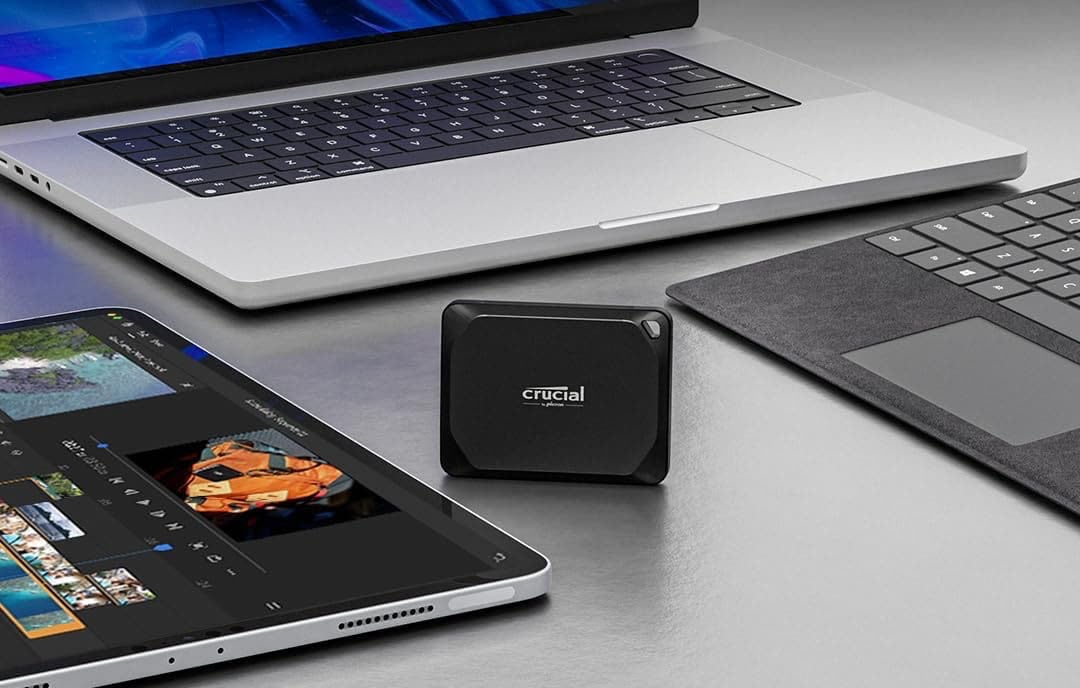
Si vous êtes à la recherche d’un peu de stockage, on vous recommande de jeter un œil à ces SSD externes de Crucial. Il est possible de faire l’acquisition du X10 Pro 2 To pour 150 €, soit 45 € de moins que son prix public. Le modèle 4 To est proposé pour sa part à 295 €. Le modèle doté de 1 To de stockage est vendu depuis peu à 99,99 €, grâce à un coupon de 10 € automatiquement appliqué au moment de l’achat.
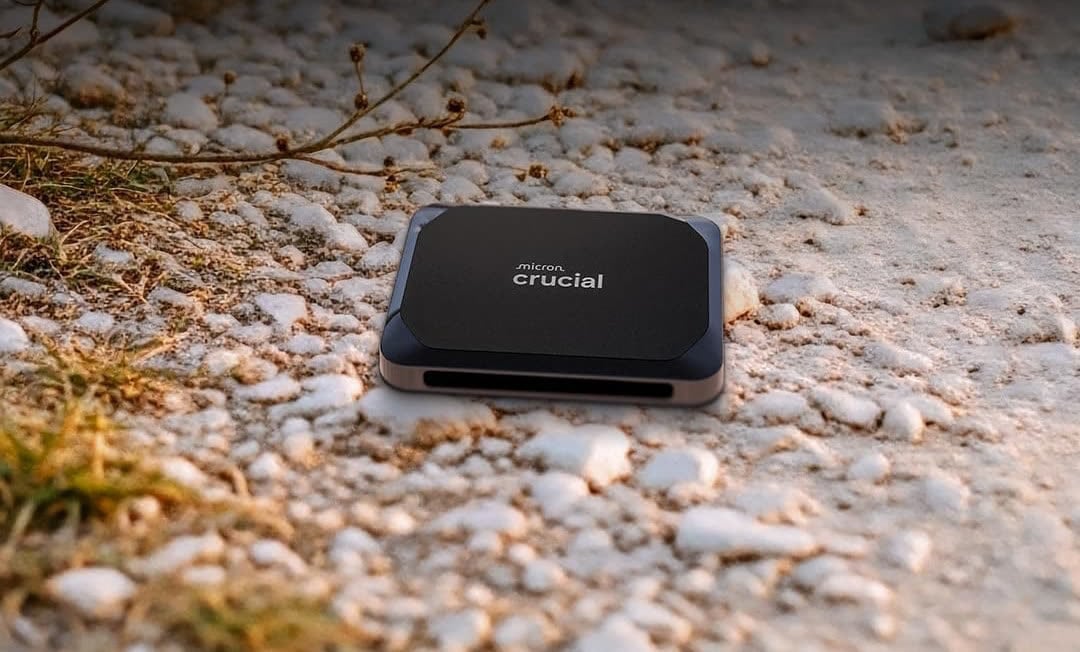
Les Crucial X10 Pro font partie des SSD externes haut de gamme sortis en 2023 : avec des débits annoncés jusqu’à 2 100 Mo/s en lecture et 2 000 Mo/s en écriture, ils visent ceux qui manipulent de gros fichiers au quotidien — vidéo, photo, bibliothèques de projets, sauvegardes rapides. À l’intérieur, on trouve de la mémoire 3D TLC en NVMe (bus PCIe), reliée en USB 3.2 Gen2x2 Type-C, et un chiffrement matériel AES 256 bits pour sécuriser les données sans plomber les performances. Le tout tient dans un boîtier en aluminium très compact (65 × 50 × 10 mm, 42 g) et conçu pour encaisser : IP55 (poussière/éclaboussures), résistant aux chocs, et annoncé comme hydrofuge.
Test des Crucial X9 Pro et X10 Pro, deux SSD externes compacts et rapides
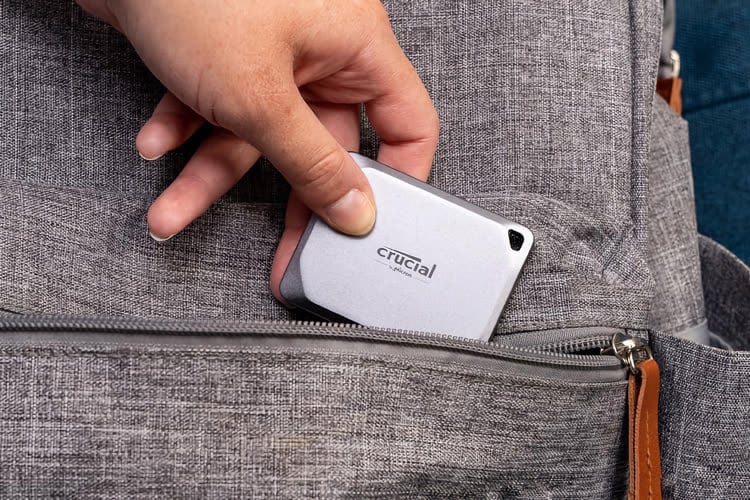
Les Crucial X9 jouent une partition plus simple que les X10 Pro : ce sont des SSD externes compacts et faciles à emporter, pensés avant tout pour augmenter rapidement l’espace de stockage et déplacer des fichiers sans prise de tête. Ils misent sur un format discret, un boîtier conçu pour résister à la vie nomade et une connexion USB-C pour fonctionner aussi bien avec un Mac qu’avec un PC ou certains appareils mobiles. Ils offrent jusqu’à 1 050 Mo/s en lecture, et à peu près autant en écriture. En clair : une solution sobre et pratique pour des sauvegardes, des bibliothèques photo/vidéo, ou du stockage d’appoint au quotidien.
Bref, des SSD moins performants, mais des prix encore plus doux :