↩ Accueil

Vue lecture

MLX sous macOS 26.2 va accélérer les IA de type LLM génératif sur M5 ?

Je l'ai vu passer partout, voilà les explications techniques (en anglais).

En bref, non, pas pour un usage en chatbot, car si le M5 va 25% plus vite que le M4, l'accélération énorme (jusqu'à 4 fois plus rapide) promise n'est que pour l'ingestion des Tokens du Prompt (l'entrée donc), pas pour le traitement subséquent.

Avec mon prompt maintenant célèbre "Que faire un week-end de vacances à Limoges?" il n'y aura aucune accélération visible, hors les meilleures perfs du M5 face au M4, grâce à sa meilleure bande-passante mémoire. Mais pas nécessairement un meilleur week-end !

Donc en général, non, MLX sous macOS 26.2 n'accélèrera pas grand chose...


En ce moment, profitez du Black Friday : soutenez MacBidouille et partagez vos trouvailles

  •  

Flattened halo of dark matter could explain high-energy ‘glow’ at Milky Way’s heart

Astronomers have long puzzled over the cause of a mysterious “glow” of very high energy gamma radiation emanating from the centre of our galaxy. One possibility is that dark matter – the unknown substance thought to make up more than 25% of the universe’s mass – might be involved. Now, a team led by researchers at Germany’s Leibniz Institute for Astrophysics Potsdam (AIP) says that a flattened rather than spherical distribution of dark matter could account for the glow’s properties, bringing us a step closer to solving the mystery.

Dark matter is believed to be responsible for holding galaxies together. However, since it does not interact with light or other electromagnetic radiation, it can only be detected through its gravitational effects. Hence, while astrophysical and cosmological evidence has confirmed its presence, its true nature remains one of the greatest mysteries in modern physics.

“It’s extremely consequential and we’re desperately thinking all the time of ideas as to how we could detect it,” says Joseph Silk, an astronomer at Johns Hopkins University in the US and the Institut d’Astrophysique de Paris and Sorbonne University in France who co-led this research together with the AIP’s Moorits Mihkel Muru. “Gamma rays, and specifically the excess light we’re observing at the centre of our galaxy, could be our first clue.”

Models might be too simple

The problem, Muru explains, is that the way scientists have usually modelled dark matter to account for the excess gamma-ray radiation in astronomical observations was highly simplified. “This, of course, made the calculations easier, but simplifications always fuzzy the details,” he says. “We showed that in this case, the details are important: we can’t model dark matter as a perfectly symmetrical cloud and instead have to take into account the asymmetry of the cloud.”

Muru adds that the team’s findings, which are detailed in Phys. Rev. Lett., provide a boost to the “dark matter annihilation” explanation of the excess radiation. According to the standard model of cosmology, all galaxies – including our own Milky Way – are nested inside huge haloes of dark matter. The density of this dark matter is highest at the centre, and while it primarily interacts through gravity, some models suggest that it could be made of massive, neutral elementary particles that are their own antimatter counterparts. In these dense regions, therefore, such dark matter species could be mutually annihilating, producing substantial amounts of radiation.

Pierre Salati, an emeritus professor at the Université Savoie Mont Blanc, France, who was not involved in this work, says that in these models, annihilation plays a crucial role in generating a dark matter component with an abundance that agrees with cosmological observations. “Big Bang nucleosynthesis sets stringent bounds on these models as a result of the overall concordance between the predicted elemental abundances and measurements, although most models do survive,” Salati says. “One of the most exciting aspects of such explanations is that dark matter species might be detected through the rare antimatter particles – antiprotons, positrons and anti-deuterons – that they produce as they currently annihilate inside galactic halos.”

Silvia Manconi of the Laboratoire de Physique Théorique et Hautes Energies (LPTHE), France, who was also not involved in the study, describes it as “interesting and stimulating”. However, she cautions that – as is often the case in science – reality is probably more complex than even advanced simulations can capture. “This is not the first time that galaxy simulations have been used to study the implications of the excess and found non-spherical shapes,” she says, though she adds that the simulations in the new work offer “significant improvements” in terms of their spatial resolution.

Manconi also notes that the study does not demonstrate how the proposed distribution of dark matter would appear in data from the Fermi Gamma-ray Space Telescope’s Large Area Telescope (LAT), or how it would differ quantitatively from observations of a distribution of old stars. Forthcoming observations with radio telescopes such as MeerKat and FAST, she adds, may soon identify pulsars in this region of the galaxy, shedding further light on other possible contributions to the excess of gamma rays.

New telescopes could help settle the question

Muru acknowledges that better modelling and observations are still needed to rule out other possible hypotheses. “Studying dark matter is very difficult, because it doesn’t emit or block light, and despite decades of searching, no experiment has yet detected dark matter particles directly,” he tells Physics World. “A confirmation that this observed excess radiation is caused by dark matter annihilation through gamma rays would be a big leap forward.”

New gamma-ray telescopes with higher resolution, such as the Cherenkov Telescope Array, could help settle this question, he says. If these telescopes, which are currently under construction, fail to find star-like sources for the glow and only detect diffuse radiation, that would strengthen the alternative dark matter annihilation explanation.

Muru adds that a “smoking gun” for dark matter would be a signal that matches current theoretical predictions precisely. In the meantime, he and his colleagues plan to work on predicting where dark matter should be found in several of the dwarf galaxies that circle the Milky Way.

“It’s possible we will see the new data and confirm one theory over the other,” Silk says. “Or maybe we’ll find nothing, in which case it’ll be an even greater mystery to resolve.”

The post Flattened halo of dark matter could explain high-energy ‘glow’ at Milky Way’s heart appeared first on Physics World.

  •  

NVIDIA rend la SHIELD TV plus accessible aux personnes handicapées

Les mises à jour logicielles des consoles de jeu et lecteurs multimédia NVIDIA SHIELD TV se font désormais rares mais ont le mérite de se poursuivre. Le dernier firmware SHIELD Experience 9.2.1 est en effet sorti au printemps dernier pour offrir le streaming de jeux en 1080p à 120 FPS depuis le serv...

  •  

Le casque audio Razer BlackShark V3 Pro compatible Nintendo Switch 2

Razer proposait début septembre 2025 plusieurs mises à jour logicielles pour certains casques audio des gammes Barracuda, BlackShark et Kraken afin de leur ajouter la compatibilité avec la console de jeu Nintendo Switch 2. Quelques semaines plus tard, ce fut au tour du casque BlackShark V2 Pro (m...

  •  

Test de Tormented Souls 2 | Le Resident Evil rétro qu’il vous faut !

Si, comme nous, vous avez particulièrement adoré l’époque de l’ascension des Survival-Horror, nous vous conseillons plus que chaudement de lire ce test de Tormented Souls 2. Ode à l’ère de la 3D précalculée et des énigmes, le nouvel opus de Dual Effect. Tout petit studio chilien fondé en 2019, il signe avec cette suite une belle expérience néo-rétro que nous invitons à découvrir plus en détails dans les lignes suivantes.

Test de Tormented Souls 2 | Ce qu’il faut savoir

  • Jeu d’horreur en vue à la 3ème personne. Vous incarnez Caroline, qui accompagne sa sœur malade dans une bourgade reculée du sud du Chili. Vous allez rapidement vous retrouver seul dans Villa Hess, ville quasi totalement désertée de ses âmes…
  • Disponible dès maintenant sur PC, PS5 et Xbox Series X|S
  • Prix de lancement : 30€
  • Durée de vie : Entre 25 et 30 heures en mode normal pour un premier run
  • Testé sur PC, via une clé Steam offerte par l’éditeur
  • Configuration du test : i9-9900KF, 32GO RAM, SSD, RTX 4070

Les gros points forts de Tormented Souls 2

  • Un Survival-Horror à l’ancienne comme on les adorait à l’époque de Resident Evil, Silent Hill, Dino Crisis, Galerians et compagnie !
  • Graphiquement, c’est vraiment très souvent magnifique
  • Les angles de vues et de caméra sont toujours bien choisis
  • Des énigmes faciles, moyennes, difficiles qui sont toujours bien dosées, et surtout très bien documentées. En cherchant bien, on s’en sort toujours
  • Un équilibre parfait entre exploration, énigmes, combats et aventure
  • L’histoire est vraiment passionnante. Racontée aussi bien en scènes cinématiques qu’en notes à trouver un peu partout. C’est très complet !
  • Une palanquée d’armes à trouver qui offre un inventaire vraiment complet et dévastateur
  • Les combats de boss sont très bien faits, avec des points faibles à trouver pour chacun
  • La difficulté globale est bien dosée en mode normal. Vous pouvez également avoir droit à des sauvegardes automatiques en mode facile
  • Plusieurs fins. Pour avoir la meilleure, il faut vraiment se creuser les méninges et avoir le sens de l’observation !
  • Une durée de vie exceptionnelle pour un jeu du genre ! Et sans aucune lassitude
  • Les environnements sont très variés : couvent, bunker, labo
  • Des inspirations des cadors du genre des années 90 / début 2000 dans tous les sens
  • Pas énormément d’aller-retours, c’est tant mieux
  • Des ennemis qui vont flipper ! Moi qui ne sursaute quasi jamais, Tormented Souls 2 a réussi à m’avoir deux ou trois fois !
  • Doublage en anglais de qualité. Sous-titre français faciles à lire
  • Bande son très agréable, qui accompagne bien les phases de jeu
  • On ne manque jamais vraiment de munitions en mode « normal », même s’il ne faut toutefois pas trop en gaspiller

Les points faibles de Tormented Souls 2

  • Des vilains bugs bloquants ! A deux reprises, j’ai été obligé de lancer une version plus ancienne du jeu sur Steam. Si vous êtes bloqués à la tombe du cimetière et devant l’œil de l’église, pensez-y !
  • Les personnages sont vraiment beaucoup moins beaux que les environnements somptueux
  • Le premier tiers de l’aventure est bien plus compliqué que la suite en termes de munitions. Un petit équilibrage serait le bien vu !
  • Quelques problèmes de déplacements du personnage lorsque l’on a besoin d’esquiver rapidement un ennemi et que l’angle de caméra change (le personnage semble ivre)
  • Pas de résolution supérieure au 1440P
  • Pas de prise en charge des écrans 21:9 et 32:9

Vous adorerez le jeu, si :

  • Vous adorez les vieux Resident Evil, Silent Hill et compagnie
  • Vous aimez les énigmes logiques, mais pas toujours simples
  • Vous avez envie de revivre de vieilles sensations, modernisées !

Test de Tormented Souls 2 | Verdict : 18/20

Que l’on soit clair : si Tormented Souls 2 était sorti en 1998, il aurait certainement reçu l’éloge de toutes les critiques, étant encore meilleur que les cadors de l’époque. Nous sommes aujourd’hui en 2025, et le moins que l’on puisse dire est que le titre de Dual Effect fonctionne parfaitement bien. Pour les « vieux de la vieille ». Pour les néophytes, ils risqueront de trouver un jeu rigide, au gameplay « bizarre », mais avec un rythme moderne.

N’ayant fait que partiellement le premier opus, je ne peux que vous conseiller d’investir 30 petits euros dans cette suite qui le surpasse en tous points. Une belle leçon de Survival-Horror à l’ancienne que j’ai vraiment adoré parcourir du début à la fin !

L’article Test de Tormented Souls 2 | Le Resident Evil rétro qu’il vous faut ! est apparu en premier sur PLAYERONE.TV.

  •  

Talking physics with an alien civilization: what could we learn?

It is book week here at Physics World and over the course of three days we are presenting conversations with the authors of three fascinating and fun books about physics. Today, my guest is the physicist Daniel Whiteson, who along with the artist Andy Warner has created the delightful book Do Aliens Speak Physics?.

Is physics universal, or is it shaped by human perspective? This will be a very important question if and when we are visited by an advanced alien civilization. Would we recognize our visitors’ alien science – or indeed, could a technologically-advanced civilization have no science at all? And would we even be able to communicate about science with our alien guests?

Whiteson, who is a particle physicist at the University of California Irvine, tackles these profound questions and much more in this episode of the Physics World Weekly podcast.

APS logo


This episode is supported by the APS Global Physics Summit, which takes place on 15–20 March, 2026, in Denver, Colorado, and online.

The post Talking physics with an alien civilization: what could we learn? appeared first on Physics World.

  •  

International Quantum Year competition for science journalists begins

Are you a science writer attending the 2025 World Conference of Science Journalists (WCSJ) in Pretoria, South Africa? To mark the International Year of Quantum Science and Technology, Physics World (published by the Institute of Physics) and Physics Magazine (published by the American Physical Society) are teaming up to host a special Quantum Pitch Competition for WCSJ attendees.

The two publications invite journalists to submit story ideas on any aspect of quantum science and technology. At least two selected pitches will receive paid assignments and be published in one of the magazines.

Interviews with physicists and career profiles – either in academia or industry – are especially encouraged, but the editors will also consider news stories, podcasts, visual media and other creative storytelling formats that illuminate the quantum world for diverse audiences.

Participants should submit a brief pitch (150–300 words recommended), along with a short journalist bio and a few representative clips, if available. Editors from Physics World and Physics Magazine will review all submissions and announce the winning pitches after the conference. Pitches should be submitted to physics@aps.org by 8 December 2025, with the subject line “2025WCSJ Quantum Pitch”.

Whether you’re drawn to quantum materials, computing, sensing or the people shaping the field, this is an opportunity to feature fresh voices and ideas in two leading physics publications.

This article forms part of Physics World‘s contribution to the 2025 International Year of Quantum Science and Technology (IYQ), which aims to raise global awareness of quantum physics and its applications.

Stayed tuned to Physics World and our international partners throughout the year for more coverage of the IYQ.

Find out more on our quantum channel.

The post International Quantum Year competition for science journalists begins appeared first on Physics World.

  •  

New cylindrical metamaterials could act as shock absorbers for sensitive equipment

A 3D-printed structure called a kagome tube could form the backbone of a new system for muffling damaging vibrations. The structure is part of a class of materials known as topological mechanical metamaterials, and unlike previous materials in this group, it is simple enough to be deployed in real-world situations. According to lead developer James McInerney of the Wright-Patterson Air Force Base in Ohio, US, it could be used as shock protection for sensitive systems found in civil and aerospace engineering applications.

McInerney and colleagues’ tube-like design is made from a lattice of beams arranged in such a way that low-energy vibrational modes called floppy modes become localized to one side. “This provides good properties for isolating vibrations because energy input into the system on the floppy side does not propagate to the other side,” McInerney says.

The key to this desirable behaviour, he explains, is the arrangement of the beams that form the lattice structure. Using a pattern first proposed by the 19th century physicist James Clerk Maxwell, the beams are organized into repeating sub-units to form stable, two-dimensional structures known as topological Maxwell lattices.

Self-supporting design

Previous versions of these lattices could not support their own weight. Instead, they were attached to rigid external mounts, making it impractical to integrate them into devices. The new design, in contrast, is made by folding a flat Maxwell lattice into a cylindrical tube that is self-supporting. The tube features a connected inner and outer layer – a kagome bilayer – and its radius can be precisely engineered to give it the topological behaviour desired.

The researchers, who detail their work in Physical Review Applied, first tested their structure numerically by attaching a virtual version to a mechanically sensitive sample and a source of low-energy vibrations. As expected, the tube diverted the vibrations away from the sample and towards the other end of the tube.

Next, they developed a simple spring-and-mass model to understand the tube’s geometry by considering it as a simple monolayer. This modelling indicated that the polarization of the tube should be similar to the polarization of the monolayer. They then added rigid connectors to the tube’s ends and used a finite-element method to calculate the frequency-dependent patterns of vibrations propagating across the structure. They also determined the effective stiffness of the lattice as they applied loads parallel and perpendicular to it.

The researchers are targeting vibration-isolation applications that would benefit from a passive support structure, especially in cases where the performance of alternative passive mechanisms, such as viscoelastomers, is temperature-limited. “Our tubes do not necessarily need to replace other vibration isolation mechanisms,” McInerney explains. “Rather, they can enhance the capabilities of these by having the load-bearing structure assist with isolation.”

The team’s first and most important task, McInerney adds, will be to explore the implications of physically mounting the kagome tube on its vibration isolation structures. “The numerical study in our paper uses idealized mounting conditions so that the input and output are perfectly in phase with the tube vibrations,” he says. “Accounting for the potential impedance mismatch between the mounts and the tube will enable us to experimentally validate our work and provide realistic design scenarios.”

The post New cylindrical metamaterials could act as shock absorbers for sensitive equipment appeared first on Physics World.

  •  

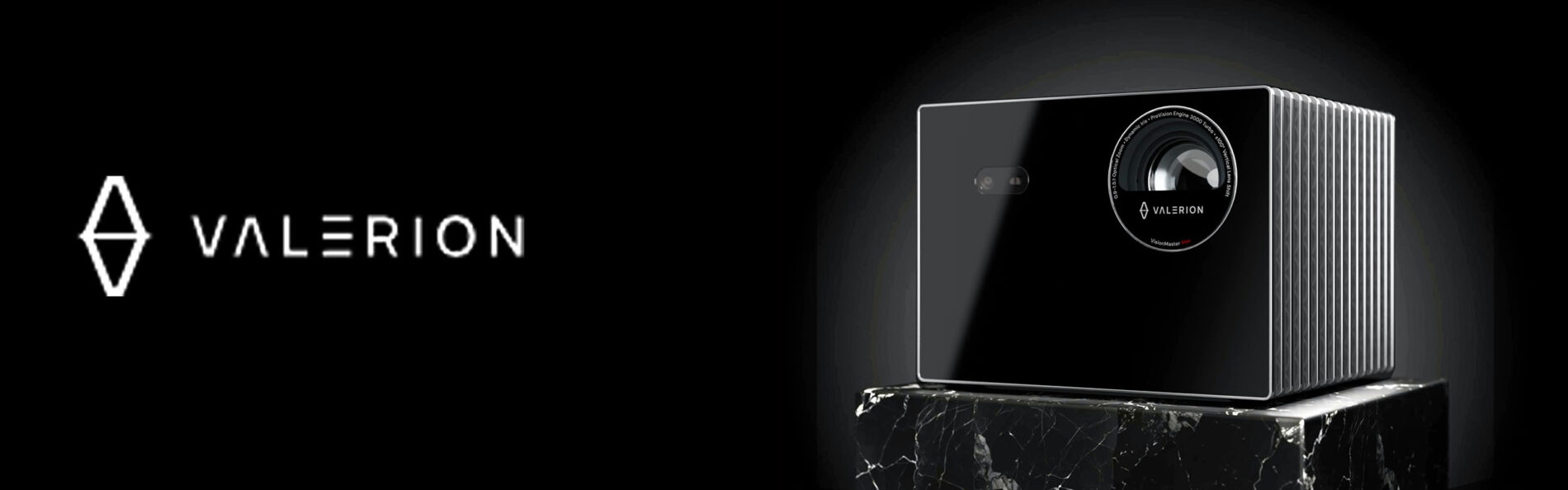
Black Friday 2025 : Valerion casse les prix sur ses projecteurs laser haut de gamme

Black Friday 2025 : Valerion casse les prix sur ses projecteurs laser haut de gamme 

À l’occasion du Black Friday, Valerion dégaine une salve de promotions particulièrement agressives, valables du 20 novembre au 1er décembre. La marque lifestyle spécialisée dans les projecteurs laser haut de gamme veut clairement rendre l’expérience home cinéma premium plus accessible que jamais.

La première salve de remises concerne la prestigieuse gamme VisionMaster, équipée d’un laser RVB triple, de 2 500 à 3 000 lumens ISO et d’un contraste pouvant grimper jusqu’à 15 000:1. Pensés pour transformer un salon en véritable salle obscure, ces projecteurs affichent un ensemble de technologies habituellement réservées au très haut de gamme : zoom optique, lens shift vertical, compatibilité Dolby Vision, HDR10+ ou encore IMAX Enhanced. Le tout dans un châssis au design volontairement épuré.

Valerion

Deux modèles bénéficient d’une réduction massive allant jusqu’à 700 € :
VisionMaster Pro 2, qui passe de 2 999 € à 2 299 €
VisionMaster Pro, de 2 499 € à 1 799 €

Pour les utilisateurs à la recherche d’un projecteur plus polyvalent et compact, Valerion applique également de belles remises sur sa gamme StreamMaster, elle aussi équipée d’un laser RVB triple et d’une définition 4K UHD. Avec ses 1 650 à 2 000 lumens ISO, son contraste de 10 000:1 et une couverture colorimétrique REC.2020 à 110 %, la série mise sur une image vibrante et dynamique. Les joueurs y trouveront aussi leur compte grâce à une latence de 4 ms en 1080p / 240 Hz.

Les réductions atteignent également plusieurs centaines d’euros :
StreamMaster Plus 2, de 2 199 € à 1 499 €
StreamMaster Plus, de 1 599 € à 999 €

Avec cette opération Black Friday, Valerion confirme son ambition : rendre le home cinéma laser premium plus abordable sans sacrifier l’innovation. La marque, sous-division haut de gamme d’AWOL Vision, s’est spécialisée dans les projecteurs laser aux optiques de précision et aux performances spectaculaires, avec notamment la VisionMaster, désormais référence sur le marché haute focale.

Une chose est sûre : cette année, le Black Friday s’annonce comme le moment idéal pour équiper son salon d’une vraie expérience cinéma… sans exploser son budget.

Black Friday 2025 : Valerion casse les prix sur ses projecteurs laser haut de gamme a lire sur Vonguru.

  •  
❌