Le commandement américain pour l’Amérique latine et les Caraïbes fait état de deux morts lors de cette première frappe, connue, de l’année. Les garde-côtes américains recherchent une troisième personne qui aurait survécu.
Une image fixe extraite du compte X du Commandement Sud des Etats-Unis montre une frappe contre un navire présumé exploité par des trafiquants impliqués dans des opérations de narcotrafic, le 23 janvier 2026.
Internet La newsletter, c'est tendance ! Oubliée depuis des années, nous lançons Warp Zone, la newsletter de Puissance Nintendo. Hébergé sur Substack qui a donné un vrai coup de jeune à l'emailing, on vous dit tout sur l'ambition de Warp Zone !
Intel termine la semaine sous tension. Le géant des semi-conducteurs a vu son cours boursier chuter lourdement après avoir dévoilé ses prévisions de revenus pour le premier trimestre 2026. Des chiffres en dessous des attentes du marché qui viennent doucher l’optimisme né autour du redressement promis par la nouvelle direction. La sanction est immédiate : […]
La domination de NVIDIA dans l’intelligence artificielle ne repose pas uniquement sur ses GPU. Elle s’est surtout construite autour d’un atout bien plus difficile à détrôner : son écosystème logiciel. CUDA est devenu au fil des années le langage universel du calcul accéléré, incontournable aussi bien dans les centres de données que dans la recherche […]
Évoqué par certaines rumeurs cette semaine, le prochain Nintendo Direct est aujourd’hui officialisé par l’éditeur, qui nous donne rendez-vous très rapidement pour en profiter.
Le Xbox Game Pass propose pas moins de quatre jeux à tester gratuitement durant les Free Play Days cette semaine et c'est du très bon. On a des licences cultes et de vraies pépites à se mettre sous la dent.
Officialisé il y a maintenant plusieurs mois, le retour de Rayman est aujourd’hui très attendu par de nombreux joueurs. Il se murmure toutefois qu’une mauvaise surprise serait à la clé.
Jujutsu Kaisen c'est fini, mais pas tout à fait. Gege Akutami a encore des histoires à raconter dans l'univers des exorcistes. La suite a leaké avec un retour qui s'annonce absolument légendaire.
D'après un analyste spécialisé de l'économie polonaise et de CD Projekt RED, The Witcher 4 pourrait se placer comme l'un des jeux les plus chers de l'histoire.
Apple TV va bientôt signer le grand retour d'une série très appréciée. La plateforme met le paquet et nous partage une ultime bande-annonce prometteuse cette saison 2 très attendue par les fans.
Récemment enfin présenté en grandes pompes, l'un des jeux les plus prometteurs de 2026 pourrait arriver sur Nintendo Switch 2, si l'on en croit de récentes rumeurs.
Sous ses atours de jeu familial et bon enfant, Les Sims 4 cache une communauté visiblement très bonne vivante, en témoigne la popularité de ce mod porté sur le sexe.
La nouvelle coqueluche du cinéma serait en lice pour incarner le célèbre agent 007 dans le futur film James Bond réalisé par Denis Villeneuve. Les discussions seraient en cours.
Comme chaque semaine, l’ensemble des abonnés Amazon peuvent récupérer de nouveaux jeux gratuits à garder grâce à l’offre Prime Gaming. L'une des pépites de 2024 est notamment offerte.
Suite à une présentation globalement rassurante pour Fable 4, son studio a toutefois confirmé l'abandon d'une des fonctionnalités les plus emblématiques de la licence.
Petit message d’intérêt général à destination de tous les abonnés au PlayStation Plus. Un nouveau pack de contenus gratuits est disponible dès maintenant avec votre abonnement.
Une banale invitation dans votre calendrier Google Agenda peut mener à une fuite d'informations en manipulant l'IA Gemini via une injection de prompt indirecte.
Avec sa fonctionnalité nommée Brand Impersonation Protection, Microsoft s'attaque aux appels suspects dans Teams afin de lutter contre l'usurpation d'identité.
Il y a actuellement une tempête sur les États-Unis, mais aussi une part du Canada, avec des précipitations importantes sous formes de neige annoncées, ainsi que des températures très basses.
Cela a amené une controverse sur l'App Apple Weather ou Météo, qui annonce entre 1 à 2 pieds de neige (33 à 66cm) à certains endroits aux États-Unis. Ça fait beaucoup et ça amené des gens à critiquer l'App d'Apple.
Les différentes Apps de prévision météorologiques ainsi que les différents sites (j'utilise Meteomedia souvent) prennent leurs sources d'informations de différents acteurs spécialisés avec différents modèles. Ces modèles divergent, aucun ne semble parfaitement fiable, mais dans des évènements exceptionnels comme celui-ci, c'est criant.
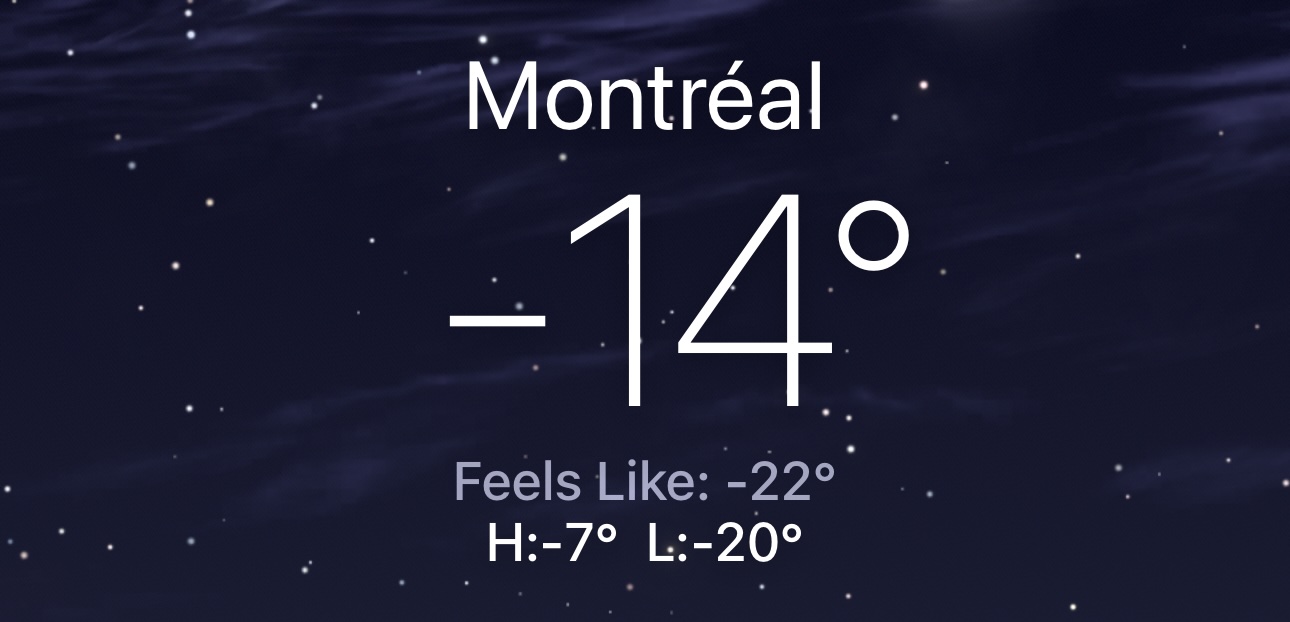
Si on prend Montréal, l'App Weather/Météo d'apple m'indique qu'il fait -22˚ ressenti actuellement, et je peux vous dire que ce matin j'ai exceptionnellement pris ma tenue grand-froid avant d'aller au travail, et que les -29˚ ressentis de Meteomedia me paraissent bien plus réalistes ! Cette nuit il fera entre -30˚ et -40˚ ressenti au Québec d'après les plus grands médias.
La température ressentie est basée sur la température réelle (sous abri), associée aux effets du vent et de l'humidité (facteur humidex). En hiver il y a très peu d'humidité (air très sec), mais du vent oui, et celui-ci peut vous glacer...
Donc des fois l'App Weather/Météo d'Apple est pessimiste (1 à 2 pieds de neige à certains endroits des USA) et des fois optimiste (-22˚ ressentis contre -29˚ plus probables).
Ça arrive à toutes les sources d'informations météo issues directement d'un modèle, et c'est pourquoi les météorologistes existent (et j'en connais) : ils compilent ces informations, éliminent les erreurs flagrantes, et essayent de fournir un tableau qui sans être exact va être plus proche de la réalité que ce qui sort des super-calculateurs. De la science et même de l'art.
Pourquoi dans Samedi Sécurité, et la catégorie "sécurité" ? Car quand il y a de grosse bordées comme on dit ici, avec plus de 25cm de neige, ou des températures passant les -30˚, -37˚ samedi matin à Montréal, la nature si forte et si belle devient un ennemi mortel, où il faut être préparé (véhicules, équipements, vêtements), et où des touristes peuvent avoir des engelures très graves et irréversibles juste pour être resté quelques minutes de trop dehors et sans comprendre que sentir de la chaleur intense aux doigts, aux oreilles, aux orteils ou au nez sont des signaux d'alerte immédiate. L'expérience et le matériel adéquat.
Si vous êtes dans cette tempête de neige et de froid, et si vous n'avez pas l'expérience de telles conditions, restez au chaud, ne bougez pas. Il s'agit vraiment de votre sécurité...
PS: apparemment -29˚ ressentis dehors, 19˚ dedans, mon chauffage est à mi-puissance (entre 50% et 25% donc). J'ai une très belle marge.
Watching an NBA game in the Apple Vision Pro feels like a glimpse of where sports and entertainment need to go, even if the path forward is still taking shape. Apple is clearly experimenting with what watching sports can feel like when you are no longer locked into a flat television broadcast.
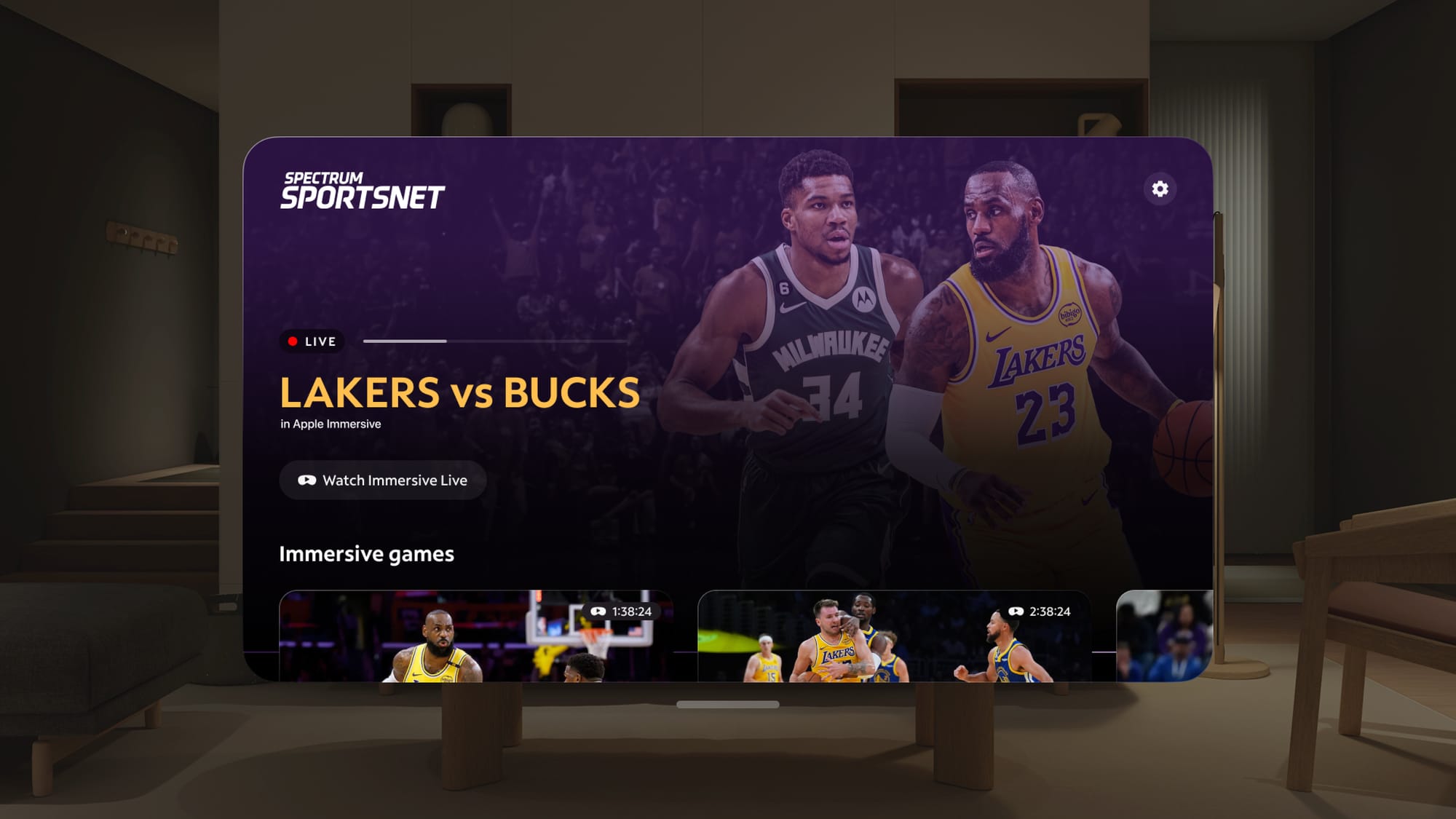
I recently went onto the court at an immersive Lakers game from the confines of Ian Hamilton's Vision Pro I borrowed from him in New York City. This was not a live broadcast, I watched the game on demand via the Spectrum SportsNet app, after the fact, in guest mode on his headset wearing my own personal Dual Knit Band. The experience leaving my Quest 3 behind and spending extended time in an immersive Apple experience left me both impressed, and conflicted.
Presence Or Floating In Space?
Viewers are given a choice about how to watch an NBA game in headset.
You can watch the game on a floating virtual screen, which already feels cleaner and more cinematic than a traditional TV. Or switch into fully immersive 180-degree 3D view for a full two-hour cut-together view of the game from start to finish. That second option is where the experience shows the most potential, but we also shouldn't dismiss the first mode. That first mode can be more easily shared in mixed reality with other apps and people, making the experience of watching there a bit like an IMAX version of an NBA game that's simultaneously without any of the typical distractions. Ian showed me a Jupiter environment in his headset too, and I could've watched the game there, surrounded by the gigantic planet and glimmering stars. All that said, instead, I dropped into the immersive mode for most of my time with the game.
In immersive mode, you are limited to a small set of camera perspectives and a singular timeline through the game. There are cameras mounted beneath each basket at opposite ends of the court, a ground-level center-court view, and a wider angle from up in the stands. Those angles are sufficient for following the game. Most intriguing about my time in this mode is that some of the most compelling moments had little to do with the action on the court.
The cutaways to commentators and sideline reporters stood out immediately. Interviews are presented in 3D and human scale, and that changes how you perceive the people on screen. You see their entire bodies rather than a cropped head-and-shoulders shot, and they feel more like they're standing right there talking to you. The sense of scale is immediate and lasting. You can also tell how tall these players actually are and start noticing details you would never catch on television, like a birthmark on a shoulder or sweat collecting along an arm.
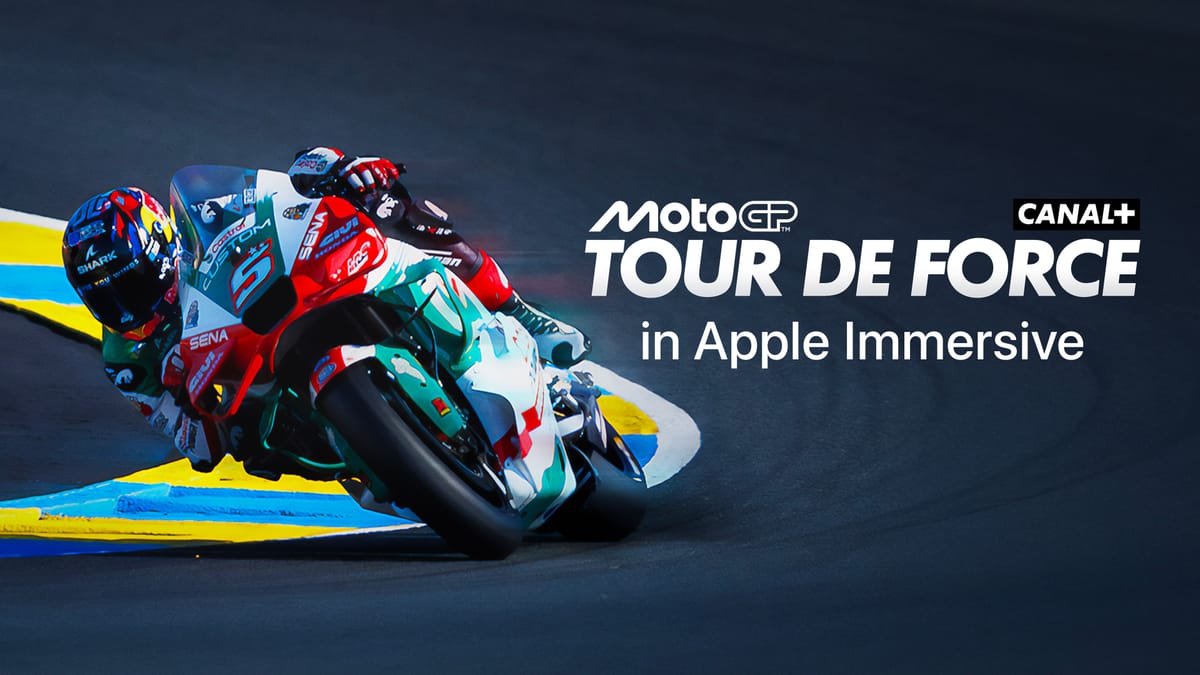
An Apple Immersive NBA broadcast feels intimate in a way traditional broadcasts are not. That intimacy is powerful, but it also highlights a challenge immersive sports production will have to solve. At one moment, feeling present on the court can be a good thing, and the next it can feel uncomfortably close. Immersive broadcasts still need to learn where that line is, and how to stay on the right side of it from moment to moment. In something like the recent Tour De Force MotoGP documentary, the immersive filmmakers had quite a bit more time to prepare around a very specific narrative, and you can feel the difference moment to moment.
For basketball, the immersive cameras provided terrific close-up views of plenty of interesting things outside the game too. Instead of watching commercials you're watching the Laker Girls during breaks, and their performances in 3D at human scale again reinforces the difference from television. You feel as if you are standing there, close enough to appreciate movement, spacing, and physicality. During commercial breaks, you can watch the crew wipe down the court, see players and staff milling about, and catch the in-between moments that usually disappear when the feed cuts away. Those behind-the-scenes details add texture and strengthen the feeling that you are actually inside the arena, not just consuming a polished broadcast.
The experience shows more friction once active gameplay ramps up. When using the center-court camera, the action constantly moves left to right and back again. That means repeatedly turning your head to follow the play unless the feed switches to one of the basket cameras. Over time, that motion becomes tiring.
I found myself wishing for more camera options, or better yet, the ability to manually switch views during the replay. An Immersive Highlights clip separate from the full broadcast pulls together some of the best moments seen from Apple‘s cameras over the course of the game, and at less than 10 minutes long, it offers a great way to see some of LeBron James’ best moments from behind the backboard without giving too much time to neck strain. Basketball broadcasts have always been built around wide shots that let you see the entire floor at once. In immersive VR at certain angles, the constant side-to-side motion means your head and neck are doing more work than they ever would in front of a TV or even at the game itself.
Even with the Dual Knit Strap, the Vision Pro is heavy and coming from extended daily use with a Meta Quest 3, I felt the Vision Pro's weight immediately pushing down on my face, and it stayed there throughout my time. For shorter sessions, it is manageable. For longer viewing, headset weight may be the biggest thing holding this use case back even if it isn't the only thing.
Immersive Broadcasts And Lighter Headsets
Immersive viewing isn't just the future of sports, concerts, and entertainment – it's here today, to quote William Gibson, just "not evenly distributed." The sense of presence here is too compelling to ignore. What feels less certain is how quickly the hardware evolves, how the technical implementation will improve, and how it will scale to become mainstream.
Ian's hands-on experiences with Steam Frame would suggest a much more lightweight experience that could be worn for extended periods, and he showed me how slim the Bigscreen Beyond headset is, which takes the minimal small and light form factor to the extreme. He also hasn't worn the Frame for an extended period, yet, and neither Apple nor the headset manufacturers have shown any indication that Apple's top tier immersive programming is coming to any headset other than one with an Apple logo shown at startup.
So, much as it was in 2016, and in 2024, right now immersive sports still feel like a glimpse of the future even if it works now. It is not a default viewing mode. What Apple is doing with Vision Pro and Apple Immersive is not a finished product. It is a preview. And as previews go, this one is strong enough to make me want more, even as it makes clear how much work remains to create a mass-market experience.
 Connexion